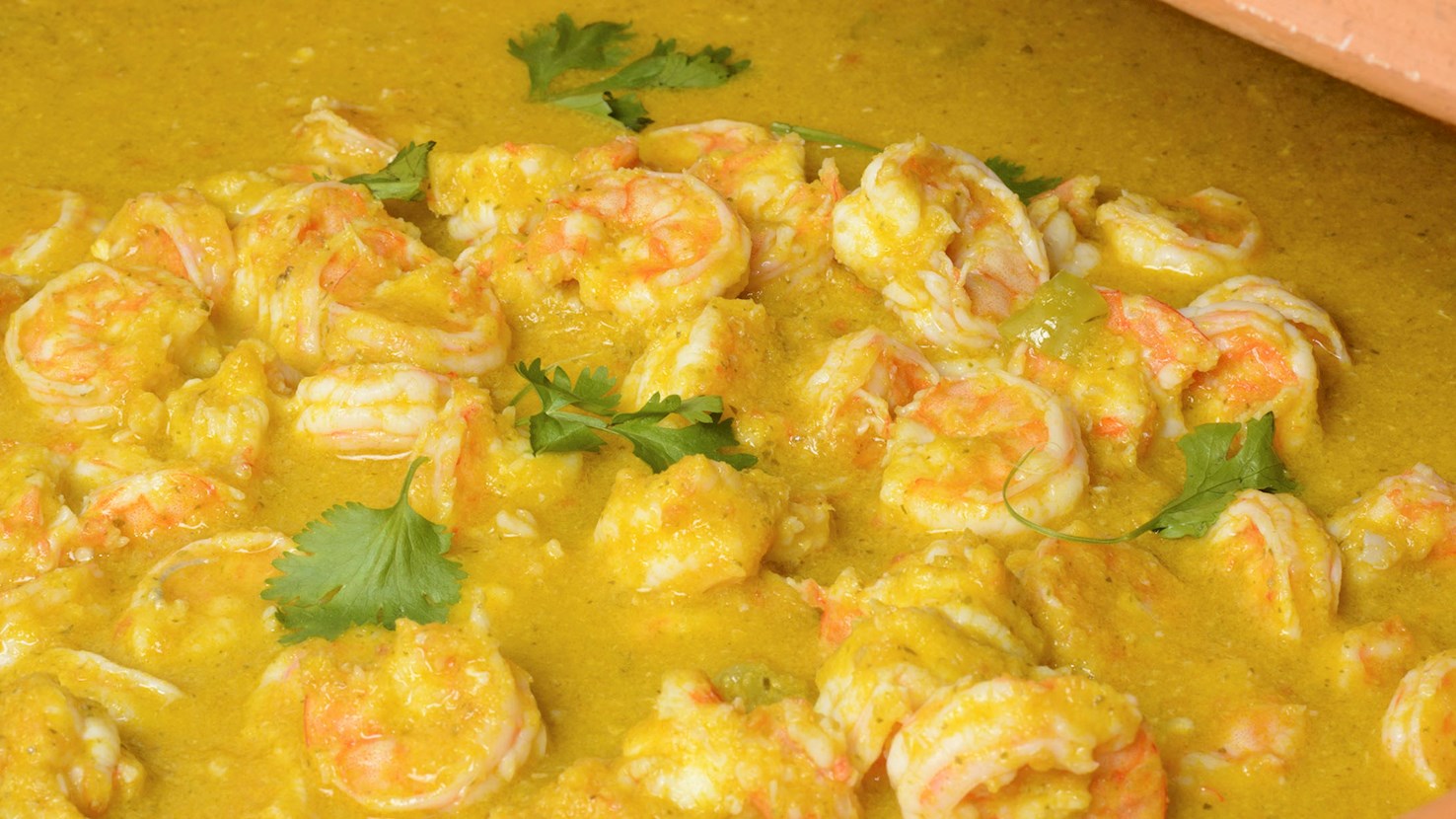
A classic dish of the Brazilian Bahia region, bobó de camarão is a stew made with puréed cassava (bobó), fresh shrimps, coconut milk, and dendê palm oil. The word bobó comes from the Ewe people who were brought to Brazil as slaves, denoting a dish made with beans, although there are no beans in bobó de camarão as we know it today, due to the fact that the Afro-Brazilians enthusiastically took to cassava when they were first introduced to it. The dish is traditionally accompanied by rice on the side, and is a staple of most traditional Brazilian eateries and Bahian self-service restaurants.
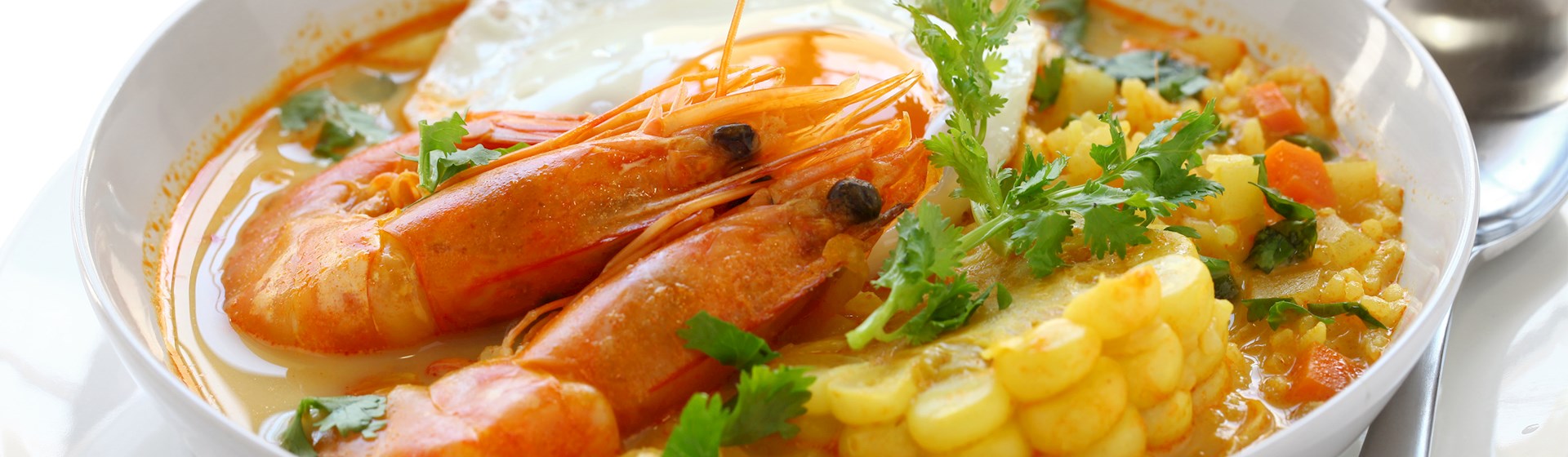
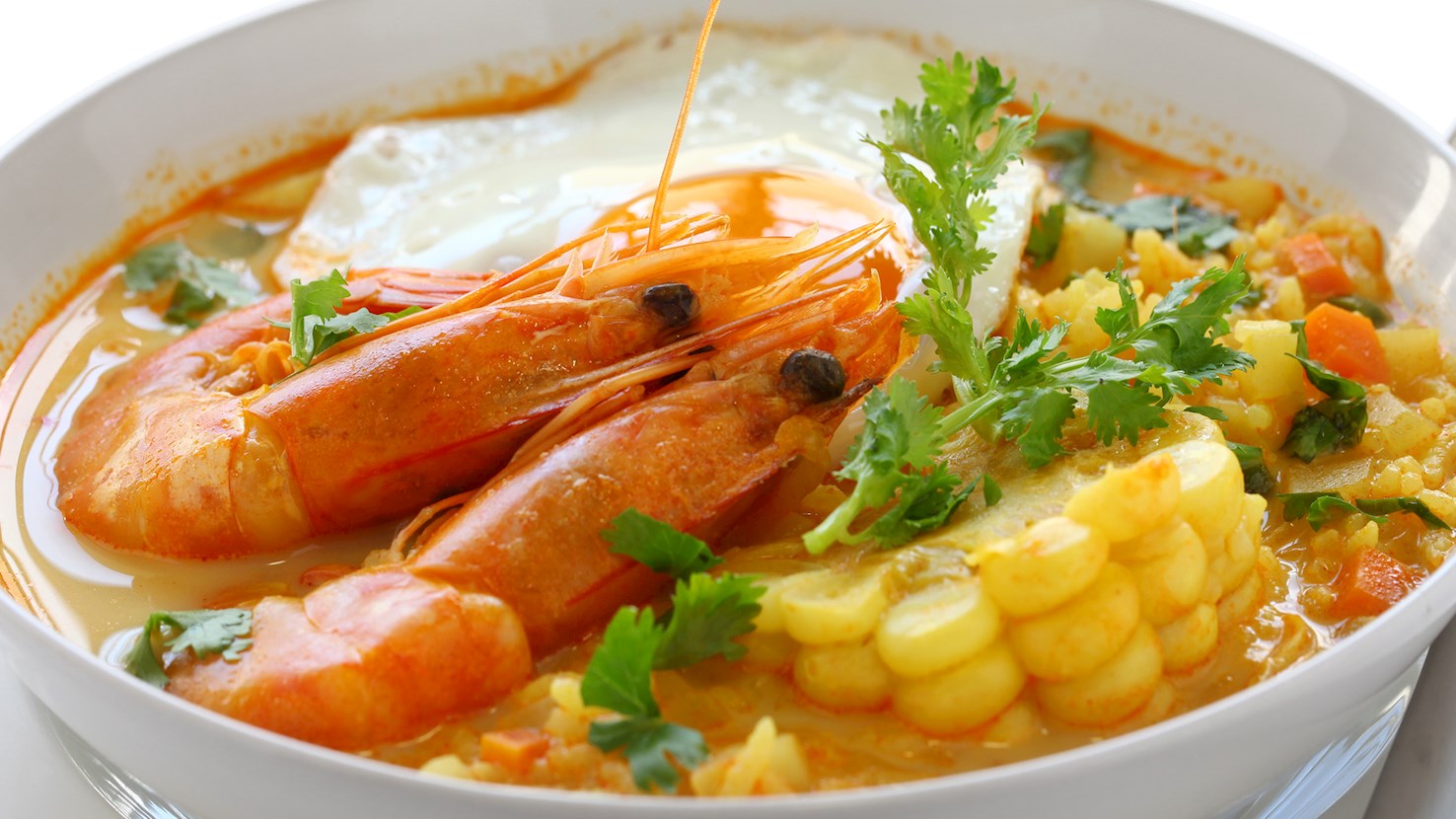
Chupe de camarones is a popular Peruvian shrimp (or prawn) chowder with a long and unusual history. The chowder is typically made with fish stock, fresh shrimps, onions, garlic, and yellow potatoes, while rice, beans, carrots, and peas are used often, but not always. The dish is traditionally served in deep bowls and garnished with parsley. In recent years, food historians have revealed that chupe de camarones actually evolved from a thick Arequipeño stew made with potatoes, llama meat, and herbs. The dish was called chuwa misa (lit. deep bowl) and was prepared before the 16th century. After the Spanish conquest, locals started to catch shrimps, preparing shrimp ceviche and shrimp sauteé in the process. The Spaniards brought some new ingredients to the region, such as milk and cheese, and added them to the shrimp sautée, resulting in the creation of chupe de camarones.
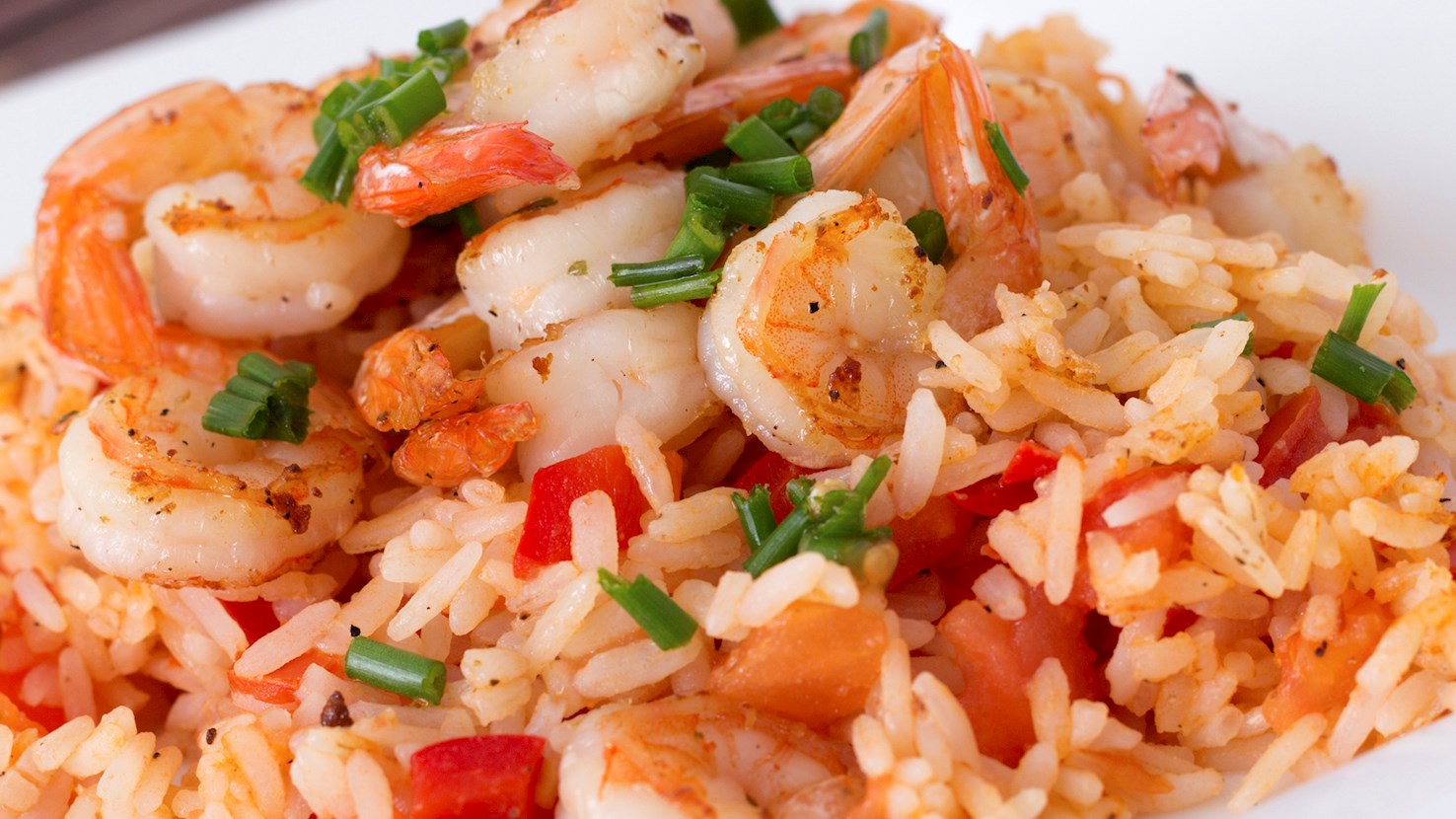
Arroz con camarones is a dish that is popular throughout Latin America, especially in Peru, Ecuador and Mexico. It consists of rice that is cooked in a flavorful shrimp broth, combined with shrimp, peppers, tomatoes, and onions. The dish is usually seasoned with cumin, garlic, and achiote, with the addition of finely chopped parsley used for garnishing. Arroz con camarones can be served with numerous accompaniments such as lime wedges, hot sauce, avocado slices, or fried plantains.
Picante de langostinos is a traditional stew originating from Peru. It's usually made with a combination of shrimp, evaporated milk, bread, garlic, onions, hot peppers, tomatoes, pisco, stock, oregano, walnuts, salt, and pepper. The hot peppers, garlic, and onions are sautéed until soft, and then mixed with grated tomatoes, pisco, oregano, and blended bread sliced that have been soaked in evaporated milk. The mixture is cooked over medium heat until creamy and it's then covered with vegetable stock. The shrimps and ground walnuts are added to the pot and the dish is cooked for a few more minutes. Once done, the stew is seasoned with salt and pepper and ladled over potato slices and hard-boiled eggs in large shallow bowls.
Ceviche de camarón ecuatoriano is the Ecuadorian version of shrimp ceviche. Ceviche is a dish in which seafood is "cooked" in an acidic marinade, typically made of citrus juice. In this instance, fresh shrimp are typically briefly boiled and then cooled. They are then marinated in lime juice with thinly sliced red onions, chopped tomatoes, and finely chopped coriander. One of the unique touches in the Ecuadorian version is the addition of orange juice, giving it a sweeter, less acidic profile than some other ceviches. Some recipes also include ketchup or tomato sauce, lending the ceviche a reddish hue and a slightly sweet taste. When it comes to serving, Ecuadorian ceviche is typically paired with chifles (thinly sliced and fried green plantains), and may be accompanied by patacones (fried green plantain patties). Ceviche de camarón is popular along the coast but is relished throughout Ecuador. It's a common dish for lunch, especially on warmer days, and is a favorite in beach towns and cities. The freshness of the ingredients is paramount, and the blend of flavors and textures makes Ecuadorian shrimp ceviche a cherished dish both locally and internationally.
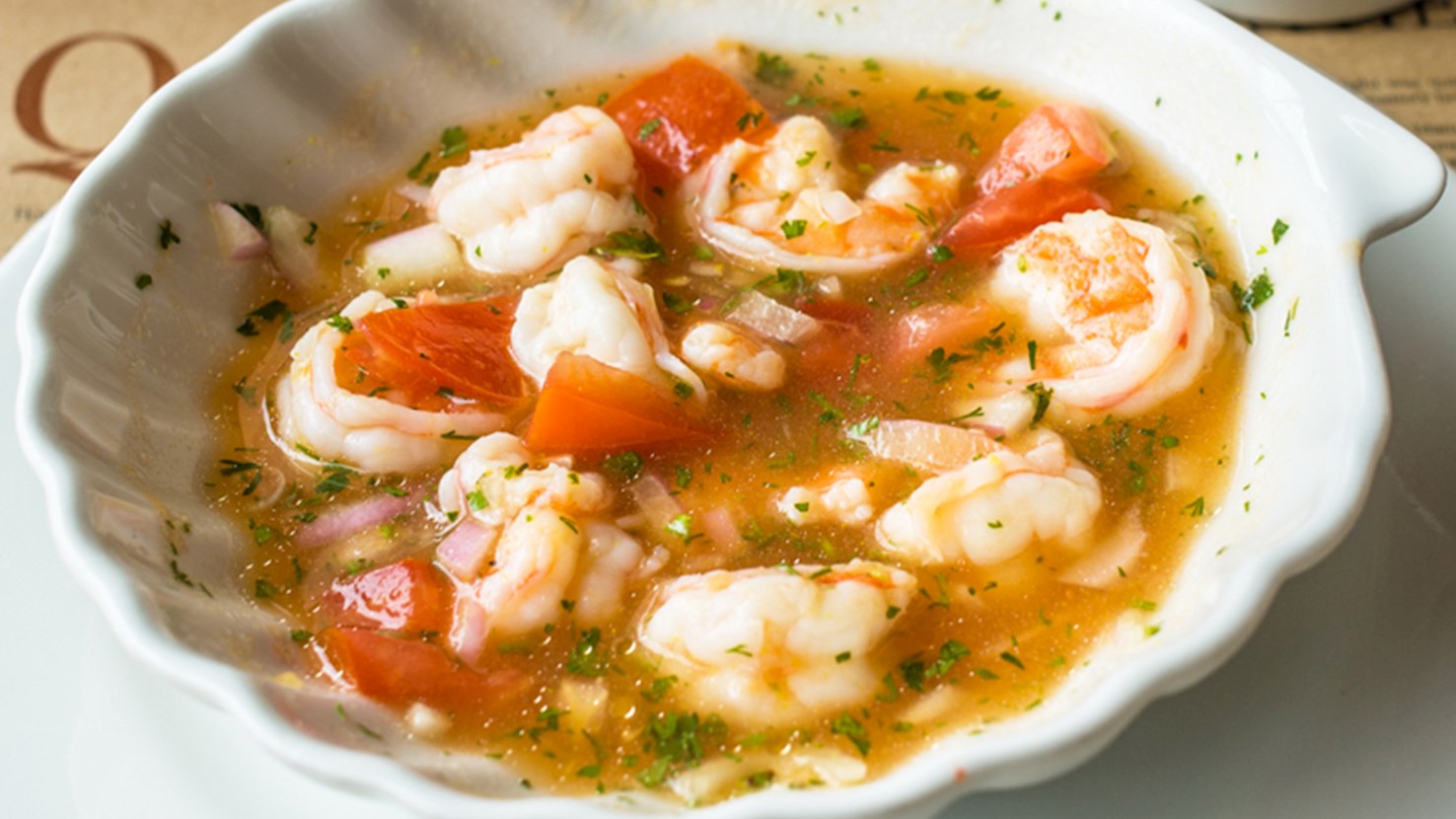
Sudado de langostinos is a traditional seafood dish originating from Peru. It's made with a combination of shrimps, onions, garlic, yellow chili peppers, white wine, fish broth, tomatoes, seasonings, and coriander. The shrimps are sautéed in a pan with the onions, garlic paste, and sliced yellow chili peppers. The combination is mixed with white wine, fish broth, yellow chili paste, and tomatoes. It's simmered until the shrimps are fully cooked, and the dish is seasoned with salt and pepper. Once done, the shrimps are arranged in a serving bowl and garnished with coriander sprigs.
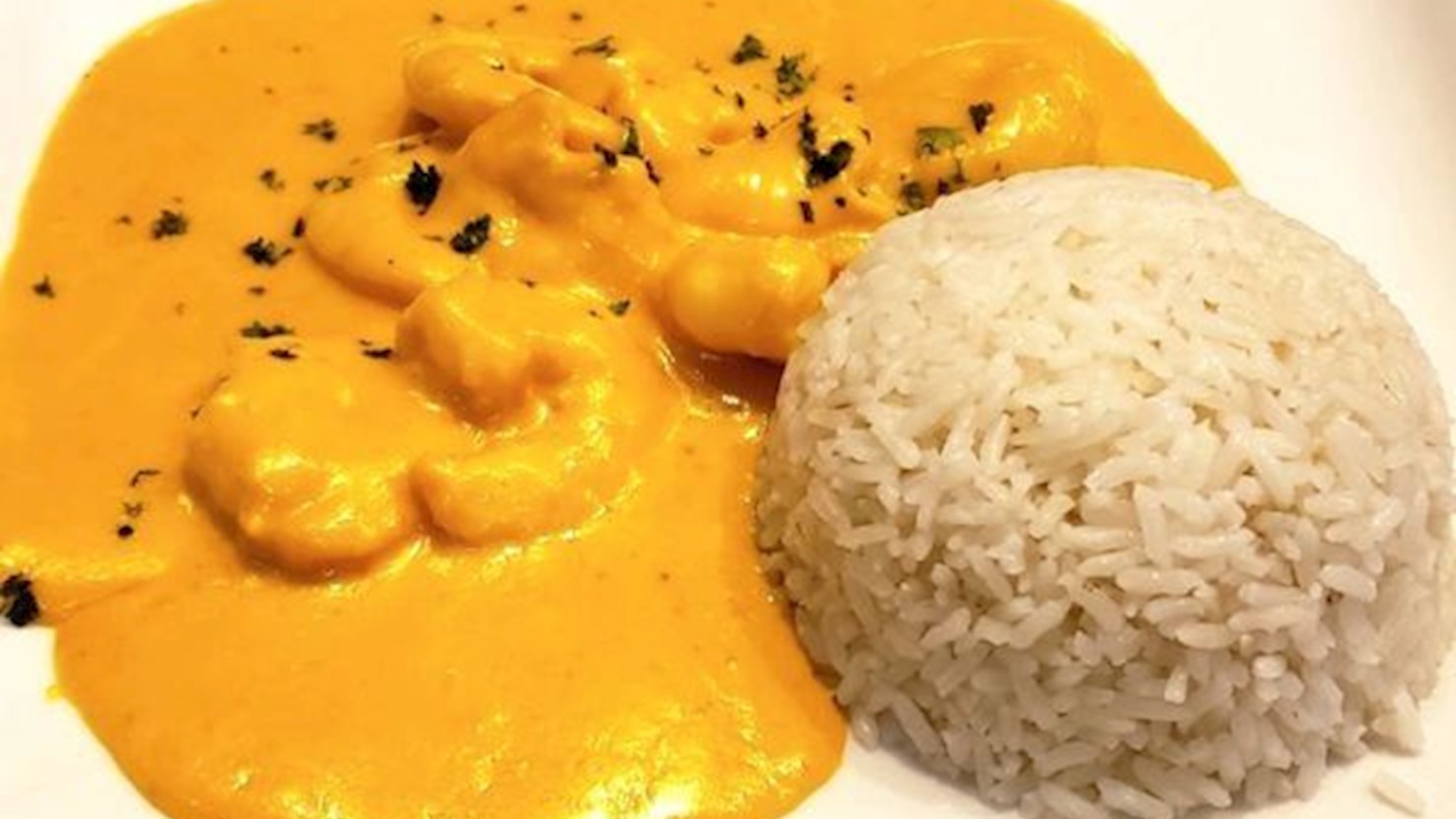
Ají de langostinos is a traditional dish originating from Peru. It's usually made with a combination of shrimps, onions, oil, butter, yellow peppers, white wine, heavy cream, thyme, tarragon, salt, and pepper. The shrimps are boiled until pink, drained, and set aside. The onions are sautéed in oil until soft and mixed with thyme, tarragon, yellow peppers, and white wine. The mixture is seasoned with salt and pepper and mixed with heavy cream in order to thicken the sauce. The shrimps are added near the end of cooking, and the dish is traditionally served with Peruvian-style white rice on the side.
Moqueca de camarão is a Brazilian seafood stew made with shrimp, coconut milk, tomatoes, onions, peppers, and fresh herbs, slowly cooked to create a rich, aromatic dish that reflects the flavors of the country’s northeastern and southeastern coasts. It is most closely associated with the states of Bahia and Espírito Santo, where coastal fishing communities developed seafood stews centuries ago to make use of fresh local catches, combining ingredients brought by Portuguese colonizers with African and Indigenous culinary influences. Over time, moqueca evolved into a cornerstone of regional cooking, with shrimp becoming one of its most popular versions due to its abundance along Brazil’s Atlantic coast. The preparation begins by marinating the shrimp with lime juice, garlic, and salt, a step that enhances the seafood’s natural flavor and tenderizes it. A base is built in a clay pot with sautéed onions, tomatoes, and bell peppers, to which coconut milk and dendê oil (palm oil) are added, lending the stew its characteristic creamy texture and deep golden color. The shrimp are gently cooked in the sauce until just tender, often seaoned with parsley or cilantro and sometimes chili for heat, resulting in a dish that is both delicate and deeply flavorful. One of the most distinctive aspects of moqueca de camarão is the use of dendê oil, introduced from West Africa, which not only defines its taste but also symbolizes the cultural fusion at the heart of Brazilian cuisine. The dish is typically served hot, often straight from the pot, accompanied by white rice and farofa, a toasted cassava flour mixture that adds texture and soaks up the sauce. It is a staple of festive gatherings, family meals, and seaside restaurants, where it pairs beautifully with a cold beer or a crisp white wine, enhancing the vibrant, coastal flavors that define it.
TasteAtlas food rankings are based on the ratings of the TasteAtlas audience, with a series of mechanisms that recognize real users and that ignore bot,
nationalist or local patriotic ratings, and give additional value to the ratings of users that the system recognizes as knowledgeable.
TasteAtlas Rankings should not be seen as the final global conclusion about food. Their purpose is to promote excellent local foods,
instill pride in traditional dishes, and arouse curiosity about dishes you haven’t tried.






What People Say