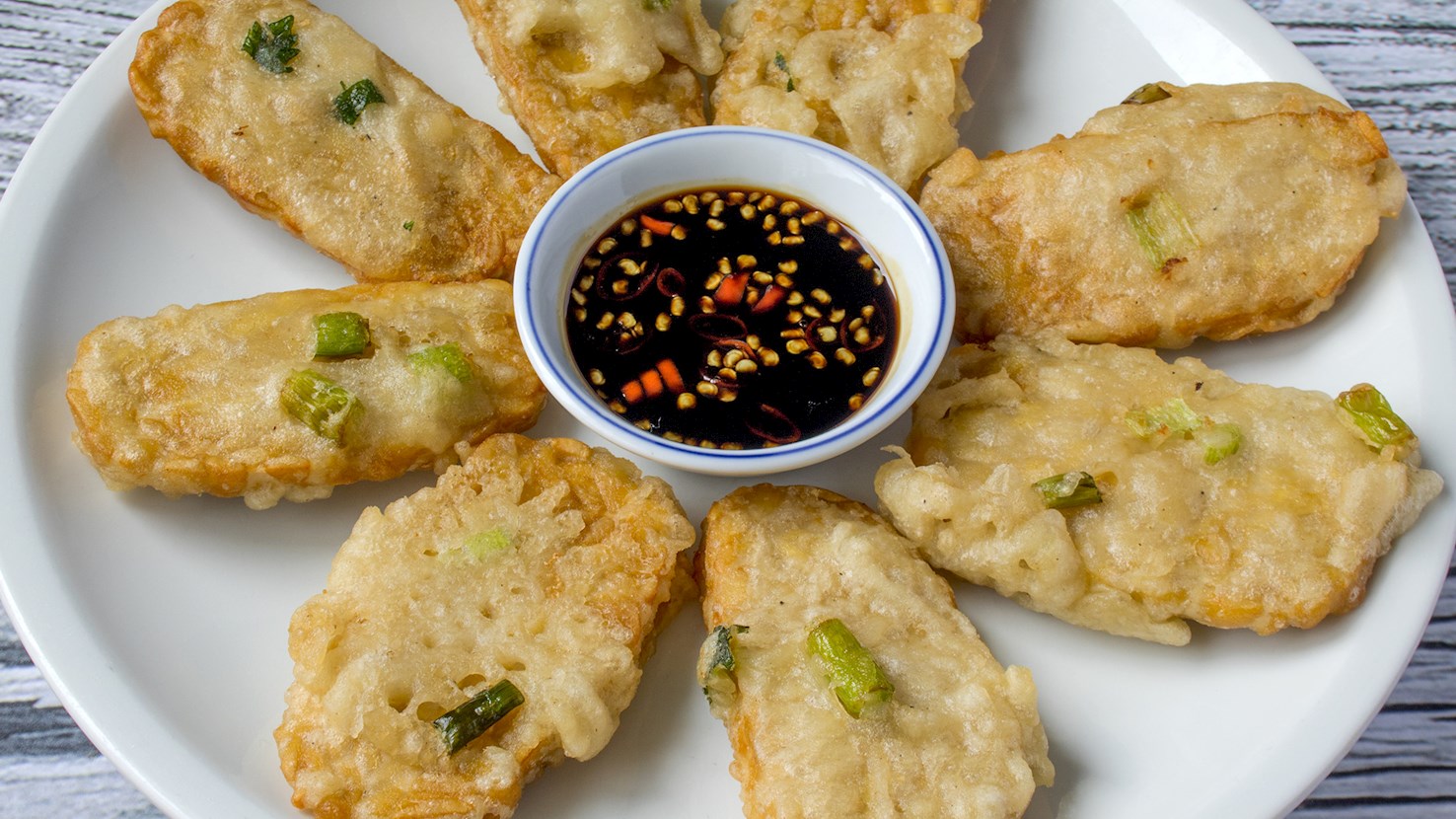
Tempeh mendoan is a variety of fried tempeh that hails from Purwokerto. Thin slices of tempeh—fermented soybean product—are dipped in batter that is enriched with ground coriander, sliced scallions, and garlic before they are deep-fried. This tempeh variety is only shortly fried, creating a crispy outer layer, while the tempeh remains soft and juicy. The name of the dish stems from Banyumasan language in which mendo roughly translates as half-cooked. This tempeh is best served with sambal, other types of chili-based dips, or kecap manis—Indonesian sweet soy sauce. It is usually enjoyed as a snack or a side dish, and it is mostly prepared and sold by street vendors.
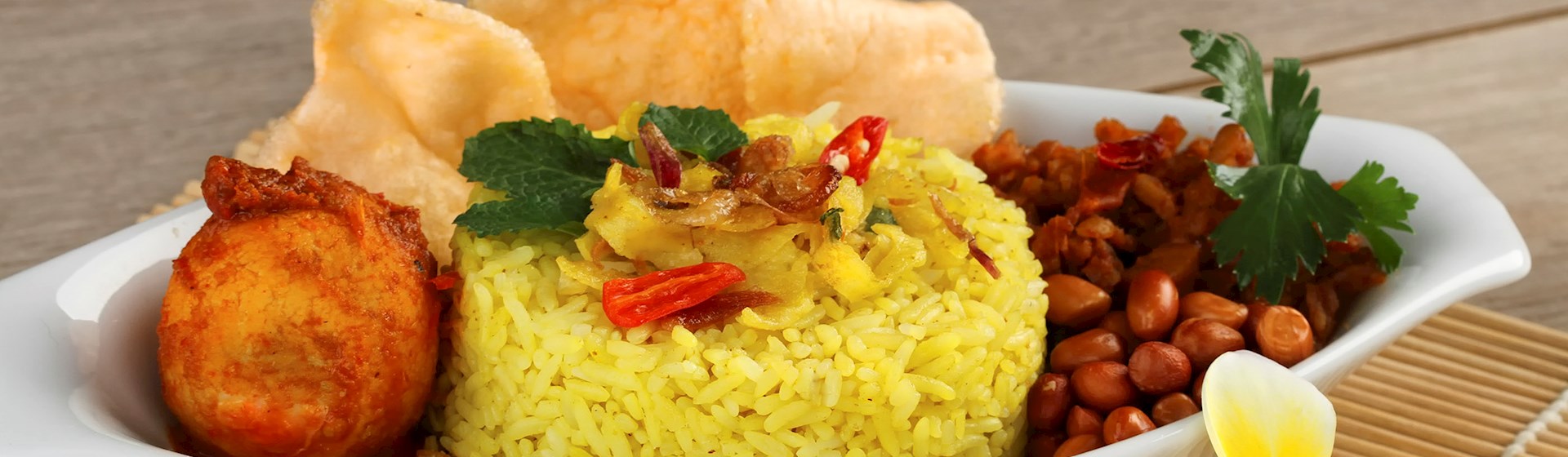
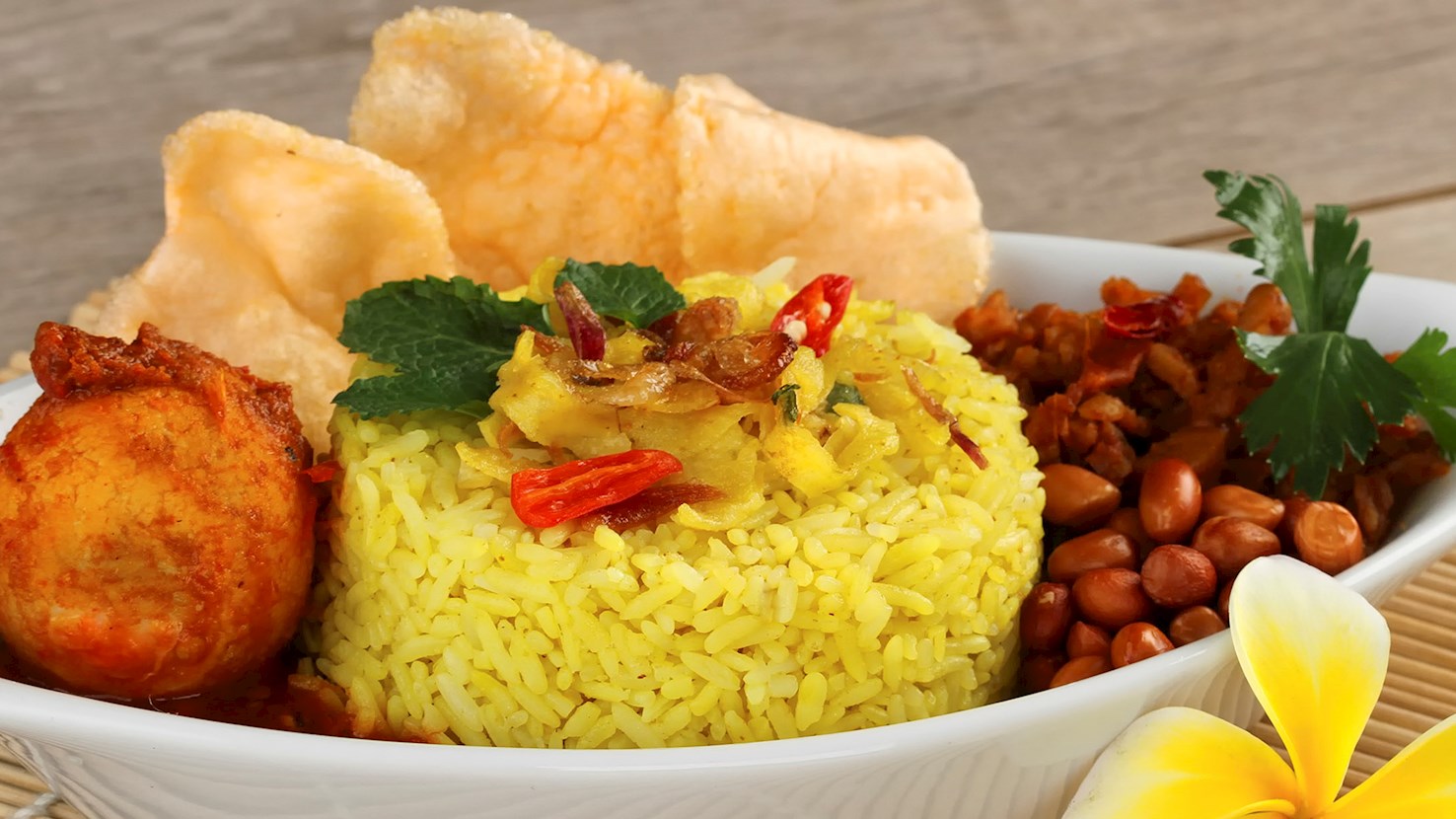
This traditional Indonesian dish consists of rice cooked in coconut milk that is usually seasoned with turmeric, lemongrass, and kaffir lime leaves. Even though yellow rice is the star of nasi kuning, the dish is assembled out of other Indonesian dishes and complements, such as fried chicken, potato fritters, sliced omelet, fried anchovies, shrimps, or fried tempeh. Sambal, the traditional Indonesian chili sauce, and serundeng (spicy fried coconut flakes) are often served as condiments. Nasi kuning is always served neatly organized on the plate, and the rice should always be placed in the middle. It is traditionally associated with the island of Java, which is considered to be the place of origin of this authentic Indonesian dish.
This quintessential Southeast Asian condiment is usually made only with spicy chili peppers and salt. It is occasionally adapted with lime juice, onions, sugar, ginger, shrimp paste, or vinegar. Traditionally prepared in a mortar, it is characterized by its thick consistency and an incredibly strong and sharp flavor. This original Indonesian creation has gained worldwide acclaim, and store bought varieties are available at numerous Asian food markets and international stores around the world. Sambal is used in a variety of Asian dishes, usually as a spicy condiment, seasoning, or a topping served alongside meat, seafood, vegetables, or rice.
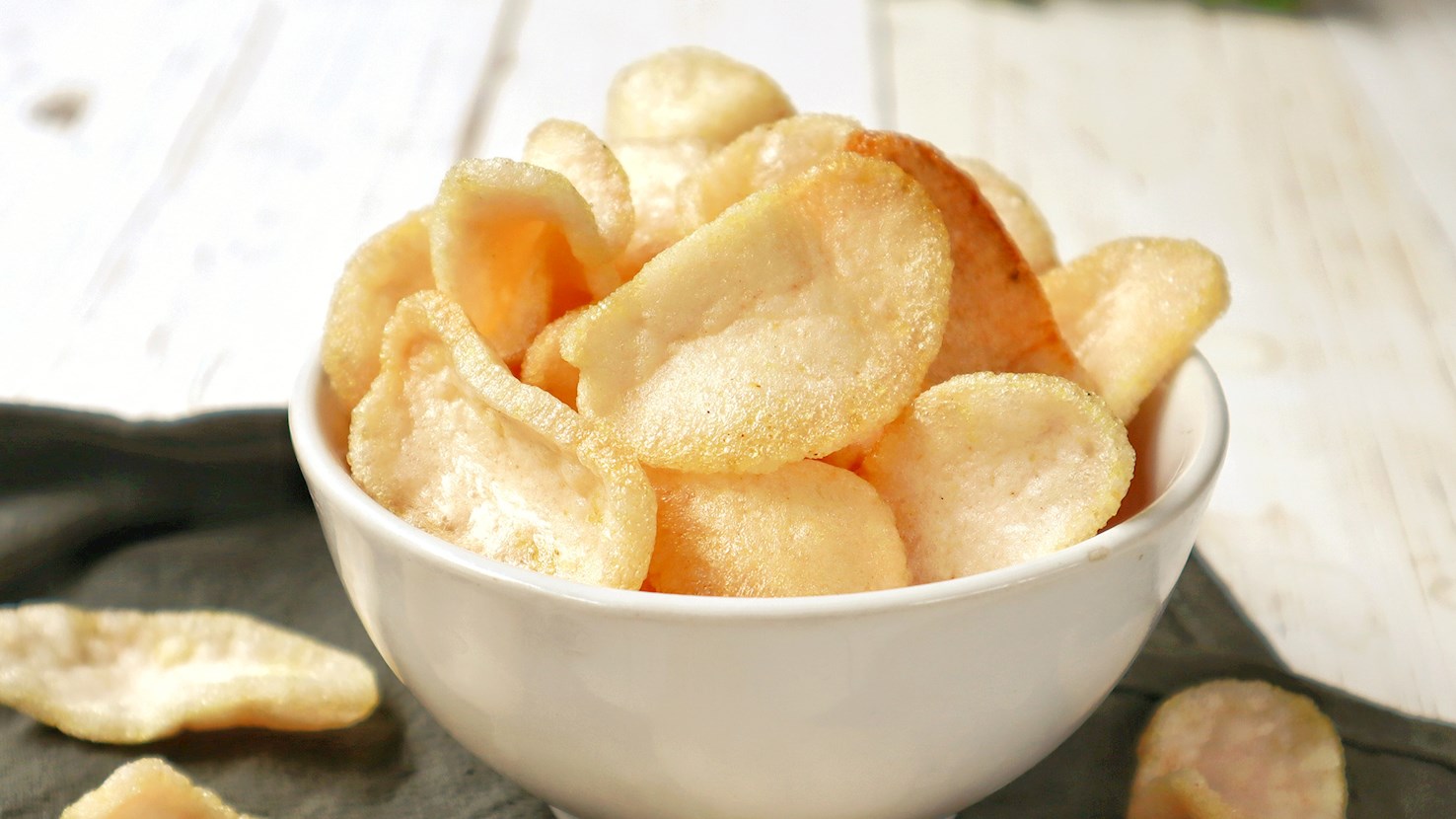
Krupuk udang is a type of traditional Indonesian shrimp cracker, made from a mixture of ground shrimp, tapioca flour, garlic, and seasonings, which is then sun-dried and deep-fried until it puffs up into a light, crispy snack. The word krupuk (or kerupuk) means “cracker”, and udang means “shrimp”. These crackers are known for their savory, umami-rich flavor with a subtle seafood aroma, making them one of the most popular accompaniments to Indonesian meals. They are usually large, round, and slightly curled, with a light beige or pinkish color once fried. Krupuk udang is commonly served as a side dish or garnish with fried rice (nasi goreng), soups (soto, sayur asem), or even just as a snack. In soto Lamongan, they are crushed and mixed with fried garlic to make koya, the flavorful topping. Traditionally, krupuk udang is made at home or by small-scale producers who sun-dry the raw crackers before frying. Today, you can also find store-bought versions, both raw (ready to fry) and pre-fried, in Indonesian markets and Asian grocery stores worldwide.
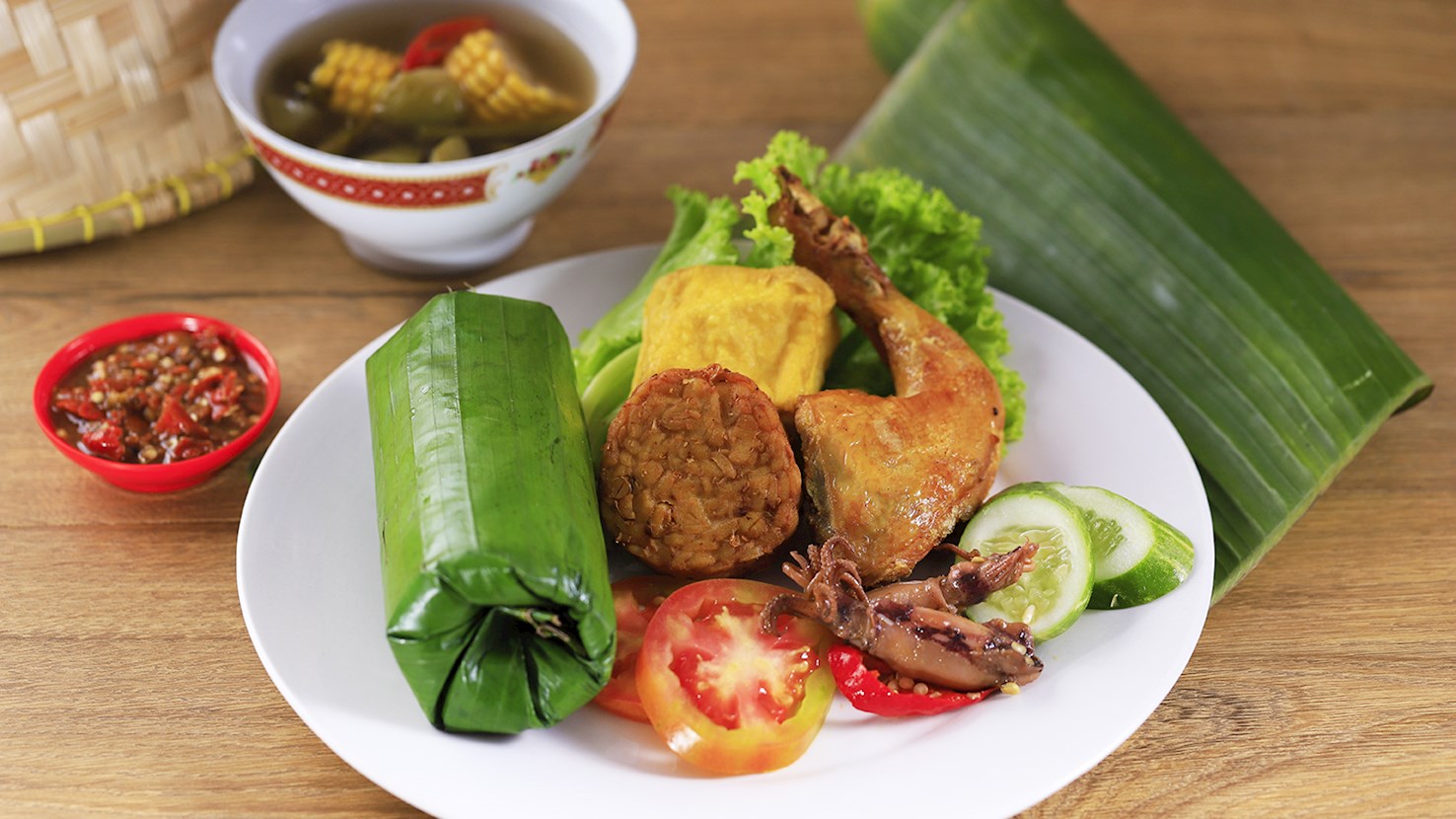
Nasi timbel is a traditional Sundanese dish from West Java that features steamed rice wrapped in banana leaves and served with a variety of savory accompaniments. The name "timbel" refers to the method of rolling hot rice tightly inside banana leaves, a practice that not only keeps the rice warm but also infuses it with a subtle, earthy aroma. The rice, typically white or sometimes red, is the central element and is usually paired with a variety of side dishes such as fried or grilled chicken, fried tofu and tempeh, salted fish, or occasionally fried duck. These proteins are often accompanied by a generous helping of sambal terasi, a spicy chili sauce made with shrimp paste, and lalapan — a raw vegetable assortment that may include cucumber, tomatoes, cabbage, long beans, and fresh basil leaves. The freshness of the vegetables contrasts beautifully with the heat of the sambal and the richness of the fried components. In some traditional settings, nasi timbel is also served with a light, sour vegetable soup called sayur asem, which adds another layer of flavor and freshness to the meal. It is a common sight in West Javanese homes, traditional eateries, and roadside warungs, often enjoyed during communal meals, family gatherings, or festive occasions.
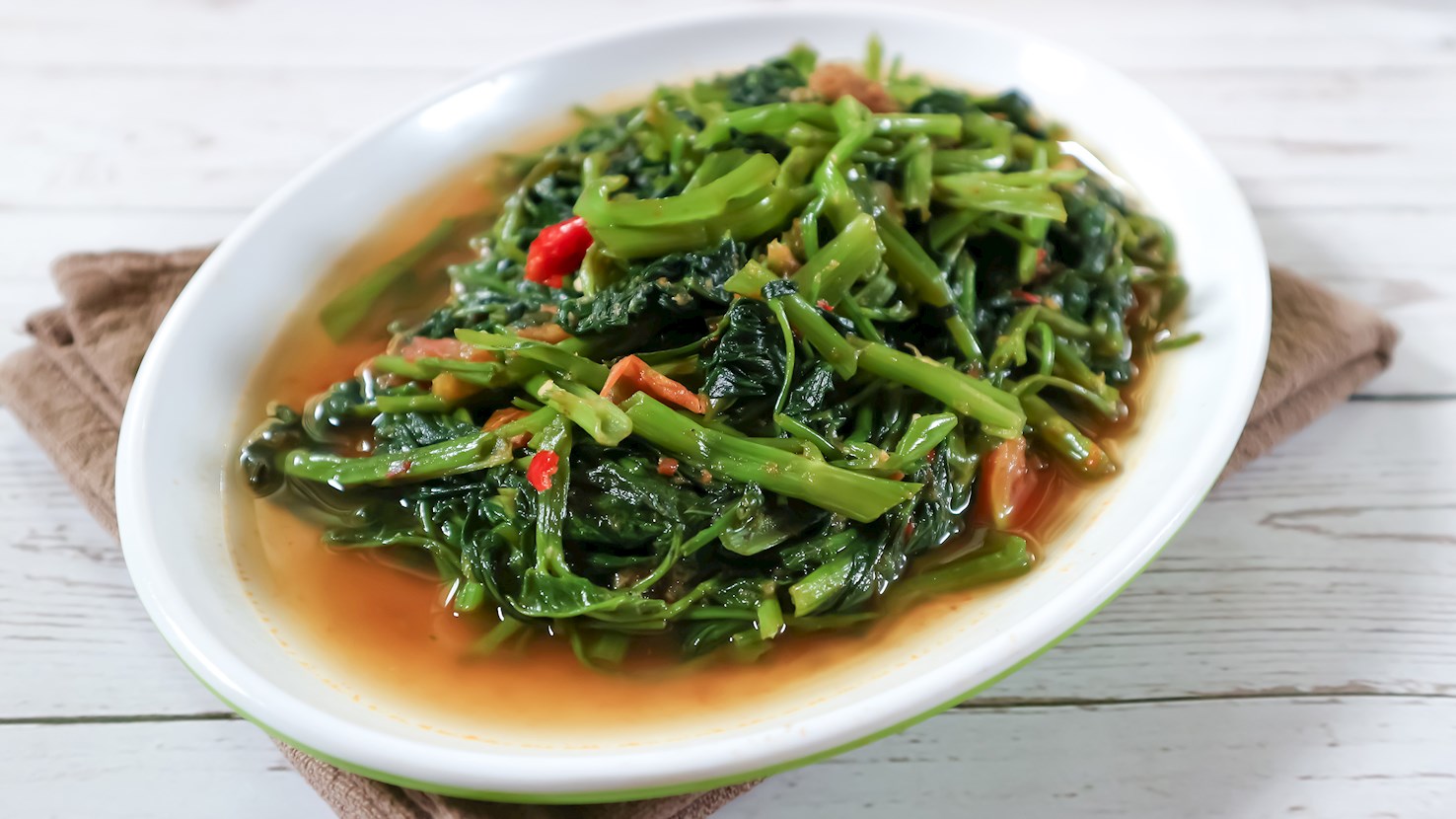
Tumis kangkung is one of the quintessential dishes of everyday Indonesian cooking, a deceptively simple stir-fry of water spinach that delivers far more flavor than its humble ingredients might suggest. Kangkung, also known as water spinach or morning glory, grows abundantly in the humid tropical lowlands of Indonesia, often along rice paddies and riverbanks. Its hollow stems and tender leaves make it an ideal canvas for bold flavors, and in the case of tumis kangkung, those flavors come in the form of garlic, shallots, bird’s eye chilies, and the all-important terasi, a fermented shrimp paste that infuses the dish with a deep, savory backbone. Cooked over high heat in a wok or skillet, the ingredients come together in minutes: first the aromatics sizzling in oil until fragrant, then the chopped greens tossed in quickly so they wilt and soften while retaining their vibrant color and snappy stems. The result is a dish that is spicy, pungent, and slightly sweet, with a balance of textures that keeps every bite interesting. Unlike the milder stir-fried greens of neighboring cuisines, tumis kangkung embraces the assertiveness of Indonesian flavor. The use of terasi sets it apart, providing a layer of umami that is earthy and complex without being overpowering when handled with care. Some cooks add a splash of kecap manis, Indonesia’s sweet soy sauce, to round out the heat with a caramel-like sweetness, while others prefer to keep it lean and hot, allowing the vegetable’s natural earthiness to come through. It is rarely eaten on its own; instead, it plays the supporting role in a typical Indonesian meal, served with rice and proteins like fried tempeh, grilled fish, or spicy chicken. Found in warungs, street stalls, and family kitchens across the archipelago, tumis kangkung is a culinary equalizer, enjoyed by all classes and cooked with nearly the same method from city to village.
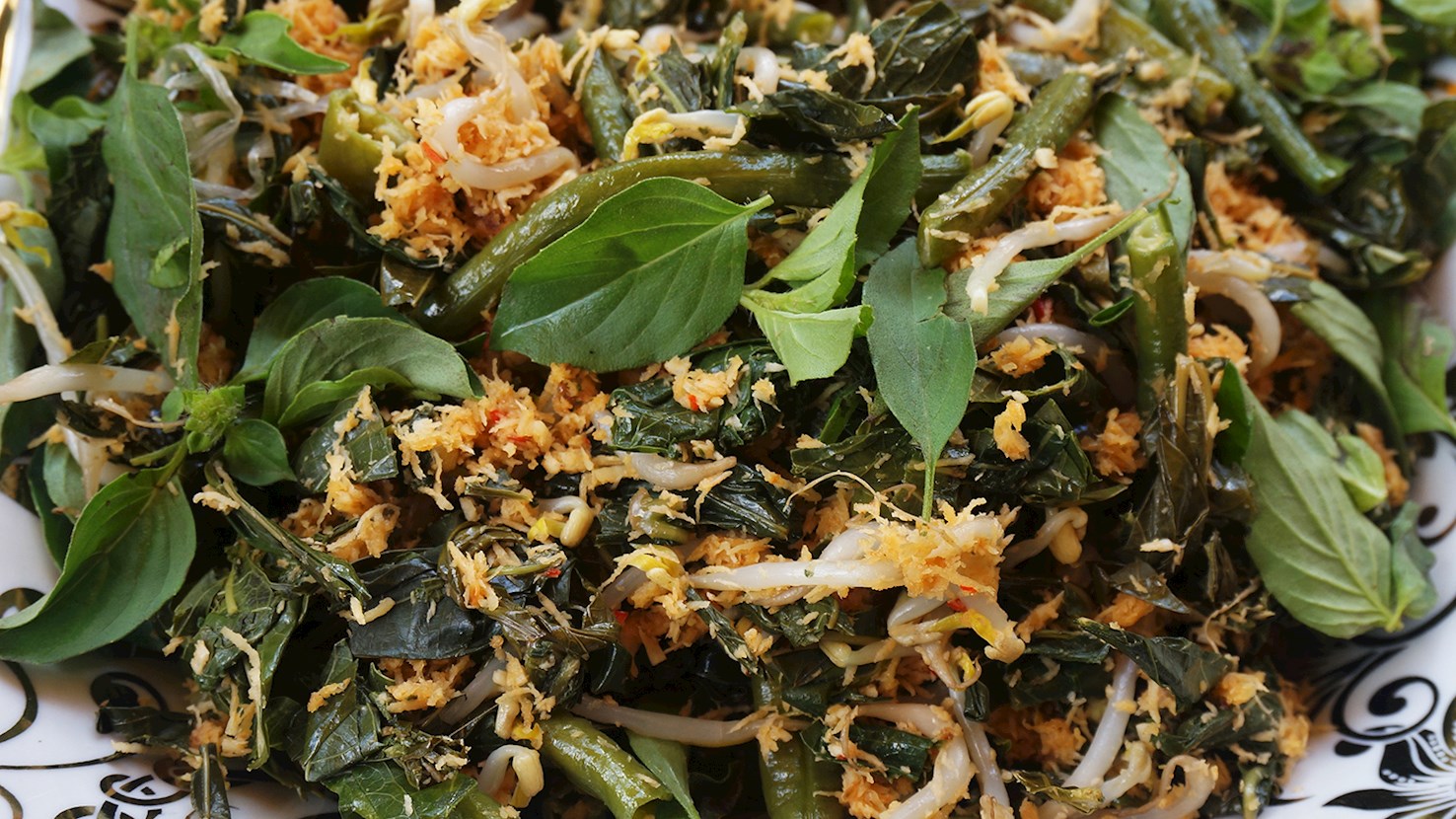
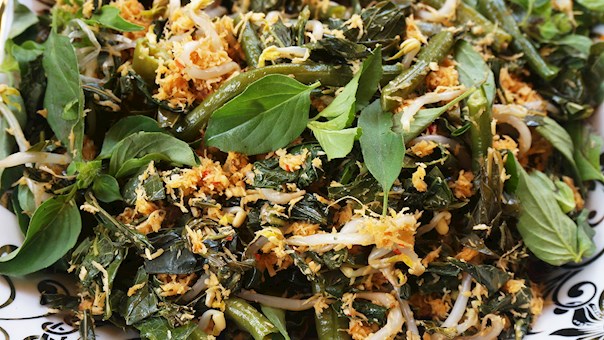
Urap is an Indonesian salad that originates from Java and is widely enjoyed across the archipelago for its fresh, earthy flavors and rich coconut-based seasoning. Unlike typical Western salads, urap is composed of lightly blanched or steamed vegetables that are generously coated in a spiced grated coconut dressing. It is often served as a side dish alongside rice and grilled meats, but it is also hearty enough to be enjoyed on its own as a vegetarian main course. The vegetables used in urap vary by region and availability but commonly include long beans, bean sprouts, spinach, cabbage, cassava leaves, and sometimes carrots. What sets urap apart is the bumbu kelapa, the grated coconut mixture that binds the dish together. This dressing is made by mixing freshly grated coconut with a blend of ground spices, which typically includes garlic, shallots, chili, makrut lime leaves, galangal, and sometimes turmeric or kencur. The mixture is lightly sautéed or steamed to enhance its aroma, then tossed with the vegetables, allowing the seasoning to cling to each leaf and strand. Urap is particularly popular in Javanese cuisine and plays an important role in traditional celebrations such as selamatan, communal feasts held for spiritual or social milestones. It is also a key component of tumpeng, the ceremonial cone-shaped rice platter served with various side dishes. While deeply ceremonial, urap remains a common everyday dish, appreciated for its simplicity and affordability.
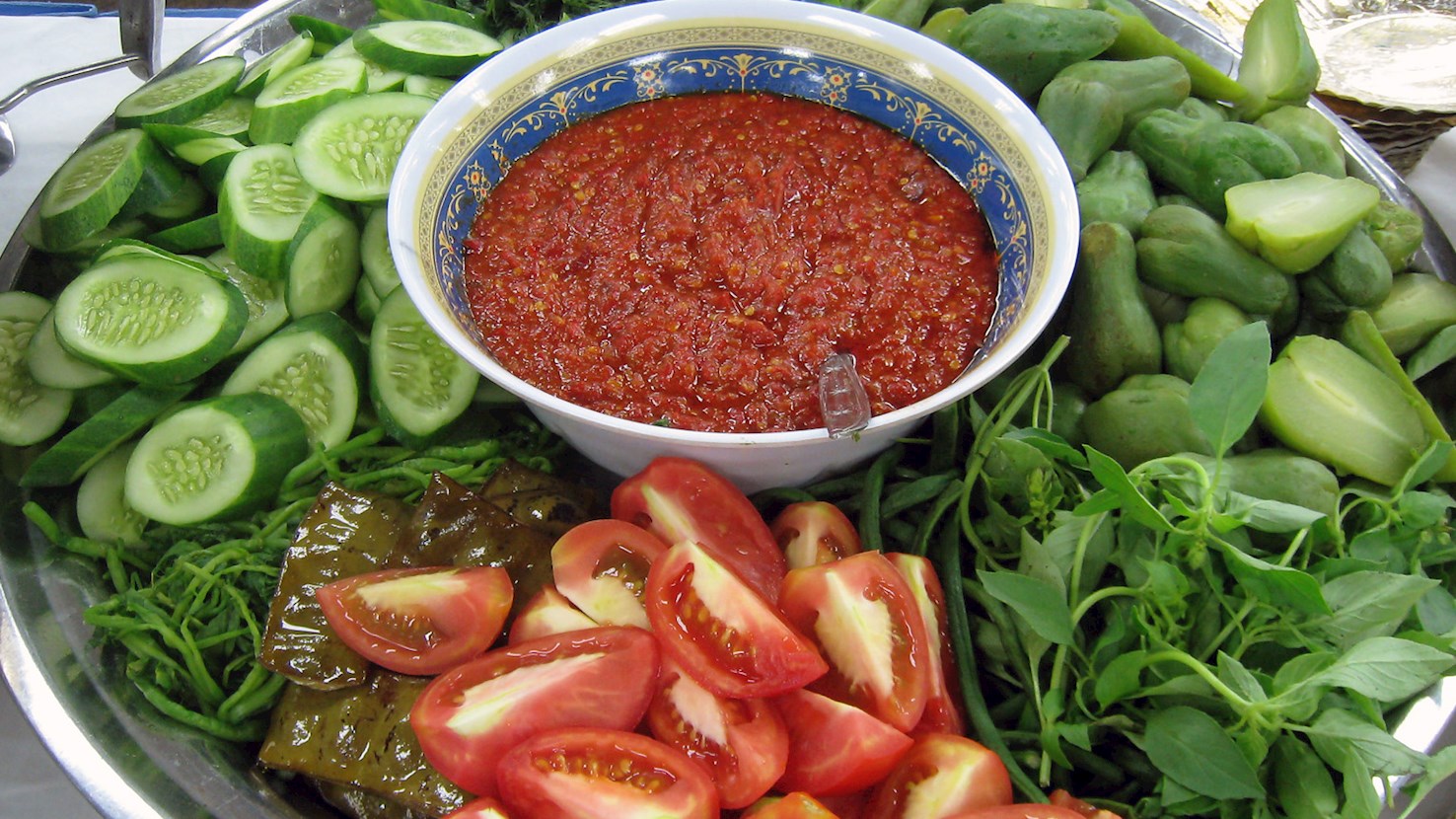
Lalap is a raw vegetable dish from Indonesia, particularly associated with Sundanese cuisine of West Java. It consists of assorted uncooked or lightly blanched vegetables served alongside sambal, a spicy chili-based condiment. Lalap is commonly eaten as part of daily meals, especially in West Javanese households, and is often paired with fried or grilled proteins such as chicken, fish, or tempeh. Its function on the plate is to provide freshness, texture, and contrast to heavier or oily components of the meal. The typical vegetables used in lalap include cucumber, long beans, basil leaves (kemangi), cabbage, lettuce, and sometimes eggplant, tomatoes, or young cassava leaves. Some vegetables are served raw for crispness, while others may be briefly blanched to soften their texture or reduce bitterness. The selection depends on regional availability, seasonal produce, and personal preference. There is no fixed combination, and the emphasis is placed on freshness and balance. Lalap is always served with sambal, most commonly sambal terasi, which contains chili, shrimp paste, lime juice, and a small amount of sugar and salt. The sambal provides the central flavor element of the dish, while the vegetables function more as a neutral base to carry the spiciness. In Sundanese meals, lalap and sambal are considered essential components, and the quality of sambal is often seen as a marker of the cook’s skill. The dish reflects the Sundanese culinary philosophy, which emphasizes raw and lightly cooked foods, balanced flavors, and minimal use of heavy sauces. It also serves a practical purpose by offering a quick, low-cost way to include vegetables in daily meals without complex preparation. Despite its simplicity, lalap holds an important place in Indonesian food culture, especially in the western part of Java where it is consumed regularly and often made from ingredients grown in household gardens.
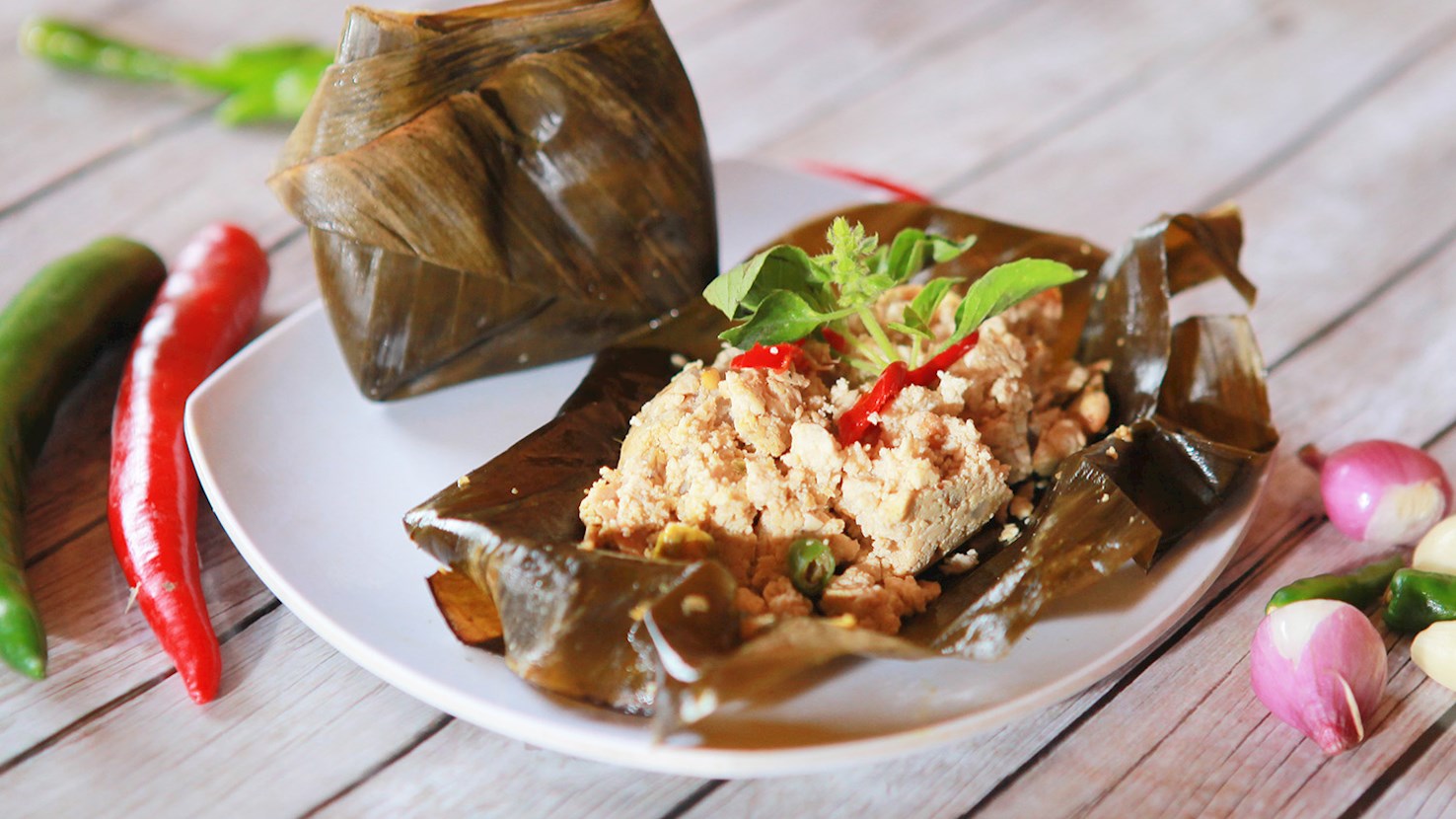
Pepes tahu is an Indonesian steamed tofu dish originating from Java, where the method of cooking in banana leaves, known as pepes, is commonly used for preparing both plant-based and protein-rich foods. In this version, tofu serves as the primary ingredient, mixed with a ground spice paste and sometimes combined with vegetables or aromatic herbs before being wrapped in banana leaves and steamed until firm and fragrant. The use of banana leaves allows the ingredients to cook evenly while absorbing the subtle aroma from the leaf itself, creating a dish that is both practical and flavorful. The preparation of pepes tahu starts with mashing firm tofu until smooth, then blending it with a spice mixture typically made from shallots, garlic, chilies, coriander, candlenuts, and turmeric, with the occasional addition of lemongrass or makrut lime leaves to enhance the aroma. The mixture is seasoned with salt, pepper, and sometimes a small amount of sugar, depending on regional preference. Other optional ingredients include finely sliced chayote, carrots, basil leaves, or chopped mushrooms, which contribute texture and variation. Once the tofu and spices are well-mixed, the seasoned mash is portioned onto softened banana leaves, folded tightly into packets, and secured with toothpicks or small bamboo pins. These packets are then steamed until the contents are cooked through and set, typically for about 20 to 30 minutes. Some variations call for an additional step of grilling the steamed packets briefly to introduce a smoky aroma, though this is optional and often depends on local practice. Pepes tahu is usually served as a side dish with rice and other accompaniments, especially in vegetarian or plant-focused meals. It is appreciated for its soft texture, balanced seasoning, and the clean, slightly earthy fragrance imparted by the banana leaf wrapping. In many parts of Java, it is a common feature in lunchboxes, market stalls, and home meals, valued for its lightness, portability, and ease of preparation.
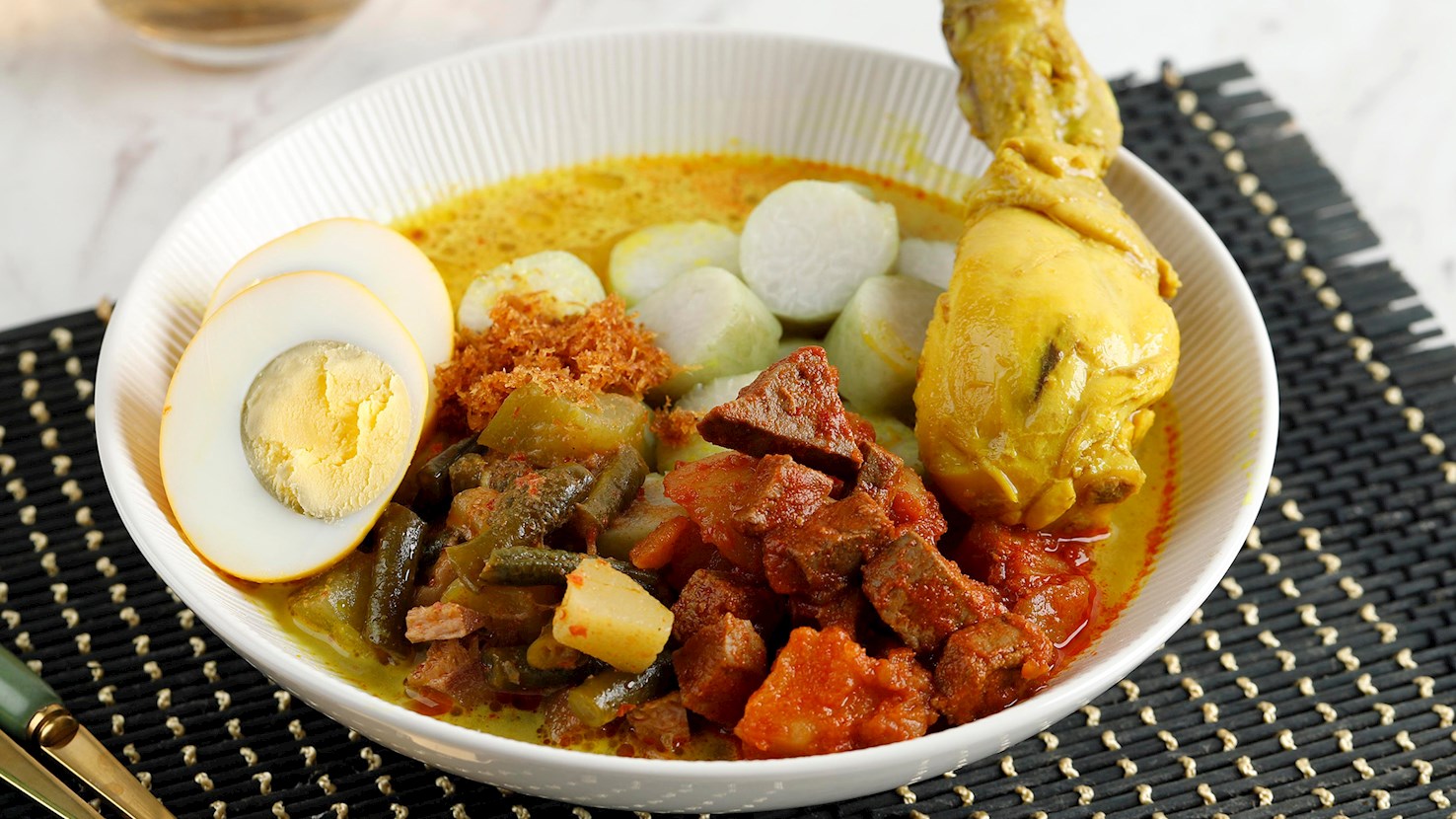
Lontong is a traditional Indonesian rice cake, made by boiling tightly packed rice in banana leaves until it forms a firm, compact texture. The result is a mildly fragrant, chewy, and slightly firm rice cake, which is then sliced into bite-sized pieces and served as a staple carbohydrate in many Indonesian, Malaysian, and Singaporean dishes. Unlike steamed rice, lontong has a more cohesive texture, making it ideal for soaking up rich, flavorful sauces. The process of making lontong involves partially cooking rice, packing it into banana leaf cylinders, and then boiling it for several hours. The compression inside the leaf casing allows the rice to bind together, creating its distinct shape and dense texture. Once cooled, the banana leaf is peeled away, revealing the pale, green-tinted rice cake with a subtle aroma from the banana leaves. Lontong is commonly served with savory dishes such as gado-gado (vegetable salad with peanut sauce), soto (Indonesian soup), opor ayam (coconut chicken stew), sate Padang (spicy beef satay), and rendang (slow-cooked beef in coconut sauce). It is also a key component in lontong sayur, a classic dish where lontong is paired with vegetables in coconut curry broth. As a versatile dish, lontong is enjoyed throughout Indonesia, Malaysia, and Singapore, often as part of festive meals, street food offerings, or home-cooked feasts.
TasteAtlas food rankings are based on the ratings of the TasteAtlas audience, with a series of mechanisms that recognize real users and that ignore bot,
nationalist or local patriotic ratings, and give additional value to the ratings of users that the system recognizes as knowledgeable.
TasteAtlas Rankings should not be seen as the final global conclusion about food. Their purpose is to promote excellent local foods,
instill pride in traditional dishes, and arouse curiosity about dishes you haven’t tried.




What People Say