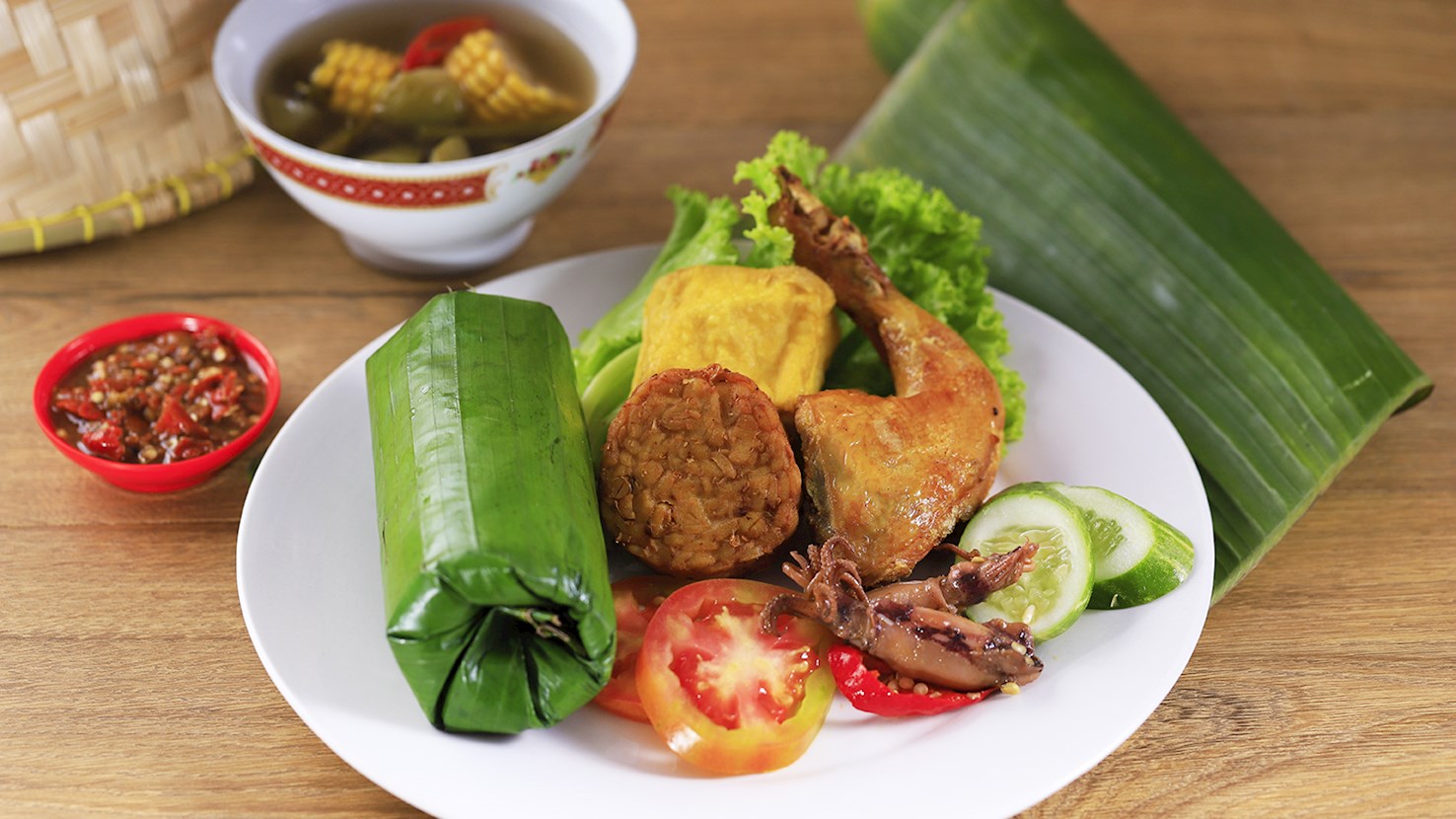
Nasi timbel is a traditional Sundanese dish from West Java that features steamed rice wrapped in banana leaves and served with a variety of savory accompaniments. The name "timbel" refers to the method of rolling hot rice tightly inside banana leaves, a practice that not only keeps the rice warm but also infuses it with a subtle, earthy aroma. The rice, typically white or sometimes red, is the central element and is usually paired with a variety of side dishes such as fried or grilled chicken, fried tofu and tempeh, salted fish, or occasionally fried duck. These proteins are often accompanied by a generous helping of sambal terasi, a spicy chili sauce made with shrimp paste, and lalapan — a raw vegetable assortment that may include cucumber, tomatoes, cabbage, long beans, and fresh basil leaves. The freshness of the vegetables contrasts beautifully with the heat of the sambal and the richness of the fried components. In some traditional settings, nasi timbel is also served with a light, sour vegetable soup called sayur asem, which adds another layer of flavor and freshness to the meal. It is a common sight in West Javanese homes, traditional eateries, and roadside warungs, often enjoyed during communal meals, family gatherings, or festive occasions.
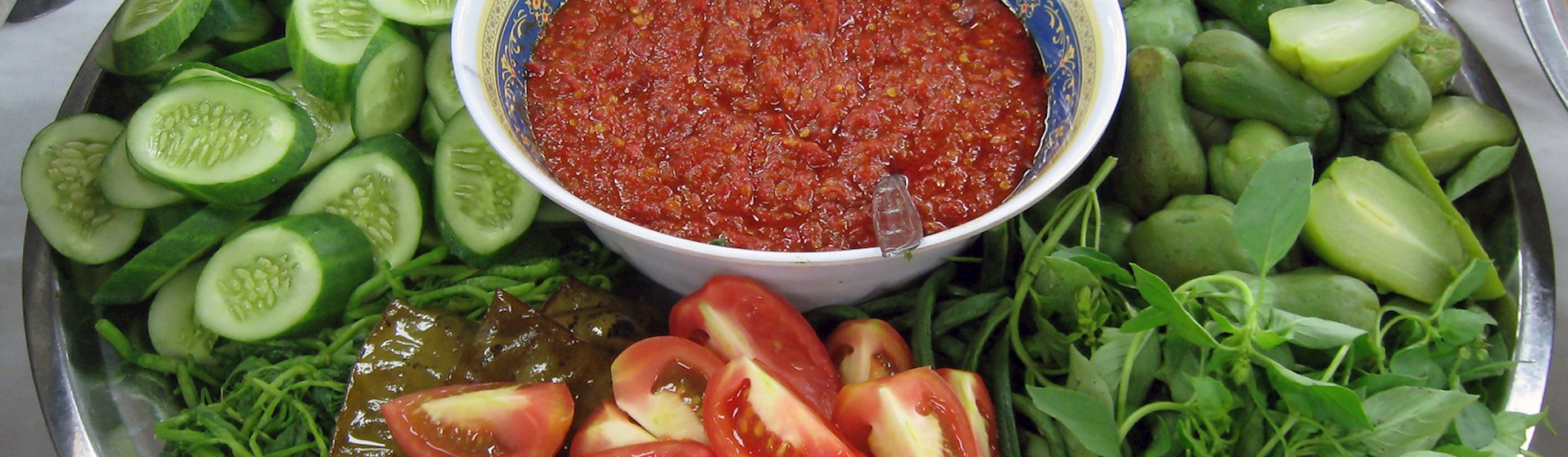
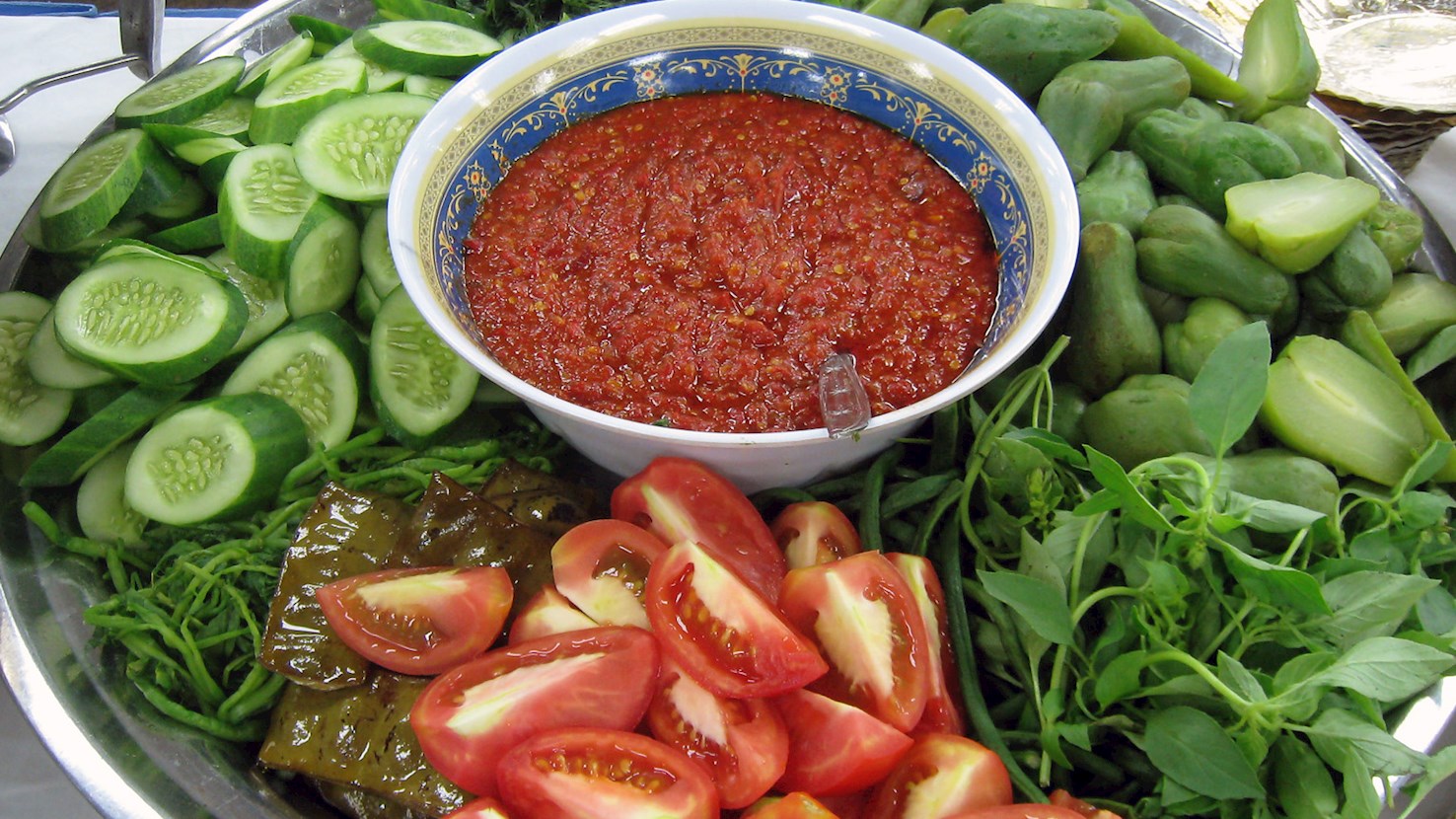
Lalap is a raw vegetable dish from Indonesia, particularly associated with Sundanese cuisine of West Java. It consists of assorted uncooked or lightly blanched vegetables served alongside sambal, a spicy chili-based condiment. Lalap is commonly eaten as part of daily meals, especially in West Javanese households, and is often paired with fried or grilled proteins such as chicken, fish, or tempeh. Its function on the plate is to provide freshness, texture, and contrast to heavier or oily components of the meal. The typical vegetables used in lalap include cucumber, long beans, basil leaves (kemangi), cabbage, lettuce, and sometimes eggplant, tomatoes, or young cassava leaves. Some vegetables are served raw for crispness, while others may be briefly blanched to soften their texture or reduce bitterness. The selection depends on regional availability, seasonal produce, and personal preference. There is no fixed combination, and the emphasis is placed on freshness and balance. Lalap is always served with sambal, most commonly sambal terasi, which contains chili, shrimp paste, lime juice, and a small amount of sugar and salt. The sambal provides the central flavor element of the dish, while the vegetables function more as a neutral base to carry the spiciness. In Sundanese meals, lalap and sambal are considered essential components, and the quality of sambal is often seen as a marker of the cook’s skill. The dish reflects the Sundanese culinary philosophy, which emphasizes raw and lightly cooked foods, balanced flavors, and minimal use of heavy sauces. It also serves a practical purpose by offering a quick, low-cost way to include vegetables in daily meals without complex preparation. Despite its simplicity, lalap holds an important place in Indonesian food culture, especially in the western part of Java where it is consumed regularly and often made from ingredients grown in household gardens.
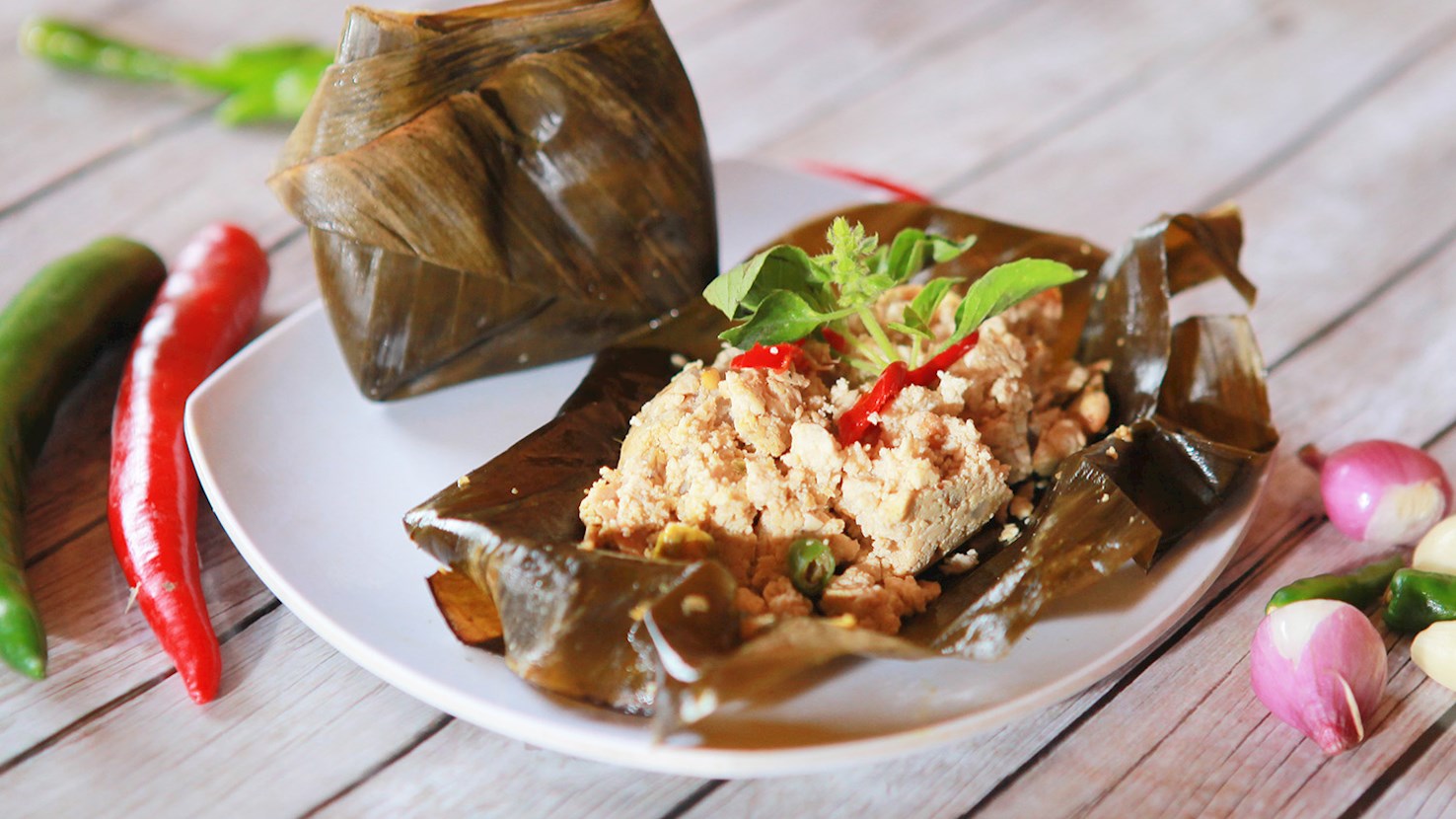
Pepes tahu is an Indonesian steamed tofu dish originating from Java, where the method of cooking in banana leaves, known as pepes, is commonly used for preparing both plant-based and protein-rich foods. In this version, tofu serves as the primary ingredient, mixed with a ground spice paste and sometimes combined with vegetables or aromatic herbs before being wrapped in banana leaves and steamed until firm and fragrant. The use of banana leaves allows the ingredients to cook evenly while absorbing the subtle aroma from the leaf itself, creating a dish that is both practical and flavorful. The preparation of pepes tahu starts with mashing firm tofu until smooth, then blending it with a spice mixture typically made from shallots, garlic, chilies, coriander, candlenuts, and turmeric, with the occasional addition of lemongrass or makrut lime leaves to enhance the aroma. The mixture is seasoned with salt, pepper, and sometimes a small amount of sugar, depending on regional preference. Other optional ingredients include finely sliced chayote, carrots, basil leaves, or chopped mushrooms, which contribute texture and variation. Once the tofu and spices are well-mixed, the seasoned mash is portioned onto softened banana leaves, folded tightly into packets, and secured with toothpicks or small bamboo pins. These packets are then steamed until the contents are cooked through and set, typically for about 20 to 30 minutes. Some variations call for an additional step of grilling the steamed packets briefly to introduce a smoky aroma, though this is optional and often depends on local practice. Pepes tahu is usually served as a side dish with rice and other accompaniments, especially in vegetarian or plant-focused meals. It is appreciated for its soft texture, balanced seasoning, and the clean, slightly earthy fragrance imparted by the banana leaf wrapping. In many parts of Java, it is a common feature in lunchboxes, market stalls, and home meals, valued for its lightness, portability, and ease of preparation.
TasteAtlas food rankings are based on the ratings of the TasteAtlas audience, with a series of mechanisms that recognize real users and that ignore bot,
nationalist or local patriotic ratings, and give additional value to the ratings of users that the system recognizes as knowledgeable.
For the “Top 3 Traditional Side Dishes in West Java” list until June 15, 2026, 50 ratings were recorded, of which 37 were recognized by the system as legitimate.
TasteAtlas Rankings should not be seen as the final global conclusion about food. Their purpose is to promote excellent local foods,
instill pride in traditional dishes, and arouse curiosity about dishes you haven’t tried.