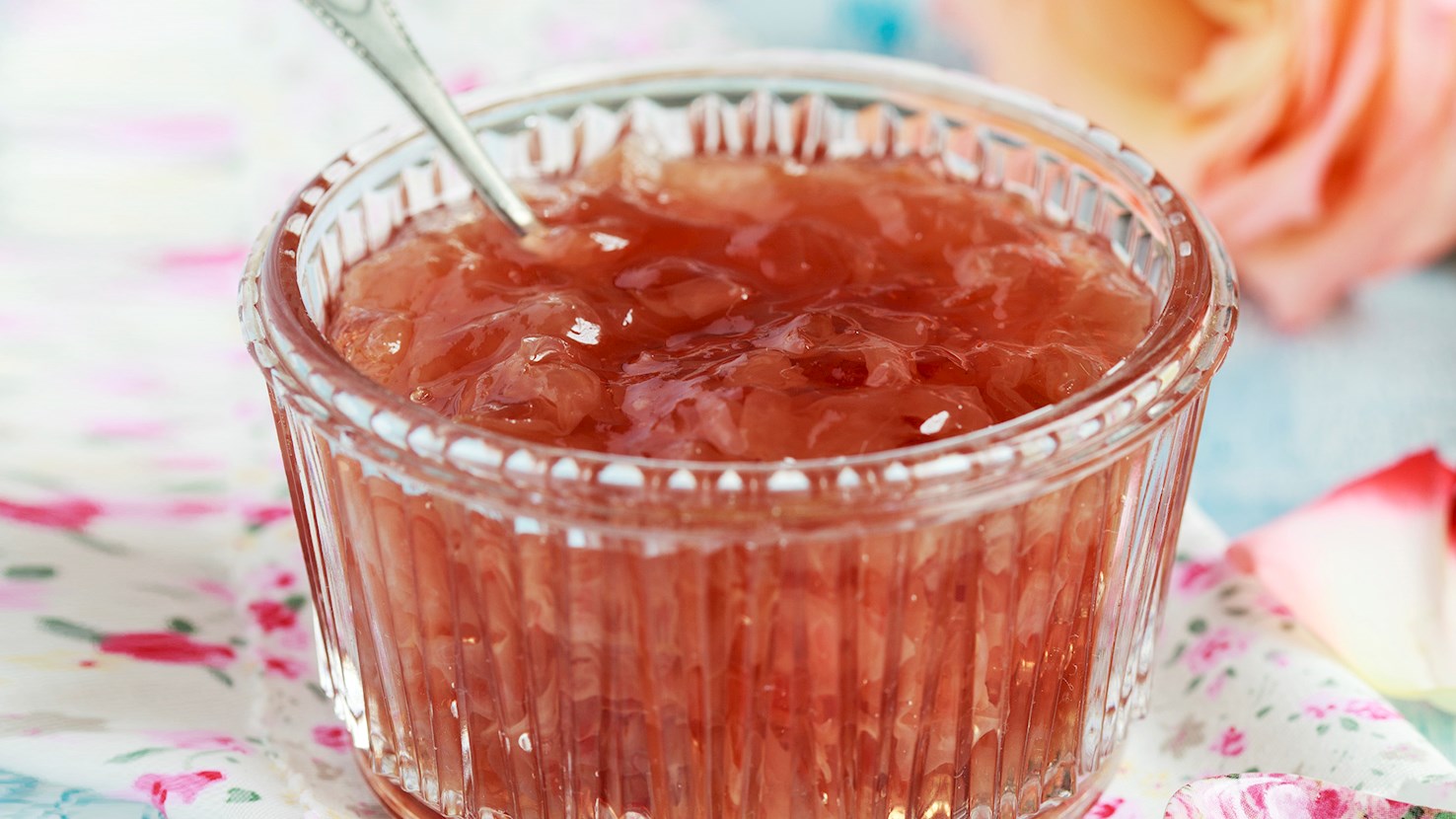
This unique variety of Serbian slatko—a fruit preserve—is made with rose petals. It typically uses the petals of roses that have a pleasant odor, most commonly those of May roses which are characterized by a distinctively sweet rose fragrance. The cleaned and washed petals are simmered in sugar syrup with lemon juice or citric acid until they become translucent and the syrup thickens. Although the tradition of making rose petal preserves in Serbian households is very old, this slatko variety is rarely prepared nowadays. Slatko od ruže is traditionally enjoyed in small portions, and it is usually accompanied by a glass of water, coffee, and local plum brandy. In Serbia, slatko preserves are typically offered to guests to show a warm welcome.
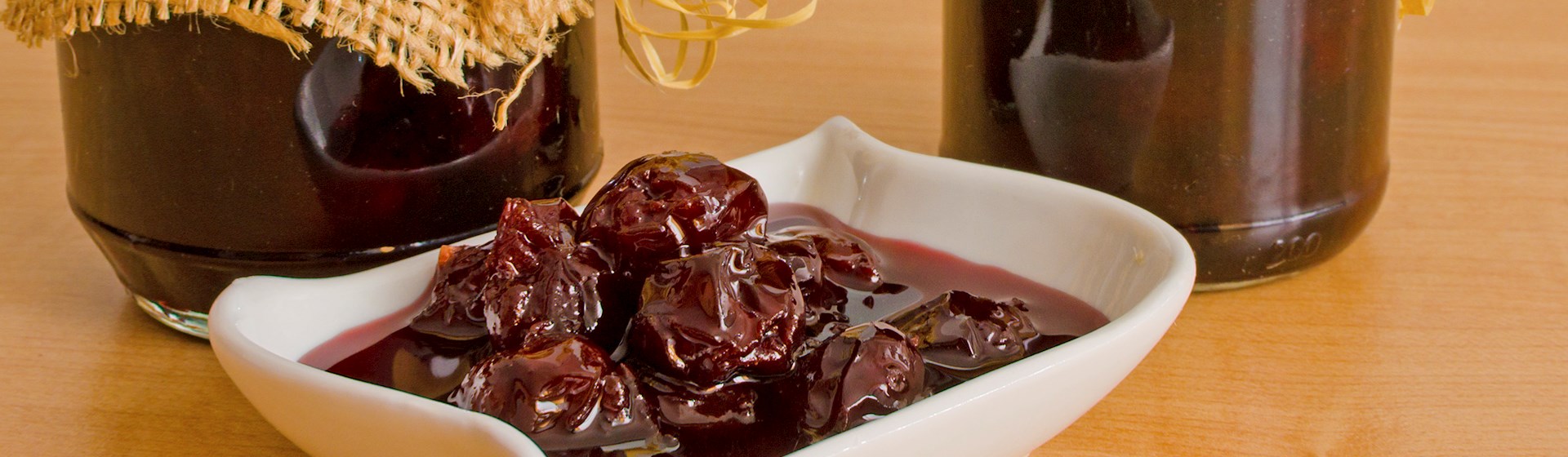
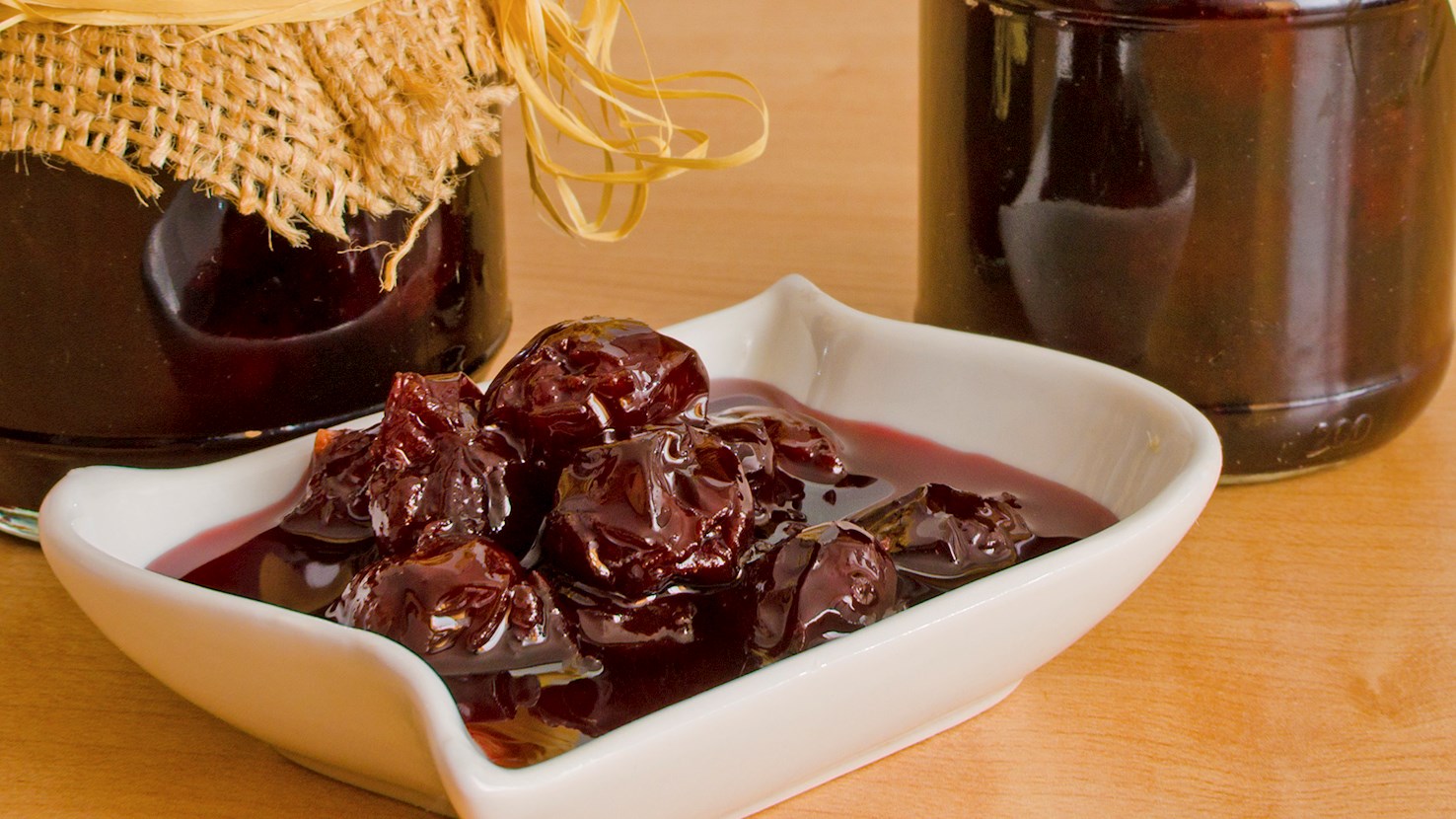
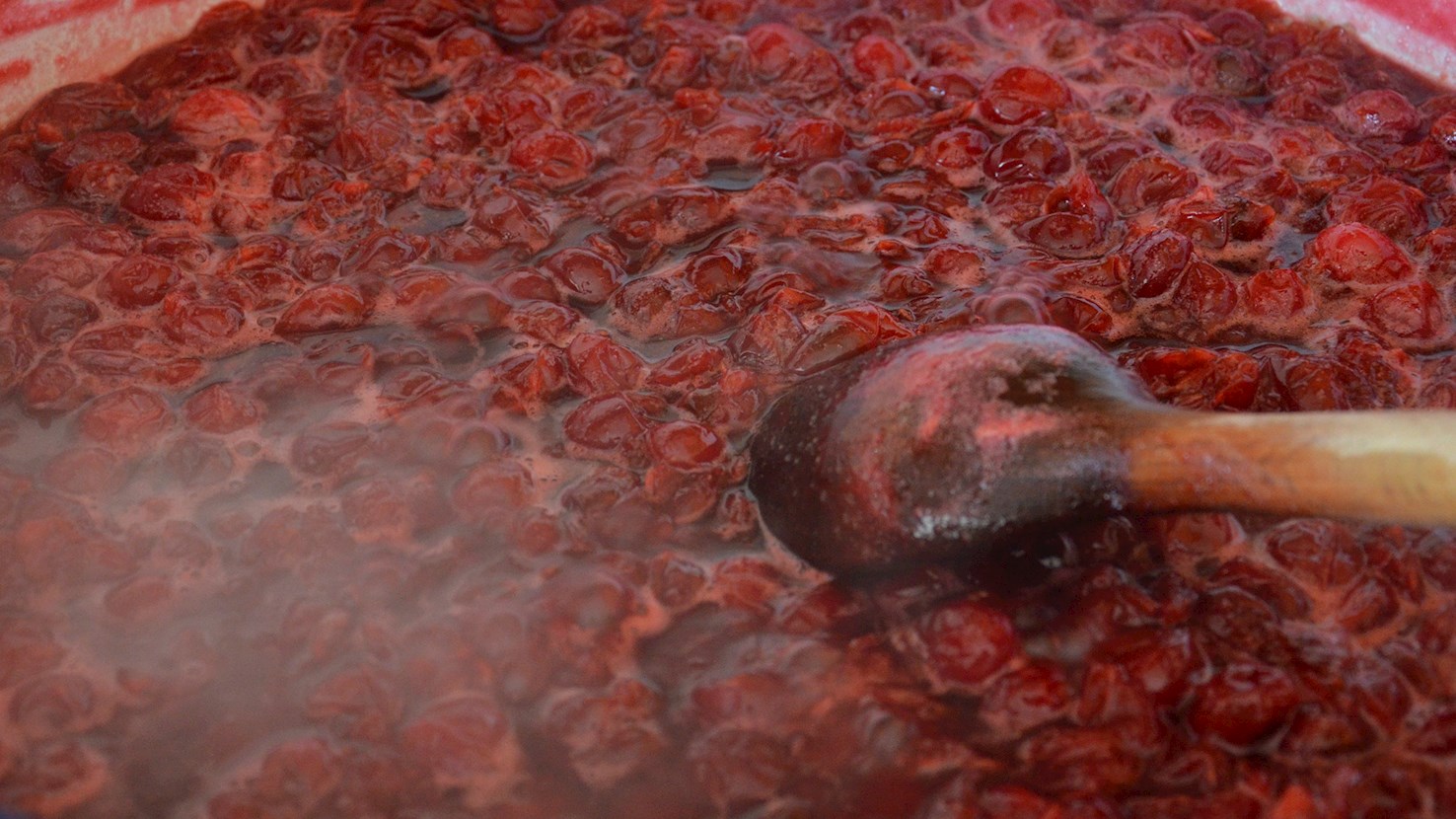
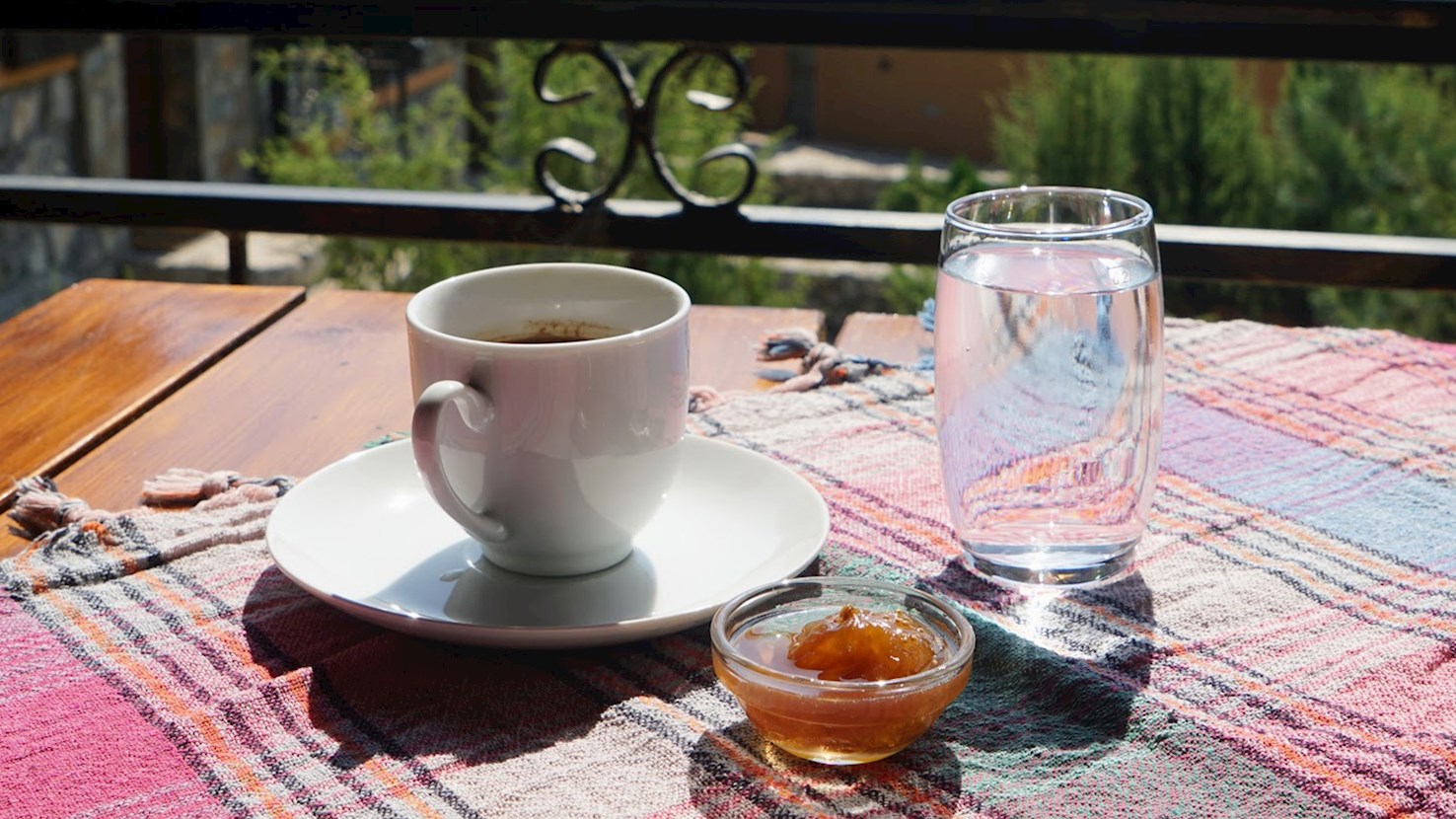
A variety of Serbian slatko, slatko od višanja is a fruit preserve that is based on sour cherries. According to the traditional method of preparation, the sour cherries are cleaned, washed, and pitted, then covered with sugar and left overnight to release their juices. The following day, the mixture is boiled without stirring until it thickens to a syrupy consistency. Another way to make this sour cherry preserve is to cook whole washed and pitted sour cherries in sugar syrup. Unlike other slatko varieties, this one doesn’t require the use of lemons or lemon juice since the cherries are sour themselves. If the fruit is more on the sour side, the amount of sugar should be increased. Traditionally, Serbian slatko, which translates as sweet, is offered to show a warm welcome to guests, and it is typically served in small plates or bowls. Since slatko preserves are quite sweet, they’re usually accompanied by a glass of water. Other typical accompaniments to slatko include coffee and traditional plum brandy known as šljivovica. Apart from being enjoyed as a sweet snack, slatko od višanja is also often incorporated into a variety of desserts.
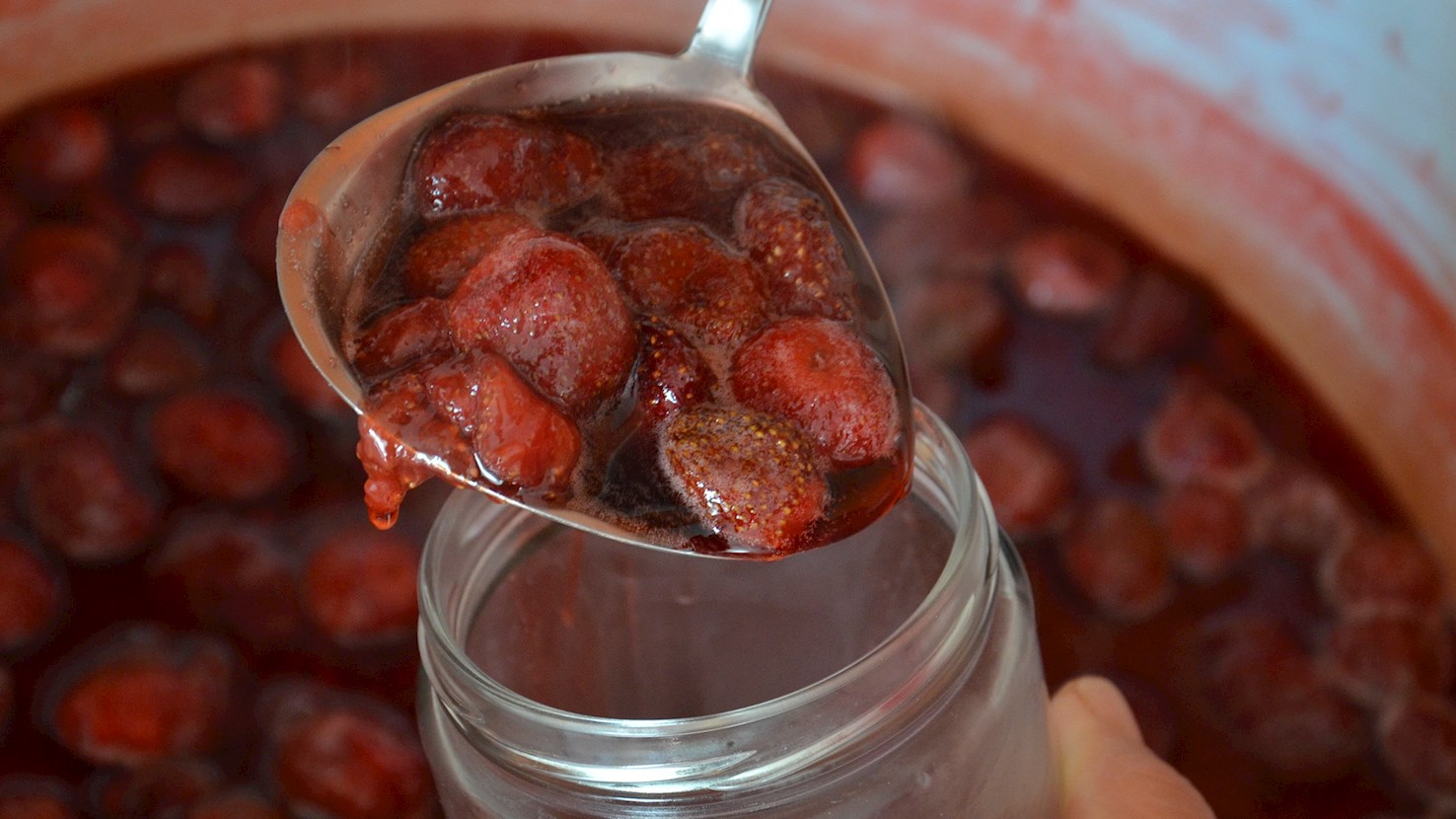
Slatko od jagoda is a type of Serbian preserve made with strawberries. This dish belongs to a group of slatko preserves that are traditionally made from various seasonal fruit such as quinces, apricots, cherries, or watermelons. The strawberries are washed and cleaned before they are cooked in sugar syrup. During cooking, it is recommended not to stir the fruit so it would stay whole and not turn into mush. Lemon is usually added in order to help preserve the fruit and add extra flavor. Like other types of slatko, the strawberry version is also an essential part of Serbian hospitality. According to the age-old custom, slatko is usually served to guests as a sign of greeting. It's traditionally served with a glass of water, while typical accompaniments include Serbian plum brandy (šljivovica) and coffee. Because of its sweetness—the name slatko also translates as sweet—only of a spoonful of the preserve should be enough for consumption.
Slatko od trešanja is a traditional fruit preserve made with cherries. Any type of cherries - red or white, wild or cultivated - may be used as long as they’re firm and not overripe. The cherries are typically cleaned, washed, and pitted before they are cooked in sugar syrup. The syrup is usually flavored with vanilla and lemon juice or slices of lemon. While they’re being cooked, the cherries should not be stirred but only lightly shaken so that they retain their shape and remain firm. This sweet delicacy is usually stored in clean glass jars and it keeps for a whole year. Slatko od trešanja is typically made during the summer period when cherries are in season, and it is only one of a wide variety of slatko preserves that have long been prepared in Serbian households. In Serbia, these preserves are traditionally offered to guests as a sign of hospitality and they’re typically accompanied by a glass of water and a cup of coffee or Serbian plum brandy (šljivovica) on the side. Like other types of slatko, slatko od trešanja can also be used to enrich a variety of desserts.
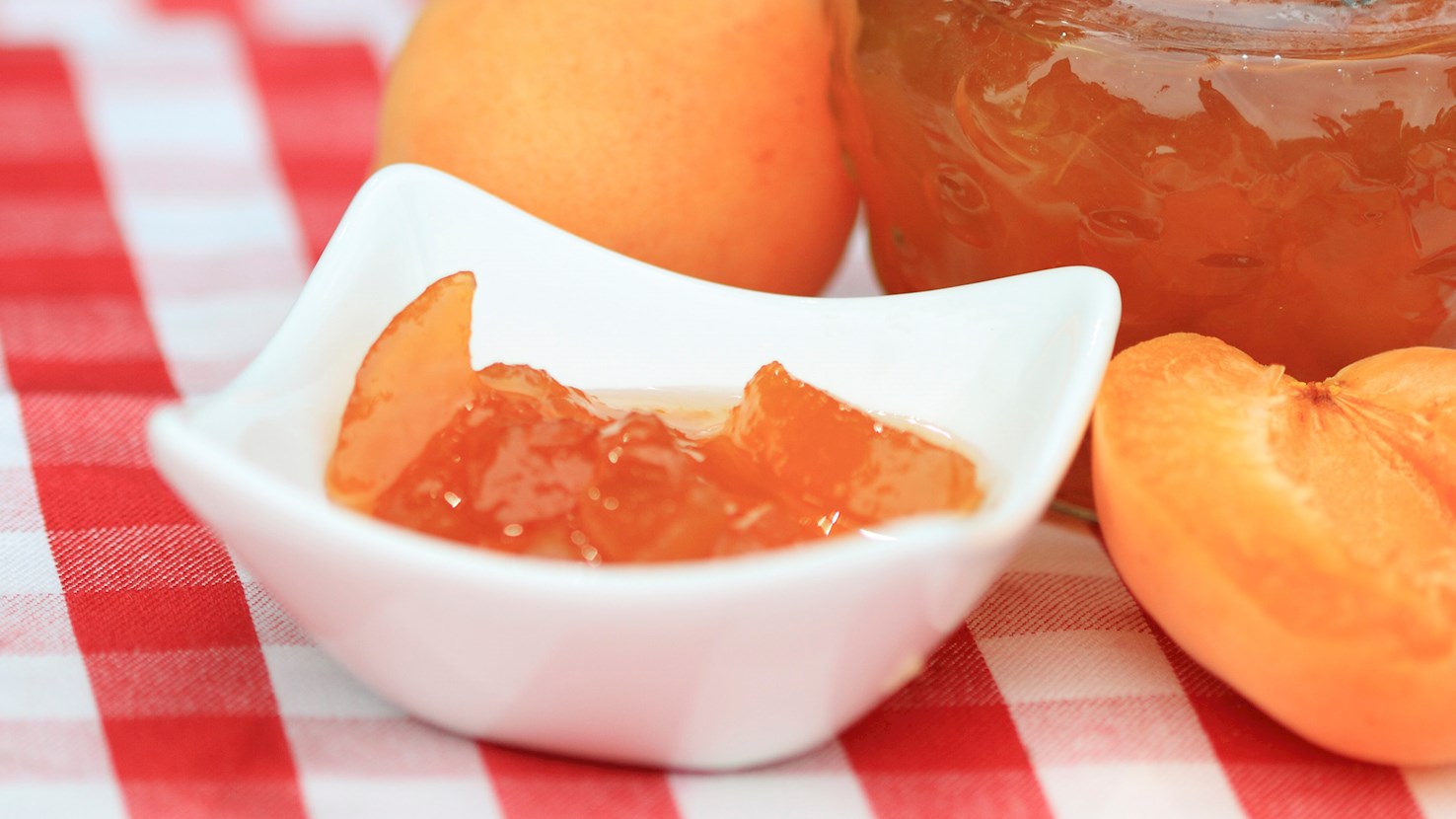
Slatko od kajsija is a variety of Serbian slatko—a fruit preserve—that is made with apricots in this case. The apricots are pitted and usually peeled and then slowly simmered in sugar syrup. Optionally, to preserve the fruit, the apricots can be shortly soaked in a mixture of Calcium hydroxide (slaked lime) and water. Whether halved or used whole, the flesh of the apricot needs to stay intact, and unlike jams, it should never turn into mush. Slatko od kajsija is a part of Serbian tradition, usually served to welcome a guest. The preserve will typically come first, accompanied by a glass of water, plum brandy (šljivovica), and coffee.
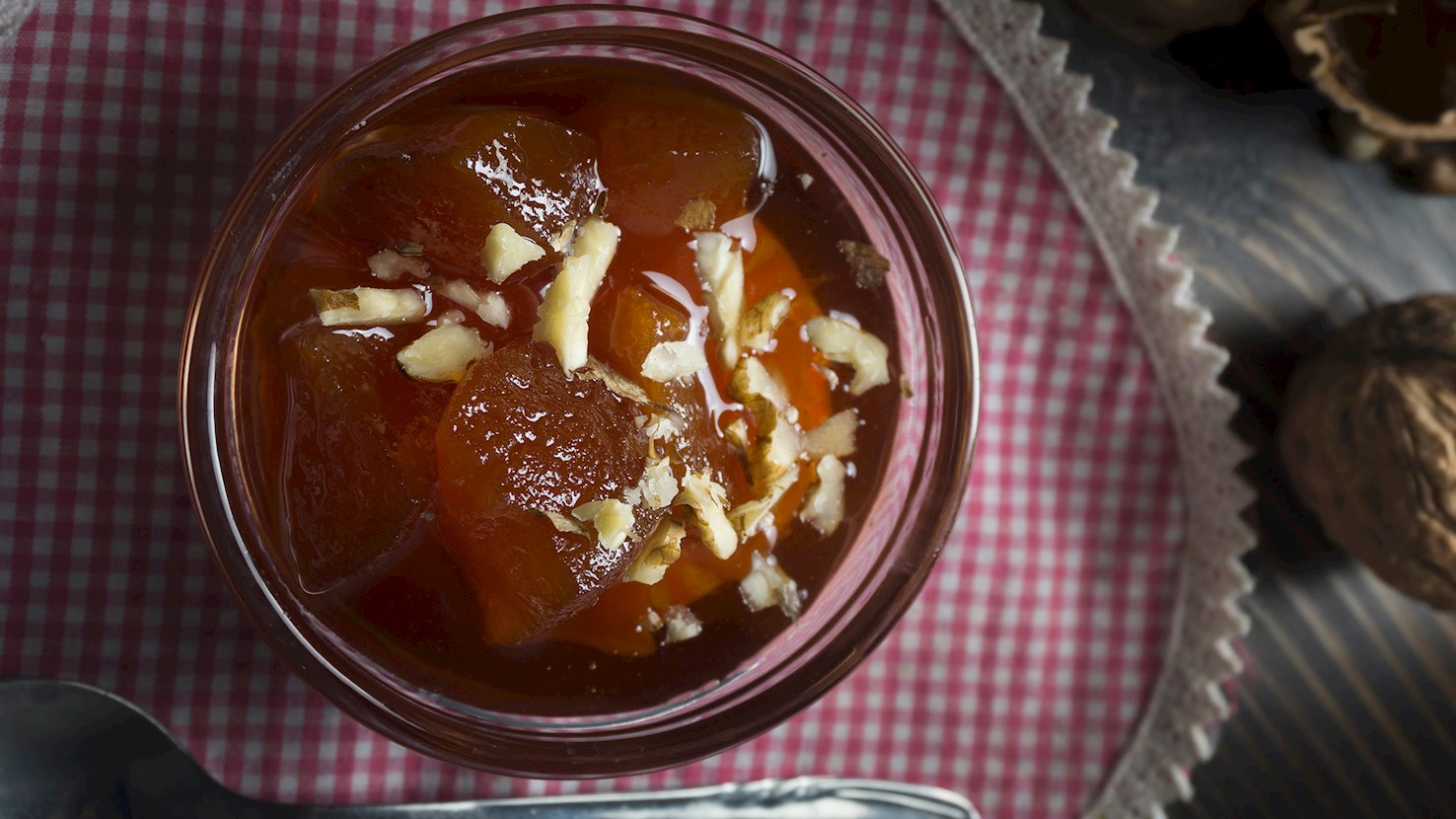
Belonging to a wide variety of traditional preserves that are known as slatko, this delicacy is prepared with a simple method in which diced or grated quinces are cooked in a flavorful mixture of water, sugar, and lemon juice. The preserve is occasionally enriched with spices or chopped walnuts and is usually stored in jars. Though slatko od dunja can be used in various desserts, it is traditionally offered as a sweet snack, usually served on a plate and accompanied by a glass of water or local brandy. This fragrant preserve is a staple throughout Serbia and Montenegro.
Slatko od smokve is a popular variety of Serbian slatko, a type of fruit preserve that is made with seasonal fruit, in this case with figs. To make the preserve, ripe figs are typically washed, cleaned, and boiled in sugar syrup before they’re chilled and stored in clean glass jars. The fruit is usually left whole, although some versions call for cutting the figs in halves or quarters. If left whole, the figs need to be pricked with a fork to absorb more of the syrup in which they’re simmered. Lemon juice, citric acid, or slices of lemon are typically added to the preserve both for flavor and to prevent sugar crystallization, while other common flavorings include vanilla and scented geranium (rozetla). There are also versions of this fig preserve that use wild green figs. In Serbia, small portions of slatko preserves are usually served in small glass bowls or plates, and they are typically accompanied by a glass of water to balance the sweetness. Other common accompaniments include a cup of coffee and a shot of plum brandy (šljivovica). Traditionally, slatko preserves are offered to guests as a sign of hospitality.
Recognized as the first Slow Food Presidium item of North Macedonia, wild fig slatko, or slatko od divi smokvi, as it is known in Macedonian, is a type of fruit preserve that is made with wild figs. This preserve has traditionally been produced in the Southeastern region of the country, in the municipalities of Gevgelija, Valandovo, Bogdanci, and Dojran, where wild fig trees are abundant. Customarily, it has been the task of men to gather the small green, pear-shaped fruits of the wild fig tree just as they start to ripen, while women have been responsible for cleaning the figs and preparing the preserve. The making of wild fig slatko (slatko, meaning sweet in Macedonian) is a long and laborious process that involves boiling the whole fruits nine times to eliminate the bitter-flavored, milky latex they contain before simmering them in a sugar syrup until the syrup has thickened. Lemon juice or citric acid is typically added to the preserve to help the figs retain their distinctive color and shape. Once done, the preserve is traditionally stored in clean glass jars. The flavor of this preserve is sweet with a slightly astringent finish, while the aromas are herbal and spicy, with subtle notes of caramel. In North Macedonia, wild fig slatko is typically prepared for family consumption only, although efforts are being made to promote the product on the market as well. Although it is most commonly enjoyed on its own, wild fig slatko can also be used as a topping for ice cream or a filling for pancakes, and it may be incorporated into a variety of desserts such as cakes or cookies.
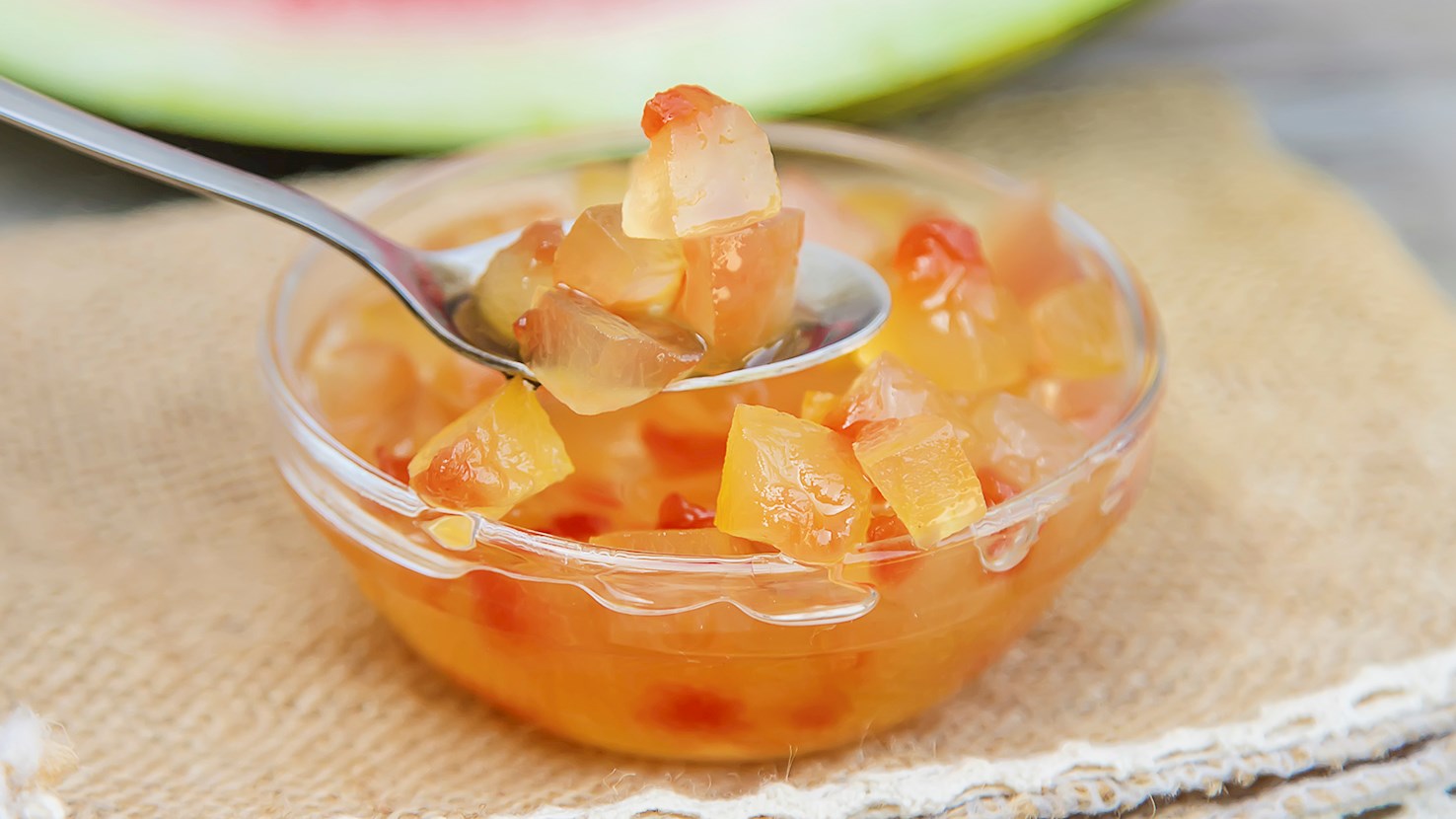
This Serbian preserve is prepared with white parts of watermelon rinds. When trimmed and cut, watermelon skin is cooked and then doused in a sugary syrup that is frequently spiced with lemon juice, vanilla, cinnamon, or cloves. The process transforms the rinds into translucent, jelly-like pieces that are coated in a thick, fragrant syrup. Slatko is easily incorporated into various desserts, but Serbian tradition is to offer it to guest as a sweet snack that is usually served on a plate and paired with water or a glass of strong Serbian brandy.
TasteAtlas food rankings are based on the ratings of the TasteAtlas audience, with a series of mechanisms that recognize real users and that ignore bot,
nationalist or local patriotic ratings, and give additional value to the ratings of users that the system recognizes as knowledgeable.
For the “9 Slatko Varieties Ranked From the Best To the Worst” list until September 17, 2026, 804,807 ratings were recorded, of which 527,136 were recognized by the system as legitimate.
TasteAtlas Rankings should not be seen as the final global conclusion about food. Their purpose is to promote excellent local foods,
instill pride in traditional dishes, and arouse curiosity about dishes you haven’t tried.




What People Say