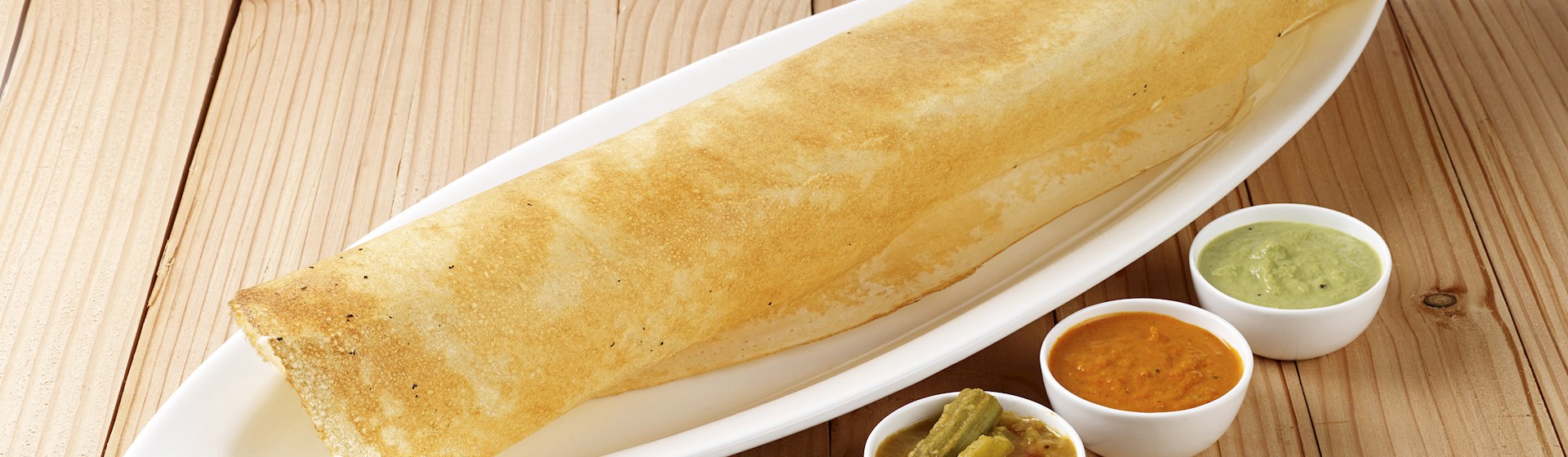
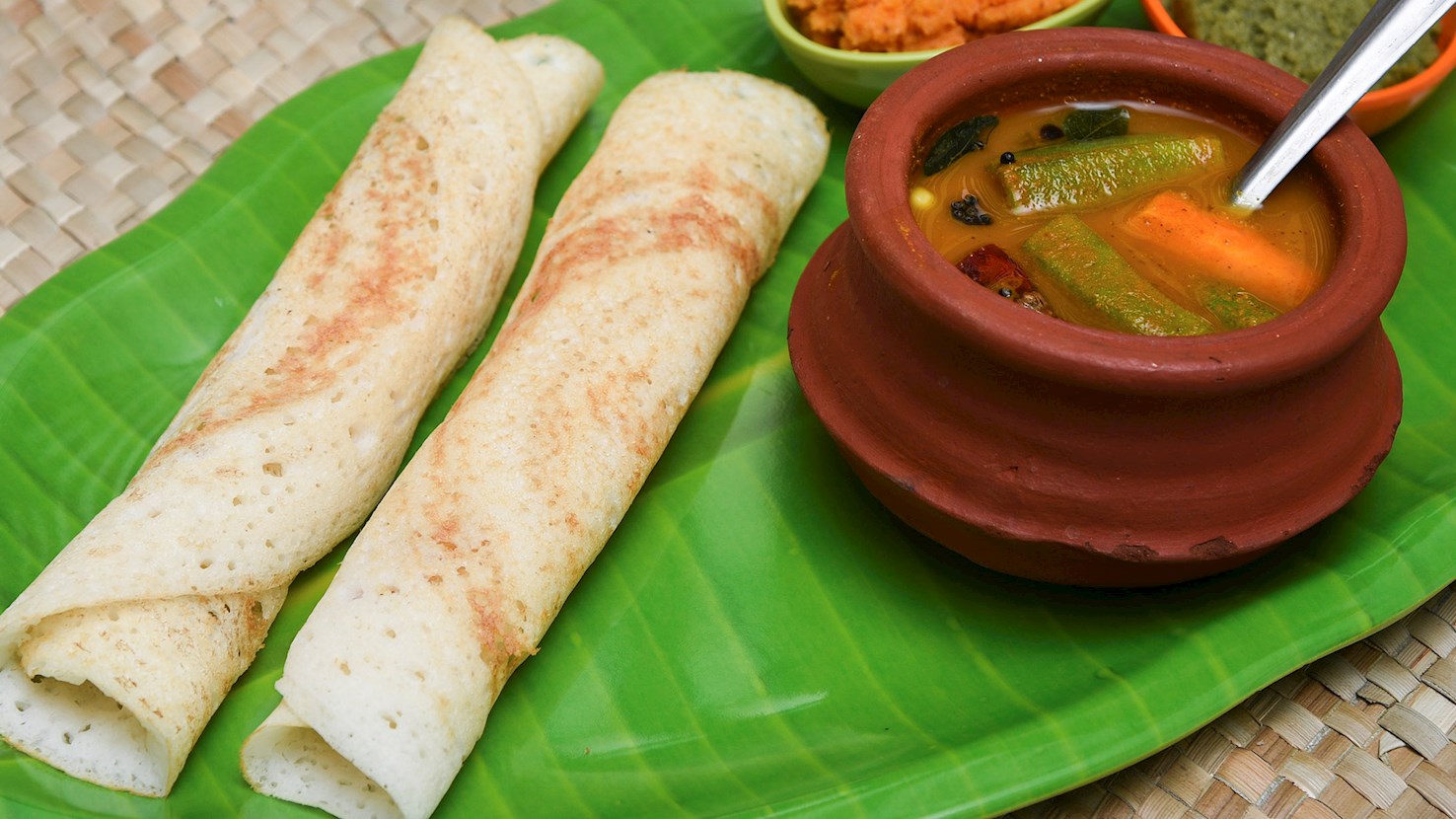
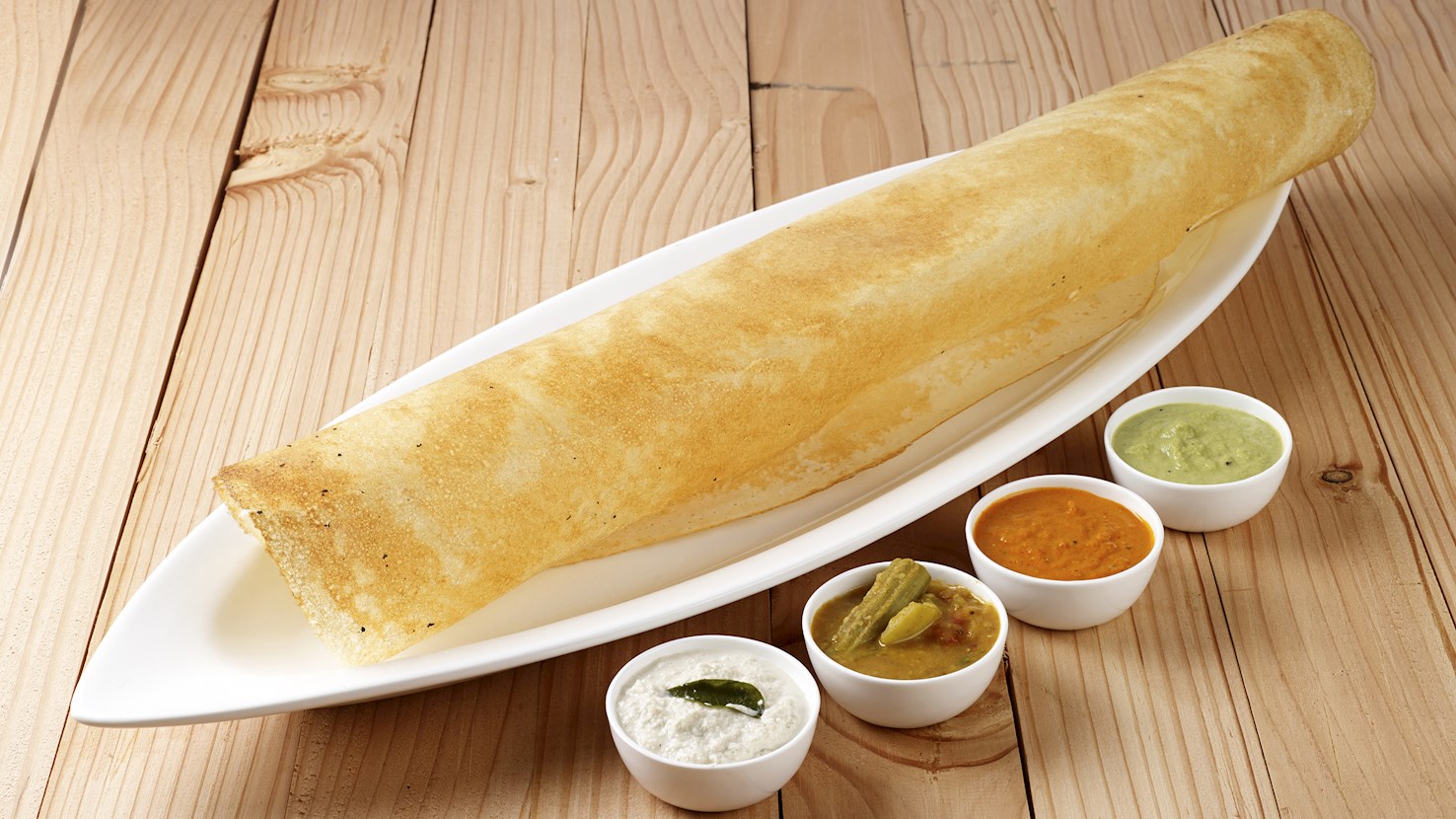
The thin pancake known as dosa is one of the most famous Indian dishes. It is made with soaked rice and black gram beans, which are ground into a paste and mixed to create a thick batter, usually left to ferment overnight. The mixture is enriched with a handful of fenugreek seeds, which give dosa its distinctive golden brown color and a delicious, crispy texture. It is then baked on a hot oiled griddle, pertaining a delicate, thin texture and round shape. Indian dosa is a staple dish in the entire country, but some believe that dosa had originated in the south Indian state of Tamil Nadu. It is an ancient dish, whose origins are traced back to the 1st century AD, when it was first mentioned in Tamil literature. Others claim that it's linked to Udupi (present day Karnataka) due to the association with the Udupi restaurants. Usually, dosa is consumed as a savory dish, commonly eaten for breakfast, dinner, or a quick snack. Since it has a rather neutral taste, dosa is an ideal accompaniment to many luscious Indian dishes, such as meat and vegetable curries or chutneys. It is often filled with ingredients and wrapped, or served on the side as an integral part of a meal, when it is usually used as a utensil to scoop the fragrant side dishes. As other ancient food staples, dosa has been adapted and combined with other ingredients to create numerous distinct varieties. Wheat flour, semolina, rice flour, or soy milk are used in some regions to create milder, diverse, and more interesting dosa varieties. This ancient Indian creation, in its numerous forms, is found everywhere in India - it is sold as a quick snack by street vendors, and it is an irreplaceable item in traditional Indian restaurants.
Paper dosa is a traditional pancake originating from Tamil Nadu. These wafer-thin crispy pancakes are usually made with a combination of basmati rice, urad dal (black grams), fenugreek seeds, ghee, and salt. The rice is processed into a thick paste and soaked in water. The urad dal is also soaked in water, and both are left to soak overnight. The next day, urad dal is drained, mixed with fenugreek, and processed into a paste. The two pastes are mixed together, left to stand overnight, and seasoned with salt. The batter is then fried in a skillet over medium heat until dry, and some ghee is spread in the center and on the sides. The dosa is cooked until golden brown and crisp. It's rolled up and served hot with sambar and coconut chutney.
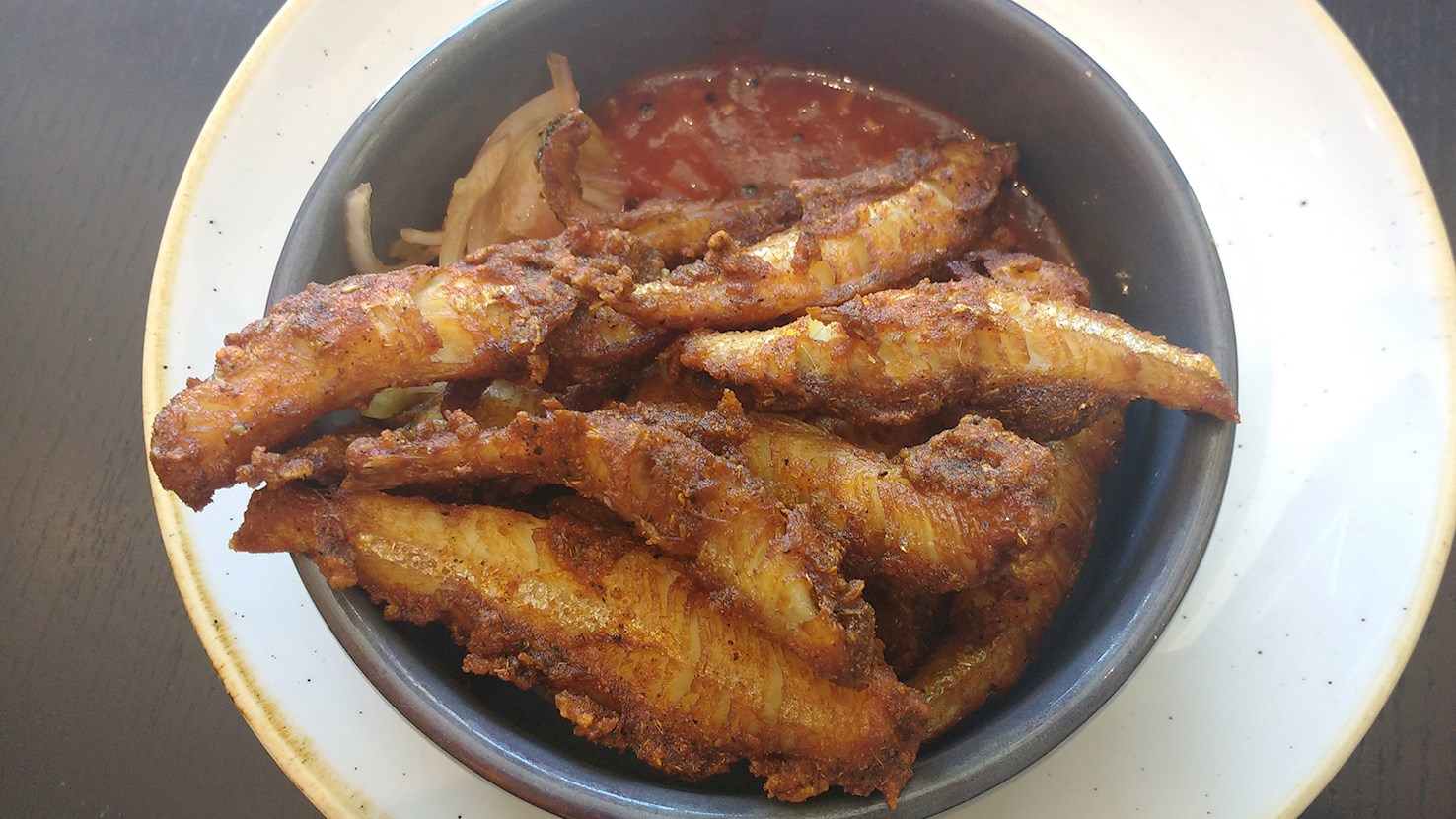
Anchovy 65 or Nethili 65 is a traditional dish originating from Tamil Nadu. The dish consists of anchovies that are fried until crunchy. The anchovies are usually marinated in a mix of yogurt, lemon juice, chili powder, garam masala, black pepper, turmeric, and rice flour before they're fried in hot oil. The dish is served as an appetizer or an evening snack on weekends. It's always served hot, ideally with lemon wedges on the side.
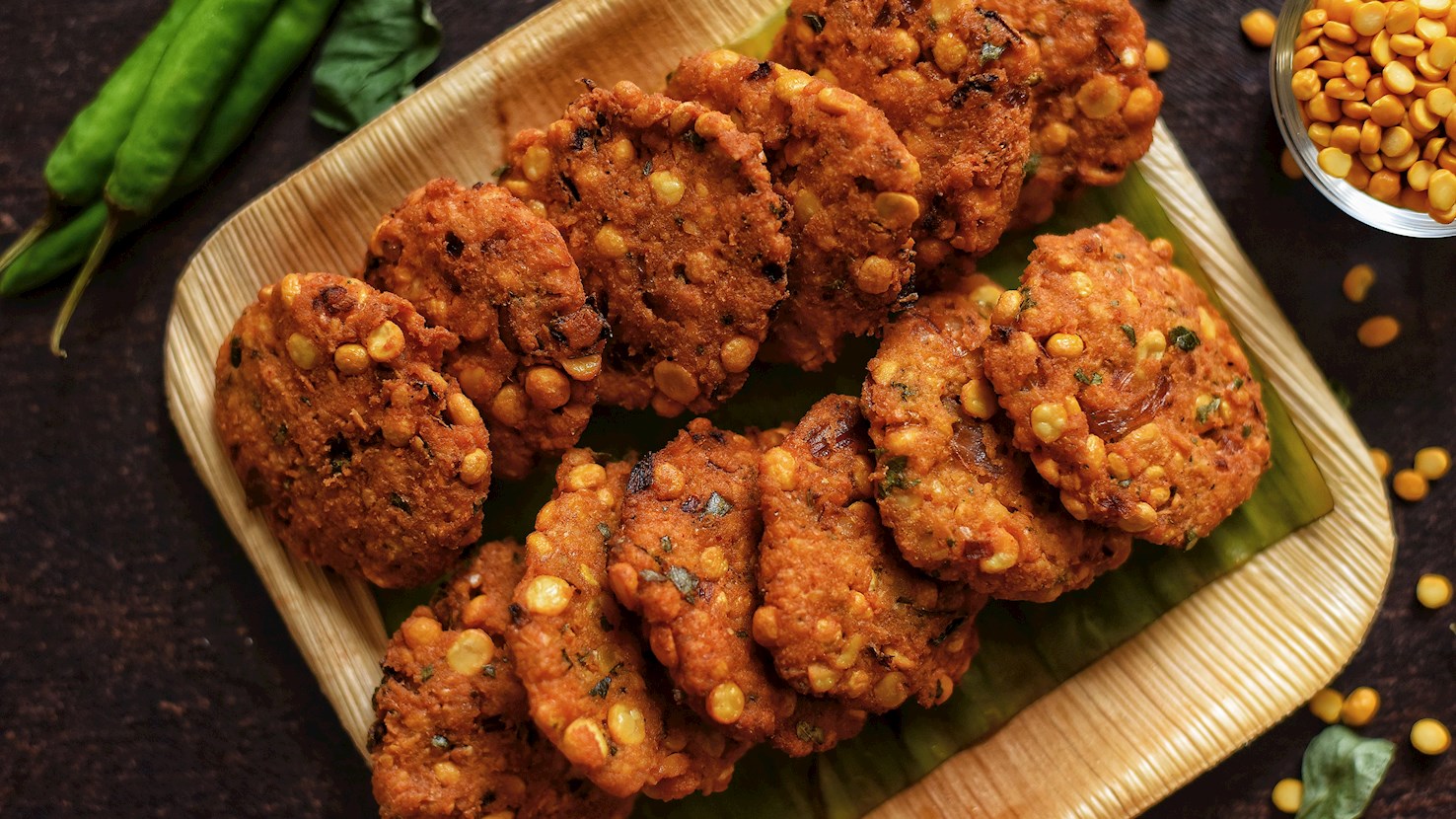
Masala vada or chana dal vada is a traditional fritter originating from Tamil Nadu. Although there are variations, this tea-time snack is usually made with a combination of chana dal, onions, ginger, curry leaves, fennel seeds, dried red hot peppers, vegetable oil, and salt. The chana dal, fennel seeds, and dried hot peppers are soaked in water for two hours, drained, and the mixture is processed into a coarse paste. The paste is mixed with onions, ginger, curry leaves, and some of the reserved chana dal. The mixture is seasoned with salt and formed into round patties. They are deep-fried in hot oil until golden brown, and then served with chutney.
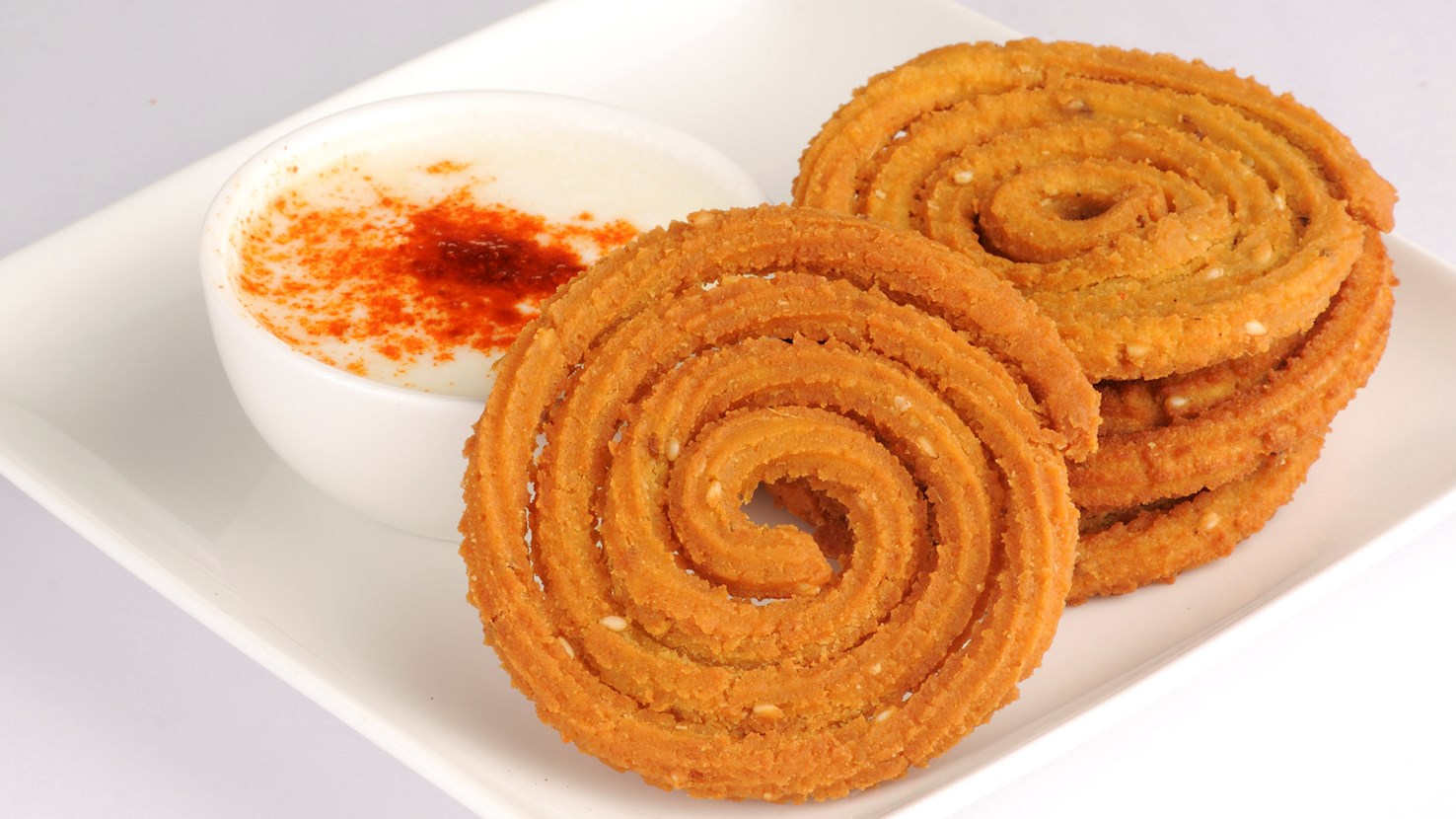
Murukku is a popular Indian snack with a crunchy texture, usually made with rice flour and urad dal bean flour, combined together into a spiral-shaped paste that is deep-fried in oil. Most of these savory snacks are additionally flavored with cumin, onion powder, or chili. Originating from Tamil Nadu, its name means twisted, referring to its unusual shape. Today, it is widely available throughout India, but it is most popular in Karnataka, Andhra Pradesh, Gujarat, and of course, Tamil Nadu. Murukku is often prepared for Indian festivities such as Diwali, Krishna Jayanti, and Vinayaka Chaturthi. Due to its great popularity, there are different versions of the snack, so it is sometimes dusted with sesame seeds and salt, while minced vegetables are often added to the paste before cooking.
Palakayalu is a traditional snack that's especially popular in Tamil Nadu and Andhra Pradesh. The snack is usually prepared with a combination of rice flour, sesame seeds, ghee, grated coconut, chili powder, and salt. The dough is rolled into balls that are slightly flattened in the palms of the hand. They're fried in ghee until golden brown, then drained, left to cool, and enjoyed immediately or stored in airtight jars, where they can keep for 10 days. Palakayalu is often prepared for Sri Krishna Janmashtami (Krishna's birthday) and it's typically enjoyed with tea.
TasteAtlas food rankings are based on the ratings of the TasteAtlas audience, with a series of mechanisms that recognize real users and that ignore bot,
nationalist or local patriotic ratings, and give additional value to the ratings of users that the system recognizes as knowledgeable.
For the “Top 6 Tamil Snacks” list until June 15, 2026, 414 ratings were recorded, of which 304 were recognized by the system as legitimate.
TasteAtlas Rankings should not be seen as the final global conclusion about food. Their purpose is to promote excellent local foods,
instill pride in traditional dishes, and arouse curiosity about dishes you haven’t tried.