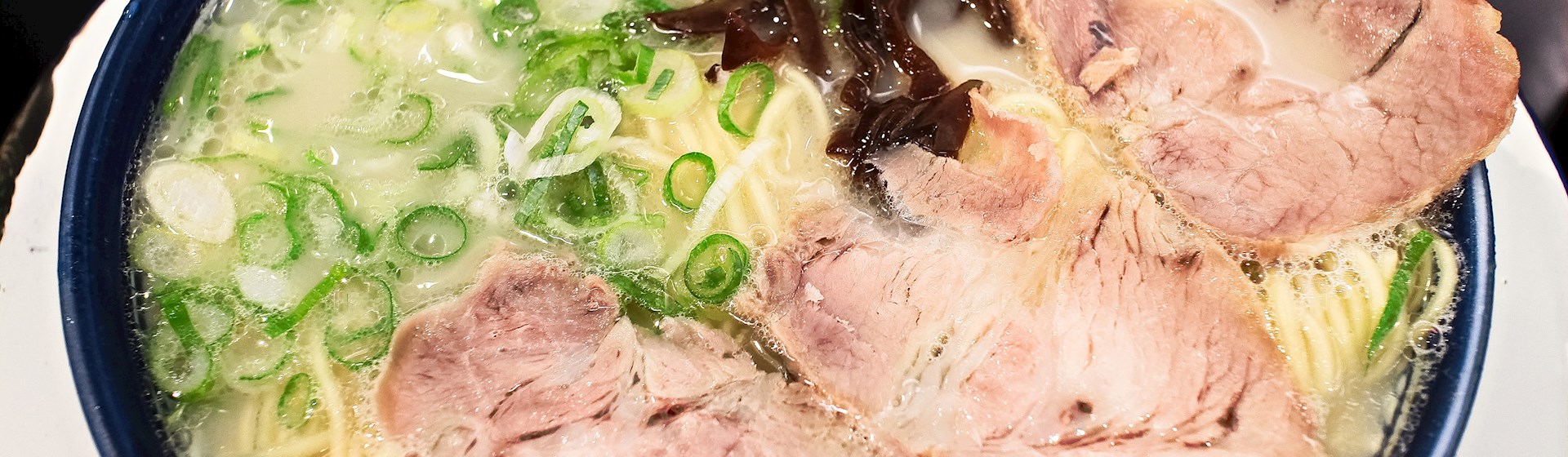
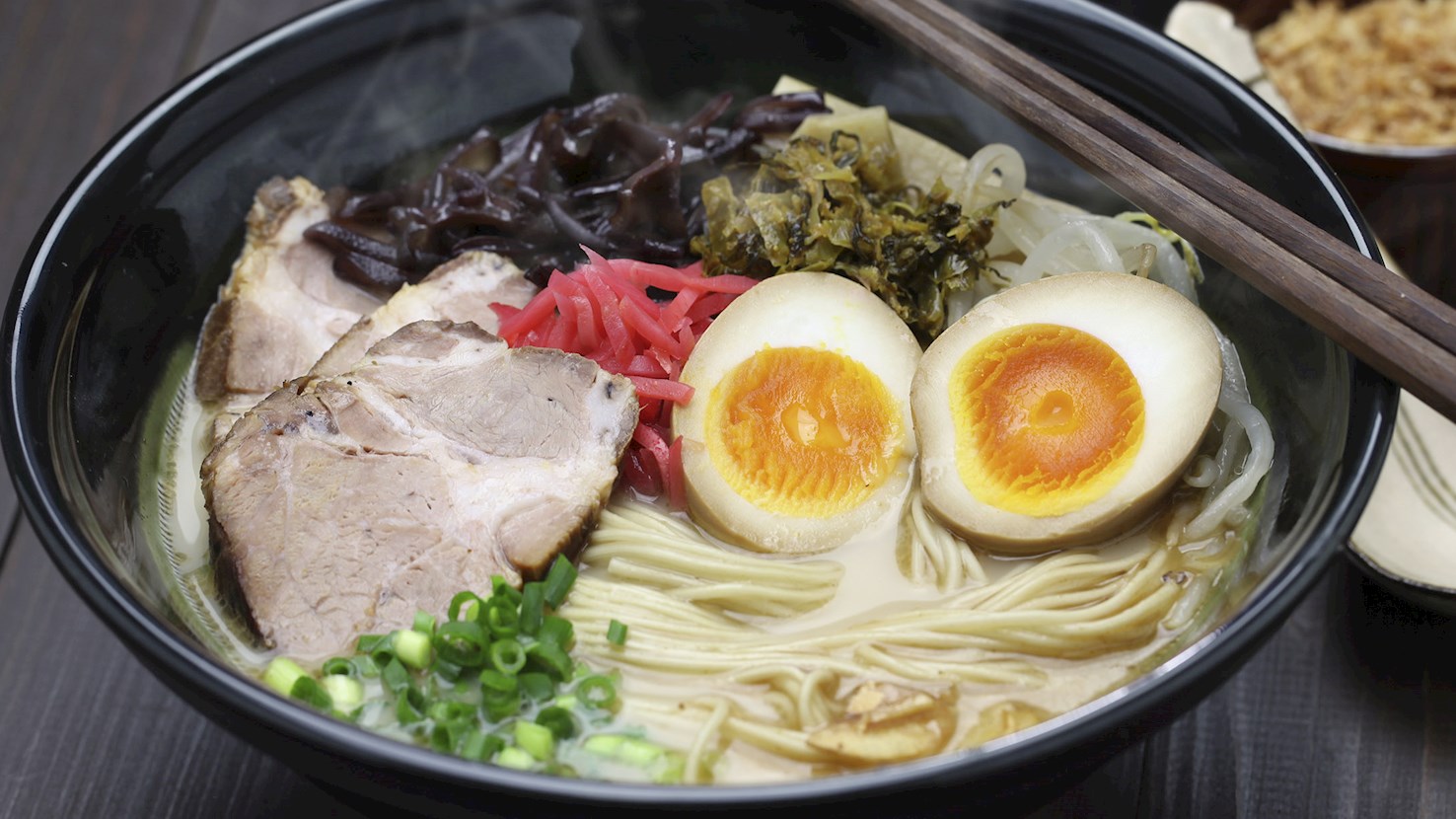
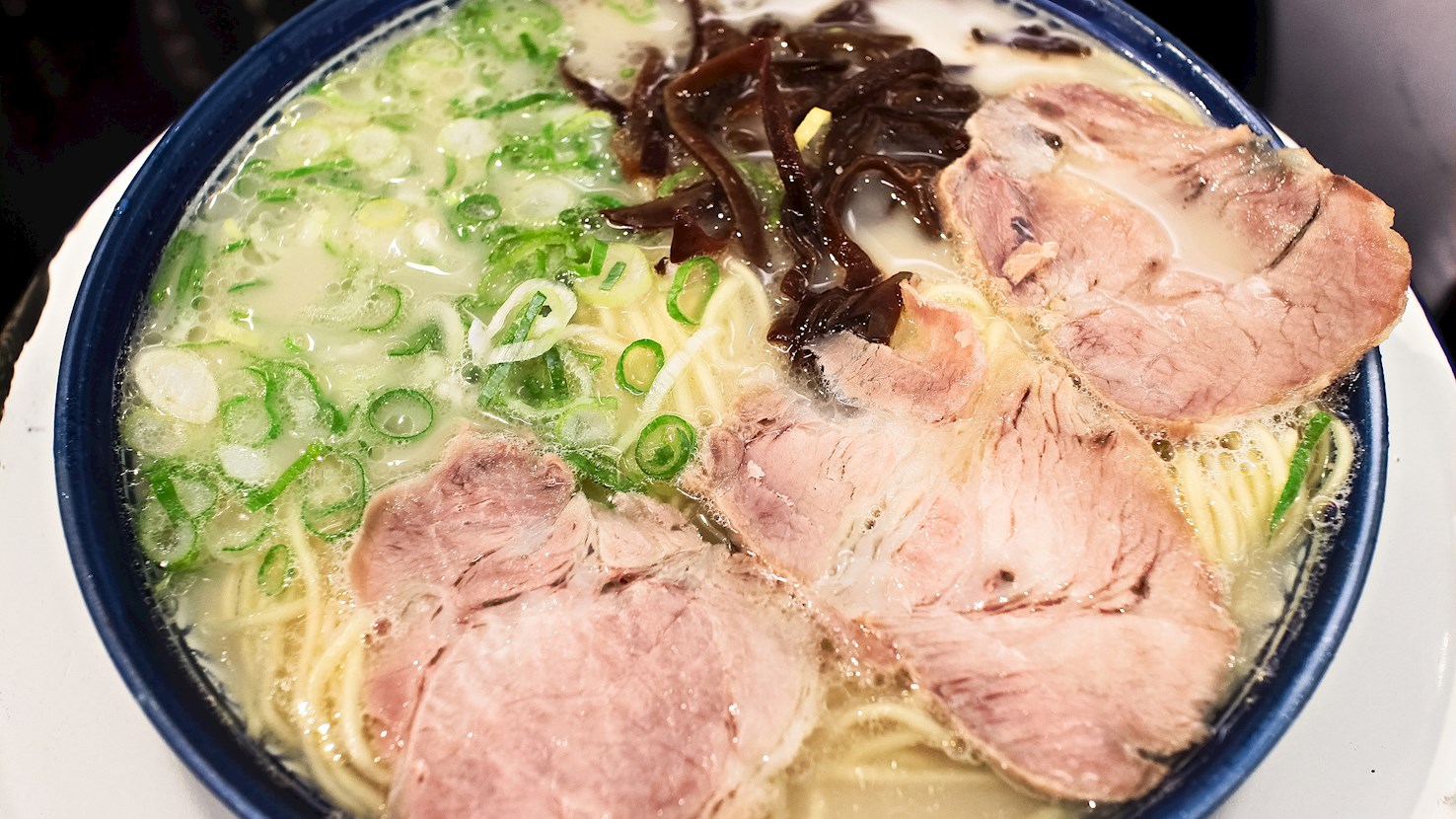
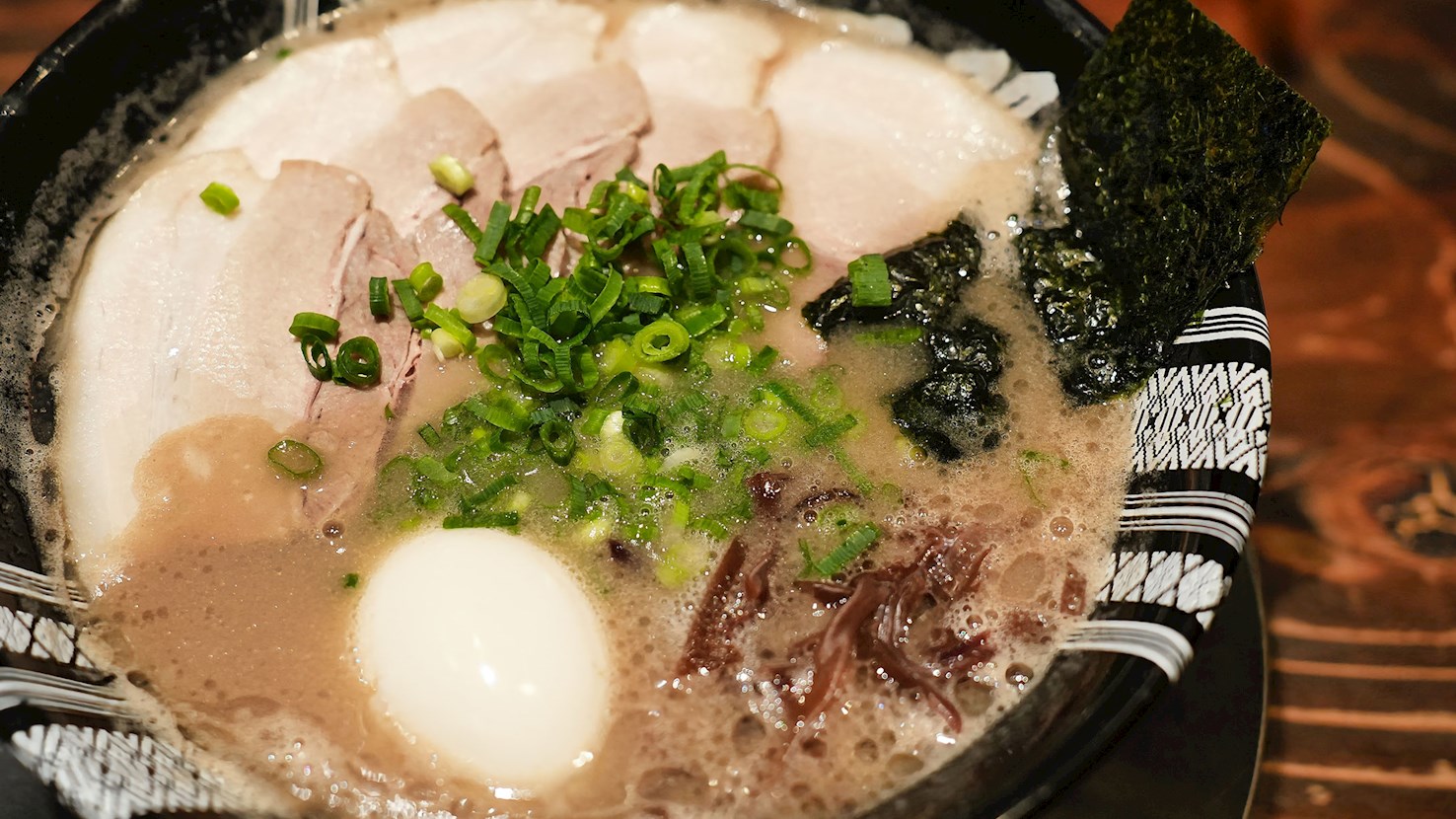
Tonkotsu is a unique style of ramen consisting of an extremely rich, fatty pork broth, fresh noodles, soft-yolk eggs, and tender pork belly that melts in the mouth. It is so popular and special that it could be a dish of its own, not just a ramen style. The ramen is usually topped with scallions for brightness and vibrancy, bamboo shoots for a crunchy, nutty flavor, nori seaweed for crispness, and sweet corn for an even better flavor. The rich broth is developed by cooking the pork bones for a very long time, until the collagen and fat dissolve, resulting in a unique, creamy texture of the dish. In recent years, it has been quite trendy to add some mayu (burnt sesame or garlic oil) to the dish, giving it an even richer, bolder flavor.
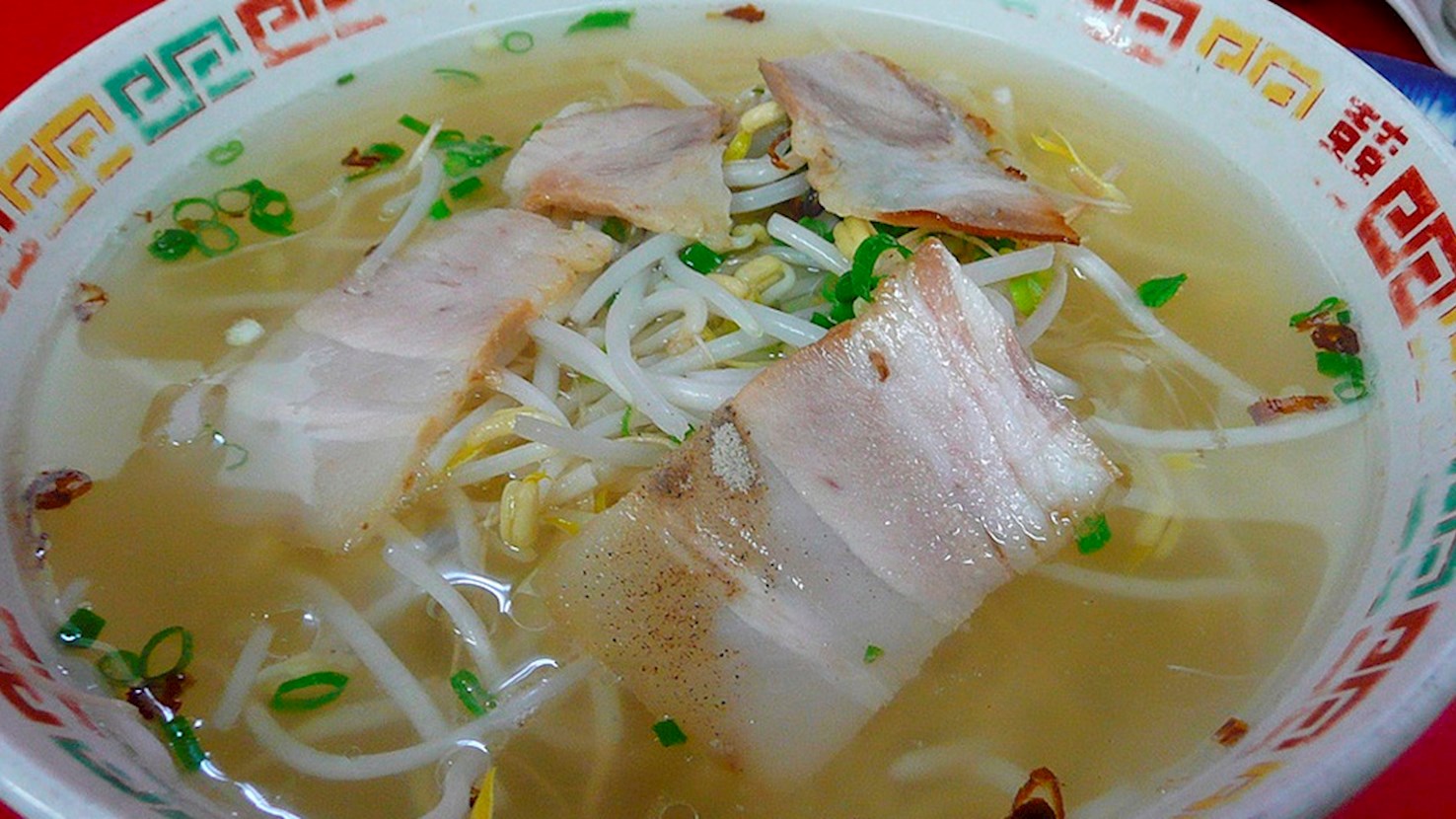
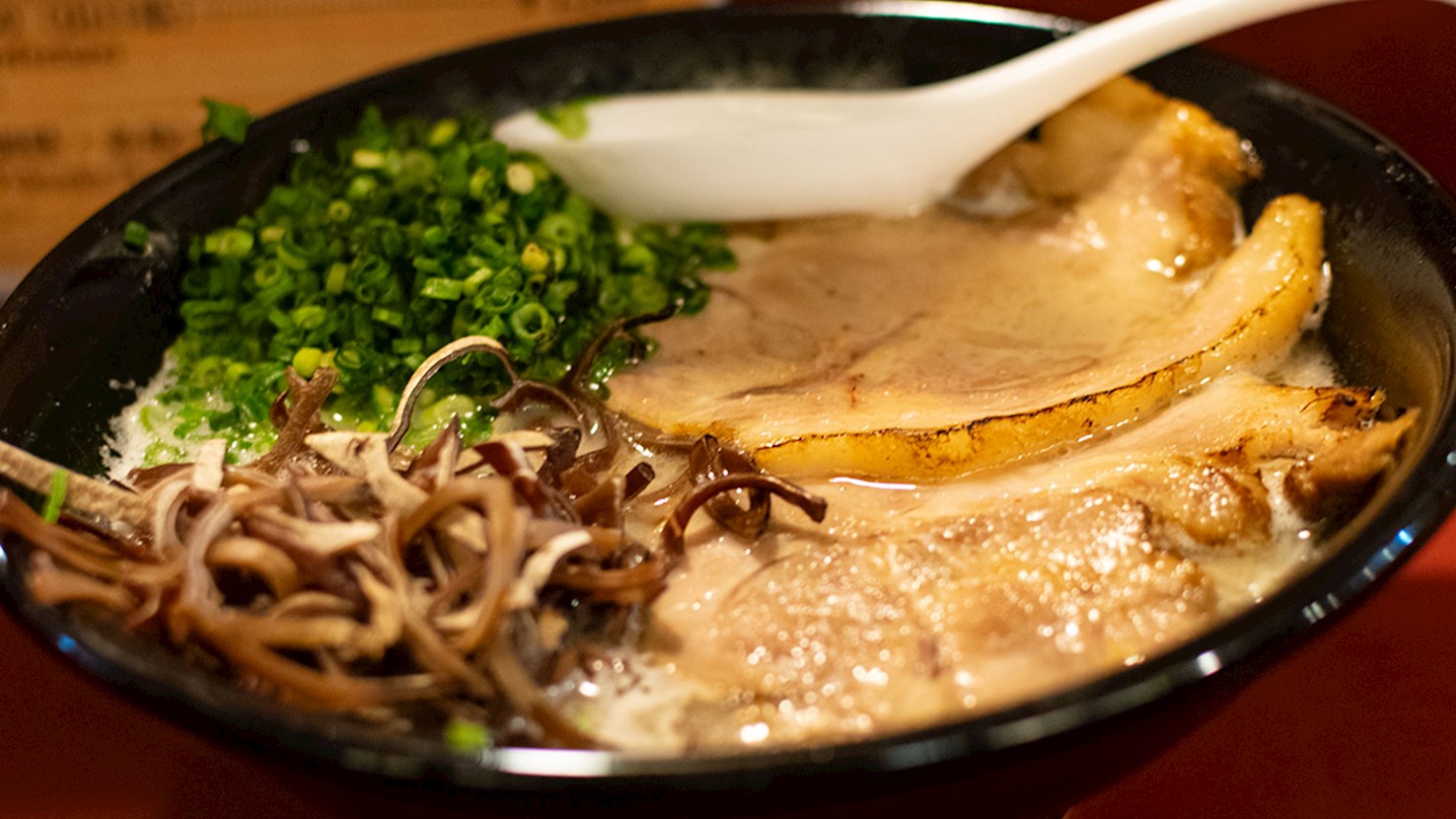
Hailing from Fukuoka, hakata is one of the most famous ramen variety in Japan. The base of the ramen is tonkotsu (which is why it is sometimes, especially in Fukoaka, refered to as tonkotsu ramen, although there are various other regional varieties of tonkotsu ramen), the creamy pork bone broth which gives the dish its incredibly rich and layered taste. It is often only seasoned with shio (salt), and occasionally with shoyu (soy sauce) and miso (fermented soybean) paste. Hakata ramen is typically served with ultra-thin, straight, and firm wheat noodles, though it’s possible to choose the firmness of the noodles according to individual preferences. Although thin slices of chashu pork and chopped green onions are the most common, other typical additions to the broth include spicy mustard greens, ramen eggs, wood ear mushrooms, beni shōga (pickled ginger root), garlic, bean sprouts, mayu, and crushed sesame seeds. This ramen variety derives its name from the former port city and merchant quarter of Hakata, which, in 1889, was merged with the castle town of Fukuoka into one city that came to be known as Fukuoka city.
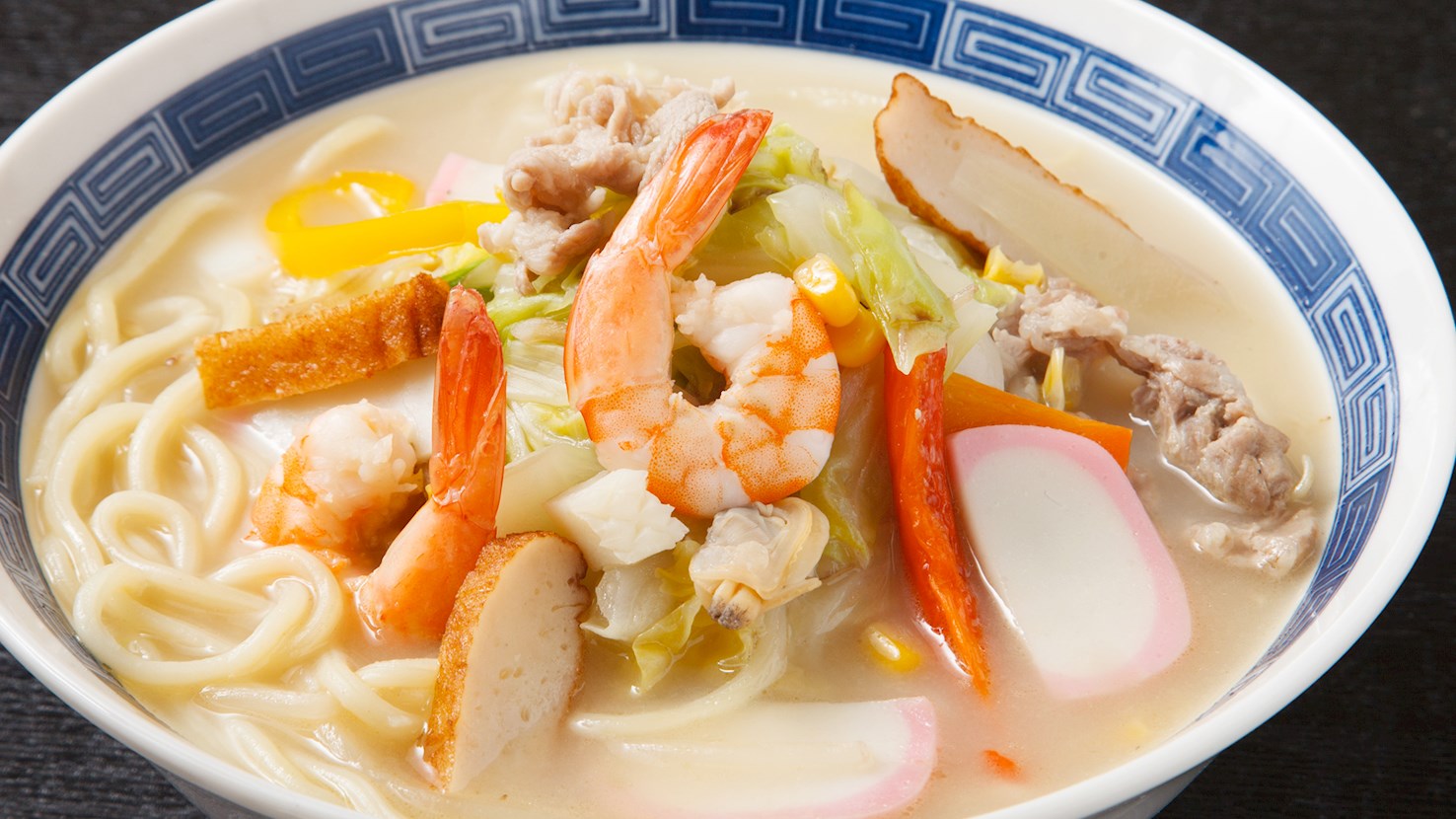
Champon is a robust noodle soup consisting of thick, chewy wheat noodles submerged in a rich pork-and-chicken broth, topped with stir-fried seafood, sliced meat, and vegetables. Arriving at the table in a massive bowl, this hearty meal is consumed immediately while the liquid remains piping hot, requiring chopsticks to manage the dense tangle of ingredients alongside a wide ceramic spoon to scoop up the savory soup. The recipe demands a specific type of noodle manufactured with toaku, an alkaline salt that grants the wheat strands their signature elasticity and subtle yellow tint. The first step in cooking is aggressively frying pieces of pork belly, shrimp, squid, and cured fish cake in a large wok over extreme heat. Chopped cabbage, bean sprouts, carrots, and onions are tossed into the rendered fat to soften slightly before a cloudy, slow-simmered broth—usually a combination of pig bones and poultry carcasses—is poured directly over the sizzling components. Instead of boiling the starches separately, the raw noodles are dropped directly into this mixture, absorbing complex flavors as everything stews for a few minutes. This one-pot approach fundamentally separates the item from other Asian noodle soups. The origins of this dense bowl date back to the late 19th century in Nagasaki, where it originated at a local restaurant named Shikairo. The founder designed the highly caloric soup specifically as a cheap, filling nutritional source for impoverished students arriving from overseas. Its name, champon, comes from the Fujian word shapon, meaning to eat a meal. Over the decades, the formula spread beyond the port city, spawning distinct regional variations. In the town of Obama, the broth takes on a much lighter, seafood-forward profile paired with exceptionally long, thick noodles. Meanwhile, the Amakusa version relies almost entirely on locally caught seafood and omits the heavy pork base entirely, opting for a clear, salt-tinged liquid flavored with kelp and light soy sauce.
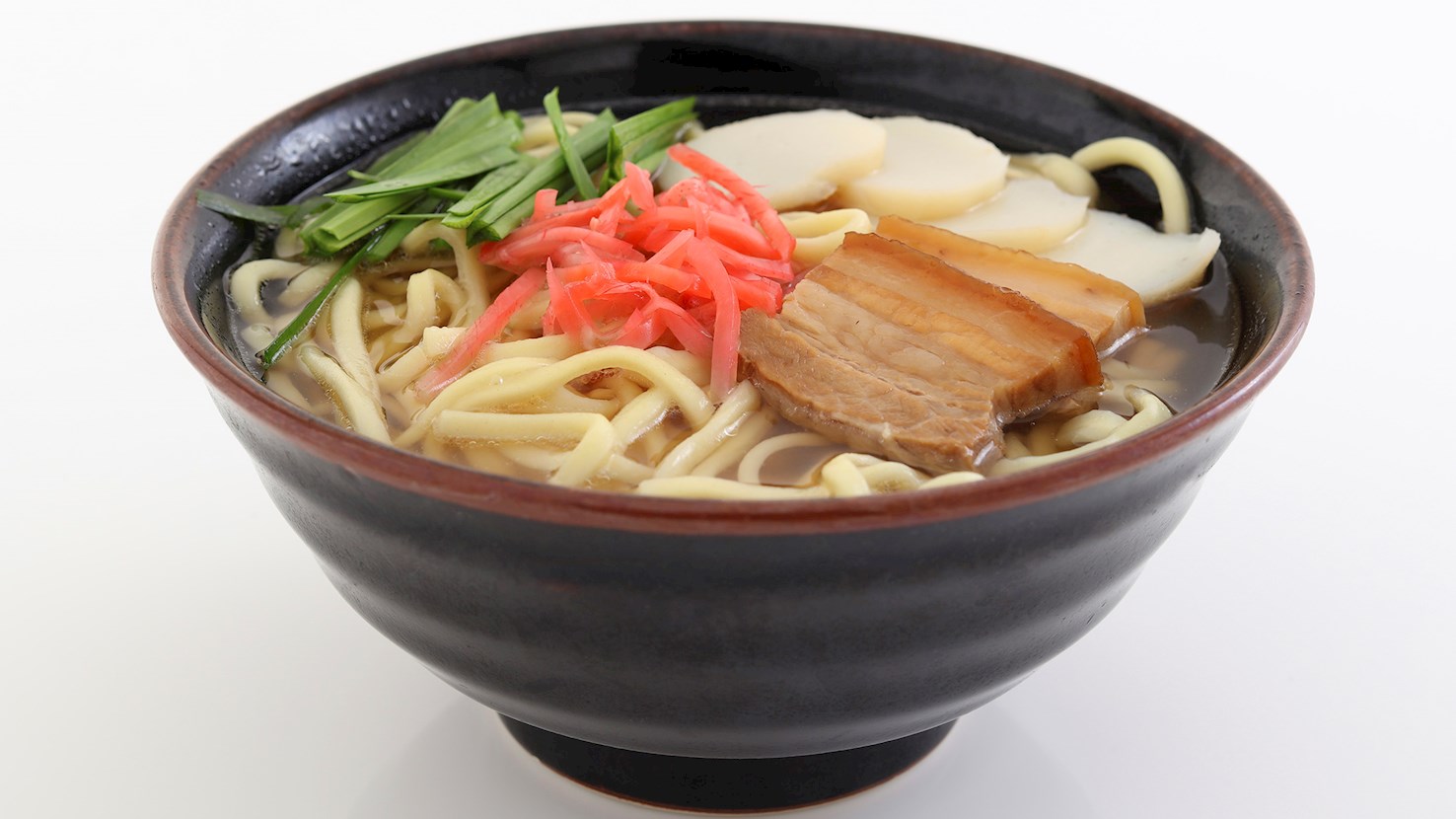
Okinawa soba is a variety of Japanese noodle soup originating from the Okinawa prefecture. Although the name soba traditionally encompasses buckwheat noodles, buckwheat is rarely used in Okinawa, and the noodles incorporated in this authentic dish are primarily made with wheat flour. They range from round and long varieties to the thicker and wider types. Pork, most commonly pork belly cooked in soy sauce is most often utilized in Okinawa soba, and the dish is usually topped with fish cakes, fish paste, sliced scallions, and pickled ginger. Finally, all ingredients are covered in dashi; an aromatic broth flavored with konbu seaweed, fish flakes, and pork. The first recorded mention of the dish goes back to 1902, but it was only in the 1960s that it became popular and commonly eaten by all social classes. Different varieties can be found across Okinawa, including additional ingredients such as extra ribs or the unusual pork’s trotter. The dish is served sizzling hot in traditional pots and eaten with chopsticks.
Kagoshima ramen is a variety of tonkotsu ramen prepared in southern Japan's Kagoshima prefecture. It is beloved by the locals, but not so popular in the rest of the country. A base of this ramen is a cloudy tonkotsu broth made with pork bones, enriched with chicken bones, vegetables, anchovies, kelp, and dried mushrooms to make a mixed broth. Two types of noodles can be used: the thicker ones, influenced by Okinawa, or extra-thin noodles similar to the Taiwanese vermicelli. This mellow, full-bodied ramen pairs nicely with pickled daikon or radishes.
Tamana ramen is a rich, historic pork-bone noodle soup from Tamana City, Kumamoto Prefecture. It is widely recognized as the direct ancestor of the famous Kumamoto ramen style. The dish's history began in 1952, when a popular Kurume ramen shop, Sankyu, opened near the local railway station. Its rich flavor inspired several aspiring chefs who later founded some of Kumamoto's most legendary ramen chains. Historically, Tamana ramen became highly popular among local seaweed farmers who needed a hot, hearty meal to warm their freezing bodies and regain stamina after working in the cold coastal waters. The dish is defined by a dense, savory tonkotsu broth paired with medium-thin, straight wheat noodles. Local noodle makers intentionally craft these noodles with a slightly uneven surface so they catch the thick soup perfectly, and the portions are typically larger than those found in neighboring cities. The absolute signature of Tamana ramen is its roasted or fried garlic topping. Unlike other styles where the garlic is mixed in during cooking, the toasted garlic in Tamana is added tableside. Waitstaff will specifically ask customers whether they want garlic, then sprinkle it directly over the hot broth right before eating, allowing each person to enjoy the intense, smoky flavor at its freshest.
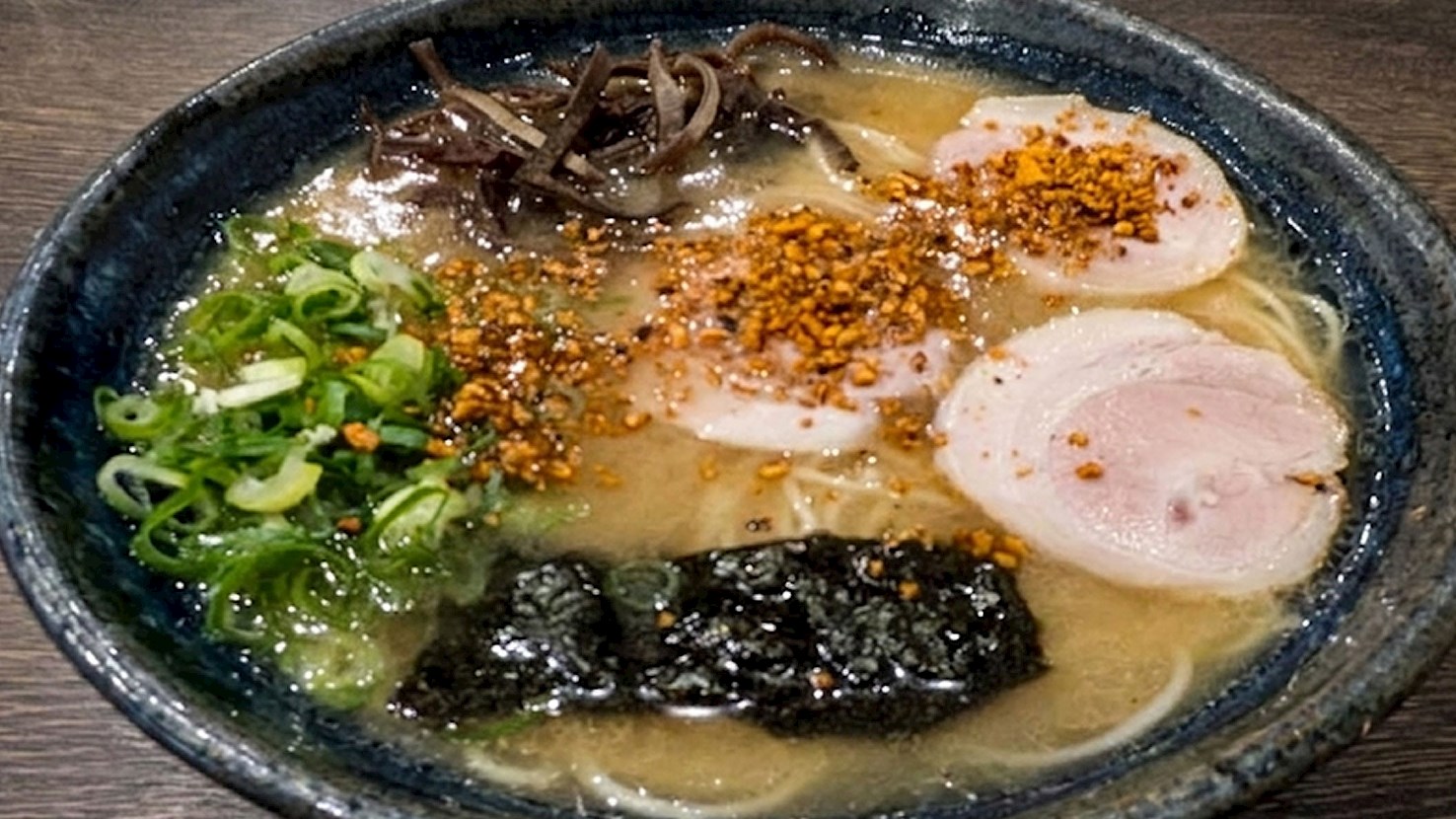
Originating in Kumamoto after being introduced from neighboring Kurume via Tamana city in the 1950s, Kumamoto ramen is a distinctive Japanese pork bone noodle soup that offers a carefully balanced alternative to standard tonkotsu dishes. According to local history, the style was pioneered by restaurateurs who rebuilt their livelihoods and opened shops like Komurasaki and Keika following the devastating 1953 Shirakawa flood. While the foundation relies heavily on pork bones, cooks frequently blend in chicken carcasses and crucially use the broth entirely on the same day rather than continuously boiling it, a practice that significantly reduces the strong, funky pork aroma associated with other regional styles. The absolute hallmark of this specialty is the liberal application of garlic, a technique originally developed by a chef at Keika. Cooks flavor the mild, mellow soup with crispy fried garlic chips, toasted garlic bits, and the iconic mayu, a deeply savory black roasted garlic oil that floats on the surface. Submerged in this highly aromatic liquid are medium-thick, straight wheat noodles with a low water content, which are purposefully boiled to a slightly firm texture. A comforting bowl is traditionally assembled with tender slices of roast pork or rich braised pork belly, Taiwanese-style seasoned boiled eggs, crunchy wood ear mushrooms, bamboo shoots, bean sprouts, and fresh scallions, creating a uniquely satisfying dish that has expanded from local Kumamoto eateries to international prominence.
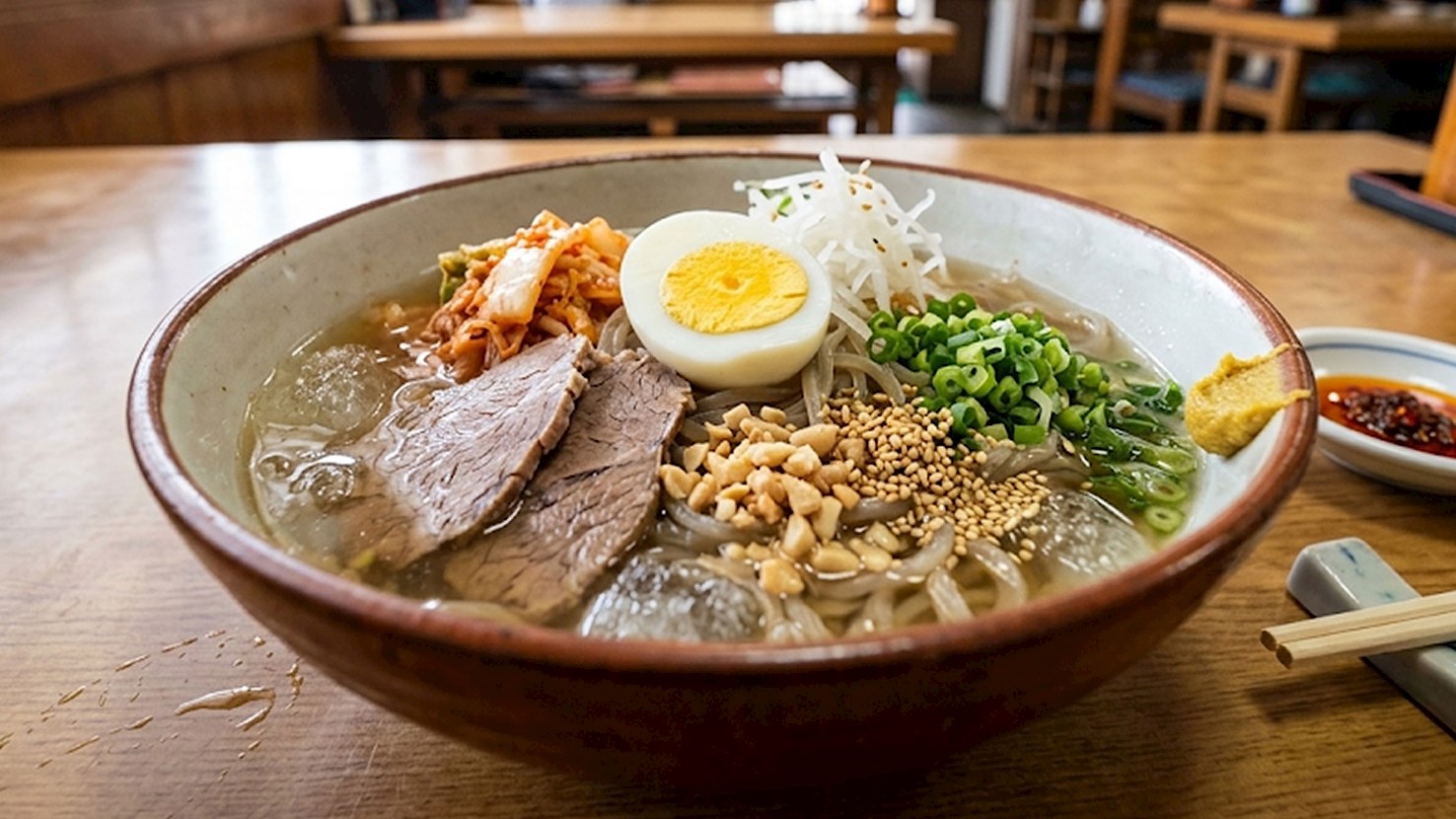
Beppu reimen is a chilled noodle dish from the coastal city of Beppu in Oita Prefecture, defined by a firm buckwheat-based noodle and a soup that blends beef stock with Japanese seafood dashi. This specific variety appeared in 1950, credited to a Japanese repatriate who had lived in the northern Korean Peninsula and opened the restaurant Arirang upon returning to Kyushu. While similar cold noodle dishes in Japan moved toward a purely beef-centered profile, the version in Beppu was modified to align with local preferences for lighter, umami-rich flavors found in traditional Japanese cooking. This led to a distinct divergence from the Morioka style, with Beppu reimen eventually split into two categories: the "Yakiniku-style," served as a palate cleanser in barbecue houses, and the "Specialty-store style," which functions as a standalone meal in dedicated shops. The noodles are made from a mixture of wheat flour, buckwheat flour, and potato starch, which are combined into a dough and forced through a mechanical extruder directly into a boiling cauldron. This method yields a thick, rounded noodle with a dark hue and significant resistance to the bite, resulting in a much denser texture than standard ramen. The soup preparation involves a dual-layered process where a clarified beef bone broth is combined with a cold extraction of dried anchovies (iriko) and kelp (konbu). This technical combination ensures the liquid remains refreshing at low temperatures without the heavy mouthfeel of congealed animal fats. A unique functional component of the dish is the use of aggressively fermented cabbage kimchi, which is aged longer than typical table kimchi to ensure its lactic acid is sufficiently sharp, sharpening the savory dashi when mixed into the bowl. Beppu reimen is served in a deep ceramic bowl, with the cold broth submerged under a mound of noodles and topped with slices of lean, braised beef, a halved hard-boiled egg, and the signature sour cabbage. A specific characteristic of the Beppu presentation is the addition of thick-cut, crunchy cucumber slices briefly cured in salt. Unlike other regional cold noodles that utilize fruit to offset spice, Beppu reimen relies on the interplay between the earthy buckwheat and the briny, acidic notes of the seafood-beef broth. The dish is primarily consumed in Beppu, often as a light lunch for residents or as a restorative meal for visitors to the local hot spring districts. It is eaten by dipping the thick noodles into the broth and is frequently paired with chilled water or local Oita shochu, which complements the fermented depth of the kimchi.
Kurume ramen is a noodle dish from Kurume City, Fukuoka Prefecture, characterized by a dense, opaque pork bone broth known as tonkotsu. This ramen type is the precursor to the better-known Hakata style and has a high concentration of dissolved fats and marrow that create a creamy, off-white appearance and a potent aroma. It was created in 1937 when Tokio Miyamoto opened a food stall called Sankyu in front of Kurume Station, initially serving a clear pork broth inspired by the shoyu and salt ramen of Tokyo and Yokohama. In 1947, a cooking error at the stall resulted in the pork bones being boiled at a high heat for an extended period, causing the lipids and collagen to emulsify and turn the liquid milky. Rather than discarding the batch, Miyamoto refined the technique, which became the standard for the region and eventually spread across the island of Kyushu. Kurume ramen is prepared using a specific technique called yobimodo-shi, or "calling back," in which the stockpot is never fully emptied. As the soup is served throughout the day, fresh water and new pork bones are added to the existing base, allowing some of the original marrow and flavor to remain in the pot for decades. The bones, typically a mix of skull and leg bones, are boiled vigorously to break down the connective tissue into gelatin. The seasoning for this heavy broth is a concentrated soy sauce-based tare, or less frequently miso, which is placed in the bowl before the soup is added. This shoyu tare provides the necessary salinity and fermented depth to balance the richness of the animal fats and marrow. The noodles used in Kurume are straight and slightly thicker than those in nearby Fukuoka City, and they are usually cooked to a medium-firmness. Common toppings include pork chashu, green onions, and wood ear mushrooms, though a hallmark of Kurume ramen is the addition of fried pig fat cubes known as karikari. Many shops also include a square of nori seaweed, lightly dipped in the soup to soften it before serving. However, it is common for diners to customize their bowl at the table using jars of pickled red ginger (beni shoga), crushed garlic, and toasted sesame seeds, which help to balance the heaviness of the fat. A frequent practice is ordering kaedama, or a second serving of noodles, to be added to the remaining broth once the first portion is finished. The dish is often paired with small sides of fried rice (yakimeshi) or pan-fried gyoza. Due to the high sodium and fat content, the most common beverage pairings are cold water, hot jasmine tea, or a sharp, carbonated beer to provide a structural contrast to the soup's viscous texture.
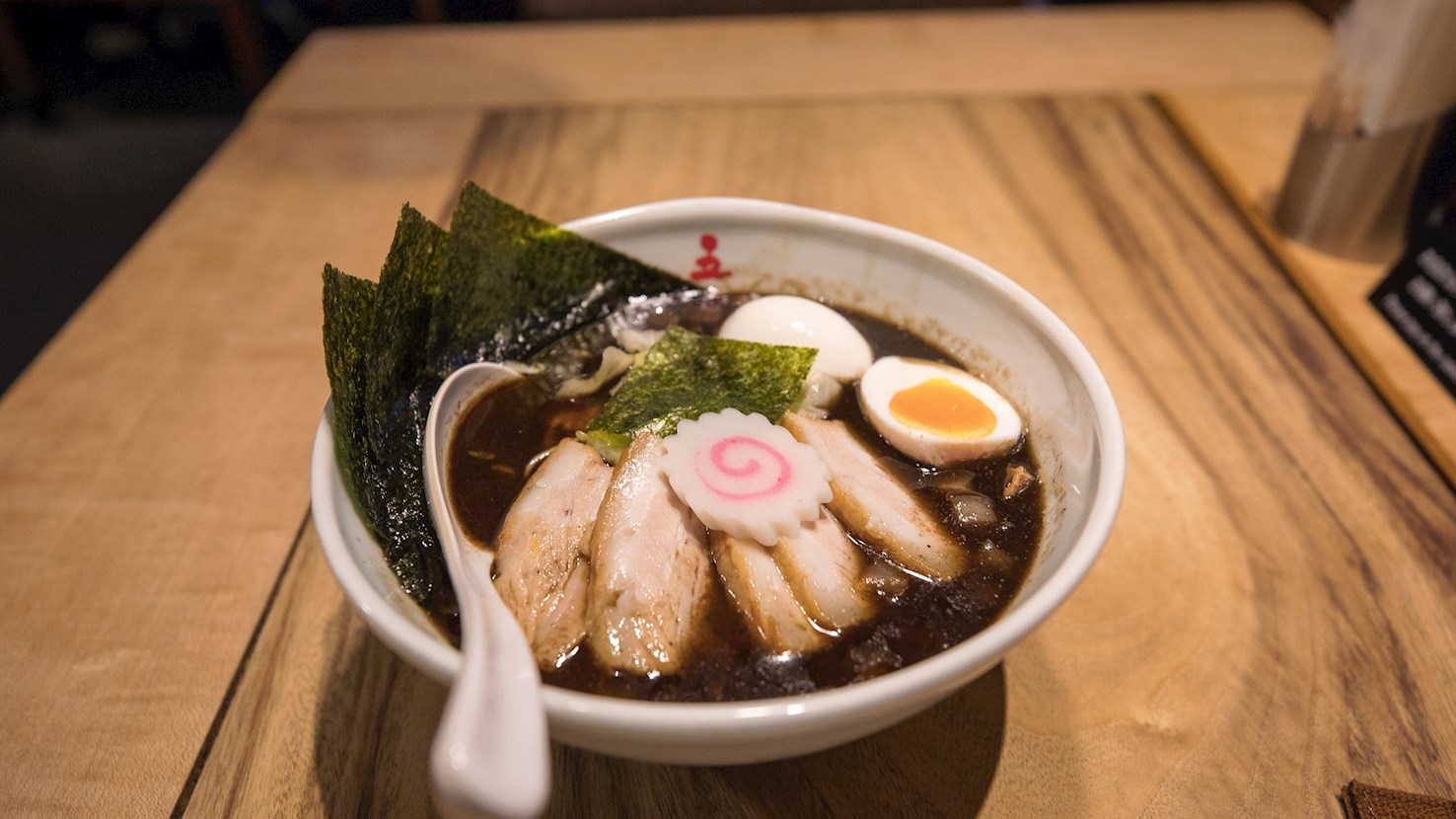
Burnt miso ramen or kogashi ramen is a traditional ramen variety. It’s usually made with a combination of sliced pork, pork lard, ramen noodles, cabbage, fish cakes, poached eggs, roasted nori seaweed, soy sauce or miso, and stock. The dish originates from Hakata and it was created in 2000 by Shigemi Kawahara. The broth is black, rich, slightly bitter, and full of umami, and it’s the main characteristic of this ramen variety. The noodles need to be a bit thicker in order to withstand the intense heat of the broth. When served, burnt miso ramen is slowly sipped, while the noodles should be slurped as they cool down with the help of the air that you suck in while eating them.
TasteAtlas food rankings are based on the ratings of the TasteAtlas audience, with a series of mechanisms that recognize real users and that ignore bot,
nationalist or local patriotic ratings, and give additional value to the ratings of users that the system recognizes as knowledgeable.
For the “Top 11 Kyushu Soups” list until June 15, 2026, 1,053 ratings were recorded, of which 837 were recognized by the system as legitimate.
TasteAtlas Rankings should not be seen as the final global conclusion about food. Their purpose is to promote excellent local foods,
instill pride in traditional dishes, and arouse curiosity about dishes you haven’t tried.