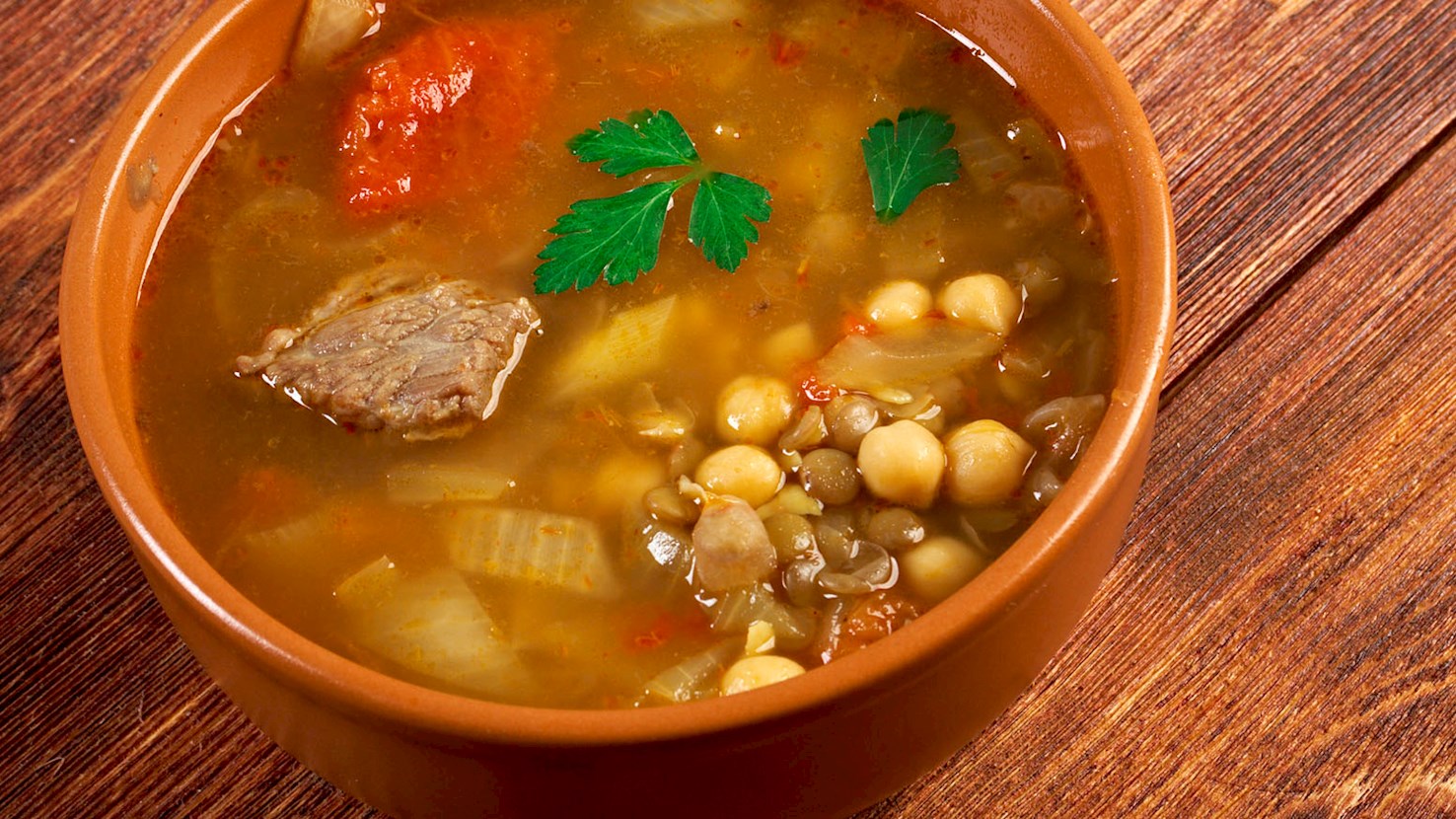
Harira is a herb-rich, tomato-based soup with a velvety-smooth, creamy texture, as the word hareer signifies velvetiness in Arabic. It's the most popular soup in Morocco, symbolizing the unification of people during Ramadan, the holy month of fasting in the Muslim calendar. According to religious law, practitioners may not eat or drink anything between dawn and sunset. At sunset, when the cannons strike, Moroccans eat their first meal of the day - the obligatory harira soup, accompanied by dates, figs, coffee, or milk, along with fried honey cookies shaped like flowers and sprinkled with sesame, called chebakia. Harira is made from a variety of legumes such as lentils, fava beans, and chickpeas, tomato sauce, harissa paste, and fresh herbs such as parsley, turmeric, saffron, lemon, caraway seeds, and coriander, but every region in Morocco has its own version of the soup. It's also very popular in Algeria. Harira can be either vegetarian or stuffed with bits of lamb, chicken, beef, or fish meat. In some cases, beaten eggs or flour and water mixture are whisked into the soup near the end of cooking in order to give it a slightly different texture and to thicken it. Spicy, peppery, nourishing, rich with vegetables and meat, harira is a true delicacy in the world of soups.
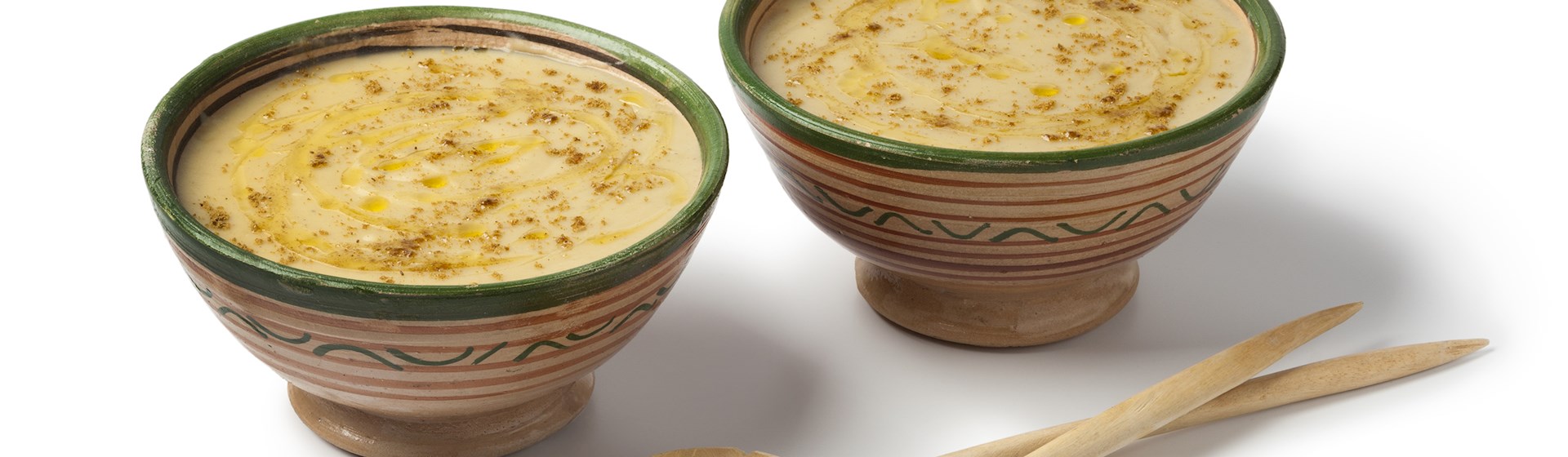
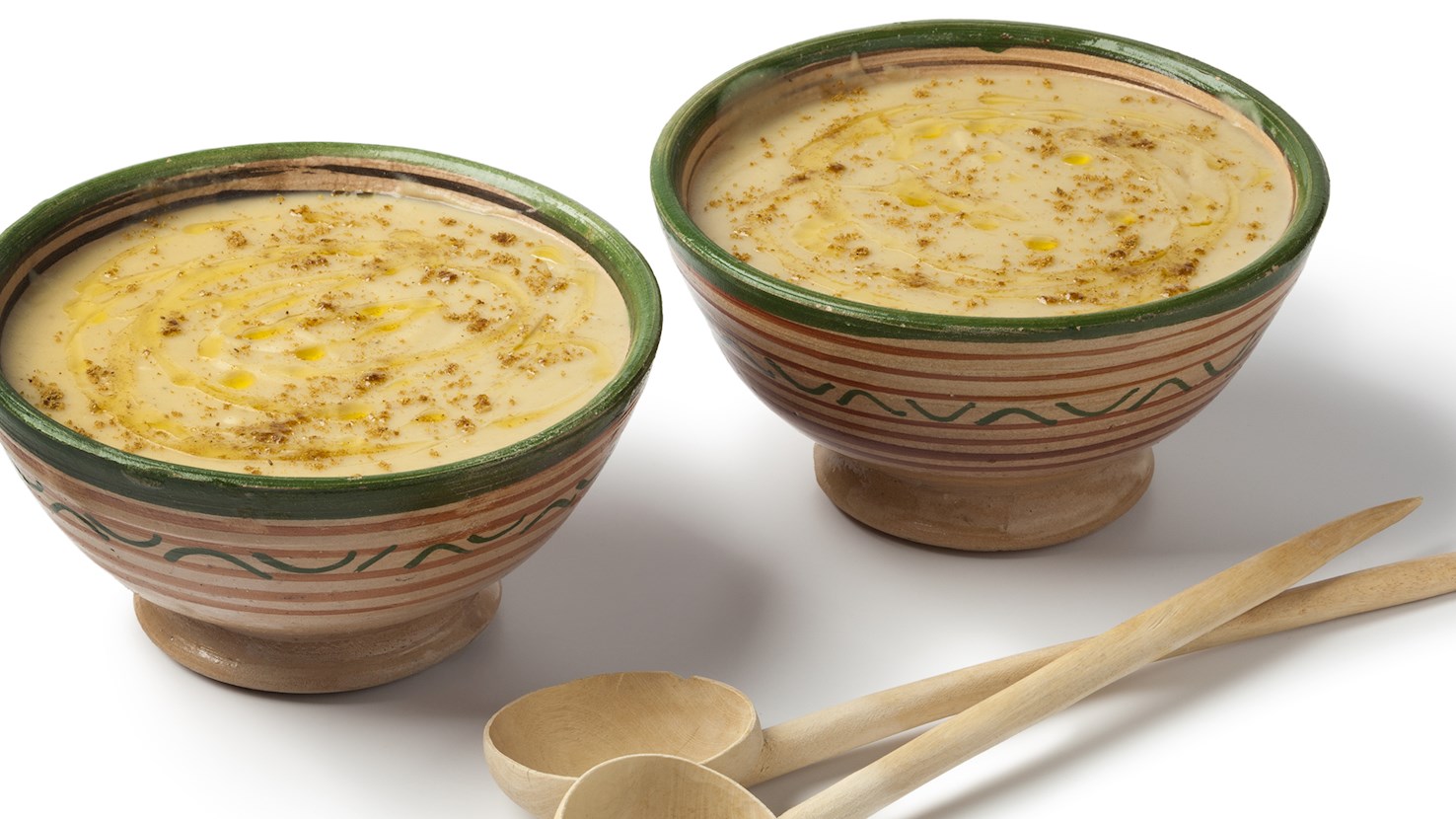
Bissara is a comforting Egyptian and Moroccan dish made with puréed beans – either split peas or dried fava beans. It can be prepared in the form of a soup or porridge, while the thicker versions are commonly used as a dip. The puréed beans are typically seasoned with olive oil, lemon juice, and garlic, and the dish is often served with paprika and cumin on the side, while crusty bread is almost mandatory. Bissara is traditionally served for breakfast, and it is especially popular during winter.
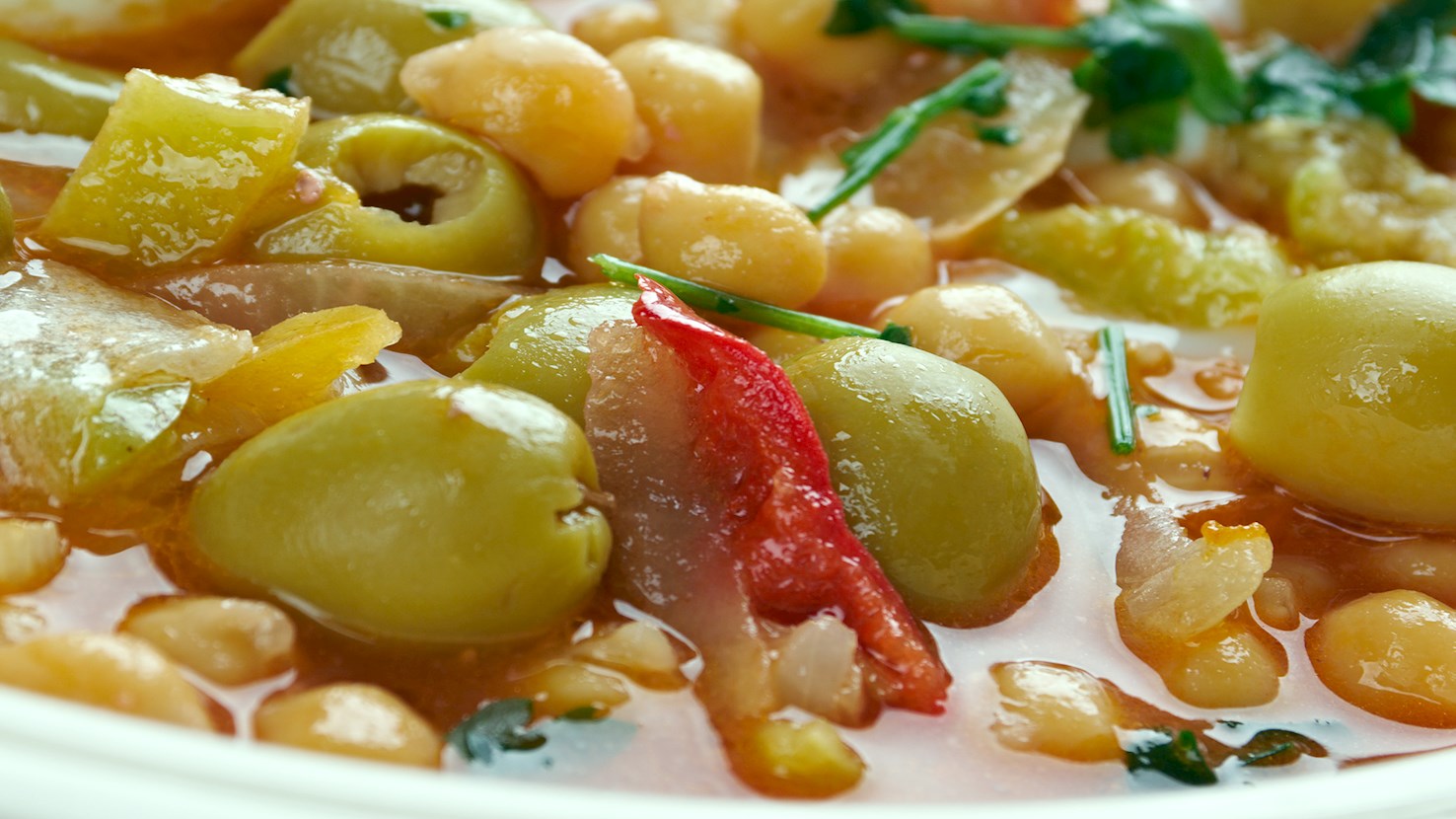
Tunisian chickpea soup is a real working class staple — cheap, quick to prepare, filling, and commonly found at inexpensive restaurants. Lablabi is a hot and spicy dish, also quite greasy and heavy, and typically flavored with garlic, cumin, and harissa. It is traditionally served ladled over chunks of stale crusty bread, drizzled with olive oil, sometimes even with either vinegar or lemon or lime juice, and often garnished with cilantro, parsley, and scallions. Special versions of lablabi include capers, olives, pickled vegetables and tuna, while another variety called hergma is made with cow's hooves.
Sharba Libiya is often considered the national dish of Libya, and it is especially popular during Ramadan. Although there are versions made with chicken or fish, the traditional version of this aromatic soup is prepared with lamb and dried mint as the key ingredients. Apart from those, the soup consists of onions, tomatoes, olive oil, tomato paste, chopped parsley, tiny pasta, and chickpeas. It is heavily flavored with turmeric, red paprika, black pepper, cinnamon, cardamom, bay leaves, and shaiba leaves (also known as dagad phool in Indian cuisine). When served, sharba Libiya is typically paired with lemon wedges and tanoor bread on the side in order to make the dish even more satisfying and nourishing.
The traditional soup known as chorba frik is one of the staples of Algerian diet. It is a tomato-based soup made with meat, chickpeas, and an ancient grain called freekeh (or frik). The dish is seasoned with traditional Algerian spices such as mint or coriander, which give the dish a typical oriental flavor. The main ingredient, frik, is a grain that is frequently used in many Algerian dishes. This ancient cereal, familiar to the Mediterranean and Arabic countries, has an unusual green color, and resembles the more popular bulgur. Chorba frik is a dish that is usually associated with the eastern parts of the country, but it can be found throughout Algeria. Since it is highly nutritious, it is often served on its own. Various breads or a traditional Algerian flatbread, kesra, are usually served on the side. The dish is typically served on Ramadan, after breaking the fast. On Ramadan, a bowl of chorba frik is usually served with borek – a crispy pastry filled with minced meat.
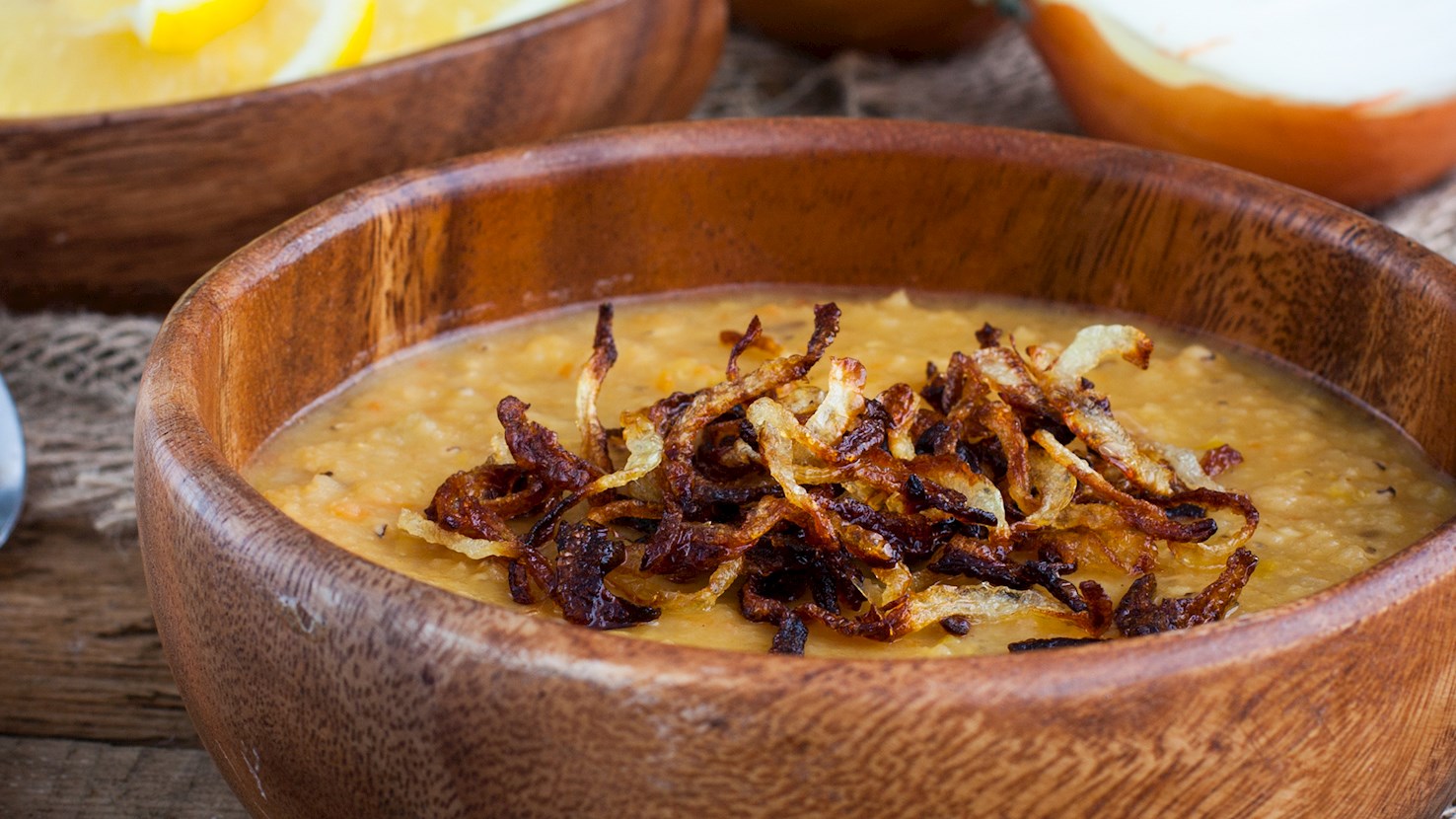
Hasa adas is a healthy Lybian soup that is also suitable for vegetarians. It has a thick consistency and is typically made with lentils, carrots, onions, and tomatoes. The soup is traditionally flavored with garlic and cumin. Once prepared, hasa adas is garnished with crispy and sweet caramelized onions or toasted pieces of bread. When made with dried meat, the soup is often poured over toasted Arabic bread, and the creation is then called fattat adas, usually consumed as a warming winter dish.
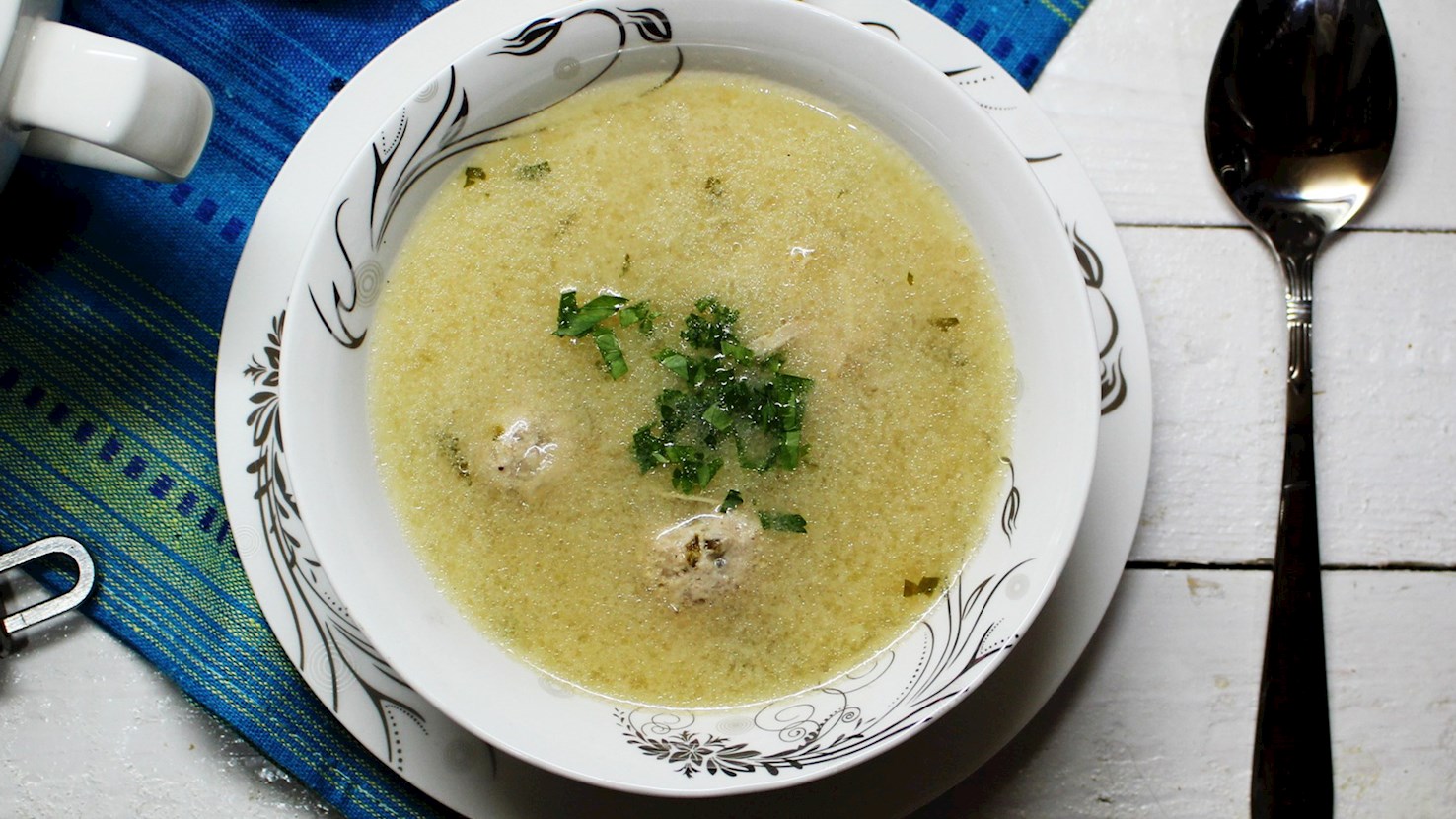
Chorba beïda is a rich and nourishing Algerian white chicken soup that's traditionally prepared for Ramadan. It's usually made with a combination of chicken, onions, carrots, celery, garlic, butter, cinnamon, chickpeas, and seasonings. The chicken pieces are first browned and the vegetables are cooked until they soften. Water is added to the pot and the soup is simmered for a while along with chickpeas. Near the end of cooking, a combination of egg yolks, lemon juice, and parsley or coriander is stirred into the soup. When served, chorba beïda is often accompanied by crusty bread on the side.
Although the traditional sharba Libiya soup is made with lamb and mint, this variety, known as sharba Libiya bil dajaj wa alzatar is much lighter, prepared with chicken and thyme as the key ingredients. Apart from chicken and thyme, the soup is made with onions, tomatoes, tiny pasta, and flavorings such as parsley, cinnamon, bay leaves, cardamom, turmeric, and cloves. Served with lemon wedges and fresh bread on the side, this aromatic soup is a staple of every Iftar table during Ramadan.
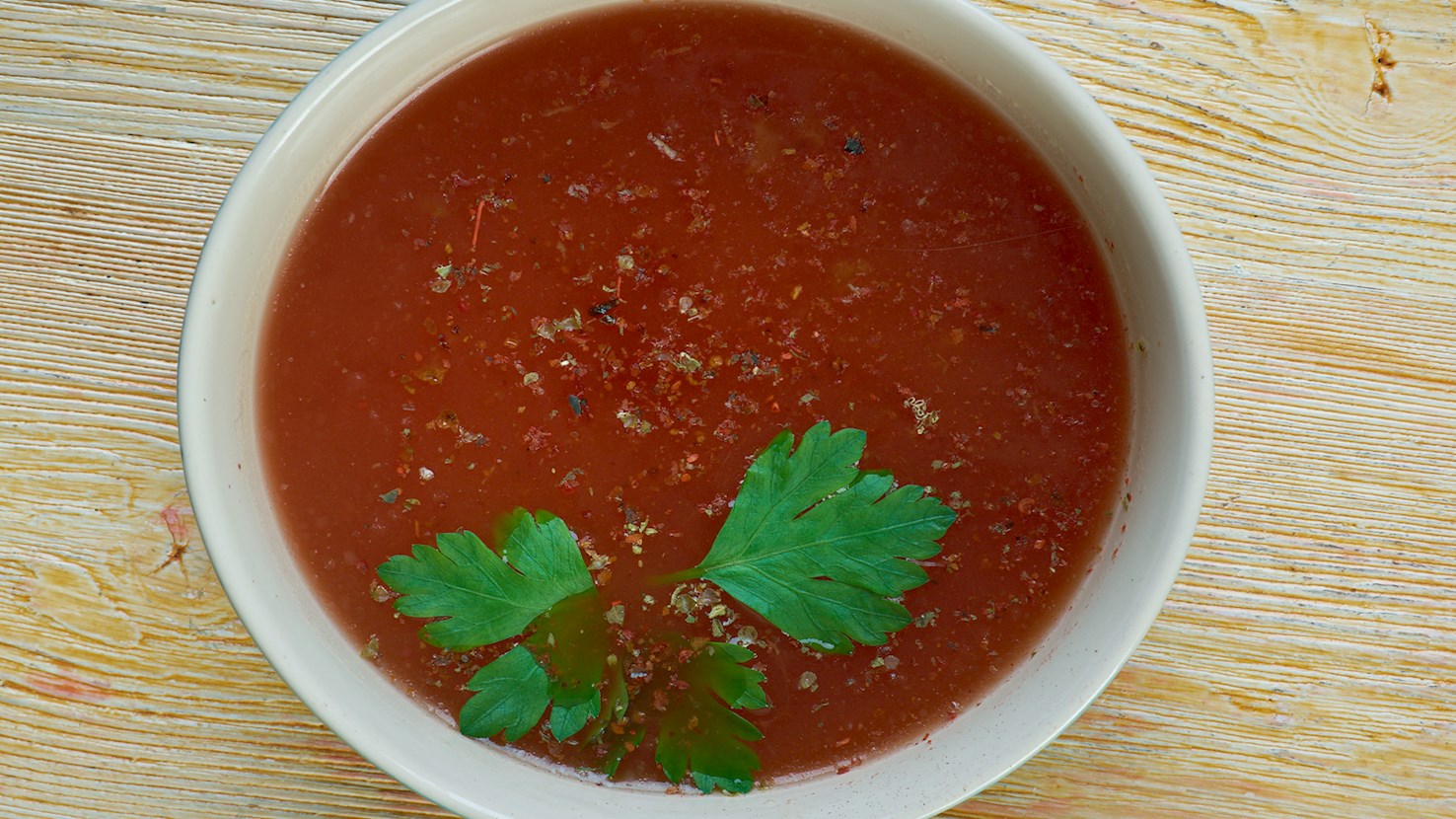
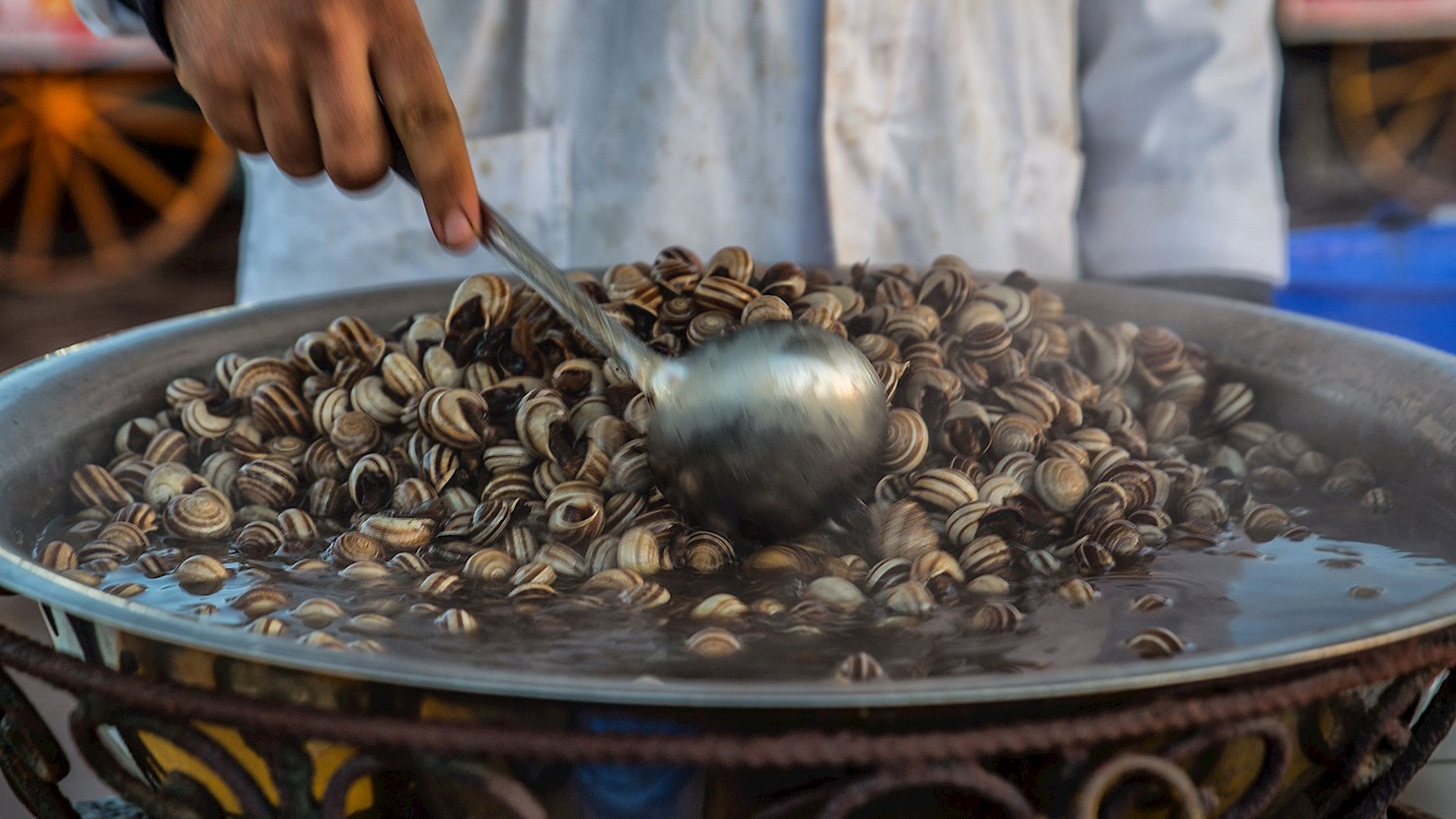
Babbouche, also known in Morocco as bebbouch, ghlala, or ghlal, is a street food made with land snails simmered in a dark, strongly seasoned herbal broth. It is especially associated with evening food stalls and busy public squares such as Jemaa el-Fnaa in Marrakech, although it is also sold in other Moroccan cities. The dish is valued as much for the broth as for the snails themselves, and many people drink the hot liquid at the end as a warming, medicinal-tasting finish. The snails are cleaned carefully before cooking. In home and vendor versions, they are usually washed several times, often with salt, vinegar, or water, until the shells are free of dirt. Some cooks also keep the live snails for a short period before cooking so they can purge naturally. Once cleaned, the snails are cooked in a large pot of water with a mixture of herbs, spices, and bitter aromatics. The exact blend changes from vendor to vendor, but it often includes thyme, mint, aniseed, caraway, licorice root, ginger, black pepper, dried orange peel, bay leaves, rosemary, lavender, or small amounts of tea leaves. Many Moroccan recipes describe the broth as having well over a dozen flavoring ingredients, which is why babbouche tastes sharper and more herbal than a simple snail stew. The pot is brought to a boil, then simmered until the snails are tender and the broth has deepened to a rich brown. The result is a hot bowl of snails in their shells, served with enough broth to sip. The meat is pulled from each shell with a toothpick or small pin, then the spiced liquid is drunk from the bowl. The flavor is earthy, peppery, and intensely herbal, with a slight bitterness from ingredients such as licorice root, tea, or dried citrus peel. Babbouche is most often eaten as a street snack in the evening, especially in cooler weather. Vendors serve it from large metal pots, ladling the snails and broth into small bowls for customers who stand or sit nearby. It is not usually treated as a full meal and does not require many accompaniments, though it can be followed by mint tea or another hot drink.
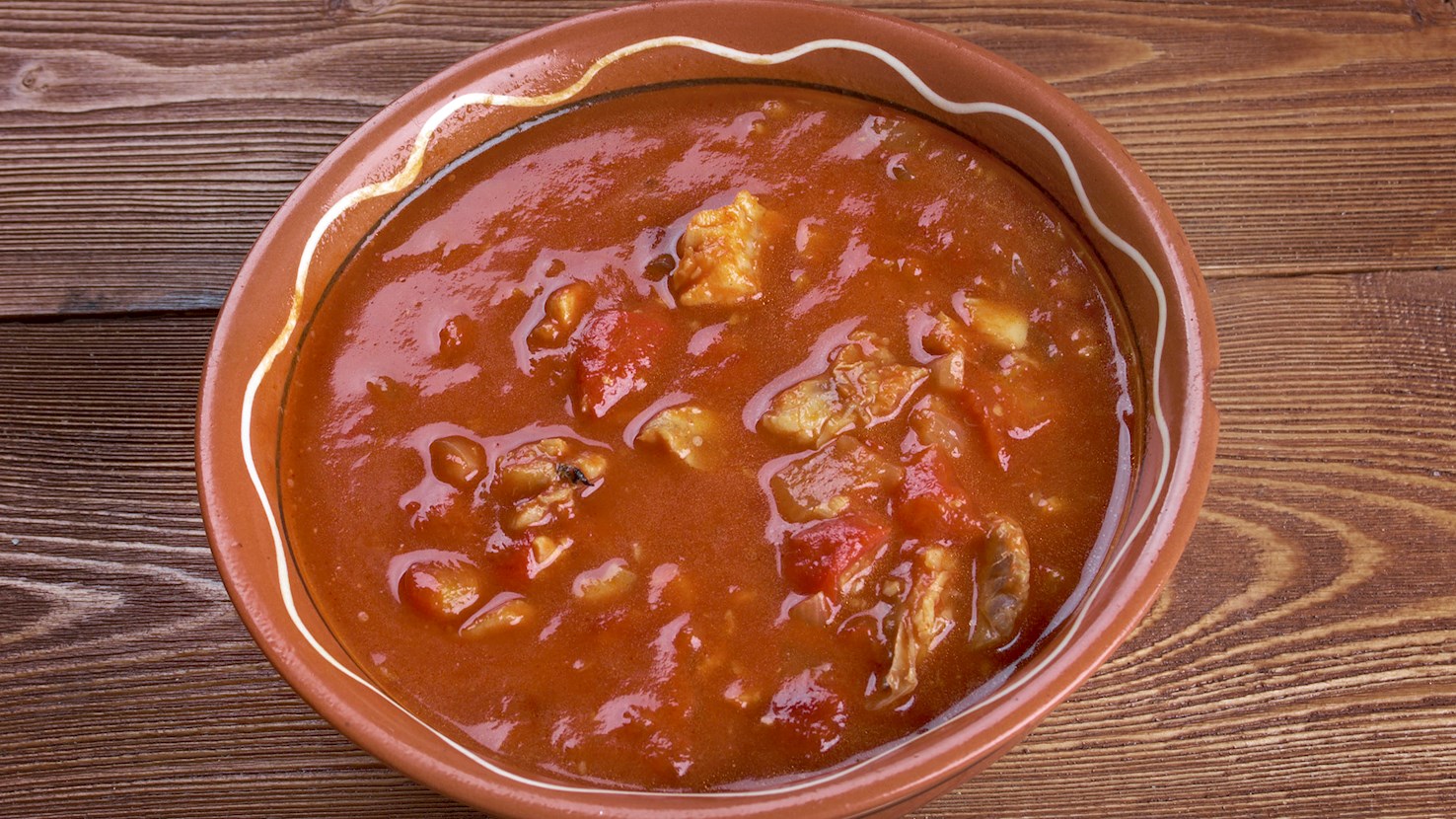
Hassa dernawi is a thick Libyan soup that is traditionally prepared and consumed during winter. It consists of lamb, chopped tomatoes, tomato paste, water, and flavorings such as turmeric, chili powder, and black pepper. The soup can be additionally thickened with white flour, while fresh herbs such as coriander, basil, and mint are important elements of this hassa soup variety hailing from the city of Derna. It is recommended to serve the soup piping hot with a lemon wedge on the side.
TasteAtlas food rankings are based on the ratings of the TasteAtlas audience, with a series of mechanisms that recognize real users and that ignore bot,
nationalist or local patriotic ratings, and give additional value to the ratings of users that the system recognizes as knowledgeable.
TasteAtlas Rankings should not be seen as the final global conclusion about food. Their purpose is to promote excellent local foods,
instill pride in traditional dishes, and arouse curiosity about dishes you haven’t tried.





What People Say