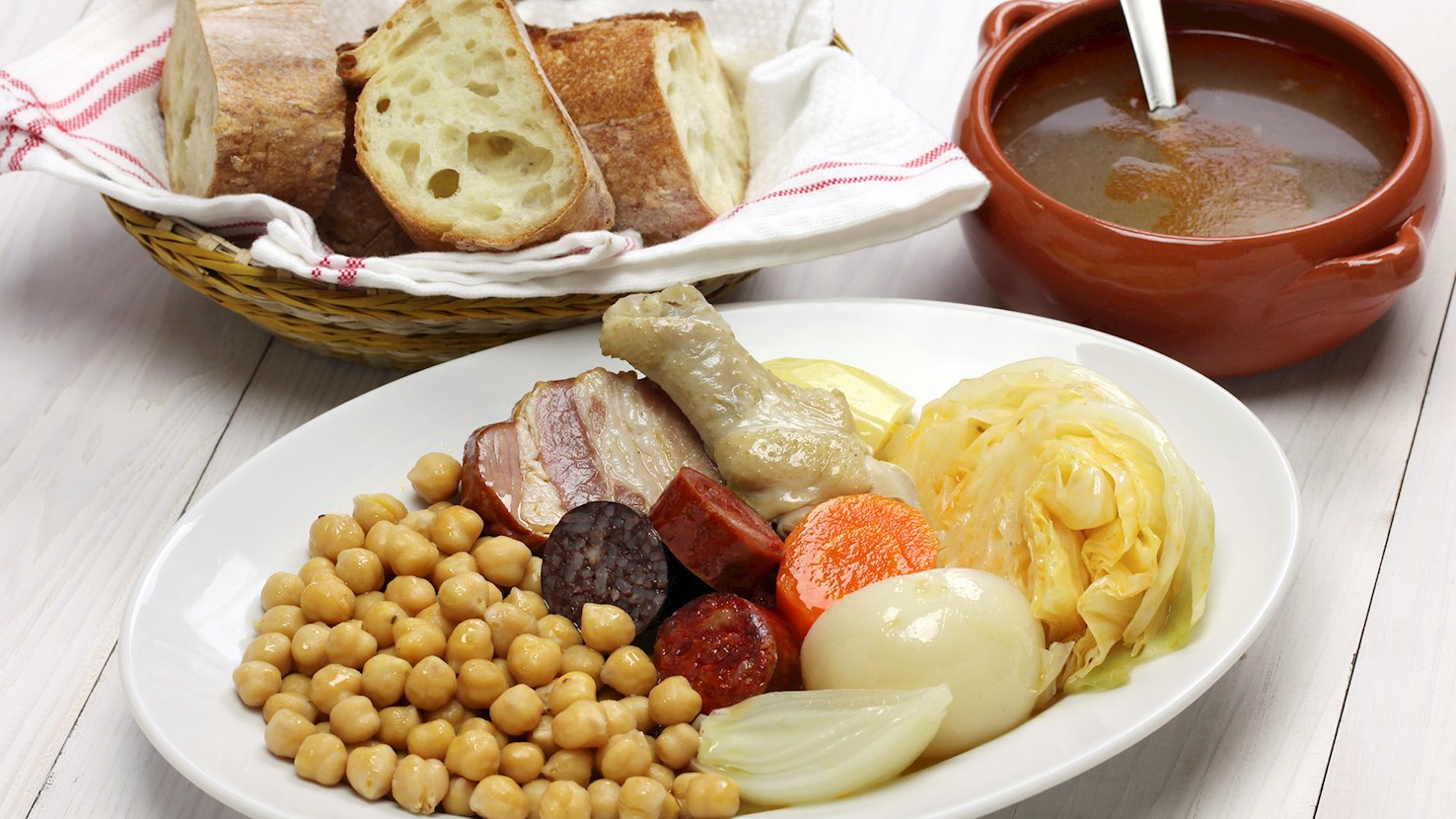
One of the most emblematic dishes of Madrilenian cuisine known as cocido madrileño is a hearty meat and chickpea stew whose origins can be traced back to the medieval-era Castilla La Mancha. Some food historians claim that this one-pot meal evolved from a peasant dish called olla podrida Manchega, but wasn't named cocido madrileño until the 17th century. However, most sources agree that the famed dish has its roots in the Sephardic stew called adafina–a Shabbat kosher meal based on chickpeas, vegetables, and either hard-boiled eggs or meat such as lamb, veal, beef, or chicken. With the arrival of the Inquisition, feared of prosecution by the Catholic priests who roamed the streets of Madrid at the time–in search of both Jewish and Muslim cookery–the converted Spanish Jews called Marranos started incorporating pork into their adafinas to prove themselves as Christians. Over time, with the addition of lard, bacon, Serrano ham, chorizo (pork sausages) and morcilla (blood sausages), adafina reportedly became the dish that is now known as cocido madrileño. This substantial meal is traditionally served in three separate vuelcos or courses: the first one is a rich, flavorful stock with added noodles; the second vuelco consists of chickpeas and vegetables, while the meat is dished out as the third course. Once commonly consumed during winter, cocido madrileño can nowadays be found prepared throughout the year in many of Madrid's restaurants and taverns.
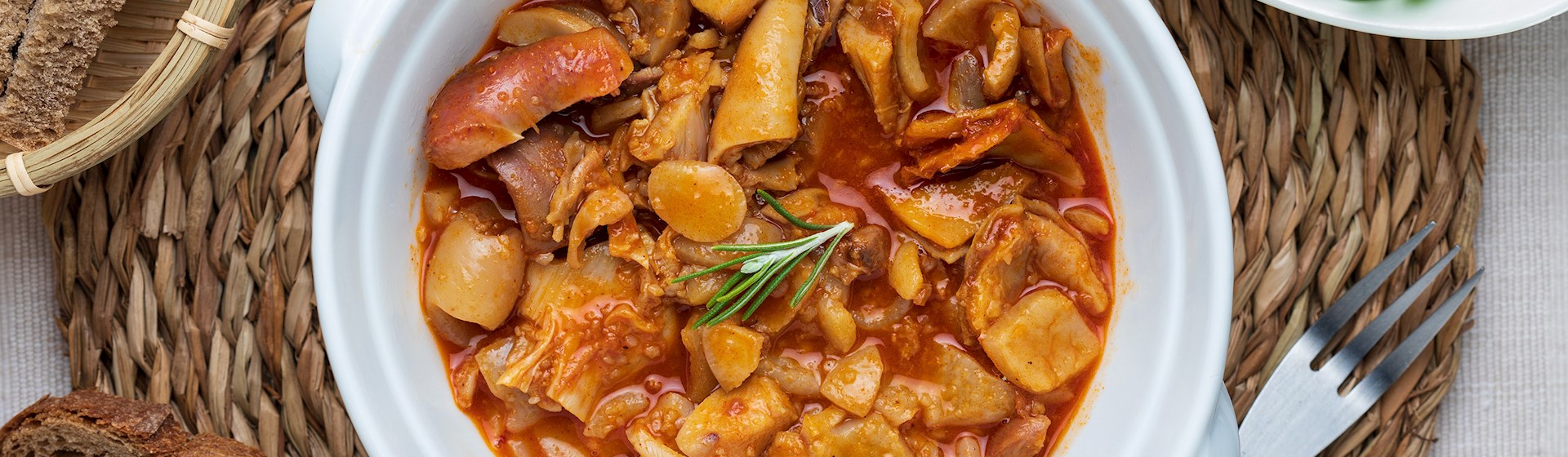
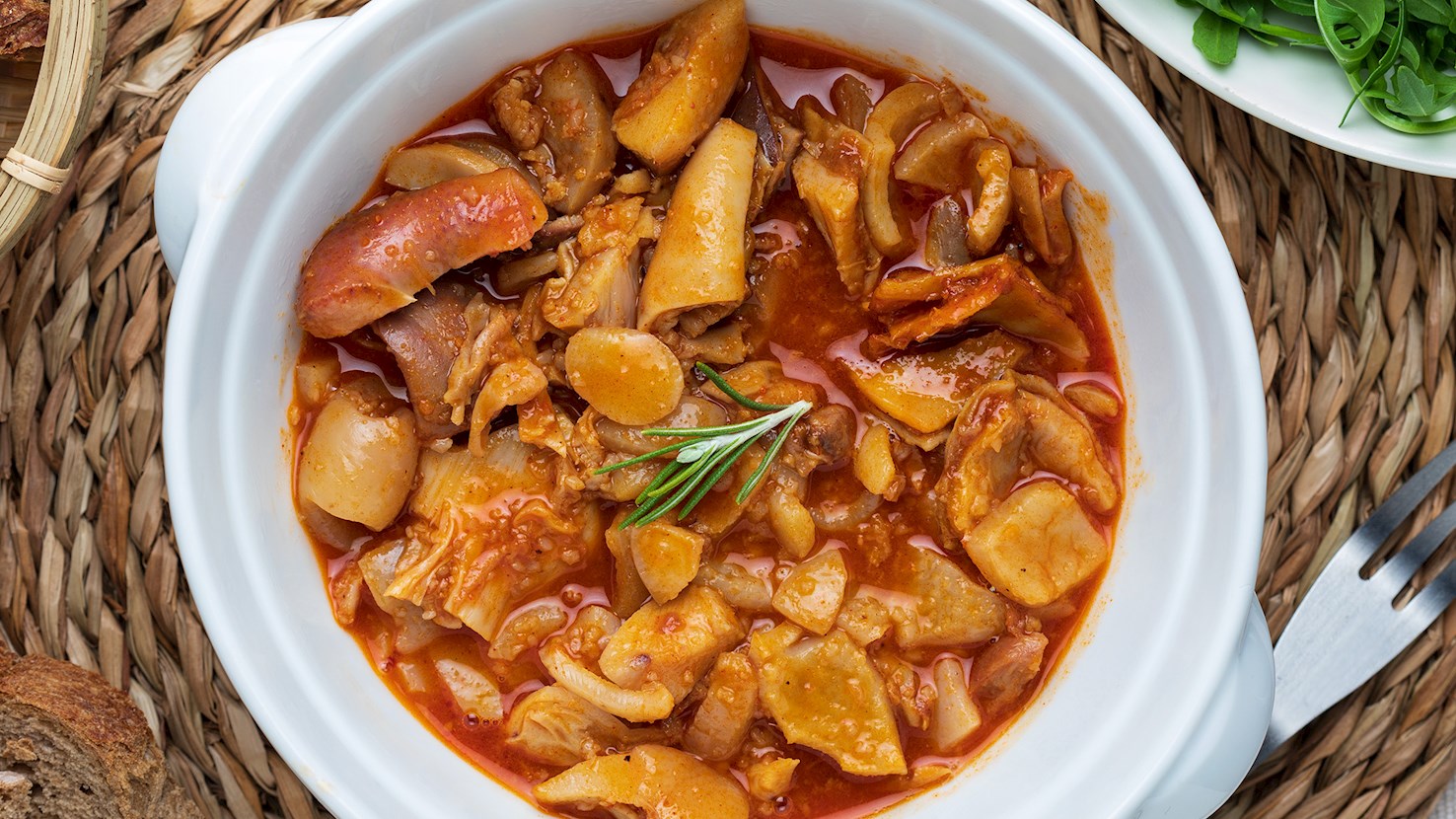
Callos a la Madrileña or Madrid-style tripe is a Spanish dish that consists of tripe, ham, chorizo, and morcilla (blood sausage) cooked in a broth with onions, tomato sauce, garlic, and paprika. Bay leaves, parsley, and saffron are added for extra flavor, while optional ingredients include breadcrumbs, white vinegar, and garbanzo beans. The dish is cooked slowly at medium to low heat until the broth develops a thick consistency. This typical Madrid dish is believed to date back to the 19th century. Before the 19th century, the dish was served in taverns, but then a luxury restaurant Lhardy included it in its menu and it became widely popular. Nowadays, this stew is traditionally served in earthenware bowls accompanied by rustic bread on the side.
Carne al desarreglo is a traditional stew originating from Madrid. The stew is usually made with a combination of beef, tomatoes, onion, garlic, white wine, olive oil, salt, and black pepper. The beef is cut into cubes and browned in a pan with sautéed onions and garlic. The mixture is covered with white wine and cooked until the liquid is reduced. Tomatoes are added to the pot, and the stew is then simmered until everything is tender and the sauce thickens. The stew is traditionally served in the summer when tomatoes are in season, and it's typically accompanied by patatas chulas – potato slices that are fried in oil and dressed with garlic and parsley.
TasteAtlas food rankings are based on the ratings of the TasteAtlas audience, with a series of mechanisms that recognize real users and that ignore bot,
nationalist or local patriotic ratings, and give additional value to the ratings of users that the system recognizes as knowledgeable.
For the “Top 3 Madrilenian Stews” list until June 15, 2026, 136 ratings were recorded, of which 113 were recognized by the system as legitimate.
TasteAtlas Rankings should not be seen as the final global conclusion about food. Their purpose is to promote excellent local foods,
instill pride in traditional dishes, and arouse curiosity about dishes you haven’t tried.