

shutterstock

Top 31 Stews
in East Asia

Last updated on September 15, 2026
01

Karē

4.4 ·

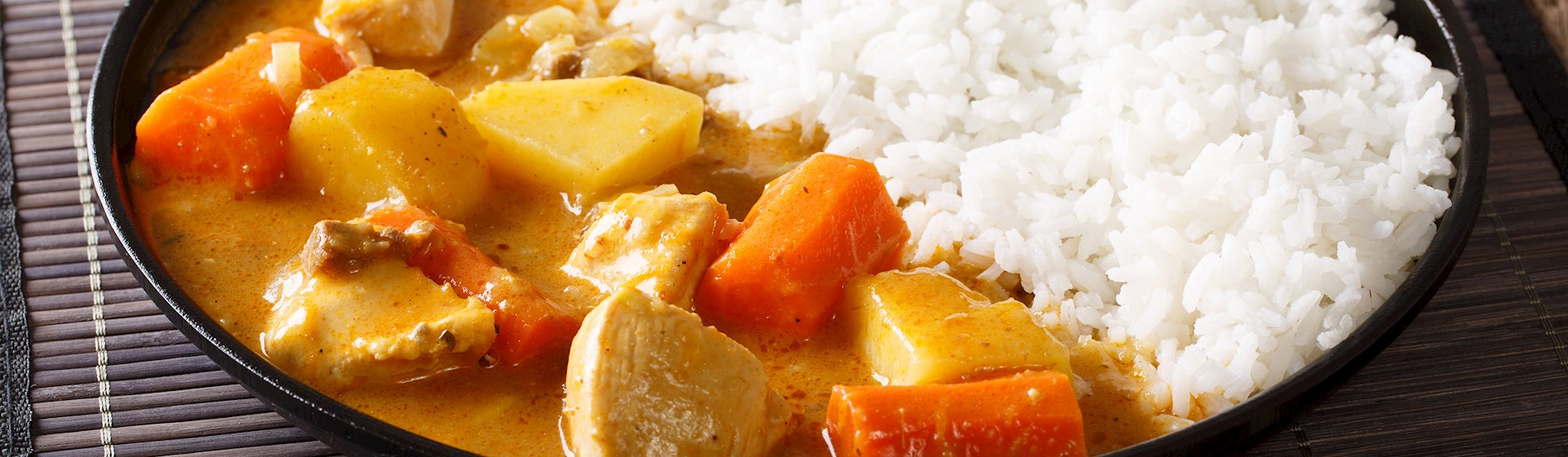
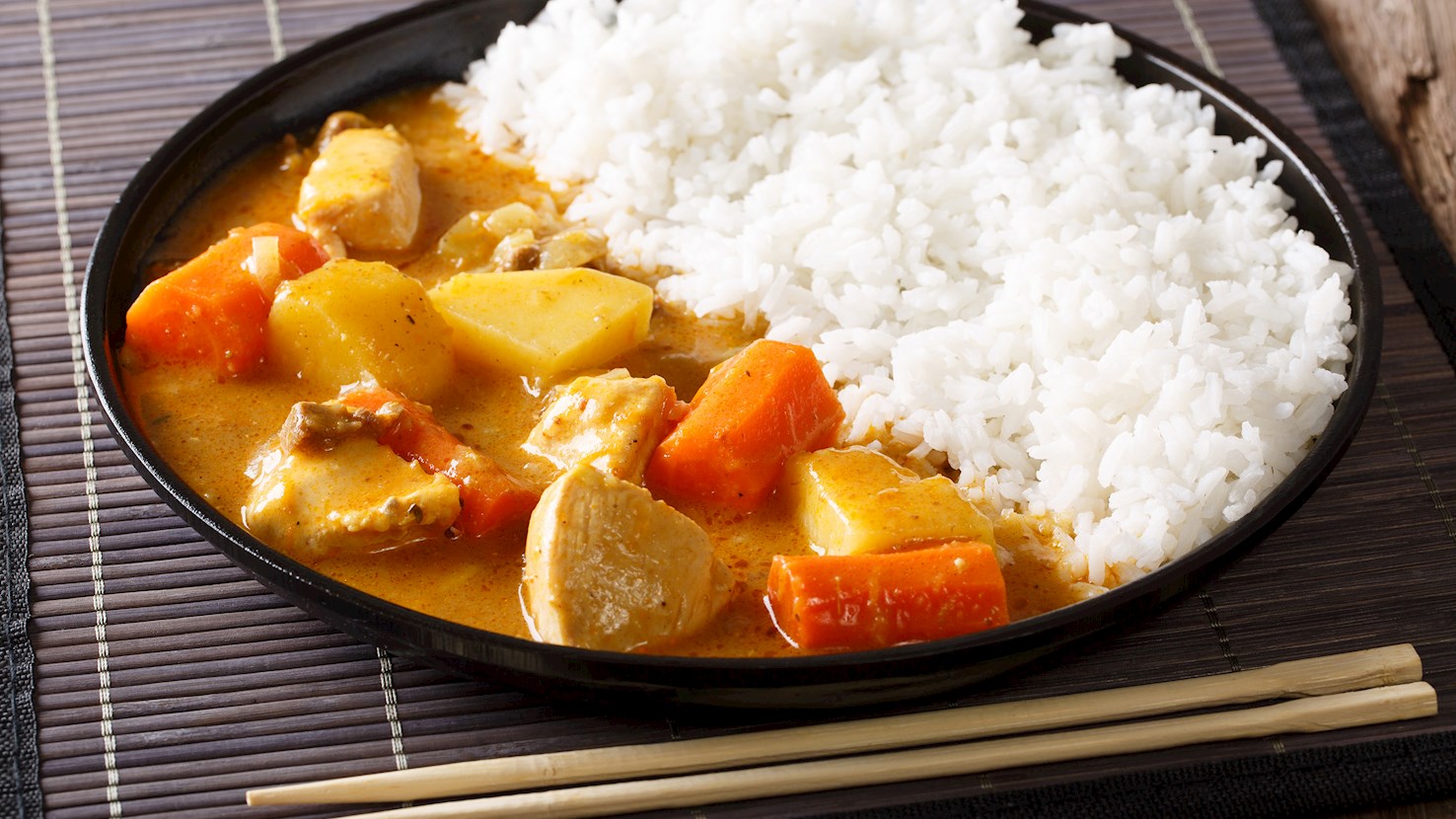
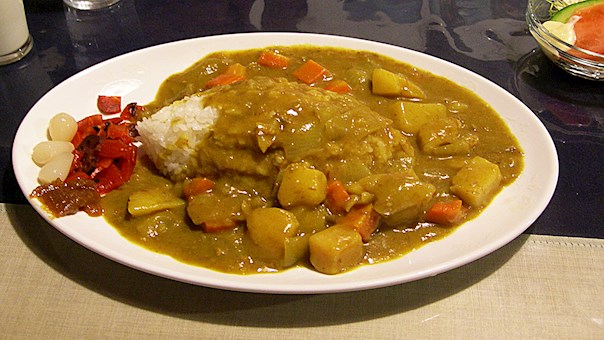
Japanese-style curry known as karē is one of the most popular dishes in the country. It started gaining popularity in Japan during the Meiji period (1868-1912), when the British introduced it to the country. During its early years, karē with rice was an expensive, gourmet dish reserved only for the wealthy. Compared to Indian curries, karē is less spicy, sweeter, darker, and usually thicker, which is thanks to the addition of flour or roux. There are three main version of karē in Japan - karē raisu (curry over rice), karē udon (curry over noodles), and karē -pan (a pastry filled with curry). The most popular variety, is, as expected, karē raisu, which is usually served with fukujinzuke pickles or Japanese scallions on the side. Today, karē is so popular in Japan that it can be called a true national dish.

02

Karē raisu

4.3 ·

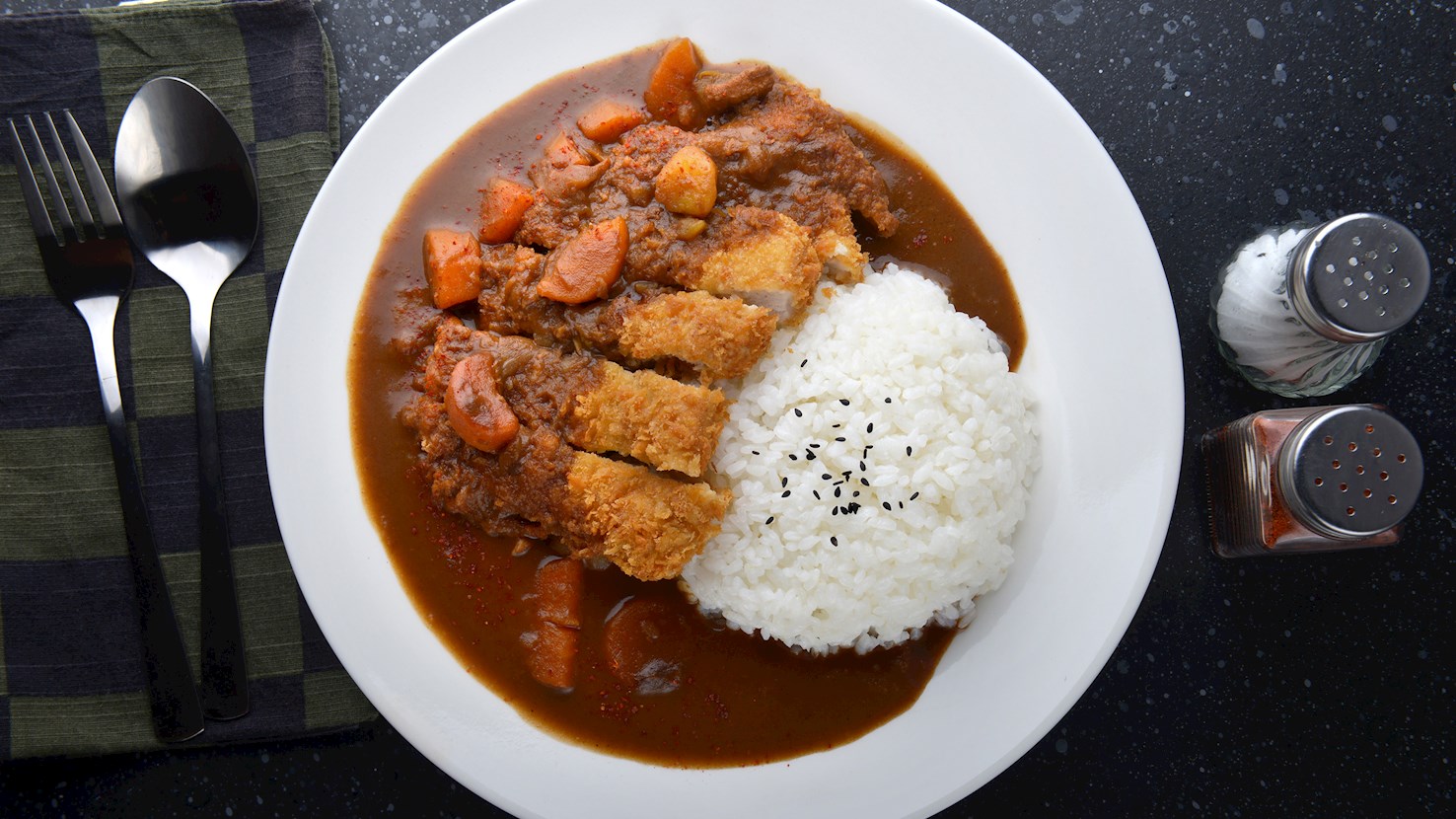
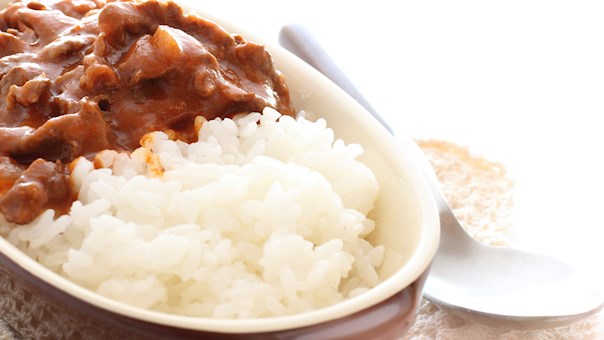
Japanese curry is an extremely popular dish throughout Japan. Since the curry is almost always served with rice, one can hear the term karē raisu mentioned very often. Curry was brought over to Japan by the British in the 19th century, when Meiji-era Japan welcomed foreigners and their goods. As a result, Japanese curry is similar to the English curry, characterized by the heavy use of curry powder. The dish developed into curry rice, a rich stew of meat and vegetables (such as carrots, onions, and potatoes) which is ladled over short-grain, white rice. Common garnishes include eggplant, lotus root, and cucumbers on top. There is also a popular variation on kare raisu called katsu kare, a curry rice dish with a piece of deep-fried pork cutlet called tonkatsu placed on top.

03

Sìchuān huǒguō (Sichuan hot pot)

4.3 ·

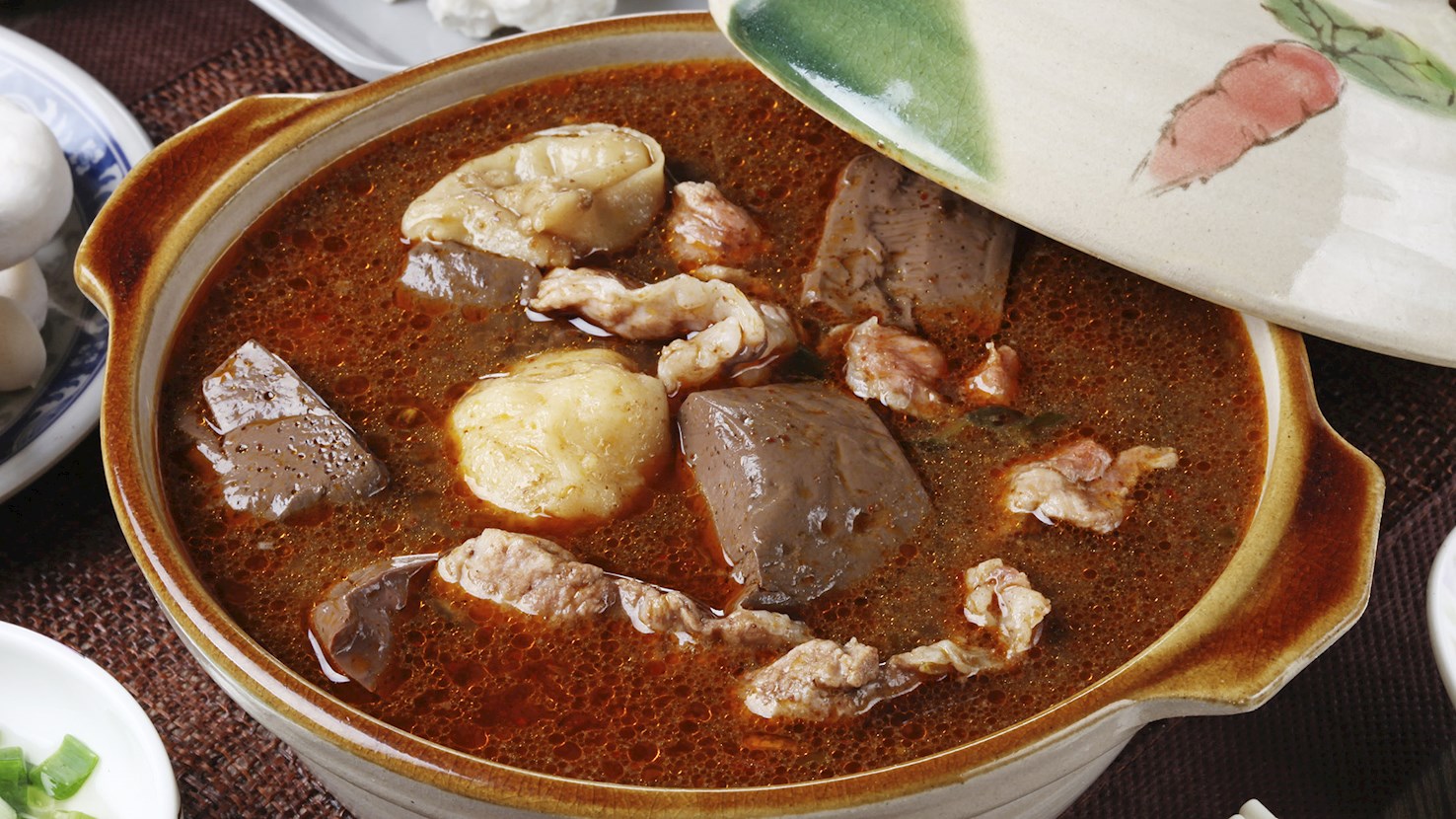
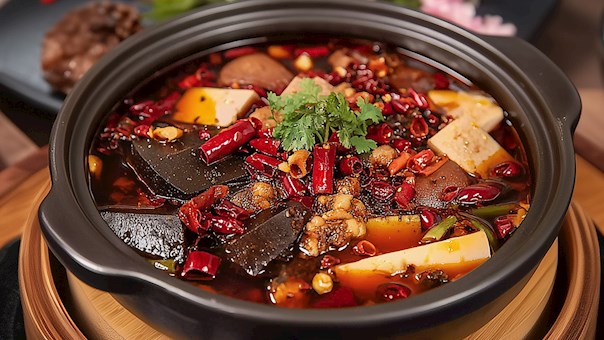
Sichuan hotpot is a numbingly hot and spicy dish made by poaching raw ingredients in a pot of boiling broth. The ingredients might include sliced meat, offal, seafood, vegetables, noodles, and most importantly, Sichuan peppercorns. Consuming hotpot is a communal affair, so people usually gather around the pot while socializing and adding the ingredients into it. As its name suggests, the dish was invented in Sichuan at the beginning of the 20th century. Originally, fisherman and port workers from the region could not afford regular cuts of meat, so they used offal, which was cooked in a spicy broth in order to disguise its pungent aromas. Over time, the dish evolved and became extremely popular throughout China and in the United States of America, due to the addition of fragrant spices and other flavorful ingredients such as ginger, garlic, cinnamon, and Sichuan bean paste. Although the dish is consumed throughout the year, it is most popular during winter because it warms the body and improves circulation.

04

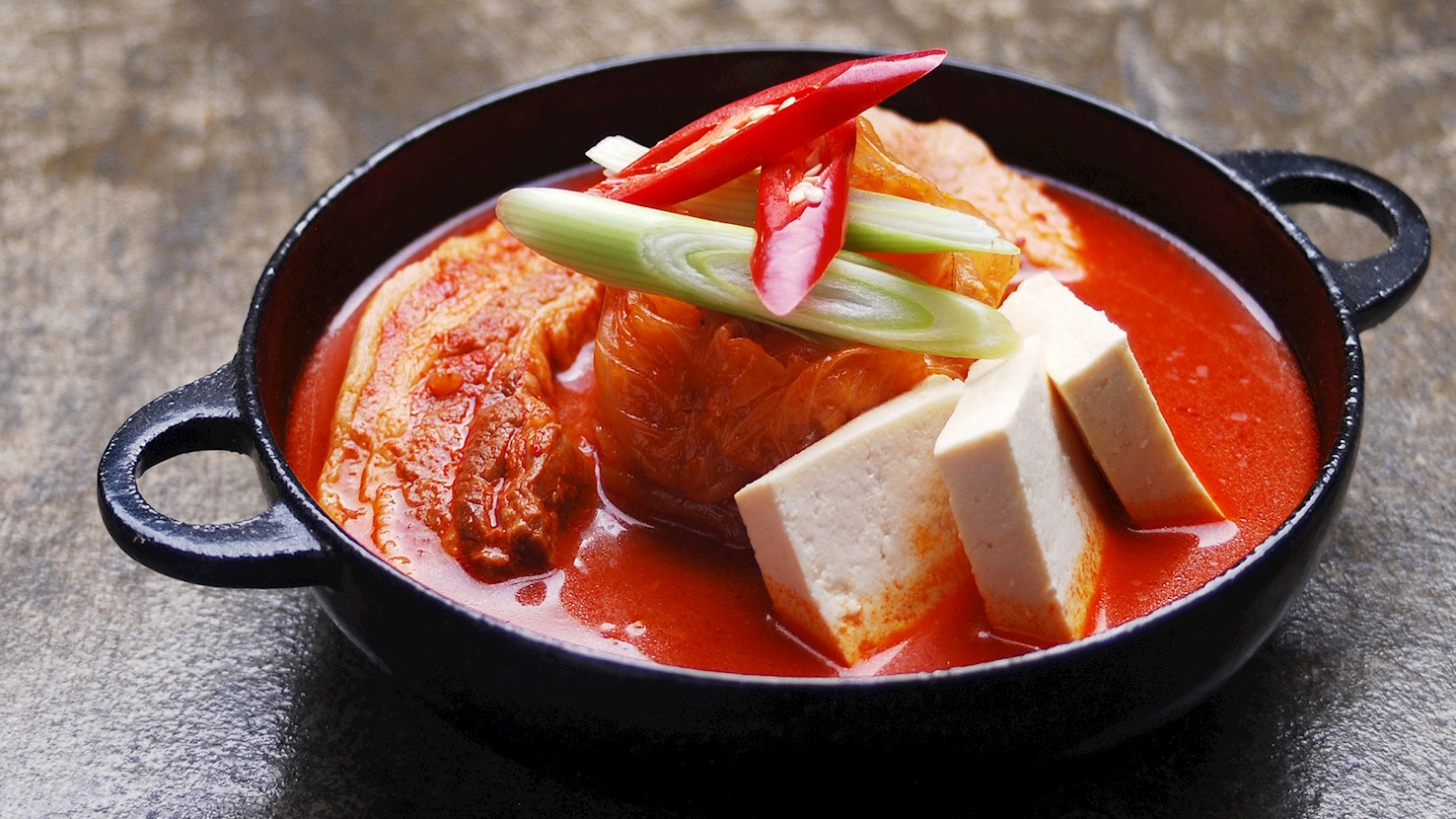
Kimchi jjigae

4.3 ·

Kimchi jjigae is a flavorful Korean stew that employs kimchi as its base ingredient. Other elements usually include diced tofu, pork, or seafood, along with scallions and other vegetables such as potatoes or zucchinis. Kimchi stew is one of the most common dishes enjoyed in South Korea, and it is traditionally served as a communal meal, and should always be piping hot. The dish is best prepared with older kimchi since it tends to impart more flavor to the stew. Kimchi jjigae is usually served with rice on the side, as well as other traditional Koran sides (banchan).

05

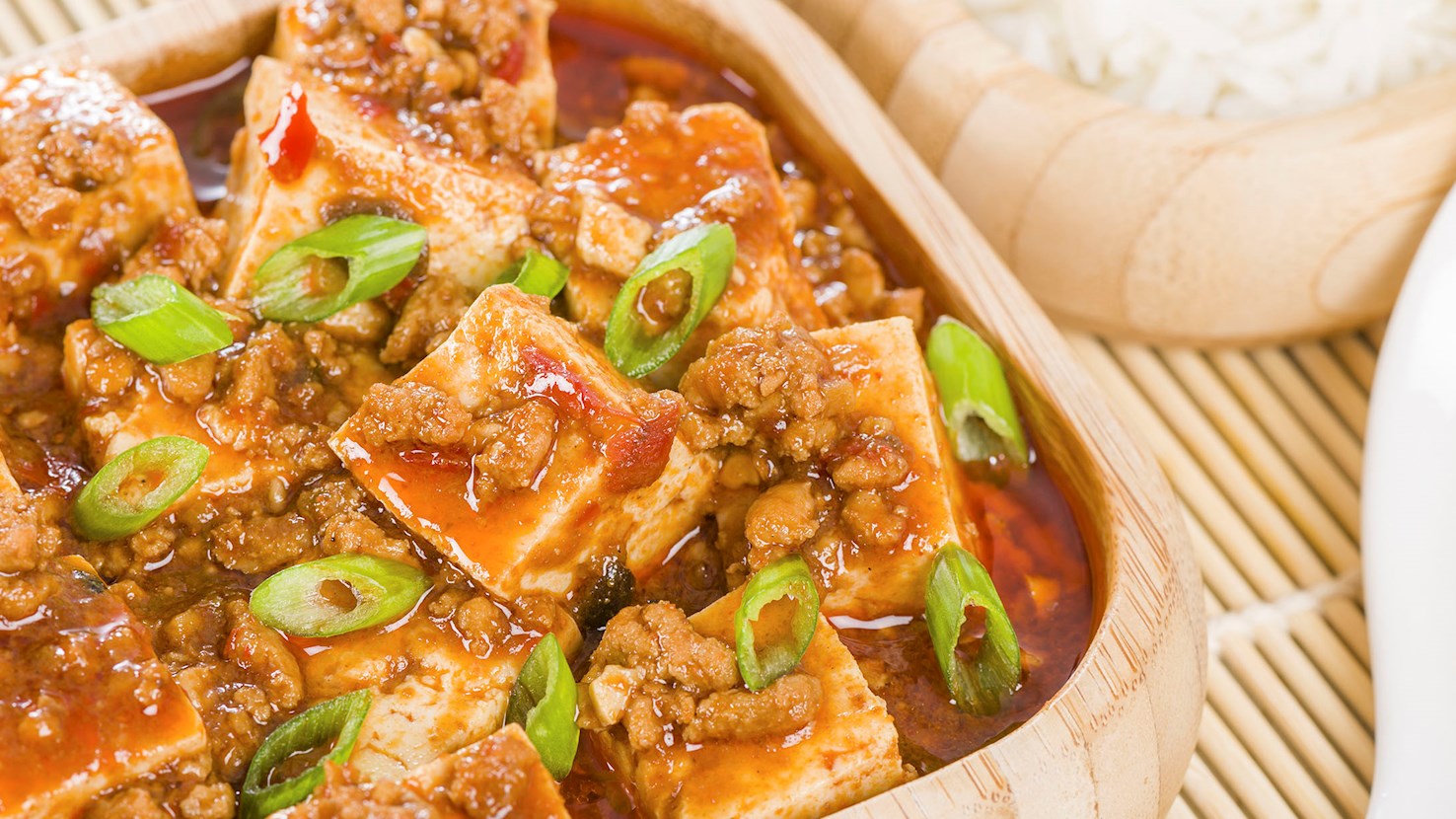
Mapo doufu

4.2 ·

Sichuan in origin, mapo doufu consists of tofu cubes settled in a spicy sauce containing minced meat, traditionally beef or pork, and fermented black beans known as douchi. The dish is said to have been invented in a small restaurant called Chen Xingsheng in Chengdu back in 1862, while the name of the dish comes from the lady cook who created it. Namely, the word mapo is an abbreviation which can be translated as pockermarked grandma, referring to the woman's appearance. The numbing spiciness and hotness of the dish come from Sichuan peppercorns, chili oil, and doubanjiang, a broad bean paste, whereas additional ingredients include wine rice, soy sauce, ginger, garlic, a garnish of chopped green onions, and optionally, starch, which is used as a thickener. Once cooked, mapo doufu will have a spicy top oil layer which serves to preserve the heat of the dish. Steamed white rice is the perfect accompaniment to this dish, but mapo doufu can also be eaten on its own.

06

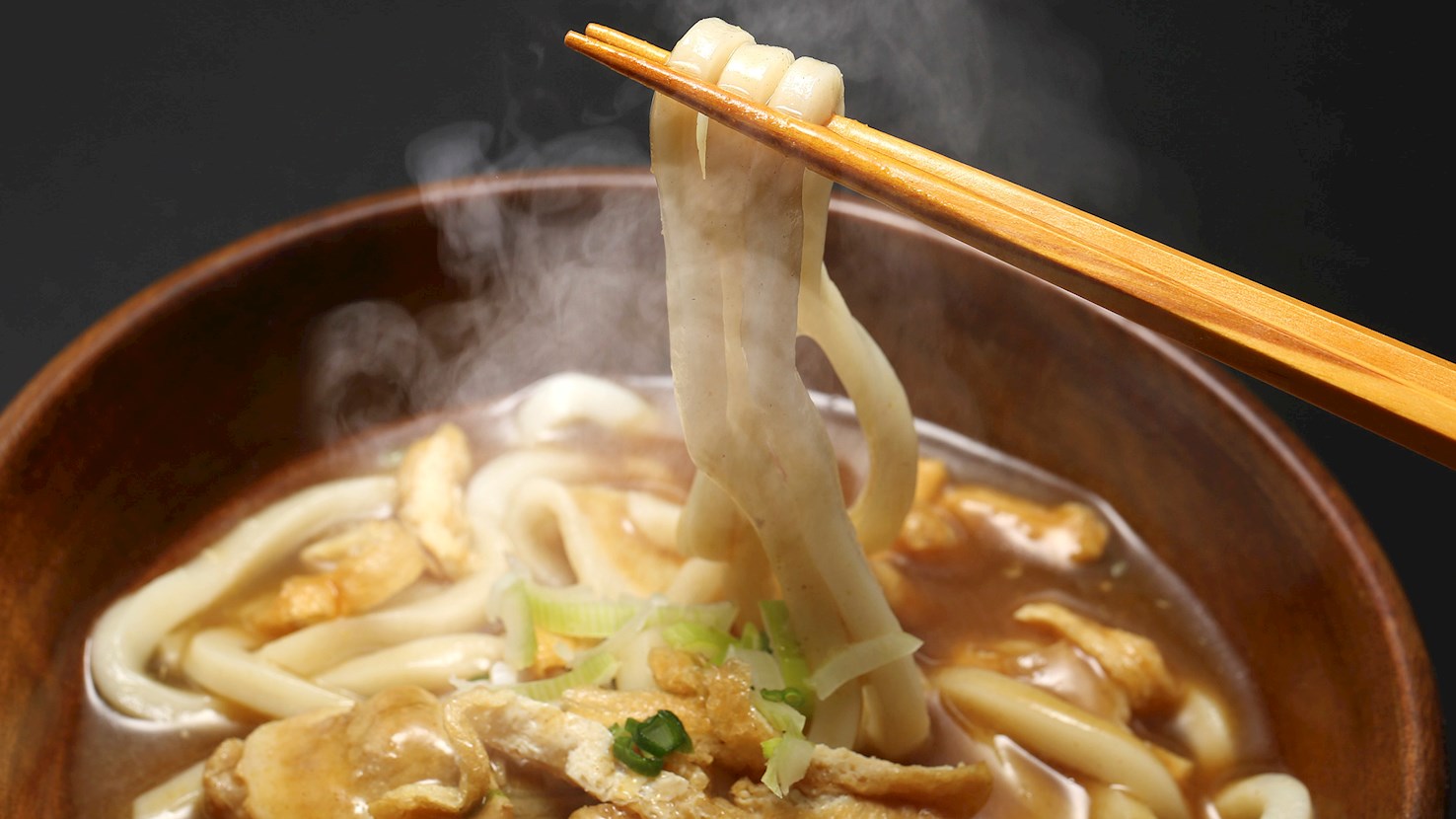
Karē udon

4.2 ·

Curry udon consists of thick Japanese noodles made from wheat flour, served in a bowl of Japanese curry. Since it is a warming dish, curry udon is extremely popular during winter, and because things can get quite messy while consuming it, some curry udon restaurants offer disposable dibs to customers. The dish can vary in levels of spiciness - from mild to hot, depending on the curry. One of the most popular toppings for the dish is Shabu Shabu meat, thinly sliced so that it combines extremely well with the thick and chewy udon noodles.

07

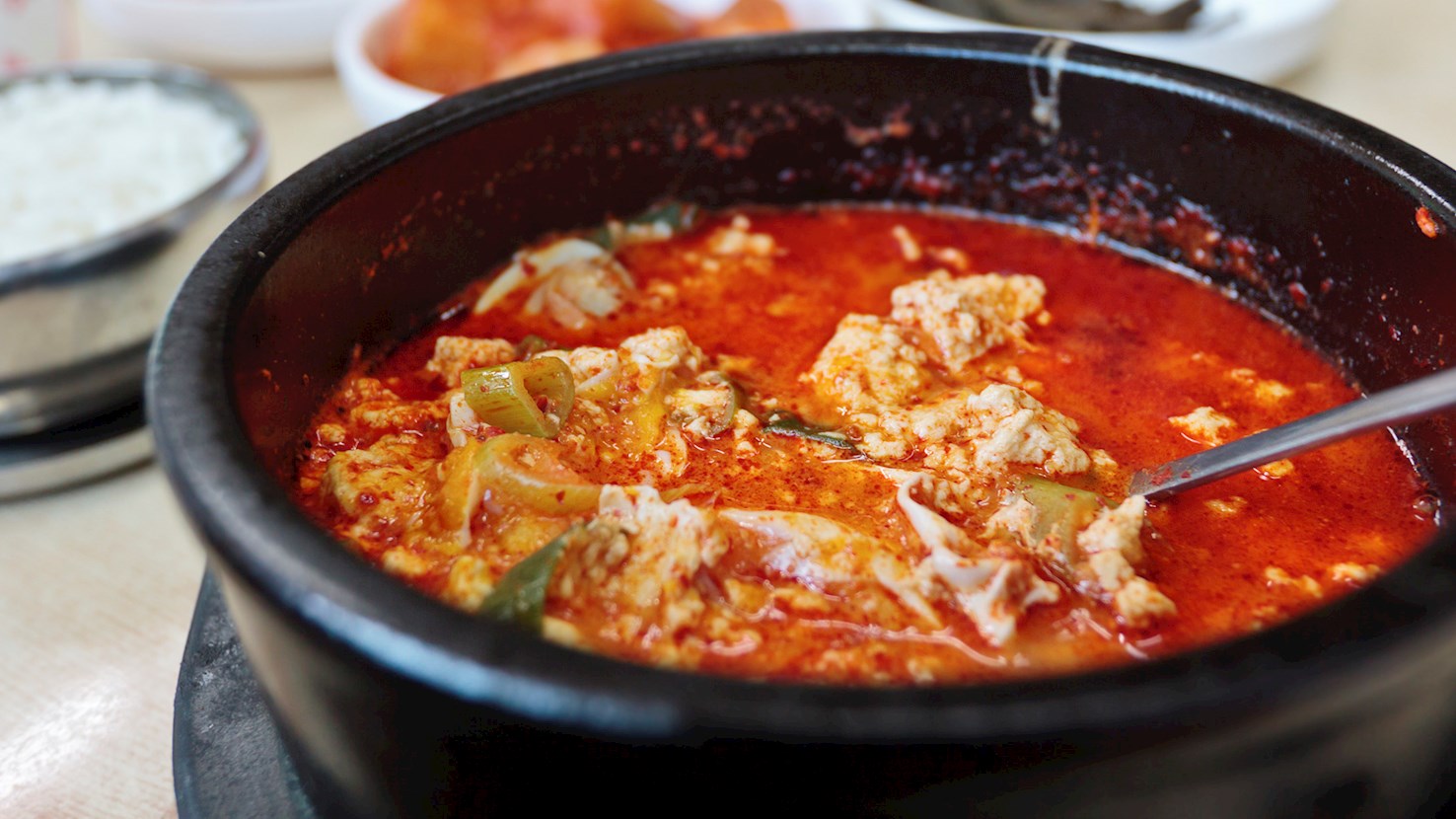
Sundubu jjigae

4.1 ·

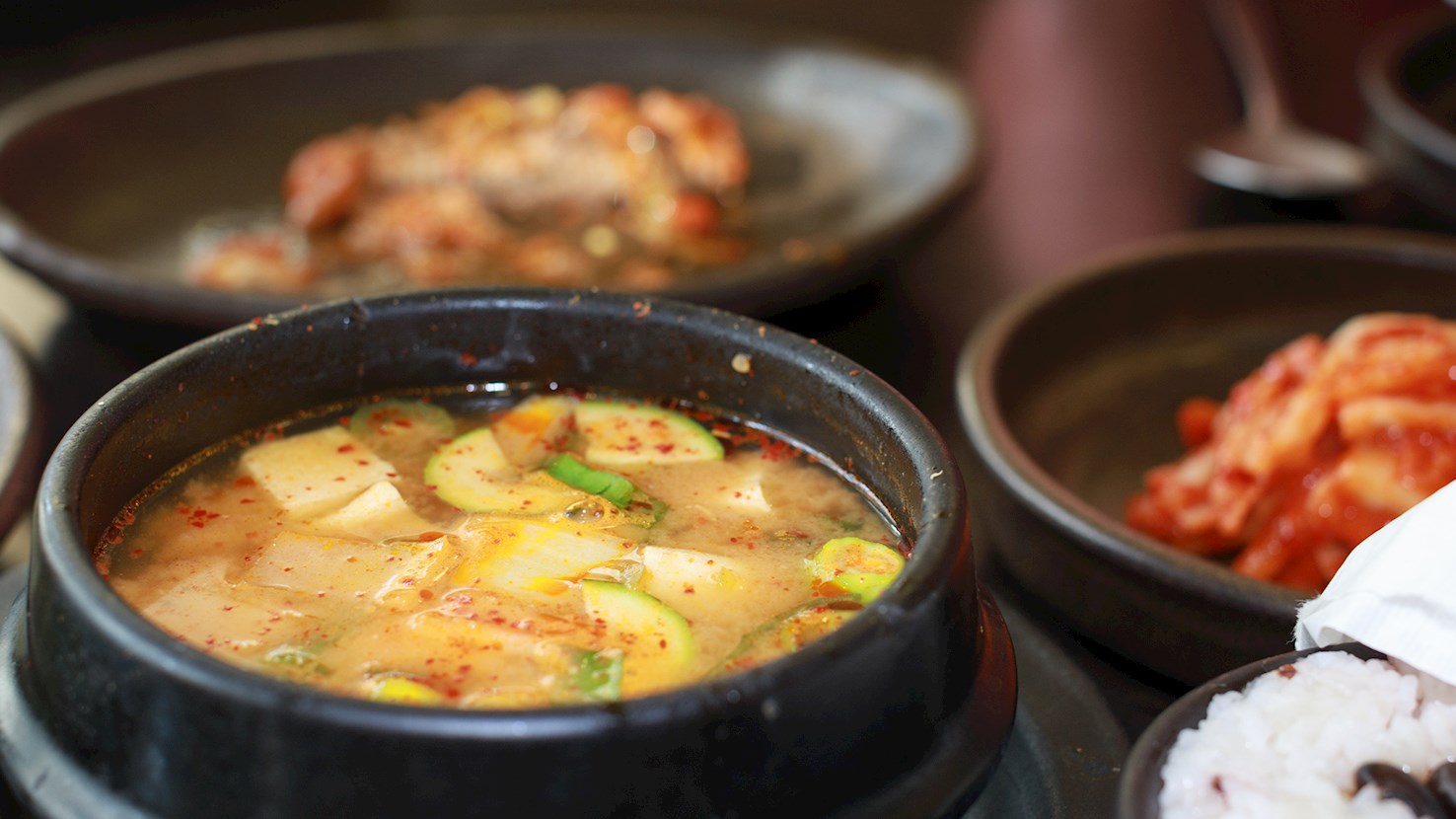
Sundubu jjigae is a variety of traditional Korean stews. Besides numerous other ingredients, the foundation of sundubu is uncurdled tofu. Since the tofu is not strained, its consistency is not firm, but rather soft and silky. It can vary in texture from incredibly soft to more solid types, but it never reaches the consistency of completely strained tofu. The choice of additional ingredients is extensive and primarily depends on personal preferences. It can be based on meat (usually beef) or a variety of seafood. Occasionally, both meat and seafood can be used in the dish at the same time. Onions, zucchini, scallions, mushrooms, and garlic are the most common vegetables found in sundubu. Soft tofu is added in the end, since it does not require cooking, and the dish is commonly garnished with sliced green onions and chopped green or red chili peppers. The dish is usually cooked in a traditional stone pot, while a bowl of rice is often served on the side as an accompaniment. Sundubu has been present in South Korean cuisine for centuries and has also been popularized in Los Angeles, a city with a vast population of Korean immigrants who brought the recipe with them in the early 1990s.

08

Budae jjigae

4.1 ·

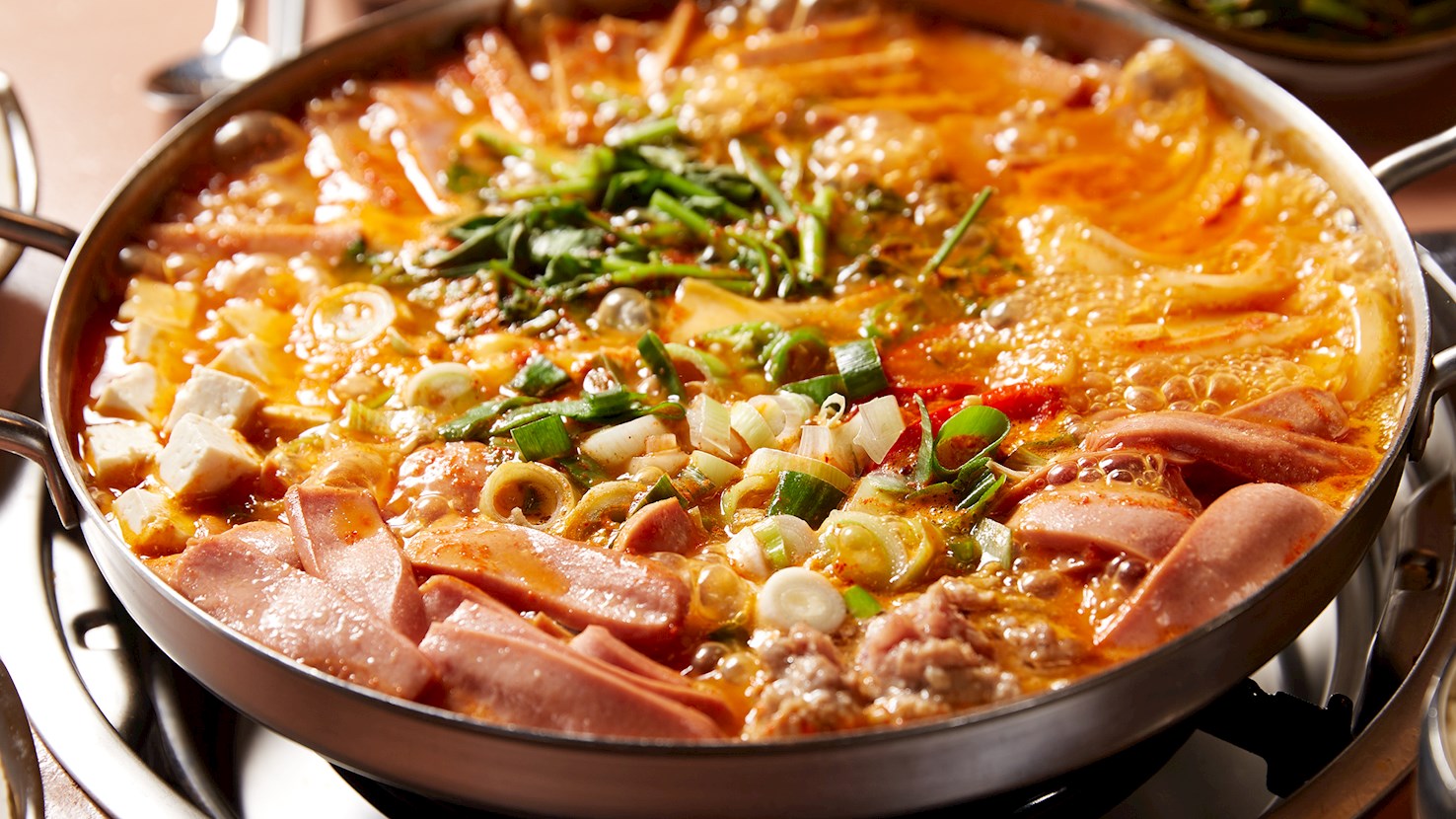
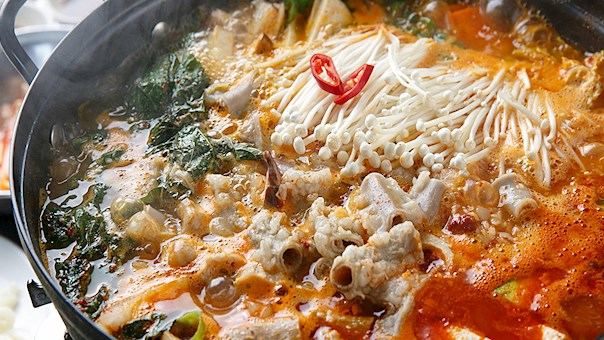
This Korean stew usually combines kelp and anchovy stock with kimchi, baked beans, spam, and hot dog sausages, while the common addition also includes ramen noodles, pork, potato noodles, rice cakes, or tofu. Also known as army stew, budae jjigae was created as a true fusion dish sometime in the 1950s, in the aftermath of the Korean War. Since the food was scarce, the locals would smuggle processed meat products that they could find at American army bases, and through ingenuity and resourcefulness, they created budae jjigae. The dish is believed to have originated at an army base located in Uijeongbudong.

09

Doenjang jjigae

4.0 ·

The star ingredient in this traditional Korean stew is fermented soybean paste (doenjang). Although there are many variations, this hearty dish typically consists of a flavorful broth that is enriched with rice water, anchovies, kelp, and a generous amount of soybean paste. The usual additions include different vegetables such as zucchini, onions, scallions, and radishes, as well as tofu, meat, or seafood. Doenjang jjigae is one of the most common stews in Korean cuisine, and it is usually served with rice on the side.

10

Gamjatang

4.0 ·

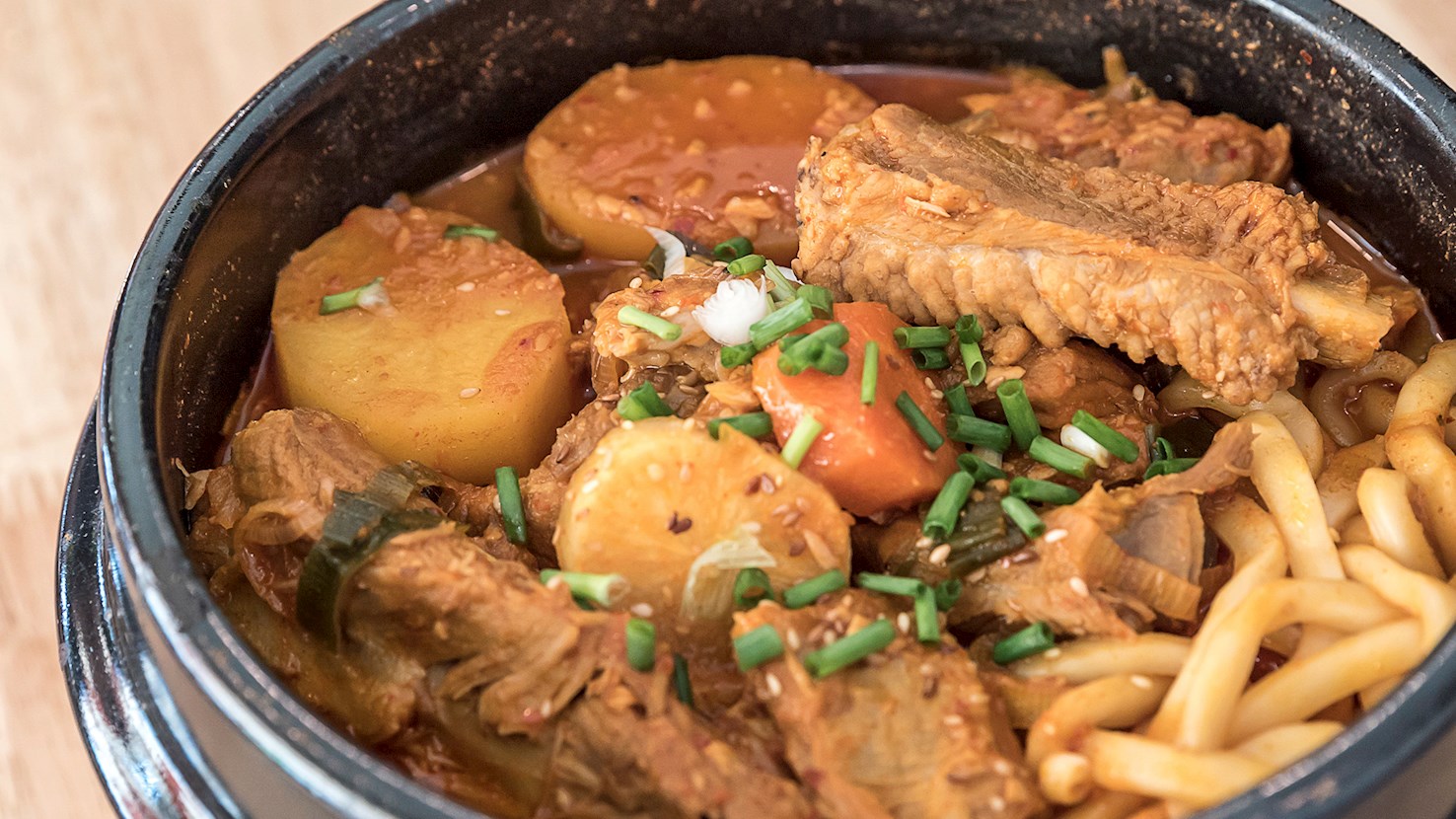
Gamjatang is a flavorful Korean stew made with pork spine and potatoes as the key ingredients, along with bean paste, chili powder, and garlic which are also simmered in the pot. The dish is usually topped with sesame leaves and served with a bowl of rice on the side. Gamjatang has origins in the Incheon area, famously full of construction workers who used to cook it throughout the day so it could be consumed when they would finish working. The stew would often be paired with a few shots of cold soju. Today, gamjatang is a popular hangover cure in Korea, and it has spread to other territories such as Europe, USA, and Southeast Asia.

About this Ranking

TasteAtlas food rankings are based on the ratings of the TasteAtlas audience, with a series of mechanisms that recognize real users and that ignore bot, nationalist or local patriotic ratings, and give additional value to the ratings of users that the system recognizes as knowledgeable. For the “Top 31 Stews in East Asia” list until September 15, 2026, 1,975 ratings were recorded, of which 1,723 were recognized by the system as legitimate.

TasteAtlas Rankings should not be seen as the final global conclusion about food. Their purpose is to promote excellent local foods, instill pride in traditional dishes, and arouse curiosity about dishes you haven’t tried.

What People Say

Similar Lists