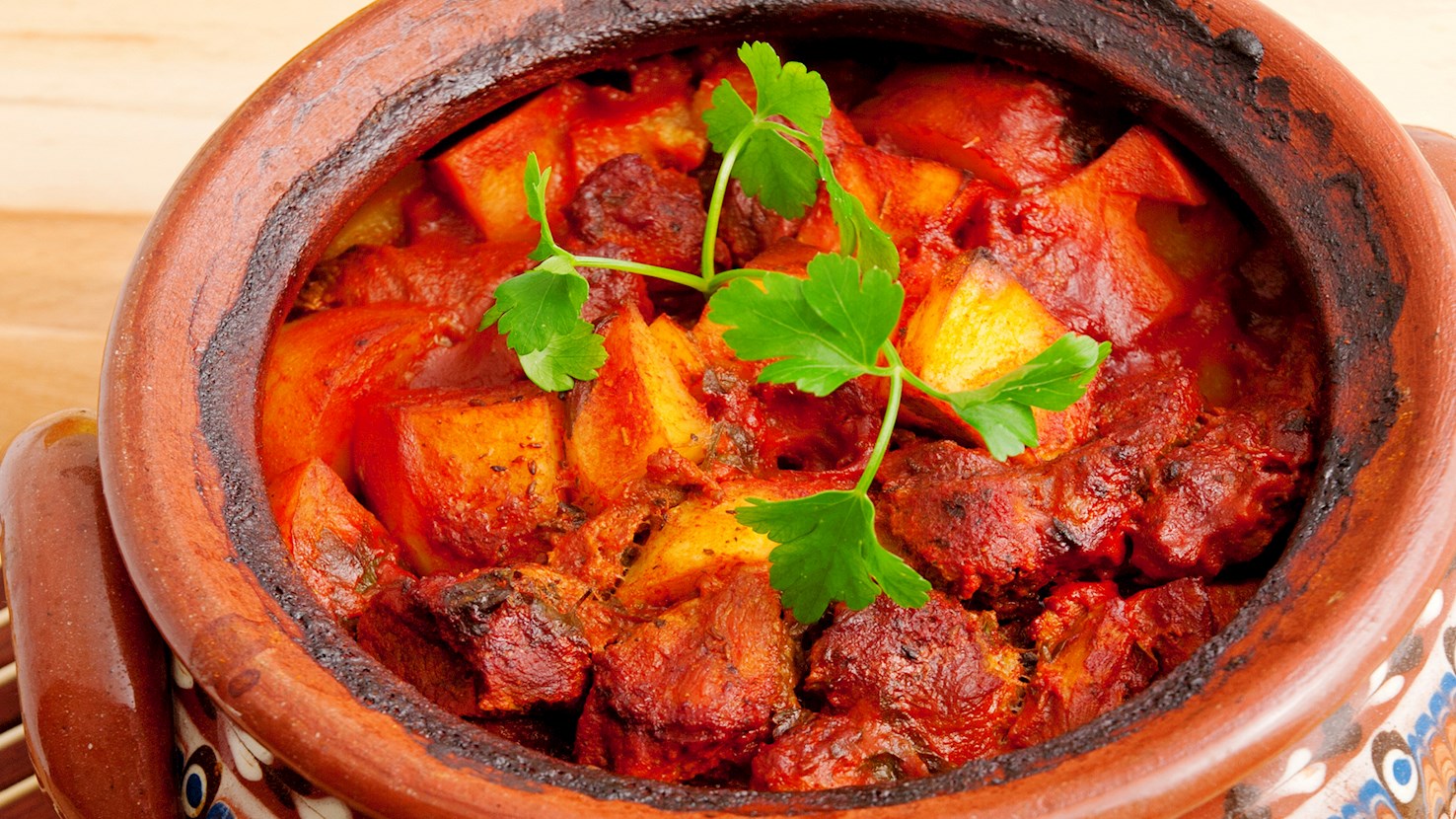
This North Macedonian specialty consists of meat chunks stewed with whatever vegetables are available in the kitchen, such as onions, tomatoes, carrots, and potatoes. The combined ingredients are doused with white wine and simmered for a long time. The dish is served in a traditional clay pot in which the stew was cooked. Due to the variable ingredients used in the preparation of selsko meso (village meat), it is believed that one cannot find the same dish at any two restaurants.
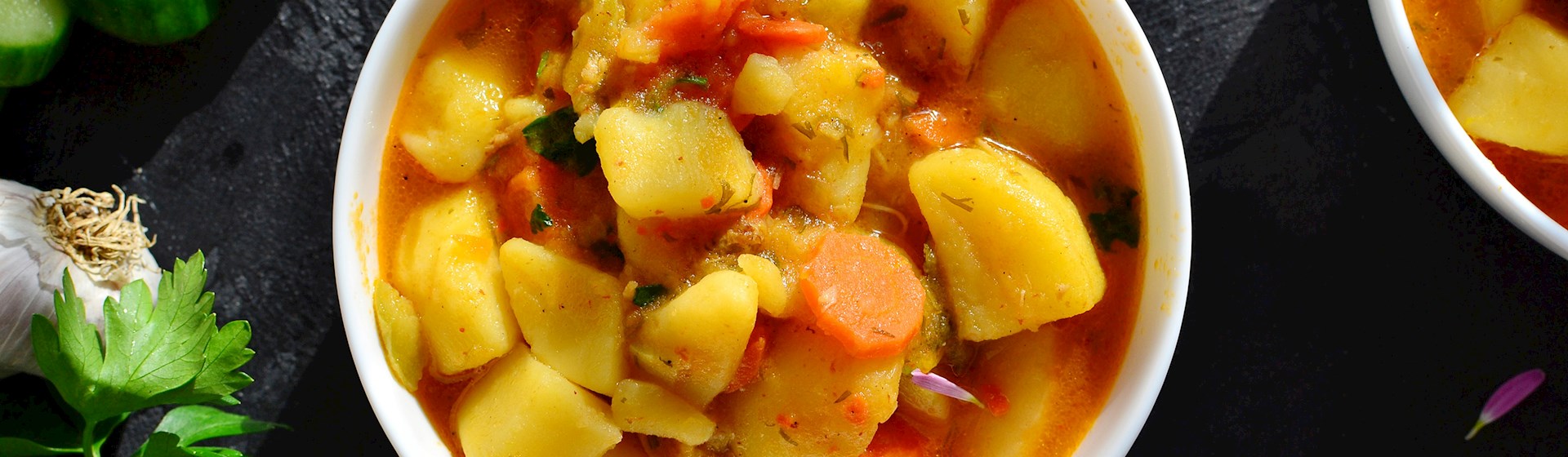
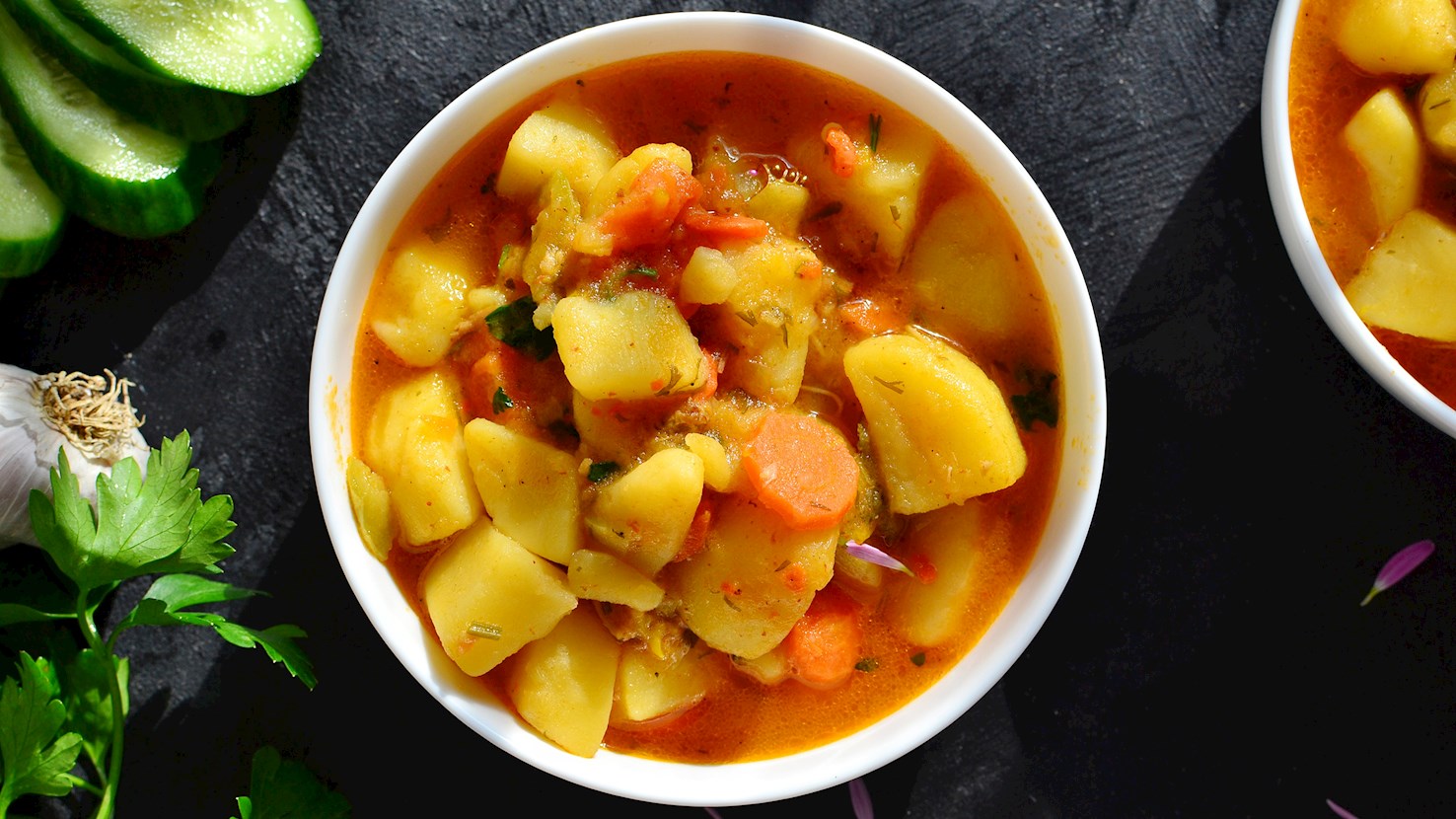
Kompir mandza is a simple North Macedonian potato stew that is considered a poor man's meal in some parts of the country. Apart from potatoes, the stew consists of onions, carrots, garlic, oil, powdered paprika, seasonings, and optional flour for additional thickening. The stew is served warm, garnished with fresh parsley, and it is recommended to pair it with a salad on the side.
Chomlek is a traditional North Macedonian stew that is typically prepared with veal or baby beef, a generous amount of tiny, walnut-sized onion bulbs (called kokar or arpadzik in Macedonian), and garlic. Depending on the recipe, either red or white wine is added to the mixture, while other common ingredients contained in the dish include dried red peppers, carrots, tomato purée, parsley, or mushrooms. Chomlek is usually seasoned with salt, black pepper, red pepper, and bay leaves. It is customarily prepared in a traditional earthenware dish or pot, with the lid placed on top and firmly secured and sealed with dough. Even though this delicacy is a rather straightforward dish, it is also time-consuming and takes hours to cook. North Macedonian chomlek is mostly associated with the southwest and Pelagonija regions of the country, especially with Bitola, Prilep, Ohrid, and Krushevo, with each town having their own version of the dish: bitolski chomlek, prilepski chomlek, ohridski chomlek, and krushevski chomlek. These chomlek variations use more or less the same ingredients with slight differences. In North Macedonia, chomlek is a typical winter dish, usually eaten for lunch, and there’s a long-standing tradition of preparing this dish for New Year’s celebrations in the towns of Bitola and Prilep. The stew is typically enjoyed with a glass of red wine on the side, and it is recommended to dip some bread in it while eating it. The origins of this specialty most likely stem from Turkish cuisine, which is suggested by the dish’s name, which derives from the Turkish word çömlek, meaning earthenware pot. Some varieties of this traditional stew can be found in other Balkan countries, and it is mainly associated with the traditional cuisine of neighboring Bulgaria, particularly that of Blagoevgrad Province.
Turli tava is a traditional North Macedonian dish consisting of meats and vegetables that are stewed together and baked in an oven. Common ingredients include pork, beef, or lamb, and vegetables such as potatoes, eggplant, carrots, and peppers. The dish is baked in a traditional earthenware vessel, just like the national dish of North Macedonia, gravče na tavče. The name of the dish is derived from the Turkish words turli, meaning mixed, and tava, an earthenware vessel.
TasteAtlas food rankings are based on the ratings of the TasteAtlas audience, with a series of mechanisms that recognize real users and that ignore bot,
nationalist or local patriotic ratings, and give additional value to the ratings of users that the system recognizes as knowledgeable.
For the “Top 4 Macedonian Stews” list until May 15, 2026, 147 ratings were recorded, of which 42 were recognized by the system as legitimate.
TasteAtlas Rankings should not be seen as the final global conclusion about food. Their purpose is to promote excellent local foods,
instill pride in traditional dishes, and arouse curiosity about dishes you haven’t tried.