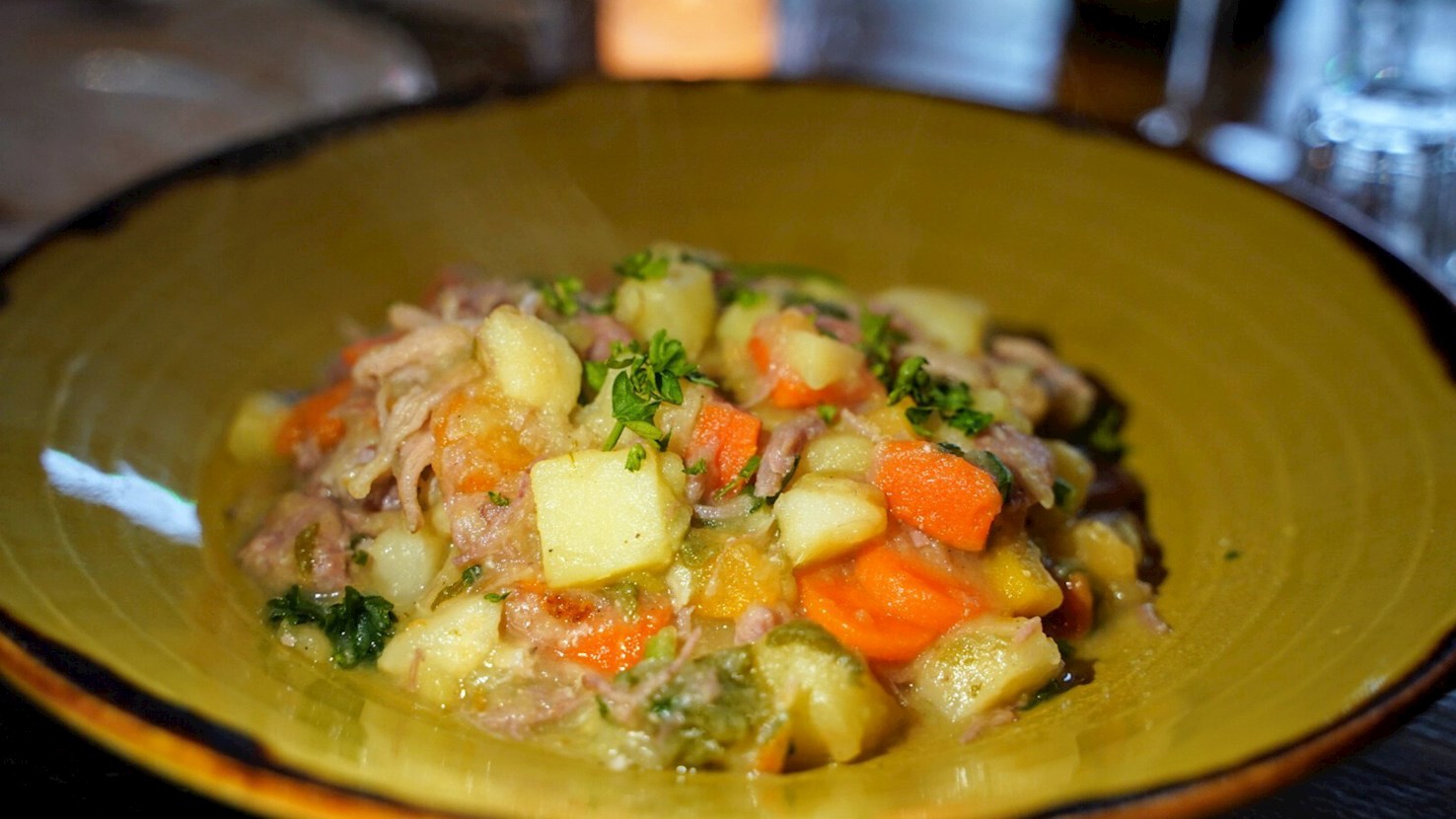
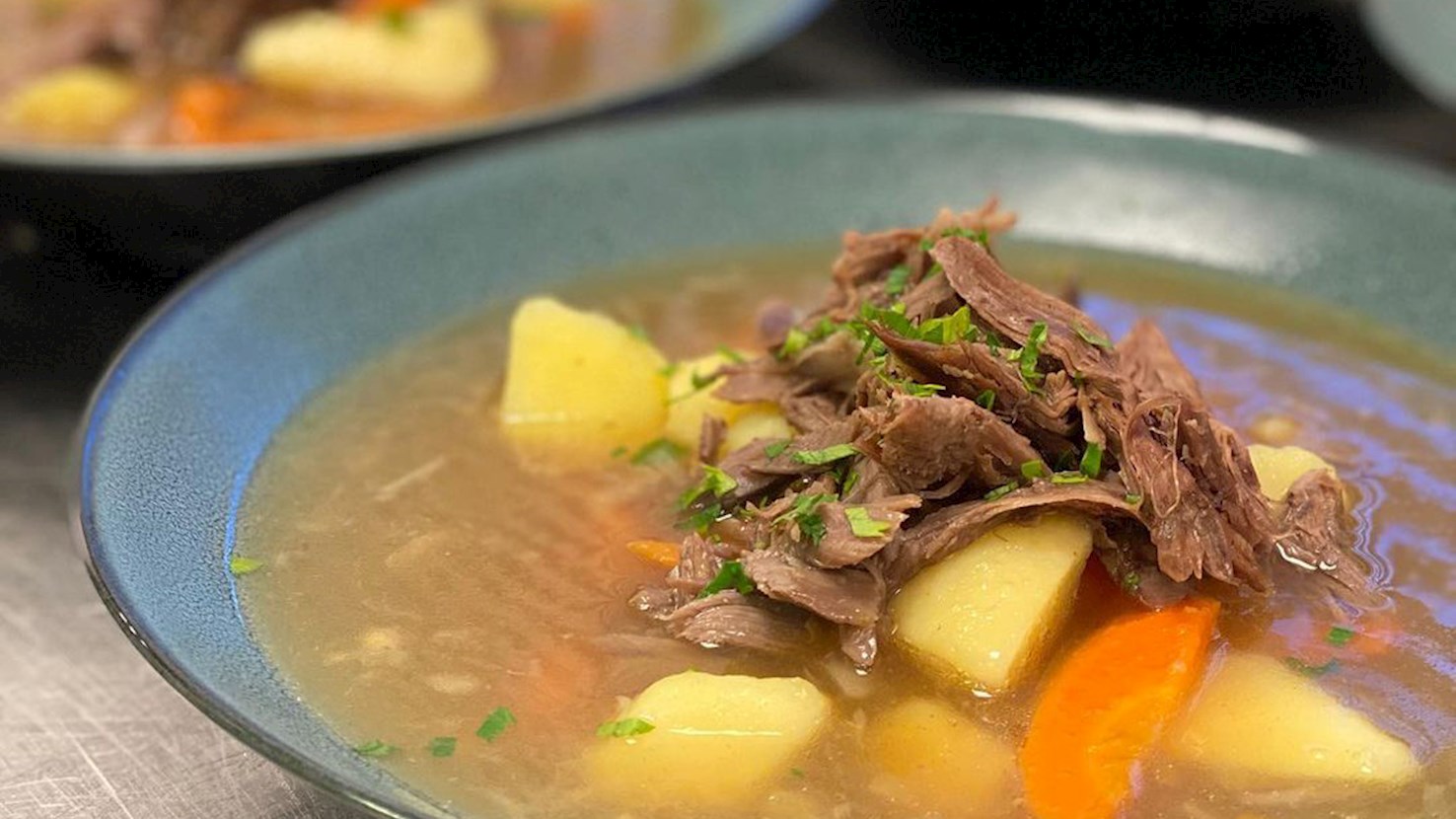
Lapskaus is a traditional stew originating from Norway. The stew is usually made with a combination of beef (lamb, pork, and chicken are also viable options), onions, potatoes, carrots, celery, rutabaga, stock, flour (optional), bay leaves, thyme, salt, and pepper. The beef is cooked in water with the vegetables, herbs, and seasonings. As the stew cooks, the broth becomes thicker, and once it develops the right consistency, it's served warm with a few slices of bread or lefse flatbread on the side. If desired, the broth can be thickened with a bit of flour. However, the dish has many variations, and some people like their broth to be thin and watery. This hearty stew is especially popular in autumn and winter. Like most stews, lapskaus tastes even better the next day.
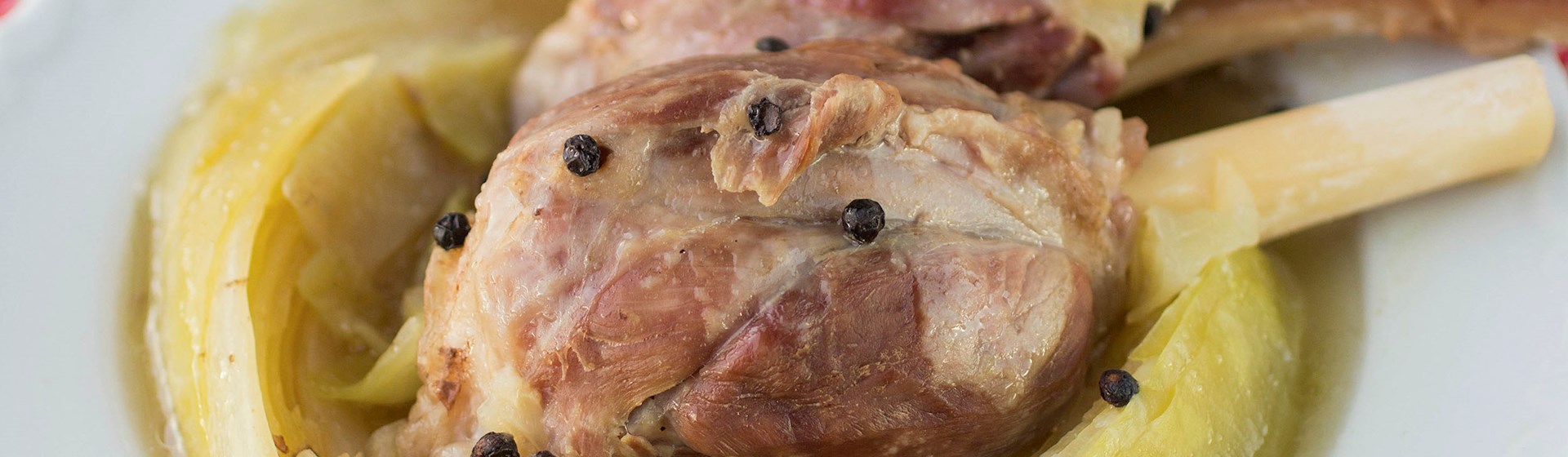
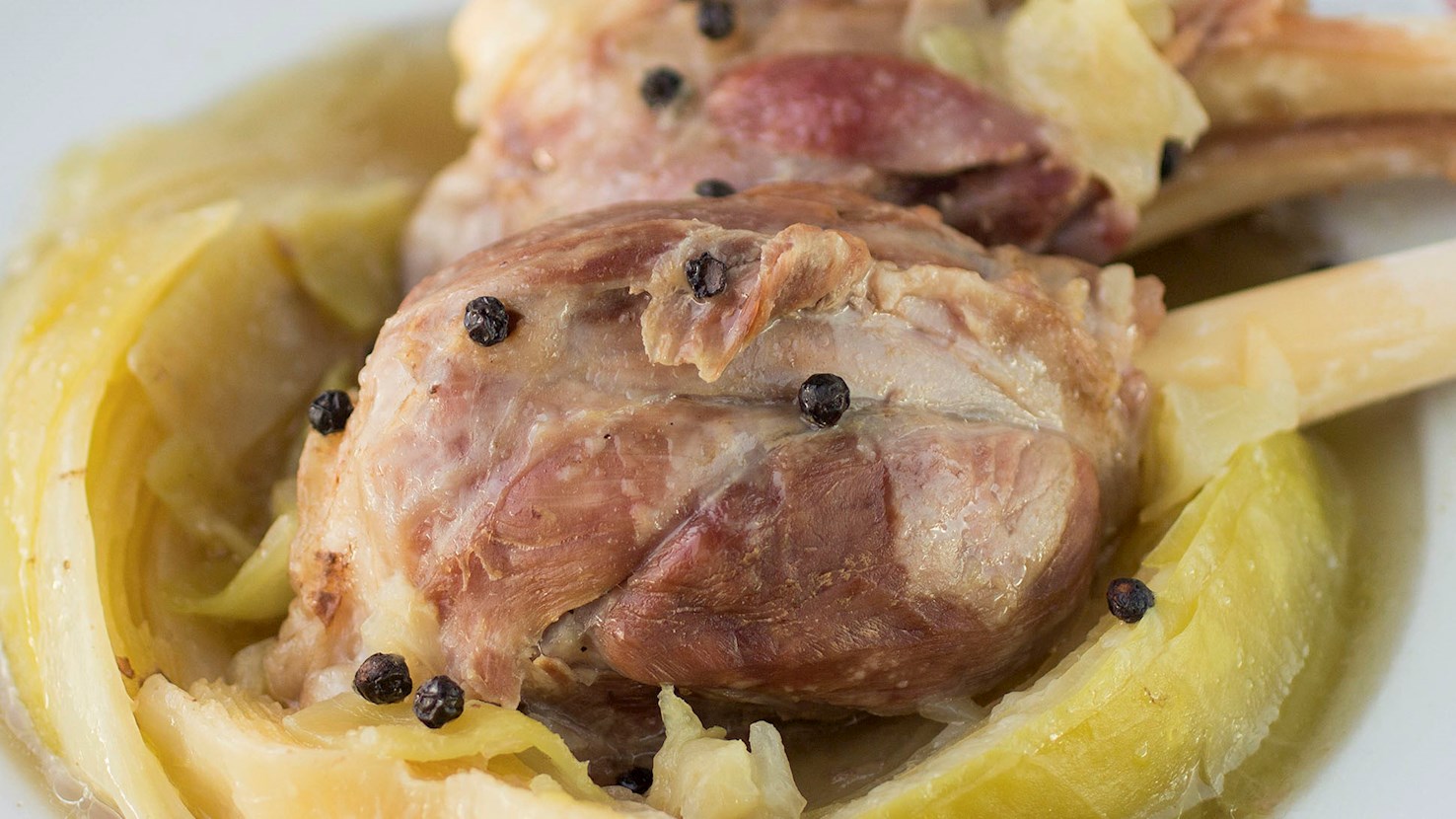
The national dish of Norway, fårikål, is hearty mutton and cabbage stew, typically served with boiled potatoes. The list of ingredients is scarce: only mutton, cabbage, salt, pepper, and water, although some recipes call for the broth to be thickened with flour. Traditionally, this stew was a seasonal, autumn dish, but today it is eaten throughout the year.
Bidos is a traditional stew of the Norwegian Sámi people. It's made with a combination of reindeer meat (including the heart), onions, potatoes, and carrots. Traditionally, no seasoning is used because the stew already has a rich flavor reflecting the reindeer's pasture. However, the stew can be enriched with a bit of mustard, if desired. The ingredients are slowly cooked until everything is tender. The Sámi people traditionally serve bidos at weddings and similar festive occasions.
Finnbiff is a Norwegian stew made from thinly sliced reindeer meat, simmered with ingredients such as onions, mushrooms, cream, and sometimes juniper berries to create a rich and hearty dish. It originates from the northern regions of Norway, where reindeer herding has been an important part of Sámi culture for generations. The use of thin shavings of meat comes from a practical approach to cooking in cold climates, allowing the meat to cook quickly and evenly over open fires or in simple pots. Over time, the dish evolved from a campfire meal for herders into a well-known recipe served in homes and restaurants across the country. Preparation begins with browning the frozen or semi-frozen slices of reindeer in butter, which helps develop flavor and prevents the meat from stewing too early. Onions and mushrooms are added, followed by cream or sour cream to create a smooth sauce, with juniper berries or thyme sometimes included for aroma. The stew is usually served with boiled or mashed potatoes, lingonberry preserves, or flatbread, which complement the richness of the meat. One notable feature of finnbiff is that it retains the distinct taste of reindeer while becoming tender through the slow cooking process, making it both robust and refined. Today it is enjoyed throughout Norway, especially in the north, served in mountain lodges, local restaurants, and family kitchens, often as a warming meal during the colder months or offered to visitors seeking regional cuisine.
Reinsdyrgryte is a hearty reindeer stew from Norway, particularly common in the country’s northern regions where reindeer herding is an important part of the Sámi way of life and Arctic culinary culture. This dish features reindeer meat, typically sliced thin or cut into chunks, slowly simmered in a creamy base often enhanced with onions, mushrooms, and aromatic elements like juniper berries or thyme. The result is a rich, warming dish suited to the cold climate of northern Scandinavia, where hearty, nourishing meals are a natural part of daily life. Reindeer meat is valued for its lean, tender quality and its mild game flavor, which absorbs and complements the creamy sauces and forest-scented herbs used in cooking. The stew is typically cooked over low heat to ensure the meat becomes soft and infused with flavor. Although it is especially popular in areas with Sámi influence, it is served throughout Norway in wintertime menus, mountain lodges, and holiday celebrations, often accompanied by mashed potatoes, lingonberry jam, or root vegetables.
Elggryte is a Norwegian stew made from moose meat, slow-cooked with vegetables, stock, and often cream to create a hearty and flavorful dish. It is rooted in the hunting culture of Norway, where moose has long been an important source of meat, particularly in rural areas with large forested landscapes. As hunting practices became regulated and meat preservation improved, moose began appearing not only in private households but also in restaurants, especially during the autumn hunting season. The preparation starts with browning cubes of moose meat in butter or oil to seal in flavor, followed by adding onions, carrots, and sometimes root vegetables such as celeriac or parsnip. Game stock or water is poured in, and the stew is left to simmer slowly until the meat becomes tender. Cream or sour cream is often stirred in near the end of cooking, creating a smooth, rich sauce that balances the stronger taste of the meat. Seasonings may include juniper berries, thyme, or bay leaves, enhancing the depth without overpowering the natural flavor of the moose. Moose meat is very lean, so long, gentle cooking is essential to keep it from becoming tough, and the added cream helps soften the texture. Elggryte is usually served with potatoes, mashed or boiled, and sometimes with lingonberry preserves on the side. It remains a popular dish across Norway during the colder months, eaten in mountain lodges, family kitchens, and restaurants that focus on local, seasonal game.
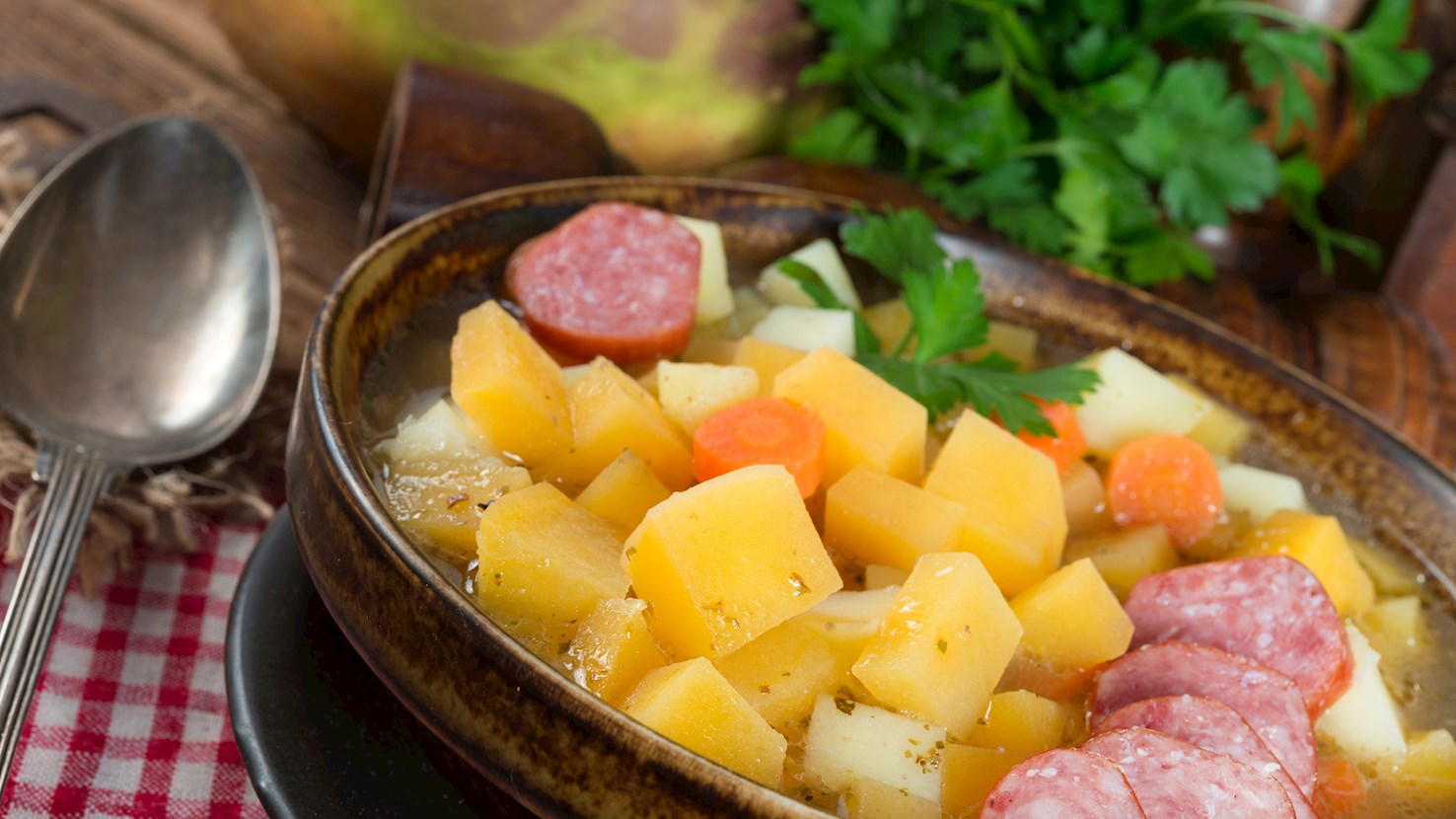
Husmannsgryte or cotter's kettle is a traditional stew originating from Norway. This hearty stew is usually made with a combination of bouillon cubes, rutabagas, medisterpølse sausage, carrots, parsnips, mustard, leeks, salt, and pepper. The bouillon is dissolved in water, the vegetables are placed into the pot, and then simmered until barely done. The sausage is cut into slices and added to the pot with the mustard, salt, and pepper. The stew is simmered for a few more minutes until everything is fully cooked, but not overcooked. This stew is typically served with mustard, potatoes, and dark bread on the side.
Elghakk is a Norwegian dish made from finely chopped or minced moose meat, cooked with potatoes, onions, and sometimes carrots to create a simple, filling meal. It originates from rural areas of Norway where hunting has long been part of the food culture, and moose meat was commonly preserved and used throughout the colder months. In its earlier forms, the dish was a practical way to use meat trimmings from larger cuts, combining them with readily available root vegetables to make a one-pot meal that could be prepared over an open fire or on a stovetop. Preparation starts by browning the minced or finely diced moose meat in butter or oil, followed by adding chopped onions and cooking until softened. Potatoes, and occasionally carrots or other root vegetables, are diced and added to the pot along with water or stock, then simmered until the vegetables are tender and the flavors have melded. Seasoning is usually simple, with salt and pepper as the base, though some cooks add a bay leaf or a pinch of thyme. One notable point is that the dish benefits from being cooked slowly, allowing the potatoes to partially break down and thicken the broth, giving it a stew-like consistency without the need for flour or cream. Elghakk is eaten across Norway, particularly in the north and inland regions, served hot as a main meal at home, in hunting cabins, and in local cafés, often accompanied by flatbread or lingonberry preserves.
TasteAtlas food rankings are based on the ratings of the TasteAtlas audience, with a series of mechanisms that recognize real users and that ignore bot,
nationalist or local patriotic ratings, and give additional value to the ratings of users that the system recognizes as knowledgeable.
For the “Top 8 Norwegian Stews” list until June 15, 2026, 149 ratings were recorded, of which 115 were recognized by the system as legitimate.
TasteAtlas Rankings should not be seen as the final global conclusion about food. Their purpose is to promote excellent local foods,
instill pride in traditional dishes, and arouse curiosity about dishes you haven’t tried.