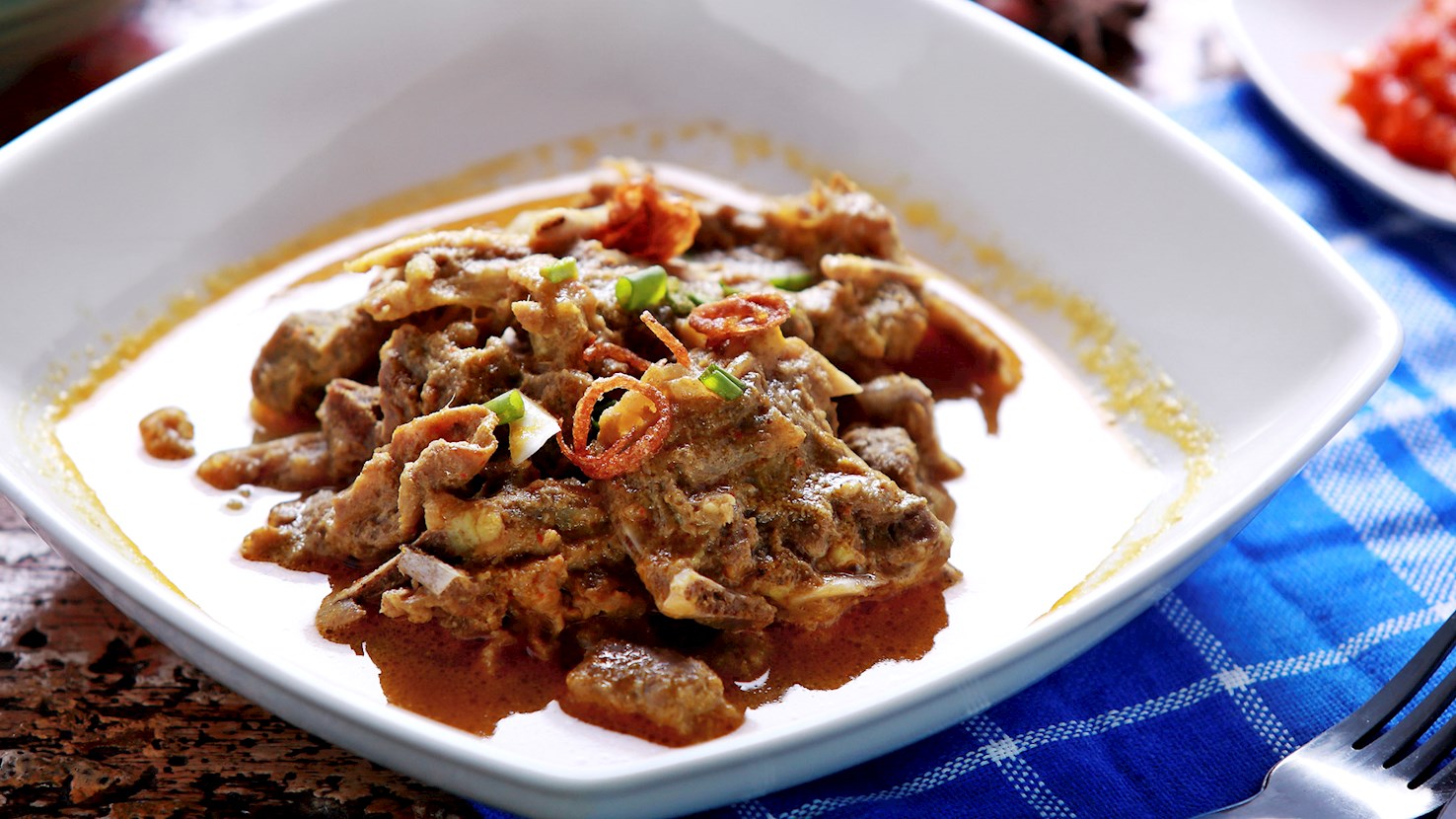
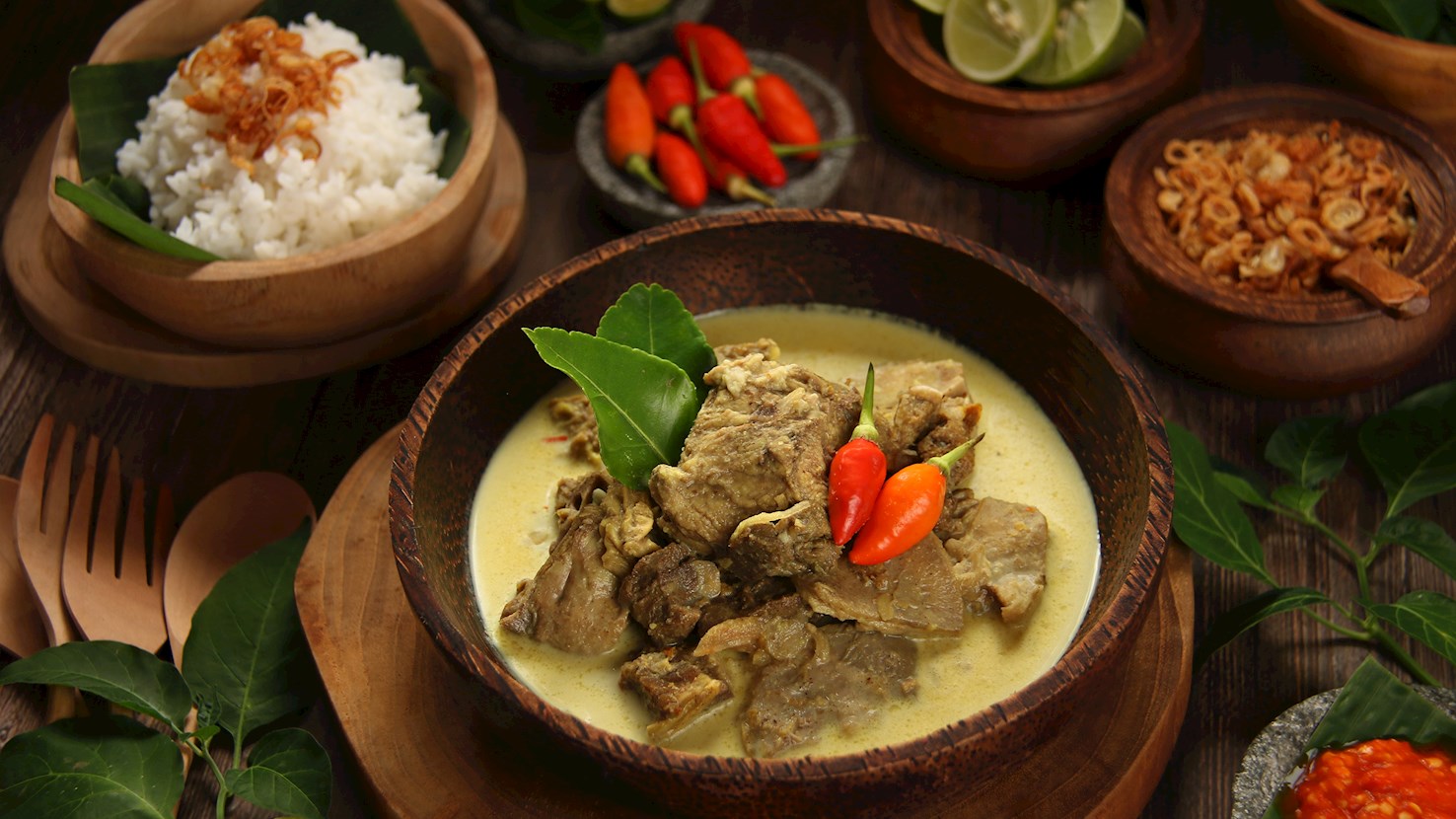
Gulai is a spicy Indonesian dish resembling a stew or a thick soup. Because of its appearance and taste, it is often dubbed as the Indonesian curry. Any meat variety can be the main ingredient in gulai, as well as offal, seafood, or vegetables. The ingredients are cooked in a combination of coconut milk and spices until the sauce achieves a thick consistency. Gulai originated in Sumatra, most likely under Indian culinary influence, but nowadays it is enjoyed everywhere in Indonesia. The dish can be found at Indonesian hawker centers and traditional restaurants. The most common side dish served alongside gulai is steamed rice.
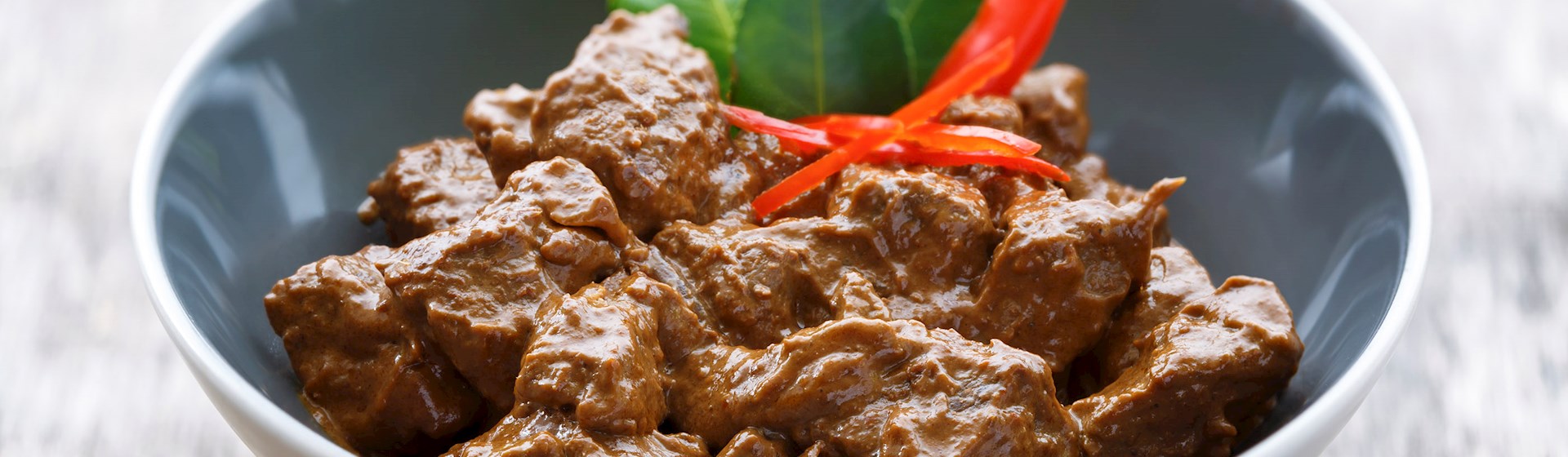
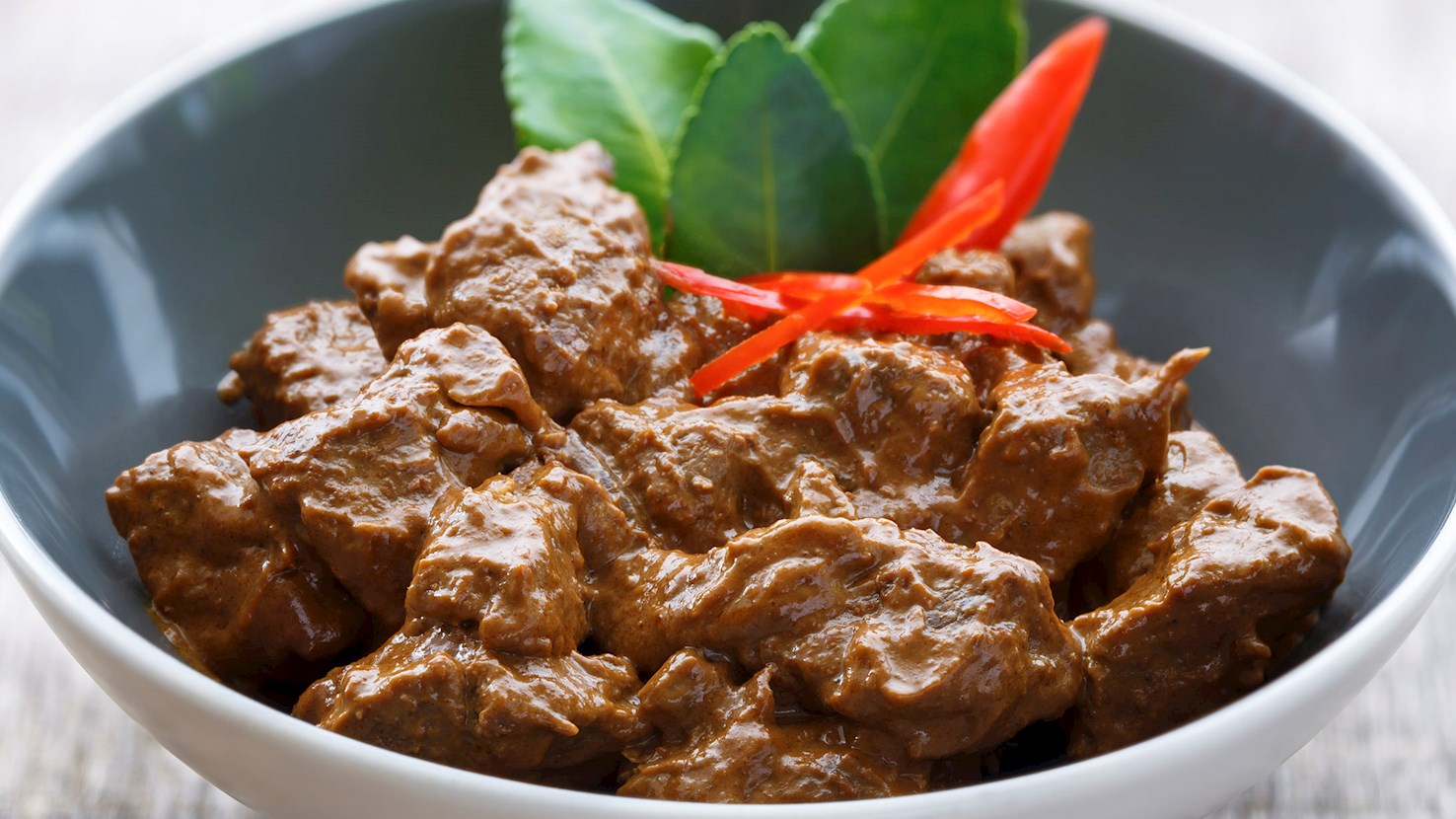
Rendang is an Indonesian meat dish which originated among the Minangkabau people in West Sumatra. The dish is famous for its spiciness and a long cooking procedure. It is often compared to Indian curry because of its consistency and unique flavors. The theory about how rendang was invented claims that the generous use of spices and long cooking hours were employed to preserve the meat in hot and tropical climates, such as Indonesian, so unsurprisingly, the need to preserve meat for a longer period appeared among the Minangkabau people. They were mainly traders who underwent long journeys and needed food which could stay fresh for weeks. However, the dish has a more symbolic meaning to them, because the main four ingredients used in rendang represent the Minangkabau society: the meat symbolizes leaders, coconut is a symbol of intellectuals, chili represents religious leadership, and other spices signify the rest of society. Today, rendang has surpassed Indonesian borders and has a reputation as one of the most delicious dishes in the world.
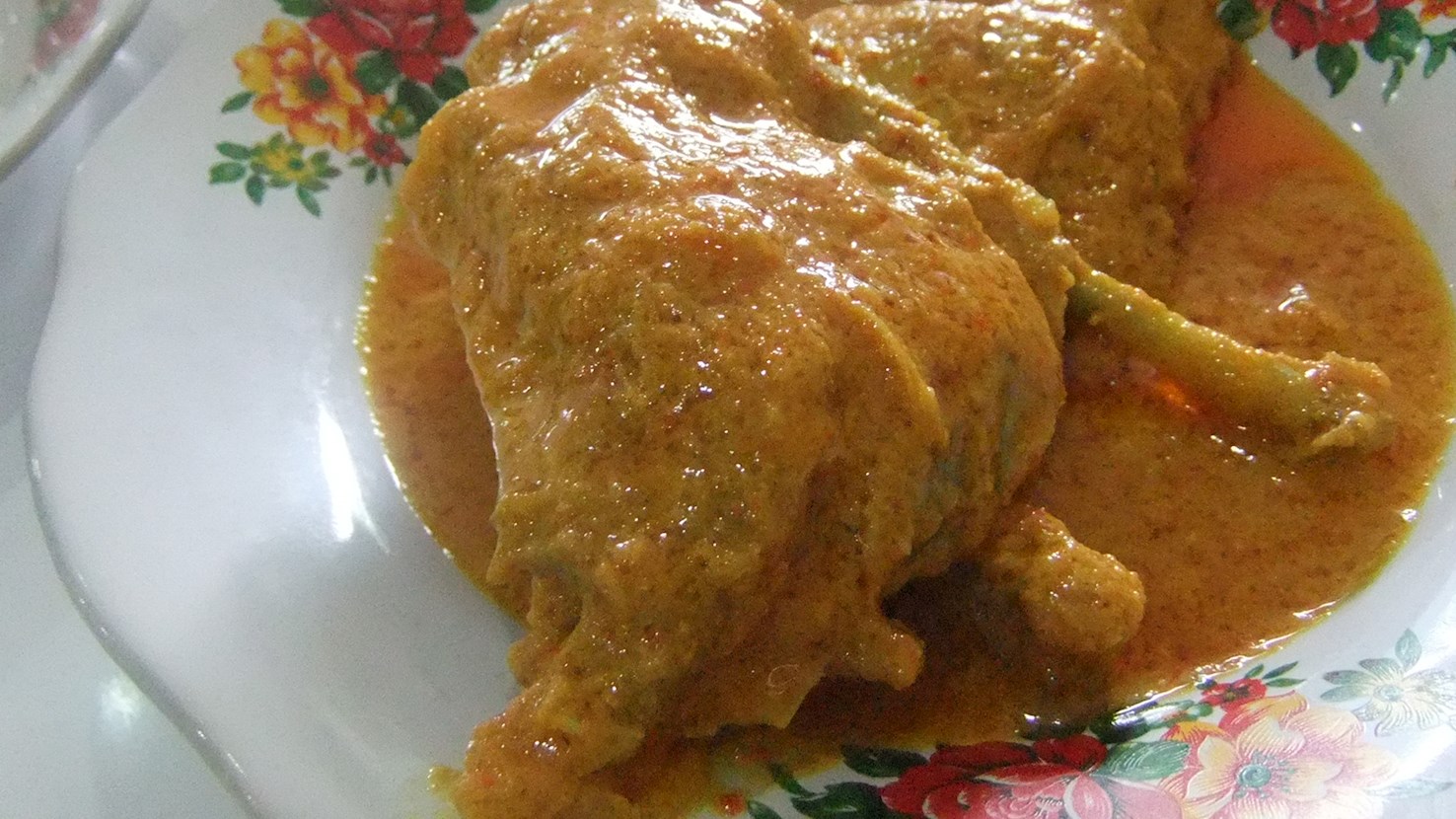
Gulai ayam is a classic Indonesian chicken curry that is rich, aromatic, and deeply rooted in Minangkabau (West Sumatran) and broader Malay culinary traditions. The term “gulai” refers to a type of curried dish found across Indonesia and Malaysia, characterized by its use of spices simmered in coconut milk, resulting in a thick, flavorful sauce. Ayam means chicken, so gulai ayam literally translates to chicken curry, but it’s far more complex than a typical curry. What sets gulai ayam apart is its luxurious spice blend, which often includes turmeric, coriander, cumin, cinnamon, cloves, star anise, cardamom, galangal, lemongrass, and sometimes toasted coconut. The chicken is slowly simmered in this fragrant blend along with thick coconut milk until it becomes tender and fully infused with the sauce’s golden, spicy, and slightly sweet richness. The color of the curry is usually a deep yellow-orange due to turmeric and chili, and the aroma is intensely warm and earthy. This dish is especially popular in Padang cuisine, which is known for bold, spicy, and coconut-rich flavors. But gulai ayam is enjoyed all over Indonesia and parts of Malaysia, with slight regional variations — for example, Javanese versions might be sweeter and milder, while Minang-style versions are spicier and more robust. Gulai ayam is typically served with steamed rice, often alongside sambal, vegetables, and other complementary dishes. It’s a common sight at family meals, religious feasts, and festive gatherings like weddings or Eid celebrations.
Gulai kambing is a rich and deeply aromatic Indonesian lamb, mutton or goat curry, rooted in Minangkabau traditions from West Sumatra but enjoyed widely across Java and other islands. At its heart, gulai kambing features tender pieces of lamb, mutton or goat meat (often including bone, skin, or offal) simmered slowly in a thick coconut milk broth infused with a complex blend of spices such as turmeric, coriander, cumin, galangal, lemongrass, ginger, cinnamon, and cloves. The result is a golden-yellow curry that is luxuriously creamy yet boldly spiced, with the natural gaminess of the goat mellowed and enriched by the coconut milk and aromatic base. The preparation varies slightly by region, with some versions leaning spicier or sweeter, and others using a thinner broth, but all are defined by their depth of flavor and slow-cooked warmth. Traditionally served hot with steamed rice, gulai kambing is often accompanied by condiments like sambal, pickled vegetables, or crispy shallots to enhance its taste and texture. This dish is a hallmark of festive gatherings, religious feasts, and traditional warung menus.
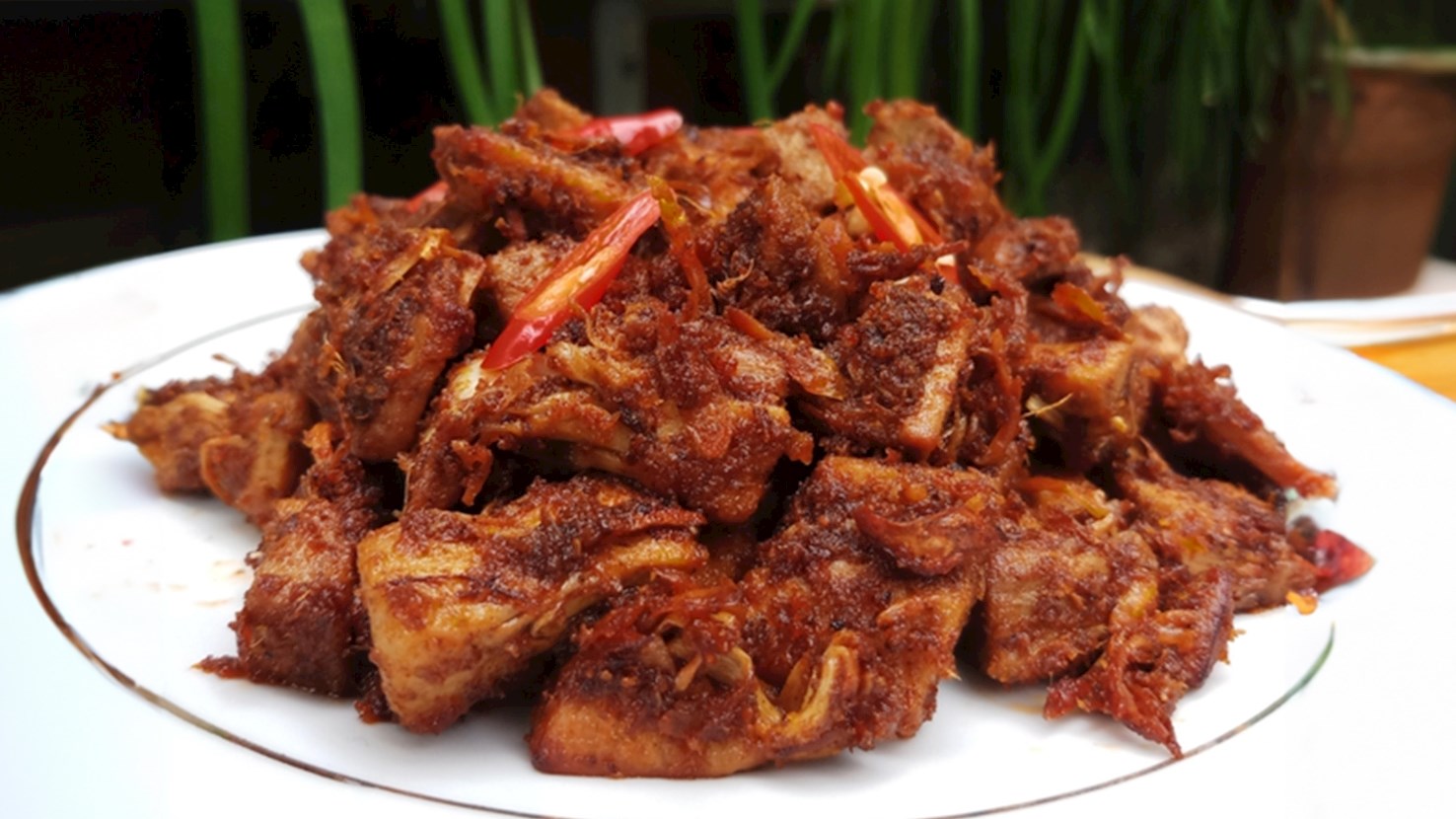
Jackfruit rendang is a vegetarian or vegan version of the classic Indonesian dish known as rendang. Traditional rendang is a rich and tender coconut beef stew that's slow-cooked in coconut milk and a mixture of lemongrass, galangal, garlic, turmeric, ginger, and chilies, among other ingredients. In the jackfruit version, young, unripe jackfruit is used as a substitute for beef. Young jackfruit has a neutral taste and a meaty texture, making it an excellent plant-based alternative for absorbing the complex flavors of the rendang sauce. When cooked, the jackfruit becomes tender and flaky, mimicking the texture of slow-cooked meat. Jackfruit rendang is prepared similarly to the meat version, starting with sautéing a spice paste (rempah) made from grinding together the spices and aromatics. Coconut milk is then added, along with the jackfruit and sometimes kaffir lime leaves and tamarind paste for additional flavor. The mixture is simmered slowly until the jackfruit is tender and has absorbed the flavors of the spices, and the coconut milk has reduced to a thick, rich sauce that clings to the jackfruit pieces. Jackfruit rendang is usually served with rice, much like the original meat-based rendang.
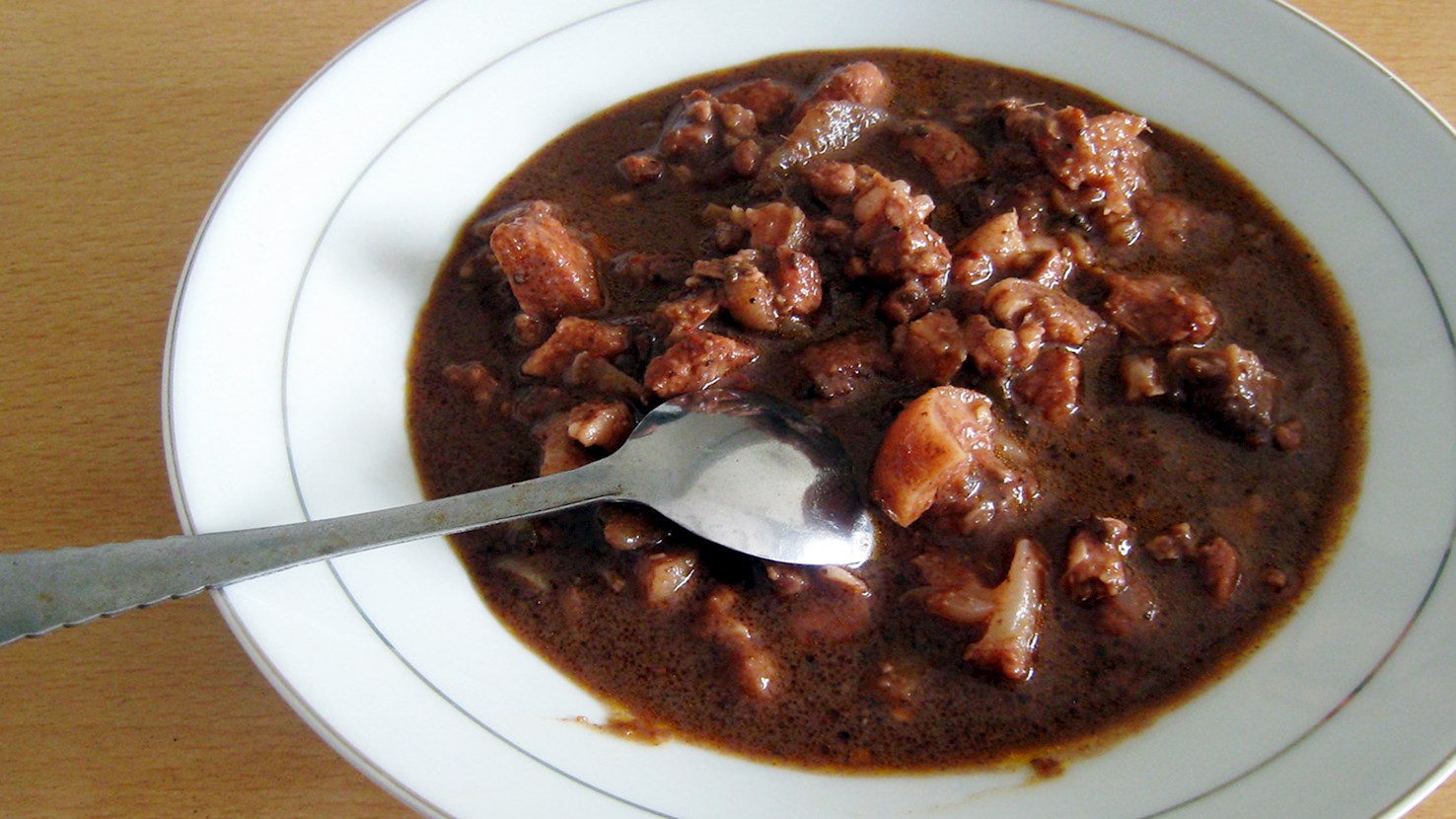
Saksang is a savory Indonesian stew which is usually served on special occasions. It is traditionally made with pork, which is cooked in blood and fiery spices. The tradition of preparing saksang is believed to have originated among the Batak people of North Sumatra. The most common main ingredient is pork; however, the varieties which include dog or water buffalo meat are also frequent among the Batak culture. Due to the addition of blood and numerous different spices, the dish has a unique spicy and sweet flavor and a distinctive dark-brown color. Batak people consider saksang to be their ceremonial dish and a traditional meal served at weddings. If not served at traditional ceremonies, saksang can be found at many traditional Batak restaurants throughout North Sumatra. In restaurants, the dish should be ordered a day in advance, and it is usually served with boiled vegetables and rice. The head of the animal is specially prepared and included in the ceremony during prayers and blessings.
TasteAtlas food rankings are based on the ratings of the TasteAtlas audience, with a series of mechanisms that recognize real users and that ignore bot,
nationalist or local patriotic ratings, and give additional value to the ratings of users that the system recognizes as knowledgeable.
For the “Top 6 Sumatran Stews” list until May 15, 2026, 540 ratings were recorded, of which 327 were recognized by the system as legitimate.
TasteAtlas Rankings should not be seen as the final global conclusion about food. Their purpose is to promote excellent local foods,
instill pride in traditional dishes, and arouse curiosity about dishes you haven’t tried.