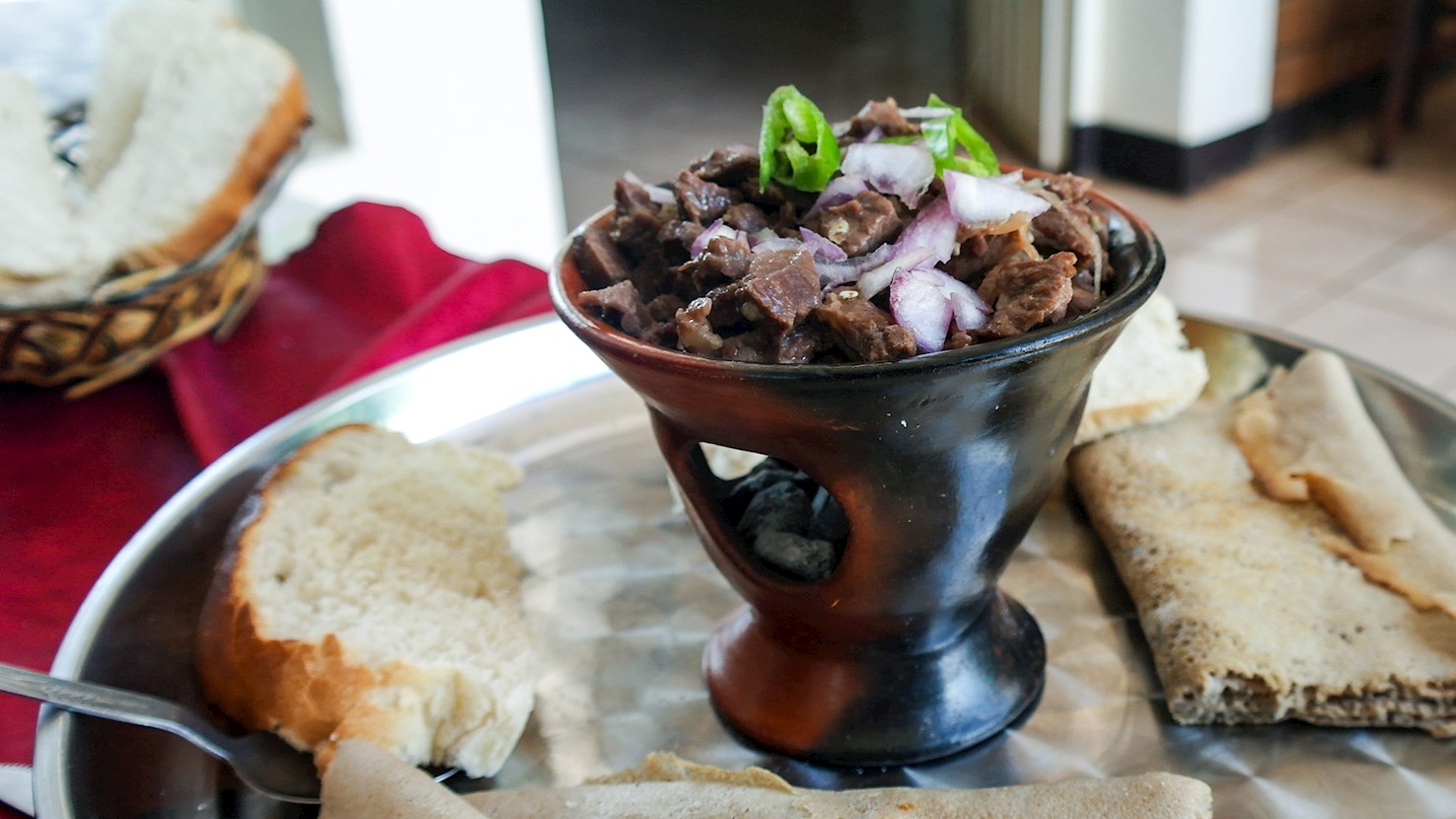
Tibs is a quick stir-fried meat dish made with cubes of beef, lamb, or goat seared over high heat with onions, jalapeños, and spiced clarified butter. Historical accounts from the Royal Chronicles of the Solomonic dynasty in the fourteenth century describe royal banquets where large platters of seared meat were served as a sign of wealth and to honor important guests. The high-heat cooking style is also closely connected with the fasting calendar of the Orthodox Church in the Horn of Africa. After the fifty-five-day vegan fast leading up to Fasika, freshly slaughtered livestock could be cooked quickly without the long simmering required for stews. The meat is first cut into even, bite-sized cubes. A wide metal pan is heated until very hot. A generous spoonful of niter kibbeh, clarified butter flavored with fenugreek, cardamom, and garlic, is melted in the pan. Sliced red onions and the raw meat are added to the hot fat and seared quickly so the outside browns while the inside stays juicy. Minced garlic, fresh ginger, and thick slices of green jalapeño are added shortly before the meat finishes cooking. Fresh rosemary sprigs are often added at the end so their aroma infuses the hot butter and meat. Changing the cooking time and seasonings creates several different styles. Awaze tibs adds a thick, spicy mixture of berbere chili and honey mead, turning the dry stir-fry into a richer, dark red, saucier version. Derek tibs takes the opposite approach. No extra liquid is added, and the meat stays in the hot pan until the outside becomes dry, crisp, and deeply browned. Lamb can replace beef, producing a fattier and gamier flavor and usually requiring less butter in the pan. The hot meat is served directly over injera, the large, spongy sourdough flatbread that absorbs the spiced butter and meat juices. The meal is eaten by tearing off pieces of injera by hand and using them to pick up the meat. A small clay brazier filled with hot charcoal is sometimes placed at the table beneath a special pan called a shekla, keeping the tibs hot and sizzling while it is served. Small portions of bright orange mitmita spice powder or sharp yellow mustard paste are often placed around the edges of the injera for dipping.
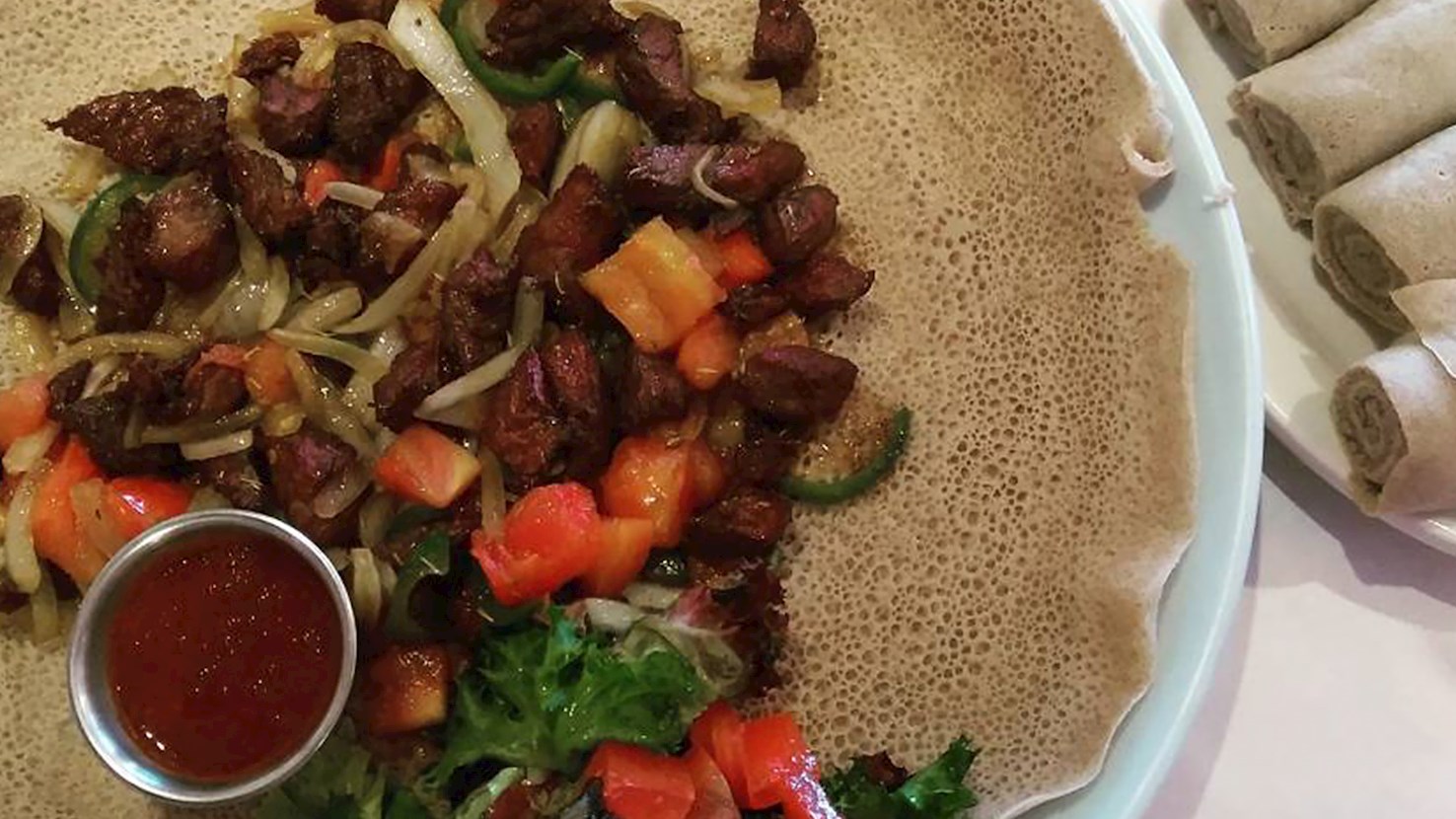
Derek tibs is a meat dish made by frying pieces of beef, lamb, or goat over high heat until the meat is deeply browned and the pan is left almost completely dry, giving it a noticeably firmer and more seared character than many other forms of tibs. The name explains the defining feature: derek means “dry” in Amharic, while tibs refers to fried or sautéed meat, and Ethiopian descriptions distinguish it from juicier tibs preparations by the absence of a substantial sauce or kulet. Tibs has long been part of Ethiopian meat cookery and is strongly associated with communal meals, restaurants, holidays, and occasions when freshly slaughtered meat is available. What separates this version from other members of the tibs family is mainly technique rather than a completely different set of ingredients: the meat is cut into chunks or strips and cooked over strong heat in oil, butter, or niter kibbeh until its released moisture evaporates and some edges become crisp and darkly browned. Onion and fresh green chili are common additions, while garlic, ginger, black pepper, and rosemary may also be used; tomato appears in some recipes but is kept limited so that the finished dish remains dry rather than becoming saucy. Fresh rosemary is particularly common as an aromatic and may be cooked with the meat or placed over it just before serving. Unlike awaze tibs, in which the meat is coated with a spicy berbere-based sauce, derek tibs usually keeps the chili sauce separate, allowing the browned flavor and texture of the meat to remain dominant. The meat is sometimes transferred directly from the pan to a heated earthenware serving dish set over hot coals, which keeps it sizzling at the table and prevents the fat from cooling and solidifying. Derek tibs is normally eaten hot with injera, using pieces of the sour flatbread to pick up the meat, onions, and peppers, and a small serving of awaze is commonly provided alongside for those who want additional heat. Beef is especially common, although lamb and goat versions follow essentially the same method. Because the dish is rich, salty, and intensely browned, injera provides its most characteristic accompaniment, while fresh vegetables or mild side dishes can provide contrast. Tej, Ethiopian honey wine, or beer are also natural beverage pairings with tibs, although no single drink is required for derek tibs itself.
Beef suqaar is a traditional stir-fried dish originating from Somalia. The dish is usually made with a combination of oil, beef, onions, carrots, salt, cumin, turmeric, bell peppers, lime juice, and coriander. The beef and onions are browned in oil, seasoned with salt, and mixed with carrots, cumin, and turmeric. A bit of water is added to the pot and the ingredients are cooked until the carrots begin to get tender. The bell peppers are thinly sliced and added to the pot and cooked until tender. The dish is seasoned with lime juice and salt, and it's then garnished with coriander before serving. It's recommended to serve beef suqaar with rice or chopped lettuce on the side.
Tibs firfir is a dish made by combining pieces of sautéed beef or lamb with torn injera, allowing the sour flatbread to absorb the meat juices, spiced butter, and chile-based sauce directly in the pan. Also widely called tibs fitfit, it brings together two familiar Ethiopian preparations: tibs, referring to quickly fried or sautéed meat, and fitfit or firfir, in which pieces of injera or another bread are torn up and mixed with a seasoned sauce. Ethiopian restaurant versions commonly use beef strips or cubes cooked with onion, garlic, awaze, and other spices before the injera is folded into the mixture, while lamb is another frequent choice. Preparation begins with meat browned in niter kibbeh or oil, generally with onion, garlic, green chili, and seasonings, followed by awaze or a berbere-based sauce that provides enough moisture for the injera. The flatbread is torn into bite-sized pieces and added near the end, then gently tossed until it is thoroughly coated but has not completely broken down. Some preparations are fairly dry, with distinct pieces of meat and softened injera, while others use more sauce and produce a wetter, almost stew-like consistency; contemporary Ethiopian menus show both approaches and use either the names tibs fitfit or tibs firfir. The defining feature is therefore not a particular cut of meat or exact spice blend but the final combination of cooked tibs with injera, which separates it from ordinary tibs served on top of a fresh flatbread. Beef is especially common, although lamb and goat can be prepared in the same manner, and awaze gives many versions their characteristic red color and pronounced heat. Because the injera is incorporated into the dish itself, tibs fitfit is usually eaten as a complete plate rather than requiring additional injera for every bite, although extra bread may still be served alongside. It is generally eaten hot and works well with cooling accompaniments such as ayib, fresh tomato salad, or mild vegetable dishes, while additional awaze or mitmita can be added for more heat. Tej or beer pair naturally with richer, spicier versions, while Ethiopian coffee or tea can follow the meal.
Yedoro tibs is a chicken dish in which pieces of chicken are cooked with butter or oil, onions, peppers, and spices until tender and well seasoned, offering a quicker and less saucy alternative to Ethiopia’s better-known doro wot. The name comes from Amharic doro, meaning chicken, and tibs, referring to fried or sautéed foods, so yedoro tibs can be understood simply as chicken tibs. Ethiopian sources document the dish in several forms, ranging from chicken pieces first simmered until tender and then fried with onions and butter to modern restaurant versions in which boneless chicken is quickly sautéed with vegetables and seasonings. Chicken has a particularly important place in Ethiopian cooking, especially in celebratory dishes, but yedoro tibs differs from doro wot by emphasizing frying or sautéing rather than prolonged simmering in a heavily seasoned berbere sauce. Older Ethiopian recipes may use bone-in chicken that is boiled first and then combined with onions, butter, black pepper, and sometimes wine or red pepper, while contemporary versions often use boneless chicken cut into strips or chunks for faster cooking. The chicken can be seasoned beforehand with salt and spices, then cooked in niter kibbeh or oil with sliced onions, garlic, green peppers, and fresh chilies. Berbere is common in hotter versions, while rosemary, ginger, and black pepper may also be included; some cooks add tomato, although the finished dish generally remains a sauté rather than developing the consistency of a stew. Ethiopian chef Eden Gebre Egziabher’s version presents doro tibs as a chicken-and-vegetable stir-fry and uses niter kibbeh and awaze within the broader meal, reflecting the way modern versions combine high-heat cooking with characteristic Ethiopian seasonings. The chicken is cooked only until tender and browned, while the onions and peppers retain some texture, giving yedoro tibs a noticeably lighter and more immediate character than slow-cooked chicken preparations. Some versions are mild and buttery, while others incorporate enough berbere or awaze to make them distinctly hot, so the name identifies the chicken and cooking style more clearly than a single fixed spice formula. Yedoro tibs is normally served hot with injera, which is torn into pieces and used to pick up the chicken, vegetables, and seasoned cooking juices. It may appear as part of a larger platter with misir wot, tikel gomen, greens, salad, or other vegetable dishes, while awaze can be served separately for additional heat. Tej or beer work well with spicier versions, while Ethiopian coffee, tea, or water are common non-alcoholic accompaniments to the wider meal.
Fiyel tibs is an goat-meat preparation in which tender cubes of goat are quickly browned with seasoned butter, onions, garlic, green chilies, and aromatic herbs, producing a rich but relatively dry dish rather than a stew. The name comes directly from Amharic fiyel, meaning goat, and tibs, referring to fried or sautéed meat; the fuller form yefiyel tibs (የፍየል ጥብስ) means “goat tibs,” while Ethiopian restaurants also commonly shorten the name to simply fiyel tibs. Addis Ababa menus use both forms for preparations explicitly made from goat meat, confirming that they refer to the same basic dish rather than separate varieties. Goat has long been an important meat animal across Ethiopia, especially in areas where its ability to thrive in dry conditions makes it particularly valuable, and fiyel tibs developed within the country’s wider family of quick-cooked meat dishes rather than as a recipe tied to one documented inventor or locality. Preparation generally starts with relatively tender goat meat cut into bite-sized cubes and cooked over strong heat so that the surfaces brown before too much moisture accumulates in the pan. Niter kibbeh, Ethiopia’s spiced clarified butter, is commonly added for richness, together with onion, garlic, fresh green chili, and often rosemary; some cooks also include ginger, black pepper, tomato, berbere, or mitmita depending on the desired level of heat and moisture. Goat-specific Ethiopian restaurant preparations commonly pair the meat with onion, garlic, and rosemary, while local menus also distinguish goat tibs from other goat dishes such as qeqel, kitfo, and goden tibs. Because goat is usually leaner and can be firmer than lamb, tender cuts are preferred for fast-cooked tibs, while tougher meat may need a little more time before being finished over high heat. The finished dish should retain distinct pieces of browned meat and only a modest amount of buttery juices; when the goat is cooked until almost completely dry and crisp it moves closer to derek tibs, while adding a substantial berbere-based sauce produces a style closer to awaze tibs. Fiyel tibs is generally served immediately, sometimes still sizzling in a hot pan or clay vessel, with injera placed underneath or alongside so that it absorbs the seasoned fat and meat juices. Ethiopian restaurant menus commonly serve goat tibs directly with butter and injera, reinforcing its role as a straightforward meat-centered meal. Awaze or mitmita can be provided on the side for additional heat, while onions, fresh chilies, salad, cooked greens, or mild vegetable dishes work well alongside the goat. Tej or beer can accompany the rich, spicy meat, while water, tea, or coffee are common non-alcoholic choices with the broader meal.
Yebeg tibs is a preparation of lamb cooked quickly with onions, green chilies, and seasoned butter until the meat is browned and tender. The name simply identifies what is being cooked: yebeg refers to lamb or sheep meat, while tibs describes meat that is fried or sautéed, making yebeg tibs the lamb counterpart to beef-based siga tibs. Lamb and sheep have long held an important place in Ethiopian celebratory meals, and yebeg tibs is especially associated with occasions such as Ethiopian Christmas and New Year, when meat dishes become prominent after or between fasting periods. Preparation begins with tender lamb, commonly from the leg or shoulder, cut into small cubes and cooked in a very hot pan so the exterior browns rapidly while the interior remains juicy. Niter kibbeh is then combined with ingredients such as sliced onion, garlic, fresh green chili or jalapeño, black pepper, and rosemary, with ginger and other spices appearing in some versions. Berbere may be added for extra heat and color, but it is not essential to the basic dish; when a substantial amount of awaze is incorporated, the preparation moves toward awaze tibs rather than plain yebeg tibs. The cooking is deliberately quick and relatively dry, distinguishing it from yebeg wot, in which lamb is slowly simmered in a seasoned sauce. High heat also allows some of the lamb fat to render and encourages browned edges, while the onions and peppers remain distinct rather than dissolving into a stew. Some restaurants bring yebeg tibs to the table still sizzling in a heated clay vessel, while simpler versions are transferred directly from the frying pan onto injera. It is eaten by tearing pieces of injera and using them to pick up the lamb together with onions, chilies, and the seasoned butter and juices underneath. Awaze or mitmita can be served separately for additional heat, while cooked greens, lentils, cabbage, salad, or mild ayib cheese can accompany it as part of a larger Ethiopian platter. Tej or beer pair naturally with the rich lamb and chile, while water, tea, or Ethiopian coffee may accompany the broader meal.
Siga tibs is a beef dish made by quickly frying or searing pieces of lean meat with seasoned clarified butter, onions, fresh green chilies, and aromatic spices, resulting in juicy browned beef with only a small amount of cooking juices rather than a stew-like sauce. The name is straightforward: siga means meat in Amharic and is also commonly used specifically for beef, while tibs refers to fried or sautéed meat, making siga tibs one of the basic beef forms within Ethiopia’s much larger tibs family. Siga tibs is generally less narrowly defined than styles such as derek tibs, which emphasizes a dry finish, zilzil tibs, which uses long strips of meat, or awaze tibs, which is characterized by a coating of spicy awaze. The beef for siga tibs is usually cut into bite-sized cubes or short pieces and cooked over high heat so that it browns quickly rather than releasing enough liquid to boil. Niter kibbeh is a characteristic cooking fat, while sliced onions, garlic, ginger, green chilies or jalapeños, and sometimes tomatoes are added for flavor; berbere may also be included, although the quantity varies greatly and a heavily sauced berbere preparation moves closer to other named tibs styles. The best results depend on keeping the pan hot and cooking the beef in batches if necessary, since overcrowding causes the meat to release water and prevents the browned exterior that defines well-made tibs. Once the beef has been seared, it is combined briefly with the softened aromatics and seasoned butter, leaving the meat tender inside with browned edges and enough concentrated juices to soak into injera. Some versions add tomato for moisture and mild acidity, while fresh rosemary is also common in Ethiopian tibs cookery; restaurants may serve the finished meat on a heated plate or clay vessel so that it continues sizzling at the table. Siga tibs is usually eaten immediately with injera, using pieces of the sour flatbread to pick up the beef, onions, peppers, and buttery juices, and it can be served as part of a larger platter with lentils, cooked greens, cabbage, salad, or other vegetable dishes. Awaze or mitmita can be offered separately for additional heat, while mild ayib cheese provides a cooling contrast. Tej or beer are common accompaniments to meat dishes of this kind, while water, tea, or coffee also fit naturally with a broader Ethiopian meal.
Goden tibs is an Ethiopian rib dish made from beef or lamb ribs that are cut into manageable pieces and sautéed or grilled with onions, garlic, green peppers, and aromatic seasonings. The name refers directly to the cut: goden means ribs, while tibs describes Ethiopia’s broad family of fried or sautéed meat preparations, making the presence of bone-in or rib meat the feature that separates goden tibs from versions based on cubed or sliced beef. Ethiopian restaurant descriptions consistently identify it with short ribs or riblets, and both beef and lamb are used. Tibs in general became closely associated with celebrations, restaurants, and occasions when good-quality fresh meat was available, while goden tibs developed around a cut prized for its combination of meat, fat, and bone. Preparation usually begins with ribs cut into individual sections or smaller riblets, sometimes marinated beforehand, then cooked over fairly high heat until the exterior is well browned and the fat begins to render. Garlic, sliced onion, green chili or jalapeño, black pepper, and rosemary are among the most common additions, while niter kibbeh may be used instead of ordinary oil to add the flavor of Ethiopian spiced clarified butter. Some versions add tomato, while others keep the seasoning deliberately simple and relatively dry, concentrating on browned meat, garlic, onion, and rosemary. The ribs may be sautéed entirely in a pan or grilled first and finished with butter and aromatics, and restaurants frequently serve them on a sizzling plate so that the meat remains hot and continues to brown slightly at the table. Unlike awaze tibs, goden tibs does not require a chile-based sauce, although awaze is commonly provided alongside as a dip, and unlike zilzil tibs or standard siga tibs, the meat remains attached to or derived from the rib section rather than being defined by strips or boneless cubes. The combination of bone, rendered fat, and strongly browned edges gives goden tibs a richer and more robust texture than many leaner tibs preparations, and some cooks take it close to derek tibs by frying the riblets until noticeably crisp. Goden tibs is served immediately, usually with injera, which is used to pick up pieces of meat, onions, peppers, and seasoned fat from the plate. Awaze, fresh salad, cooked greens, or mild vegetable dishes can accompany it, while tej or beer work naturally with the rich, salty meat; there is no single beverage specifically tied to goden tibs itself.
Zilzil tibs is one of the most distinctive forms of tibs, made from long, thin strips of beef that are quickly fried or seared with seasoned butter, onions, green peppers, and aromatic seasonings. The word zilzil refers specifically to meat cut into long strips, distinguishing the dish from tibs prepared with the more usual cubes or chunks, while tibs refers to fried or sautéed meat. Beef is the most common choice, especially tender cuts such as ribeye, sirloin, or tenderloin, and Ethiopian restaurant menus commonly describe zilzil tibs specifically as finger-length or elongated strips of lean beef. The strips are cooked over strong heat so that the surface browns rapidly while the meat remains tender, with niter kibbeh or another cooking fat supplying richness. Onion, garlic, and fresh green chili are common additions, while rosemary is particularly characteristic and may be added as whole sprigs so that its aroma perfumes the meat and butter during cooking. Some preparations keep the seasoning quite simple, emphasizing beef, butter, garlic, peppers, and rosemary, while others add berbere or finish the meat with a small amount of awaze; the latter makes the dish hotter but is not necessary for it to qualify as zilzil tibs, since the defining feature is the elongated cut of the meat. Cooking is deliberately quick and relatively dry: overcrowding the pan would cause the beef to release water and steam, while the desired result is browned edges and distinct strips rather than meat simmered in a sauce. Depending on the cook and cut, the interior may remain juicy or be cooked more thoroughly, and some versions develop lightly crisp edges similar to derek tibs while retaining the recognizable strip shape. Zilzil tibs is served immediately, often while still sizzling, either directly on injera or in a heated clay serving vessel that keeps the meat warm at the table. Injera is the main accompaniment, providing a soft, slightly sour base for picking up the beef, onions, peppers, and seasoned butter, while awaze is frequently served on the side for additional heat. Fresh salad, cooked vegetables, or mild ayib cheese can provide contrast to the rich meat, and there is no single beverage tied specifically to zilzil tibs, although tej or beer fit naturally with the spicy, buttery character of the meal.
TasteAtlas food rankings are based on the ratings of the TasteAtlas audience, with a series of mechanisms that recognize real users and that ignore bot,
nationalist or local patriotic ratings, and give additional value to the ratings of users that the system recognizes as knowledgeable.
TasteAtlas Rankings should not be seen as the final global conclusion about food. Their purpose is to promote excellent local foods,
instill pride in traditional dishes, and arouse curiosity about dishes you haven’t tried.







What People Say