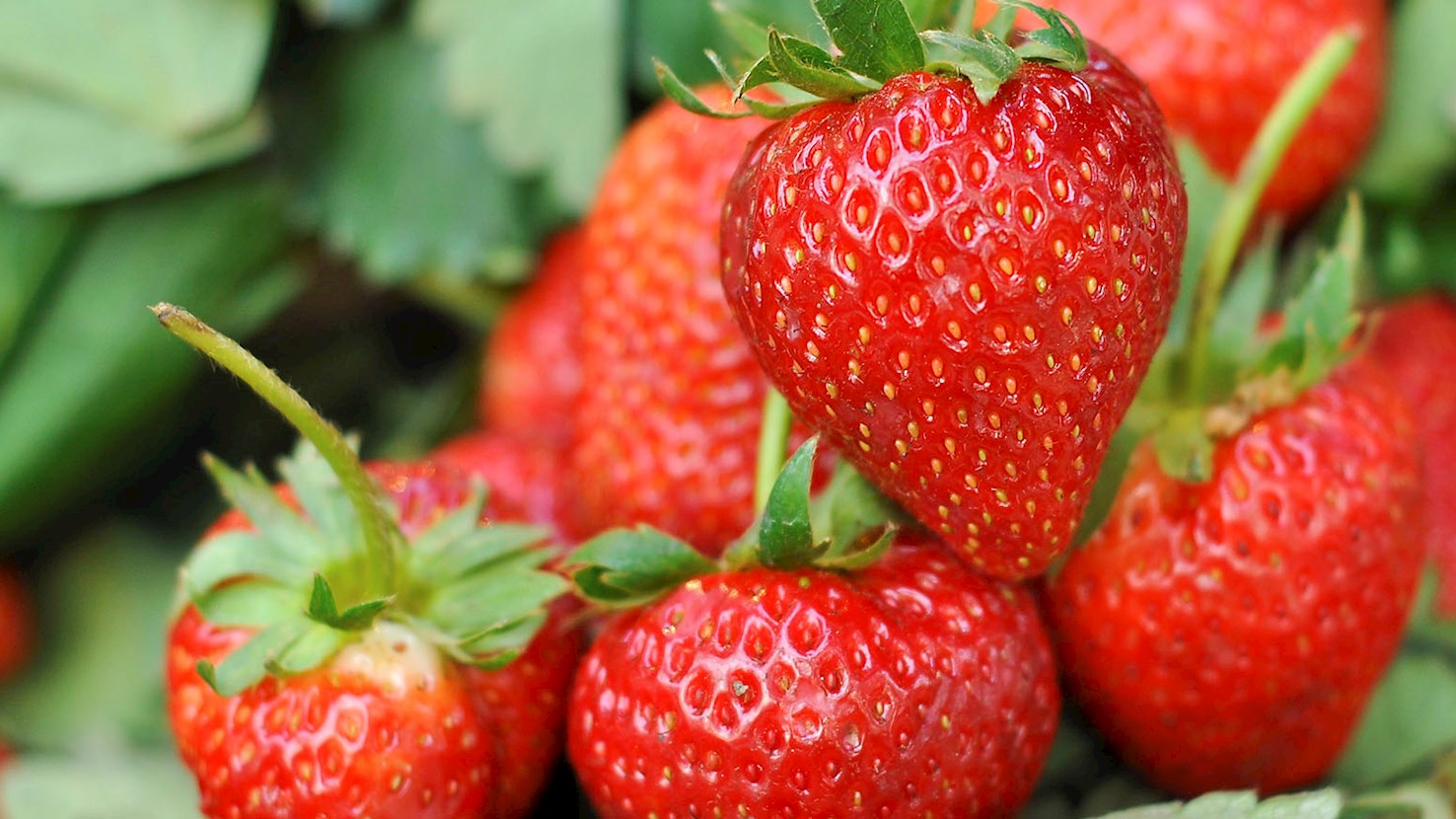
Truskawka kaszubska, also known as Kaszëbskô malëna, are strawberries of the Elsanta, Honeoye and SengaSengana varieties, grown in the Kartuski, Kościerski and Bytowski districts in Poland. The Elsanta and Honeoye varieties are intended for direct consumption and are light red to intense red, rounded and small, with juicy, firm flesh. Their taste is sweet, aromatic and well-balanced, similar to that of wood strawberries. The Senga Sengana variety is intended for processing, it has firm, juicy and hard flesh and comes in various sizes and shapes. When the strawberries are ripe, their stem is easy to remove and they contain more sugar than other varieties of strawberries, making them unique in their specific taste. A typical fruit of the region, it can be enjoyed on its own or in various sweet desserts and cakes.
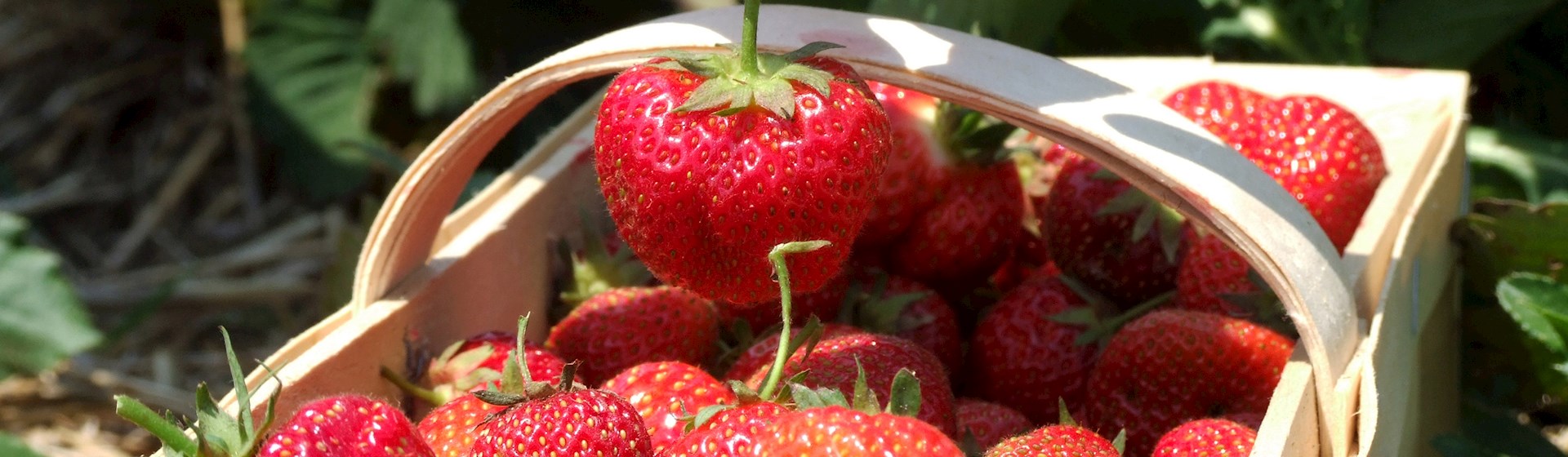
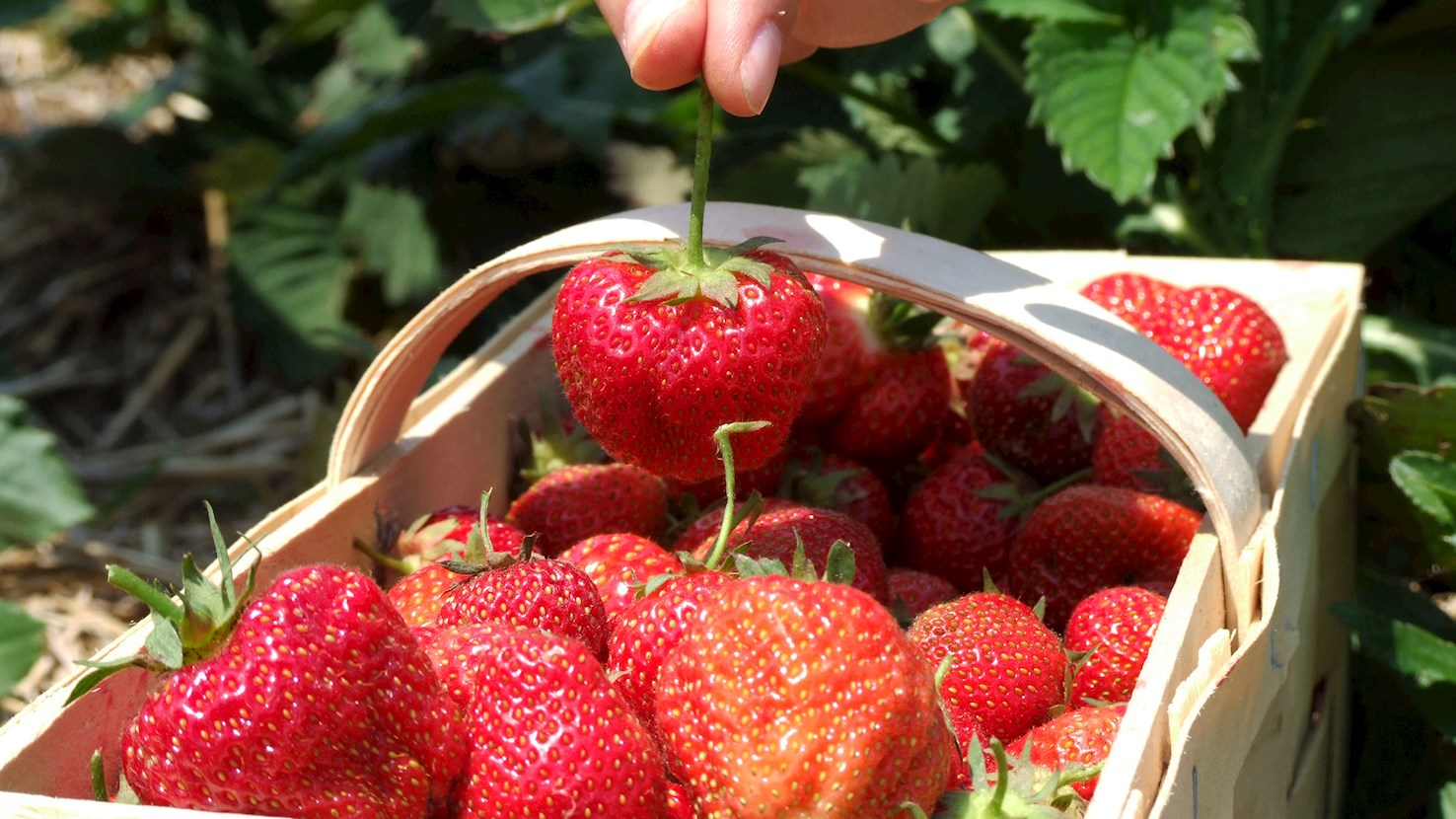
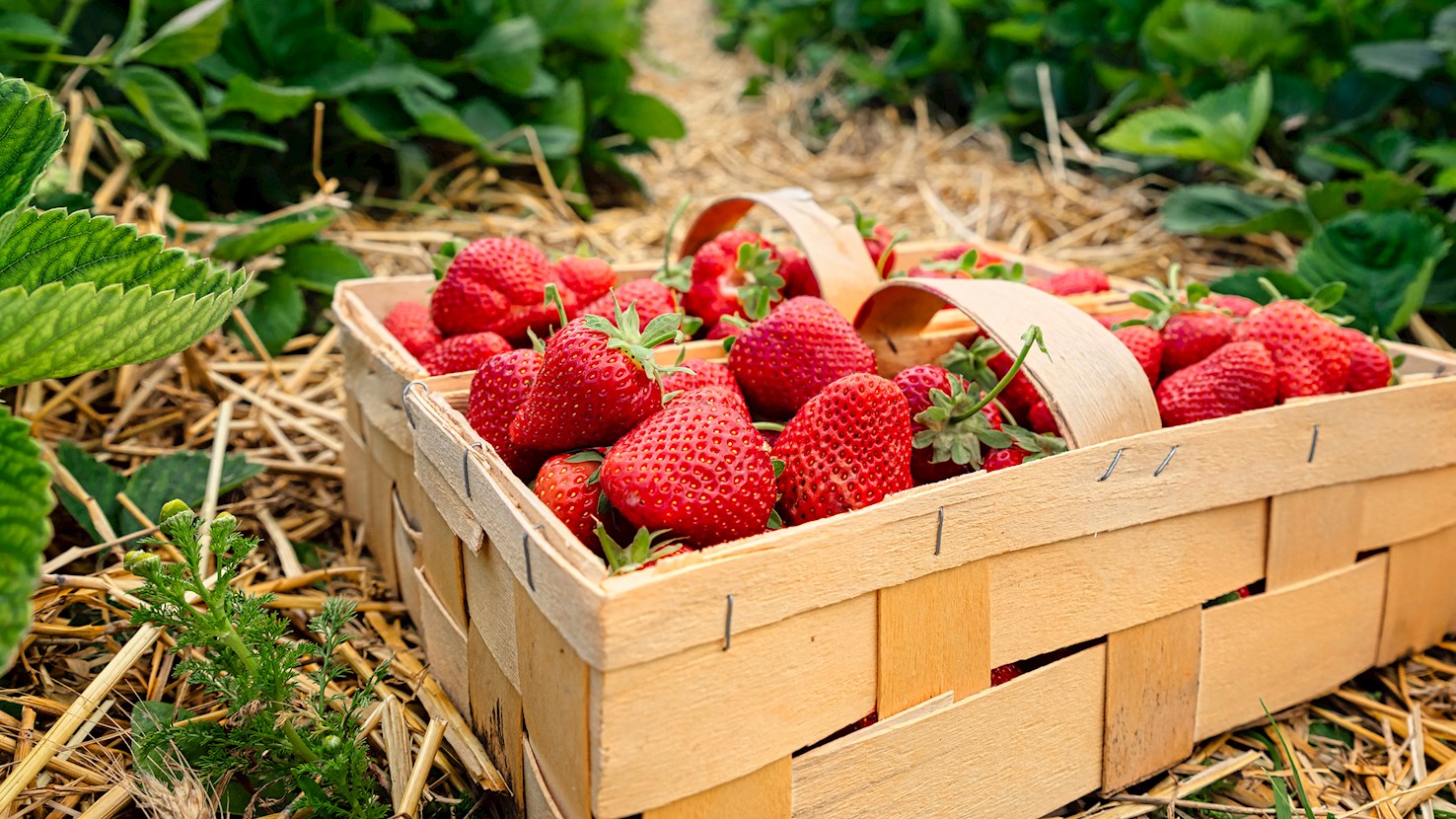
Wexford strawberries are a renowned fruit from County Wexford, celebrated for their vibrant color, intense sweetness, and rich aroma. Grown in the region’s mild maritime climate and fertile sandy soils, they have become one of Ireland’s most recognizable seasonal products, often regarded as the benchmark for strawberry quality in the country. Their reputation is closely linked to the geography and weather of the area, where long daylight hours and temperate conditions create ideal ripening conditions, resulting in berries that are notably fragrant and flavorful. The cultivation of strawberries in Wexford dates back to the early 20th century, when small-scale farmers began planting them as a summer crop to supplement their income. Over the decades, strawberry farming became a defining feature of the county’s agricultural landscape, with generations of families refining growing techniques and expanding production. By the mid-20th century, Wexford strawberries had gained a nationwide reputation, appearing at markets across Ireland and often sold directly from roadside stalls during the height of the season. Advances in horticultural practices and selective breeding improved yield and consistency, but much of the production has remained in the hands of small to medium-sized family farms, preserving a sense of continuity and regional identity. Preparation for consumption is minimal, as these strawberries are most commonly enjoyed fresh, reflecting their naturally sweet flavor and juicy texture. They are often served with cream or shortbread as a simple dessert, layered into cakes and trifles, or paired with whipped cream and meringue in desserts such as pavlova. Their concentrated sweetness also makes them a popular ingredient in jams and preserves, while some producers use them in liqueurs, sauces, and even ice creams. The uniqueness of Wexford strawberries lies not only in their taste but also in their cultural resonance: they mark the arrival of summer in Ireland, often celebrated at local food festivals and featured in seasonal menus. They are typically eaten from early June to late July, when they are at their peak, and are most often paired with dairy-based accompaniments, sparkling wines, or light, crisp desserts that highlight their natural flavor.
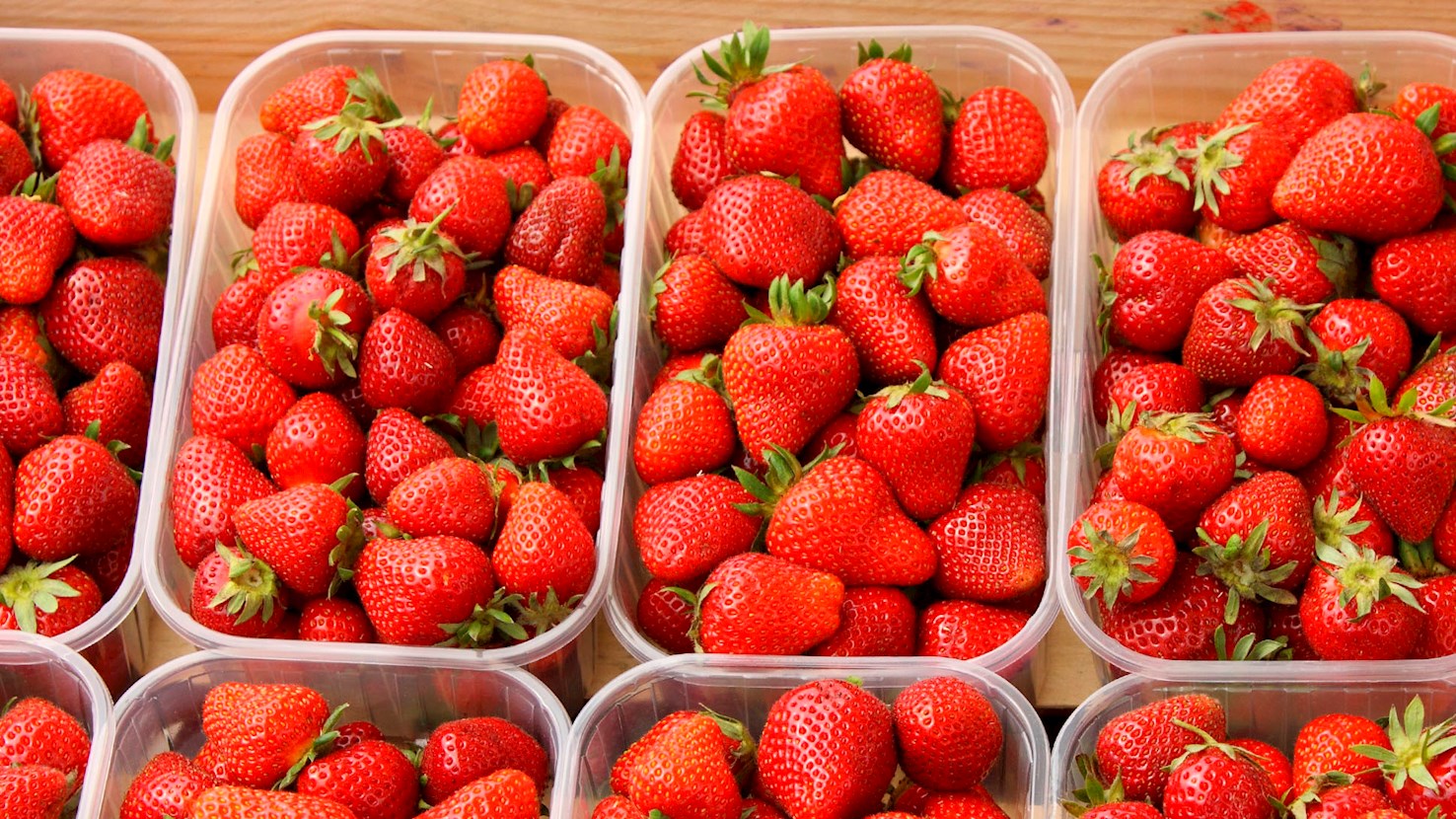
Fraises de Nîmes are fresh, elongated strawberries of the Ciflorette and Gariguette varieties grown in the Gard region in France since the 1960s. The strawberries are hand harvested and must always be arranged in layers when sold. They are expertly sorted, handled and packaged as to keep the high quality and not to damage the fragile, clean, bright and extremely aromatic fruit. The texture is moderately firm and the flavor is a balance of sweetness and tartness. As the soil on which they grow is warm and well-drained, this helps the early maturity of the juicy strawberries and they are the first spring strawberries in France. For a tasty appetizer, try roughly cut Nîmes strawberries with a drizzle of olive oil and a sprinkle of pepper.
Fragola di Tortona is an Italian strawberry variety originating from Tortona, hence the name. These strawberries are not much larger than raspberries in size. They are highly perfumed and fragrant, with a delicate and sweet flavor. The strawberries are grown on the hills surrounding Tortona, and they peaked in popularity in the 1930s. Nowadays, the strawberries are traditionally sold in woven wood baskets. They don't keep well – when picked in the morning, they must be consumed the same day, otherwise they will start to deteriorate. The harvest takes place between May and June and the strawberries are available only for ten days. Interestingly, the crisis due to pollination difficulties had started after WWII, but nowadays a few producers still grow these fragrant strawberries on local hills and nearby fields.
Fraise du Périgord are strawberries grown in the open fields and hills full of chestnut trees, in the Dordogne region in France since 1895. All of the strawberries must meet strict quality criteria in regard to their color, size, shape, sugar content, firmness and shine. There are six varieties of Périgord strawberries which are sold in packets of 250 or 500 grams. These hand-picked strawberries have an intense, sweet, deep and fresh flavor, balanced with a nice level of acidity, and are best enjoyed on their own with some whipped cream, in fruit salads or made into refreshing strawberry sorbets.
Jordbær refers to strawberries in Norway, a fruit widely cultivated and enjoyed throughout the country, particularly in the summer months when the growing season reaches its peak. Norwegian strawberries are known for their deep red color, juiciness, and pronounced sweetness, qualities influenced by the long daylight hours and cool nights that slow ripening and concentrate flavor. Strawberry cultivation in Norway expanded significantly in the 20th century as improved farming techniques, better transport, and selective breeding allowed growers to meet the increasing demand from local markets. The berries are harvested carefully by hand to avoid bruising, as their delicate skin and high sugar content make them more perishable than many imported varieties. Preparation for eating can be as simple as rinsing them in cold water and serving them fresh, often accompanied by sugar, cream, or ice cream. They are also widely used in desserts, jams, pastries, and sauces, and can be frozen for use outside the summer season. One notable point is that Norwegian strawberries often have a shorter harvest period than those grown in warmer climates, which contributes to their reputation as a seasonal highlight and creates a sense of anticipation each year. Jordbær are eaten at home, sold in open-air markets, featured in cafés and restaurants, and often served during midsummer celebrations, picnics, and family gatherings, where their flavor is enjoyed in both simple and elaborate dishes.
Shiroi houseki is a rare Japanese white strawberry variety developed by farmer and breeder Yasuhito Teshima in Karatsu, Saga Prefecture, known for its pale ivory color, red seeds, large size, delicate fragrance, and soft, sweet flavor. Its name means “white jewel,” a description that suits the way the fruit is presented in Japan: carefully grown, carefully selected, and often sold as a luxury strawberry rather than an ordinary everyday berry. Unlike an unripe red strawberry, shiroi houseki is fully mature when its skin remains white or faintly cream-colored, with small red seeds standing out against the pale surface. The inside is also light-colored, and the flesh is tender, juicy, and aromatic, with a flavor that is usually milder and more refined than that of many red strawberries. It is sweet but not heavy, gently tart, and often described as having a soft tropical note, sometimes compared to pineapple or peach, while still retaining the clean freshness of a strawberry. White strawberries had existed before as rare or unusual forms, but Teshima worked for years to create a berry that was not merely pale but consistently beautiful, flavorful, and marketable as a high-end fruit. He spent years developing the variety through natural crossbreeding, with the first commercial release coming in 2012. Only a small share of the harvest reaches the most desirable pure white appearance, which helps explain both the fruit’s rarity and its high price. Its whiteness is not achieved by artificial coloring; it comes from the way the fruit develops little to no red pigment as it ripens. White strawberries, in general, are known for having very low levels of the compounds associated with the red color of ordinary strawberries, and they require careful growing conditions because too much light, stress, or uneven development can affect their appearance. Shiroi houseki is difficult to grow well because the ideal fruit must satisfy several demands at once. It should be pale enough to look like a true white strawberry, but also ripe enough to taste sweet and fragrant. It should be large and attractive, but still soft, juicy, and clean-flavored. It should look pristine, because bruises and blemishes show easily on the pale skin. This makes selection strict, and many berries cannot be sold as top-grade examples. The best fruits are usually packed with care, sometimes individually protected, and treated almost like edible gifts. It is best eaten fresh, slightly chilled, or close to room temperature, without sugar, syrup, or heavy cream, because the whole point is to notice the aroma and the gentle balance of sweetness and acidity. It can be used in fruit plates, shortcakes, parfaits, and refined desserts, but cooking it would waste much of what makes it special. Heat would dull its fragrance, and strong flavors would hide its pale color and delicate taste.
Pineberry is a white-to-pale-pink strawberry cultivar with red seeds and a sweet-tart flavor often compared to pineapple, strawberry, and citrus. Despite its unusual color, it is not an unripe strawberry or a separate fruit species, but a cultivated form of strawberry related to the same broader hybrid background as modern garden strawberries. Pineberries are commonly described as hybrids involving the Chilean strawberry, Fragaria chiloensis, and the North American wild strawberry, Fragaria virginiana, the two ancestral species behind the modern cultivated strawberry. It was developed in the Netherlands by Hans de Jongh, who began selecting white strawberry plants around 2003 and released a marketable cultivar in 2009 after several years of improvement. Their most recognizable feature is the color reversal: where an ordinary strawberry turns red with pale seeds, a pineberry stays ivory, cream, or faintly blushed pink while its tiny seeds stand out in red across the surface. That contrast gives the fruit an almost decorative appearance, closer to a confection or a painted berry than to the supermarket strawberry most people know. The name pineberry comes from the fruit’s pineapple-like aroma and flavor, although the comparison should not be taken too literally. A good pineberry still tastes like a strawberry, but the flavor is usually lighter, more fragrant, and more tropical than that of many red varieties. The acidity is gentle but noticeable, the sweetness is clean rather than jammy, and the finish can suggest pineapple, citrus, pear, or underripe tropical fruit. Some berries are strongly aromatic, while others are mild, as flavor depends heavily on cultivar, ripeness, growing conditions, and post-harvest handling. The texture is usually softer and more delicate than that of firm commercial red strawberries, and the berries are often smaller, which partly explains why pineberries have remained a specialty fruit rather than a dominant market variety. They are attractive and memorable, but they are not always high-yielding or easy to ship. Pineberries became widely noticed in European markets in the early 2010s, when their strange appearance made them seem almost like a novelty, but white-fruited strawberries have a much longer history. White forms of the Chilean strawberry existed long before modern marketing gave the fruit its catchy English name, and contemporary pineberries were reintroduced as a commercial curiosity through selective cultivation. Their appeal lies in the meeting of old genetics and modern presentation: a pale berry with a tropical perfume, packaged and sold as something rare, elegant, and slightly surprising. In recent years, pineberries and other white strawberries have also become more visible in the United States, Japan, and specialty produce markets, thanks to broader interest in unusual berries and premium fruit. Pineberries are best eaten fresh, when their fragrance and soft texture are most noticeable. They can be served plain, added to fruit plates, used as a garnish for cakes and tarts, paired with whipped cream or yogurt, or arranged with red strawberries for contrast. Their pale color makes them especially striking in desserts. They pair well with vanilla, cream, citrus, mint, basil, white chocolate, Champagne, yogurt, soft cheese, and other berries. A good pineberry should look pale but ripe, with bright red seeds, a fresh green cap, a sweet aroma, and flesh that is soft without being mushy. If it tastes bland, it is usually because it was picked too early, stored too cold for too long, or grown for appearance more than flavor.
Oishii Omakase is a premium strawberry grown by the American vertical-farming company Oishii, known for its strong aroma, delicate sweetness, creamy texture, and Japanese-inspired luxury fruit style. More precisely, the fruit is sold as the Omakase Berry, and its name comes from the Japanese word omakase, meaning “I leave it up to you,” a phrase best known from chef-led dining where the guest trusts the maker to provide the best possible experience. Oishii applies that idea to fruit: the berry is meant to feel selected, controlled, and intentionally grown, rather than treated as a standard supermarket strawberry. The company describes the Omakase Berry as having room-filling aromatics, gentle sweetness, and a creamy texture, and is grown in Jersey City at an indoor vertical farm designed to make the fruit available beyond the usual outdoor strawberry season. The Omakase Berry belongs to the modern category of luxury strawberries influenced by Japanese fruit culture, where fragrance, shape, ripeness, and texture matter as much as sweetness. It is not a wild fruit or a traditional regional variety in the old sense, but a carefully cultivated, branded strawberry developed for consistency and premium eating quality. The berries are usually glossy, evenly red, and soft-looking without appearing fragile, with a perfume that is often more noticeable than that of conventional strawberries. Their flavor is gentle rather than sharp: sweet, floral, lightly tart, and clean, with a soft flesh that gives the fruit a rounded, almost dessert-like character. This is why the Omakase Berry is often eaten plain, one berry at a time, rather than treated as an ingredient to be hidden under sugar, cream, or pastry. Instead of relying on open-field conditions, Oishii uses controlled indoor farming, where light, temperature, humidity, water, and pollination can be managed closely. The berries are pesticide-free, non-GMO, always in season, and harvested at peak ripeness, which helps explain both the fruit’s original luxury positioning and its association with chefs and specialty grocers. The Omakase Berry is a sought-after restaurant fruit, once sold at very high prices in small trays and favored by chefs for its sweetness, aroma, and unusual texture. Over time, the brand became more accessible, but it still carries the image of a special-occasion strawberry rather than an everyday berry. In taste, Oishii Omakase is best understood as a strawberry designed for immediacy. Its main pleasure comes from the first smell, the first bite, and the contrast between a familiar fruit and a more polished, delicate version of it. It is not meant for jam, compote, or baking, where heat and sugar would erase the qualities that make it expensive. It works best fresh, slightly chilled, or at room temperature, served on its own, with Champagne or sparkling wine, with soft cream, in a simple fruit plate, or as the main element in a restrained dessert. In restaurants, it can appear with panna cotta, shortcake, ice cream, chocolate, custard, or citrus, but the strongest preparations keep the berry visible and let its aroma remain central.
Sembikiya Queen is a premium Japanese strawberry sold by Sembikiya-Sohonten under the name Queen Strawberry, grown in Kagawa Prefecture and prized for its deep red color, balanced sweetness, refreshing acidity, and elegant appearance. It is not the kind of strawberry bought casually by the basket, but a carefully selected luxury fruit connected to Japan’s culture of seasonal gifts, fruit parlors, and beautifully presented produce. Sembikiya describes Queen Strawberry as a winter specialty available only through the company, grown with careful, elevated cultivation so the berries receive plenty of sunlight and ripen red throughout, with a juicy texture and a balance of sweetness and acidity. The fruit is especially associated with Miki, Kagawa, where selected growers cultivate the berries with close attention to size, color, shine, and shape, so the final product looks as polished as it tastes. A good Queen Strawberry has a bright crimson surface, a clean strawberry fragrance, firm but juicy flesh, and a flavor that is sweet without becoming flat, thanks to its gentle tartness, which keeps the berry fresh and lively. Compared with varieties that are prized mainly for intense sugar, Sembikiya Queen is more about balance: sweetness, acidity, aroma, juiciness, and a graceful appearance working together. That balance is part of why it suits Sembikiya’s style so well, since the brand has long treated fruit as something chosen, displayed, and served with ceremony rather than simply consumed. The berries are often sold in refined gift boxes, sometimes in carefully arranged rows, where each piece is protected from bruising and shown almost like a jewel. Queen Strawberry has been handled by the Sembikiya company for 25 years, and seasonal offerings have included boxed berries as well as fruit-parlor desserts such as parfaits and plates built around the strawberry itself. In its purest form, Sembikiya Queen is best eaten fresh, slightly chilled, or close to room temperature, without sugar or heavy toppings, because the appeal lies in the berry’s natural perfume, color, and juicy bite. In Sembikiya’s fruit parlor setting, it may appear in parfaits, short seasonal desserts, or simple fruit plates with cream or ice cream, but even there, the fruit is usually treated as the centerpiece rather than a decoration. Its season is mainly winter into early spring, when Japanese strawberries are at their peak and gift fruit is in strong demand in department stores and specialty shops.
TasteAtlas food rankings are based on the ratings of the TasteAtlas audience, with a series of mechanisms that recognize real users and that ignore bot,
nationalist or local patriotic ratings, and give additional value to the ratings of users that the system recognizes as knowledgeable.
TasteAtlas Rankings should not be seen as the final global conclusion about food. Their purpose is to promote excellent local foods,
instill pride in traditional dishes, and arouse curiosity about dishes you haven’t tried.














What People Say