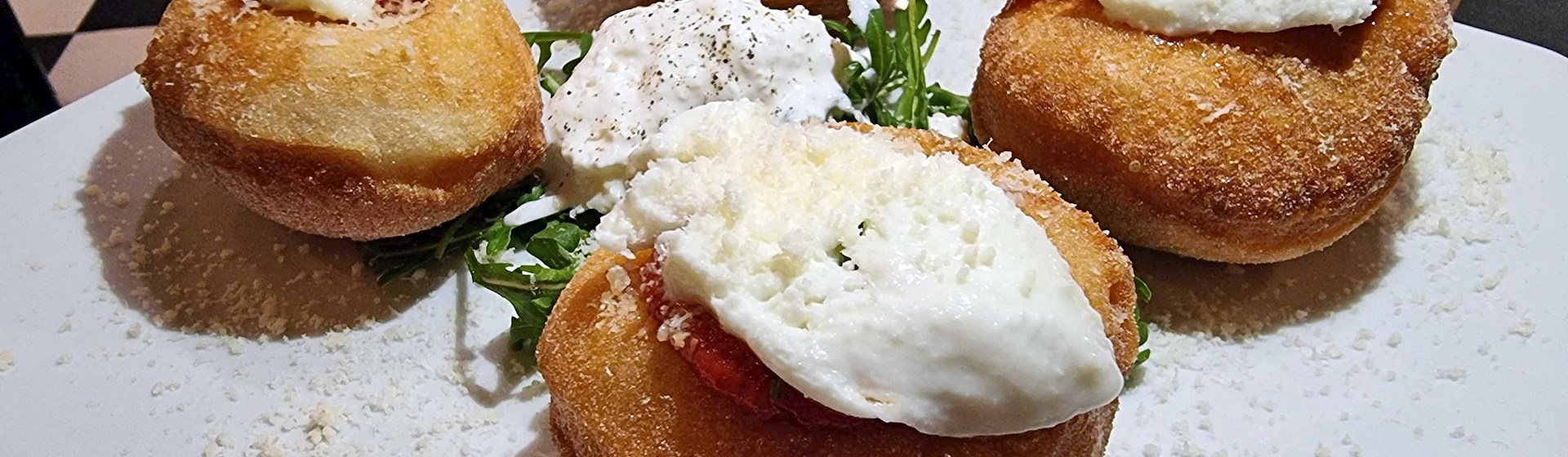
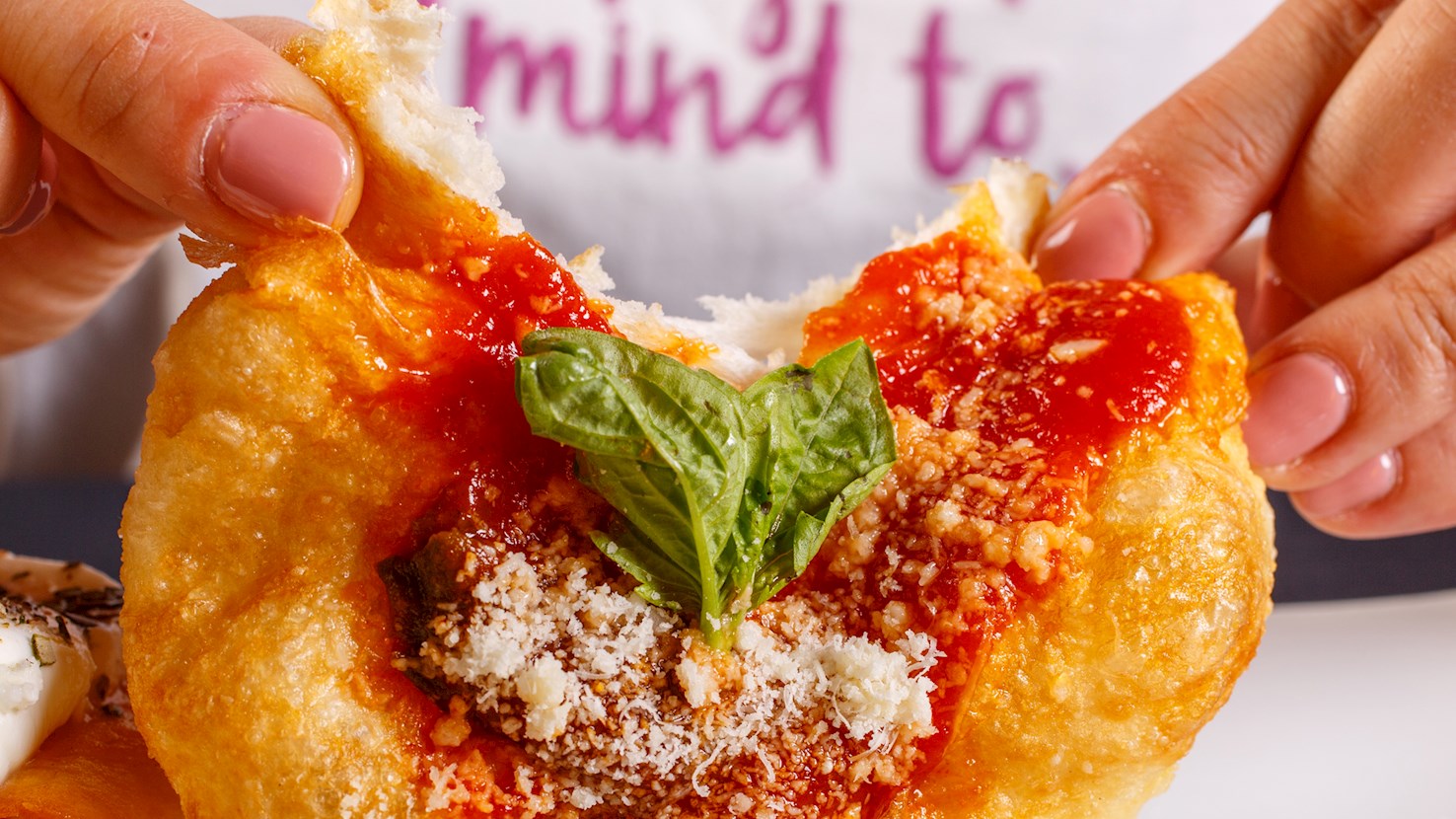
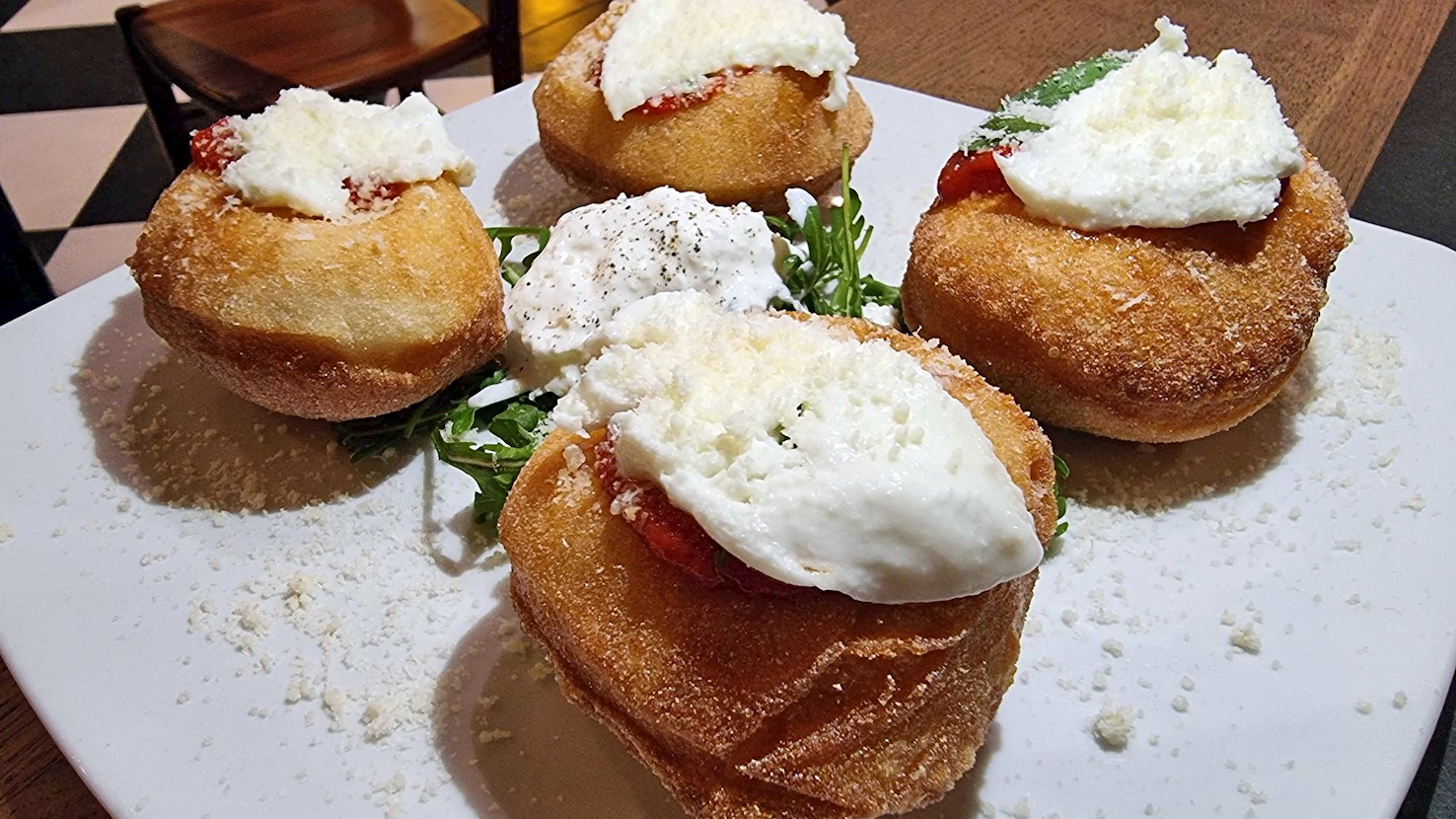
This pizza calls for deep frying the dough shortly before it is topped with marinara sauce, cheese, and basil, and then thrown into an oven for a final touch. The last step is said to imbue the pizza with a somewhat smoky, toasted flavor and make the crust light and airy, with a nice crunch to it. Although it might seem like a newly-concocted dish, this deep-fried pizza specialty is actually a variety of Italian pizza that dates way back in time and is believed to have its roots in the mountains surrounding Naples. The pizza’s origins are reflected in its name montanara, meaning coming from the mountain or mountain-style pizza. Apart from Naples, where fried pizza specialties are a common street food fare, pizza montanara can also be enjoyed in several New York restaurants.
A representative of traditional Neapolitan cuisine, pizzelle napoletane are small deep-fried pizzas that are traditionally topped with tomato sauce, mozzarella or grated Parmigiano Reggiano cheese, and fresh basil leaves. Often referred to as montanare or montanarine because of their resemblance to pizza montanara, these pizzas are prepared with soft, leavened and yeasty dough that is shaped into round, flattened pizzas, which are then fried in oil and become puffy and light. Once a staple of Naples’ cucina povera, pizzelle napoletane are nowadays a favorite street food item sold by numerous street vendors throughout the city. Savory and flavor-packed, these tiny fried pizzas are usually served as appetizers in Neapolitan restaurants and pizzerias, but they are also commonly served as party snacks.
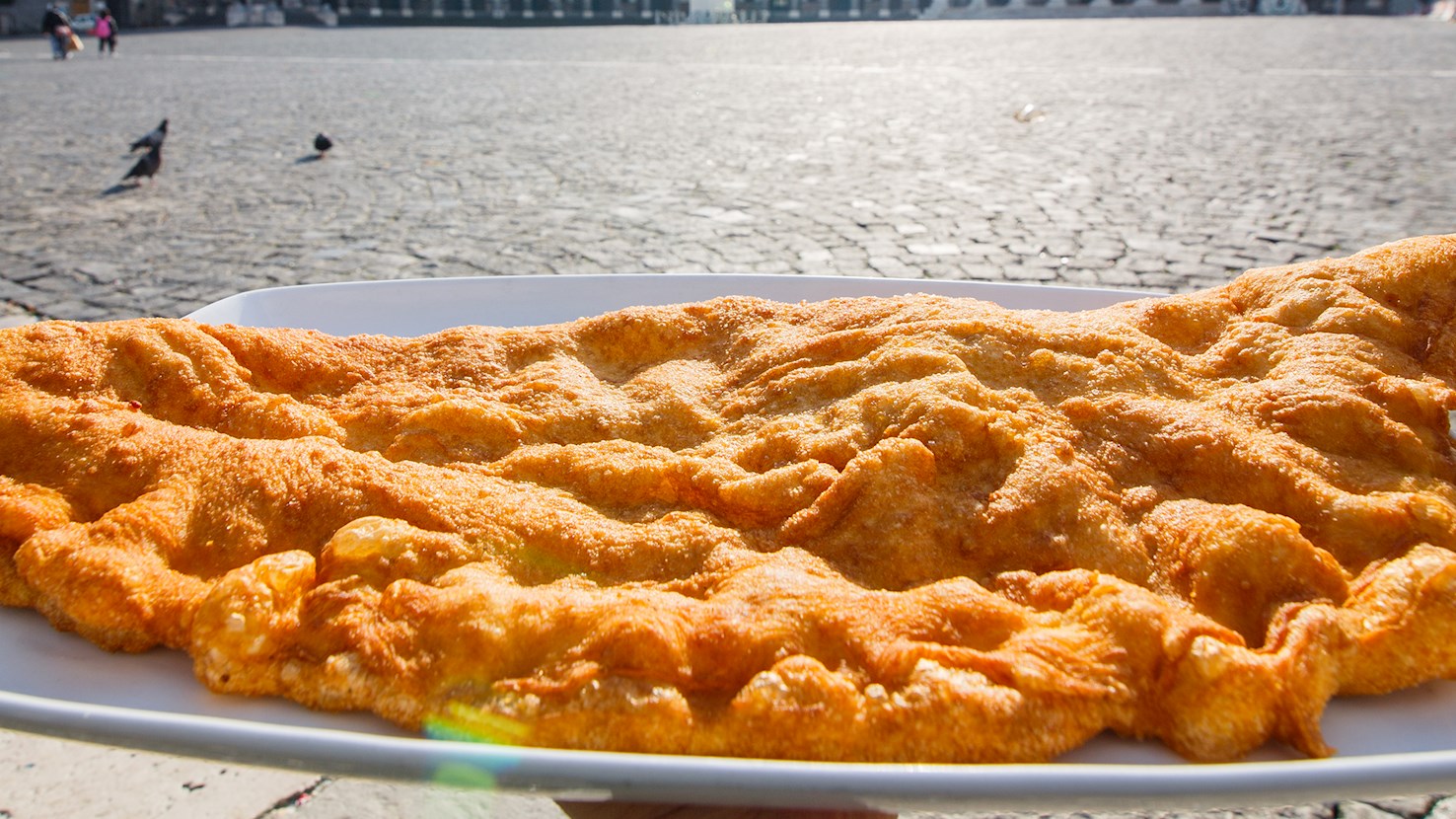
Pizza fritta, also known as fried pizza, is a popular Italian street food originating from Naples. To prepare pizza fritta, the dough (similar to traditional pizza dough, but allowed to rise longer, resulting in a lighter and fluffier texture) is rolled out into small rounds or rectangles and filled with classic pizza ingredients such as tomato sauce, mozzarella cheese, ham, mushrooms or vegetables. The edges of the dough are then folded over to enclose the fillings, and the pizza is carefully deep-fried in hot oil until golden brown and crispy. Once fried, pizza fritta is usually consumed piping hot from a piece of greasy paper, and is sometimes topped with additional ingredients like fresh basil, grated Parmesan cheese, or a drizzle of olive oil. It is typically enjoyed as a handheld street food.
'O pere e 'o musso (lit. the foot and the muzzle) is a traditional offal dish originating from Naples. This Neapolitan dish is usually made by boiling calf's snouts with pig's feet. The ingredients are cleaned, boiled, chilled, cut into small pieces, seasoned with salt and lemon juice, and then served cold from street food carts. There are many variations, so the dish can also include tripe, feet, rectum, udders, and uterus. 'O pere e 'o musso is often served with additional ingredients such as olives, fennel, or hot peppers.
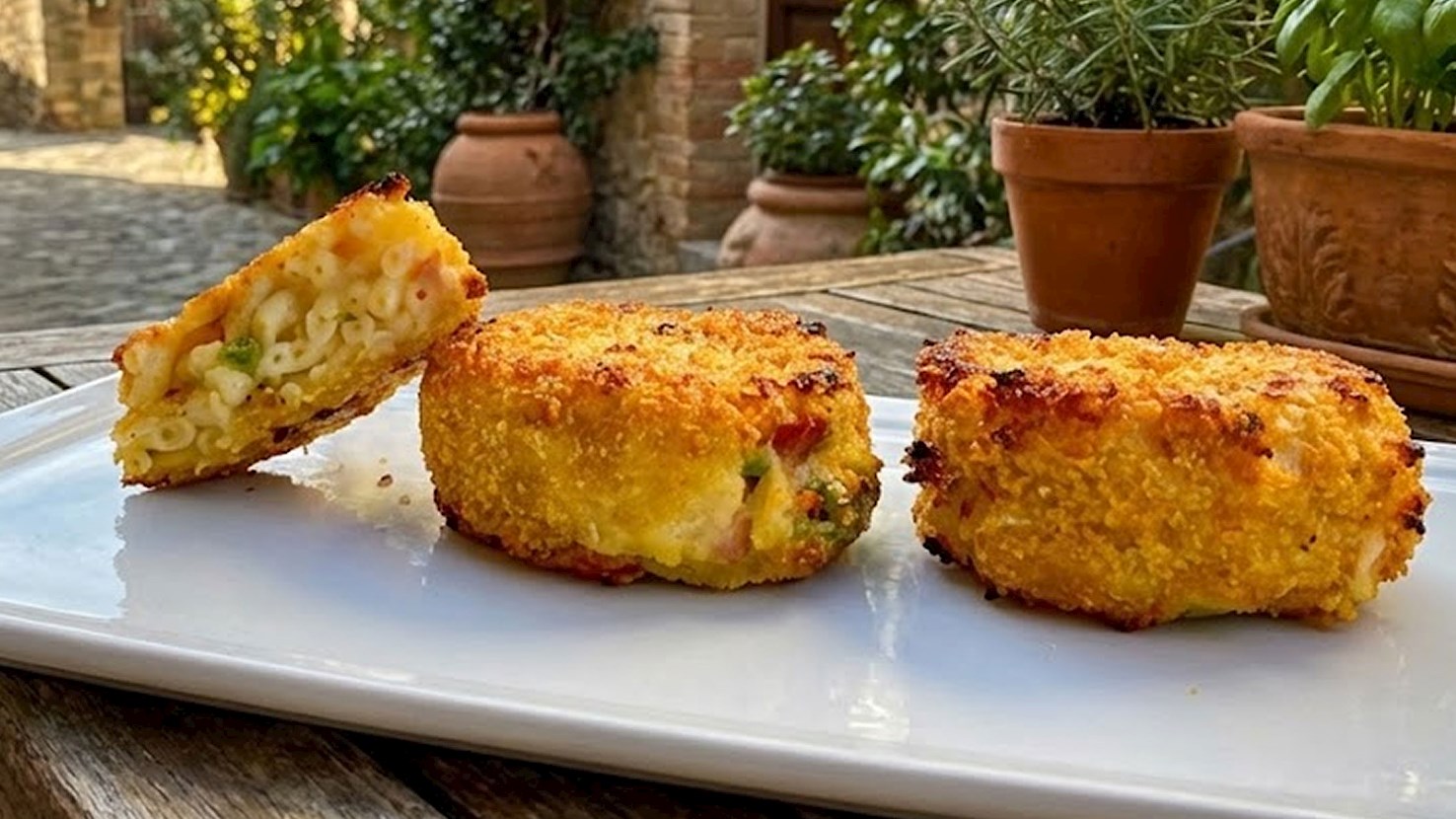
Frittatina di bucatini is a deep-fried pasta snack from the city of Naples, a compact disc of cooked bucatini pasta bound by a thick béchamel sauce and filled with a central core of meat ragù, peas, and provola cheese. It is a cornerstone of the Neapolitan "friggitoria" or fried food sector and is distinct from the larger, pan-fried frittata di maccheroni due to its specific breading and deep-frying method. The development of this item is rooted in the mid-20th century street food culture of Naples, where pizzerias sought to diversify their offerings by utilizing surplus pasta and basic pantry ingredients to create portable, high-calorie snacks for workers and students. Unlike many other pasta dishes, its evolution was dictated by the requirements of street consumption, leading to the use of a dense béchamel as a structural adhesive rather than eggs, which allowed the snack to maintain its cylindrical shape when handled. Preparation begins with boiling bucatini pasta until it is slightly beyond the al dente stage to ensure flexibility. The pasta is then chopped into smaller segments and folded into a very stiff, cold béchamel sauce seasoned with black pepper and grated cheese. The assembly involves creating a base of pasta, placing a spoonful of chilled meat ragù and cooked peas in the center, and topping it with more pasta before compressing the mixture into a circular mold or ring. Once the discs have been chilled and solidified to a firm consistency, they are dipped into a light batter composed of flour and water, known as "pastella", rather than a standard breadcrumb coating. The final cooking phase involves deep-frying the units in hot peanut or sunflower oil at a temperature of approximately 180°C until the exterior forms a rigid, golden crust while the interior remains creamy. A unique characteristic of the frittatina di bucatini is the use of the pastella, which creates a smooth, thin, and remarkably crisp shell that contrasts with the soft, hollow strands of the bucatini inside. This shell also serves as a thermal insulator, keeping the interior filling hot for a longer duration than open-faced fried foods. The frittatina is predominantly eaten as an appetizer before a pizza or as a standalone snack while walking. It is sold in pizzerias and dedicated fry shops throughout Naples and is typically served wrapped in paper to absorb excess oil. Because of its high fat and starch content, it is frequently paired with cold, effervescent beverages that provide carbonation to cleanse the palate, such as a chilled Peroni or Nastro Azzurro lager. In a more formal setting, it is often accompanied by a Gragnano DOC, a sparkling red wine from the Campania region that possesses the acidity and bubbles necessary to balance the richness of the béchamel and fried batter.
Pizza parigina is a hybrid street food from Naples, a rectangular baked sandwich made with two distinct types of dough. The base is a soft, fermented pizza dough, while the top layer is a thin, buttery sheet of puff pastry. Between these layers, the filling typically comprises tomato sauce, cooked ham, and provola cheese. The item is categorised as a rustico and is a staple in Neapolitan rotisseries and bakeries, distinguished by the structural contrast between the bready foundation and the laminated, flaky upper crust. The development of this item is linked to the culinary influence of French chefs, known as monzù, who worked in the kitchens of the Bourbon aristocracy in Naples during the late 18th and early 19th centuries. The name parigina is a linguistic corruption of the phrase "p' 'a riggina," which in Neapolitan dialect means "for the queen," specifically referring to Queen Maria Carolina of Austria, the consort of Ferdinand IV of Bourbon. This dish represented a fusion of the common pizza dough used by the local population with the refined puff pastry techniques introduced by the French-trained court chefs. By the mid-20th century, the recipe transitioned from royal households to public bakeries, where it was adapted into a convenient, portable format for urban workers. Preparation requires stretching a standard pizza dough into a well-oiled rectangular baking tray to form the bottom layer. This base is topped with a layer of tomato concentrate or sauce, followed by slices of prosciutto cotto and smoked provola cheese. A pre-rolled sheet of puff pastry is then placed over the filling and the edges are crimped to seal the contents. A unique technical requirement of the process involves pricking the surface of the puff pastry with a fork to allow steam to escape and brushing it with an egg wash to achieve a deep golden finish. The pizza is baked at approximately 200°C until the bottom is fully cooked and the top has expanded into multiple crispy layers. Pizza parigina is eaten throughout the city of Naples as a snack, a quick lunch, or a component of a buffet. It is served in rectangular portions and is usually consumed at room temperature, which allows the provola cheese to set slightly and prevents the puff pastry from becoming overly greasy. In local rotisseries, it is frequently paired with other fried or baked items such as arancini or crocchè. Beverage pairings include dry white wines from the Campania region, such as Falanghina, or a cold pilsner, both of which provide a crisp acidity that cuts through the richness of the butter in the pastry and the smokiness of the cheese.
Scazzuoppoli are small, irregularly shaped pieces of deep-fried pizza dough originating from Naples. They are a functional byproduct of the Neapolitan pizza industry, utilizing the same high-hydration dough used for standard flatbreads. The name stems from a dialectal term for "small scraps" or "little pieces," reflecting their origins as a way for pizzaioli to use leftover dough trimmings. By frying these scraps in the oil used for other street foods, pizzerias minimized waste and created a fast-cooking appetizer that required no additional raw materials. Preparation consists of tearing matured dough, made from 00 flour, water, salt, and yeast, into bite-sized fragments. These are submerged in oil heated to 180°C, where they rapidly puff and develop a crisp, golden exterior. A technical trait of the dish is the immediate expansion of the dough upon contact with the heat, creating a texture that is crunchy on the outside and airy within. For a savory finish, they are tossed with tomato sauce and grated cheese; for a sweet version, they are coated in sugar or chocolate. Scazzuoppoli are eaten in pizzerias and specialized fry shops across the Campania region, often served in a paper cone called a cuoppo. They are consumed hot by hand as a shared starter or dessert. Savory versions are typically paired with light Italian lagers or sparkling Gragnano wine, while sweet versions are accompanied by espresso or limoncello.
TasteAtlas food rankings are based on the ratings of the TasteAtlas audience, with a series of mechanisms that recognize real users and that ignore bot,
nationalist or local patriotic ratings, and give additional value to the ratings of users that the system recognizes as knowledgeable.
For the “Top 7 Campanian Street Food” list until May 15, 2026, 234 ratings were recorded, of which 166 were recognized by the system as legitimate.
TasteAtlas Rankings should not be seen as the final global conclusion about food. Their purpose is to promote excellent local foods,
instill pride in traditional dishes, and arouse curiosity about dishes you haven’t tried.