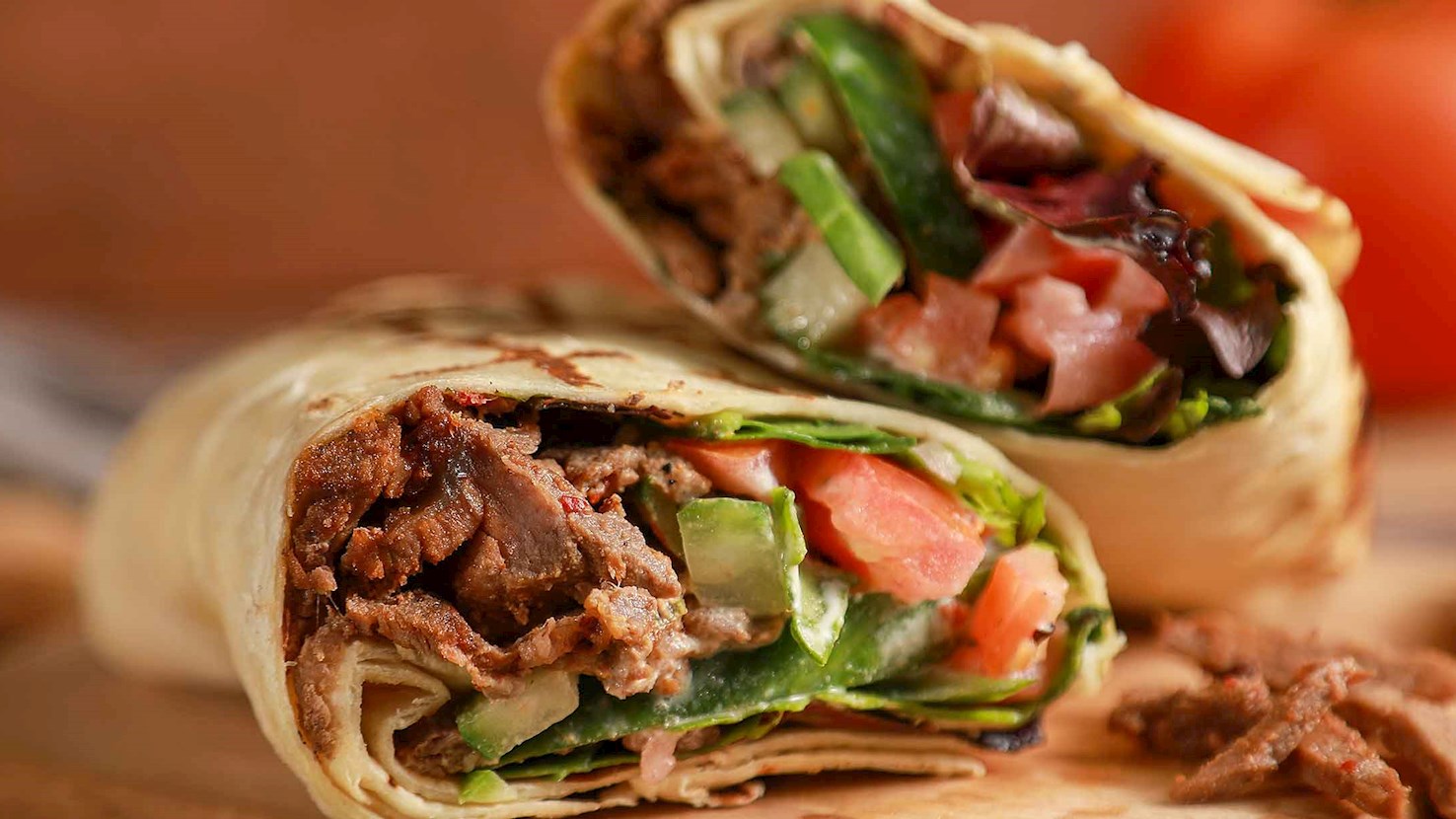
Marinated and spit-roasted, shawarma is a delicious Middle Eastern meat treat whose origins can be traced back to the Ottoman Empire era, while its name stems from the Arabic pronunciation of the Turkish word çevirme (lit. to turn; turning), and refers to the rotating skewer on which the meat is cooked. Shawarmas are made with either lamb, turkey, chicken, beef, or a mix of different meats which are slow-cooked for hours and basted in their own juices and fat, gaining an incomparable succulence, but the real secret to a perfect shawarma is in the marinade. Depending on the variety, the meat must be marinated for at least a day, preferably two, especially when using beef. These marinades are either yogurt or vinegar-based and typically include spices and flavorings such as cinnamon, cloves, cardamom, nutmeg, black pepper, allspice, dried lime, spicy paprika, garlic, ginger, lemon, bay leaf, and sometimes even orange slices. Shawarma is traditionally served either on its own or enjoyed tucked inside a warm flatbread such as pita or lavash. However, what really sets it apart from the Turkish döner kebab, Greek gyros, or other similar foods is the extent of garnishes and condiments offered with it. For example, Israeli shawarmas are typically topped with tahini and come with generous servings of hummus and pickled mango slices, while in other countries, shawarma is often complemented with garlic mayo or a zesty toumaia garlic sauce, both fresh and pickled vegetables, salads like tabbouleh or fattoush, and amba sauce–a tangy chili and mango pickle dip. Once a common staple of the Middle Eastern working man, shawarma has today become the ultimate Arabic street food, found not only in Arabia and Levant but in virtually any nook and corner of the globe.
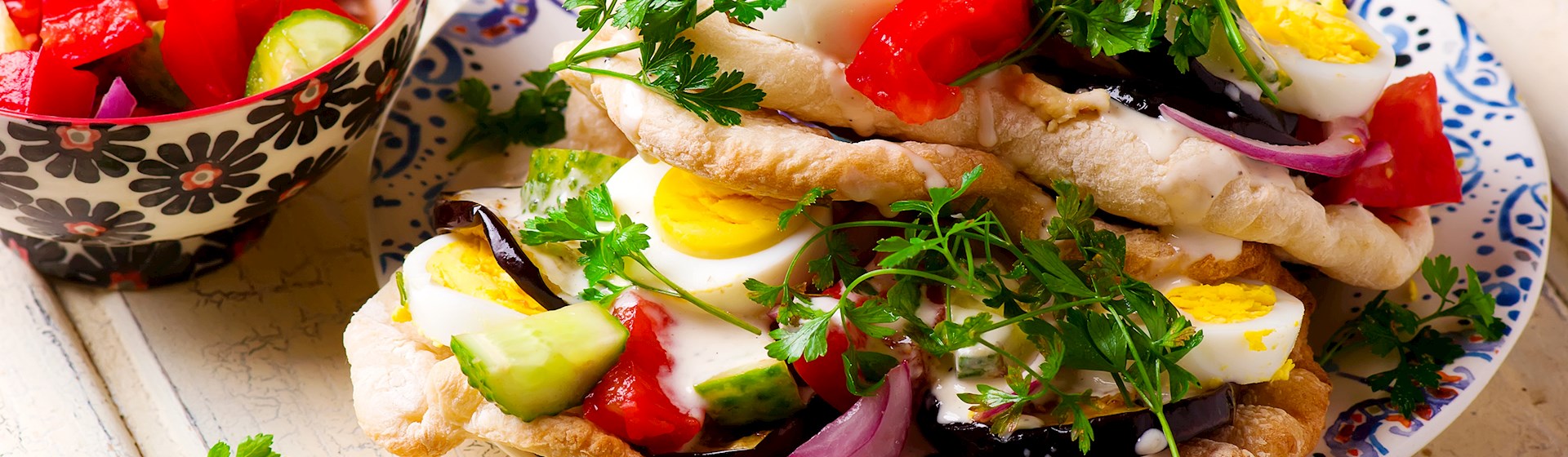
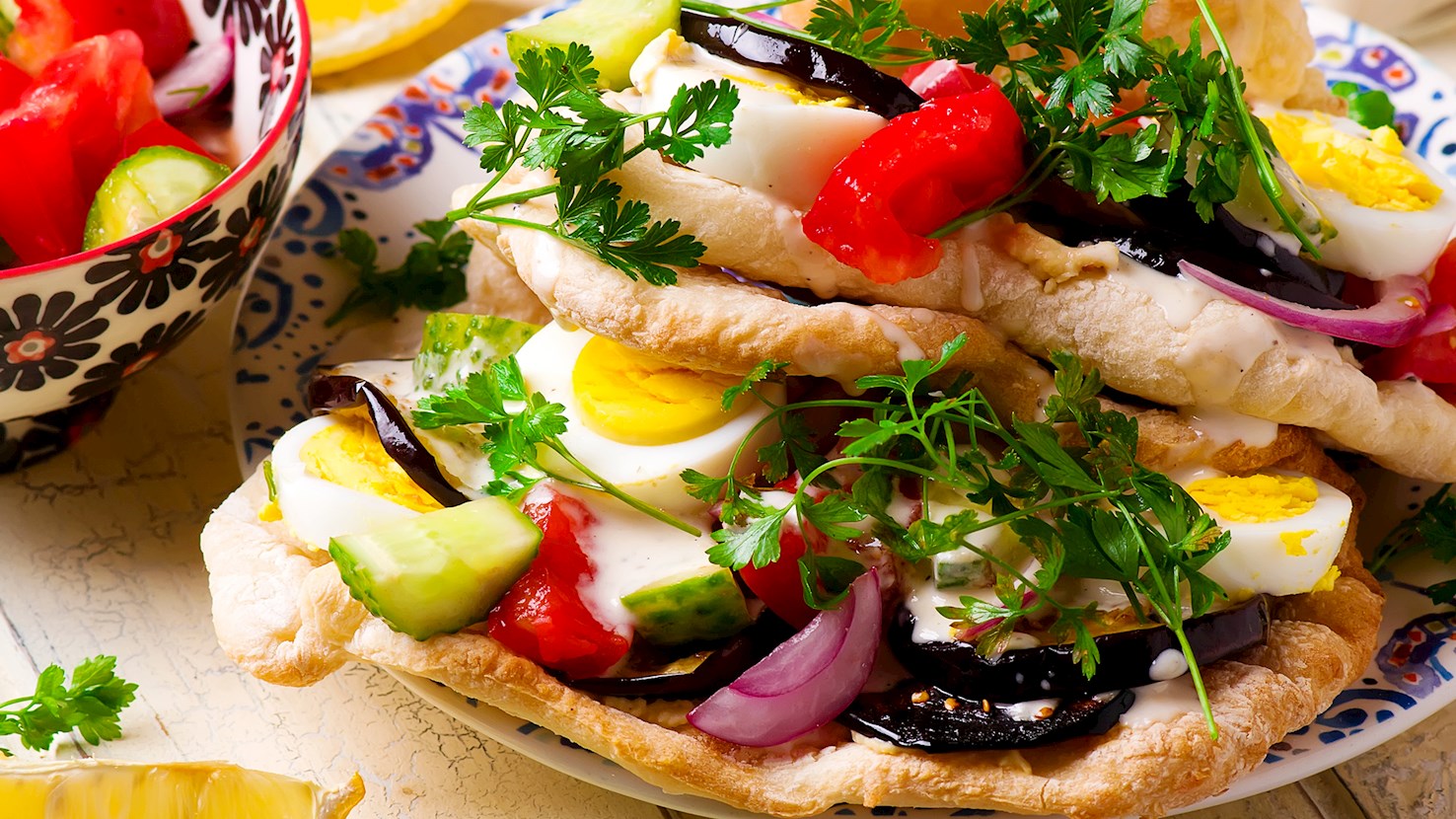
Sabich is an Israeli street food dish consisting of pita bread filled with fried eggplant, hard-boiled eggs, hummus, tahini, Israeli salad, and pickles, often topped with amba, a tangy mango pickle sauce. It is a vegetarian sandwich with Iraqi Jewish origins that has become a well-known part of Israel’s urban food culture, particularly popular as a breakfast or lunch option. The combination of ingredients represents a fusion of Middle Eastern and Iraqi Jewish flavors adapted into the context of Israeli fast food. The dish originated among Iraqi Jews who immigrated to Israel in the mid-20th century. Many of them brought with them their Sabbath morning meal, which included fried eggplant, hard-boiled eggs, and salads served cold due to religious restrictions on cooking during the day of rest. In Israel, these elements were eventually assembled together inside pita bread for convenience, creating a portable meal. The sandwich format emerged in the 1960s in Ramat Gan, where vendors began selling sabich from small stands, and it quickly became associated with the city’s Iraqi Jewish community before spreading throughout the country. To prepare sabich, thin slices of eggplant are salted, dried, and deep-fried or pan-fried until golden and soft. Hard-boiled eggs are peeled and sometimes seasoned with salt or a sprinkle of cumin. Pita bread is slightly warmed or toasted, then spread with hummus and tahini. The fried eggplant and eggs are layered inside, followed by diced tomato and cucumber salad, pickled vegetables, and a drizzle of amba sauce. Some versions include parsley, chopped onion, or boiled potatoes, depending on regional or personal preference. The amba, a key element, adds a sharp and slightly spicy note that balances the richness of the eggplant and sesame sauce. Sabich is usually served as a handheld sandwich, but it can also be presented as a plate with the same components arranged side by side. The flavors are complex but balanced, creamy from the tahini, acidic from the pickles and amba, and earthy from the eggplant and eggs. The sandwich is typically vegetarian, though some modern versions include additions like feta cheese or hot sauce. It is eaten throughout the day, especially as a filling breakfast or quick street lunch. In Israel, sabich is commonly sold alongside falafel and shawarma in similar establishments, though it appeals especially to those looking for a meatless meal. It pairs well with cold drinks such as lemonade, ayran, or mint-infused soda water. Its mix of textures, temperature contrast, and depth of flavor have made sabich one of the defining examples of Israeli street food rooted in diaspora home cooking.
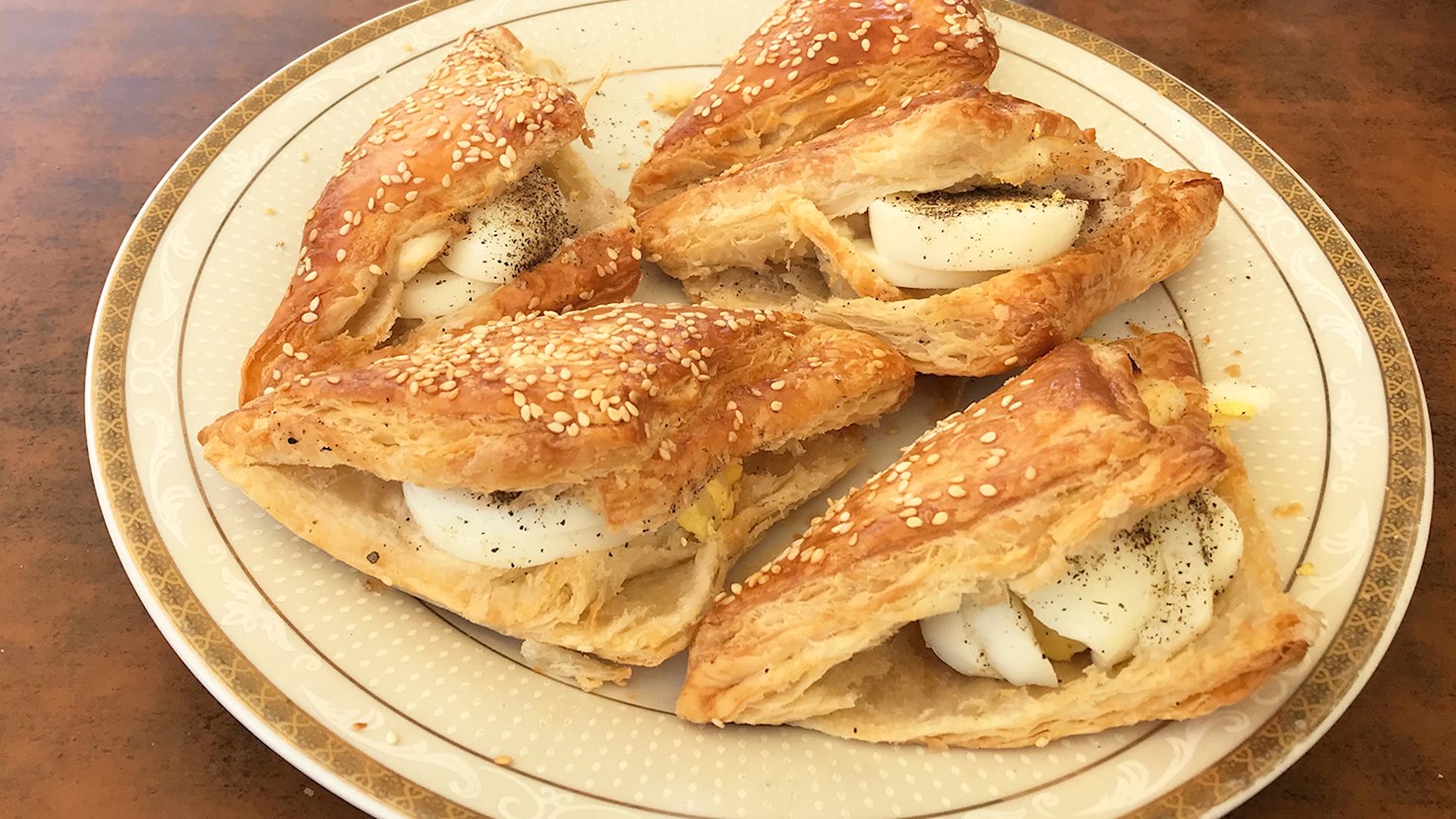
Bourekas are savory pastries popular throughout Israel and other parts of the Middle East, made from thin layers of dough filled with cheese, potatoes, spinach, mushrooms, or meat. They are typically prepared with phyllo or puff pastry, producing a crisp exterior and soft, flavorful filling. Bourekas are found in bakeries, markets, and cafés across Israel, where they are commonly eaten as breakfast, snacks, or light meals. Their name and form trace back to the Ottoman-era pastries known as börek, which spread across the Balkans, North Africa, and the Levant through Turkish influence. The pastry was introduced to Israel primarily by Sephardic and Mizrahi Jewish immigrants from Turkey, the Balkans, and North Africa during the 20th century. Each community brought variations reflecting local ingredients and culinary customs. In Ladino-speaking communities, they were called bourekas, a name derived from the Turkish börek. Over time, these pastries were adapted to Israeli tastes, often made with neutral fillings like cheese or potato and standardized shapes that indicated their contents: triangular for cheese, square for potato, and rectangular for spinach. In Israeli bakeries, bourekas became a familiar and accessible street food, appreciated for their portability and long shelf life. To prepare bourekas, dough is rolled thin or purchased pre-made as phyllo or puff pastry. The filling is typically made by combining ingredients such as mashed potatoes, feta or white cheese, sautéed mushrooms, or spinach seasoned with salt, pepper, and herbs. A small amount of filling is placed on a square or triangle of dough, which is then folded, sealed, and brushed with beaten egg. The pastries are sprinkled with sesame or nigella seeds before baking until golden brown and flaky. Some versions include an egg wash mixed with a touch of yogurt or milk for extra color and sheen. The texture depends on the dough used: phyllo-based bourekas are crisp and layered, while puff pastry versions are lighter and airier. Bourekas are typically served warm or at room temperature, often accompanied by hard-boiled eggs, pickles, and fresh vegetables. In Israeli cafés and convenience stores, they are sold as quick meals, sometimes with a cup of thick yogurt or a glass of ayran-style drink on the side. They also appear in family meals, picnics, and gatherings, reflecting their versatility and ease of preparation. They are eaten throughout the day, from breakfast to late-night snacks. The most common pairings include Turkish coffee, mint tea, or cold soft drinks. In bakeries, bourekas are often displayed alongside other pastries like sambusak and rugelach, forming part of Israel’s broader hybrid baking culture that blends European and Middle Eastern influences.
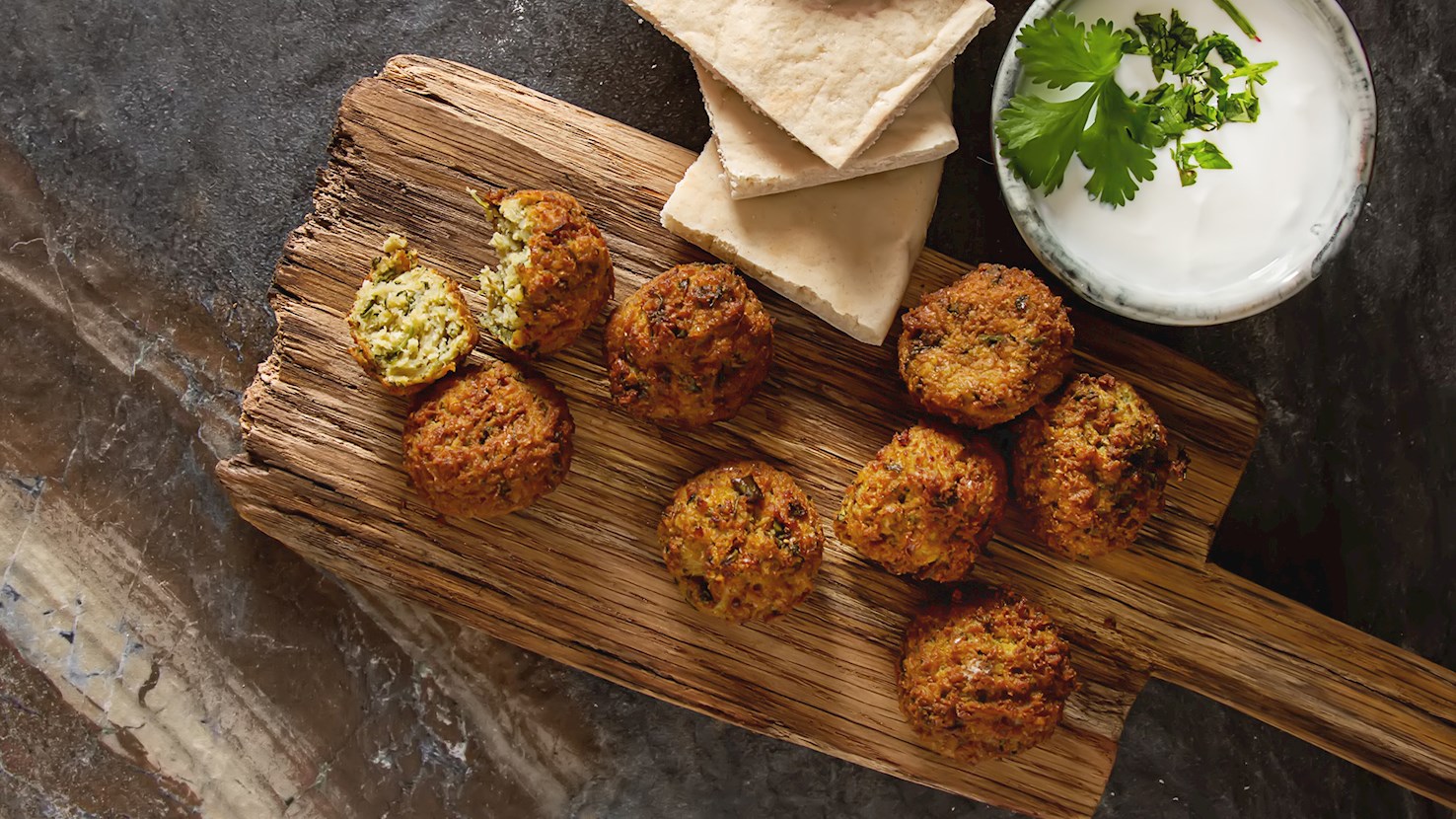
Falafel is a deep-fried food made from ground legumes, most commonly chickpeas or fava beans, and is widely eaten across the Middle East and North Africa. It is shaped into balls or patties and seasoned with herbs, onions, and spices such as cumin, coriander, and garlic. Falafel is recognized as one of the most characteristic foods of Levantine and Egyptian cuisines, commonly served in pita bread or flatbreads with salads, pickles, and tahini-based sauces. Its presence extends beyond the Middle East, having become a common street food and vegetarian option in many parts of the world. Falafel is believed to have originated in Egypt, where it was first made from fava beans and known as ta’amiya. The dish spread north through trade and migration, especially during the 20th century, and chickpeas became the preferred ingredient in Levantine regions such as Lebanon, Syria, and Palestine. Its popularity grew because it was inexpensive, nutritious, and could be prepared in large quantities, making it suitable for both home and commercial cooking. Over time, regional variations developed, with differences in texture, spice levels, and serving style. In Egypt, falafel tends to be greener and softer, while in the Levant, chickpea-based versions are denser and crispier. Preparation begins by soaking dried chickpeas or fava beans overnight, then draining and grinding them with onions, garlic, fresh herbs like parsley or cilantro, and spices. The mixture is formed into small balls or disks, often with a pinch of baking soda to ensure lightness. They are deep-fried in hot oil until golden brown and crisp on the outside while remaining moist inside. The cooking process requires precise oil temperature to achieve the right balance of texture and color without excessive oil absorption. In modern kitchens, falafel may also be baked or air-fried, though frying remains the most common method. It is served in many ways, most often in pita or laffa bread with lettuce, tomato, cucumber, pickled vegetables, tahini sauce, and sometimes hummus or yogurt sauce. In Egypt, it is commonly eaten at breakfast, while in the Levant, it is served throughout the day as a snack or meal. The dish is particularly popular among vegetarians and vegans, as it provides a high-protein option free from animal products. Falafel pairs well with beverages that balance its fried texture and spices, such as mint tea, lemonade, or yogurt drinks like ayran or laban. In Middle Eastern eateries, it is often accompanied by fries, tabbouleh, or baba ghanoush, forming part of a broader mezze spread. Across different regions, falafel maintains its core identity as a flavorful, plant-based dish prepared with skill and precision, reflecting the regional diversity and shared culinary heritage of the Middle East.
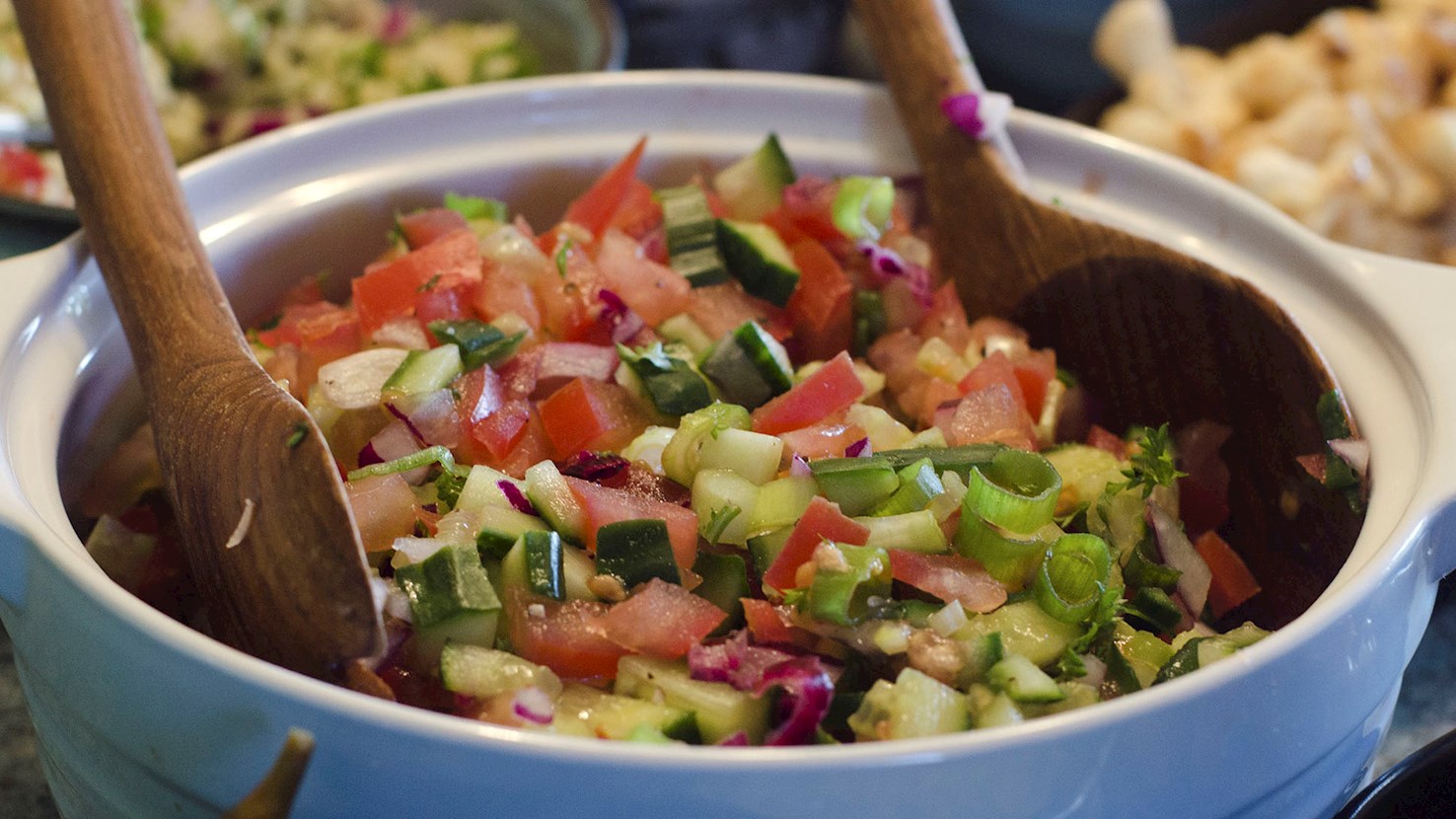
Israeli salad is a finely chopped vegetable dish commonly served across Israel and in Jewish and Middle Eastern cuisines. It typically consists of diced tomatoes, cucumbers, onions, and parsley dressed with olive oil, lemon juice, salt, and pepper. The salad is light, fresh, and quick to prepare, often considered a cornerstone of Israeli daily meals and a reflection of the region’s reliance on local produce. Unlike many composed salads, Israeli salad emphasizes uniform chopping and balance of texture, allowing each ingredient to contribute evenly to the overall flavor. The dish developed from Levantine vegetable salads such as the Arab “salata” and Turkish “çoban salatası,” both based on fresh seasonal produce dressed simply with oil and citrus. In the early 20th century, Jewish immigrants arriving from Eastern Europe and North Africa adapted these regional dishes using locally available ingredients, creating a version that became common in kibbutz dining halls and household breakfasts. Its simplicity, reliance on raw vegetables, and minimal seasoning suited the warm Mediterranean climate and agricultural lifestyle. Over time, it became emblematic of Israeli cuisine, representing a merging of influences from Middle Eastern, North African, and European food cultures. Preparation begins by finely dicing firm tomatoes and crisp cucumbers into small, even cubes. Onion and parsley are added, sometimes with green pepper or scallion. The vegetables are mixed gently and dressed with olive oil, freshly squeezed lemon juice, salt, and black pepper. Some variations include a touch of sumac, mint, or za’atar for additional flavor, while others use vinegar instead of lemon juice. The key to the salad lies in the fineness and consistency of the chop, which creates a uniform blend of flavor and texture without excess liquid. Israeli salad is served throughout the day, from breakfast to dinner. It is commonly paired with eggs, labneh, or hummus in the morning, served alongside grilled meats or falafel for lunch, or used as a topping for pita sandwiches and shawarma. In restaurants and homes, it often appears as part of a larger mezze spread, complementing other dishes such as tahini, baba ghanoush, and pickled vegetables. The salad is eaten year-round, but especially in warm months, and it pairs naturally with cold drinks such as mint lemonade, arak, or light white wines. Its freshness and adaptability allow it to fit both simple meals and elaborate spreads, maintaining a consistent presence in Israeli and Middle Eastern dining as a versatile accompaniment defined by precision, freshness, and balance.
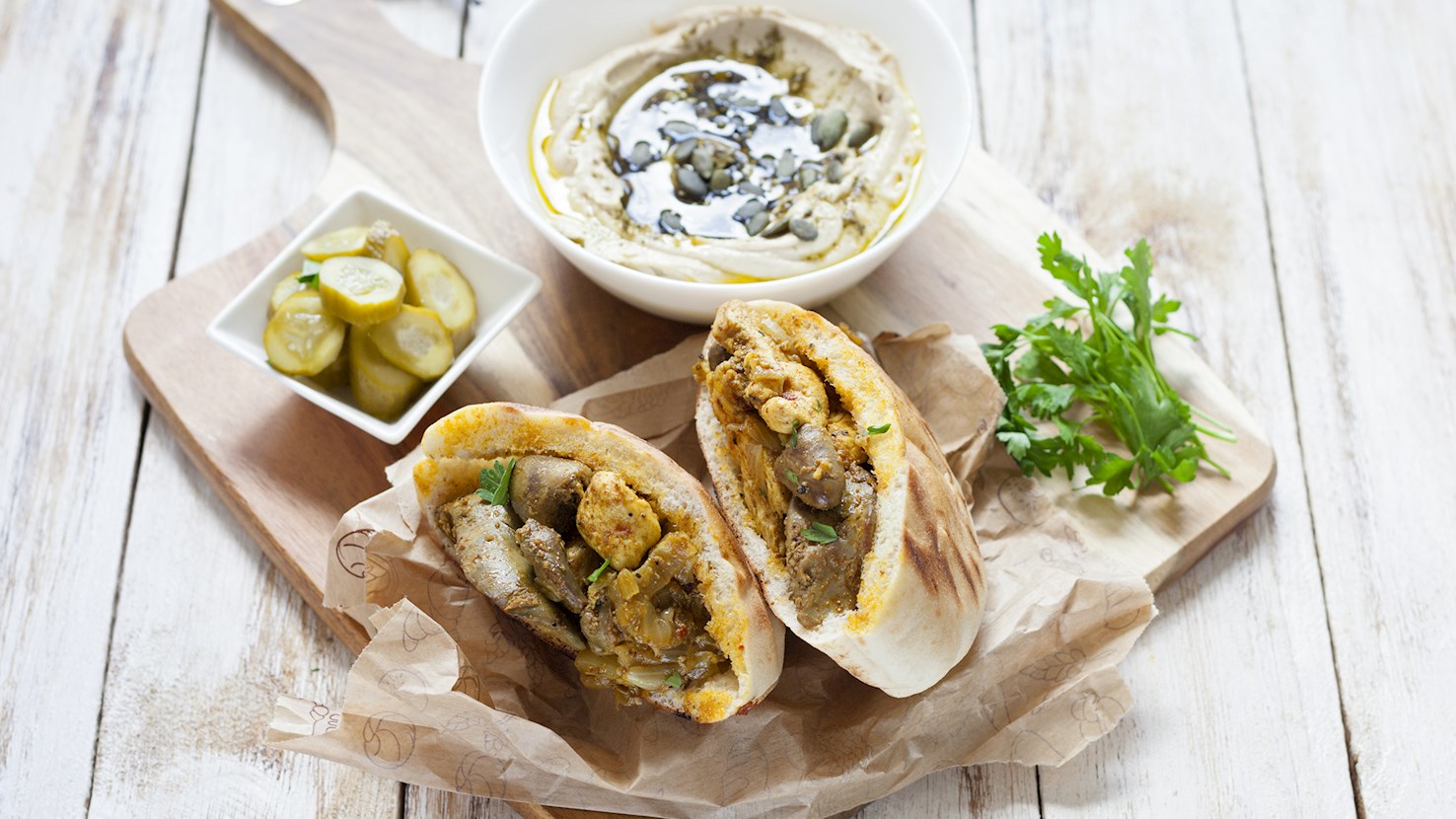
Jerusalem mixed grill is a street-food dish from Jerusalem made by sautéing or grilling small cuts of meat, most commonly chicken hearts, livers, and spleens, often combined with pieces of chicken breast or thigh, and seasoned heavily with spices. It emerged in the mid-twentieth century in the area of the Mahane Yehuda market, where butchers and grill operators used readily available offal and small cuts to create a quick, flavorful meal for workers and shoppers. Vendors refined their seasoning blends over time, incorporating spices such as cumin, paprika, black pepper, turmeric, and sometimes curry powder or cardamom, and the dish became closely linked to the stalls that sold it in pita or on plates beside salads and sauces. Preparation typically begins by cleaning and trimming the meats, cutting them into bite-sized pieces, and cooking them over high heat on a flattop griddle or grill while mixing in the spice blend so it coats the meat evenly as it cooks; onions may be added for sweetness and moisture, and some cooks finish the dish with a small amount of fat or broth to keep it juicy. Jerusalem mixed grill is eaten throughout Israel in restaurants, market stands, and home kitchens, usually served in pita with salads, pickles, and tahini or on a plate with rice, chips, or grilled vegetables. It pairs well with cold beer, lemon-based drinks, sparkling water, and dry white wines that complement the spice profile without overwhelming the dish.
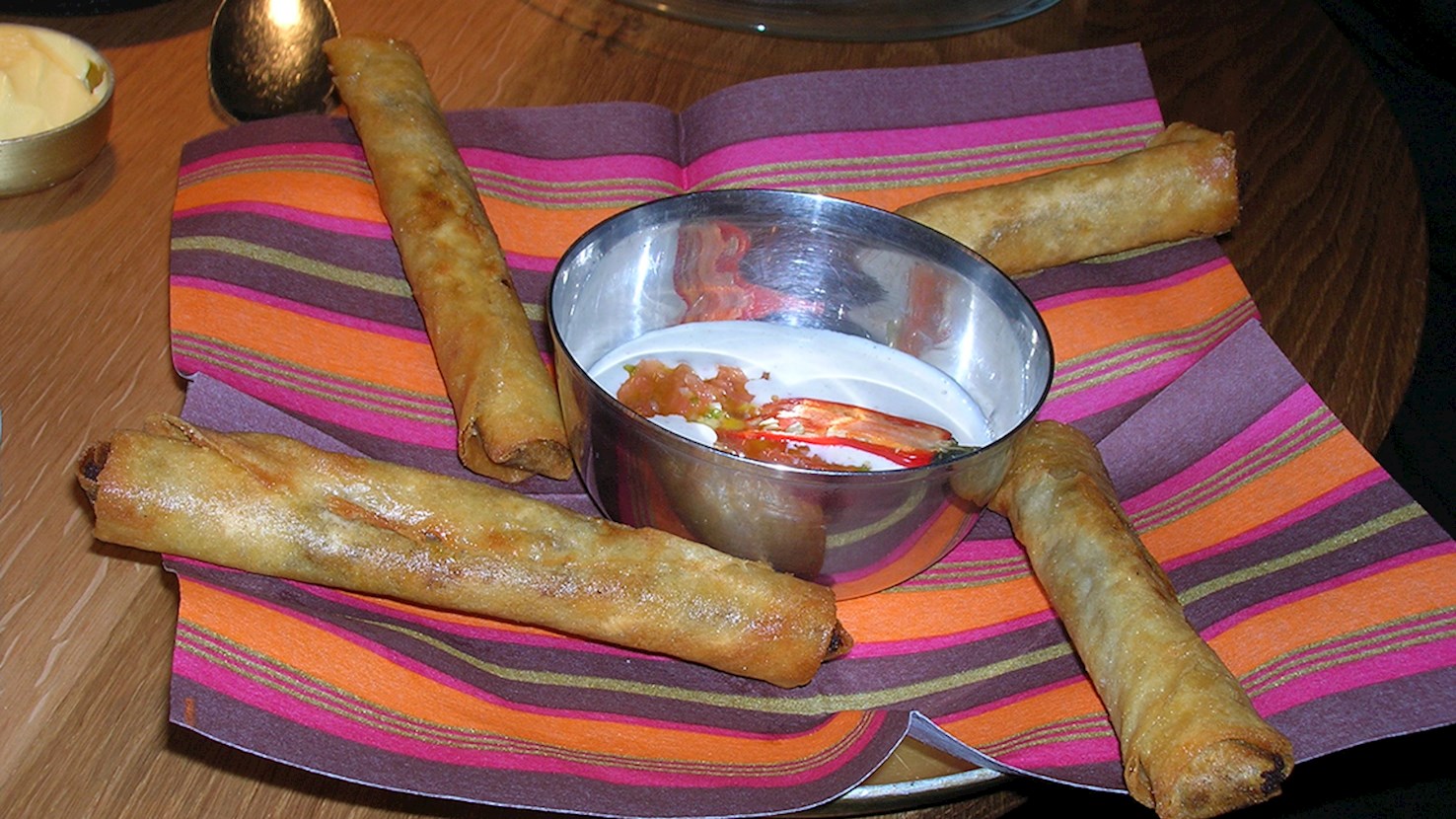
Moroccan cigars are slim, crisp, fried rolls filled most often with spiced ground meat and served as appetizers or snacks in North African and Middle Eastern Jewish cuisines, particularly in communities with roots in Morocco. Despite the name, they have no relation to tobacco products; the term refers only to their cylindrical shape. They emerged from the broader Moroccan practice of using thin pastry sheets for savory and sweet fillings, a technique seen in dishes such as briouat, where phyllo-like warqa dough is wrapped around seasoned mixtures. As Moroccan Jews migrated to Israel and other countries during the twentieth century, the dish became widely known in new settings and eventually entered Israeli street food, catering menus, and home cooking. Preparation begins by making or buying thin pastry sheets, warqa or phyllo, cut into long strips. The filling is cooked beforehand and typically includes ground beef or lamb sautéed with onions and seasoned with paprika, cumin, turmeric, pepper, salt, and sometimes cilantro or parsley. Once cooled, a small amount of filling is placed at one end of the pastry strip, which is then rolled tightly into a cylinder and sealed with a bit of flour paste or egg wash. The rolls are fried in oil until golden and crisp, though some cooks choose to bake them for a lighter version. Variations include chicken fillings, vegetable mixtures, potato-based fillings, or spicier versions using harissa or hot pepper pastes, all shaped in the same narrow form that defines the dish. Moroccan cigars are eaten in Morocco, Israel, and diaspora Jewish communities during holiday meals, Shabbat dinners, and family gatherings, and they also appear as mezze or snacks in restaurants. They are commonly served alongside salads, tahini, preserved lemon sauces, or dips made from peppers or eggplant. They pair well with mint tea, light beers, lemon-based drinks, and dry white wines, which balance the richness of the fried pastry and the spices in the filling.
TasteAtlas food rankings are based on the ratings of the TasteAtlas audience, with a series of mechanisms that recognize real users and that ignore bot,
nationalist or local patriotic ratings, and give additional value to the ratings of users that the system recognizes as knowledgeable.
For the “Top 7 Israeli Street Food” list until October 15, 2026, 3,296 ratings were recorded, of which 1,816 were recognized by the system as legitimate.
TasteAtlas Rankings should not be seen as the final global conclusion about food. Their purpose is to promote excellent local foods,
instill pride in traditional dishes, and arouse curiosity about dishes you haven’t tried.



What People Say