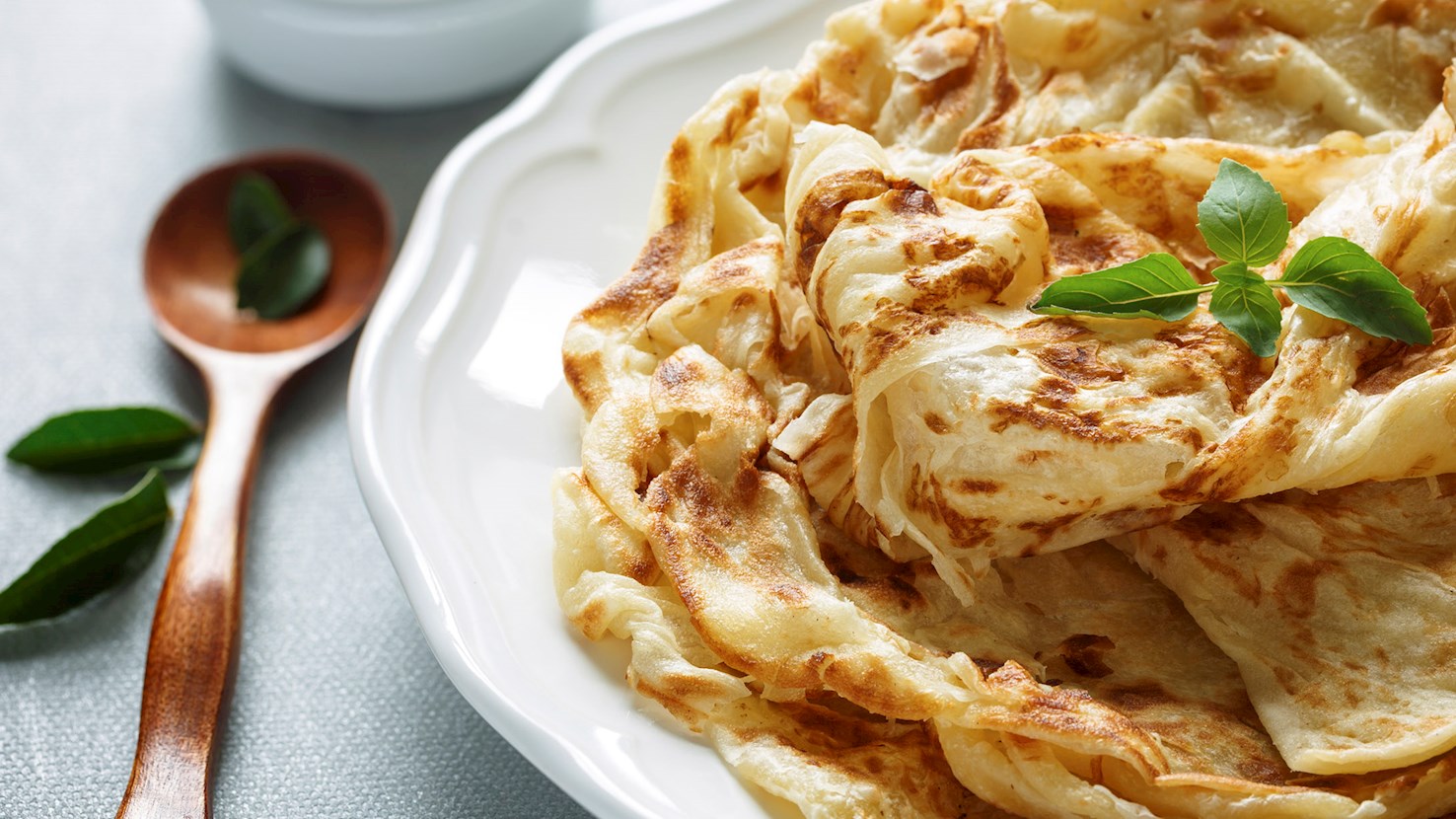
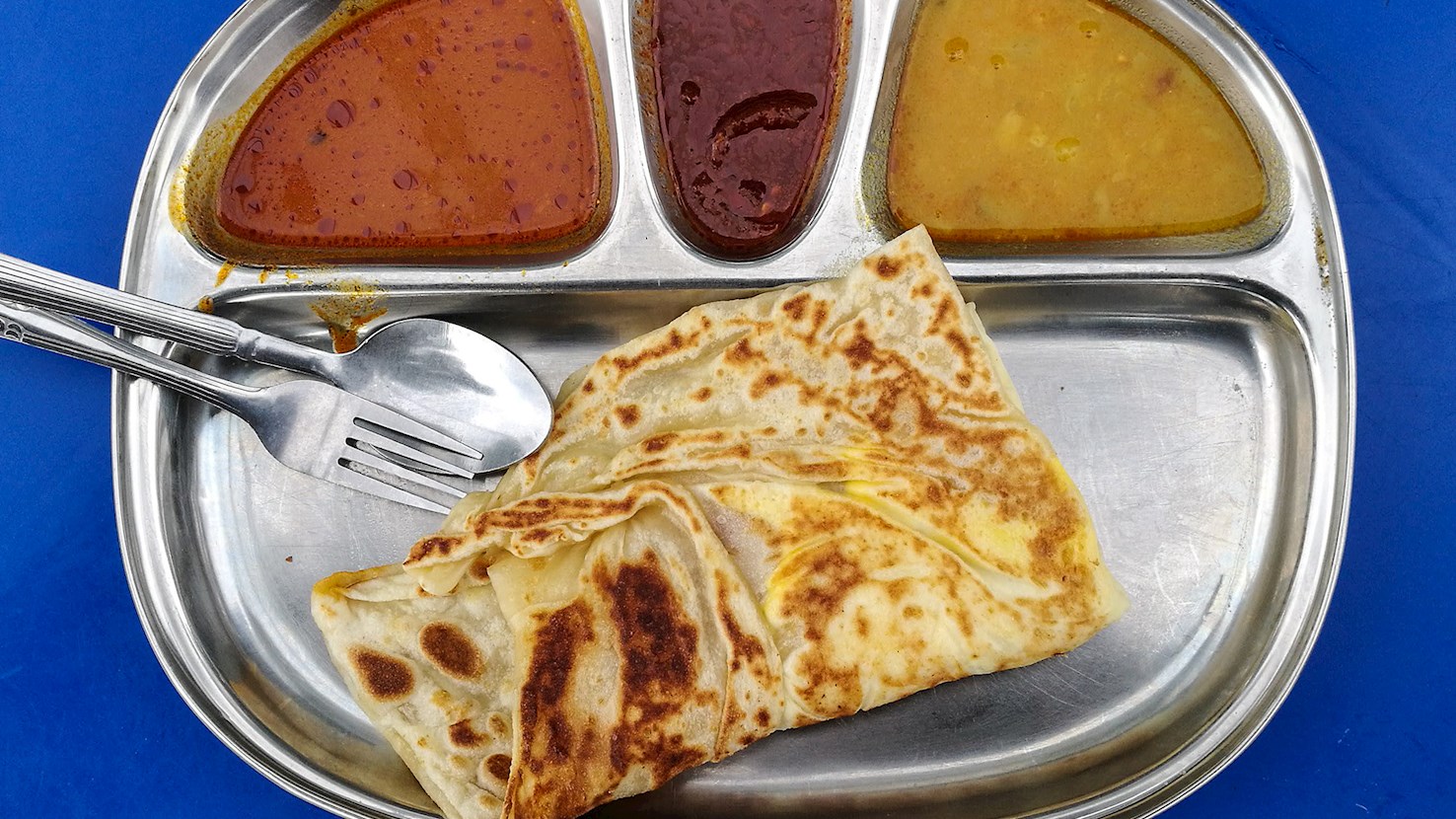
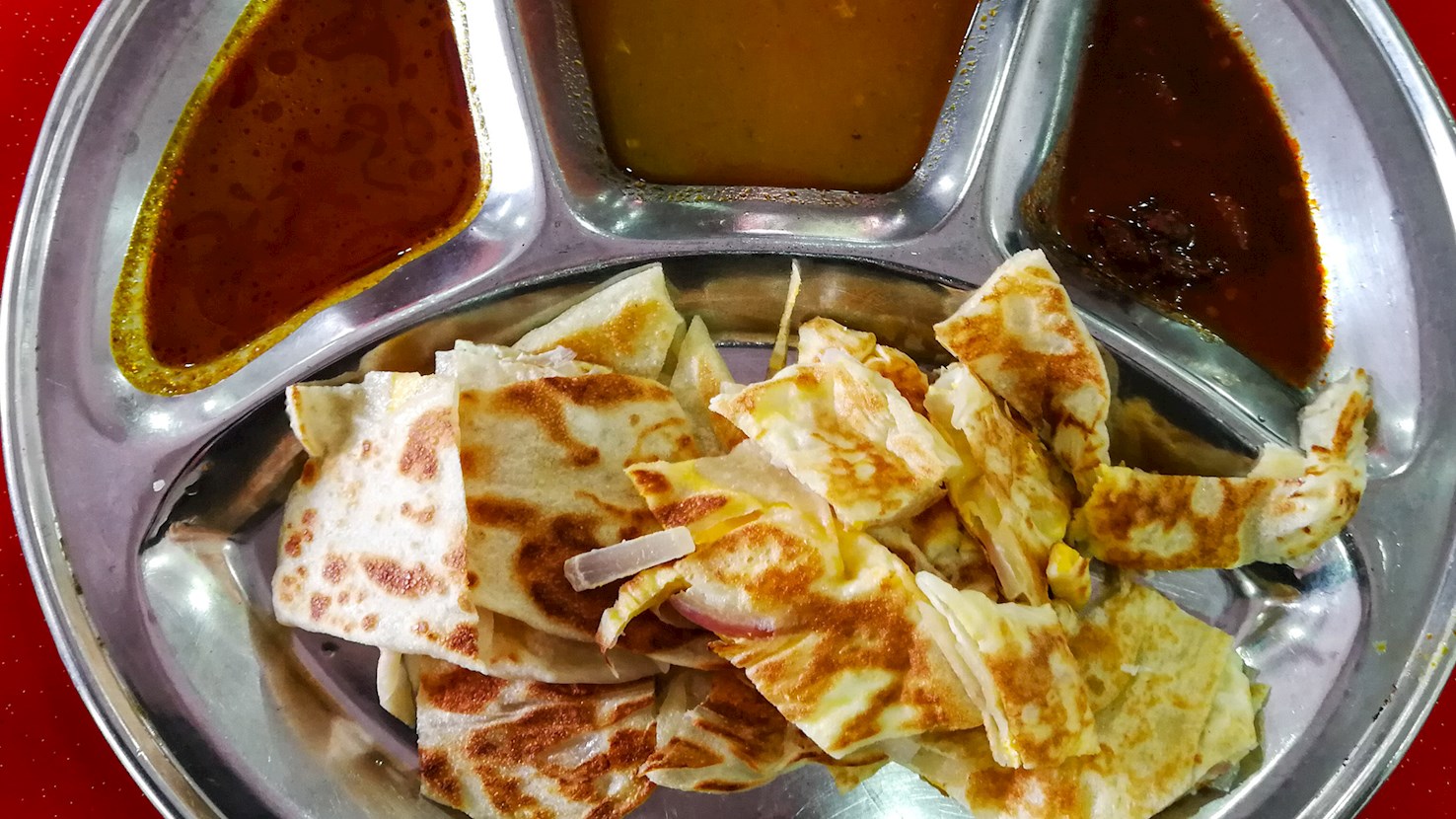
Roti canai is a traditional pan-fried flatbread made with flour, water, eggs, and fat of Indian origin, but mainly associated with Malaysia, and surrounding countries like Indonesia, Brunei, and Thailand. The dough for roti canai is repeatedly folded, so the final product has a layered texture, a soft interior, and a crispy outer layer. The most common fat used in roti canai is ghee, the traditional Indian clarified butter. It is believed that the dish originated in India when the Indian laborers who migrated to Malaysia brought the recipe and the tradition of preparing this crispy pastry to the foreign country. Usually, it is served plain in its traditional round form, as an accompaniment to curries. It can be served on the side or torn into pieces and mixed with the curry. However, roti canai is often served as the star dish, accompanied by different savory and sweet fillings and ingredients. If additional fillings are added, roti canai is usually shaped into rectangles. For example, in Malaysia, one can find various roti canai types, which are differentiated by the type of filling — egg, onion, egg and onion, banana, sardines, margarine and sugar, Maggi instant noodles, cheese, vegetable, and pork filling are some of the many available. However, roti canai doesn't have to have a filling but only a topping, such as fried eggs, curry, beans, lentils, and coffee beans. But martabak, a thick roti filled with meats, eggs, onions, and spices, is probably the best-known type of roti canai. Apart from Malaysia, it can also be found in Saudi Arabia, Yemen, and a few other countries. Other than Malaysia, a very similar type of flatbread can be found in Singapore, where it's called roti prata. This crispy bread is usually sold by street vendors called mamaks.
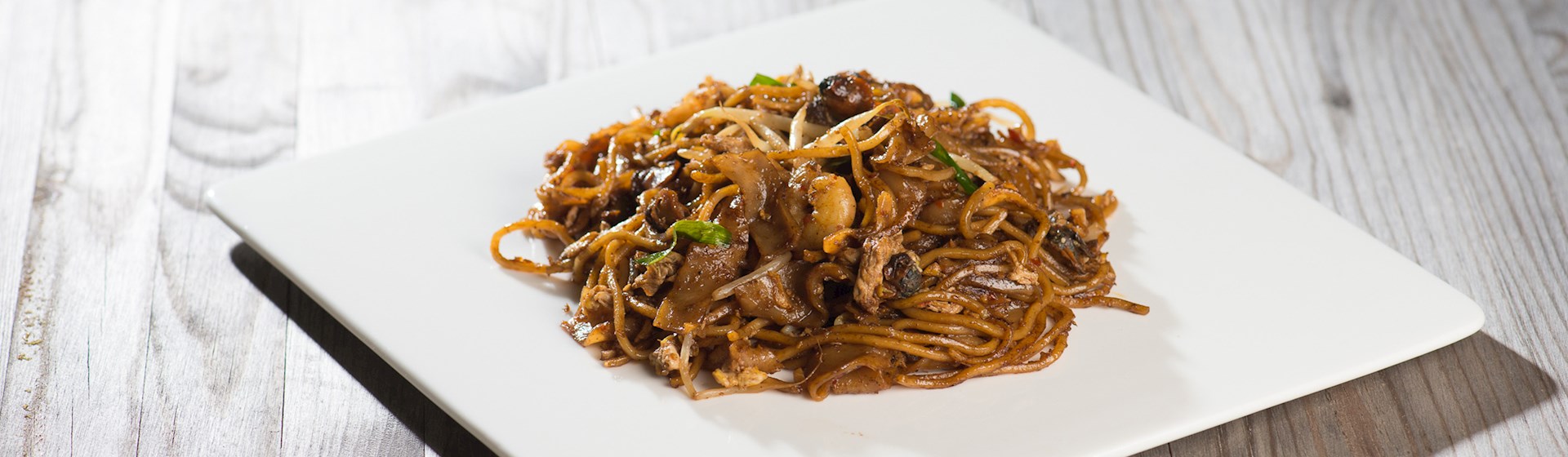
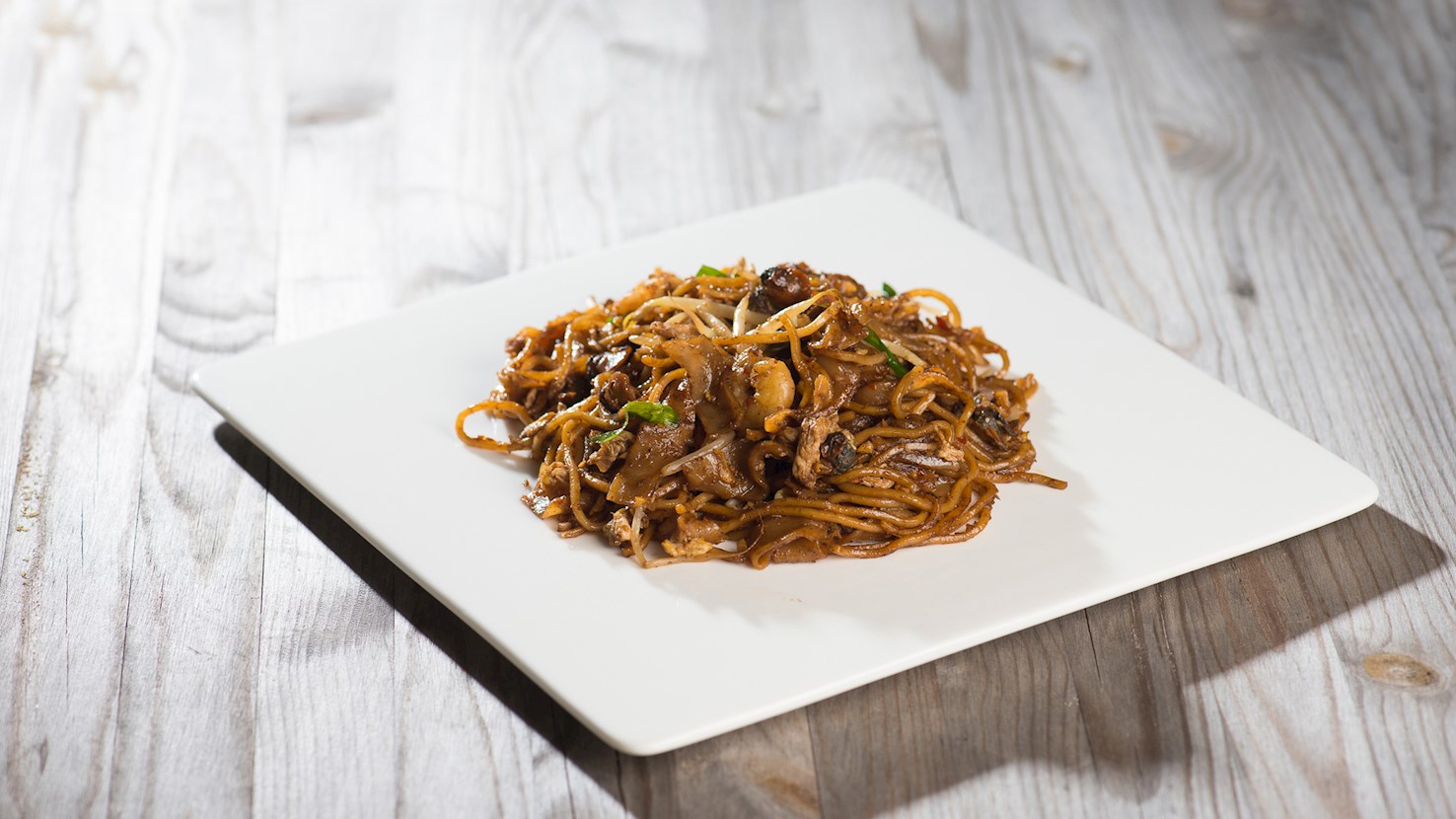
Char kway teow is one of the most popular street dishes in Malaysia and Singapore. Despite numerous regional varieties, it is usually made with flat rice noodles, shrimps, eggs, cockles, bean sprouts, chives, and Chinese sausage. All the ingredients are usually fried and coated in soy sauce, while some versions also incorporate shrimp paste, garlic, fried pork lard, and sometimes even yellow wheat noodles. Among the numerous theories about the origin of the dish, the most popular claims that it was invented in the Singaporean Teochew community by Chinese immigrants, while the name stems from Hokkien, char meaning fried and kway teow denoting flat rice noodles. Classic Teochew variety that is lighter and slightly drier than the Singaporean counterpart is especially popular in Malaysian Penang where it is considered to be a signature dish of the region. Originally, char kway teow was a poor man’s dish made by farmers and fishermen out of leftover ingredients. Realizing how delicious this combination is, they started selling it on the street, and it quickly caught on. Apart from Singapore and Malaysian Penang, a variety of char kway teow is also found in Indonesia. In Penang, some vendors still serve it on banana and palm leaves, the way it was traditionally served from its beginnings.
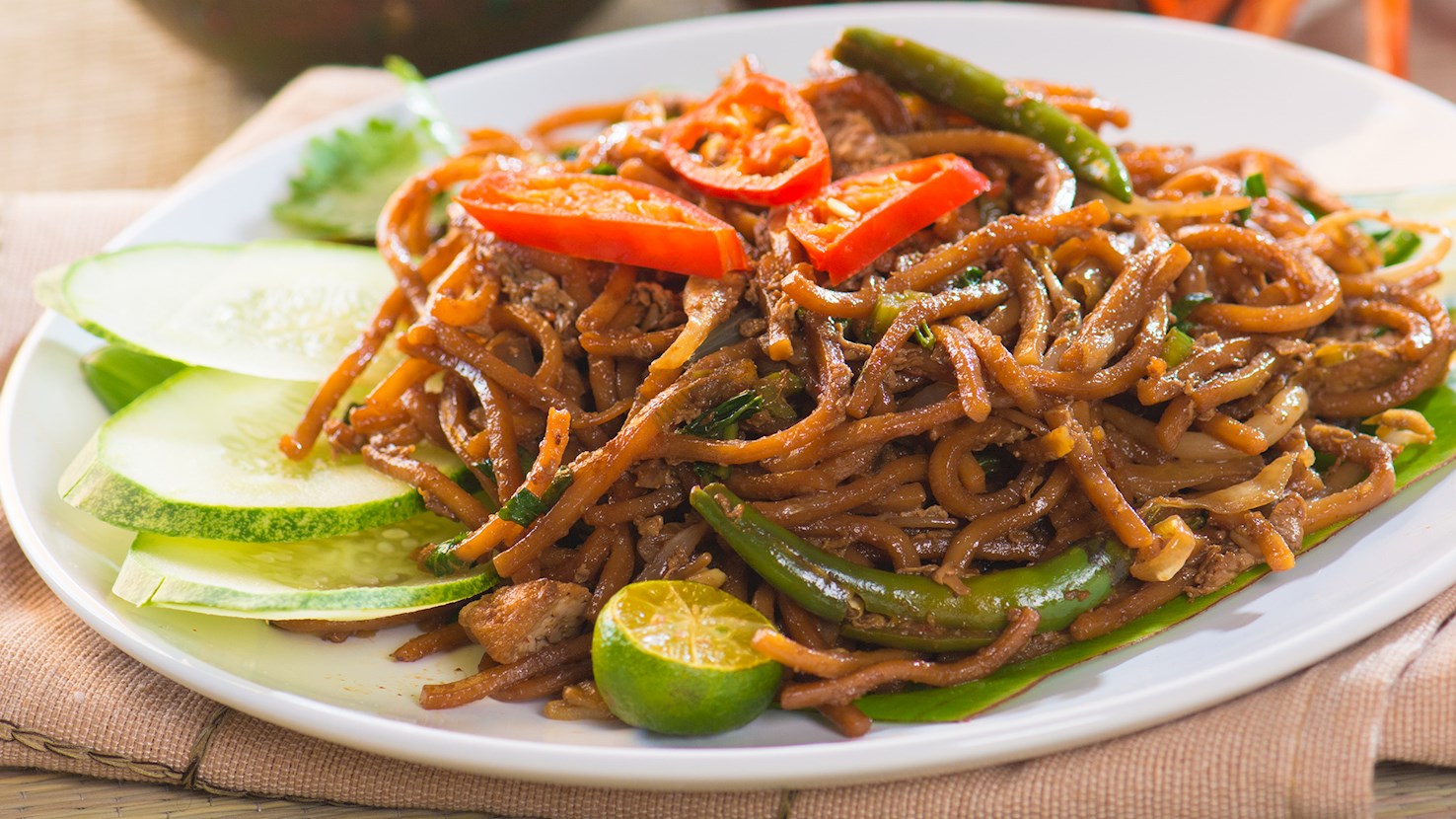
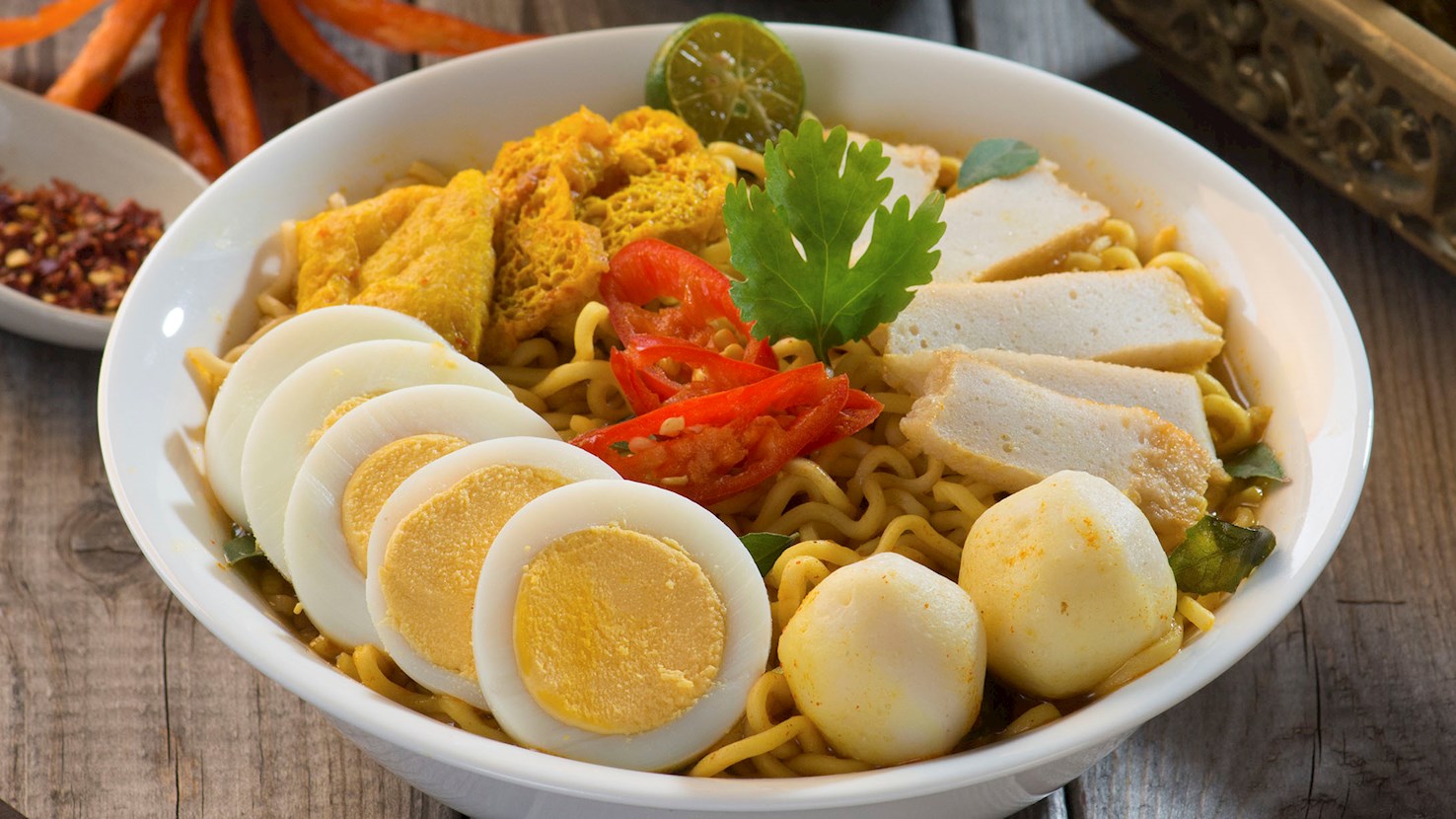
Mee goreng mamak is a versatile stir-fry noodle dish from the Maritime Southeast Asia region, initially introduced by the Indian-Muslim community. It is a spicy-savory course that pairs the noodles with a combination of fish cakes, chicken, prawns, garlic, scallions, tomato sauce, curry spice, sweet soy sauce, boiled potatoes, and eggs. For toppings, the most commonly used are red chilies, crispy fried onions, and lime juice. Traditionally, the dish is served alongside calamansi wedges - a citrus hybrid native to the region (can be substituted with lime wedges). Mee goreng mamak is a favorite in Malaysia and can be found everywhere, from street vendors to sit-down restaurants.
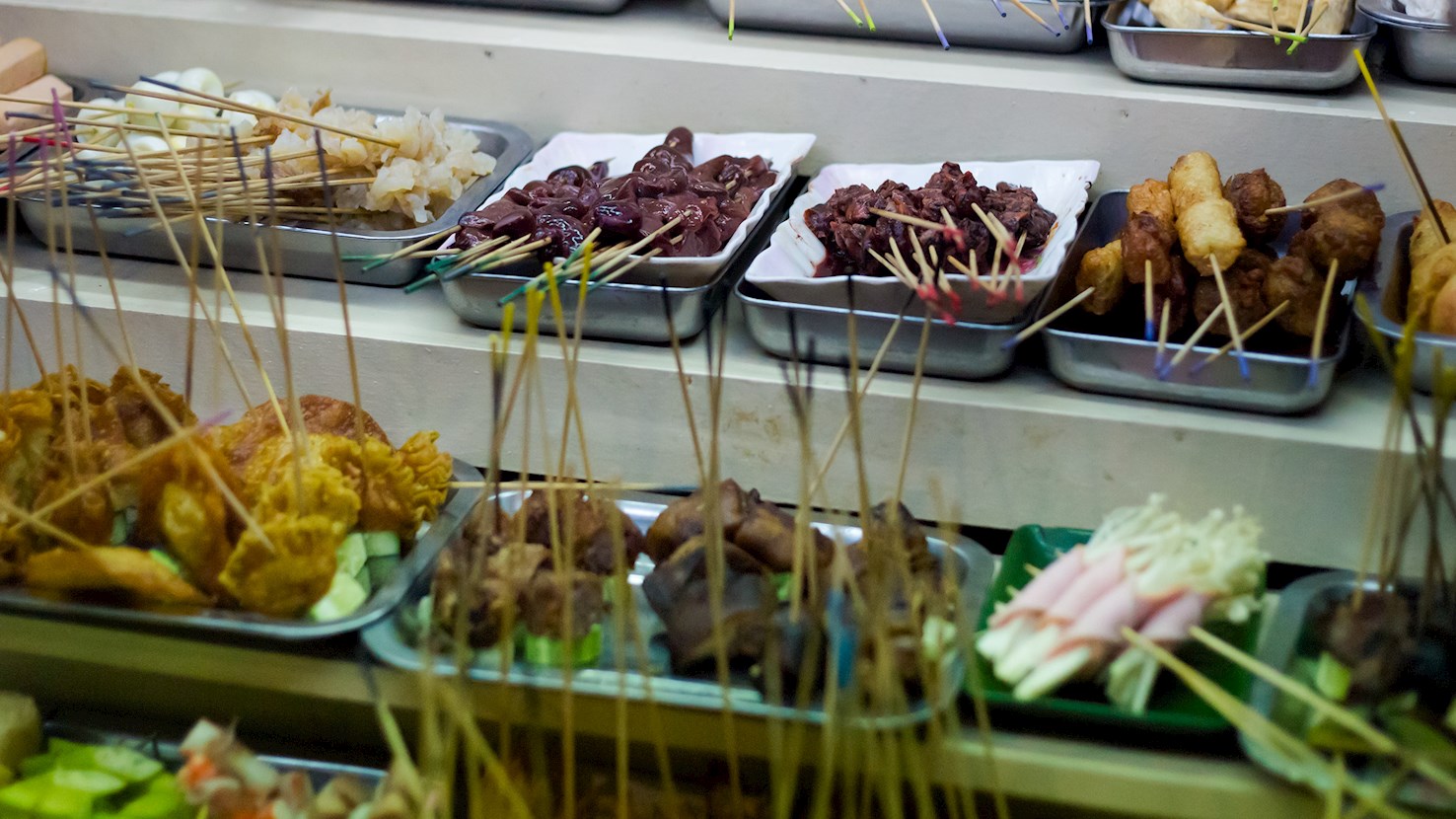
Satay celup is a traditional dish, particularly popular in the Malacca state (also known as "the historic state"), where it is considered a local favorite. It is a self-serve dish, consisting of skewers of marinated meat, raw seafood, or even vegetables that are dunked into a simmering pot of satay sauce. The sauce is primarily made with peanuts, dried chili peppers, garlic, and palm sugar, but the full recipe differs from one eatery to another. Usually, satay celup is accompanied by barley drinks, coconut water, or herbal tea in order to combat the spiciness of the sauce.
Curry mee is a spicy noodle soup commonly eaten in Malaysia and Singapore (where it's often called curry laksa). It is a true fusion dish, influenced by Indian, Chinese, and Southeast Asian culinary traditions. It is one of the numerous varieties of laksa, the quintessential noodle soups of Southeast Asia. The basis for this creamy dish is made with curry and coconut milk which form the unusual sweet and spicy sauce. Although very similar to curry, the sauce for curry mee is usually much thinner, but still has a strong and rich flavor. Traditionally, thin rice noodles are used in curry mee, and they are often cut into smaller pieces in order to ease the consumption. Other ingredients include tofu puffs, prawns, and fishcakes. The most traditional versions of curry mee also include a very unusual ingredient - cockles, saltwater clams which are usually served raw. Before serving, the dish is spiced with a dollop of traditional chili sauce and chopped coriander leaves. Curry laksa is the favorite variety in Singapore, where it is often referred to only as laksa. In Singapore, it is the most common hawker-style dish, and many vendors prepare curry laksa as their signature dish.
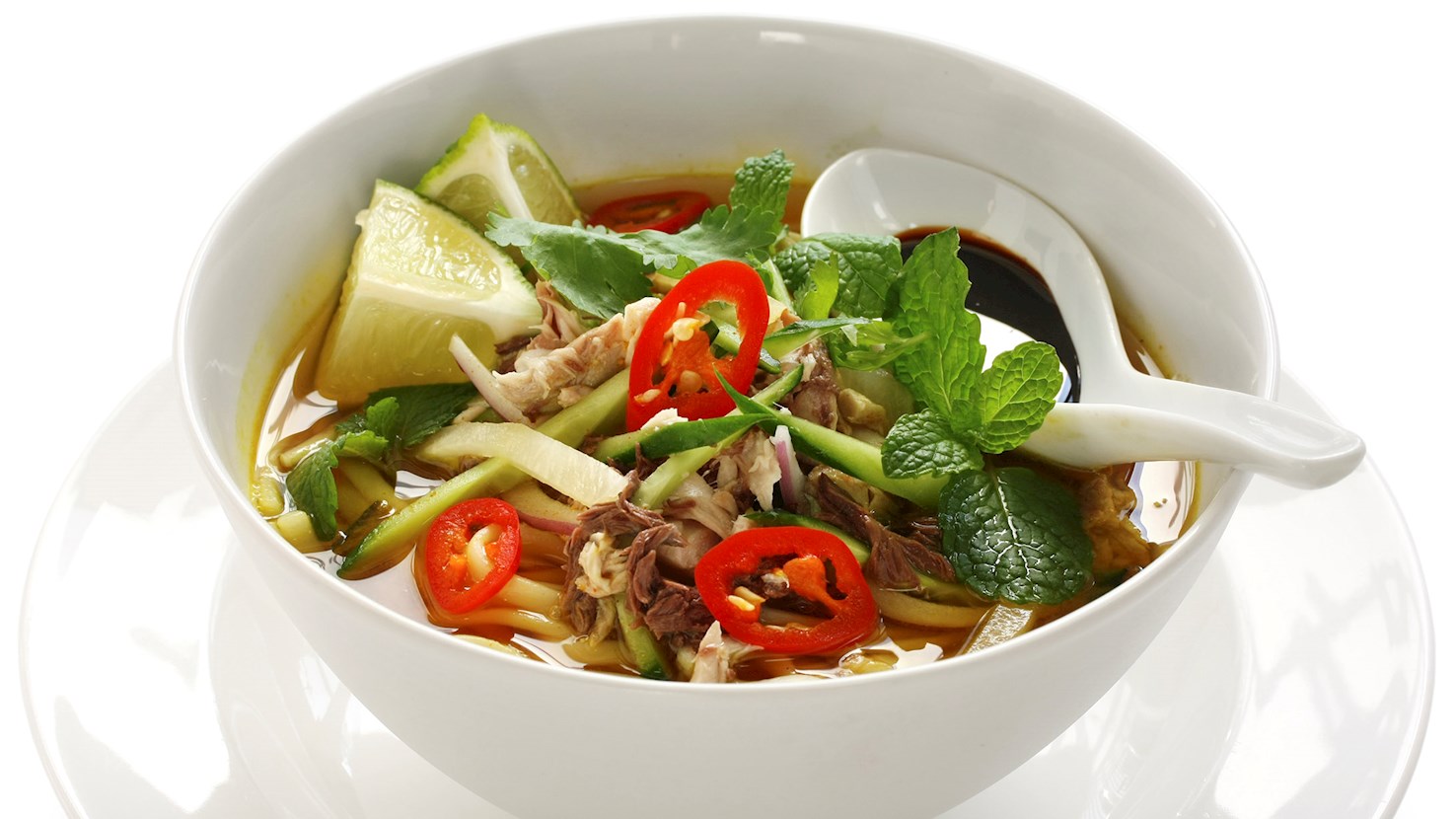
Assam laksa is a traditional fish-based sour noodle soup. It is the one of the numerous varieties of laksa, popular noodle soups widespread throughout Southeast Asia. The dish consists of rice noodles, shredded fish, and sliced vegetables, most commonly cucumber, onion, and lettuce. It has a distinctively tangy taste, which is attributed to tamarind, the sour ingredient generously used to spice the dish. The exact origin of the dish is unknown, but it is believed that it has originated in the coastal areas of Malaysia among the local fishermen who assembled the dish out of available ingredients. Through history, the dish evolved into assam laksa that we know today. Regardless of its origin, nowadays it is a signature dish of the Malaysian region of Penang. It is one of the most famous street dishes found in the area, and a favorite with both locals and tourists. In Penang, street vendors prepare assam laksa from the early morning until late in the evening. Traditionally, the dish should be served with hae ko, a dark and rich Malaysian-style shrimp paste.
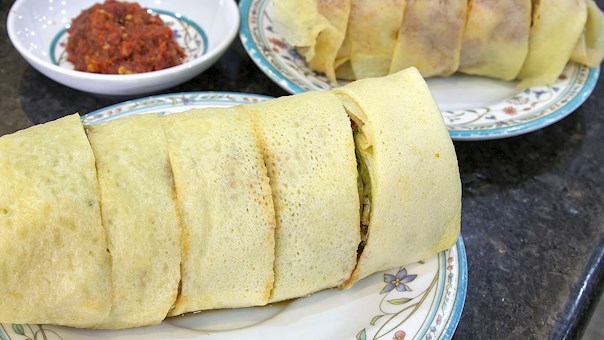
This simple variation of Malay roti canai is prepared with a cracked or lightly beaten egg that is encased inside the flaky roti dough. Roti telur is traditionally wrapped into rectangular shapes, and just like other types of savory roti snacks, it is typically accompanied by various sides that usually include thick and spicy curries or dahl dishes. The variety with added onions is known as roti telur bawang.
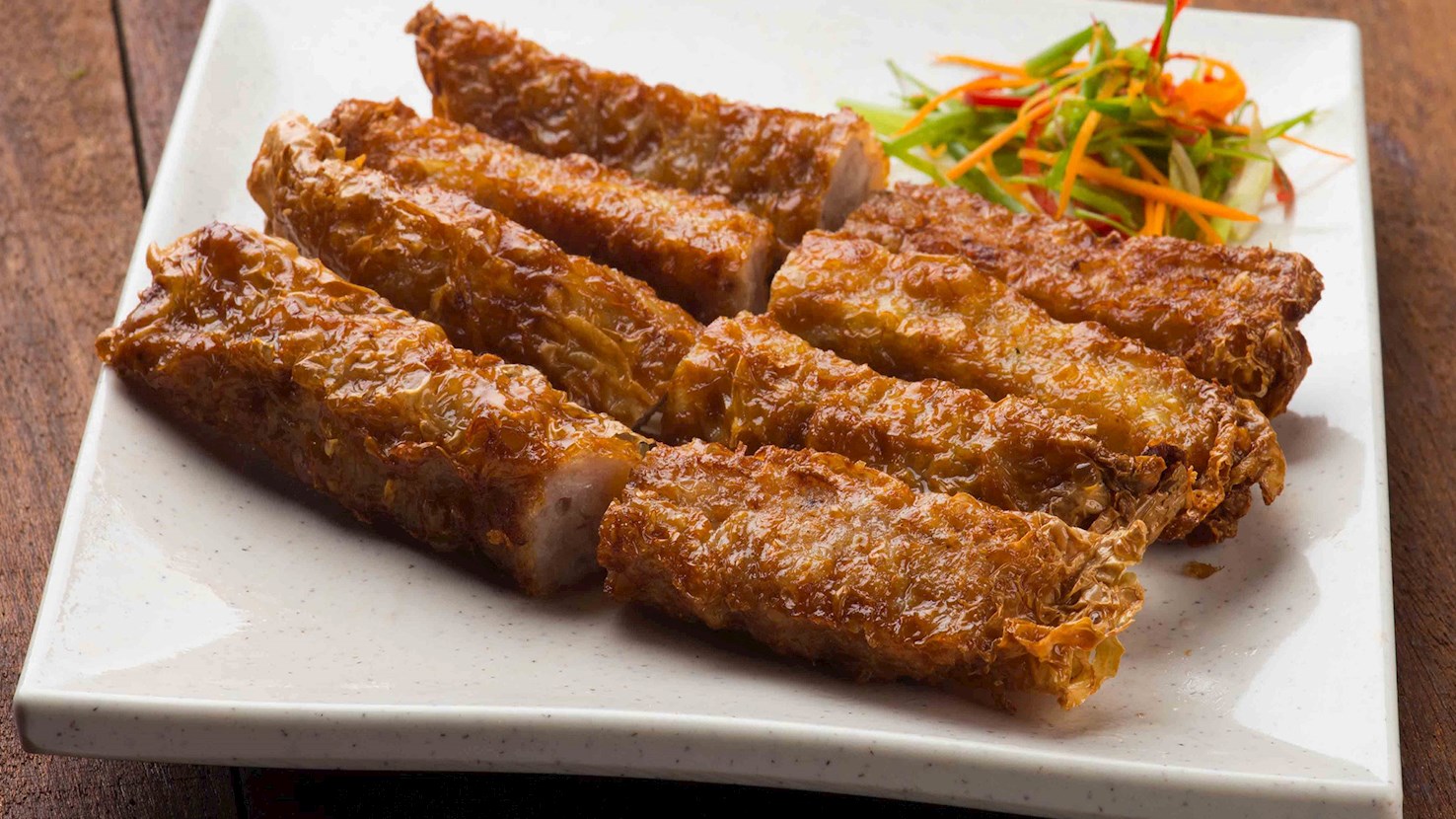
Loh bak or ngo hiang is a dish that presumably originated among Teochew and Hokkien communities. It consists of various meat and vegetable fillings that are wrapped in bean curd skins before they are deep-fried until crispy. The main ingredient used in these rolls is pork, but the variations may include shrimps, chicken meat, or taro. The fillings are always seasoned with five-spice powder, whose Chinese name (ngó͘-hiong-hún) gave the dish its name. Although their origin is probably in Southeast China, these crispy rolls have become a staple in many Asian countries, including Malaysia, Thailand, Indonesia, and the Philippines. Loh bak rolls are usually served with a dipping sauce on the side, and they are often accompanied by other deep-fried snacks. They are mainly sold and enjoyed as street food.
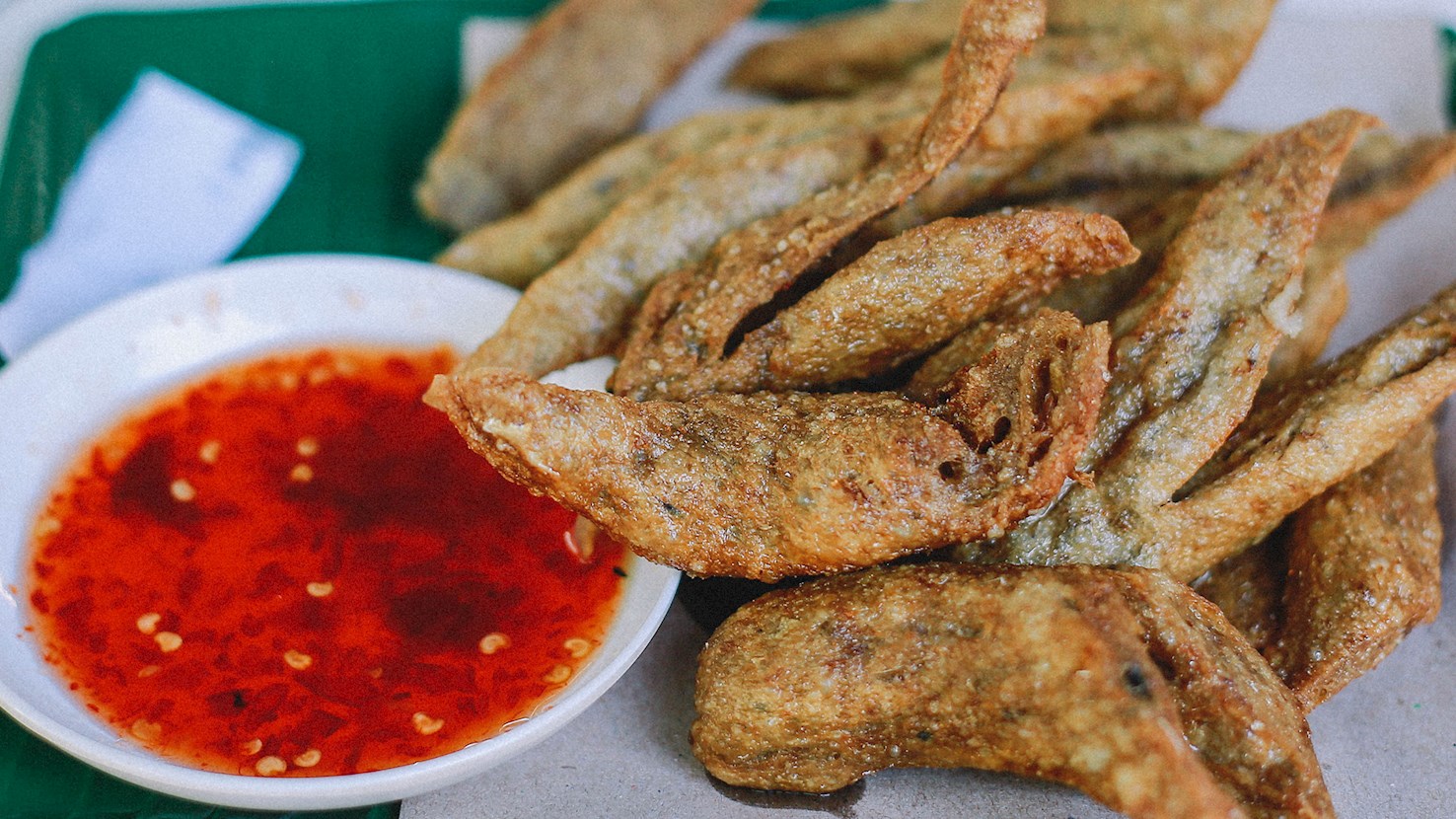
Keropok lekor is a Malaysian snack and a specialty of the Terengganu region. In order to prepare it, ground fish such as herring, ikan tamban, ikan kerisi, or ikan selayang are combined with sago flour, and the combination is formed into long, sausage-like shapes which are then boiled for several hours, although these fish sausages can also be fried. There are many stalls in the region where keropok lekor can be bought, and it is traditionally served hot with a spicy chili dipping sauce.
Roti bawang is a variety of Malaysian flatbread, based on the Indian style of roti. This version of the dish is stuffed with diced onions, and it is then pan-fried. It is usually served for breakfast or consumed as a snack alongside a dipping sauce or curry. Like most other roti varieties, this version is very easy to find at street vendors and local eateries.
TasteAtlas food rankings are based on the ratings of the TasteAtlas audience, with a series of mechanisms that recognize real users and that ignore bot,
nationalist or local patriotic ratings, and give additional value to the ratings of users that the system recognizes as knowledgeable.
For the “Top 14 Malaysian Street Food” list until June 15, 2026, 1,272 ratings were recorded, of which 809 were recognized by the system as legitimate.
TasteAtlas Rankings should not be seen as the final global conclusion about food. Their purpose is to promote excellent local foods,
instill pride in traditional dishes, and arouse curiosity about dishes you haven’t tried.