


shutterstock

Top 19 Singaporean Street Food

Last updated on June 15, 2026
01

Roti prata

4.4 ·

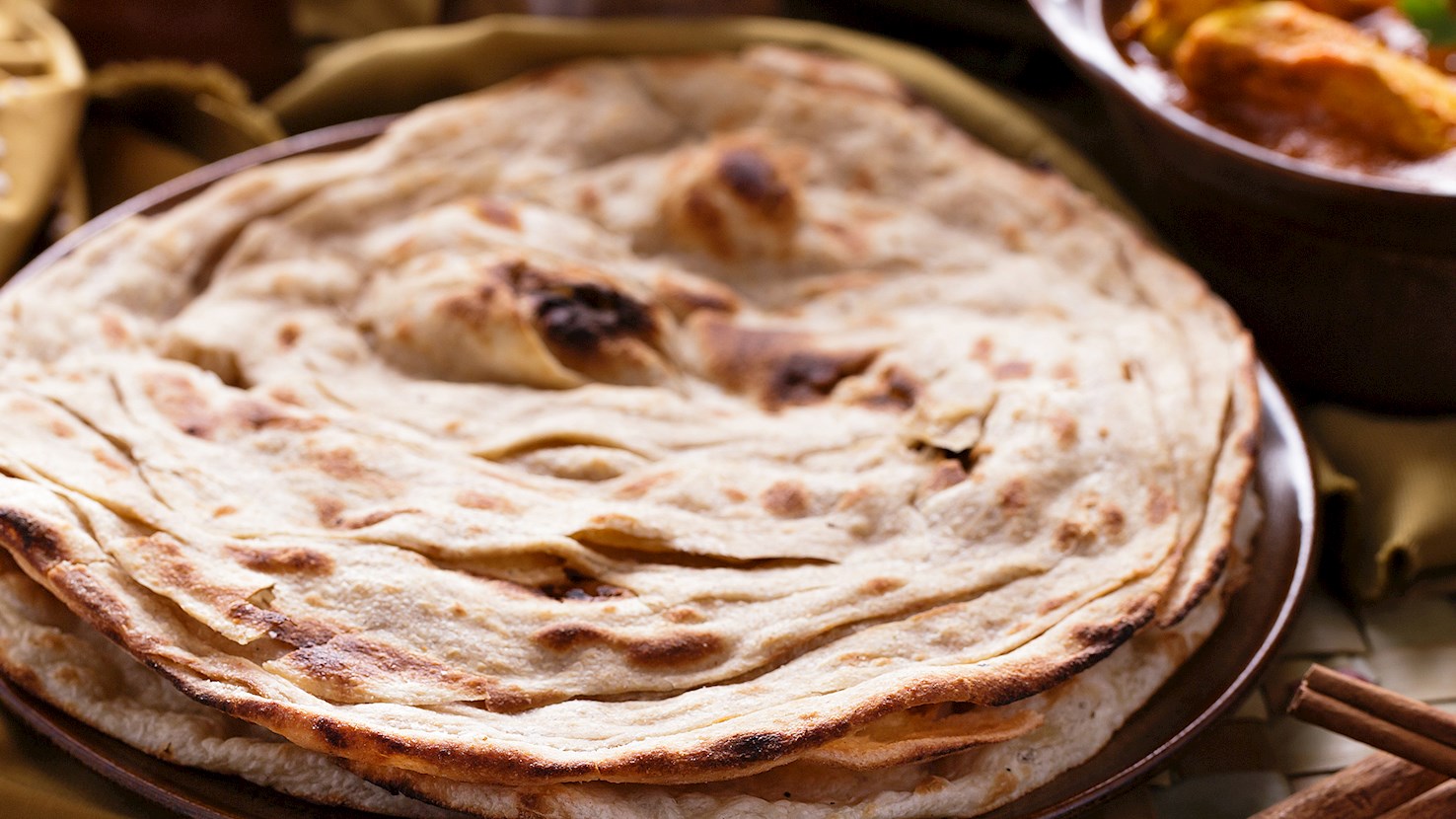
Roti prata is a Singaporean specialty consisting of a ghee-flavored flatbread that is crispy on the outside and soft on the inside. It is typically served with mutton curry or various fish dishes. There are many prata stalls throughout Singapore, so the texture of roti prata ranges from chewy and flaky to super crispy. The flatbread can also be turned into a dessert by adding ingredients such as chocolate, ice cream, or cheese.

02

Char kway teow

4.2 ·

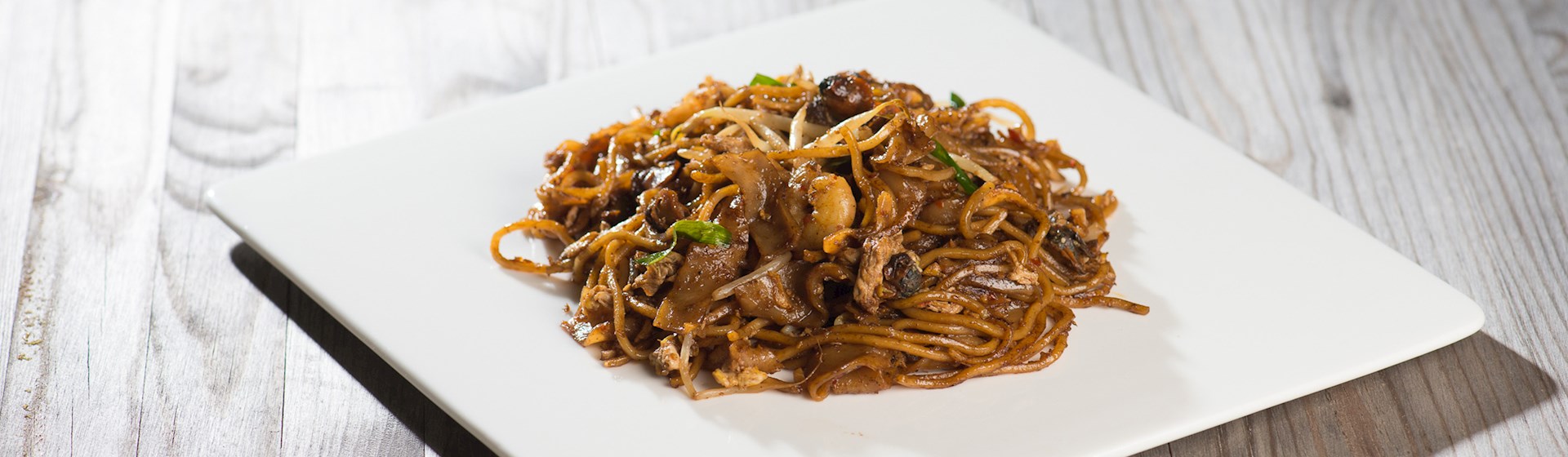
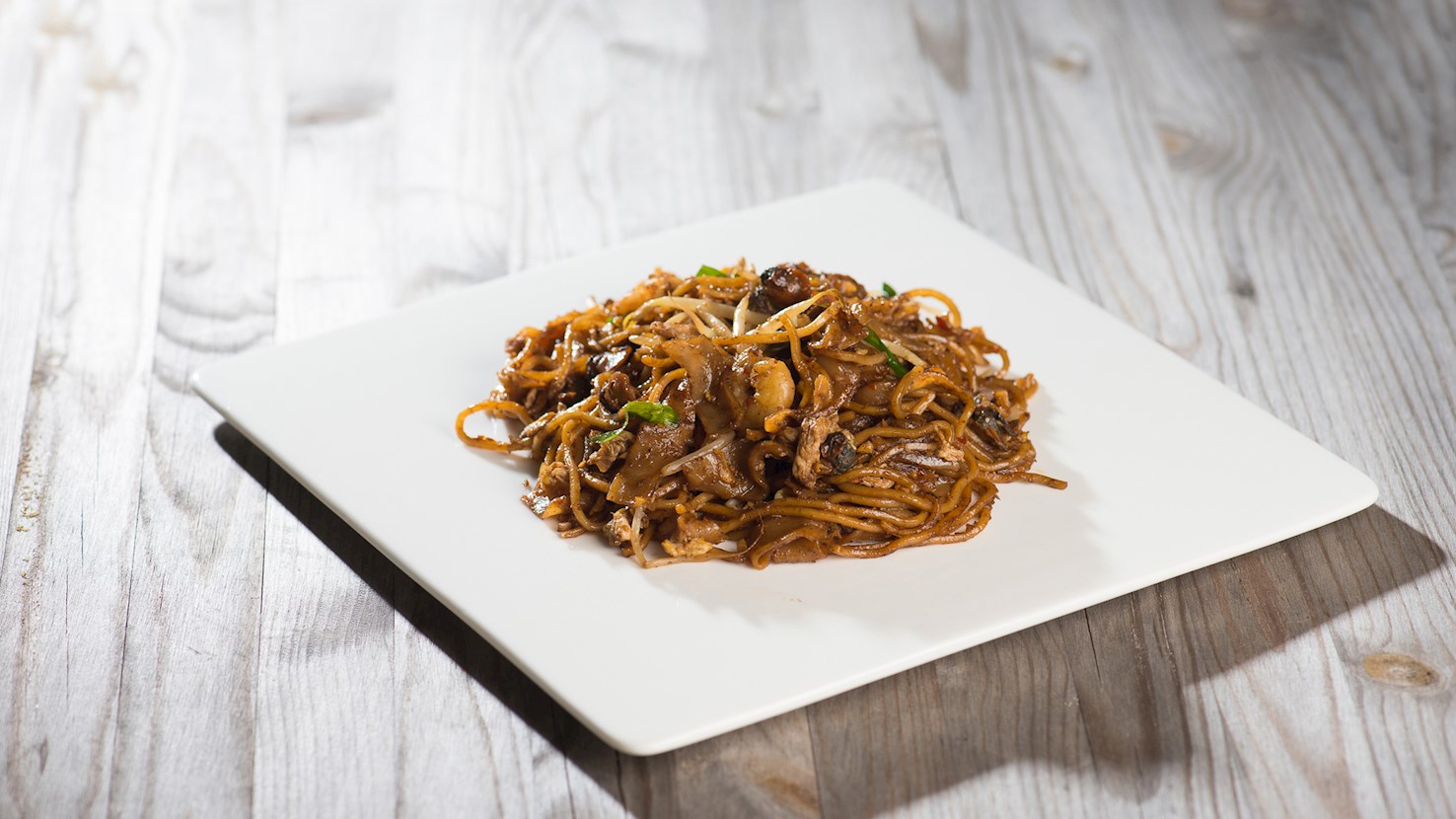
Char kway teow is one of the most popular street dishes in Malaysia and Singapore. Despite numerous regional varieties, it is usually made with flat rice noodles, shrimps, eggs, cockles, bean sprouts, chives, and Chinese sausage. All the ingredients are usually fried and coated in soy sauce, while some versions also incorporate shrimp paste, garlic, fried pork lard, and sometimes even yellow wheat noodles. Among the numerous theories about the origin of the dish, the most popular claims that it was invented in the Singaporean Teochew community by Chinese immigrants, while the name stems from Hokkien, char meaning fried and kway teow denoting flat rice noodles. Classic Teochew variety that is lighter and slightly drier than the Singaporean counterpart is especially popular in Malaysian Penang where it is considered to be a signature dish of the region. Originally, char kway teow was a poor man’s dish made by farmers and fishermen out of leftover ingredients. Realizing how delicious this combination is, they started selling it on the street, and it quickly caught on. Apart from Singapore and Malaysian Penang, a variety of char kway teow is also found in Indonesia. In Penang, some vendors still serve it on banana and palm leaves, the way it was traditionally served from its beginnings.

03

Curry Laksa

4.1 ·

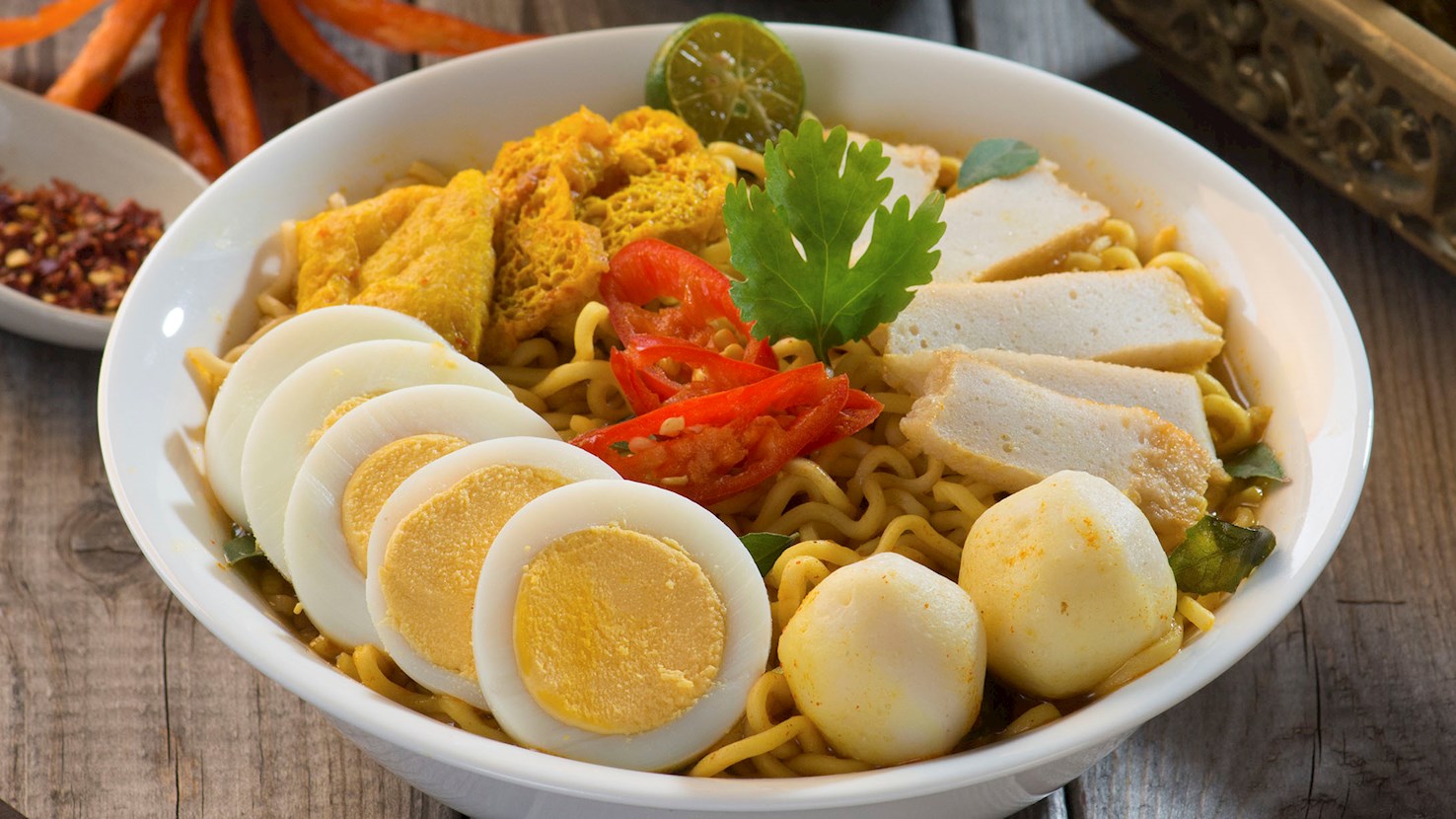
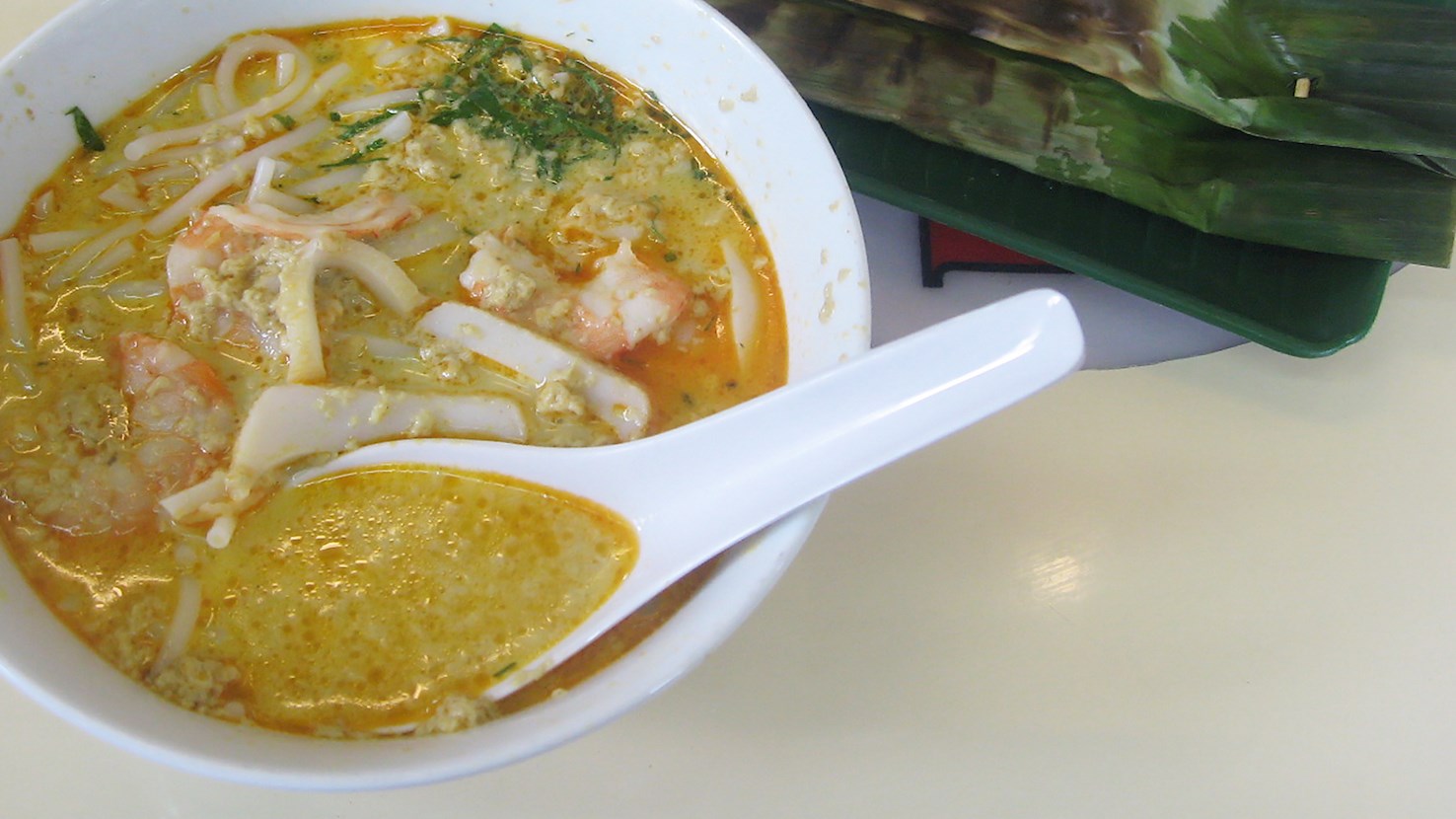
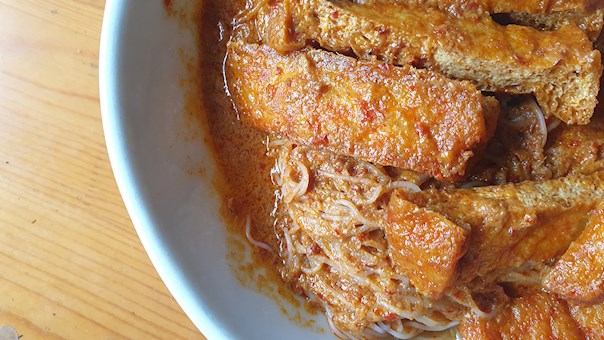
Curry mee is a spicy noodle soup commonly eaten in Malaysia and Singapore (where it's often called curry laksa). It is a true fusion dish, influenced by Indian, Chinese, and Southeast Asian culinary traditions. It is one of the numerous varieties of laksa, the quintessential noodle soups of Southeast Asia. The basis for this creamy dish is made with curry and coconut milk which form the unusual sweet and spicy sauce. Although very similar to curry, the sauce for curry mee is usually much thinner, but still has a strong and rich flavor. Traditionally, thin rice noodles are used in curry mee, and they are often cut into smaller pieces in order to ease the consumption. Other ingredients include tofu puffs, prawns, and fishcakes. The most traditional versions of curry mee also include a very unusual ingredient - cockles, saltwater clams which are usually served raw. Before serving, the dish is spiced with a dollop of traditional chili sauce and chopped coriander leaves. Curry laksa is the favorite variety in Singapore, where it is often referred to only as laksa. In Singapore, it is the most common hawker-style dish, and many vendors prepare curry laksa as their signature dish.

04

Katong laksa

4 ·

As the name implies, this laksa variety hails from the Katong neighborhood of Singapore's Central Region. It is based on a spicy, shrimp-infused broth that's flavored with coconut milk and a special laksa paste consisting of dried shrimps, herbs, and spices. Other elements include thick rice noodles and a variety of condiments and toppings such as shrimps, fishcakes, cockles, tofu puffs, fish balls, spicy sambal sauce, or coriander. The noodles in Katong laksa are always cut into smaller pieces, and when served, each bowl comes with a spoon. It is believed that the dish originated among the Peranakan (Strait Chinese), but it rose to fame during a dispute over which hawker stall serves the original version. The most popular theory claims that Ng brothers first started selling it in 1963 at a stall then named Marine Parade. When they had to move out, their place was taken over by Nancy Lim who later renamed it 328 Laksa. Eventually, numerous stalls appeared, Ms. Lim moved her business, and the sons of Ng brothers opened a new laksa shop.

05

Chilli crab

4 ·

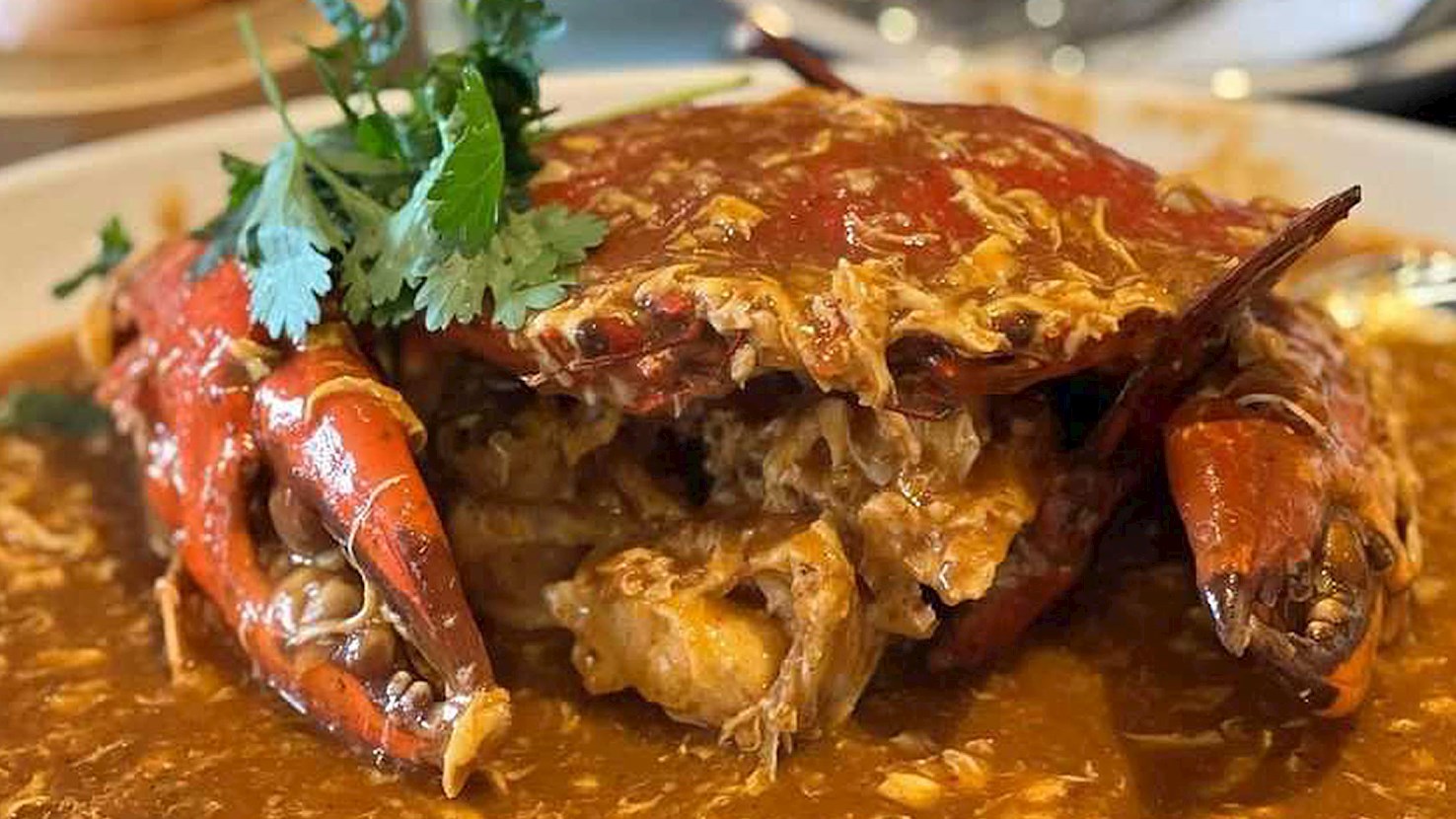
Like many other dishes in Asia, chilli crab started as a street food item, but it has eventually become so popular that today it is considered to be the national dish of Singapore. It consists of a stir-fried crab covered in a succulent, spicy sauce. The story of chilli crab's origin is a well-known anecdote - it was invented in the 1950s by Cher Yam Tian, who wanted to modify her stir-fried crab recipe by adding bottled chili sauce into the dish. The result was so delicious that her family persuaded her to start selling the dish, so chilli crab began its way to become the signature dish of Singapore. The dish is served in many restaurants in the country, and since the crab is served in a shell, the consumption of chilli crab is a unique experience. The diners must use their hands to crack the shell open in order to get hold of the tender crab meat hiding on the inside. Usually, mallets or nutcrackers are used to ease the whole procedure. Bread is commonly served together with the crab, and it is mainly used to soak up the delicious spicy gravy.

06

Black Pepper Crab

4 ·

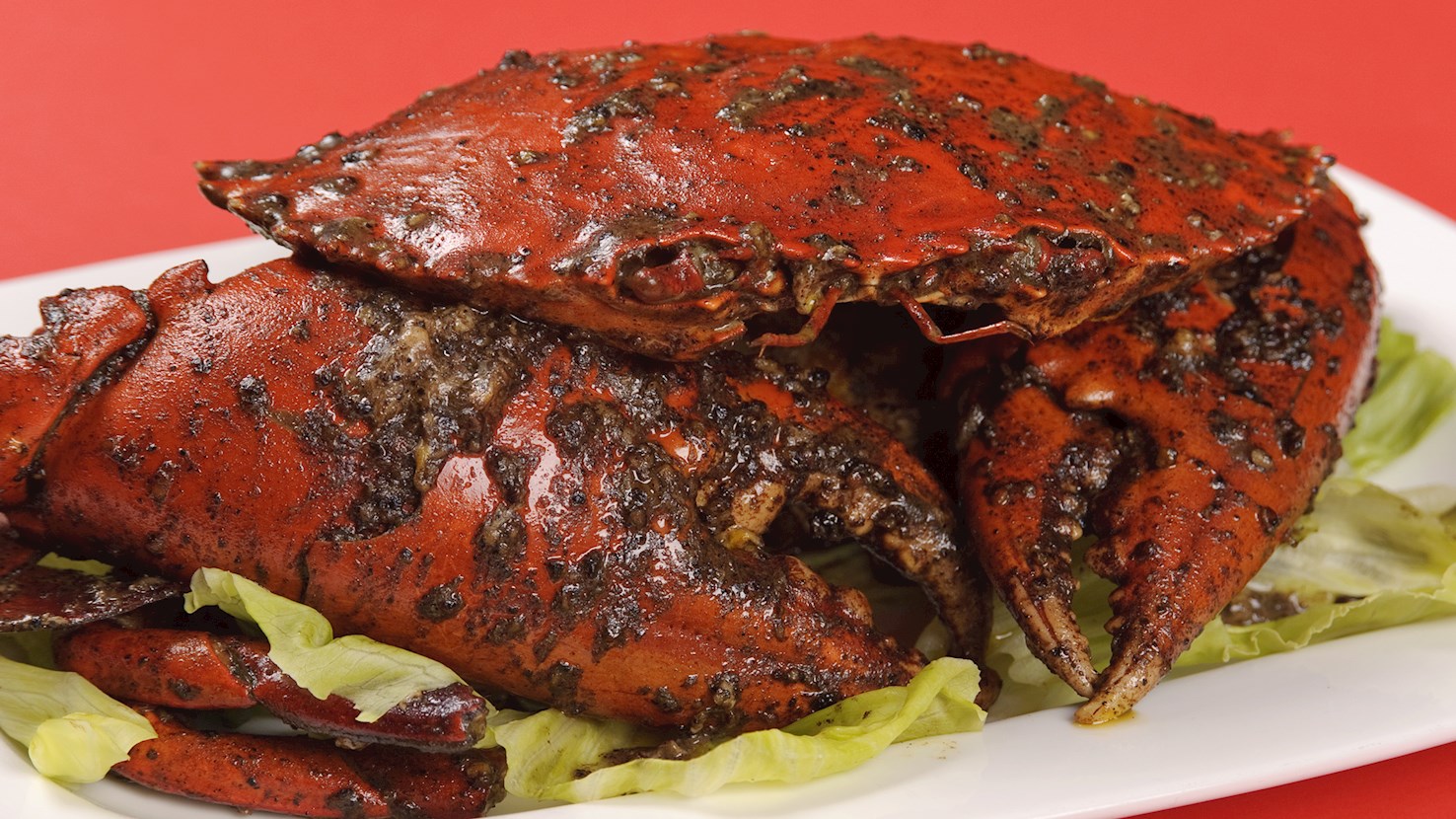
Black pepper crab is the unofficial national dish of Singapore, made by stir-frying crab pieces with black pepper, garlic, shallots, and oyster sauce over high heat. The dish is seldom prepared at home, but people can easily find it at numerous street stalls and seafood restaurants. Once the crab is cooked, it is often garnished with coriander leaves and paired with rice on the side.

07

Hainanese Chicken Rice

4 ·

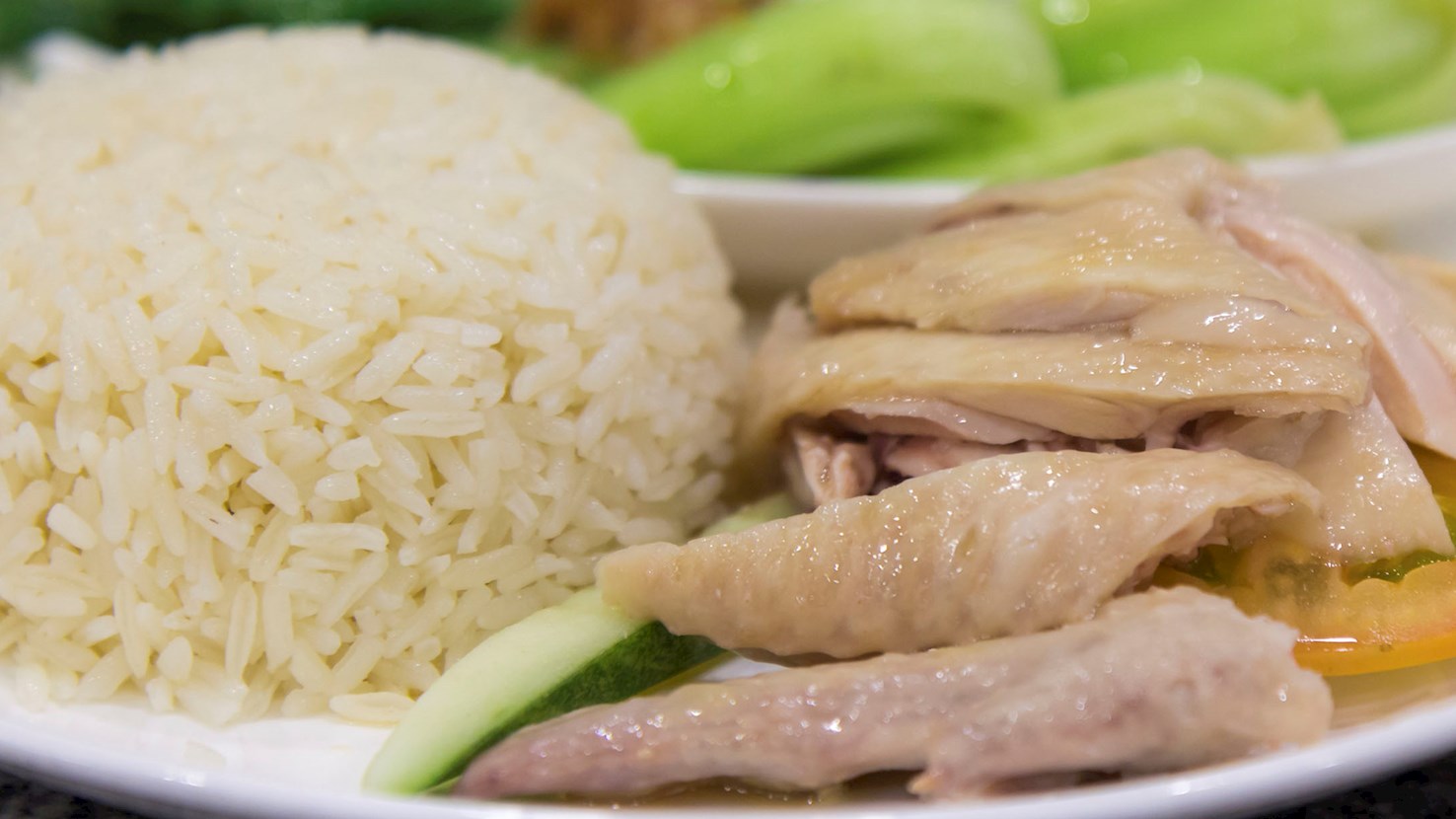
Originally invented on Hainan, a tropical island located south of China, the humble Hainanese chicken rice has evolved into one of the most popular dishes in Singapore. It consists of steamed chicken that is cut into bite-sized pieces, then served with fragrant white rice. When plated, the dish is drizzled with soy sauce and sesame oil, and it is served with sliced cucumbers and a spicy chili sauce. Frequently, the steaming liquid is subsequently spiced and served as a soup. The recipe was brought to Singapore by Hainanese migrants in the 19th century, and the first vendor selling this unique dish in Singapore opened his stall in the 1940s. There is, however, some difference between the Hainanese and Singaporean varieties of the dish: the Hainanese prefer to use pork broth and serve the dish with pounded ginger instead of chili sauce. Regardless of the original, the Singaporean version became the favorite variety, and today it is often referred to only as Singaporean chicken rice. Although it is also served in restaurants, this well-known dish is usually sold by street vendors which can be found on every street corner in Singapore.

08

Cereal Prawns

3.9 ·

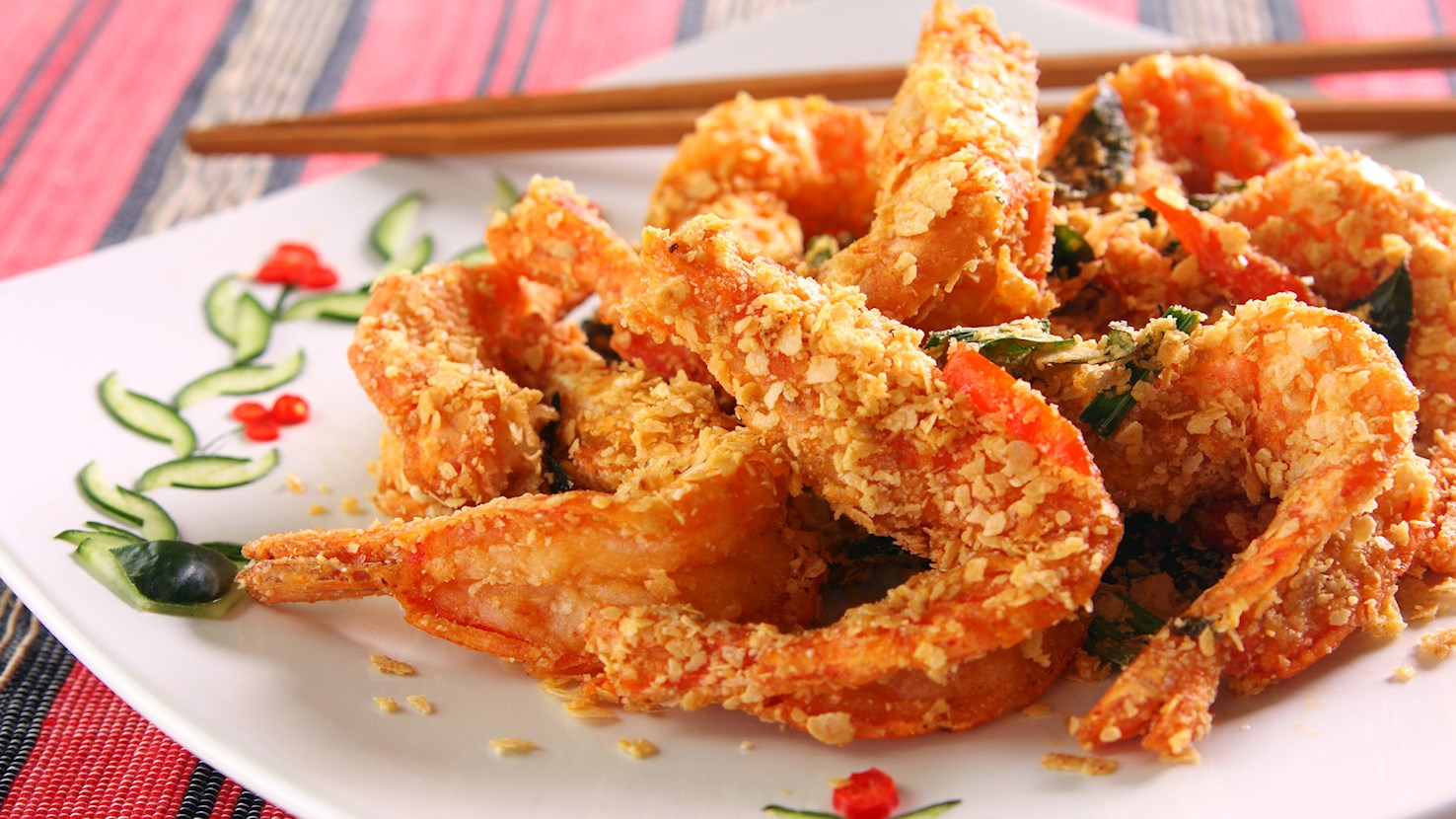
This Singaporean dish consists of crispy fried prawns that are doused in a rich combination of butter, crushed and toasted cereals, curry leaves, and chilis. Even though it is easily prepared at home, the dish is a staple at hawker centers and restaurant throughout Singapore and Malaysia. Cereal prawns are occasionally served topped with a heap of toasted, almost sand-like cereals, and they are always enjoyed hot.

09

Hokkien mee

3.9 ·

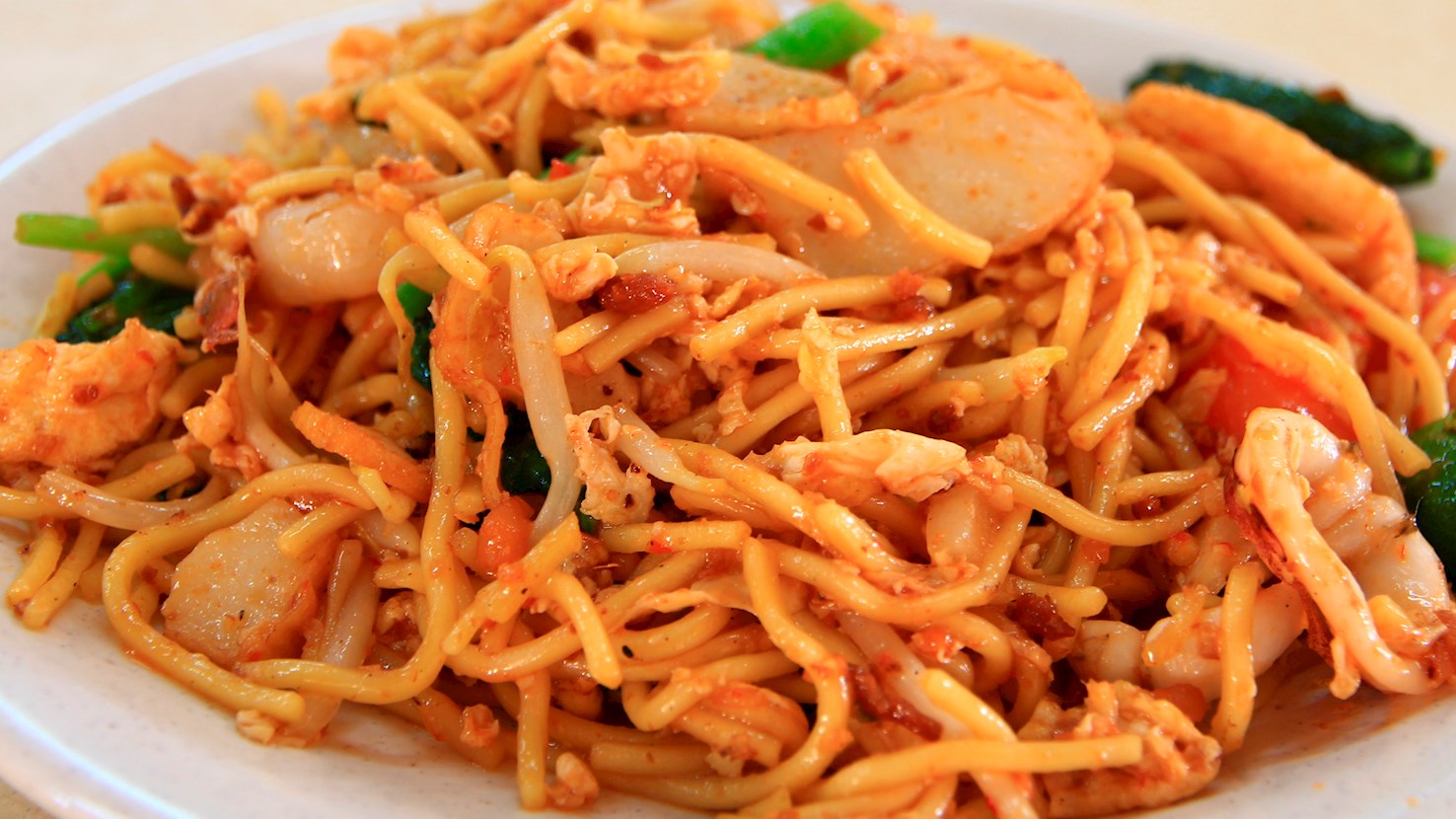
Hokkien mee is a dish usually consisting of round wheat noodles and thin rice noodles that are fried together with prawns, eggs, pork, and bean sprouts. While they stir-fry, all the ingredients are coated in a flavorful stock usually made from prawns, pork, and other types of seafood. Standard additions include fish cakes, prawns, squids, spring onions, pork lard (optional), and chives, while sambal sauce and lime are typically served on the side. The exact origins of the dish are believed to be among the Hokkien community, a dialect group that mostly came from Fujian province. It is said that the dish was invented at Rochor Market and that it was initially known as Rochor mee, only later gaining its current name. Although a similar dish with the same name exists in Malaysia, it is significantly different than the classic Singaporean version.

10

Min chiang kueh

3.7 ·

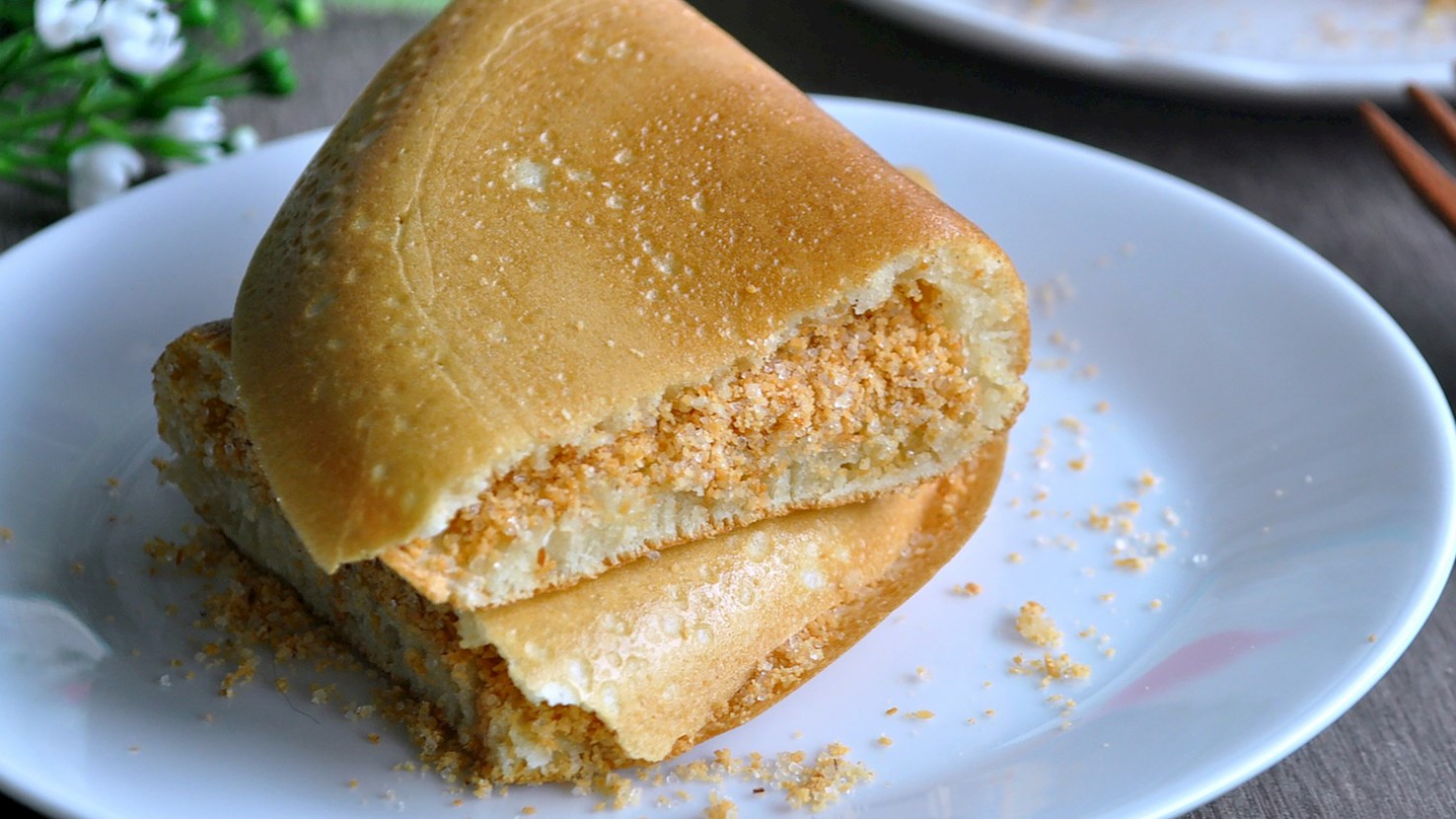
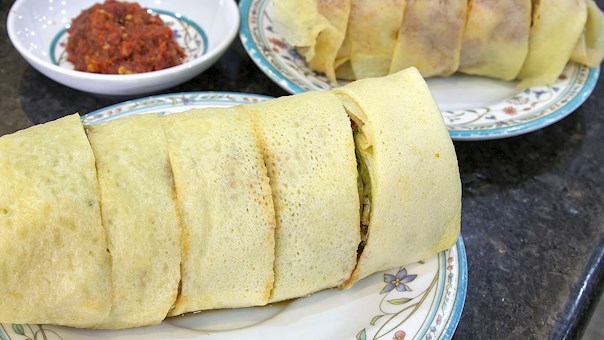
Min chiang kueh is a traditional pancake that's consumed in China and Singapore, with similar version in Malaysia (apam balik). These thick pancakes are filled with a combination of crushed peanuts and sugar. The batter is usually prepared with a combination of plain and rice flour, coconut milk, eggs, sugar, yeast, baking soda, and a pinch of salt. Once prepared, the pancake is topped with peanuts and sugar, then folded in half and served. Other fillings are also available, such as red bean paste and shredded coconut. The pancake is served for breakfast, always piping hot, and it can be found at most hawker centers. It's believed that these pancakes originate from Fujian, China.

Read more
View all
View map
About this ranking

TasteAtlas food rankings are based on the ratings of the TasteAtlas audience, with a series of mechanisms that recognize real users and that ignore bot, nationalist or local patriotic ratings, and give additional value to the ratings of users that the system recognizes as knowledgeable. For the “Top 19 Singaporean Street Food” list until June 15, 2026, 927 ratings were recorded, of which 740 were recognized by the system as legitimate. TasteAtlas Rankings should not be seen as the final global conclusion about food. Their purpose is to promote excellent local foods, instill pride in traditional dishes, and arouse curiosity about dishes you haven’t tried.

Similar lists