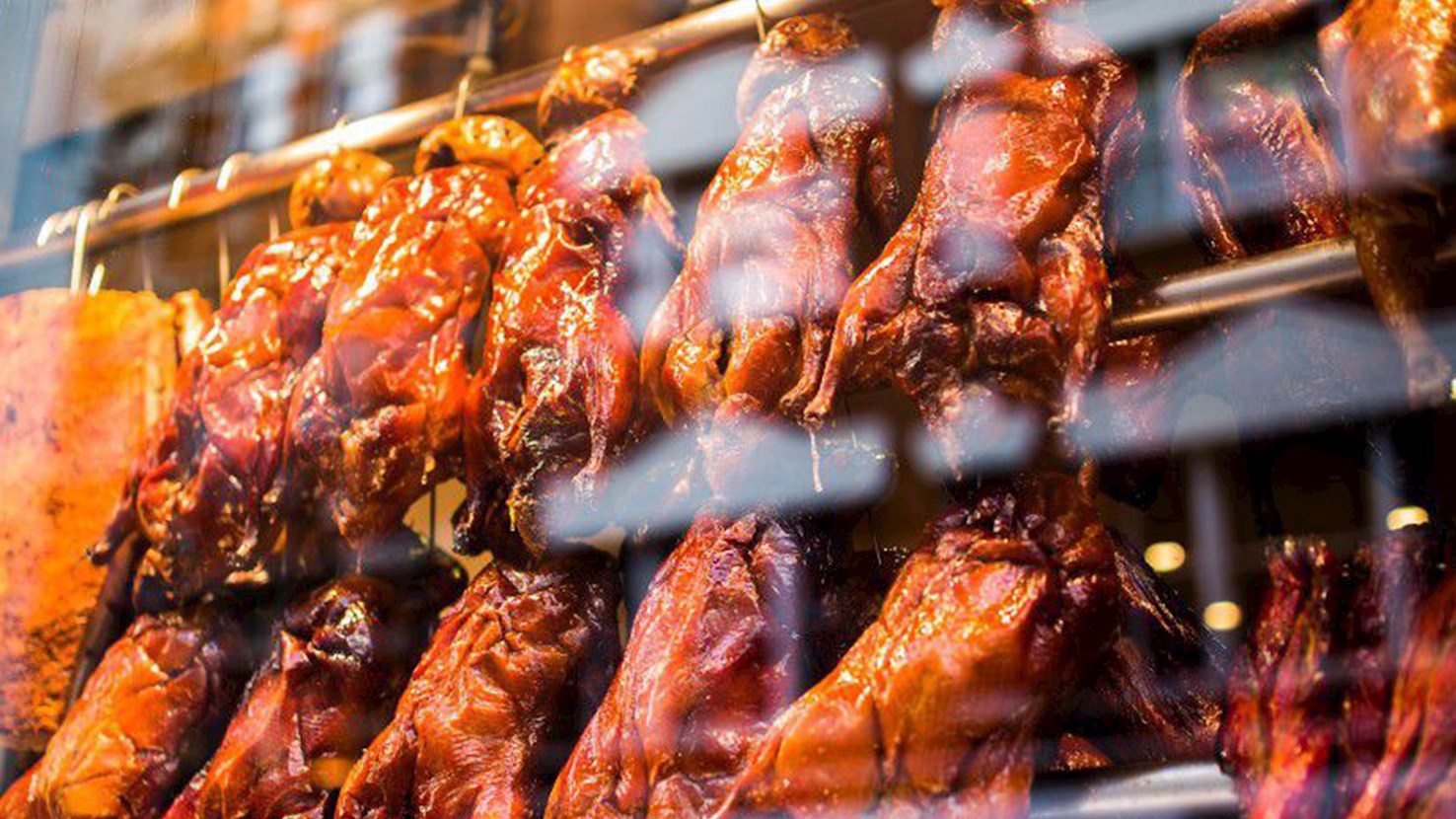
Siu mei refers to a style of Chinese cuisine that is primarily characterized by roasting meat on spits over an open fire or in a rotisserie oven. Originating from Guangdong province, this culinary tradition is particularly prevalent in Hong Kong. The term siu mei translates to "roast flavor" in Cantonese. Some of the most prominent and beloved examples of siu mei include char siu, siu yuk, soy sauce chicken, and white cut chicken. These dishes are typically served with rice and vegetables and sometimes with noodles. Siu mei meats are often displayed hanging in restaurant windows, a characteristic sight in Chinese eateries that specialize in this style of cooking. The visual display is not only appetizing but also allows customers to select their preferred cuts of meat. Siu mei is enjoyed by people all over the world, wherever there are Chinese communities, and it is celebrated for its rich flavors, varied textures, and the mastery required for its preparation.
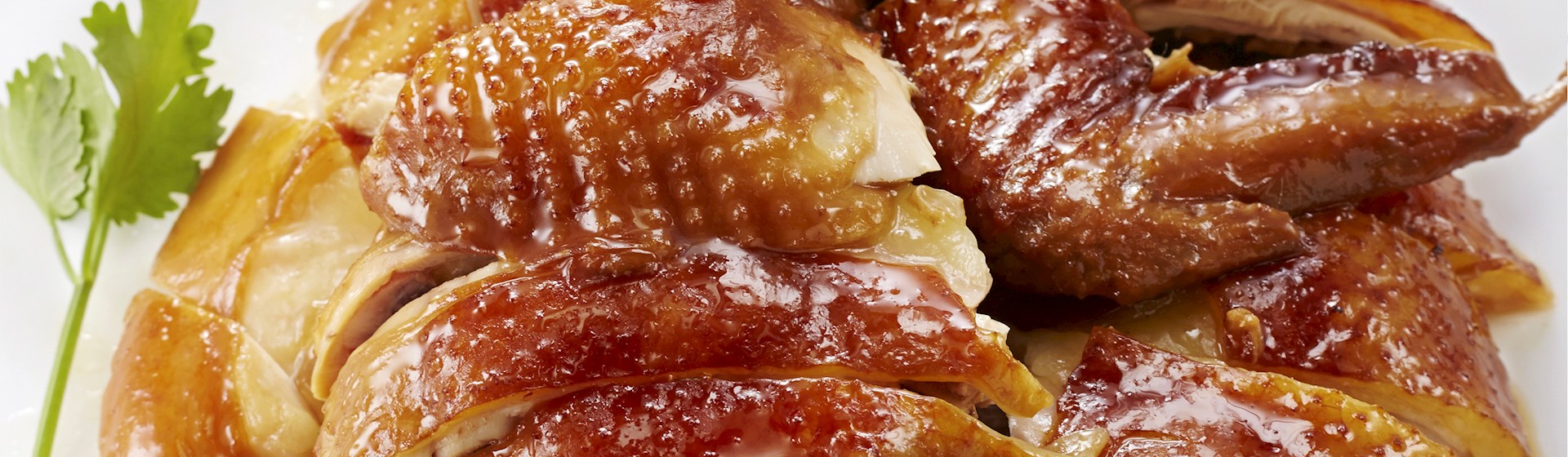
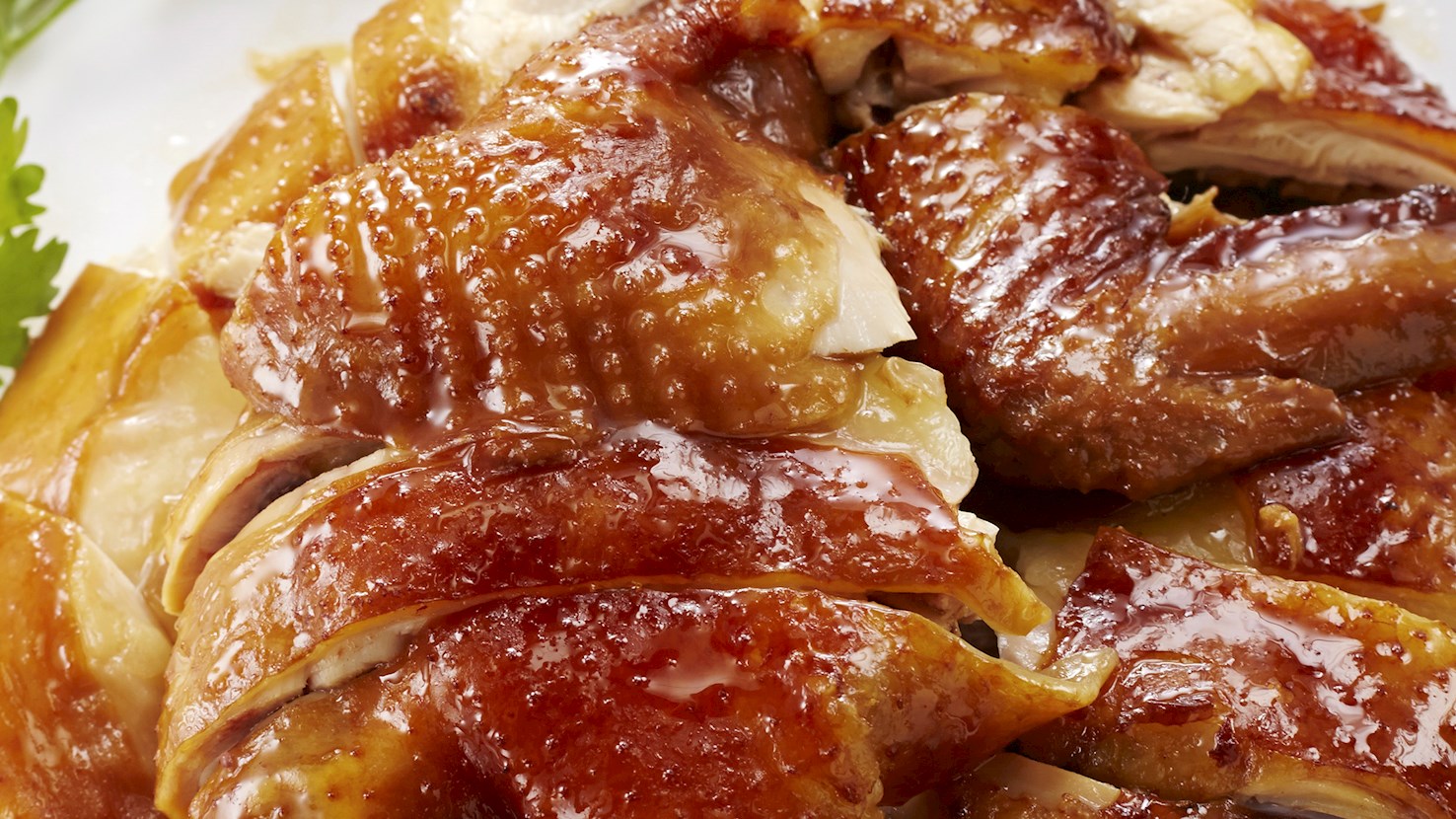
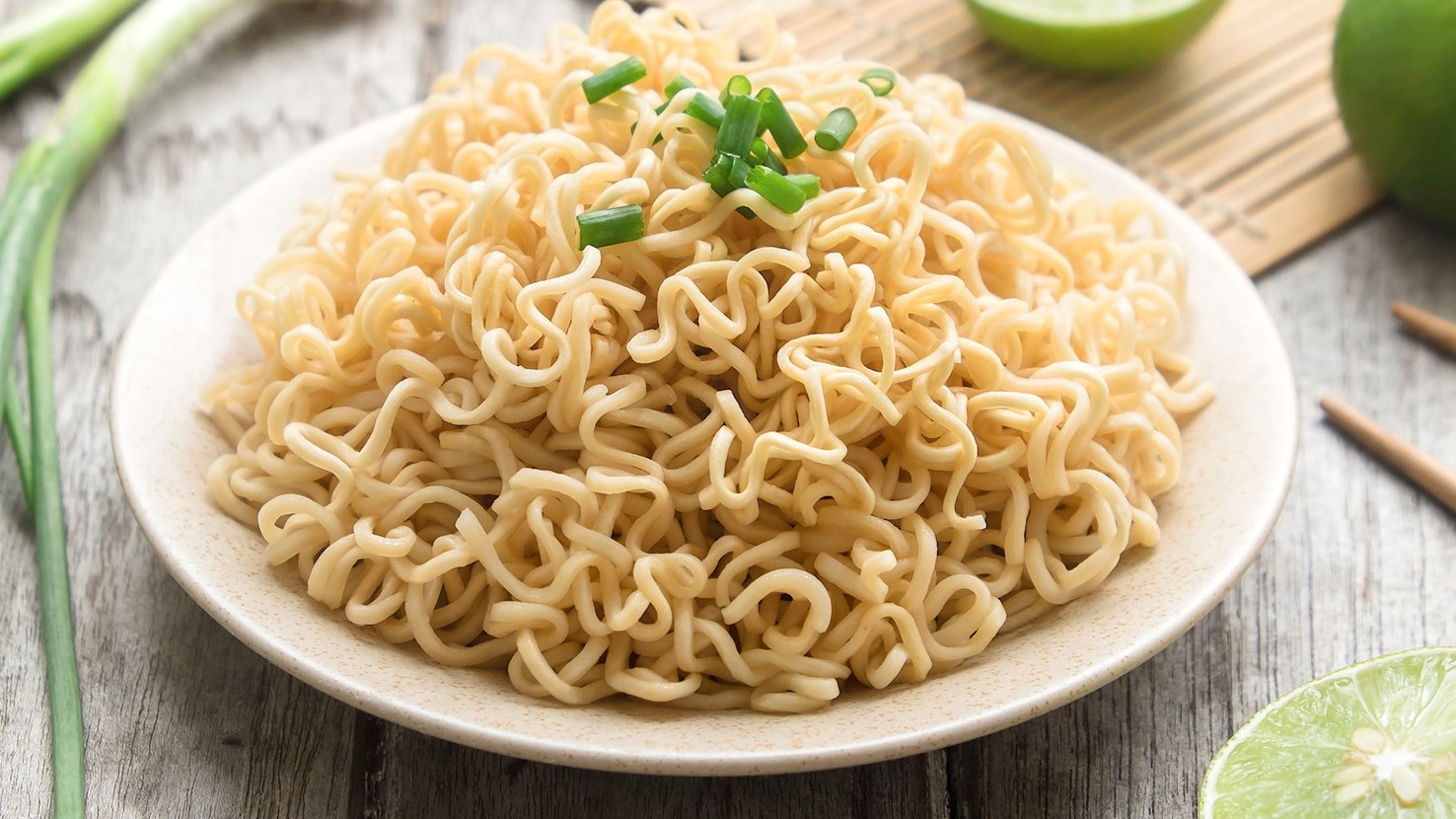
Soy sauce chicken is a traditional Cantonese dish and a classic example of red cooking technique, where meat is simmered in a soy sauce-based liquid along with various seasonings. It results in tender, succulent meat that falls off the bone. Although most cooks use chicken quarters for the dish, some like to use smaller pieces such as legs, drumsticks, and wings. Soy sauce chicken made with chicken quarters is also a traditional dish for the Chinese New Year. It is recommended to pair the chicken with side dishes such as rice or stir-fried lo mein noodles, while the typical accompaniment is a dipping sauce made with oil, ginger, chicken stock, onions, and salt.
Reganmian, or more commonly hot dry noodles, is a traditional dish originating from Wuhan, the capital of the Chinese Hubei province. It is one of the five most common and popular noodle dishes in China. The noodles in reganmian are cooked in a mixture of water and sesame oil, cooled, tossed and warmed in the same mixture right before serving. The process results in a delicious serving of noodles which are coated with a strong sesame flavor. The dish is sold by numerous street vendors across the city, who sell it from the early morning until late in the evening. Additional ingredients and garnishes vary among the vendors, who use different elements such as peanut or sesame oil, soy sauce, and chili to create their signature reganmian. Although commonly regarded as a breakfast dish, it can also be eaten as an afternoon snack or a light dinner. This inexpensive and simple dish has been a 50-year-old tradition in Wuhan and is still considered to be the most popular dish in the area.
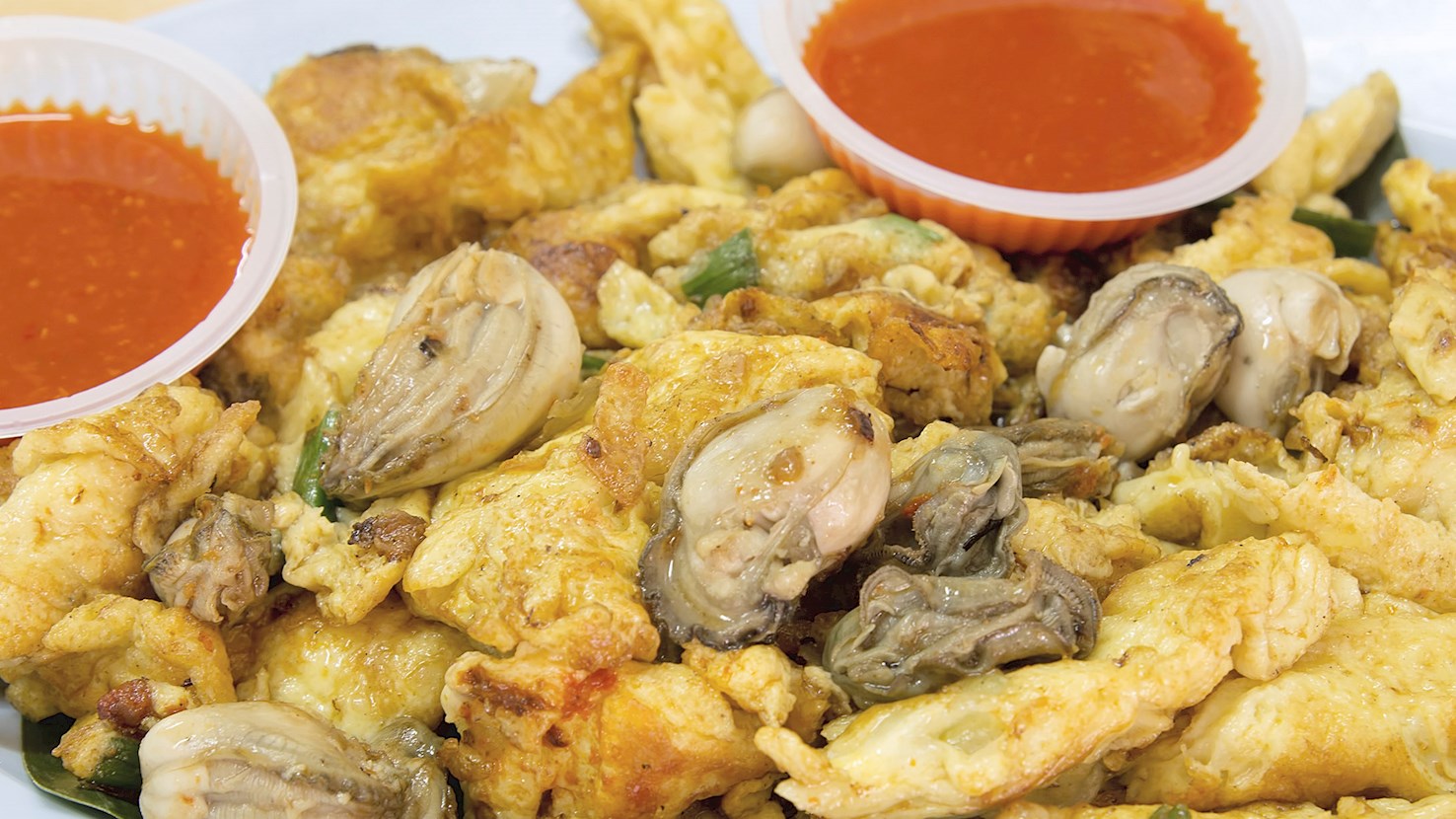
Oyster omelette is a savory egg-based dish originating in the coastal regions of southern China, particularly in Fujian and Guangdong, and it later spread across Southeast Asia, where it became a beloved staple of street food culture in places like Taiwan, Thailand, Malaysia, Singapore, and the Philippines. It combines small, fresh oysters with eggs and a starch batter, resulting in a dish that is crisp on the outside and soft within, often finished with herbs, sauces, or spicy condiments. Its roots lie in the coastal abundance of oysters and the ingenuity of cooks who sought to make use of seasonal shellfish in a satisfying and economical way. In port cities and fishing towns, oysters were plentiful but perishable, and incorporating them into quick, hot dishes allowed them to be eaten fresh while also providing nourishment and flavor to working families and laborers. The dish evolved over time, with each region adapting it to local tastes. In Fujian and Chaoshan areas, the emphasis is often on the delicate interplay of soft oysters and lightly set eggs, while in Taiwan the starch component became more prominent, forming a chewy, slightly gooey texture that contrasts with the crisp edges from the hot griddle. Thai and Malaysian versions tend to be spicier and sometimes include additional aromatics or bean sprouts for freshness and crunch. Preparation begins with a batter made of sweet potato, tapioca, or potato starch mixed with water, poured onto a hot, greased griddle or wok, and spread into a thin layer. Oysters are added on top, followed by beaten eggs, which cook quickly and bind the ingredients together. The omelette is flipped and browned until parts become crisp while the interior remains tender and moist. It is usually served hot, garnished with cilantro or scallions, and accompanied by a sweet, sour, or spicy dipping sauce, depending on the region. Today, oyster omelette is eaten both as a street snack and a restaurant dish, often associated with night markets, coastal seafood stalls, and festive occasions. It pairs well with light soups or rice porridge and is sometimes enjoyed alongside beer or tea, especially in settings where it is served as part of a shared meal.
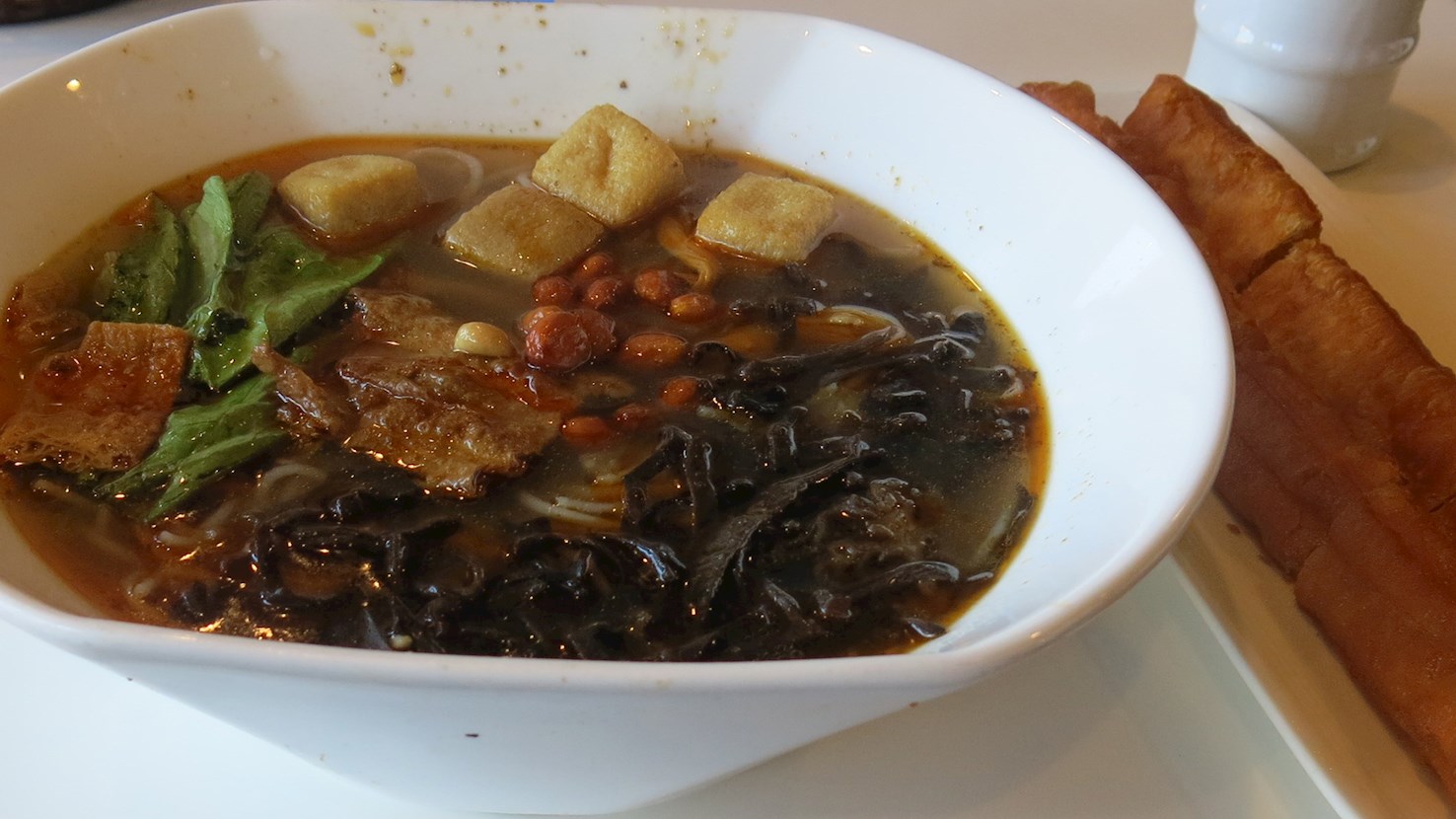
Luosifen, a native to Liuzhou in China's Guangxi province, is a dish consisting of a snail-based broth, rice noodles, and an array of additional ingredients, typically including pickled bamboo shoots, peanuts, tofu skins, and green vegetables. The hot and spicy taste comes from an elaborate concoction of spices and herbs that's used to make the broth, as well as a sizable amount of chili oil that's added to the finished soup at the end. Luosifen is typically sold by street vendors and only rarely served in restaurants, with each place having their secret recipe. Recently, specialized luosifen restaurants started to appear in numerous Chinese cities, but also abroad.
Teochew braised duck is a traditional dish from the Chaozhou region of China, especially popular in the Singaporean Teochew community. This dish exemplifies the Teochew culinary style, which emphasizes the preservation of the original flavors of the ingredients and employs techniques like braising and slow cooking. The duck is cleaned, and its inner cavity might be stuffed with various aromatics or seasonings, depending on the recipe. The primary braising liquid typically consists of a mixture of soy sauce, water, sugar, and a variety of aromatics like star anise, cinnamon, and ginger. Some recipes may also include rice wine, garlic, and other ingredients. The duck is braised in this mixture for an extended period until tender and flavorful, absorbing the rich, savory flavors from the braising liquid. Once cooked, the duck can be sliced and served with a portion of the reduced braising liquid that serves as a sauce. The skin should be glossy from the braising liquid, and the meat tender and flavorful. In Teochew communities, this dish might be found at celebratory events, festivals, or family gatherings, but can also be found on hawker stands.
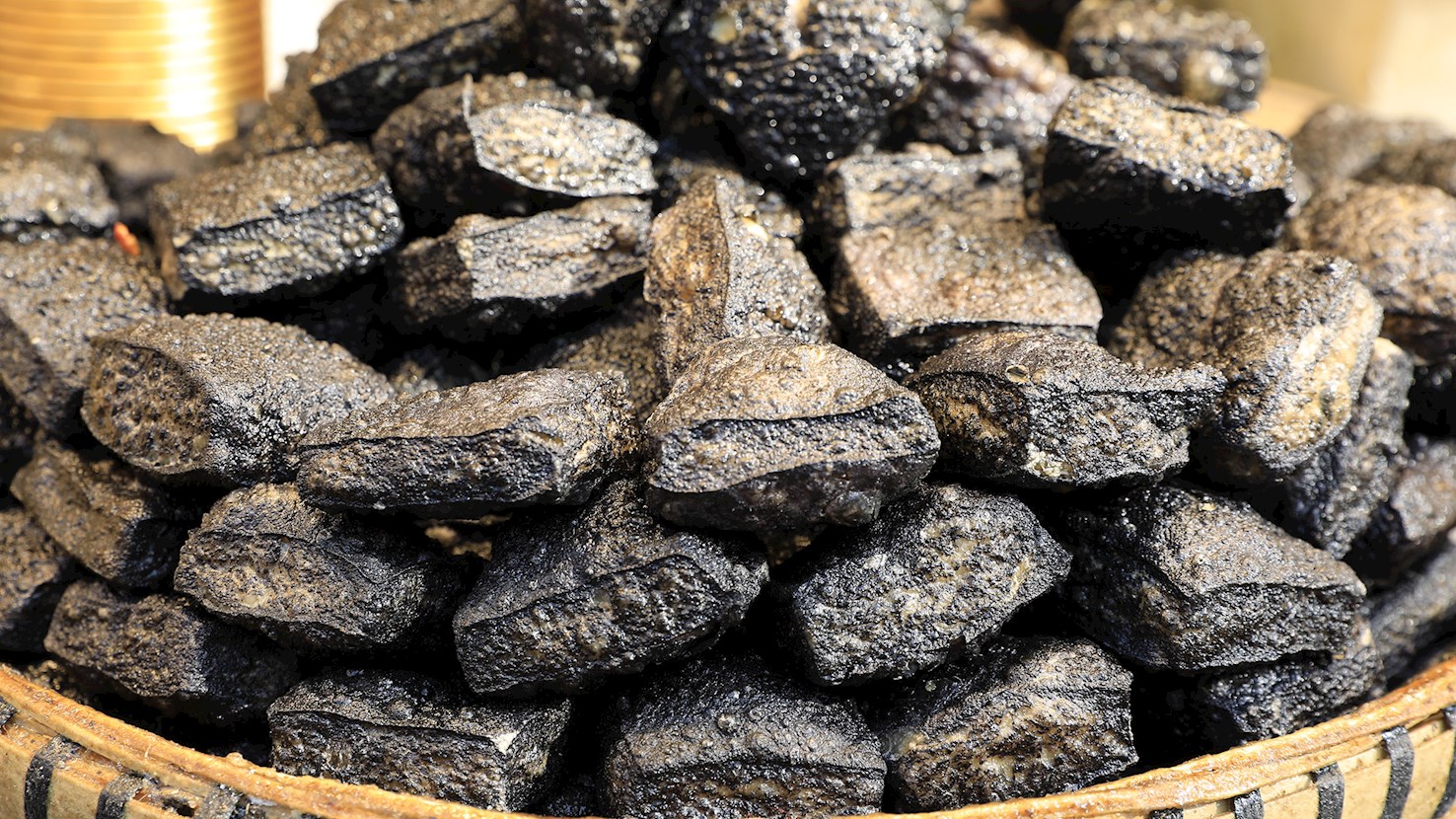
Chángshā chòu dòufu is a famous street food from Changsha in Hunan province, recognized across China for its striking aroma, blackened exterior, and spicy, flavorful toppings. While stinky tofu is prepared in many regions, the Changsha version has become one of the most iconic, standing out for its fiery seasoning that reflects the broader character of Hunan cuisine. The origins of stinky tofu go back several centuries, when methods of fermenting tofu developed both as a means of preservation and as a way of deepening flavor. In Changsha, vendors adapted the process to suit local tastes, creating a version with a darker outer skin and a stronger aroma. Over time, this style became inseparable from the city’s identity, praised in travel accounts and sought out by visitors as a culinary landmark. Its reputation grew as Changsha’s night markets flourished, turning the dish from a practical snack into a defining feature of local street food culture. Preparation starts with tofu that has been fermented in a brine made from vegetables, herbs, and seasonings, a process that develops its pungent character. The tofu cubes are deep-fried until the outside is crisp and dark while the inside remains soft and tender. They are served hot, topped with chili sauce, garlic, sesame oil, and pickled vegetables, making each bite a mixture of heat, aroma, and texture. Vendors often adjust the spiciness to suit different diners, but chili is central to the Changsha version, underscoring the city’s love for bold flavors. Today, Chángshā chòu dòufu is eaten mainly as street food in the bustling markets of Changsha, often late into the evening when food stalls are busiest. It is enjoyed by locals as an everyday snack and by tourists as a must-try specialty. Served in small portions, it is eaten hot and fresh, sometimes with chopsticks but just as often skewered on sticks for convenience.
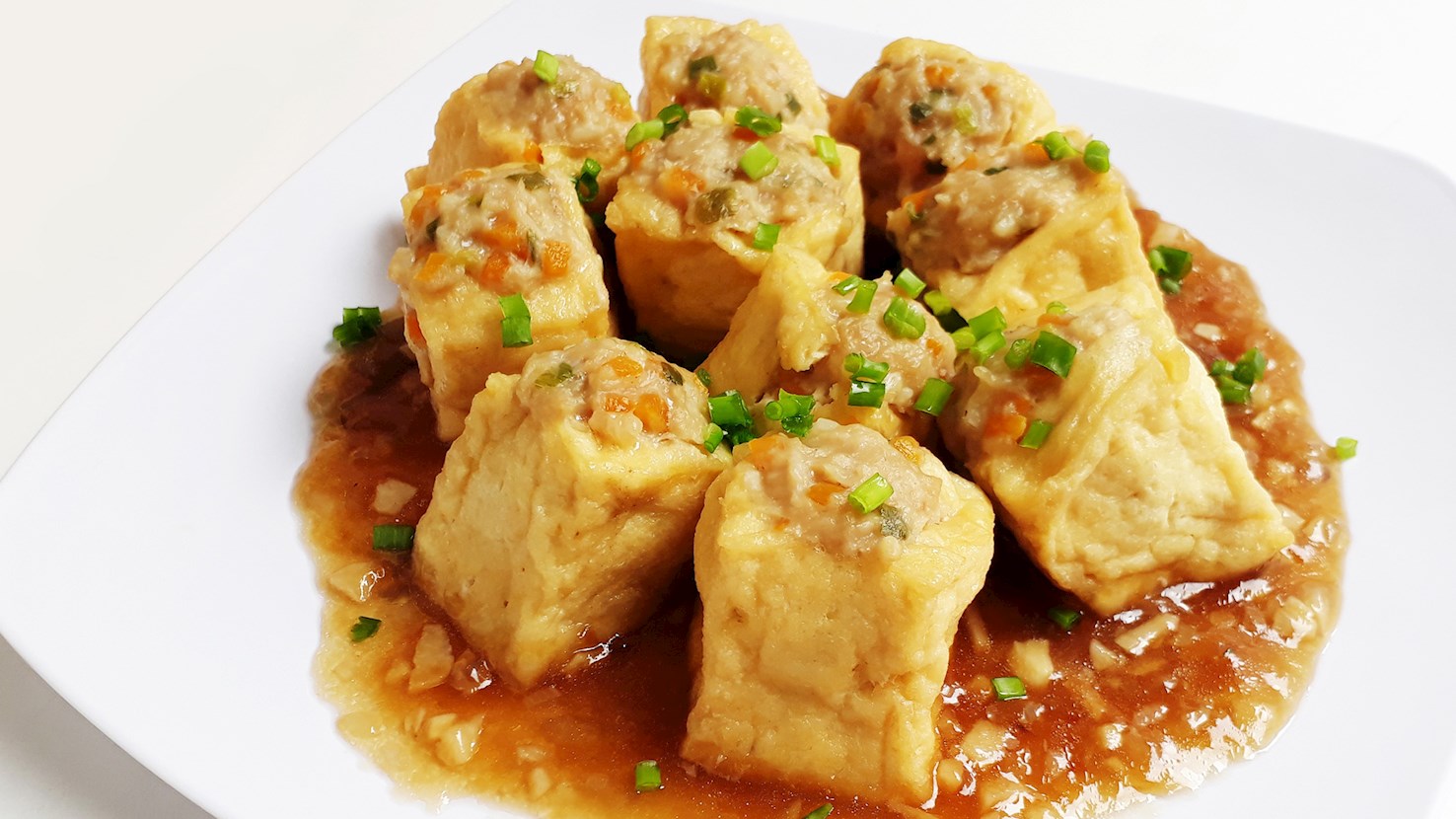
Niàng dòufu is a classic stuffed tofu dish originating from the Hakka communities of southern China, particularly in Guangdong and parts of Fujian, and it is also deeply rooted in the culinary landscapes of Hong Kong, Taiwan, and Southeast Asian regions with significant Hakka populations. The dish consists of blocks or slices of tofu that are hollowed or slit open and filled with a savory mixture of minced meat, often pork or fish paste, before being braised, steamed, or lightly fried. Its name literally means “stuffed tofu,” and it reflects a resourceful approach to cooking that makes use of simple ingredients in a way that transforms them into something rich and satisfying. The origins of niàng dòufu are closely tied to the migration and agricultural lifestyle of the Hakka people, who historically adapted their cooking to available resources. Tofu, being inexpensive, protein-rich, and easy to produce, became a staple in their diet. Over time, it was paired with minced meat or fish to create a more substantial meal, particularly on special occasions or during communal gatherings. The dish gradually spread beyond Hakka communities and became part of the broader Cantonese repertoire, often appearing in household meals and restaurant menus alike. Preparation begins with fresh, firm tofu, which is cut into squares or rectangles and carefully hollowed out or sliced open to make room for the filling. The stuffing is usually a mixture of minced pork, shrimp, or fish paste, often seasoned with soy sauce, ginger, garlic, Shaoxing wine, and white pepper. Some versions incorporate chopped water chestnuts or mushrooms for added texture. Once filled, the tofu pieces are cooked in a variety of ways depending on local custom. They might be pan-fried until golden before being simmered gently in a light broth flavored with soy sauce and stock, or they might be steamed to preserve a delicate texture. In some Cantonese interpretations, they are served in a rich oyster sauce-based gravy, while Hakka-style versions lean toward more rustic, savory broths. Today, niàng dòufu is eaten throughout southern China and in regions influenced by Hakka cuisine, often served as part of a multi-course meal or with steamed rice as a main dish. It appears at family gatherings, festive banquets, and in everyday meals, valued for its balance of protein and softness, and for how well it absorbs surrounding sauces and broths. It pairs well with simple accompaniments like stir-fried greens or pickled vegetables and is often complemented by light soups or soy-based dipping sauces.
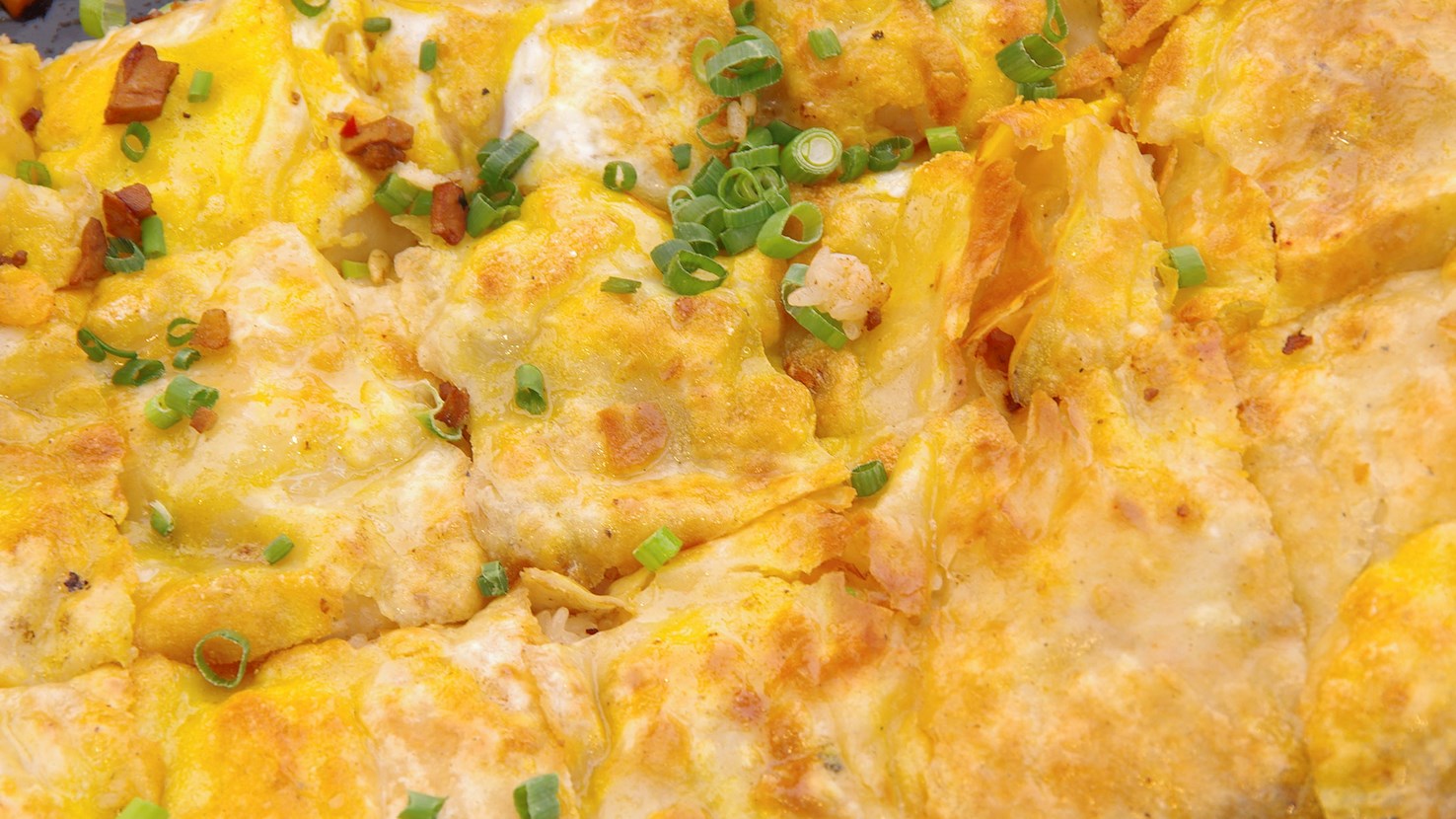
Doupi is a breakfast dish from the city of Wuhan in Hubei province. It is often sold as a street snack. Stuffed between the top and bottom layer is a filling made from rice, and usually no more than three extra ingredients - typically pork, mushrooms, and bamboo shoots. The layers are either tofu skins or pancake lookalikes consisting of mung beans, flour, milk, and eggs. Once assembled, doupi is pan-fried until golden, cut up into small pieces, then sprinkled with chopped scallions and served in small bowls. The invention of the dish in 1931 (which was only an improvement of the pre-existing one) is a credit of a local chef who later opened his own restaurant. Often titled as san xian doupi, this delicious dish is sold in almost every Chinese city.
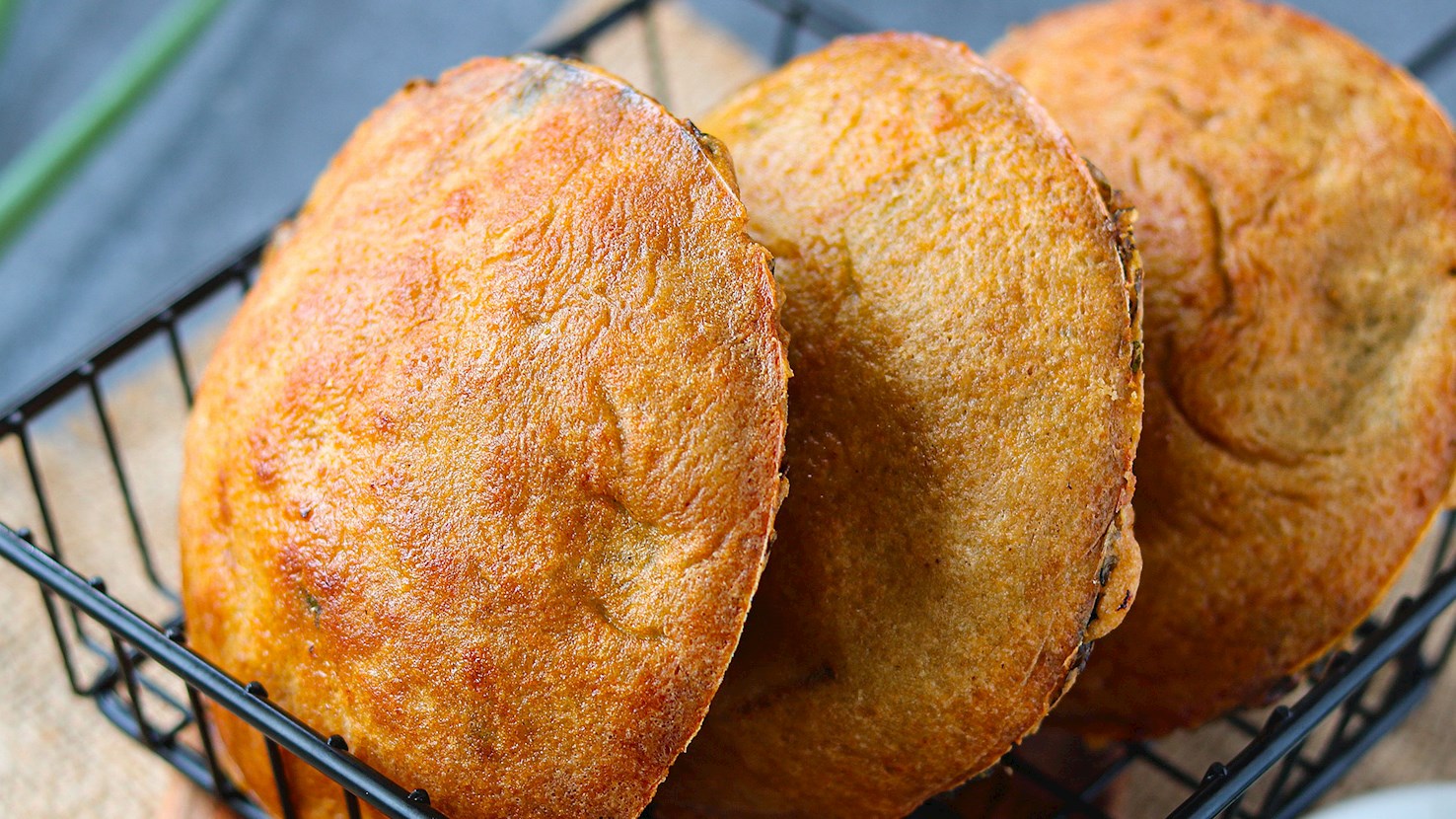
Hǎilì bǐng is a coastal snack from Hainan, especially found in Wenchang and Qionghai, made with hǎilì, a small local shellfish similar to a tiny clam that is common along the island’s shallow shores. It developed in areas where these shellfish were abundant and inexpensive, and cooks began mixing cleaned hǎilì with flour batter to create a compact, quick-cooking food that could be sold in markets and small stalls. The batter is usually made from wheat flour or a blend of wheat and rice flour mixed with water to form a thick paste into which the fresh hǎilì is added along with chopped scallions, garlic, and sometimes finely diced vegetables. The mixture is then ladled onto a flat pan or shallow wok with hot oil and fried until the edges crisp while the center remains firm, producing a round cake that holds the shellfish evenly. Vendors often press the surface lightly with a spatula to keep the cake uniform and flip it once for even browning, serving it immediately while hot. It is commonly eaten as a street snack or a light meal, enjoyed plain or with dipping sauces such as soy sauce with chili or vinegar with minced garlic. It pairs well with light teas, especially jasmine or green tea, and in some markets it is eaten alongside congee or simple stir-fried greens.
TasteAtlas food rankings are based on the ratings of the TasteAtlas audience, with a series of mechanisms that recognize real users and that ignore bot,
nationalist or local patriotic ratings, and give additional value to the ratings of users that the system recognizes as knowledgeable.
For the “Top 11 Central Southern Chinese Street Food” list until June 15, 2026, 290 ratings were recorded, of which 240 were recognized by the system as legitimate.
TasteAtlas Rankings should not be seen as the final global conclusion about food. Their purpose is to promote excellent local foods,
instill pride in traditional dishes, and arouse curiosity about dishes you haven’t tried.