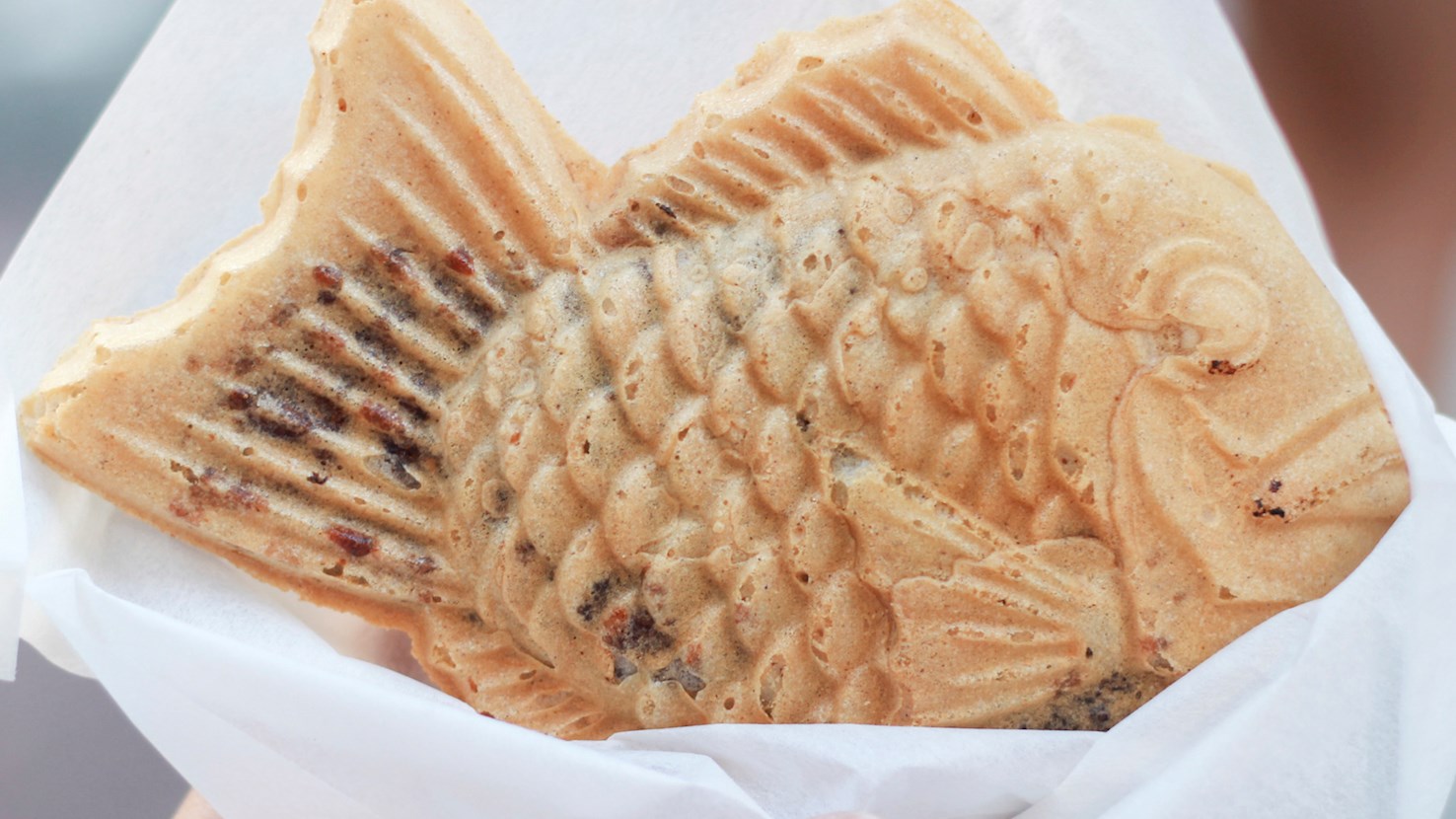
Taiyaki is a Japanese fish-shaped cake that is often consumed as a snack, made from flour and filled with azuki sweet bean paste. It is usually served warm and is often found at most taiyaki stands at any winter festival in Japan. Most people believe that this sweet treat originated in Tokyo during the Meiji era, but taiyaki became extremely popular in 1976 with the emergence of a beloved children's song called Oyoge! Taiyaki-kun (Swim! Taiyaki). It is said that the best taiyaki is characterized by a crisp shell that has been baked to a golden brown color, and although there are many different flavors and varieties of taiyaki today, the basic taiyaki still remains a favorite.
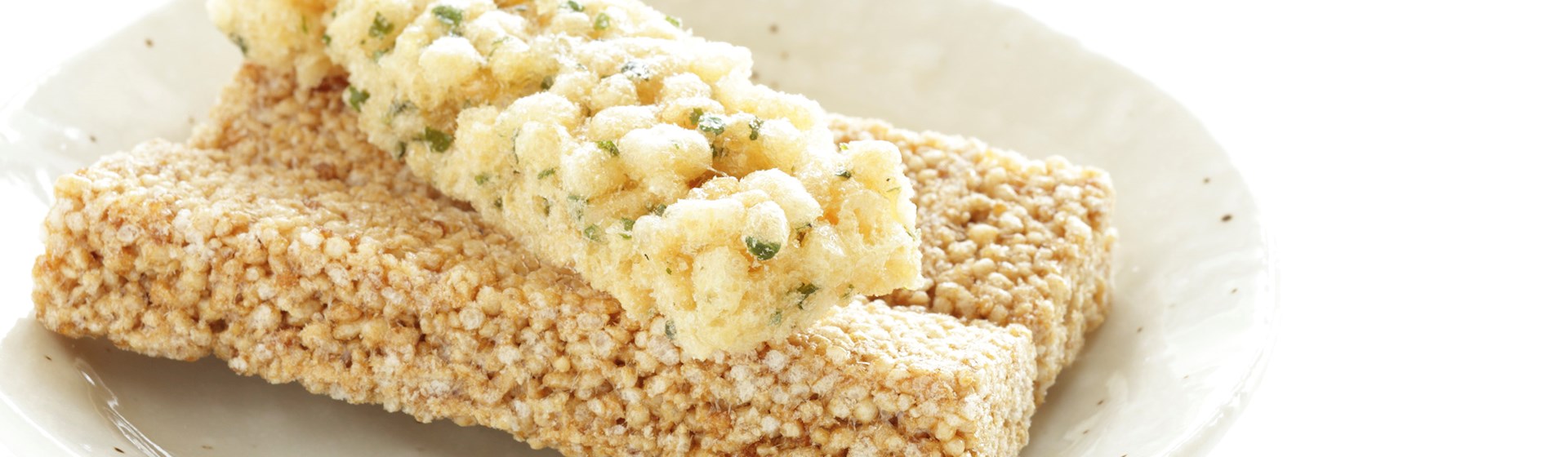
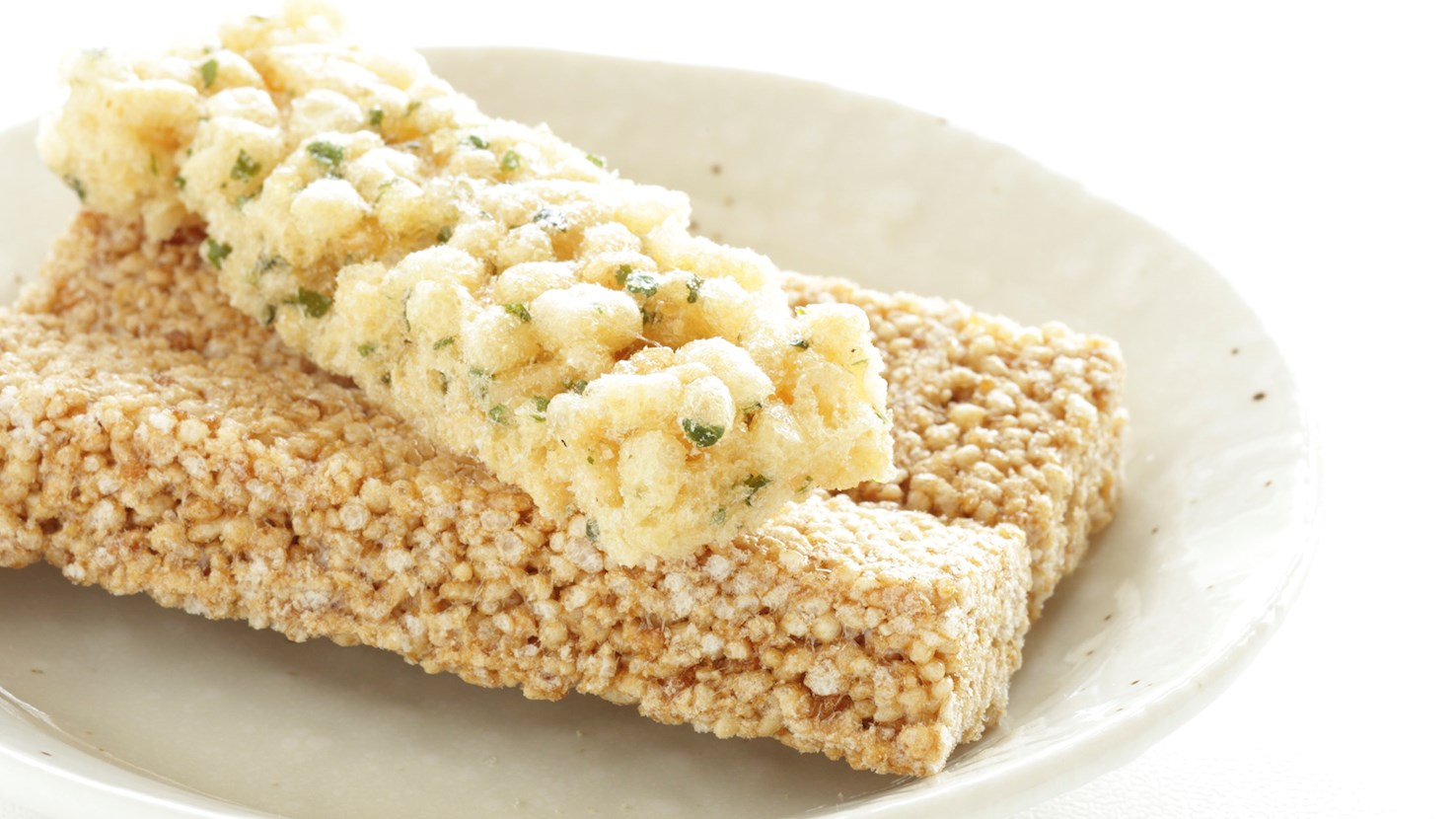
Kaminari-okoshi, often called merely okoshi, is a popular Japanese confectionery, similar to rice crispy treats. The main ingredient in okoshi is expanded rice, created by roasting rice grains until they pop. A mix of sugar and butter or corn syrup is used to hold the rice together, and after the additional ingredients have been added, the mixture is formed or pressed in trays, left to dry, then cut into square shapes. This crispy Japanese treat first appeared during the mid-Edo period in Japan and was primarily sold by street vendors in the vicinity of Buddhist temples in Asakusa, one of the districts in Tokyo. Originally, peanuts were added to enrich okoshi, but modern versions also include other nuts, dried fruit, chocolate, or sesame seeds, along with other exotic and interesting flavors such as matcha green tea or caramel. Most okoshi is nowadays factory-produced, created in an array of unusual flavor and color combinations, and sold in decorative, colorful boxes. In the Asakusa area, there are still traditional street vendors who prepare this brittle snack and demonstrate the entire procedure. Okoshi is still the most famous souvenir of the Asakusa area.
Anko taiyaki is a celebrated Japanese street food staple featuring a warm, fish-shaped outer shell harboring a generous portion of sweetened red bean paste. First appearing in Tokyo during the early twentieth century, this baked treat was ingeniously modeled after the sea bream, a highly esteemed catch tied to good fortune and ceremonial banquets, thereby allowing everyday citizens to playfully consume an otherwise expensive symbol of luck. The preparation involves ladling a simple flour-based batter into custom double-sided metal molds, then adding the traditional filling—a thick, dark paste made by slowly simmering adzuki beans with sugar until they develop a deep, earthy sweetness. The two halves of the apparatus are then pressed together and cooked until the exterior develops a golden-brown, lightly toasted crust. Upon biting into the pastry, the textural interplay between the crisp edges, the soft interior crumb, and the steaming, hearty bean center provides an exceptionally comforting mouthfeel. Regarding varieties, it comes in two distinct versions: tsubu-an taiyaki (chunky paste) and koshi-an taiyaki (smooth paste). Typically purchased from specialized storefronts or lively festival kiosks, this iconic handheld dessert is best enjoyed fresh off the iron, standing as a timeless emblem of Japan's vibrant casual dining culture.
Kasutado taiyaki is a dessert in the form of a fish filled with custard, representing a fascinating intersection between traditional Japanese street vendors and European patisserie. As Japan increasingly embraced Western culinary techniques (yōshoku) throughout the latter half of the 20th century, local bakers began experimenting with ingredients far removed from traditional legumes. By injecting rich, vanilla-scented pastry cream into the familiar fish-shaped molds, they created a contemporary classic that fundamentally changed the landscape of Japanese grab-and-go sweets. It is crucial to understand that Japanese bakery custard does not resemble the loose, hyper-sweetened puddings often found in North American grocery stores. Instead, it is heavily inspired by French crème pâtissière. To withstand the intense heat of the cast-iron baking process without liquefying or breaking, confectioners craft a structurally stable cream. A precise ratio of egg yolks, cornstarch, and cake flour is whisked into scalded milk. This creates a dense, gelatinous mixture that holds its shape even when piping hot. However, the sweetness is surprisingly restrained. The primary flavor driver is high-quality vanilla extract or a whole vanilla bean, which provides a floral, aromatic depth that pairs naturally with the dough's toasted notes. When working with dairy-based, moisture-rich centers, bakers must alter their approach to the outer shell. A brittle, water-based crust—which works perfectly for dry, dense bean pastes—often becomes unpleasantly soggy when filled with warm cream. To combat this, kasutado taiyaki is almost exclusively prepared using a fluffy, aerated batter. By incorporating whole eggs, milk, and a higher proportion of baking powder, the dough yields a sponge-like crumb. This thicker, pancake-style boundary acts as an insulating barrier, soaking up just enough moisture from the custard to become beautifully tender without collapsing. The introduction of this Western-style filling was a strategic move of the Japanese baking industry. It immediately captured the attention of children and younger generations who were growing up with a preference for dairy and chocolate over traditional wagashi (Japanese sweets). Furthermore, it serves as the perfect gateway dessert for international tourists who might be hesitant to try sweetened beans. Today, it stands shoulder-to-shoulder with the original flavors, completely cemented as a permanent fixture at festivals, train stations, and shopping arcades across the country.
Shiro-an taiyaki is a popular variation of Japan's taiyaki that replaces the standard anko paste with a smooth, sweet white bean paste. As commercial bakeries and street vendors faced increasing competition, they began experimenting with new fillings to attract modern customers. By bringing the aristocratic shiro-an into the street-food scene, bakers offered a lighter, smoother alternative for people who found traditional red beans too heavy or earthy. To make this specific filling, confectioners use white navy beans or butter beans (often called tebōmame), boiling them until completely soft before mashing them with sugar. The resulting paste has a very mild, clean sweetness, lacking the strong, earthy bite of traditional red adzuki beans. The casing is traditionally made from a simple, pourable batter of wheat flour, baking powder, and water or milk. When poured into hot, heavy iron molds, this mixture bakes into a crisp, golden-brown shell that provides a satisfying textural contrast to the soft filling inside. Because this white filling has such a neutral taste and a pale color, it is incredibly versatile. Bakers frequently use it as a base ingredient, mixing in colorful additions like green matcha powder, pink cherry blossoms, or yellow yuzu zest to create bright, seasonal flavors. Even when eaten plain, this version of the treat provides a light, melt-in-your-mouth texture that is perfect for anyone who finds standard red bean pastries too heavy or bitter.
Koshi-an taiyaki is a sophisticated variation of Japan’s beloved fish-shaped griddle cake, distinguished entirely by its incredibly smooth, velvety red bean center. Unlike its rustic counterpart, which leaves the legumes whole and chunky, this pastry relies on a highly processed filling that melts effortlessly in the mouth. To create this luxurious core, confectioners boil adzuki beans until they completely disintegrate, then press the softened mixture through a micro-fine sieve. This labor-intensive straining removes every trace of the fibrous outer skins and hard seed fragments, yielding a pure, homogenized paste that is then slowly simmered with sugar. Because the earthy, slightly bitter hulls are discarded, the resulting purée delivers a concentrated, elegant sweetness reminiscent of high-end, ceremonial Japanese sweets. When encased in the warm, golden-brown batter of the sea bream-shaped mold, the heavy, jam-like smooth paste flows flawlessly into the narrowest crevices of the pastry. In traditional Japanese confectionery, removing the bean skins was historically a technique reserved for high-end, elegant desserts. Putting this refined, buttery paste inside an everyday street snack gives koshi-an taiyaki a slightly more sophisticated feel than the chunky, earthier whole-bean versions.
Tsubu-an taiyaki is a quintessential Japanese street pastry, instantly recognized by its iconic sea bream shape and rich, rustic, chunky sweet red bean paste filling. The name itself is a literal description of the treat: "tai" refers to the red sea bream—a fish symbolizing good fortune and celebration due to its linguistic connection to the Japanese word medetai (auspicious)—while "yaki" means baked, and "tsubu-an" specifies the coarse, unmashed style of the adzuki bean filling. Unlike the smooth koshi-an variety, tsubu-an deliberately retains the bean skins and whole fragments, offering a deeply earthy flavor and a satisfying textural contrast that balances the cooked sugar. The pastry's exterior is crafted from a simple batter of wheat flour, baking powder, and water or milk, which is poured into specialized heavy iron molds. To make this specific filling, adzuki (red mung) beans are boiled with sugar until they are soft and jam-like. However, unlike smooth paste (koshi-an), the beans in tsubu-an are not passed through a fine sieve. The skins and whole bean fragments are deliberately left intact. This rustic preparation provides a distinct, satisfying textural contrast against the soft interior of the cake dough. The skins also retain a high amount of the bean's natural, earthy flavor, which balances the heavy sweetness of the added sugar. While modern vendors often use large, multi-fish griddles (yōshoku-yaki) to produce cakes with a soft, uniform, and cake-like crust, traditional artisan bakers still employ individual single-fish molds (icchō-yaki) over an intense open flame. This labor-intensive, single-bake method creates a highly prized usukawa (thin skin) style, resulting in an exceptionally crisp, slightly charred shell packed with steaming-hot bean paste.
TasteAtlas food rankings are based on the ratings of the TasteAtlas audience, with a series of mechanisms that recognize real users and that ignore bot,
nationalist or local patriotic ratings, and give additional value to the ratings of users that the system recognizes as knowledgeable.
For the “Top 7 Japanese Street Food Sweets” list until May 16, 2026, 253 ratings were recorded, of which 223 were recognized by the system as legitimate.
TasteAtlas Rankings should not be seen as the final global conclusion about food. Their purpose is to promote excellent local foods,
instill pride in traditional dishes, and arouse curiosity about dishes you haven’t tried.