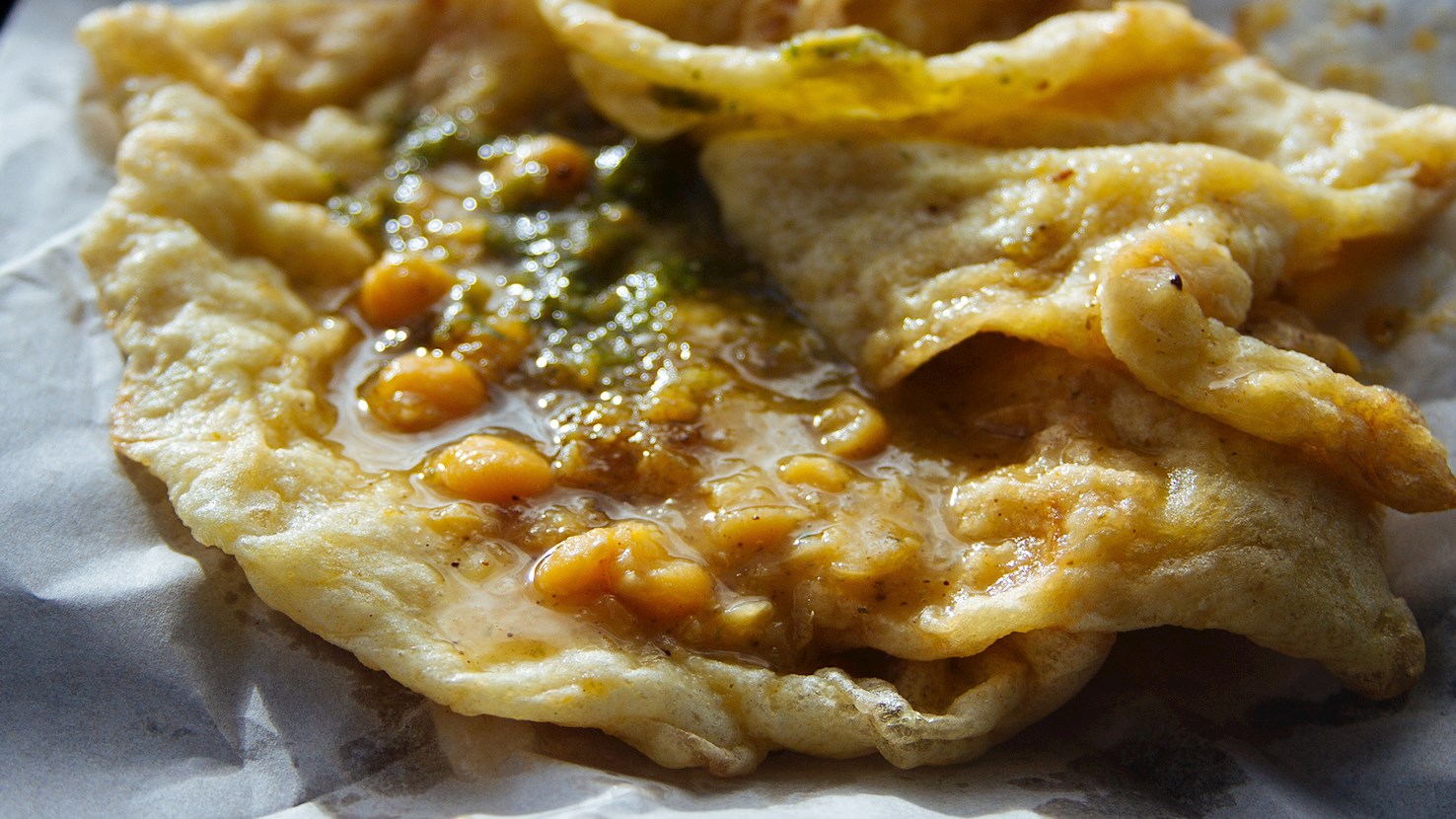
Doubles is a staple of Trini street food, a sandwich that consists of two fried flatbreads (bara) filled with curried chickpeas (curry channa). It is believed that doubles were invented in 1936 in Princes Town, and nowadays they are consumed for breakfast or as a late-night snack. The dish can be additionally enriched with ingredients such as pepper sauce, tamarind sauce, or green mango pickle with amchar masala, known as kuchela. In Trinidad and Tobago, doubles are typically sold wrapped in paper.
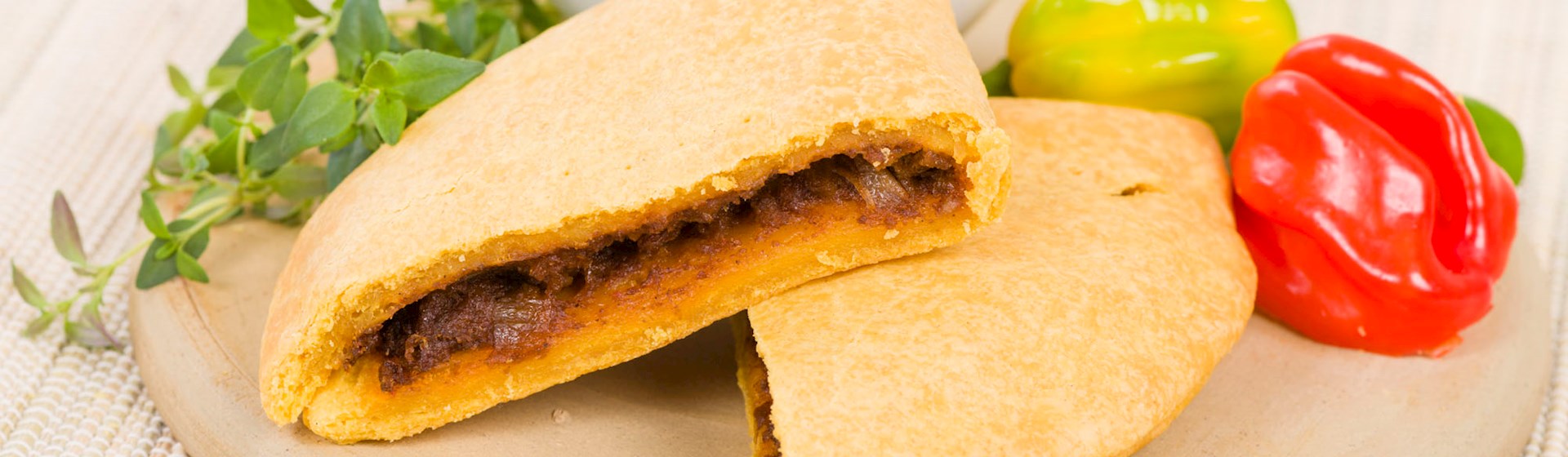
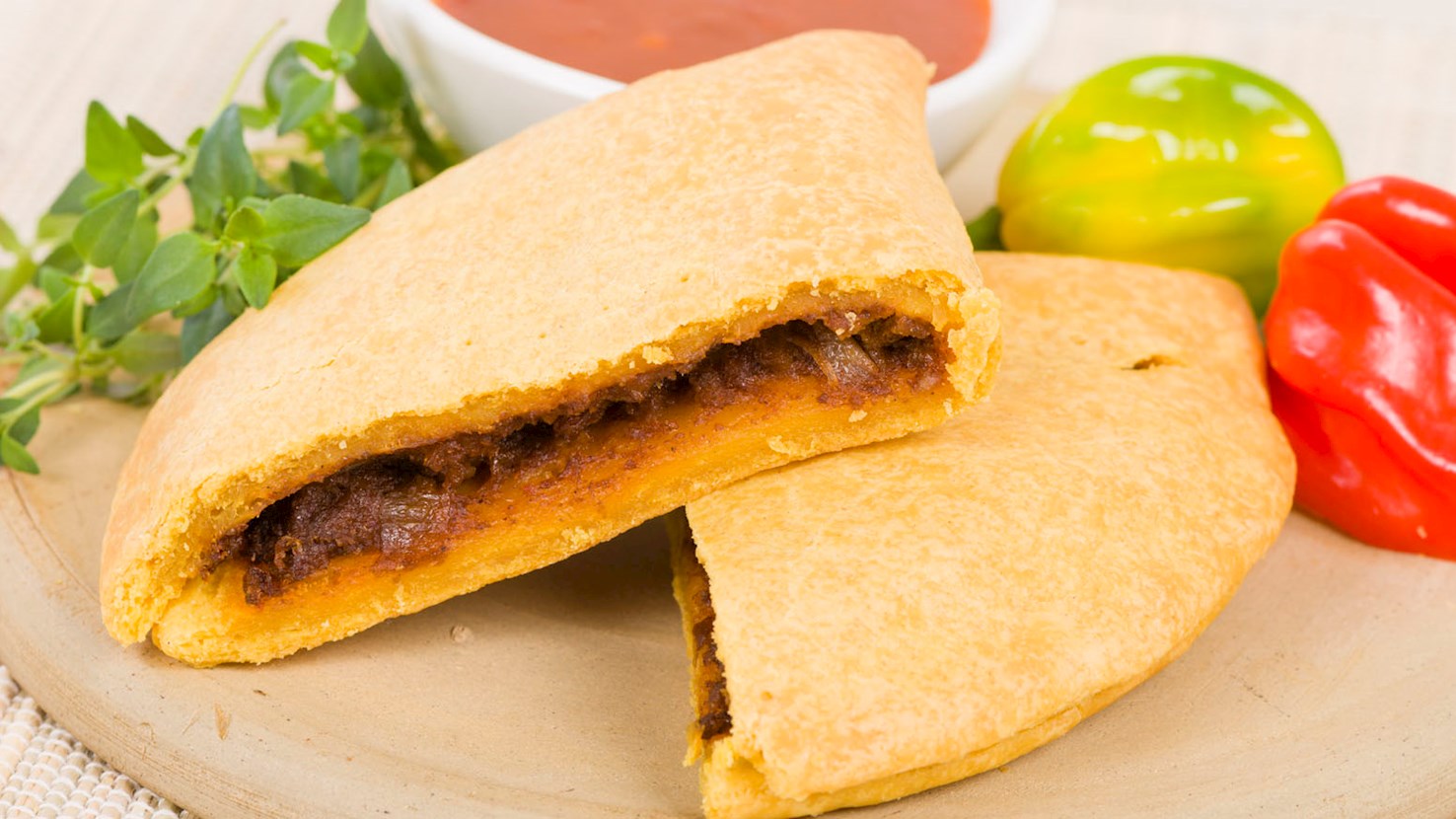
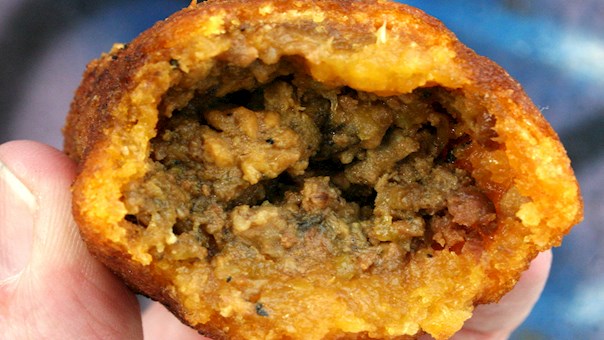
A Jamaican patty is a baked, handheld pastry filled with seasoned meat, vegetables, or seafood and enclosed in a flaky, yellow-tinted crust. It is one of the most recognizable foods of Jamaica and is widely eaten across the Caribbean and in Jamaican communities abroad. The distinct yellow color of the crust comes from turmeric or curry powder, and the filling is defined by a blend of Jamaican spices, including allspice, thyme, Scotch bonnet pepper, and scallion. Patties are commonly sold by bakeries, street vendors, and small shops, where they serve as an everyday meal or snack. The development of the Jamaican patty reflects several culinary influences that converged on the island. British settlers introduced meat pies, which inspired the concept of a seasoned filling wrapped in pastry. African cooking practices contributed techniques for seasoning and slow-cooking meat with spices and herbs. Indian indentured laborers brought curry powder and turmeric, which influenced both the color and flavor profile of the crust and fillings. Ingredients such as Scotch bonnet pepper, thyme, and allspice reflect local Jamaican agriculture and spice preferences. These elements gradually blended over the nineteenth and early twentieth centuries, and the patty emerged as a standardized street food item in urban areas such as Kingston, where bakeries refined the crust and expanded the variety of fillings. Preparation begins with making the dough, which combines flour, cold fat such as butter or shortening, turmeric or curry powder for color, salt, and water. The fat is cut into the flour to create a flaky texture similar to puff or shortcrust pastry. The dough is chilled, rolled out, and cut into circles or half-moon shapes. The filling typically consists of ground beef cooked with onion, garlic, thyme, Scotch bonnet, allspice, and breadcrumbs or flour to bind the mixture. Other fillings may include chicken, saltfish, shrimp, callaloo, vegetable mixes, or cheese. The filling is placed onto a piece of rolled dough, folded over, and sealed by crimping or pressing the edges. The patties are then baked until the exterior becomes crisp and golden. Jamaican patties are eaten throughout Jamaica in homes, schools, bakeries, and street stalls. They are widely consumed as a quick lunch or snack and are often served inside coco bread to make a more filling sandwich. Outside Jamaica, they are popular in Trinidad, Barbados, Guyana, Canada, the United Kingdom, and the United States, where Jamaican bakeries and restaurants prepare them with both traditional and expanded fillings. Common beverage pairings include ting, ginger beer, kola champagne soda, sorrel drink, fruit punches, and cold beer. The patty remains one of Jamaica’s most accessible and widely exported foods, valued for its portability, distinct flavor, and consistent preparation style.
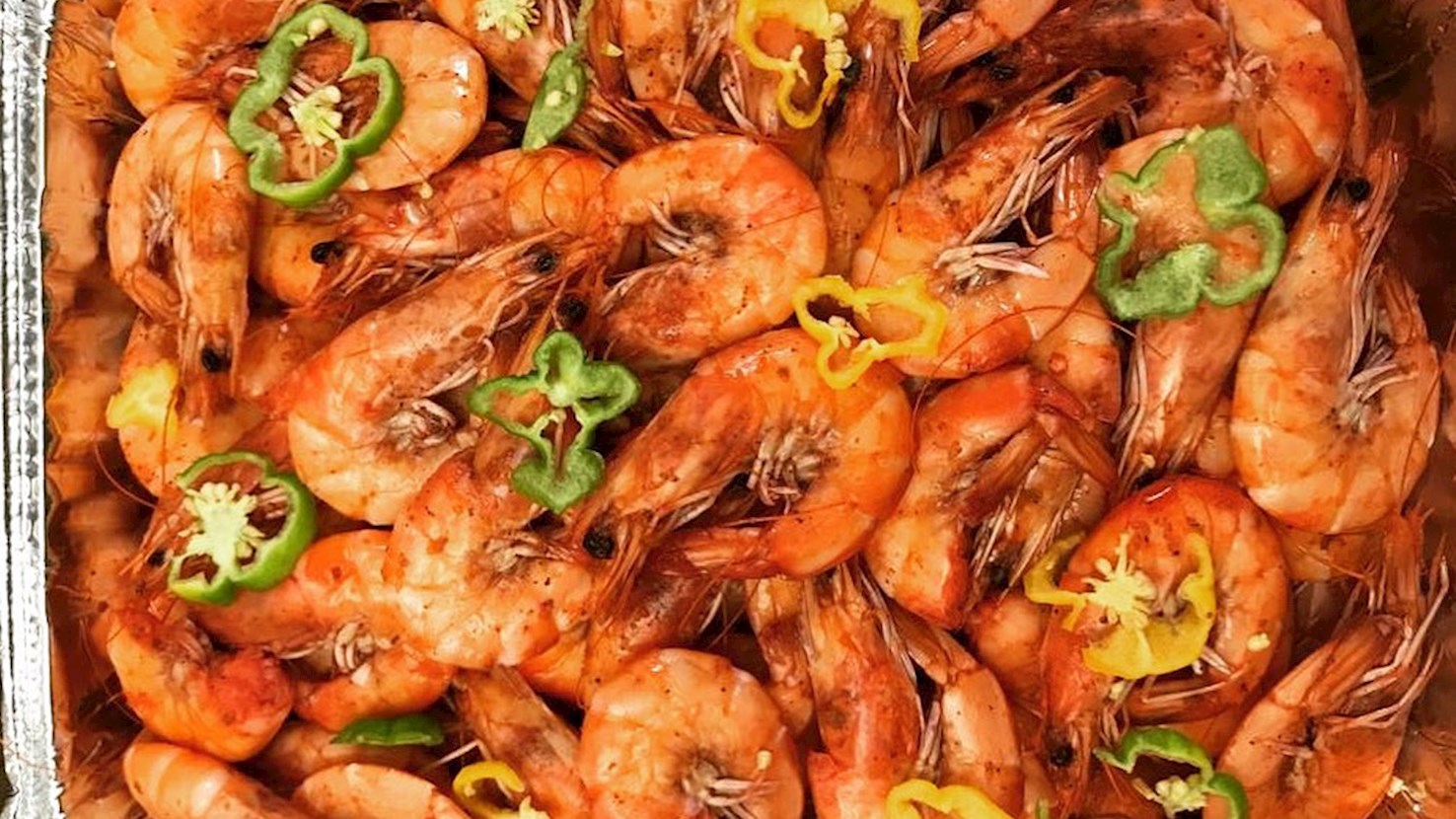
Peppered shrimps is a Jamaican dish made by cooking whole freshwater or seawater shrimp with Scotch bonnet pepper, garlic, thyme, salt, and a small amount of liquid until the shrimp are coated in a concentrated, spicy mixture. The dish is sold throughout Jamaica, especially in rural parishes where freshwater shrimp are harvested from rivers, and in coastal towns where vendors prepare it as a portable snack. It is strongly connected to areas such as Middle Quarters in St. Elizabeth, where roadside stands package peppered shrimps in small bags for travelers. The preparation grew naturally from the availability of shrimp in rivers and the widespread use of Scotch bonnet pepper and thyme in Jamaican cooking. As roadside commerce increased during the twentieth century, cooks developed a method that allowed shrimp to be seasoned heavily, cooked quickly, and stored for short periods without losing their structure or flavor, making the dish suitable for selling in small quantities. Preparation begins with rinsing the shrimp, which are usually cooked with the shell and head intact. They are placed in a pot with Scotch bonnet pepper, garlic, thyme, salt, and sometimes pimento berries. A small amount of water is added to help disperse the seasoning, and the shrimp are cooked over medium heat until the liquid reduces to a thick, spicy coating. Some cooks add butter or oil to help cling the seasonings to the shells, while others keep the method entirely water-based. The shrimp turn bright red as they cook, and the seasoning mixture becomes concentrated. Because the dish relies heavily on pepper heat rather than lengthy stewing, the cooking time is short, and the shrimp remain firm. Peppered shrimps are eaten across Jamaica as a snack, roadside purchase, or informal appetizer. They are often sold in small plastic bags or paper containers, allowing people to eat them while traveling or walking. At home, the dish may be served with fried dumplings, bammy, or festival, though it is most commonly eaten on its own due to its strong flavor. Beverage pairings include cold lager, ginger beer, limeade, sorrel, or sweetened iced tea, all of which help balance the spice level. In Jamaican restaurants abroad, peppered shrimps sometimes appear as a starter or bar snack, maintaining the emphasis on heat, minimal sauce, and the distinctive combination of thyme and Scotch bonnet pepper.
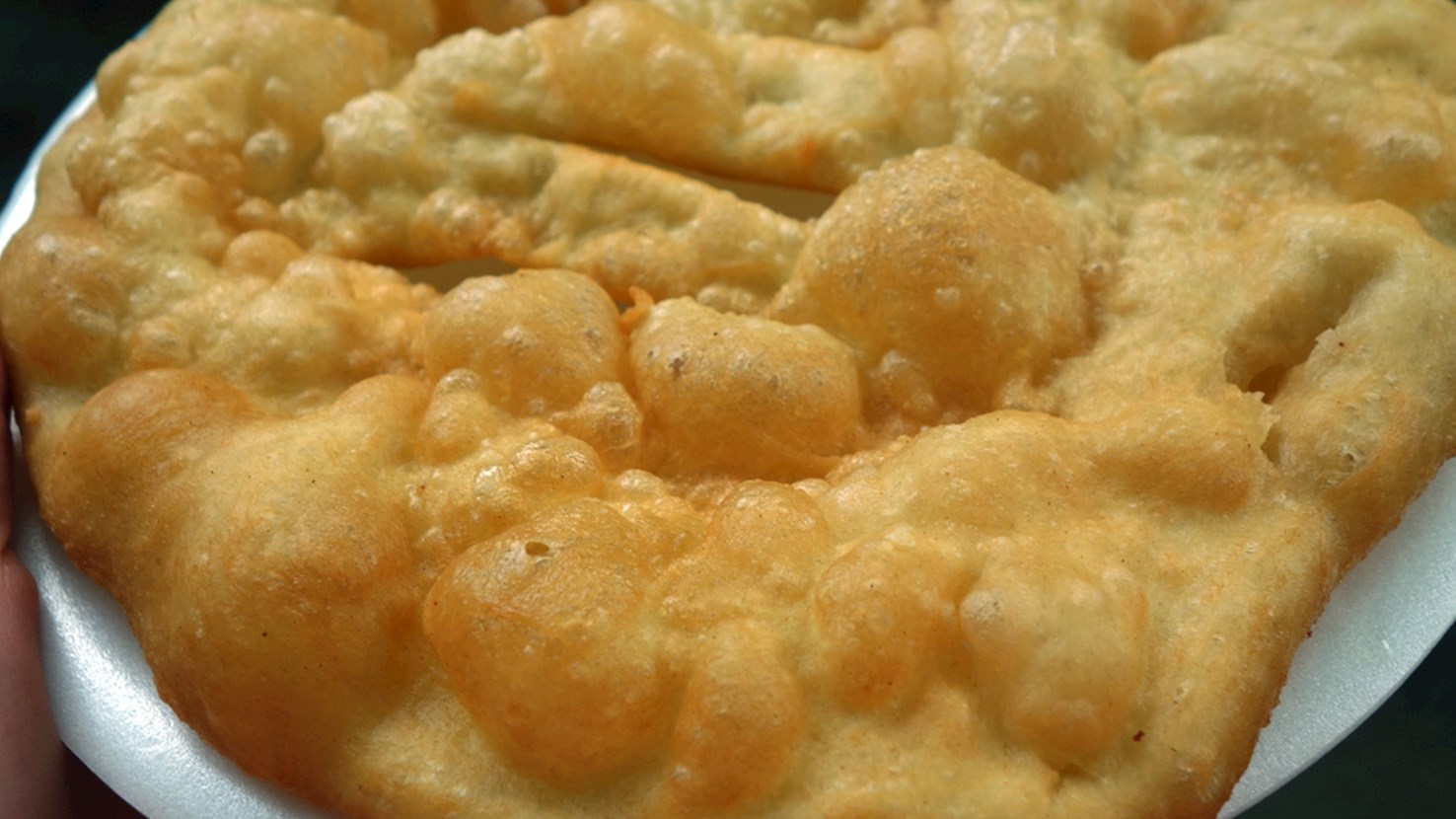
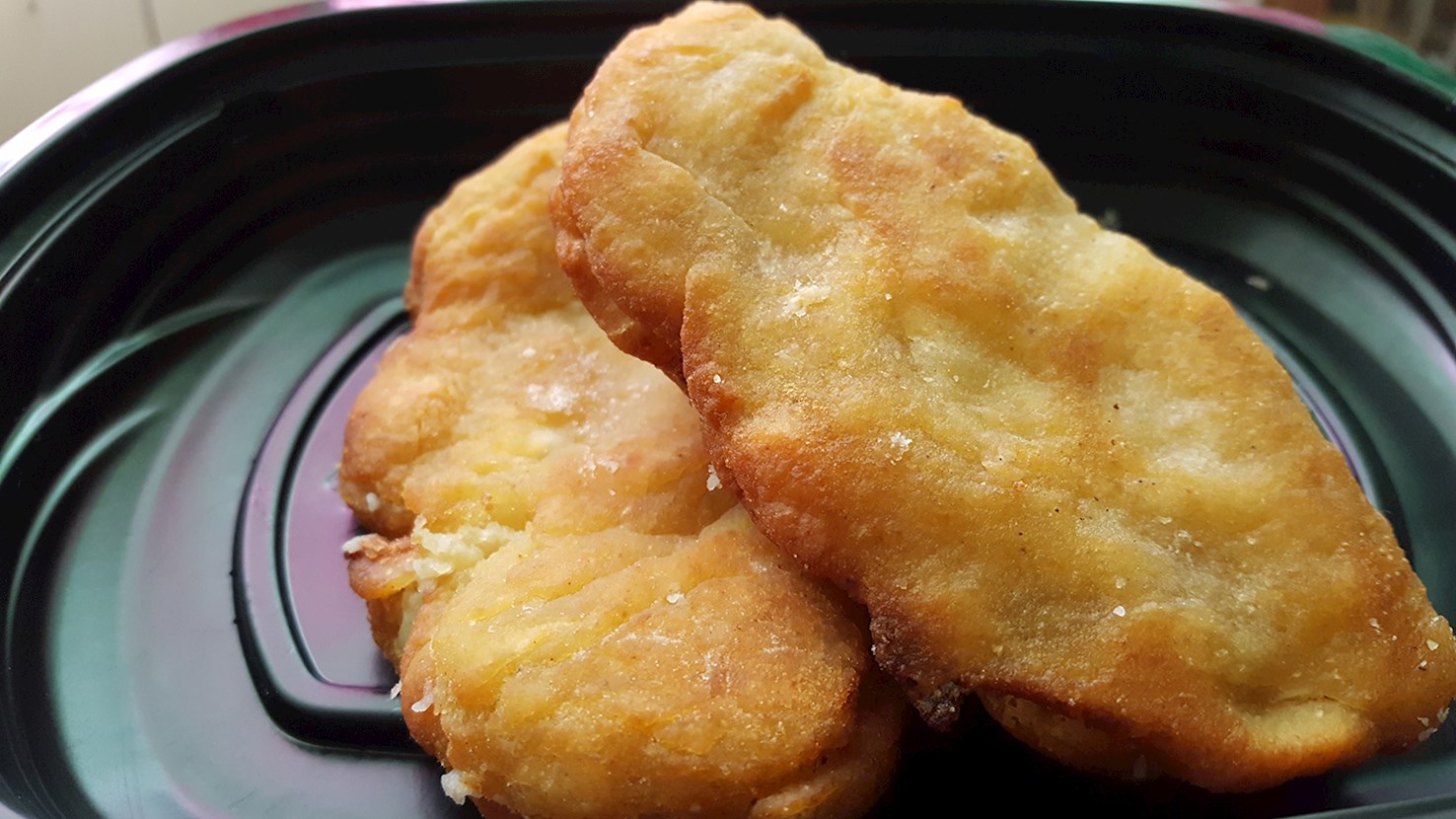
Yaniqueque or yanikeke is a Dominican fried bread with a crispy and crunchy texture. It is made with flour, salt, melted butter, and baking powder. The dough is rolled into thin circles with crimped edges, and it is then fried in hot oil until golden brown. Yaniqueques are typically placed on paper towels in order to let out excess oil. They can be found throughout the country, on numerous streets and beaches. It is believed that this is a variation on the johnny cakes, and the dish was brought to the country in the 1900s by Afro-Caribbean immigrants. Although yaniqueques are usually served with ketchup, they can also be sprinkled with salt, cinnamon, or sugar.
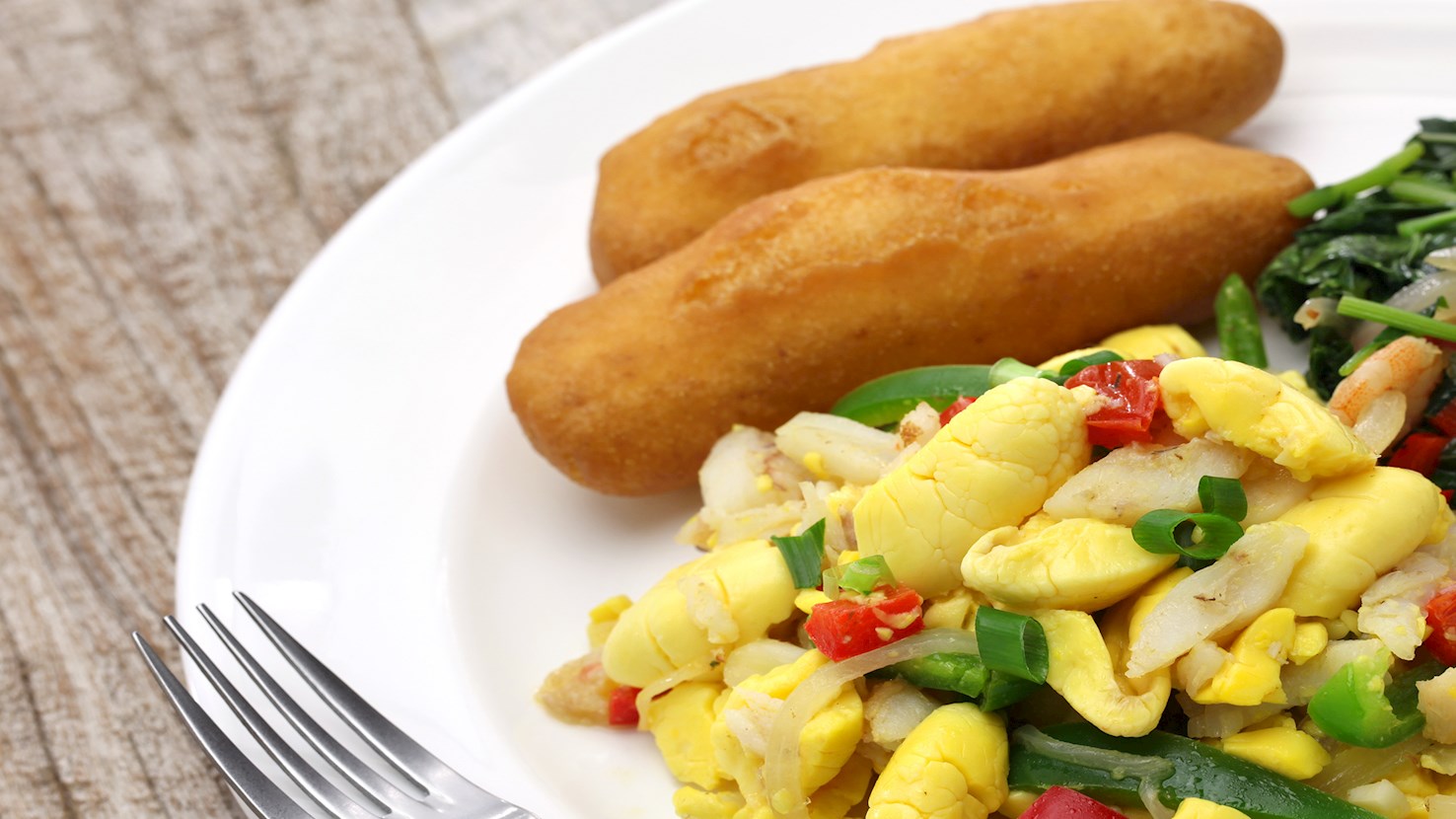
Festival is a Jamaican fried dumpling made from a dough of flour, cornmeal, sugar, salt, and water, shaped into elongated pieces and fried until golden and crisp on the outside and soft inside. It is commonly served alongside fried fish, escovitch fish, jerk meats, and other street-food dishes in Jamaica. The combination of cornmeal and a touch of sweetness distinguishes festival from plain fried dumplings, making it a staple at cookshops, roadside stalls, and beachside fish shacks throughout the island. Its development can be traced to the evolution of Jamaican fried doughs in the twentieth century, when cooks began incorporating cornmeal and sugar into basic flour dumplings. Fried dumplings have long been part of Jamaican cooking, but festival emerged as a sweeter variation designed to pair well with spicy foods such as jerk chicken and hot pepper sauces. The inclusion of cornmeal may reflect influences from earlier Caribbean and African preparations using ground maize, while the sweetened dough reflects local preferences for balancing spicy or acidic dishes with mild, slightly sweet sides. By the mid-century period, festival had become a recognized item at jerk stands and seaside restaurants, and it spread widely as Jamaican street food culture grew. Preparation begins by mixing flour, cornmeal, sugar, and a small amount of salt in a bowl. Baking powder is added to help the dough rise slightly. Water or milk is added gradually to form a soft, pliable dough, which is then kneaded briefly until smooth. The dough is divided and shaped into long, slightly tapered pieces that resemble small torpedoes. These pieces are fried in hot oil until they puff slightly and turn a uniform golden brown. The finished festival has a crisp exterior and a tender, slightly sweet interior with a mild corn flavor. Festival is eaten throughout Jamaica, especially with fried escovitch fish, steamed fish, peppered shrimp, jerk chicken, jerk pork, or roast fish. It also appears at parties, family gatherings, and beachside eateries where seafood is cooked to order. It pairs well with drinks such as ginger beer, ting, coconut water, cold lager, rum punch, or sorrel drink, all of which complement the light sweetness and fried texture of the dish.
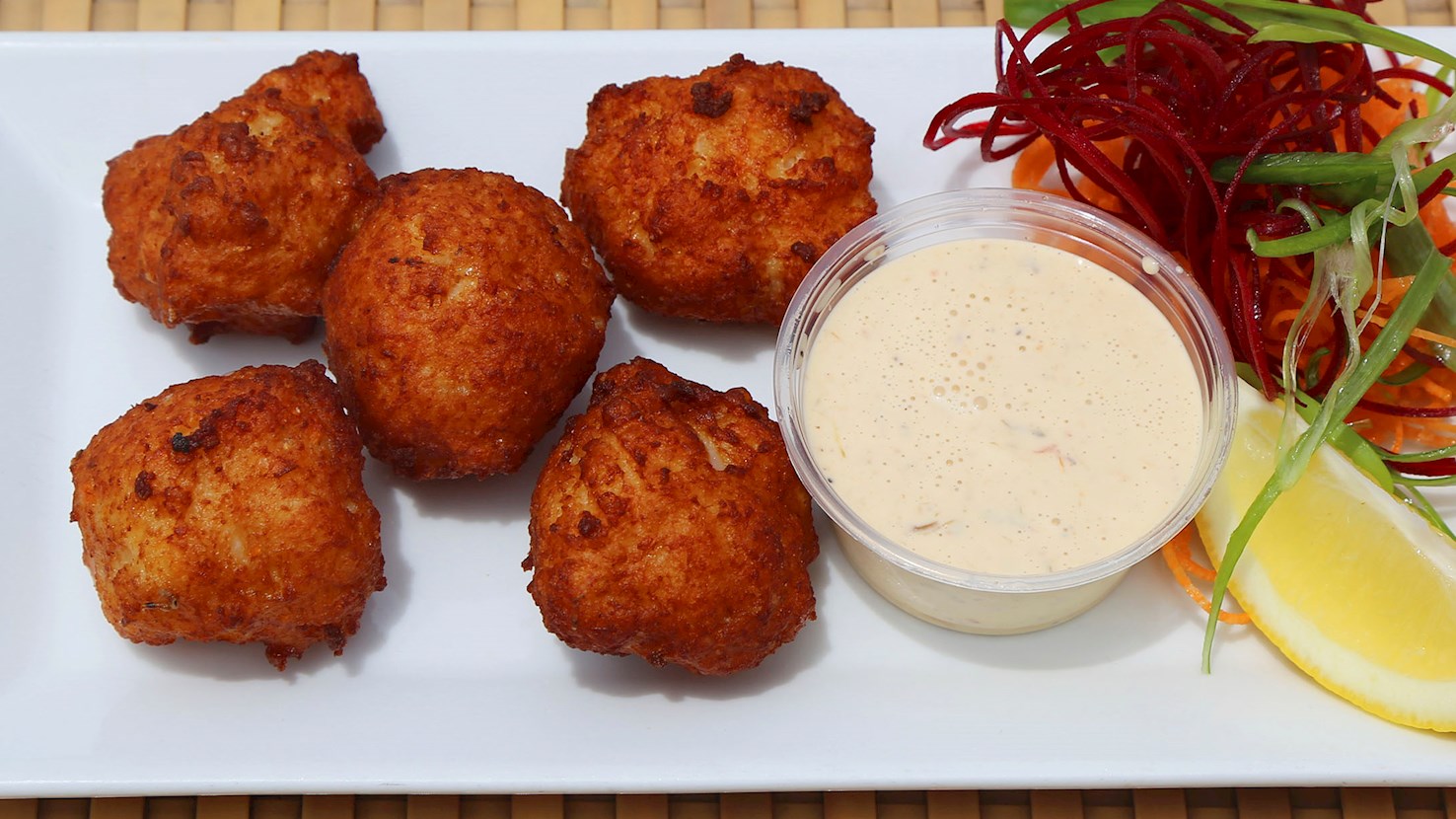
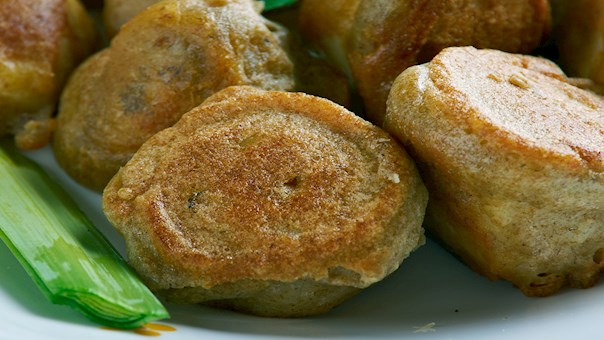
A delicacy of Caribbean and Creole cuisine, conch fritters are the national dish of sunny Bahamas. It consists of pounded, tenderized conch meat that is fried in batter with tomatoes, onions, celery, bell peppers, and various, often peppery seasonings. Conch meat is combined with vegetables because it takes a lot of effort to obtain a small amount of meat, and it's a way of making every bit of meat count. Usually tough and sturdy, conch meat greatly benefits from being cooked in tiny, diced pieces. Due to the popularity of conch in the Caribbean, one can easily find the dish throughout the islands, with many of the cooks adding their own spices to the mix in order to keep their menu unique. Therefore, it's best to try it at a few restaurants to compare different textures and flavors of the fritters. Fried until golden brown and crispy, this appetizer is best accompanied by a Bahamian-style dipping sauce consisting of lime juice, mayonnaise, ketchup, hot sauce, salt, and pepper.
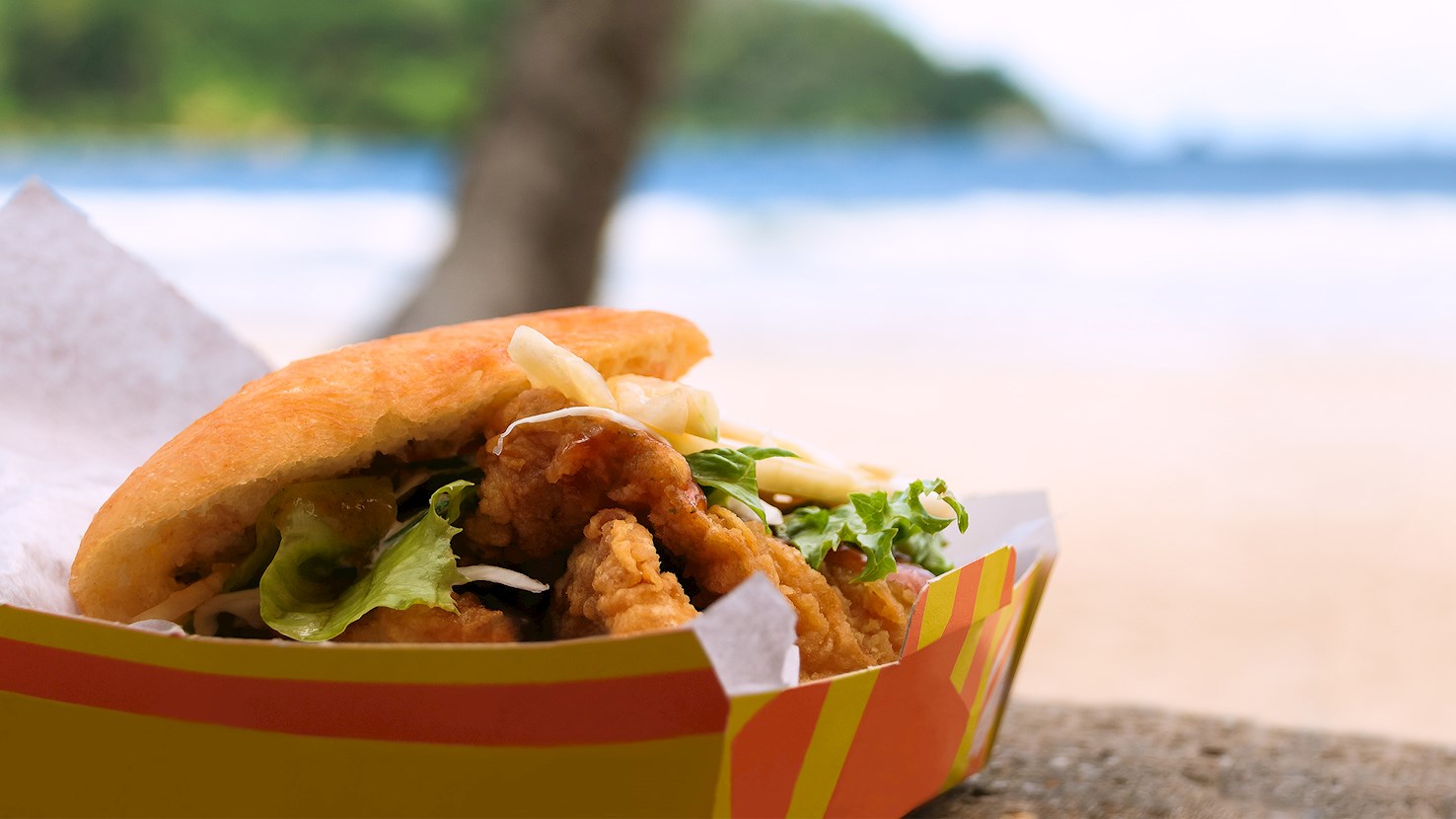
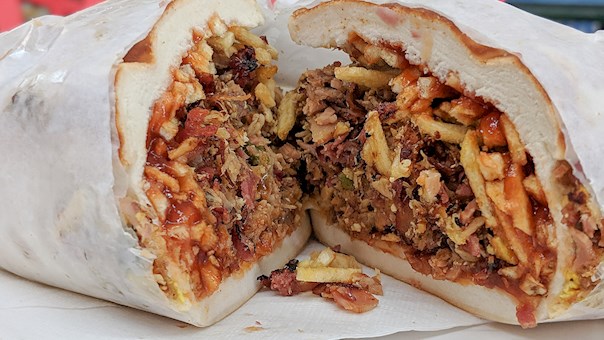
Bake and shark is a unique Trini street food item that is especially popular at concerts, festivals, and celebrations. It consists of marinated or seasoned pieces of shark meat, sauces, chutneys, and vegetables in a flatbread known as bake. The dish is often associated with Maracas beach which is filled with numerous bake and shark street stalls.
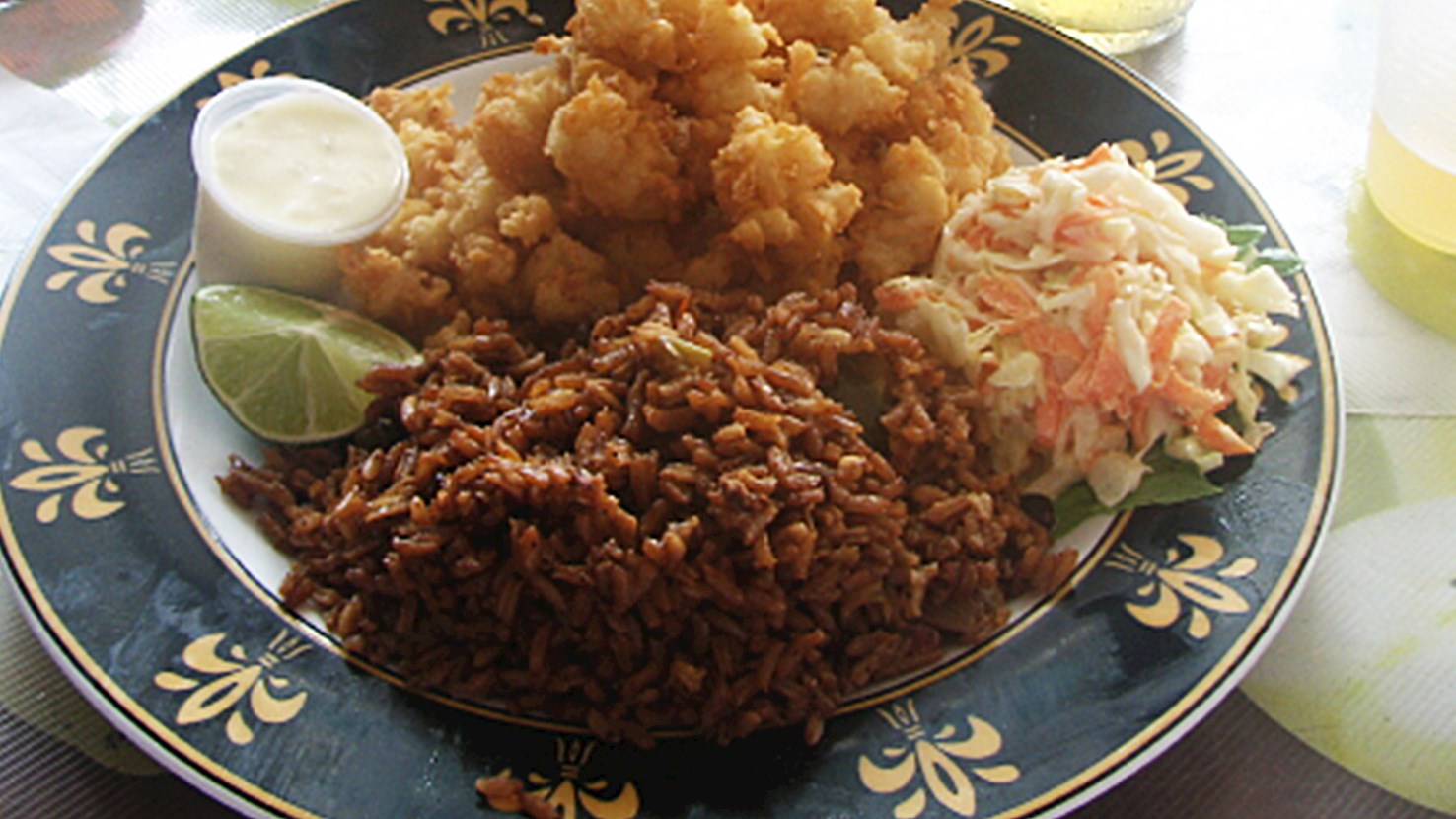
Crack Conch with peas and rice is the national dish of the Bahamas. Conch is a large sea snail that has been traditionally eaten in the region since before the arrival of Christopher Columbus. The natives did not only eat the mollusc, but used them to make tools, musical instruments, and ceremonial artifacts. The conch lies on the bottom of the seabed in big, fluted shells with pink interiors. It may be eaten raw or cooked, but in this particular dish, it is deep-fried. The finished meal looks similar to fried calamari, but it is much tastier, as the locals say. Sea snails are regarded as endangered species, which has led to an increase in their price, but it remains a very popular and loved dish in the Bahamas. It is the only type of seafood that makes use of the special Bajan seasonings - a rub of garlic, pepper, thyme, onion, and marjoram. The rub is then mixed with a batter consisting of flour, beaten eggs, and water. Conch needs to be washed in water and lime juice, beaten with a mallet in order to tenderize the meat, then cut into small pieces and coated in the batter mix. Deep-fried until it develops a deep golden brown color, the dish is accompanied by Bahamian peas and rice, made by frying bacon and mixing it with peas, onions, tomatoes, thyme, salt, pepper, and tender rice. One can try this unique dish anywhere in the Bahamas, from the luxurious hotels to the seaside street food vendors.
These Haitian delicacies consist of puff pastry that is shaped into small squares and filled with various types of meat such as beef, chicken, pork, or even fish. They are regularly served at numerous special events and celebrations, but Haitian patties can also be paired with rice and beans as a filling meal. Although they can be made at home, these pastries can also be bought on Haitian streets where food stall vendors sell them freshly prepared.
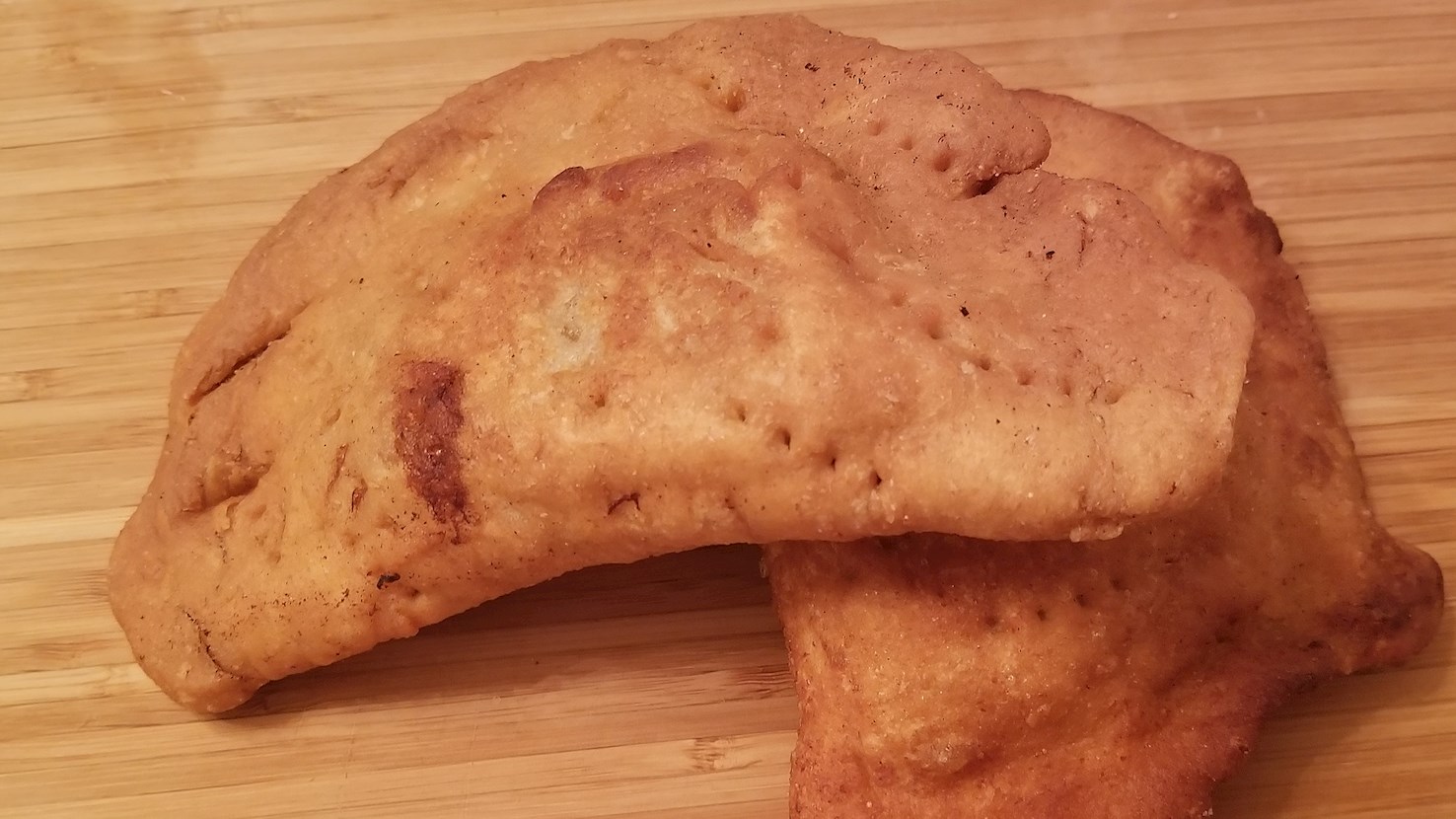
Aloo pie is a Trini dish consisting of fried dough that is filled with mashed potatoes which are flavored with onions, garlic, cumin, and bandhania. It can often be bought at food stands which sell another Trini favorite known as doubles. These fried pies are said to taste the best when paired with chutneys on the side.
TasteAtlas food rankings are based on the ratings of the TasteAtlas audience, with a series of mechanisms that recognize real users and that ignore bot,
nationalist or local patriotic ratings, and give additional value to the ratings of users that the system recognizes as knowledgeable.
TasteAtlas Rankings should not be seen as the final global conclusion about food. Their purpose is to promote excellent local foods,
instill pride in traditional dishes, and arouse curiosity about dishes you haven’t tried.








What People Say