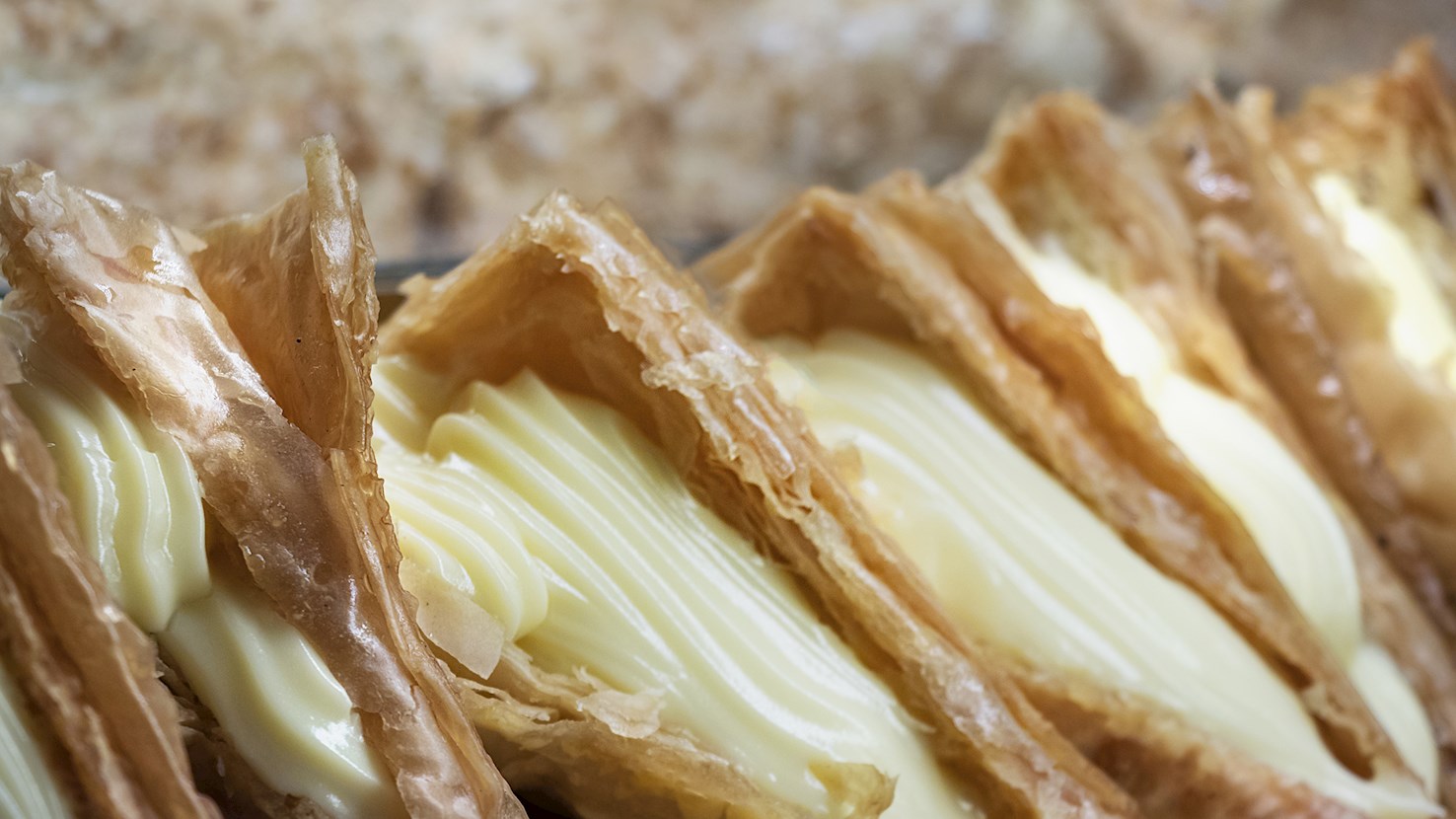
Trigona panoramatos is a traditional sweet pastry originating from the outskirts of Thessaloniki. These crispy and buttery triangular (cone-shaped) phyllo pastries are typically soaked in syrup and filled with creamy custard. The custard is usually made with a combination of egg yolks, flour, butter, milk, sugar, vanilla, and heavy cream. The phyllo triangles are baked until golden brown, dipped in cold syrup consisting of sugar and water, and then filled with the chilled custard. Trigona is often garnished with chopped nuts before consumption.
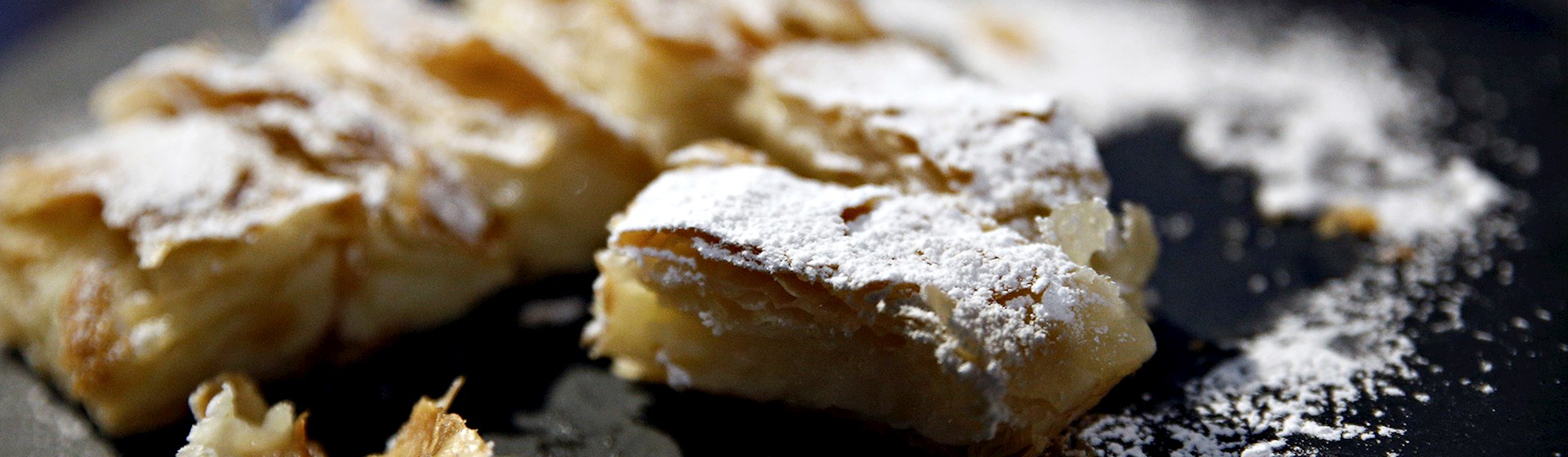
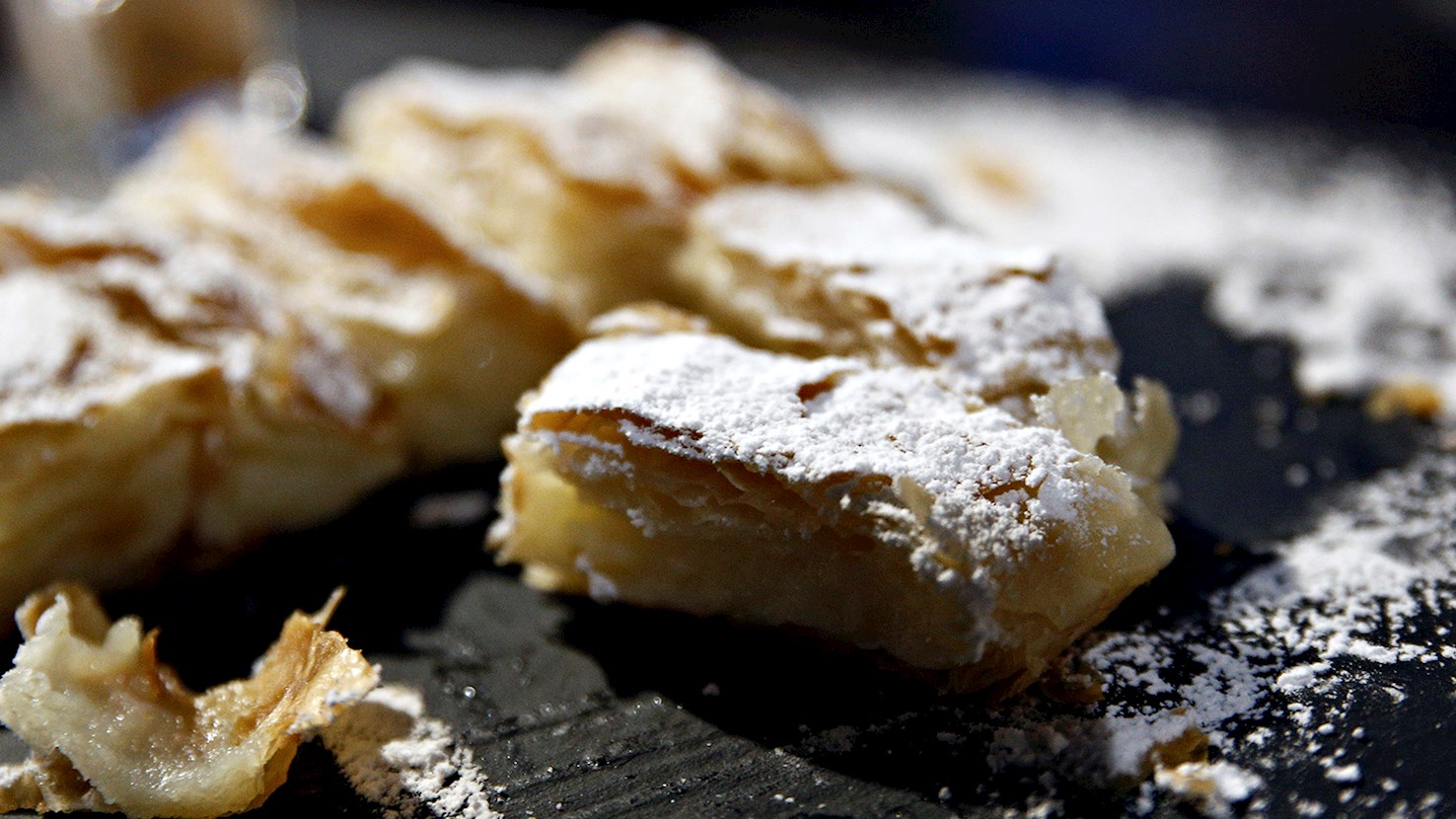
Bougatsa is a traditional, rustic Greek pie consisting of a phyllo pastry layered with a filling of semolina custard, although there are variations with minced meat or cheese. The name of the dish is a derivation of the Ottoman word pogatsa, denoting a pie filled with cheese. Bougatsa has origins from the Byzantine period, when Constantinople was Greek, and it began as a dough that was stuffed with numerous sweet and savory fillings. Over time, bougatsa evolved to incorporate a thinly rolled, hand-made phyllo pastry. As many Turkish immigrants settled in Northen Greece, bougatsa became a specialty of Serres and Thessaloniki. Today, the pies can be found throughout Greece in specialty shops called bougatsopolia, selling bougatsas exclusively.
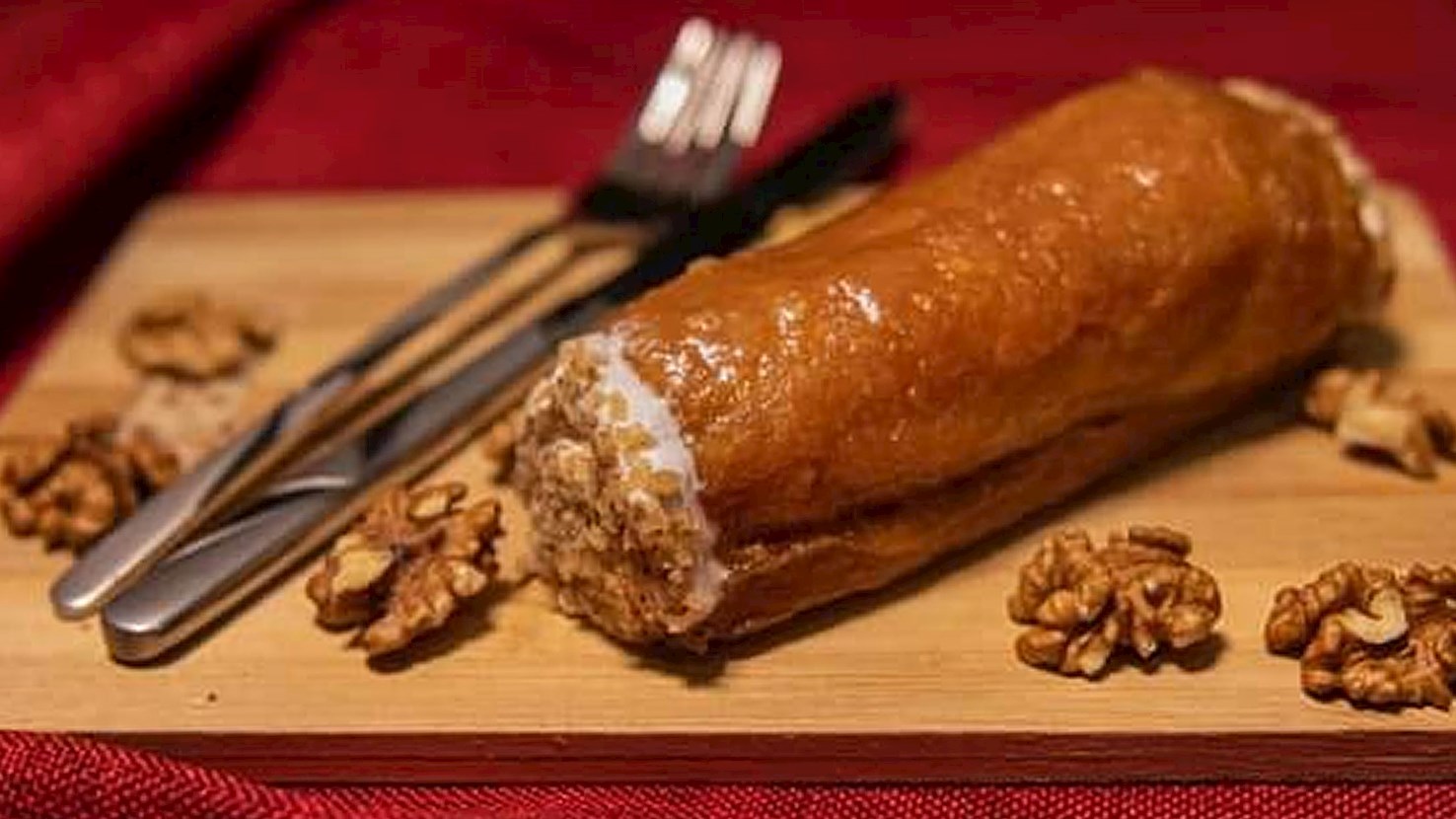
Poniro is a filled baked pastry associated with the city of Serres in northern Greece, prepared as a small individual sweet made from thin dough encasing a soft custard-like filling and finished after baking with syrup, and it is classified as a dessert rather than a bread or cake. Its emergence is linked to urban pastry-making practices in Serres during the late nineteenth and early twentieth centuries, when local bakeries developed sweets that combined techniques from Ottoman-era syrup desserts with European-style baked custards, resulting in a product that became closely identified with the city through continuous commercial production. Preparation involves shaping a light dough shell, filling it with a milk-based custard thickened with flour or starch and eggs, baking it until the exterior sets and the filling firms, and then soaking the pastry with warm sugar syrup so the sweetness penetrates without dissolving the structure. The balance between baked custard and syrup is controlled carefully, as the pastry is meant to remain intact and sliceable while absorbing moisture after baking rather than during cooking. Poniro is usually served at room temperature and sold ready to eat, without further garnish or decoration. It is most commonly eaten in pastry shops or at home as a dessert or sweet snack, and it pairs well with plain coffee, Greek coffee, or tea, which offset the sweetness and richness without competing with the custard filling.
TasteAtlas food rankings are based on the ratings of the TasteAtlas audience, with a series of mechanisms that recognize real users and that ignore bot,
nationalist or local patriotic ratings, and give additional value to the ratings of users that the system recognizes as knowledgeable.
For the “Top 3 Macedonian Sweet Pastries” list until June 15, 2026, 655 ratings were recorded, of which 352 were recognized by the system as legitimate.
TasteAtlas Rankings should not be seen as the final global conclusion about food. Their purpose is to promote excellent local foods,
instill pride in traditional dishes, and arouse curiosity about dishes you haven’t tried.