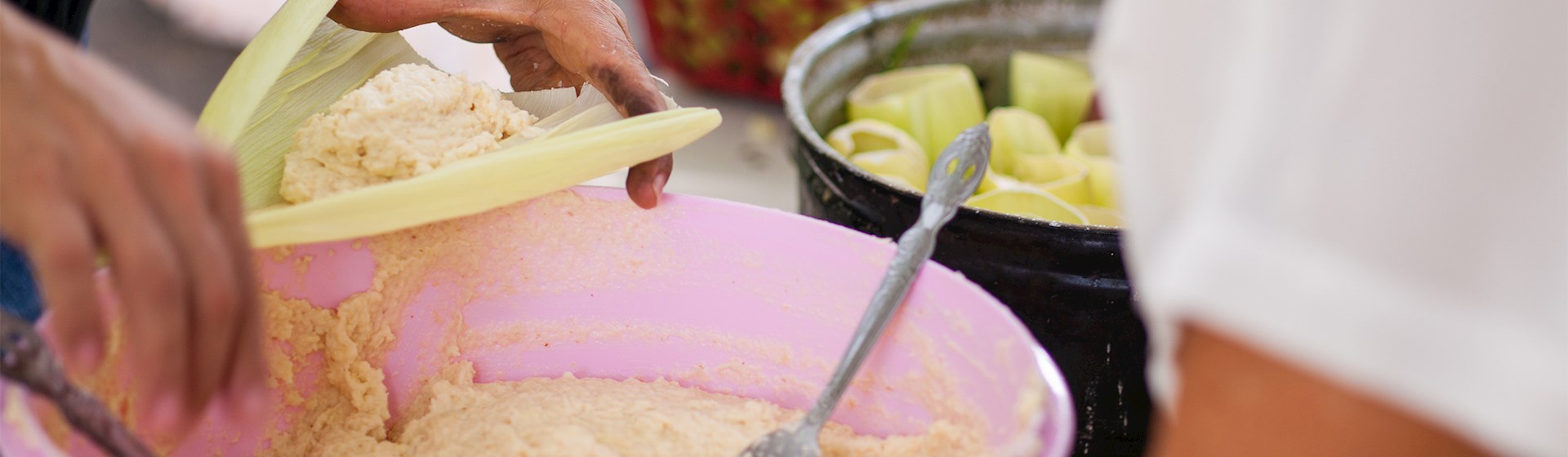
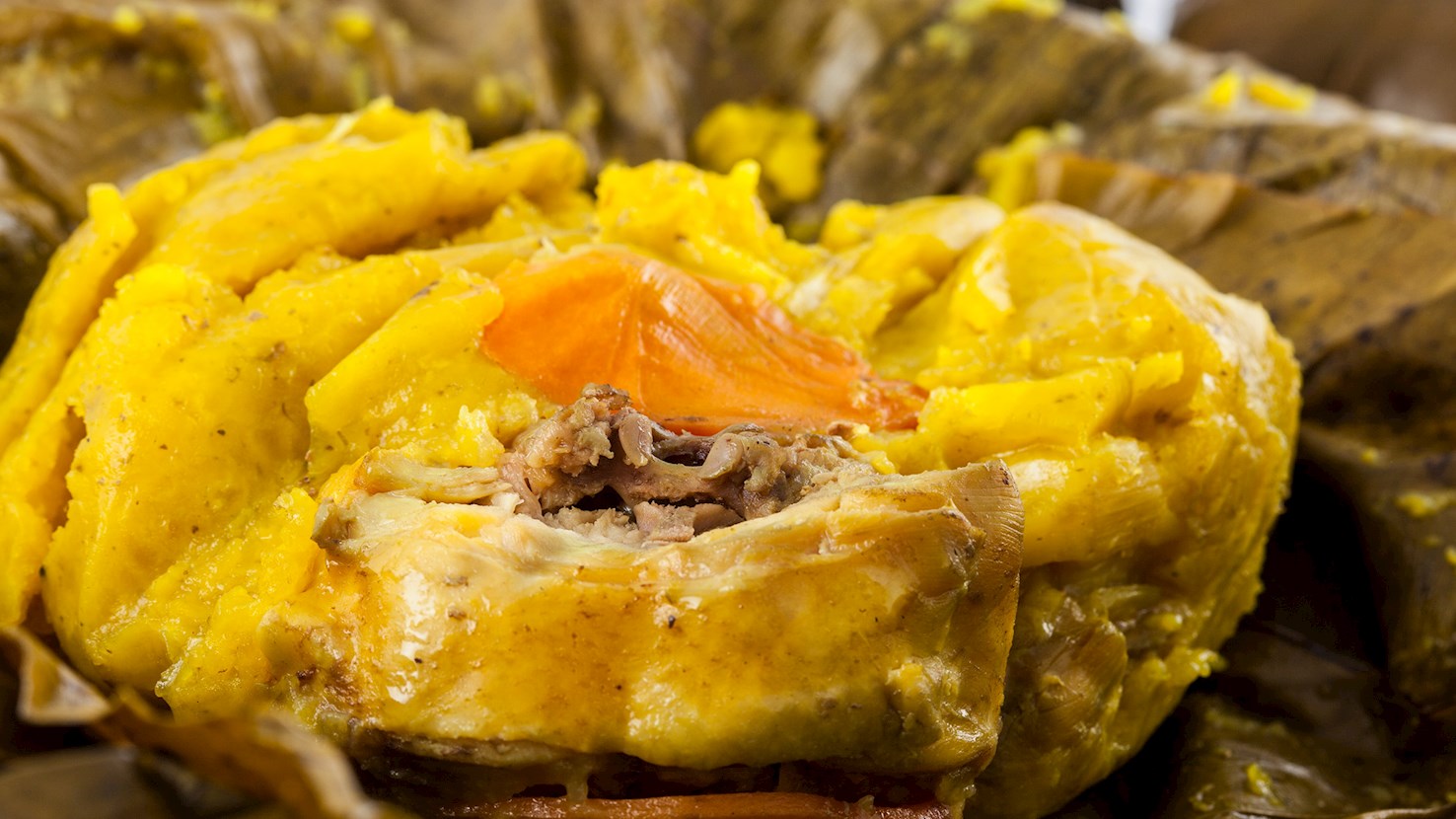
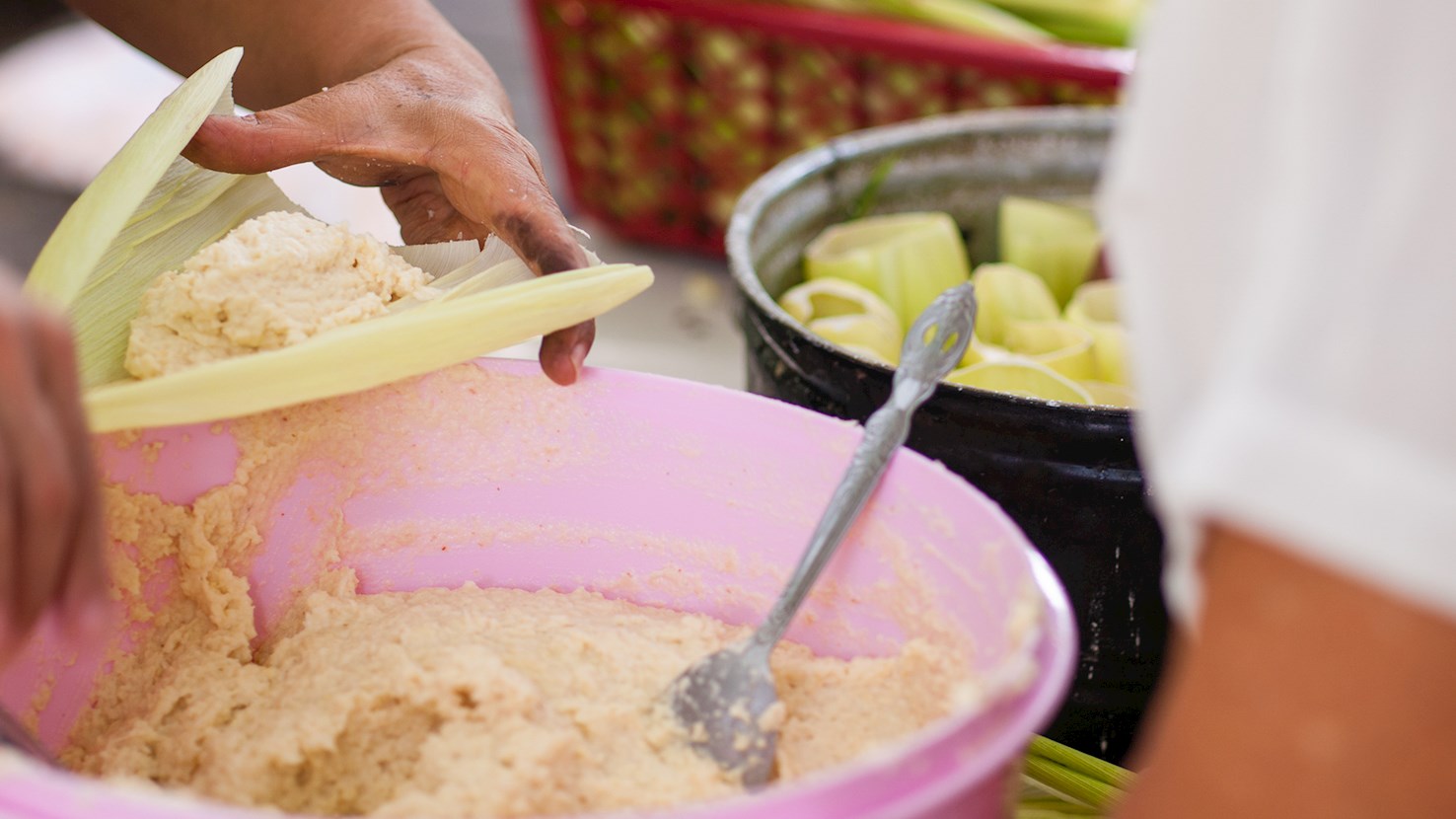
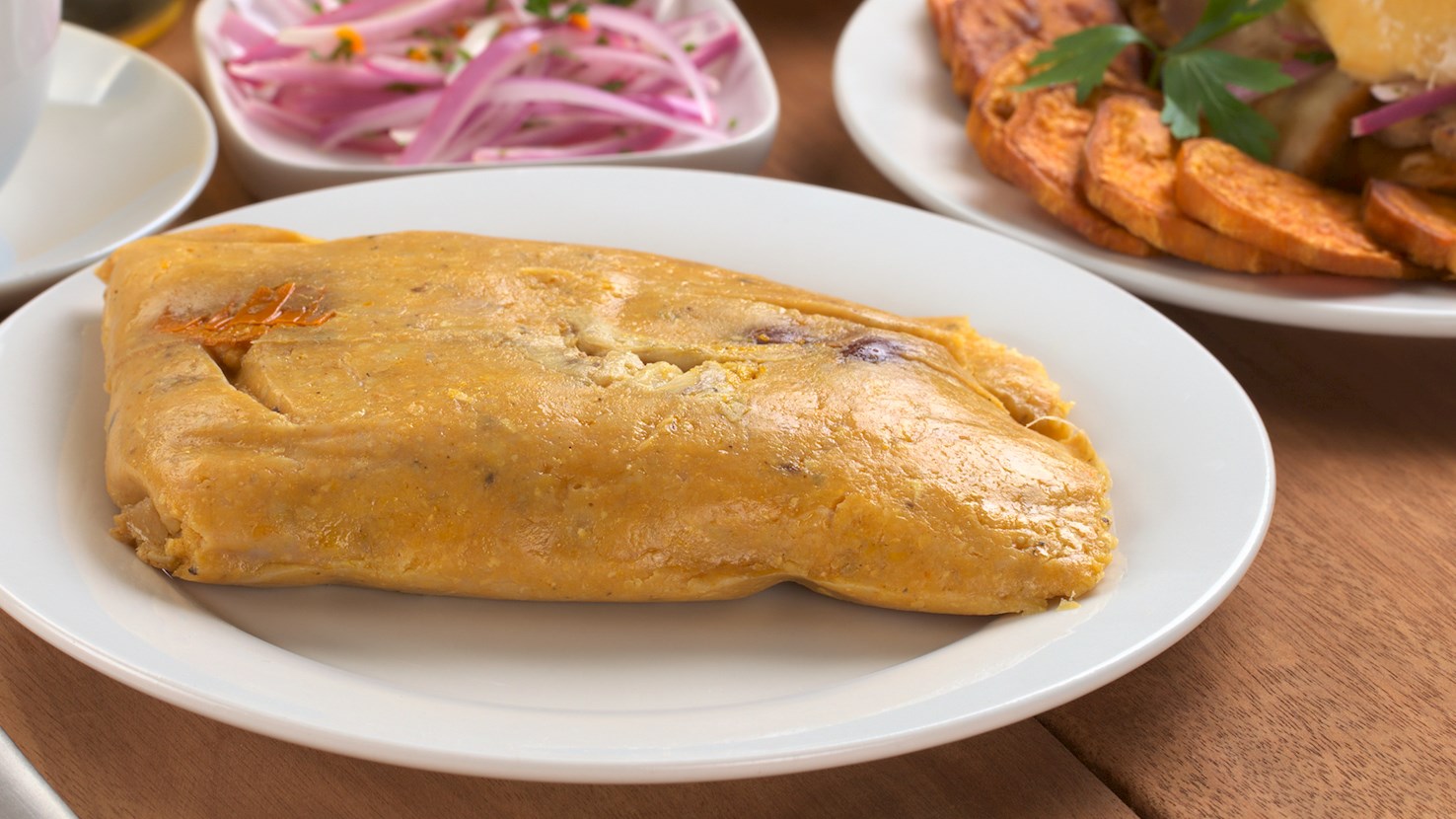
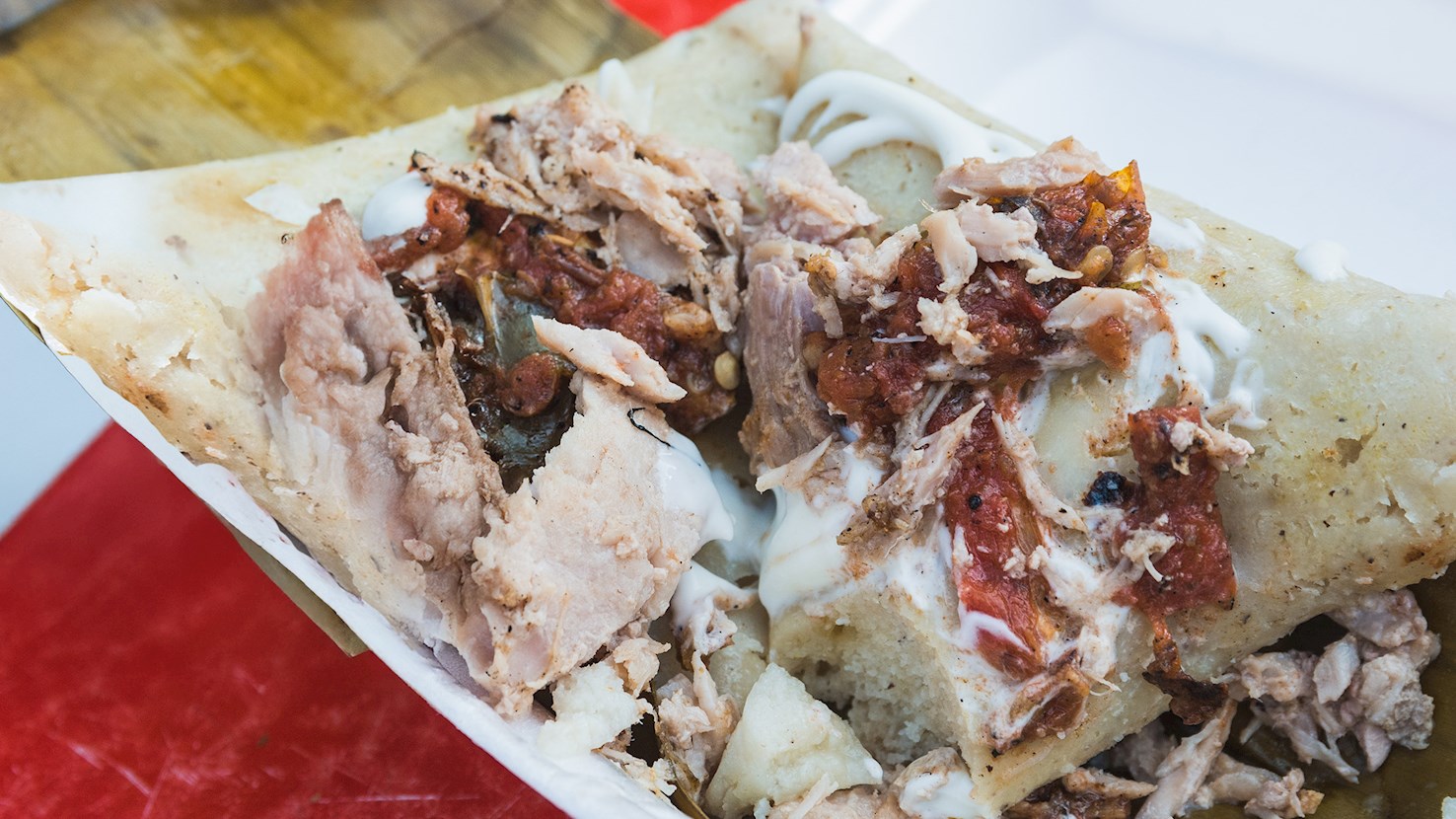
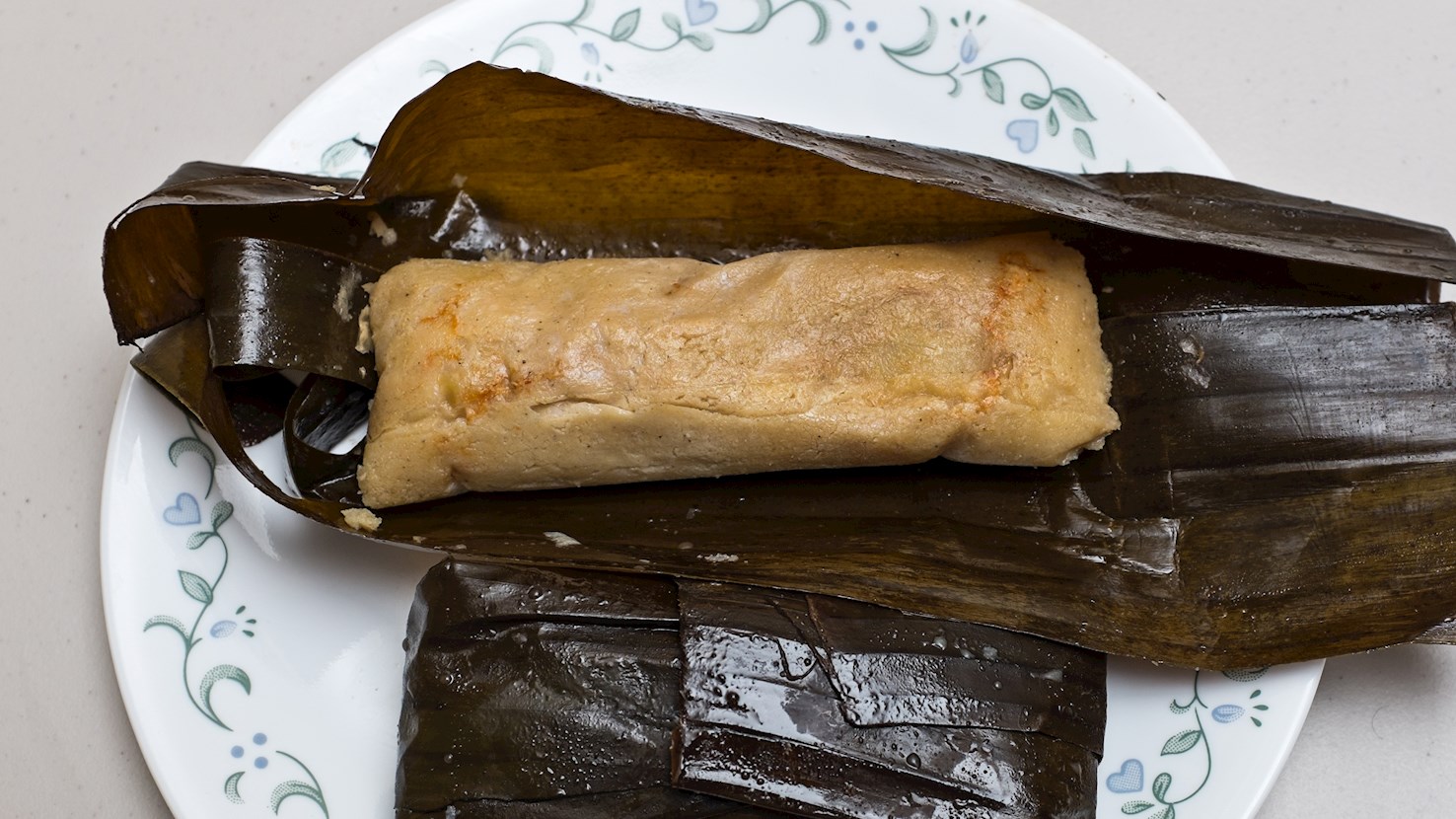
Tamales tolimenses are large, rounded leaf-wrapped parcels from Tolima, filled with seasoned corn dough, rice, peas, chicken, and pork. Inside, slices of potato, carrot, and hard-boiled egg sit among the meat, while the surrounding starches absorb the broth and fat released during cooking. The wrapping is gathered and tied at the top, giving each tamal a recognizable pouch shape. Opened on a plate, it becomes a substantial meal: soft, moist dough and rice around distinct pieces of meat and vegetables, with an aroma partly contributed by the heated leaves. Although closely associated with Tolima and its capital, Ibagué, tamales tolimenses are also eaten elsewhere in Colombia, particularly for breakfast. They belong to the wider family of leaf-wrapped foods rooted in Indigenous American cooking, but the familiar combination of corn, rice, pork, and chicken developed through the meeting of Indigenous ingredients and foods introduced after European contact. The age of the tamal as a food should not be confused with a documented date for this particular regional version: no single inventor or precise moment of creation is securely established. Within Tolima, recipes have been passed between generations of families, with differences in the proportion of rice and corn, the cuts of meat, and the seasonings. Southern Tolima has a particularly strong connection with the leaves used for wrapping. In Coyaima, families harvest and heat-treat cachaco leaves from a locally grown banana variety for tamal makers. These leaves add flavor and help hold the contents together. The combination of corn and rice deserves attention because the filling isn't simply smooth corn dough enclosing meat. Cooked rice and softened dried peas may be mixed into the masa, creating a substantial, slightly uneven texture, or added during assembly. Some versions give rice greater prominence. Corn can enter as soaked, ground grain or as corn flour, with the amount of broth adjusted to form a soft mixture. The broth from cooking the meat is especially useful here: it carries seasoning into the starches, so the dough surrounding a piece of pork or chicken has flavor of its own. Achiote or another coloring seasoning may give the mixture a yellow-orange tint, while cumin, garlic, and scallions commonly supply its savory character. The seasoning is generally aromatic rather than strongly hot. Chicken or hen is commonly paired with pork ribs and tocino, a fatty pork cut that shouldn't automatically be mistaken for smoked breakfast bacon. These meats contribute different textures: poultry provides a substantial piece of leaner meat, ribs bring meat around the bone, and fatty pork enriches the surrounding mixture. Their treatment varies between recipes, but seasoning in advance and partially or fully cooking some components before wrapping allows their broth to be reused. A guiso of softened scallions and garlic adds another layer of seasoning. Potato and carrot are usually included as slices, while hard-boiled egg remains a recognizable piece within the filling. The contents are portioned deliberately so each package receives meat and vegetables, rather than relying on a loosely mixed filling to distribute them evenly. Before assembly, the leaves are cleaned and softened with heat so they bend without splitting. Passing them over a flame is known as soasar; hot water is another method. Overlapping pieces provide a stronger wrapper, and a little fat on the inner surface helps the cooked mixture release. The filling is placed in the center, the edges are brought upward, and the gathered top is secured with cabuya or suitable kitchen string. This top knot is often called the moño. The packages then undergo long, moist cooking in a large covered pot, usually for several hours. The wrapping must stay secure so the filling remains contained as the rice, dough, vegetables, and meat finish cooking together. A lining or support at the bottom of the pot helps protect the lowest layer from direct contact with the hot base. Tamales tolimenses are served hot, with the opened leaf resting on the plate and the string removed; the wrapper is not eaten. They appear at family breakfasts, community gatherings, Christmas celebrations, and Tolima’s June festivities around San Juan and San Pedro. Ibagué also holds a dedicated tamal celebration during its June festival season. A cup of hot chocolate is a common accompaniment, often alongside bread or an arepa, despite the generous amount of starch already in the parcel. Coffee is another practical breakfast choice. When the tamal contains ribs or a bone-in piece of chicken, eating it from a plate with cutlery makes it easier to separate the tender meat and leave the bones on the unfolded leaf.
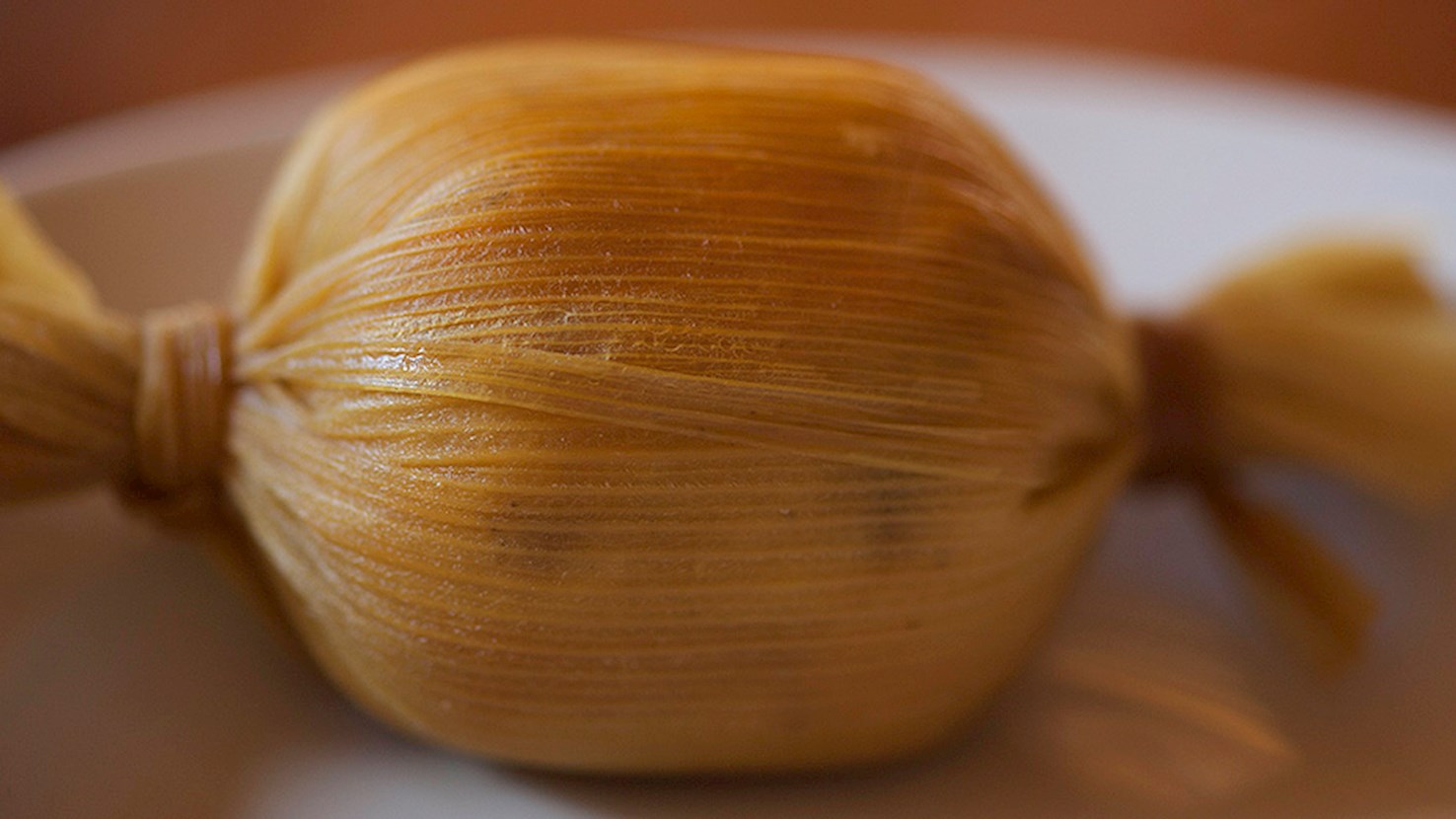
Tamalito is the Peruvian version of tamales. They are smaller and drier than tamales, but both are prepared in a similar fashion. Green maize is first combined with lard, and the combination is then filled with various ingredients and wrapped in corn leaves before being tied with a string and steamed in a pot. Tamalitos are traditionally served as a light appetizer or a tasty side dish. It is recommended to pair them with salsa criolla.
Nacatamal is a type of traditional Nicaraguan tamale made with corn dough which is stuffed with chicken or pork, then wrapped in plantain leaves and steamed. This savory dish usually also contains ingredients such as bell peppers, garlic, potatoes, rice, bitter orange, onions, mint, and chile peppers. On special occasions, nacatamal is often enriched by the addition of prunes, raisins, capers, and olives. It is typically prepared on weekends and served for breakfast, paired with bread and a cup of coffee on the side. The name of the dish is derived from the Nahuatl words nacatl, which means meat, and tamalli, which means tamale. Originally, the dish was prepared with turkey, iguana, tomatoes, annatto, and deer meat wrapped in corn leaves, but during the colonial time, the meat changed to pork and chicken, while plantain leaves substituted corn leaves.
Although tamales are usually made with maize dough, the Guatemalan version called paches uses mashed potatoes, annatto powder, allspice, and lard. These tamales are typically filled with a combination of meat, tomatoes, green onion, garlic, bell peppers, and chile peppers. When the concoction is prepared, it is then wrapped in banana leaves or corn husks and steamed until it is soft and ready for consumption. In Guatemala, paches is traditionally sold by street vendors on Thursdays, while other types of tamales made with maize dough are prepared on other days of the week. It is recommended to serve paches with lots of fresh lemon wedges.
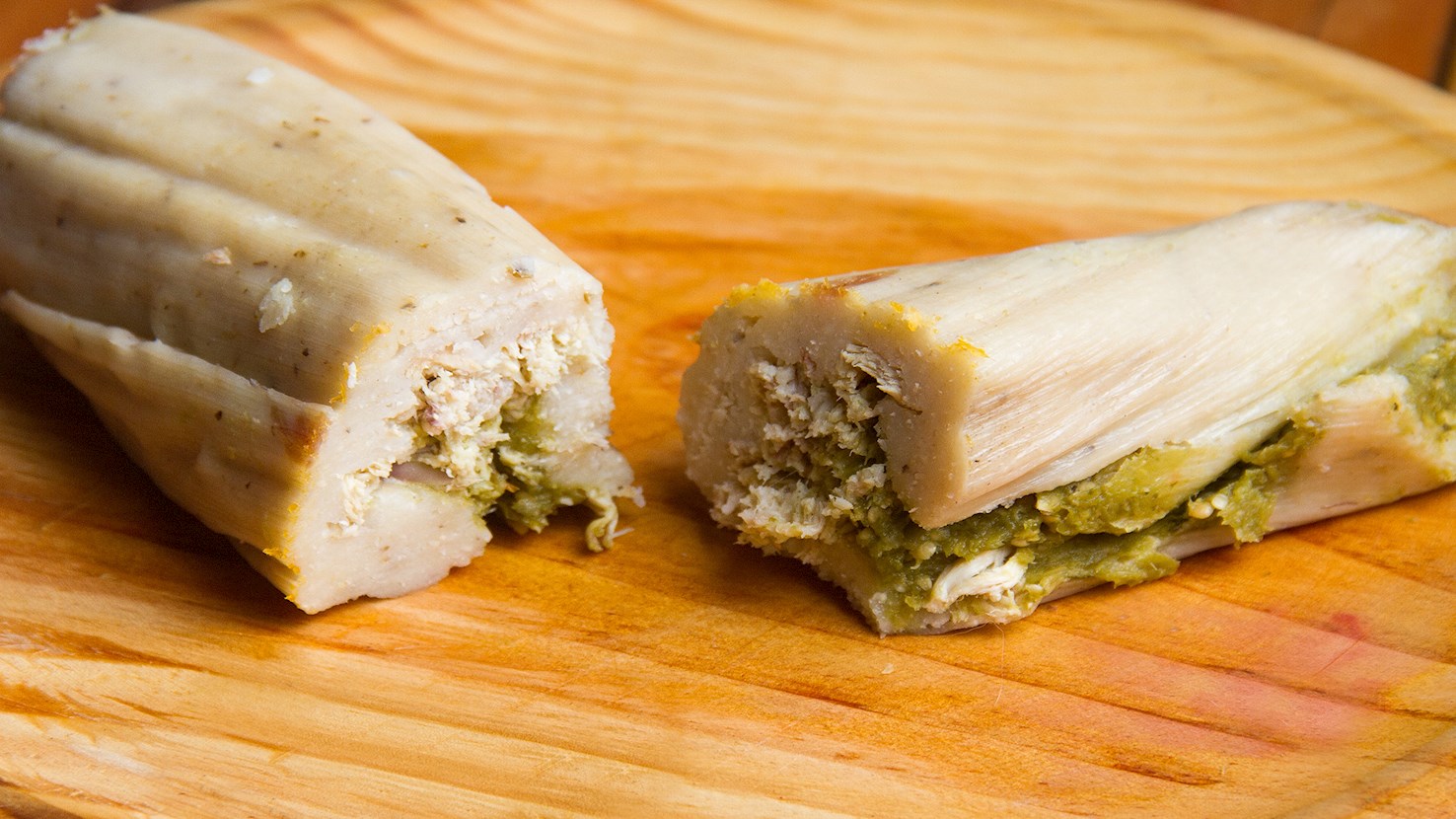
This tamale variety originates from the town of Salta in Argentina, hence the name. Fresh corn husks called chalas are filled with a delicious mixture of corn flour and shredded meat – either from boiled lamb or pork head. These tamales are often enriched with the addition of onions, pimentón, and ají peppers. When assembled, tamales salteños are boiled, then removed from the husks and consumed warm.
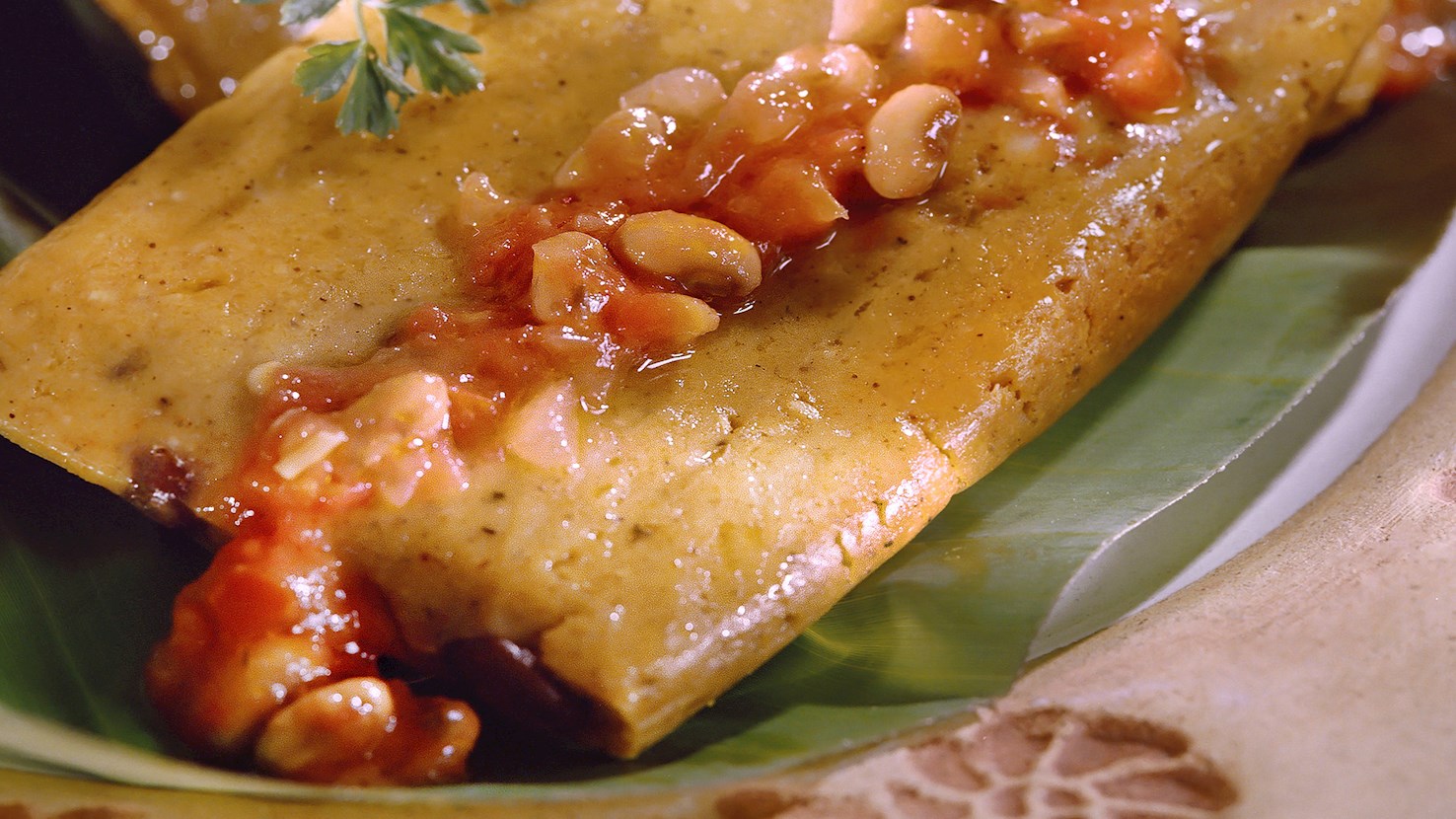
Tamal de pollo is a Salvadorian variety of a tamale that is usually filled with shredded chicken. The chicken is stewed with potatoes, chickpeas, and olives. The combination is mixed with corn masa, and it is then wrapped in banana leaves and boiled or steamed. This tamal is often made with recaudo sauce, made with onions, bell peppers, garlic, and tomatoes, imparting a bit of extra flavor to the dish. Once tamal de pollo is fully cooked, it can be consumed immediately, but some people say that it's even better the next day, when all the flavors are combined and the texture becomes even better. It is recommended to serve the dish on its own, but it can also be served with sour cream and black beans.
Tamalitos de chipilín is a Guatemalan tamale variety made with a leafy green vegetable called chipilín, native to Mexico. This variety does not contain any meat, just chipilín leaves that are wrapped in a combination of corn flour, margarine, queso fresco, water, and salt, then wrapped again in corn husks and steamed. The dish can be consumed as it is, but it is often recommended to serve it with a bit of cream on the side. The Mexican version of the same dish has origins in the state of Chiapas.
Corunda is a Mexican steamed corn masa dumpling from Michoacán, usually shaped into a triangle, pyramid, or small multi-pointed form and wrapped in fresh green corn leaves. The dish is closely associated with Purépecha cooking, where maize has long served as both a staple ingredient and a source of cooking materials, including the flexible leaves used to enclose the dough. Today, the dish is especially popular during the Day of the Dead. Unlike tamales wrapped in dried corn husks, corundas are commonly folded in fresh leaves taken from the corn stalk, which give the steamed masa a subtle grassy aroma. The dough is made with nixtamalized corn masa, salt, warm water, and rendered pork lard, then beaten until light and aerated. A spoonful of the soft masa is placed on a green corn leaf, which is folded tightly around it at sharp angles to create the characteristic geometric shape. The wrapped dumplings are arranged in a steamer and cooked until the masa firms while remaining tender and slightly fluffy. Some versions include small amounts of shredded pork, chilies, cheese, or other fillings, while others are made only with seasoned masa. Regional variations may also use masa made from corn cooked with wood ash, producing a darker, denser dough with a more pronounced mineral note. Once cooked, the leaves are removed and discarded. Corundas are typically served warm with roasted tomato sauce, Mexican crema, and crumbled cotija cheese, allowing the mild corn dough to absorb the sauce and dairy. They are often eaten with churipo, a red-chile-and-beef broth from Michoacán, whose sharp, spicy flavor balances the richness of the masa and lard.
This variety of tamales comes from El Salvador, but it is also popular in Honduras. Tamales pisques are made with seasoned corn masa that is mixed with refried beans, and the combination is then neatly wrapped in plantain leaves. The tamales are then steamed, and the dish is ready for consumption after it has cooled down a bit. It is recommended to serve tamales pisques with tomato sauce or curtido – a fermented cabbage relish that is a staple of Salvadoran cuisine.
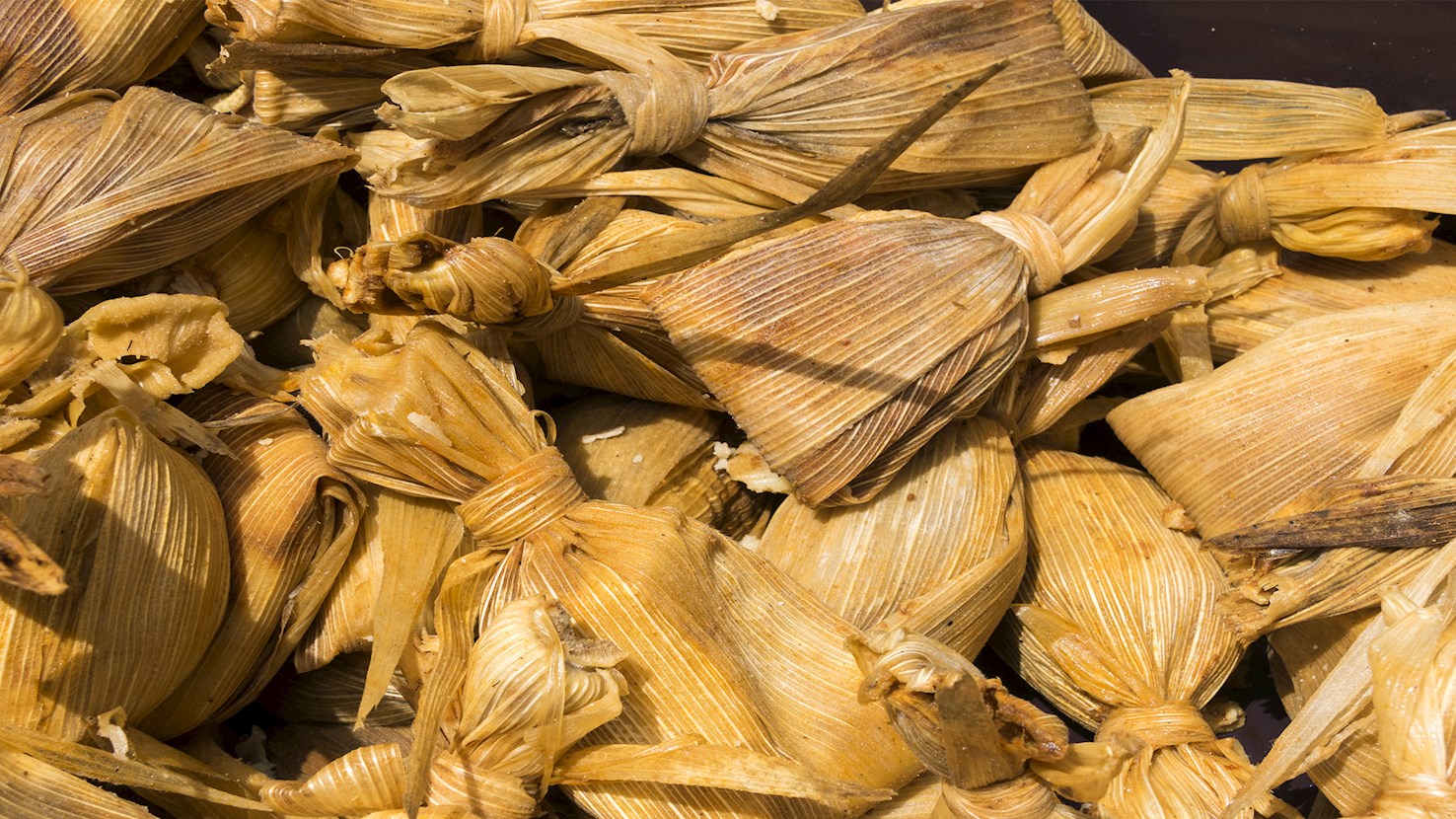
Chuchitos are traditional Guatemalan-style tamales that are usually made for holiday celebrations and festivities, but are also eaten any day of the year. Chuchito, meaning a small dog or a puppy, consists of warm corn masa dough stuffed with succulent pieces of meat such as pork or chicken and a mild tomato or chili sauce. The mixture of these ingredients is wrapped in a dried corn husk and steamed until the dough develops its typical texture and flavor and is cooked thoroughly. Alternatively, chuchitos can be grilled after they're steamed, giving them a unique, smoky flavor along with their nice visual appearance. Eaten for both breakfast and dinner, these "puppies" can be found on most street corners and local markets in Guatemala. If bought on the streets, the vendors usually unwrap them from the husks and add a bit more sauce or a sprinkle of grated cheese in order to further intensify the flavors.
TasteAtlas food rankings are based on the ratings of the TasteAtlas audience, with a series of mechanisms that recognize real users and that ignore bot,
nationalist or local patriotic ratings, and give additional value to the ratings of users that the system recognizes as knowledgeable.
For the “14 Tamal Varieties Ranked From the Best To the Worst” list until October 17, 2026, 811,838 ratings were recorded, of which 532,919 were recognized by the system as legitimate.
TasteAtlas Rankings should not be seen as the final global conclusion about food. Their purpose is to promote excellent local foods,
instill pride in traditional dishes, and arouse curiosity about dishes you haven’t tried.














What People Say