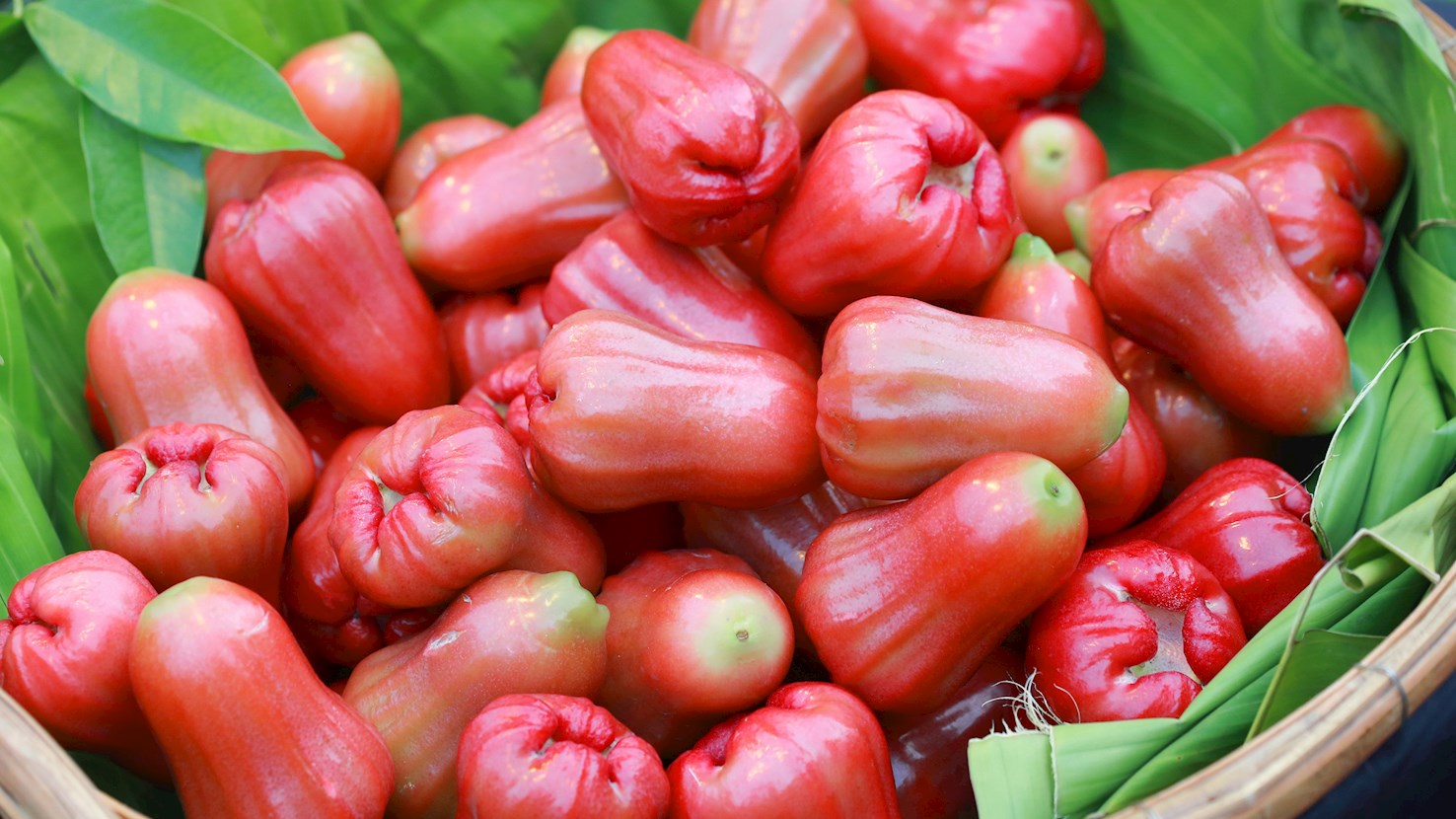
Water apple is a tropical fruit native to Southeast Asia and the Malay Archipelago, produced by the evergreen tree Syzygium malaccense and widely cultivated in regions such as Malaysia, where it is known locally as jambu bol and consumed primarily for its high water content and crisp flesh rather than for sweetness or acidity. Its spread beyond its native range followed maritime trade and botanical exchange during the late eighteenth century, and plants were later introduced to the Caribbean, including Jamaica, where it became known as Otaheite apple after its route of introduction from the Pacific rather than its place of origin. Preparation in its native region is minimal, as the fruit is most often eaten fresh, washed and consumed whole or sliced, with the thin skin left intact and the central seed removed, and it may also be used in light preserves, juices, or briefly cooked preparations that emphasize moisture and texture. The flesh is firm and watery when just ripe and softens quickly, which limits storage and favors immediate consumption close to harvest. Water apple is typically served at ambient temperature or lightly chilled and eaten casually as a snack rather than as part of a structured meal. It is commonly sold in markets and eaten at home, often paired with salt, chili, or light sugar, and accompanied by water or mild fruit drinks that reinforce its clean, hydrating character without competing with it.
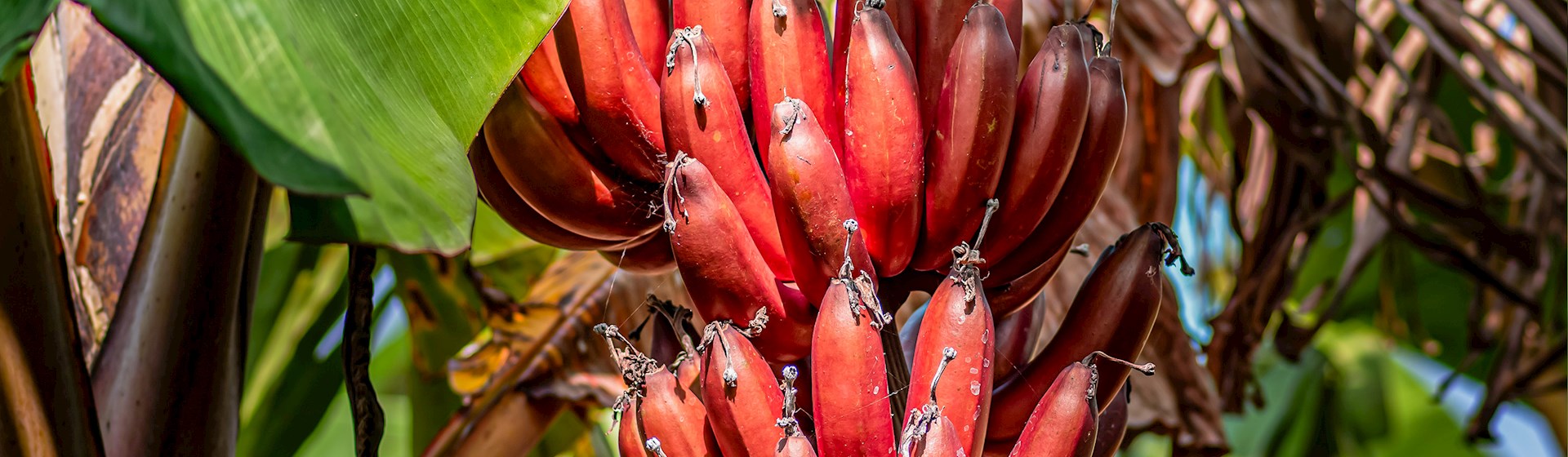
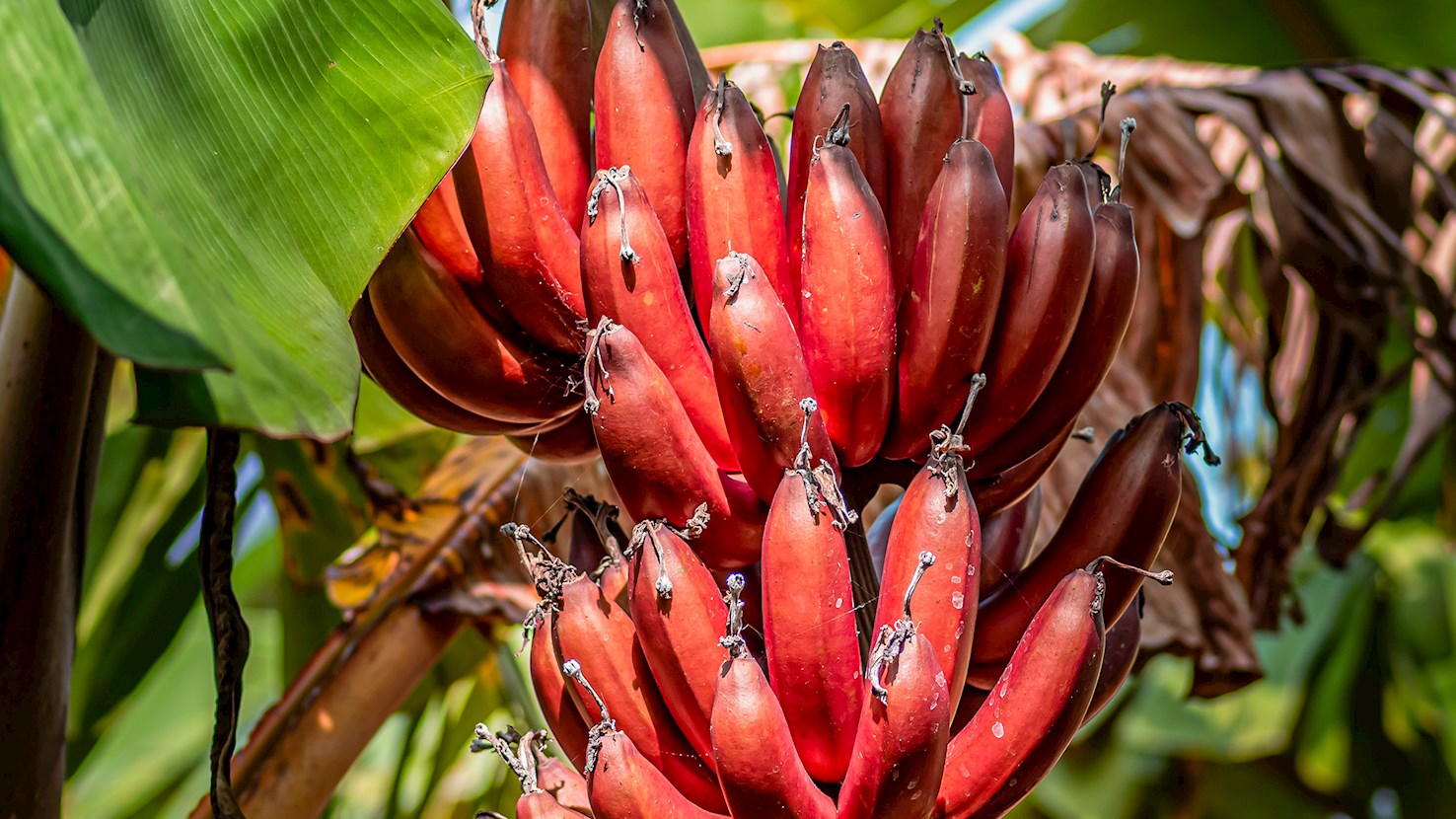
Red banana (lat. Musa acuminata var. 'Red') is a variety of banana with a distinctive red or purple skin, setting it apart from the more common yellow bananas. This variety is smaller, plumper, and has a creamier texture compared to the more widely known Cavendish banana. When ripe, the flesh of the Red banana is soft and sweet, with a flavor that hints at raspberry in addition to the traditional banana taste. Red bananas are believed to originate in India, but may be native to Southeast Asia and the Pacific Islands and are now grown in many tropical and subtropical regions around the world, including parts of East Africa, South America, and the United Arab Emirates. They require a warm climate to thrive and are more sensitive to cold weather than their yellow counterparts. Nutritionally, red bananas offer a range of benefits. They are rich in vitamin C, vitamin B6, and potassium. They also contain a higher content of beta-carotene and vitamin D than yellow bananas, which gives them their unique color and contributes to their nutritional profile. In terms of culinary use, red bananas are versatile and can be enjoyed raw or used in cooking. Their sweet flavor makes them an excellent choice for desserts, smoothies, and baking. Because of their sweetness and moisture, they can add a unique flavor and texture to a variety of dishes.
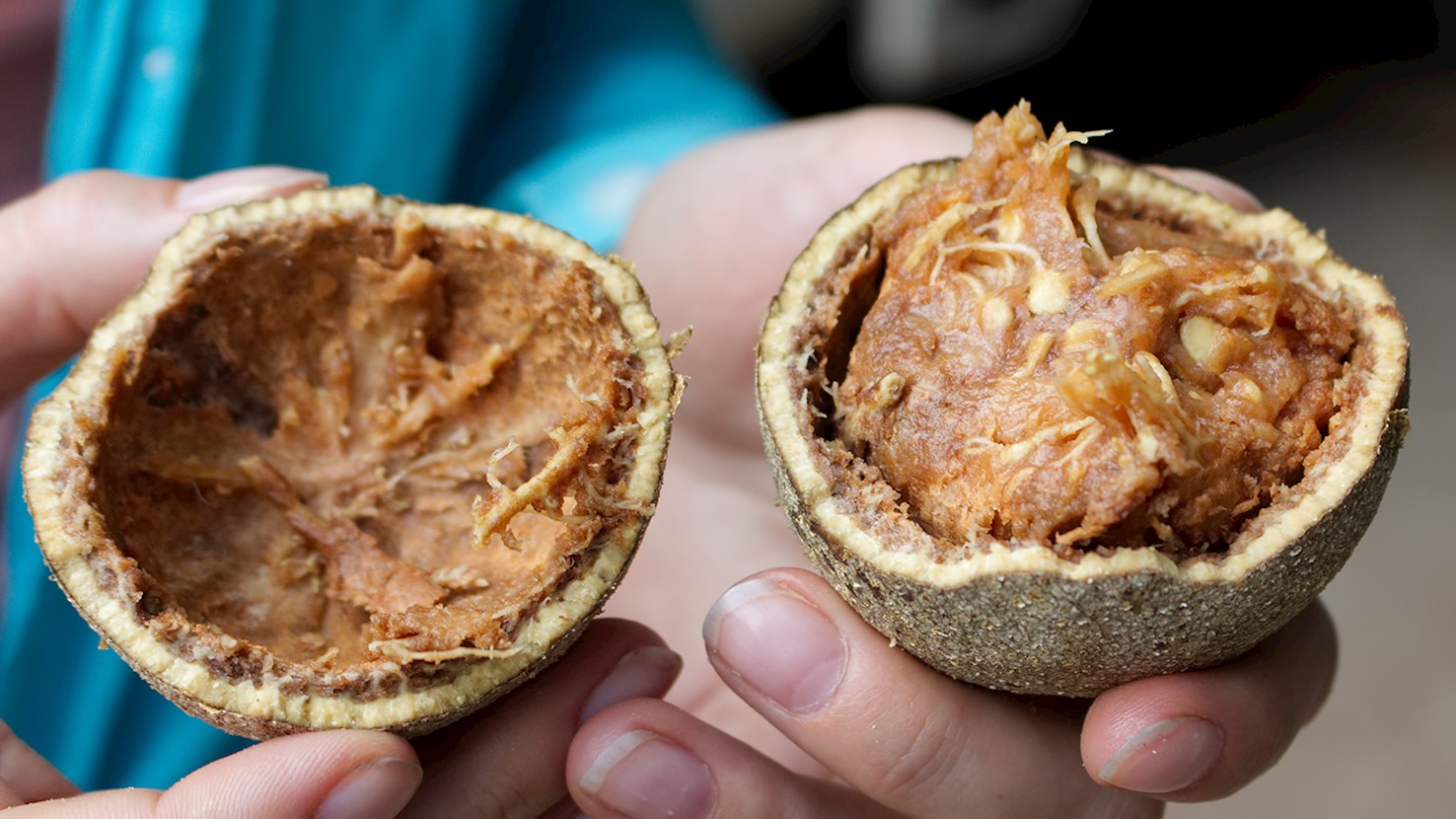
Wood apple is the tropical fruit of a tree with rough bark and sharp spines that’s native to India and Sri Lanka. The fruits are egg-shaped or round, with a hard and thick rind that must be crushed with a hammer or a stone in order to get to the pulp. The pulp is mealy, with an astringent, acid, or sweet flavor and numerous white seeds scattered throughout it. Whether sweet-sour or sweet, the pulp is usually enjoyed fresh after it’s been scooped out. It can also be made into jams, jellies, and chutneys. When mixed with palm syrup and coconut milk, the pulp can be made into ice cream, beverages, and various desserts. Interestingly, unripe fruits are used in traditional Indian medicine to treat diarrhea.
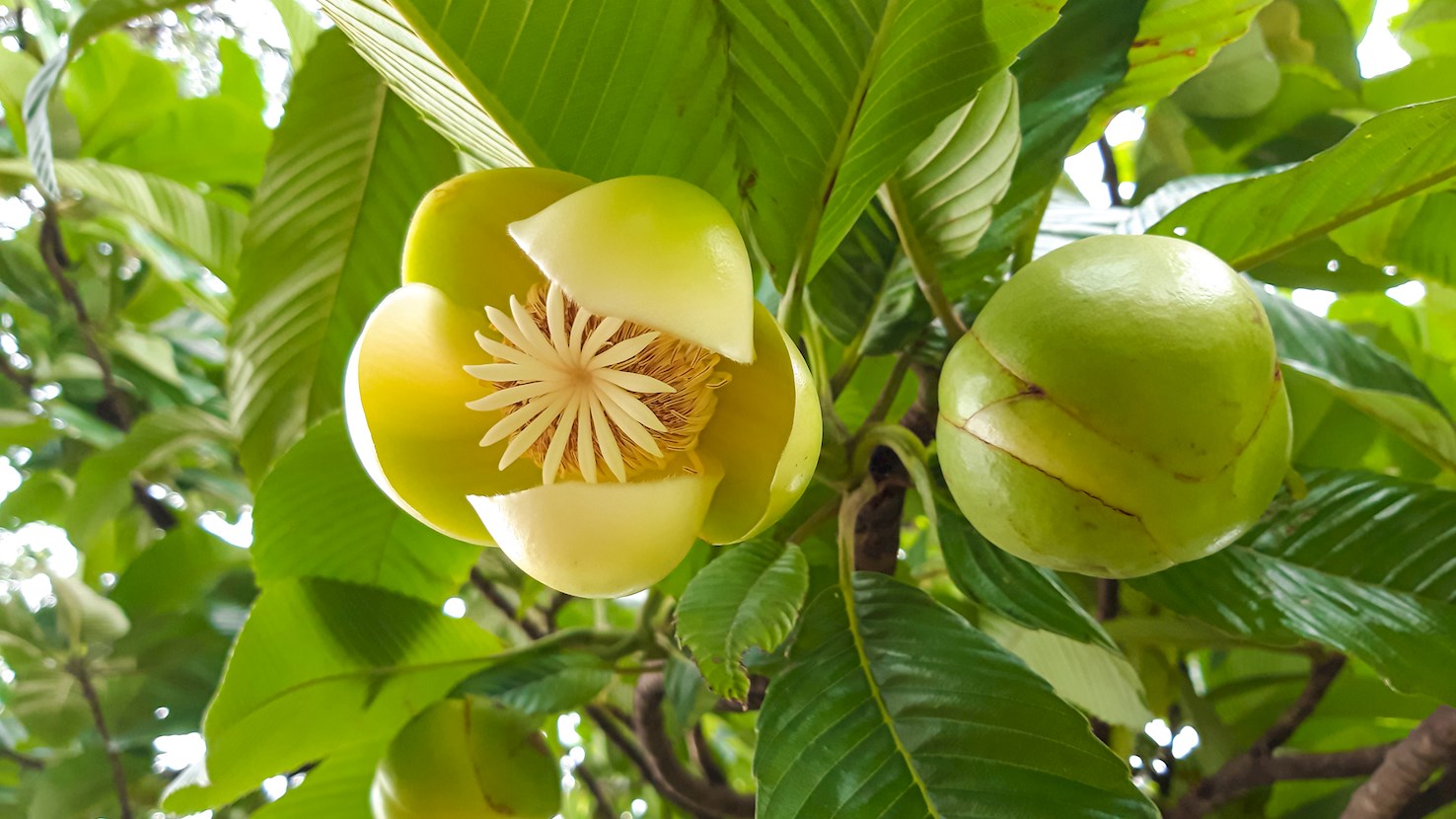
Elephant apple is the fruit of an evergreen tree that’s native from India and Sri Lanka to Southeast Asia, and then to Vietnam and southwestern China. The fruit is globose in shape and it’s formed as an aggregate of 15 carpels that overlap. Each carpel contains five seeds that are embedded in a gelatinous pulp. When fully ripe, the fruits have a sour to sweet-sour flavor. The pulp is often used to make beverages, vinegar, and jams. When not fully ripe, the fruits are pickled or used in soups and curries, while the flower’s petals are often used as garnishes for fruit and vegetable salads.
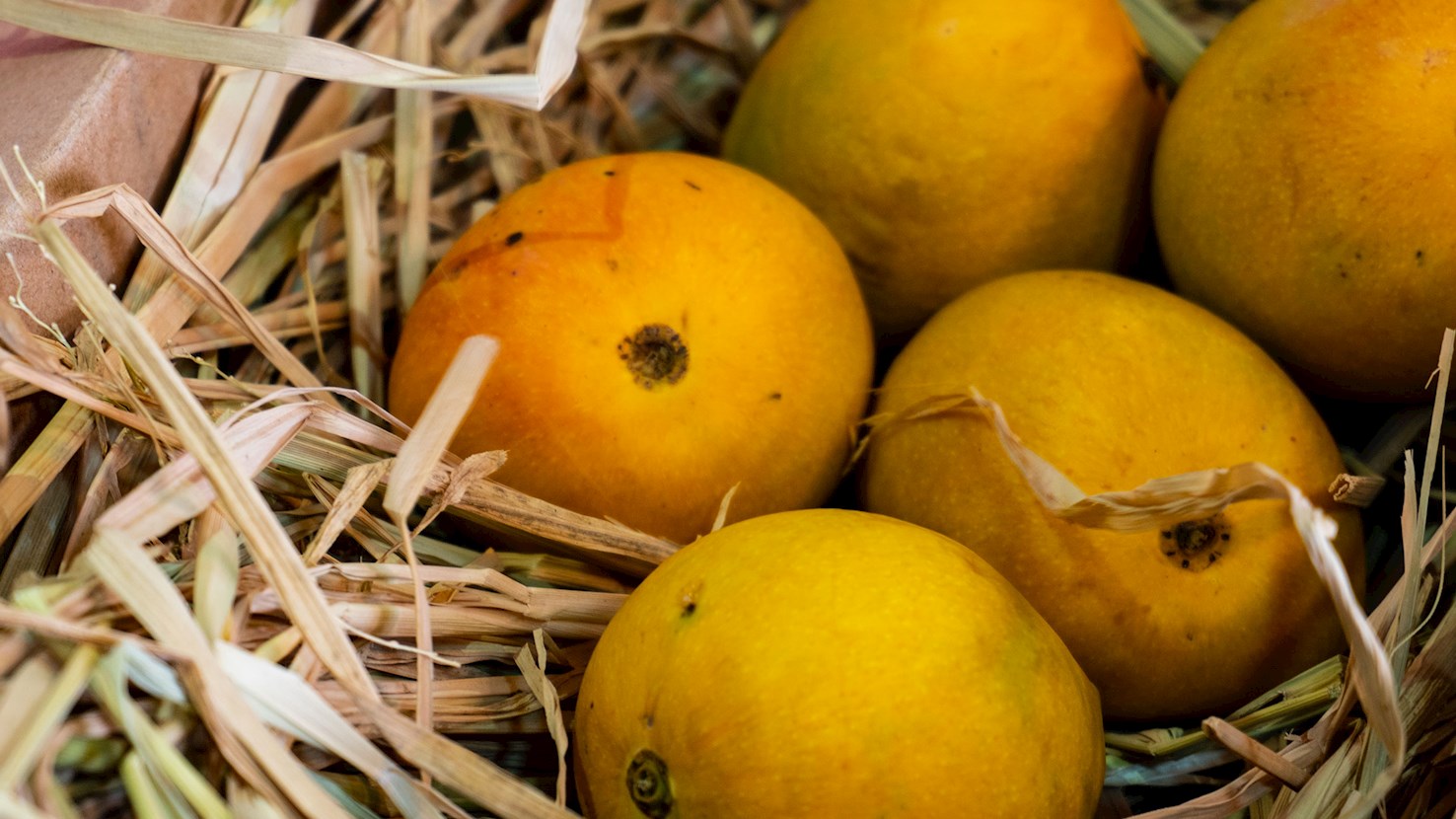
Hapus amba or Alphonso mango is a prized mango cultivar from the Konkan coast of Maharashtra. It is most closely associated with Ratnagiri, Sindhudurg, Devgad, Raigad, Thane, and Palghar, where the coastal climate, lateritic soil, sea breeze, and warm summer conditions help produce mangoes with a rich aroma, saffron-orange pulp, smooth texture, and high sweetness. The English name Alphonso is linked to Afonso de Albuquerque and to Portuguese influence in western India, where grafting helped stabilize selected mango trees into a recognizable cultivar. The Konkan Alphonso from Ratnagiri, Sindhudurg, Palghar, Thane, and Raigad is registered as a Geographical Indication in India, a status used for products whose qualities and reputation are tied to a defined place. A ripe hapus amba is usually medium-sized, with a thin yellow to golden skin that may show a light blush, and flesh that is deep orange, juicy, creamy, and almost free of fiber. Its flavor is sweet but not plain, with a strong mango fragrance, low acidity, and a rounded taste that becomes fuller after proper ripening. The fruit is usually harvested when mature but firm, then allowed to ripen off the tree for several days until the skin turns a warmer color and the aroma develops. It is rarely cooked when the fruit is at its best, because heat dulls the fragrance and reduces the value of its smooth pulp. The usual preparation is simple: the mango is washed, chilled lightly or kept at room temperature, sliced along the flat seed, scored into cubes, or squeezed and eaten by hand in the older home style. The pulp is also used for aamras, milkshakes, ice cream, kulfi, shrikhand, lassi, mousse, cakes, sorbets, and mango cream, but the highest-quality fruit is often eaten plain so its aroma and texture remain clear. Hapus amba is seasonal, generally arriving from late March into June, and its short availability is part of its importance in western Indian food culture. The fruit is also heavily associated with gifting, export boxes, family orders, and regional pride, especially because names such as Ratnagiri hapus and Devgad hapus are used to signal place and quality. It is one of the Indian mangoes most affected by questions of authenticity, since cheaper mangoes may be sold under the hapus name, which is one reason regional identity and GI recognition matter. Hapus amba is eaten across Maharashtra, Goa, Gujarat, and much of urban India during mango season, either as a fresh dessert fruit or as pulp served with puri, chapati, or simple meals. It pairs well with milk, yogurt, cream, cardamom, saffron, pistachio, almond, coconut, lime, mild cheese, vanilla, and wheat flatbreads, while suitable drinks include lassi, buttermilk, chilled milk, sparkling water, masala chai after a meal, or sweet wines and light dessert beverages when served in a more formal setting.
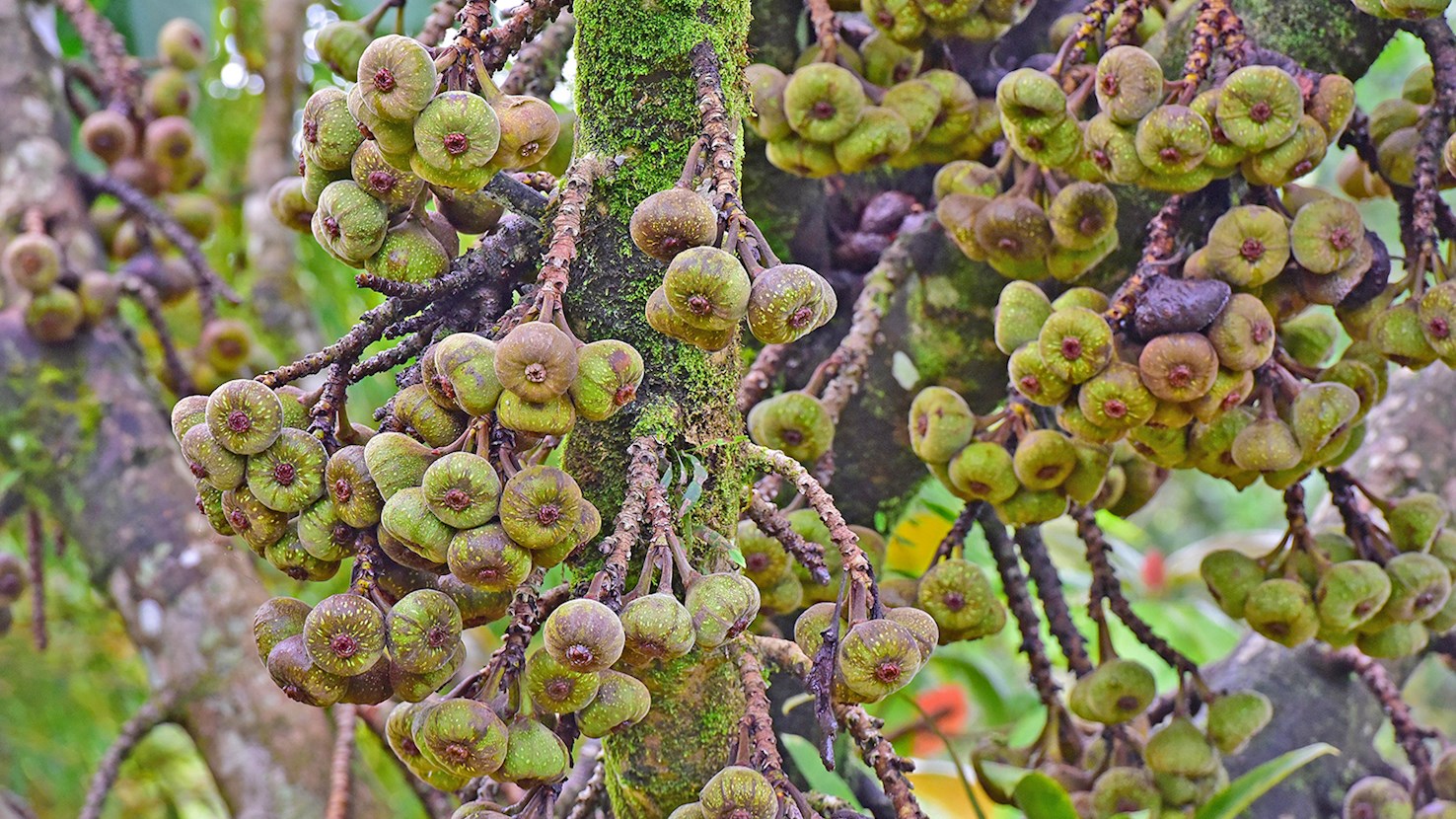
Elephant ear fig is the fruit of an evergreen tree with large leaves that’s native to northern India and cultivated in tropical regions of south Asia and Southeast Asia. When ripe, the fruits are round and flattened in shape, with a reddish brown to copper red color with pale green dots. The flesh is soft in texture, while the flavor is sweet. The fruits are enjoyed fresh or dried, and they’re often made into beverages or jams. In India, elephant ear figs are often used in savory dishes such as salads and curries. The fruit is named elephant ear fig because the tree on which it grows has disproportionately large leaves that are reminiscent of elephant ears.
TasteAtlas food rankings are based on the ratings of the TasteAtlas audience, with a series of mechanisms that recognize real users and that ignore bot,
nationalist or local patriotic ratings, and give additional value to the ratings of users that the system recognizes as knowledgeable.
For the “Top 6 Indian Tropical Fruits” list until June 15, 2026, 115 ratings were recorded, of which 82 were recognized by the system as legitimate.
TasteAtlas Rankings should not be seen as the final global conclusion about food. Their purpose is to promote excellent local foods,
instill pride in traditional dishes, and arouse curiosity about dishes you haven’t tried.