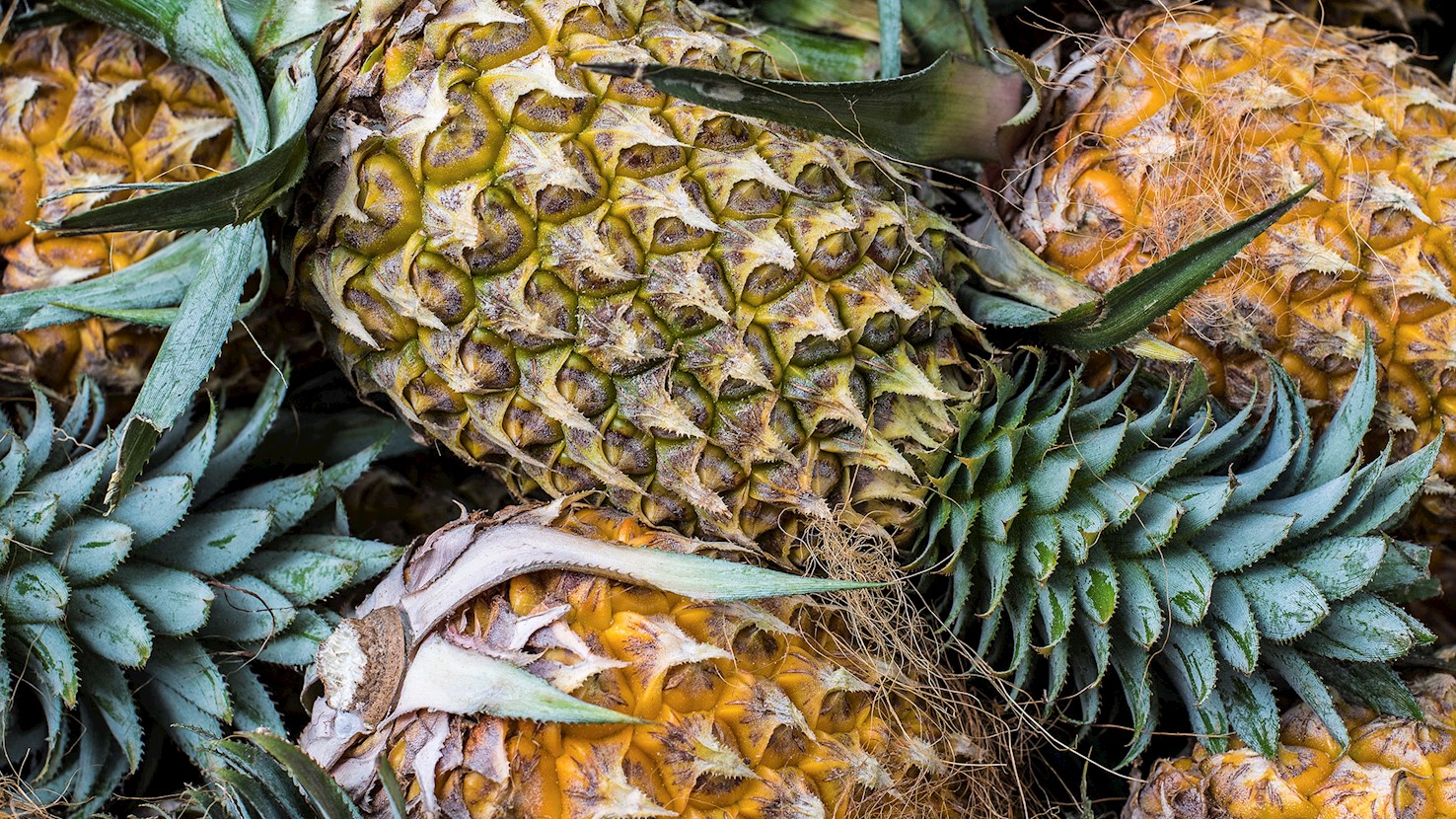
Antigua Black is the world's sweetest pineapple, grown primarily on the southwest coast of the island. Its sweet flavor is a result of a specific type of soil and the right amount of rainfall, allowing the sugar content to be higher than in other pineapples. The fruit is low in fiber and acidity, its texture is crisp, the core is edible, and the flesh is characterized by its golden-yellow color.
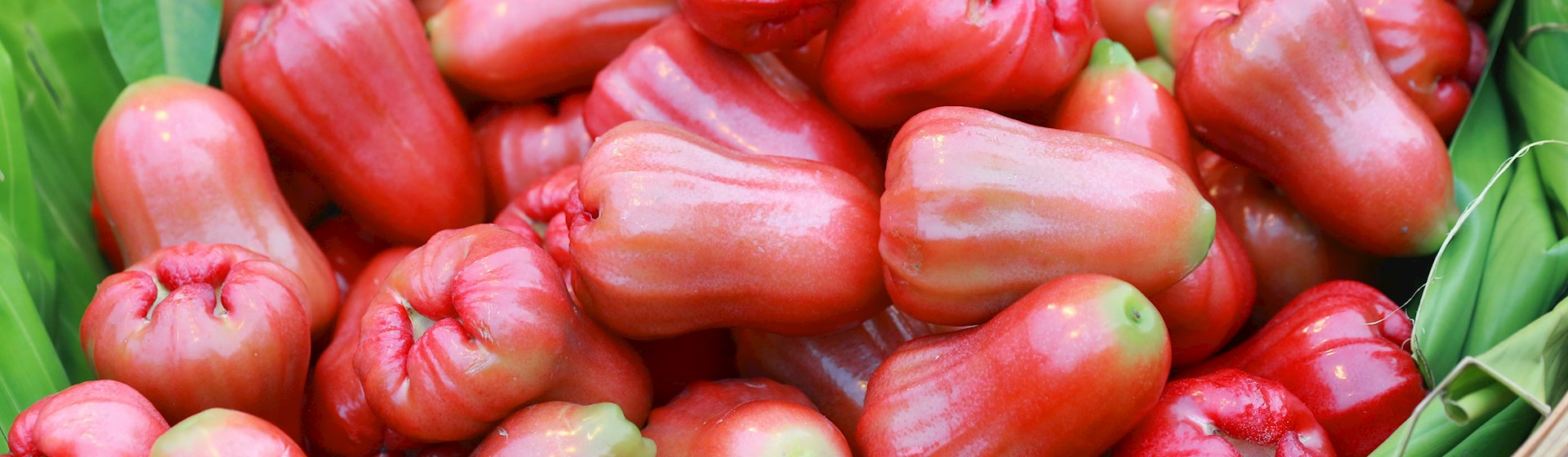
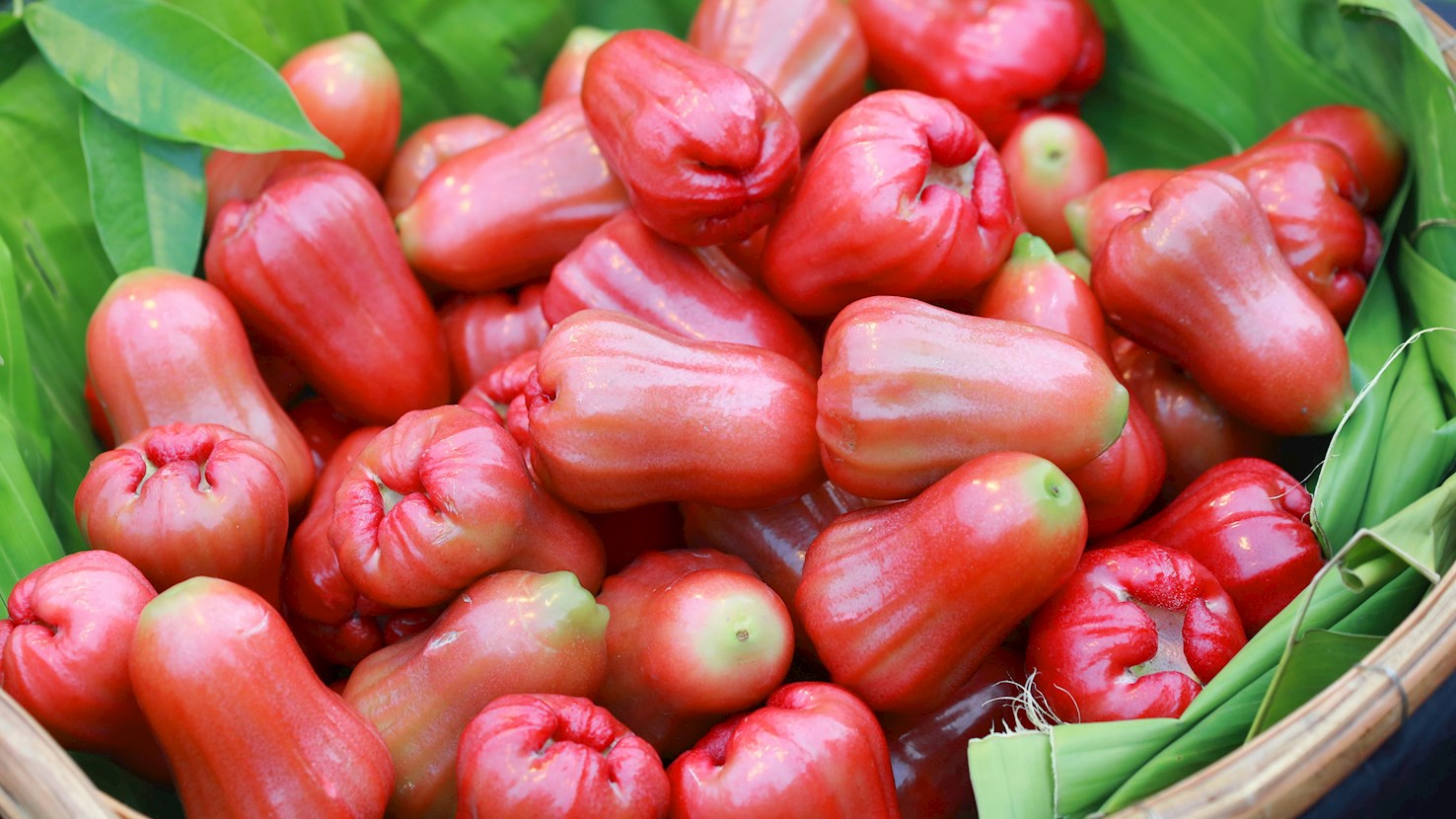
Water apple is a tropical fruit native to Southeast Asia and the Malay Archipelago, produced by the evergreen tree Syzygium malaccense and widely cultivated in regions such as Malaysia, where it is known locally as jambu bol and consumed primarily for its high water content and crisp flesh rather than for sweetness or acidity. Its spread beyond its native range followed maritime trade and botanical exchange during the late eighteenth century, and plants were later introduced to the Caribbean, including Jamaica, where it became known as Otaheite apple after its route of introduction from the Pacific rather than its place of origin. Preparation in its native region is minimal, as the fruit is most often eaten fresh, washed and consumed whole or sliced, with the thin skin left intact and the central seed removed, and it may also be used in light preserves, juices, or briefly cooked preparations that emphasize moisture and texture. The flesh is firm and watery when just ripe and softens quickly, which limits storage and favors immediate consumption close to harvest. Water apple is typically served at ambient temperature or lightly chilled and eaten casually as a snack rather than as part of a structured meal. It is commonly sold in markets and eaten at home, often paired with salt, chili, or light sugar, and accompanied by water or mild fruit drinks that reinforce its clean, hydrating character without competing with it.
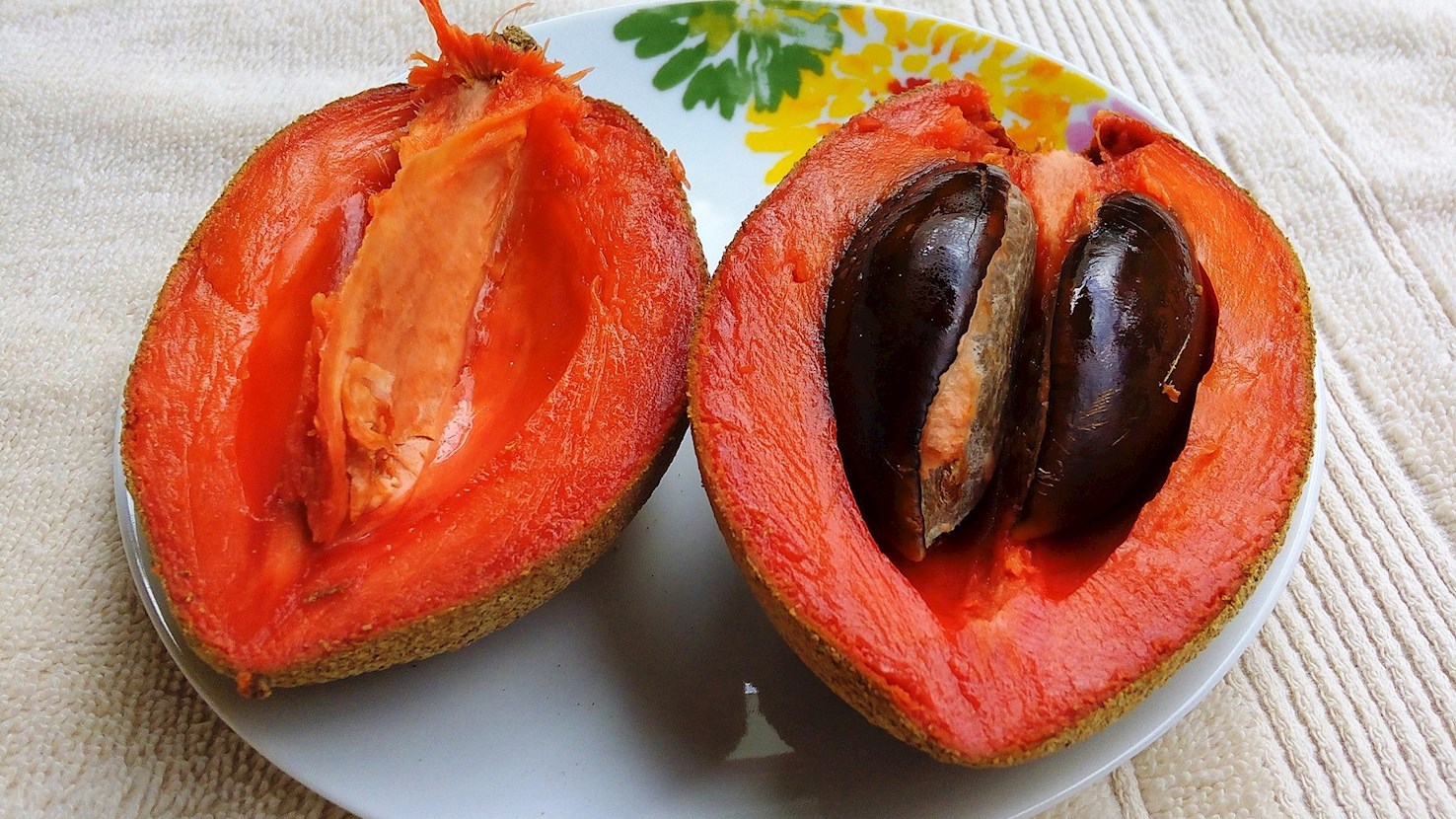
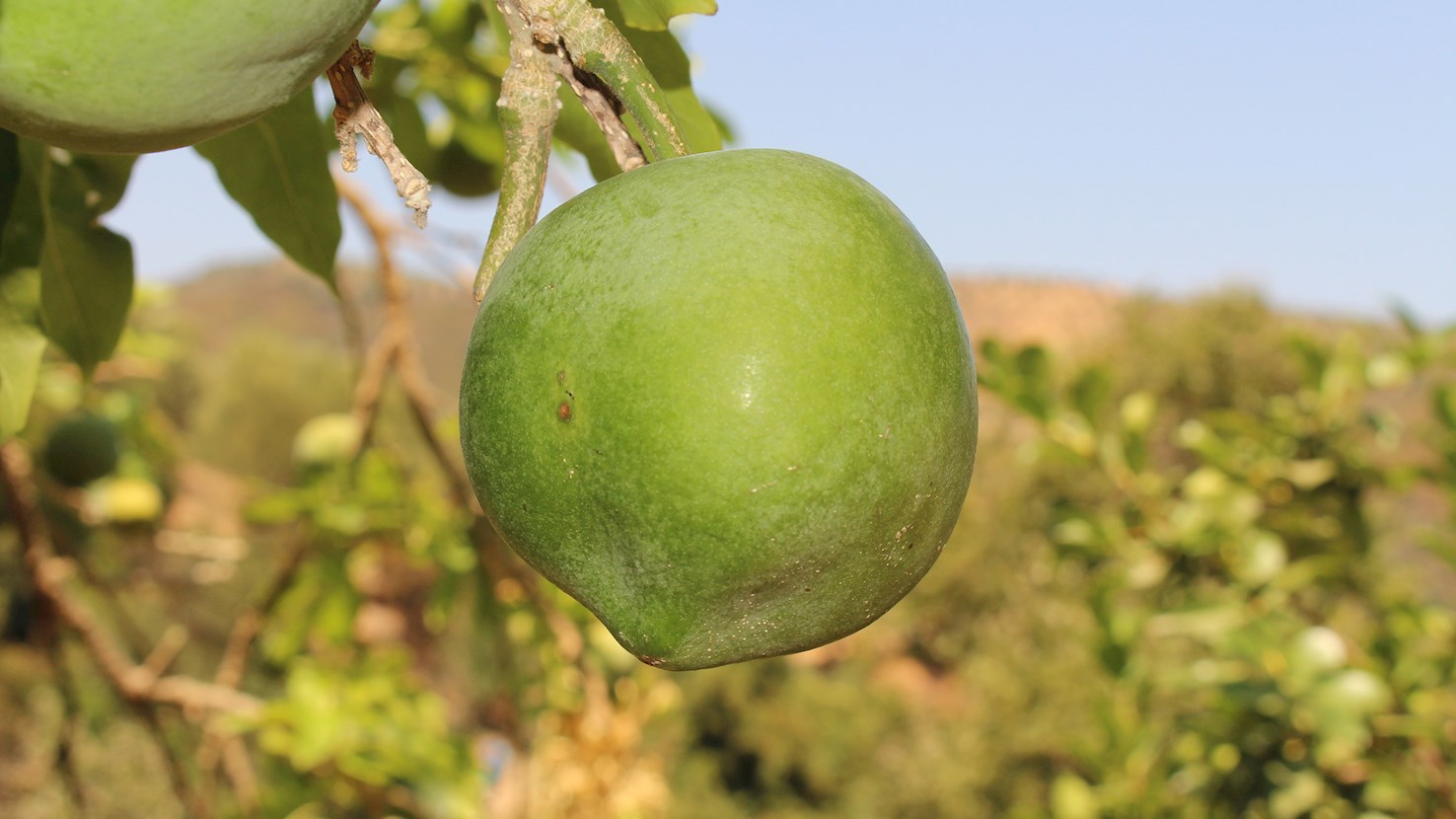
Sapote is an erect evergreen tree that contains white latex in all parts of the plant. It‘s native to the region that stretches from southern Mexico to Nicaragua, but sapote is grown throughout tropical America and in some countries in Southeast Asia. The fruit is round to elliptic with rough skin and creamy, soft, and sweet pulp that’s said to taste like a mix of sweet potatoes and pumpkin. The pulp is enjoyed fresh or made into smoothies, ice creams, and milkshakes. Pieces of sapote are often added to green salads or made into jams and jellies. In Mexico, there’s a dessert called dulce de sapote, consisting of ripe sapote, rum, sugar, and either orange juice or lime juice. The name of this fruit is derived from the Nahuatl language, meaning soft, sweet fruit. It is believed that it was sapote that kept Cortez and his army alive when he had famously marched from Mexico City to Honduras.
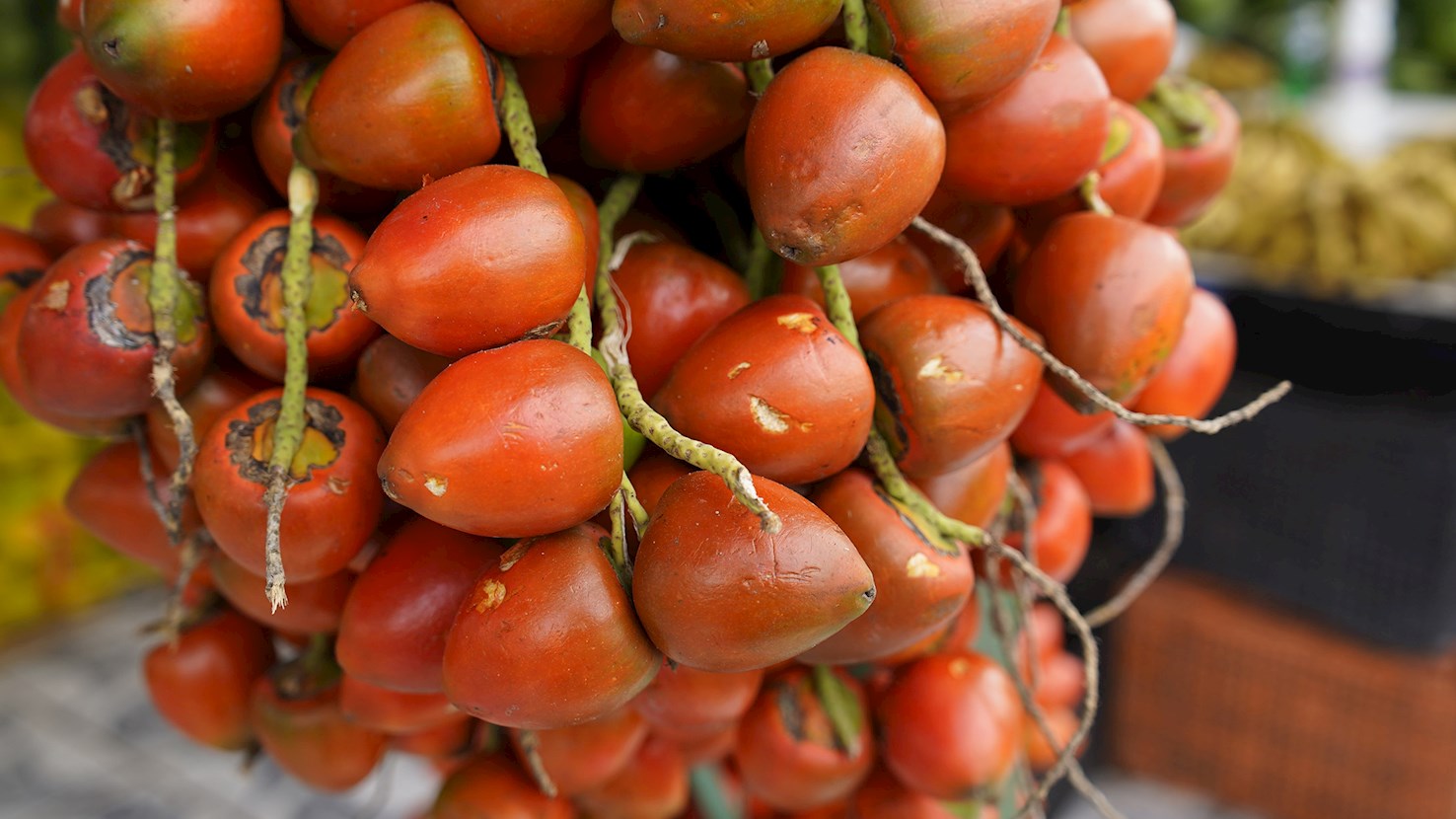
Peach palm fruit is the edible fruit of the peach palm tree (lat. Bactris gasipaes). This tropical palm is cultivated for both its fruit and its heart of palm, making it an important crop in various parts of Central and South America. The fruit itself is small, typically about the size of a large olive or small peach, and has a hard, thick skin ranging in color from yellow to orange to red when ripe. Nutritionally, peach palm fruit is rich in carbohydrates, dietary fiber, vitamins A and C, and contains some protein. Its flesh is dense and starchy, with a texture and taste that can be compared to a combination of pumpkin, potato, and chestnut. Because of its hard flesh, the fruit must be cooked before it can be eaten, usually boiled in salted water for an hour or more until it becomes soft. Once cooked, it can be consumed on its own, often with a dab of mayonnaise or lime juice, or used as an ingredient in various dishes.
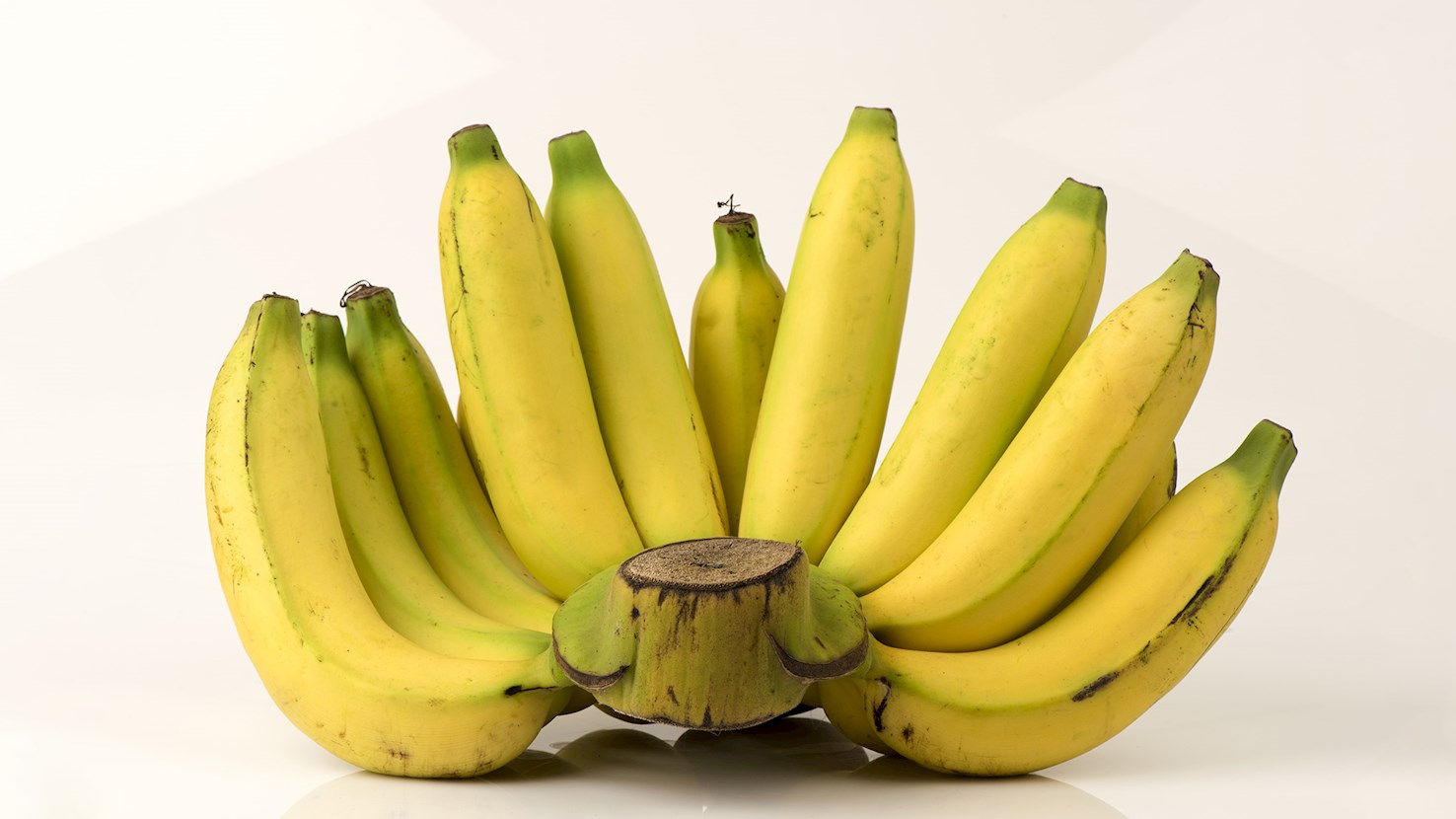
Burro banana is a unique variety of banana, shorter and more squared in shape compared to the common Cavendish banana, with a chunky appearance that sets it apart. When ripe, its skin turns bright yellow and may develop black spots, similar to other banana varieties, but its flesh holds a unique texture and taste. One of the most notable characteristics of the burro banana is its taste. It has a lemony or tangy flavor when compared to the sweeter taste of more conventional bananas. The texture is also different; it's firmer and starchier, somewhat resembling that of a plantain, but becomes creamier as it ripens. This tangy flavor and firm texture make the burro banana versatile for both raw and cooked applications, ranging from fresh snacks to being cooked in dishes where bananas or plantains might be used. Burro banana is native to Mexico, but is also grown in some parts of Central America, the Caribbean and the United States, particularly in areas with suitable tropical and subtropical climates.
White sapote (lat. Casimiroa edulis) is an evergreen tree that’s native from southeastern Mexico south to Costa Rica. The tree produces smooth-skinned fruit with a soft pulp and white seeds. Depending on the variety, the flavor can range from bland or bitter to sweet. When ripe, the fruits of selected varieties have a sweet pulp with a texture that’s reminiscent of avocados. The fruits are usually eaten out of hand, but they can also be made into ice cream, milkshakes, desserts, and marmalades. Interestingly enough, the poisonous seeds contain glycosides, which have been used in medicine as a sedative.
Gros Michel banana, sometimes known as "Big Mike," was the primary banana cultivar exported to the United States and Europe throughout the first half of the 20th century. It is known for its excellent taste, size, and resistance to handling and transportation, making it the dominant export banana until the 1950s. Gros Michel is larger, has a thicker skin, and, by many accounts, a sweeter and more flavorful taste than the Cavendish variety, which replaced it as the most widely exported banana. The decline of the Gros Michel as the leading export banana was due to Panama disease, caused by the fungus Fusarium oxysporum f. sp. cubense. This soil-borne fungus attacks the banana plant's roots and vascular system, eventually killing the plant. By the 1960s, Panama disease had devastated Gros Michel plantations across Central and South America, leading to the adoption of the Cavendish banana. The Cavendish was resistant to the strain of Panama disease that killed the Gros Michel, though it is now threatened by a new strain of the same fungus.
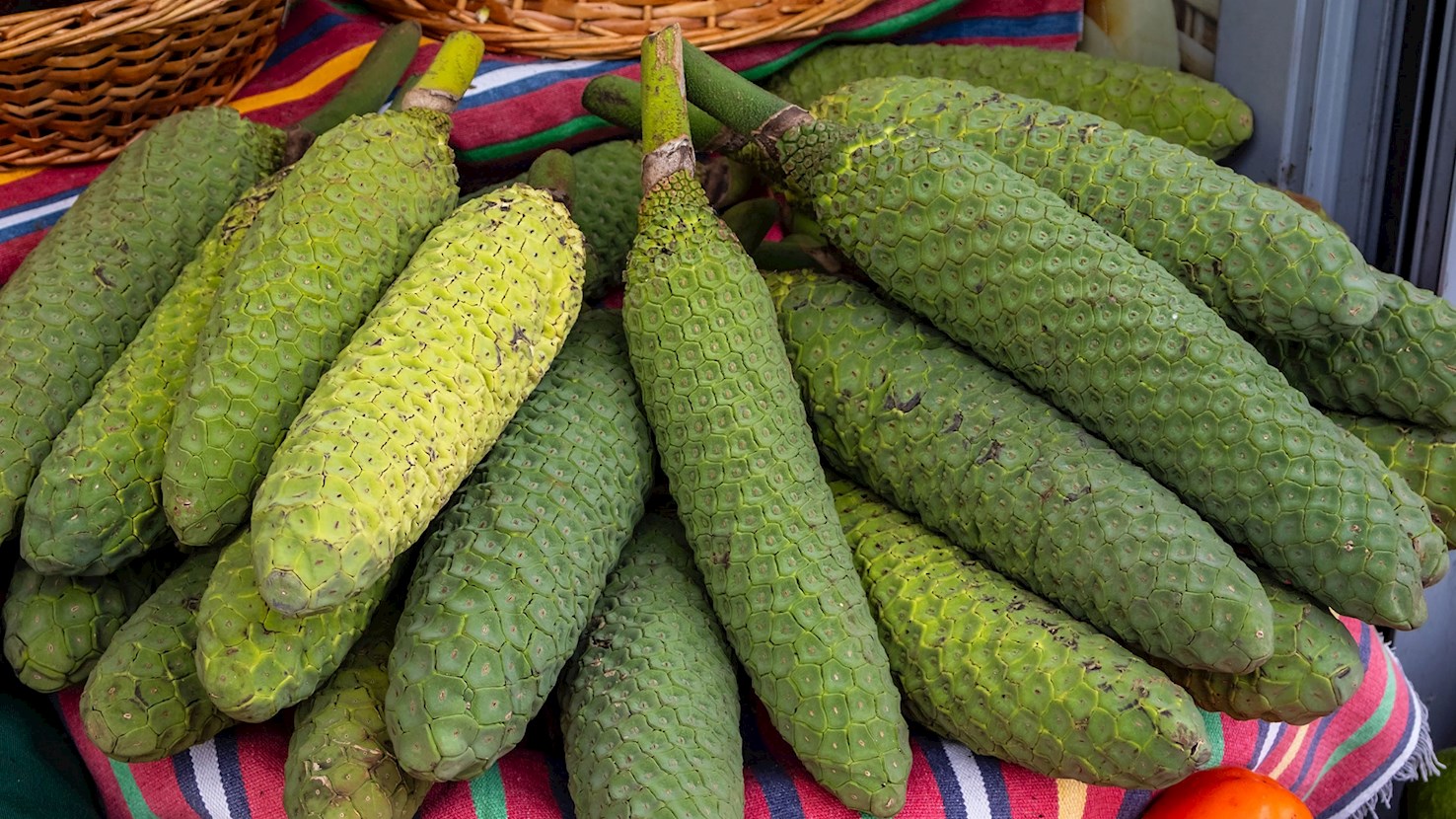
Monstera deliciosa fruit is the edible ripe fruit of the tropical Monstera deliciosa plant, a long, green, cone-like fruit covered in small hexagonal scales and known for its sweet pineapple-banana flavor. It comes from the same plant many people recognize as the Swiss cheese plant, but the fruit belongs to a very different world from the decorative leaves that made the species famous as a houseplant. The fruit looks almost like a green ear of corn or a scaled cylinder, and when it ripens properly, those scales loosen and fall away, revealing soft, pale, juicy flesh underneath. The flavor is the reason for the species name deliciosa: ripe fruit can taste like a mixture of pineapple, banana, mango, jackfruit, and ripe tropical candy, with a strong perfume that becomes noticeable as the fruit matures. Its texture is soft and slightly fibrous, sometimes custard-like in the ripest sections, and the edible flesh separates in small segments beneath the patterned skin. The fruit is unusual because it does not become safe and pleasant all at once. It ripens gradually, usually from the bottom upward, and only the portions where the outer scales have lifted or fallen away should be eaten. Unripe Monstera deliciosa fruit contains needle-like calcium oxalate crystals that can cause immediate burning, stinging, swelling, and irritation in the mouth and throat, so eating it too early is not just unpleasant but potentially harmful. This is why the fruit is usually allowed to continue ripening after harvest, often wrapped loosely or left at room temperature until the scales release naturally. The ripe sections are brushed clean and eaten fresh, while the still-green, tightly scaled parts are left alone until they soften and open. In places where the plant grows outdoors in warm climates, Monstera deliciosa fruit is treated as a rare tropical delicacy rather than an everyday market fruit. It is slow to develop, often taking many months to mature, and it does not travel as easily as firmer commercial fruits. The best specimens are fragrant, heavy, and beginning to shed their scales, with flesh that tastes intensely sweet and aromatic but still fresh enough to avoid becoming cloying. It is usually eaten plain, spooned, or pulled away from the core, because its main attraction is the direct experience of the ripe fruit: the perfume, the segmented flesh, and the surprising flavor that seems to combine several tropical fruits at once. It can also be added to fruit salads, smoothies, ice cream, custards, or simple desserts, but cooking or heavy seasoning tends to waste its delicate aroma. Monstera deliciosa is famous enough to have common names such as fruit salad plant or Mexican breadfruit, yet unfamiliar enough that many people who grow Monstera as an ornamental plant have never seen the fruit. I
TasteAtlas food rankings are based on the ratings of the TasteAtlas audience, with a series of mechanisms that recognize real users and that ignore bot,
nationalist or local patriotic ratings, and give additional value to the ratings of users that the system recognizes as knowledgeable.
TasteAtlas Rankings should not be seen as the final global conclusion about food. Their purpose is to promote excellent local foods,
instill pride in traditional dishes, and arouse curiosity about dishes you haven’t tried.







What People Say