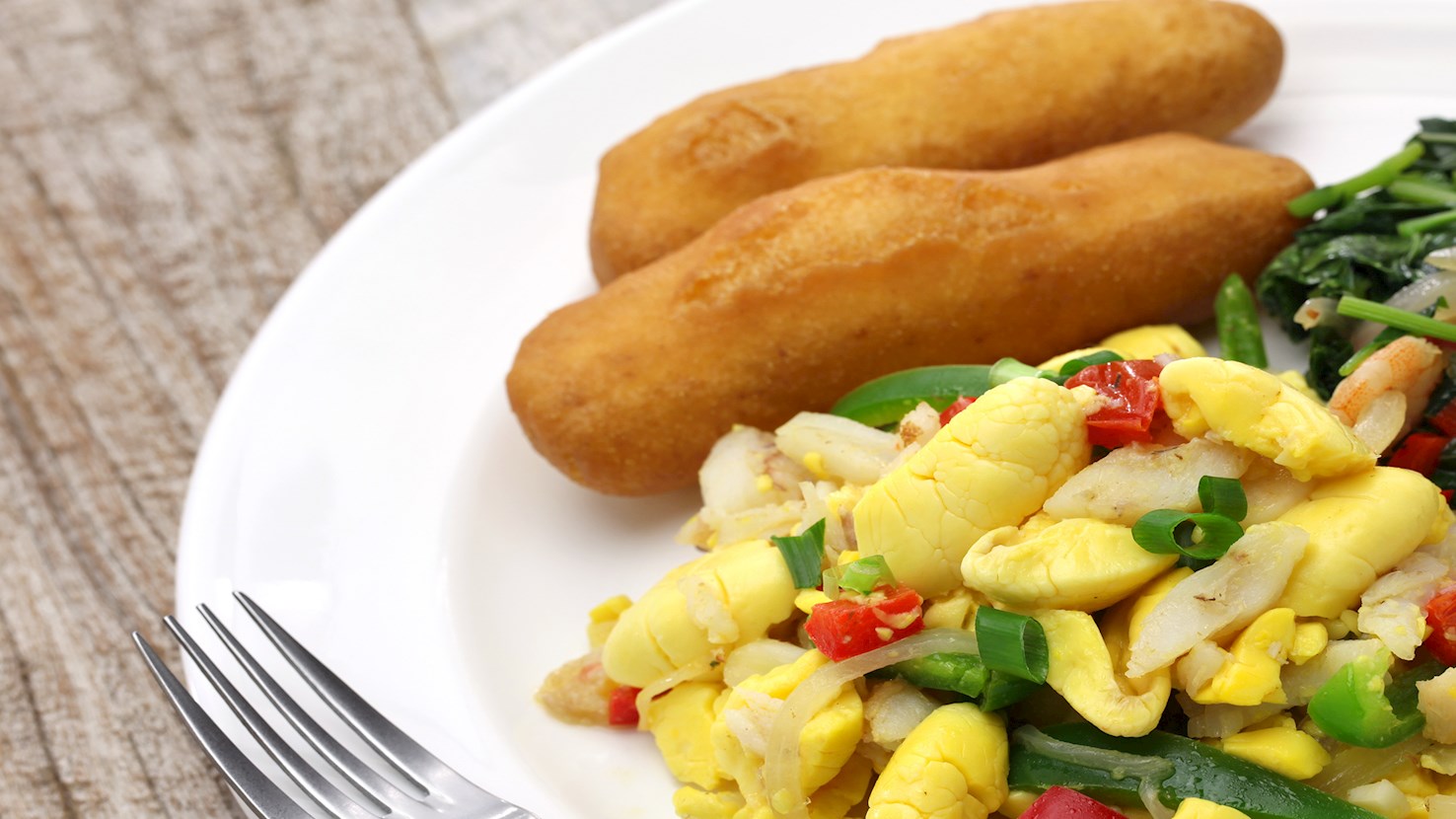
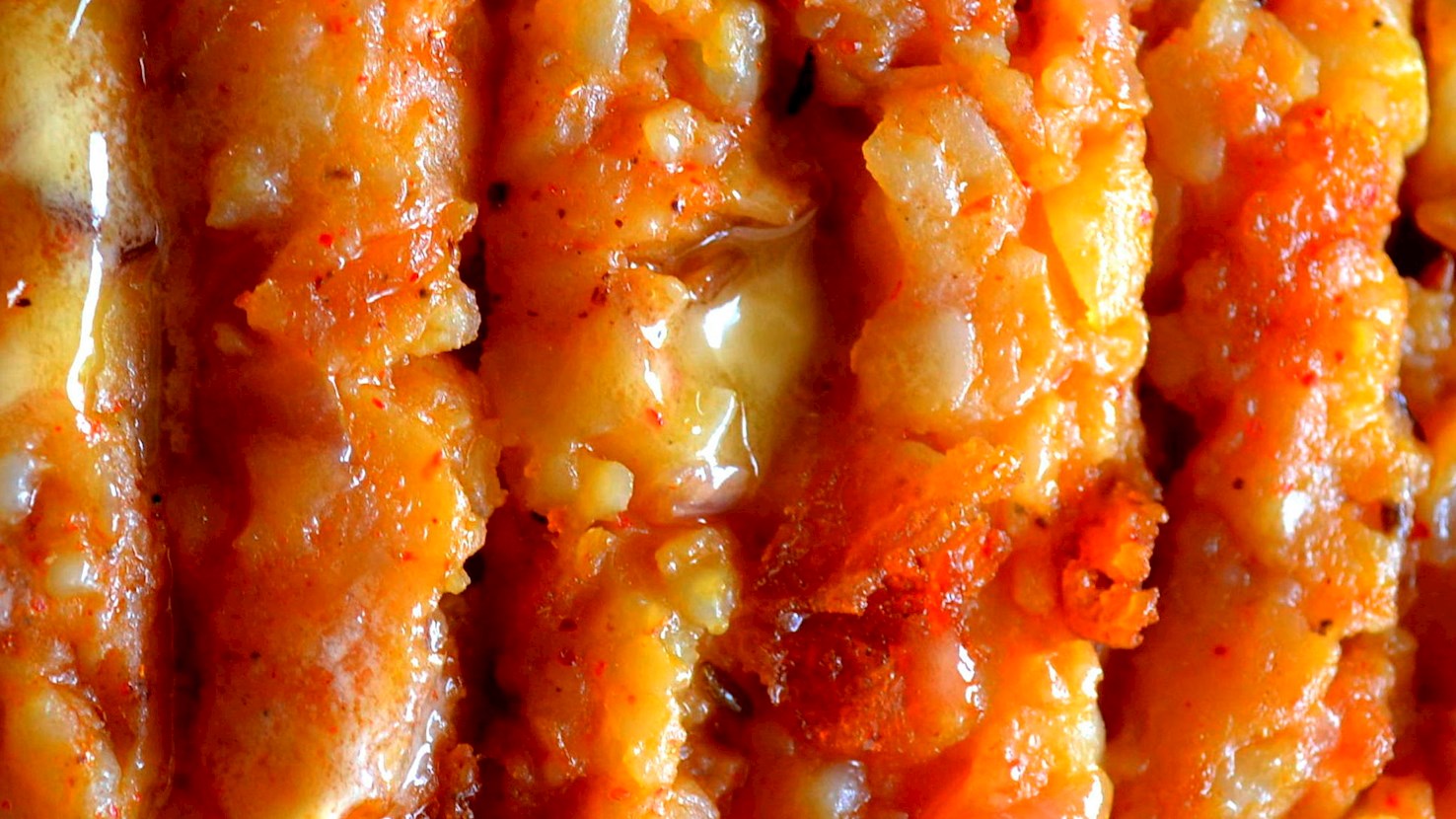
Festival is a Jamaican fried dumpling made from a dough of flour, cornmeal, sugar, salt, and water, shaped into elongated pieces and fried until golden and crisp on the outside and soft inside. It is commonly served alongside fried fish, escovitch fish, jerk meats, and other street-food dishes in Jamaica. The combination of cornmeal and a touch of sweetness distinguishes festival from plain fried dumplings, making it a staple at cookshops, roadside stalls, and beachside fish shacks throughout the island. Its development can be traced to the evolution of Jamaican fried doughs in the twentieth century, when cooks began incorporating cornmeal and sugar into basic flour dumplings. Fried dumplings have long been part of Jamaican cooking, but festival emerged as a sweeter variation designed to pair well with spicy foods such as jerk chicken and hot pepper sauces. The inclusion of cornmeal may reflect influences from earlier Caribbean and African preparations using ground maize, while the sweetened dough reflects local preferences for balancing spicy or acidic dishes with mild, slightly sweet sides. By the mid-century period, festival had become a recognized item at jerk stands and seaside restaurants, and it spread widely as Jamaican street food culture grew. Preparation begins by mixing flour, cornmeal, sugar, and a small amount of salt in a bowl. Baking powder is added to help the dough rise slightly. Water or milk is added gradually to form a soft, pliable dough, which is then kneaded briefly until smooth. The dough is divided and shaped into long, slightly tapered pieces that resemble small torpedoes. These pieces are fried in hot oil until they puff slightly and turn a uniform golden brown. The finished festival has a crisp exterior and a tender, slightly sweet interior with a mild corn flavor. Festival is eaten throughout Jamaica, especially with fried escovitch fish, steamed fish, peppered shrimp, jerk chicken, jerk pork, or roast fish. It also appears at parties, family gatherings, and beachside eateries where seafood is cooked to order. It pairs well with drinks such as ginger beer, ting, coconut water, cold lager, rum punch, or sorrel drink, all of which complement the light sweetness and fried texture of the dish.
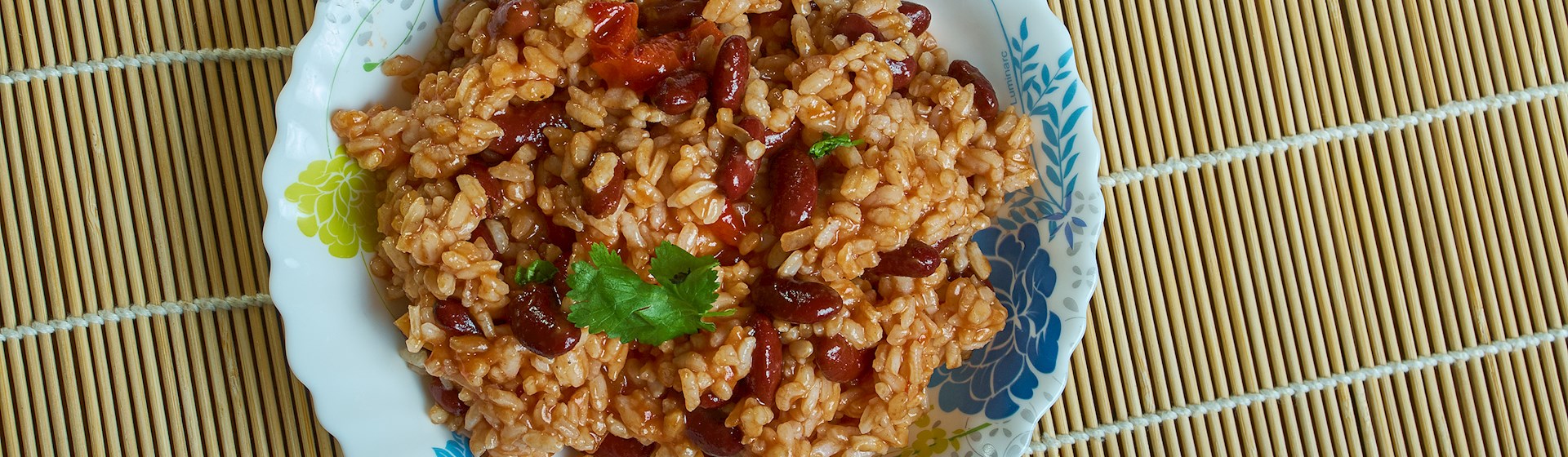
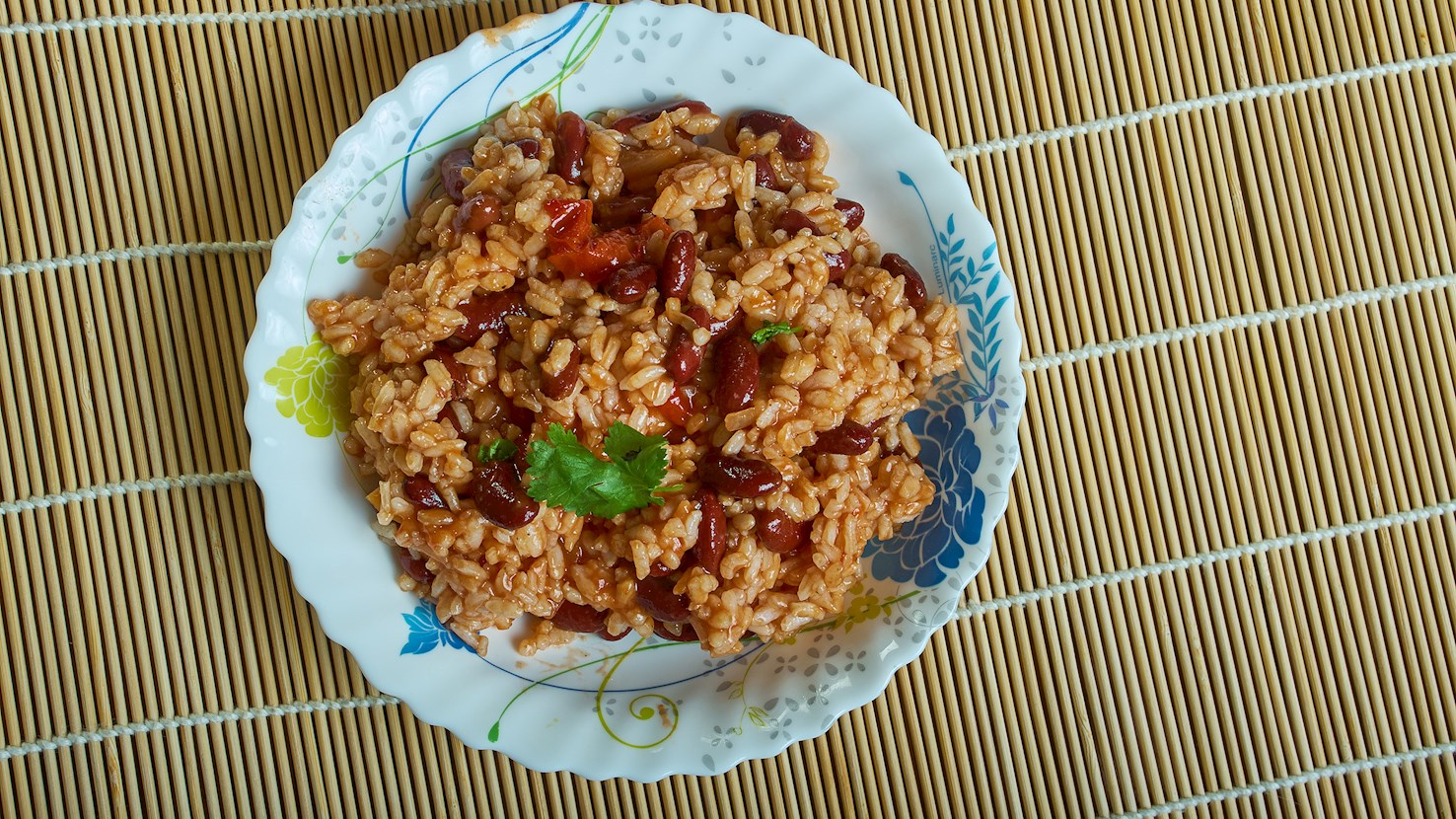
Diri ak pwa, also called diri kole ak pwa, is the national dish of Haiti, consisting of rice and beans. The dish became a common, everyday staple during the period of slavery, when rice and beans were two of the few ingredients that were fed to the slaves by their owners. It can be made with a variety of beans, but pinto, red kidney beans, and black beans are the most common options. Diri ak pwa is exceptionally nutritious as rice is rich in starch and contains iron, vitamin B, and protein, while the beans also contain iron and a greater amount of protein than rice. When combined, they make a complete protein. A true Haitian classic, you can see diri ak pwa eaten everywhere on the island, and as the locals say "A meal is not a meal without a side of rice and beans." Even though the dish is tasty and nutritious on its own, Haitians often serve it with a lot of sauce, and it is best paired with Creole chicken or topped with red snapper, tomatoes, and onions. Another interesting accompaniment to diri ak pwa is bouillon, a hearty stew consisting of tomatoes, potatoes, spices, and goat or beef meat.
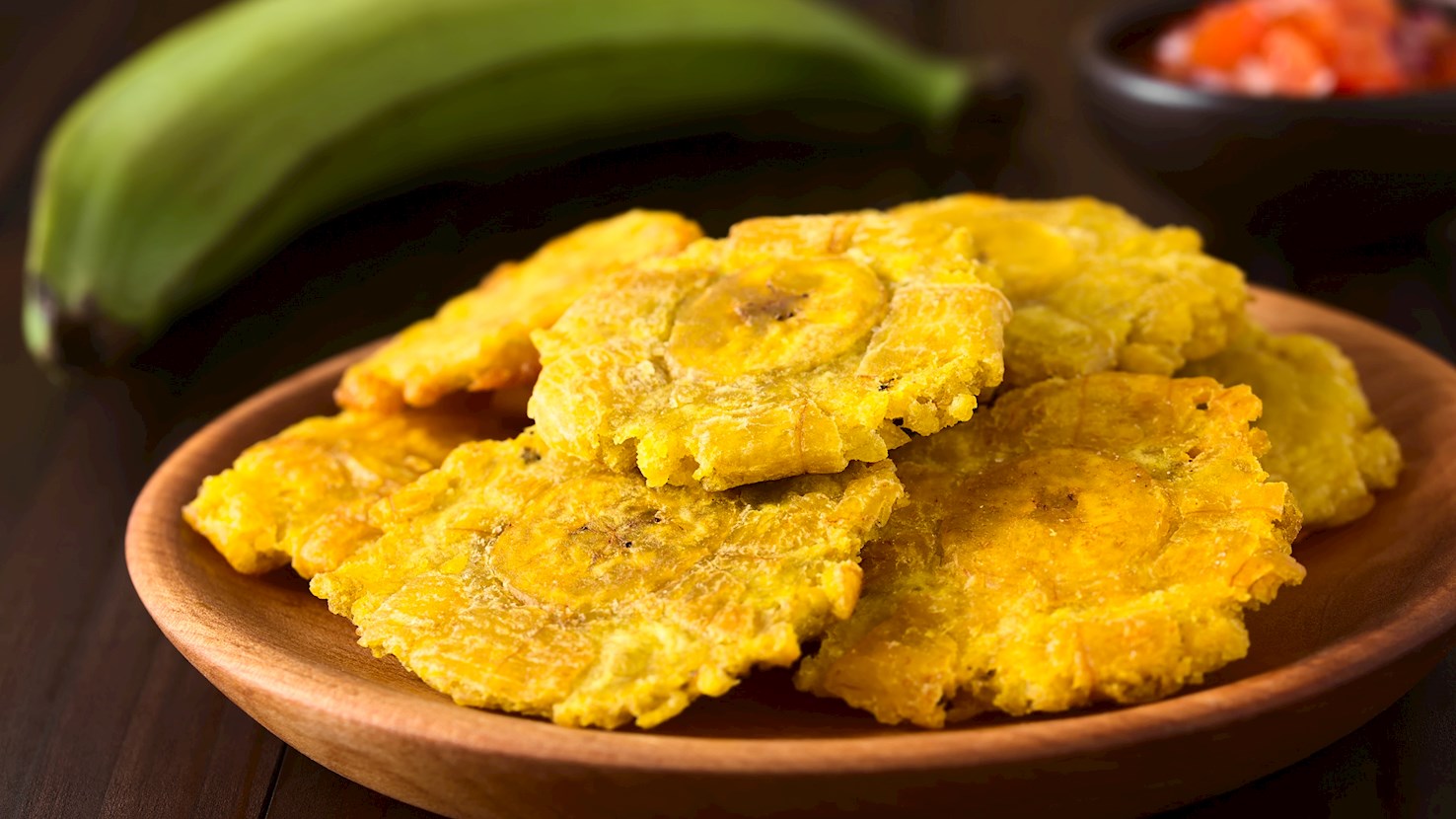
Tostones is a traditional side dish that's popular throughout Latin America and the Caribbean, especially in Puerto Rico. Unlike platanos fritos, where only ripe plantains are used, tostones are made with unripe, hard, very green plantains. They are sliced into pieces, fried on each side, then smashed or flattened and deep-fried one more time until they become golden. Once prepared, the tostones are sprinkled with sea salt and served as a side dish to various dishes. They are often served with garlic mojo sauce (mojo de ajo), either on top of the tostones, or on the side as a dip.
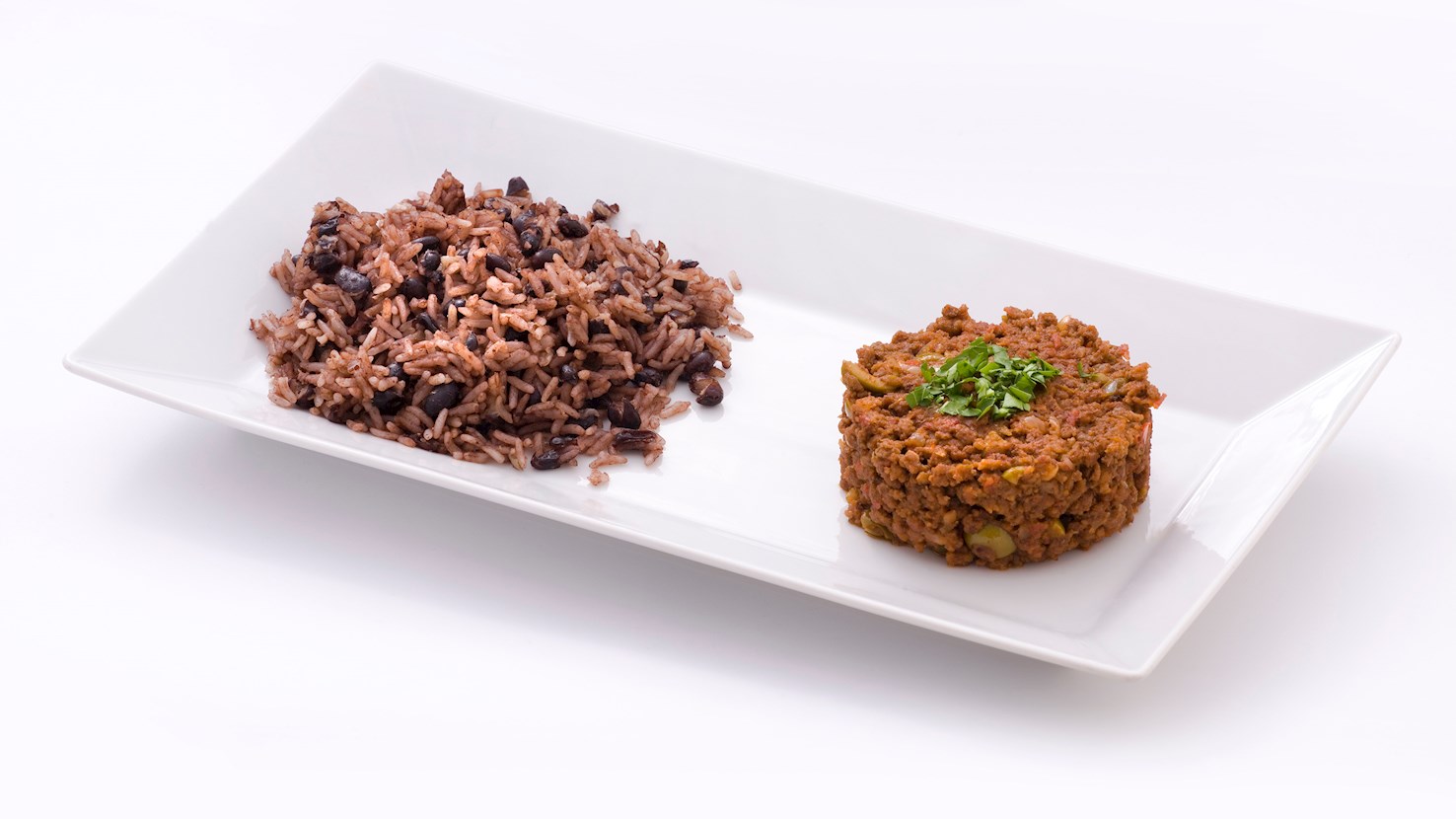
Platillo Moros y Cristiano, roughly translated as Moors and Christians dish - a poetic name referring to history, is the national dish of Cuba, a hearty combination of fluffy white rice and seasoned black beans, cooked together in the same pot. Moros y Cristiano is originally Spanish, and it spread to Cuba with its strong Spanish, Caribbean, and North African influences. White rice represents the Spanish Christians, while black beans are supposed to be the Muslim Moors, remembering a long period of wars between the two, known as Reconquista, and celebrating how both groups came to reconciliation in the Iberian Peninsula. The dish is found everywhere in Cuba, and you can't go to any restaurant, home, or street corner without it appearing in some form, so it is not unusual that there are as many recipes for the dish as there are Cuban people with cooking skills.
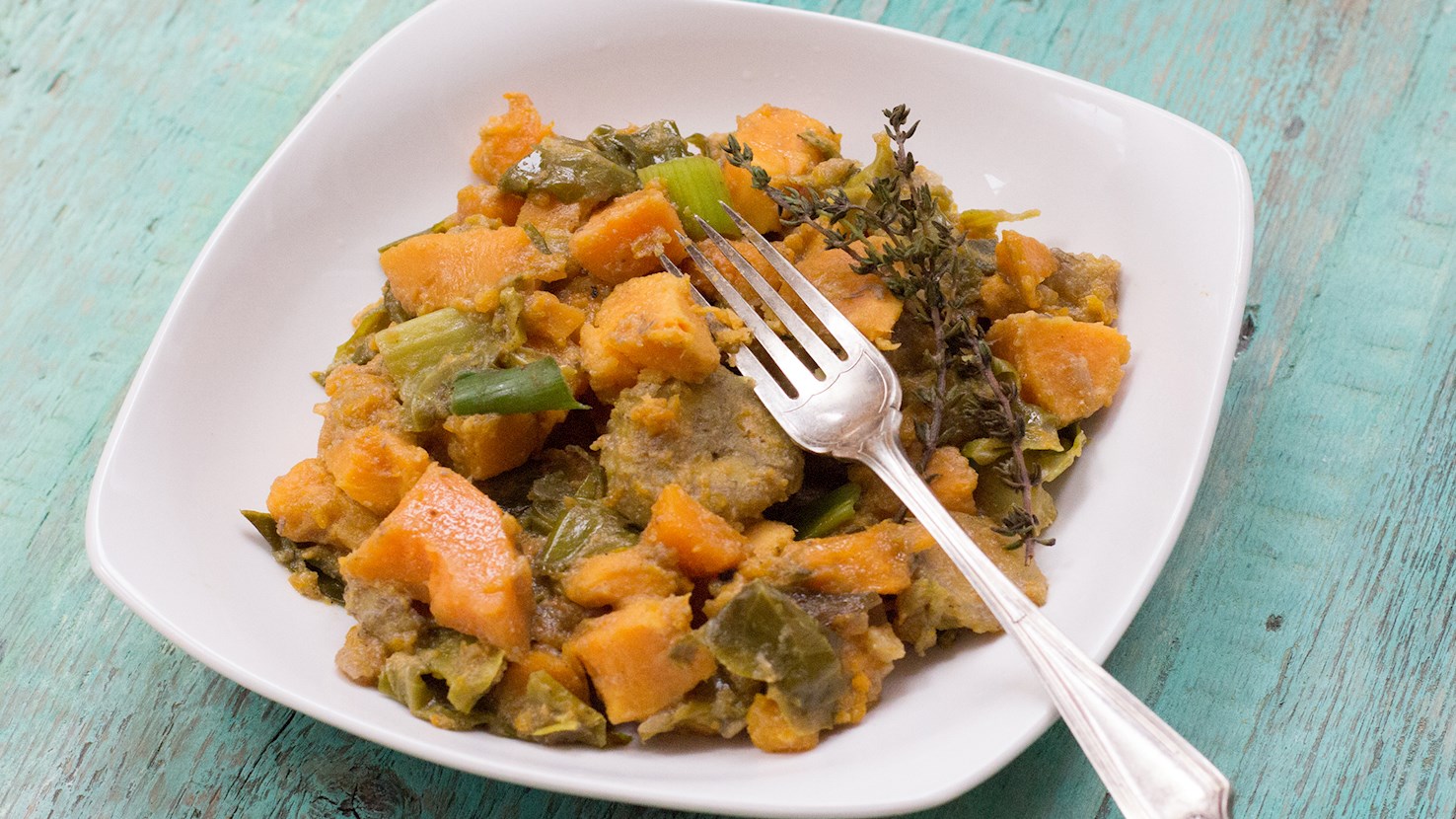
Ital stew is a plant-based Jamaican dish prepared with vegetables, legumes, coconut milk, herbs, and natural seasonings, cooked without meat and often without salt. The name “Ital” refers to the Rastafarian dietary principle that food should be vital, pure, and derived directly from natural sources, avoiding processed ingredients, artificial additives, or anything seen as diminishing the life force of the eater. Ital food is therefore centered on whole foods, minimal intervention, and methods that preserve the integrity of the ingredients. Ital stew appears in homes, community gatherings, and Ital cookshops, and has become widely recognized outside Jamaica as one of the core expressions of Rastafarian cooking. Its development is linked to the growth of Rastafari in the mid-twentieth century, when adherents shaped dietary practices to align with spiritual beliefs that emphasize natural living and a close relationship with the earth. As Ital cooking spread in urban and rural areas, the stew evolved into a flexible preparation that accommodates local produce such as pumpkin, callaloo, beans, and ground provisions. Preparation begins with a base of onions, scallions, garlic, thyme, and Scotch bonnet pepper, which are sautéed in coconut oil or cooked directly in coconut milk. Vegetables such as pumpkin, carrots, okra, and chocho are added along with red peas or broad beans. Coconut milk provides the liquid and helps thicken the stew. Ingredients such as Irish potato or sweet potato may be included to increase the stew’s body. Salt is often omitted or replaced with natural substitutes such as seaweed or celery, in keeping with Ital practice. The stew simmers until the vegetables are tender and the coconut milk reduces to a cohesive, lightly creamy texture. Its character depends on the use of fresh herbs and natural seasonings rather than manufactured sauces. Ital stew is eaten across Jamaica, especially in Rastafarian communities and in Ital restaurants that focus on plant-based meals. It is served with rice, bulgur, quinoa, or boiled ground provisions such as yam and green banana. Beverage pairings include coconut water, herbal teas, sorrel, and fresh fruit juices, all of which align with the emphasis on unprocessed foods and complement the clean, earthy flavors of the stew.
Diri ak djon djon is a Haitian dish consisting of rice combined with black mushrooms. During the boiling process, these mushrooms release a natural coloring (gray to black), giving the dish its distinctive colors and flavors. Black mushrooms are native to the northern parts of the island, so diri ak djon djon is considered a regional delicacy in Haiti. The dish can be consumed on its own, when it is typically paired with a salad, but it is also served as an accompaniment to various meat and fish dishes.
Baigan choka is a vegetarian Trini dip that is made with eggplant as the key ingredient. In order to prepare the dip, the eggplants are traditionally roasted over an open flame, then mashed and combined with garlic, hot chili peppers, onions, and olive oil or vegetable oil. Some variations also use roasted tomatoes, while some do not. The creamy dip is then seasoned with salt and pepper before being served with parathas or any other types of flatbread.
Palmito guisado is a traditional dish originating from the Dominican Republic. This stew is usually made with a combination of cooked heart of palm, garlic, tomatoes, bell peppers, onions, olives, oil, salt, and black pepper. The onions are sautéed in olive oil until translucent, and the remaining ingredients except the heart of palm are then added to the pot. The stew is covered and simmered until the vegetables are fully cooked. The heart of palm is added with some water, and the stew is then simmered uncovered until the liquid becomes reduced to half. Pamito guisado is seasoned with salt and pepper before serving.
Aloo choka is a popular Trini dish influenced by Indian cuisine. Simple and filling, consumed for breakfast or dinner, the dish is made by combining boiled potatoes with chopped onions, grated ginger, salt, pepper, and oil. Hot peppers can be added for a spicy kick, depending on personal preferences. It is recommended to pair aloo choka with a flatbread called sada roti.
Ensalada de molondrones is a traditional salad originating from the Dominican Republic. It's usually made with a combination of okra, onions, bell peppers, lime juice, olive oil, parsley, salt, and pepper. The okra is boiled with salt and half of the lime juice. The remaining ingredients are mixed together with the okra, and the salad is seasoned with salt and pepper to taste. This simple and healthy salad is usually served on its own as a main dish.
TasteAtlas food rankings are based on the ratings of the TasteAtlas audience, with a series of mechanisms that recognize real users and that ignore bot,
nationalist or local patriotic ratings, and give additional value to the ratings of users that the system recognizes as knowledgeable.
For the “Top 10 Caribbean Vegan Dishes” list until May 16, 2026, 299 ratings were recorded, of which 215 were recognized by the system as legitimate.
TasteAtlas Rankings should not be seen as the final global conclusion about food. Their purpose is to promote excellent local foods,
instill pride in traditional dishes, and arouse curiosity about dishes you haven’t tried.