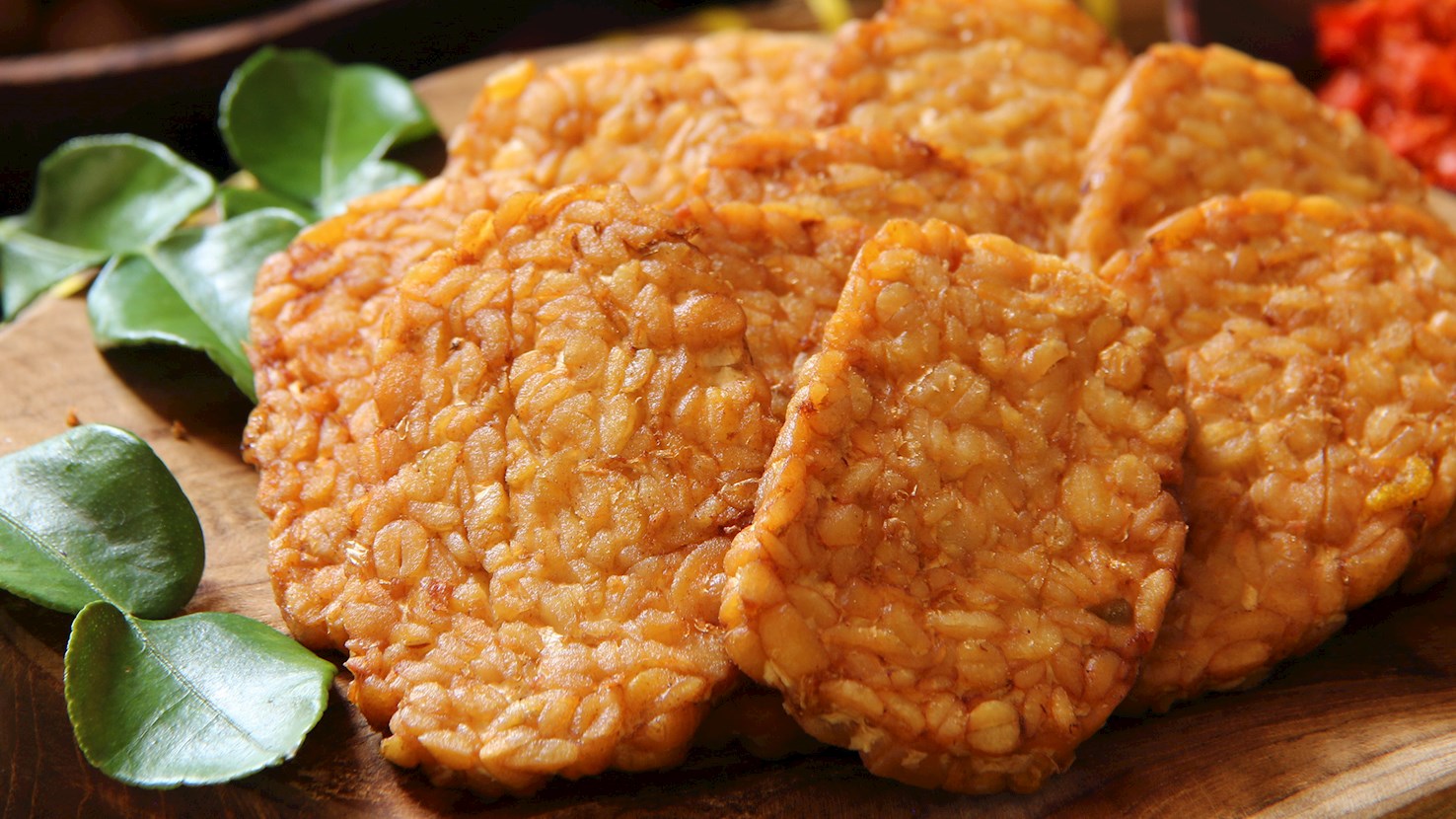
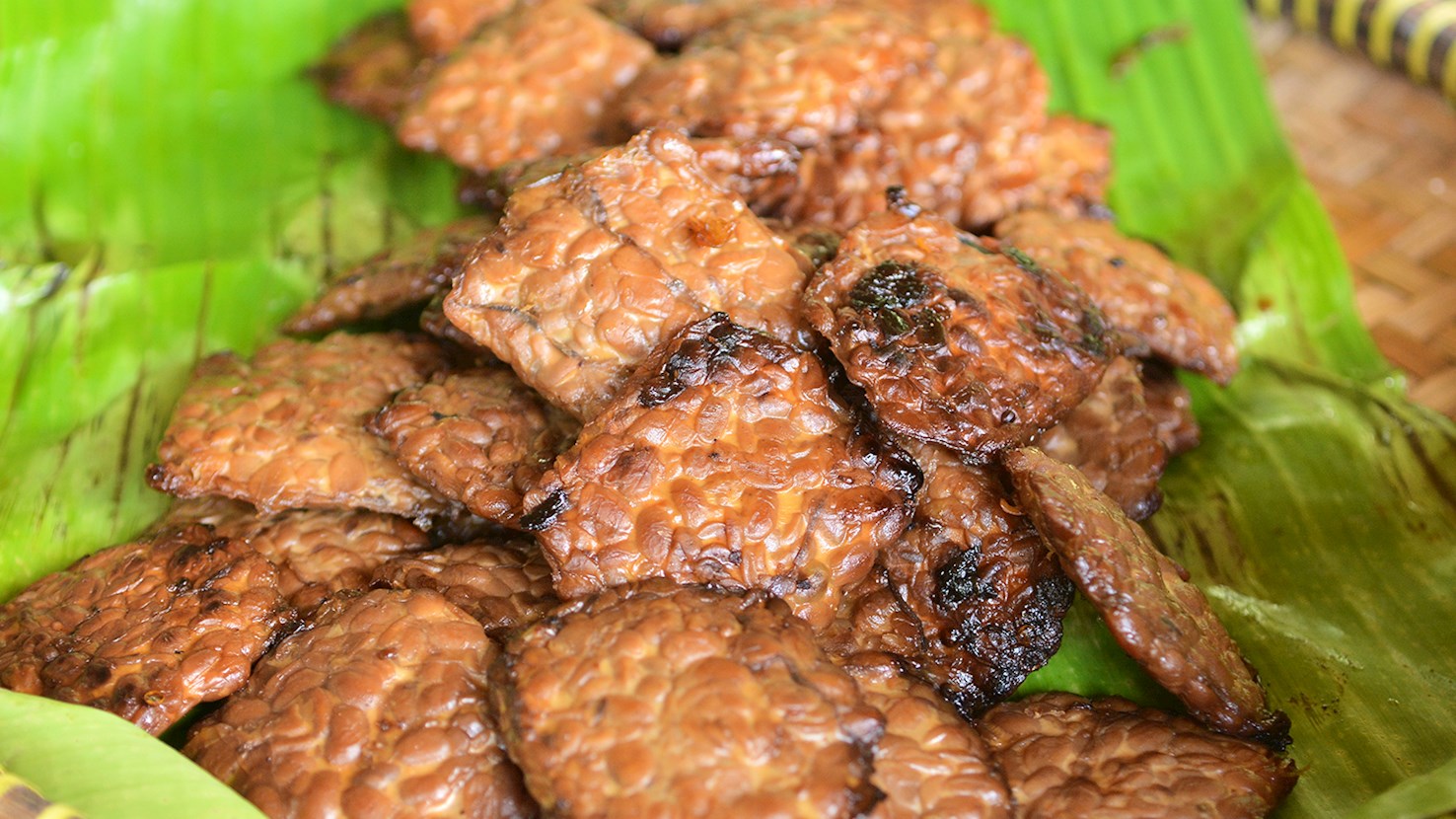
Tempe goreng is an Indonesian fried tempeh dish, known for its crispy texture, rich umami flavor, and aromatic spices. A staple in Javanese and Sundanese cuisine, it is made from tempeh, a fermented soybean cake that is deeply rooted in Indonesian food culture. Unlike tofu, which has a soft and spongy texture, tempeh is firm, chewy, and packed with a natural nutty taste, making it an ideal ingredient for frying. To prepare tempe goreng, the tempeh is sliced and marinated in a fragrant blend of garlic, shallots, coriander, turmeric, and salt, sometimes infused with kaffir lime leaves for added aroma. Some regional variations involve simmering the tempeh in a spiced coconut broth before frying, giving it an even deeper flavor. The marinated tempeh is then fried in hot oil until golden brown and crispy, creating a perfect contrast between the crunchy exterior and the tender, meaty inside. Tempe goreng is highly versatile and is eaten in many ways—as a simple snack with sambal, as a protein-rich side dish in rice meals like nasi uduk or nasi campur, or as part of a larger feast. Some variations coat the tempeh in batter before frying, resulting in tempe mendoan, a crispier, lighter version, while others caramelize it in kecap manis (sweet soy sauce), creating tempe goreng kecap, a slightly sweet and savory alternative.
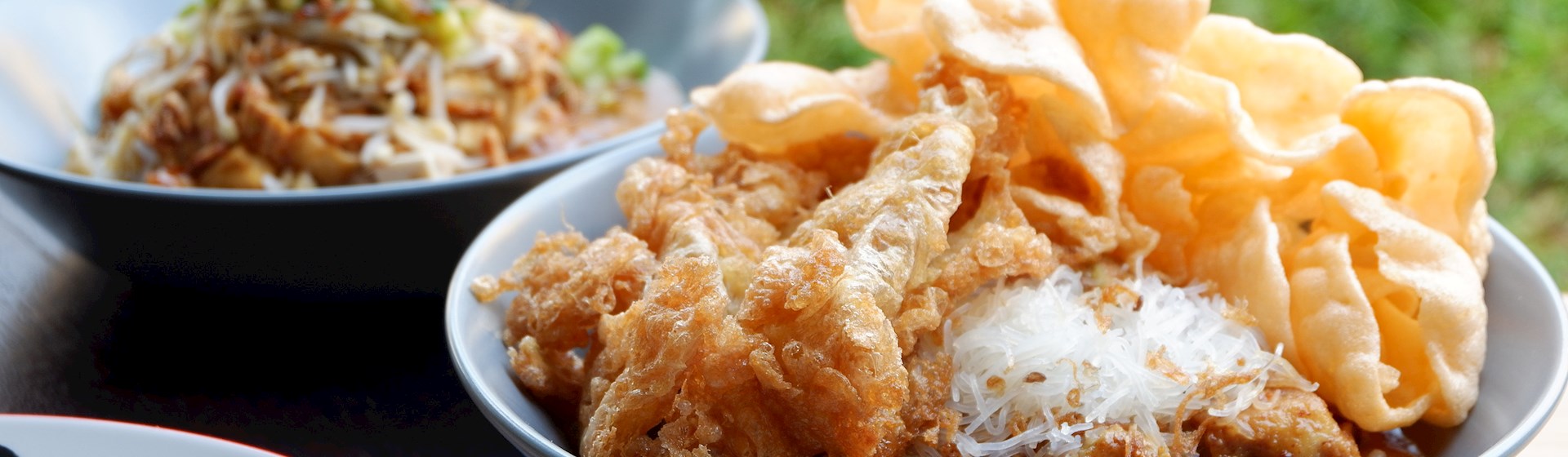
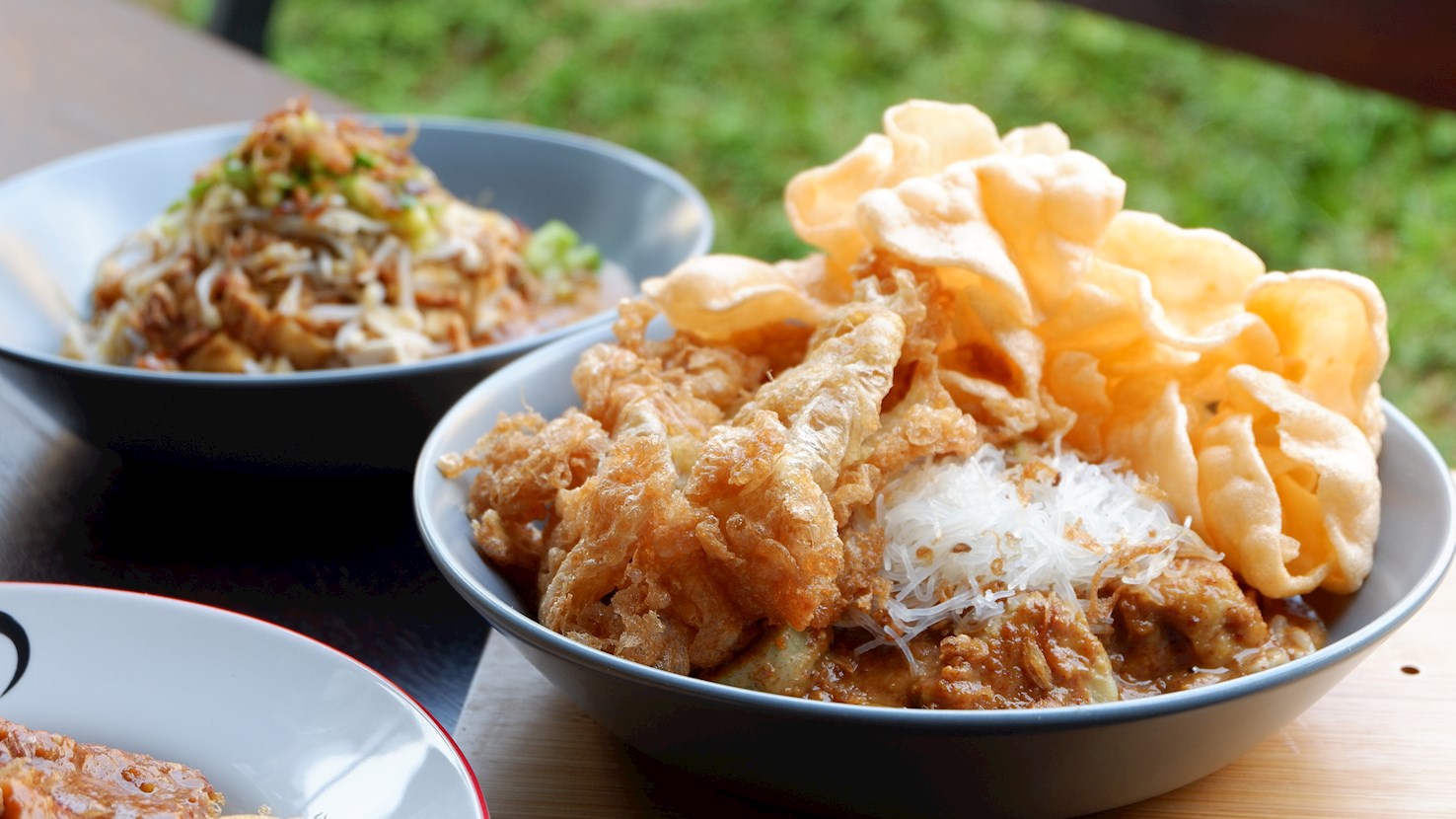
Ketoprak is a traditional street food dish that's often described as tofu salad. It's made with a combination of fried tofu, steamed rice cakes, rice vermicelli noodles, bean sprouts, cabbage, and cucumbers. The combination is served in peanut sauce and sweet soy sauce (kecap manis). It's usually topped with fried shallots and krupuk. The dish can be found at numerous ketoprak food carts throughout Jakarta, although there is still an ongoing debate about the origin of the dish – some claim that it was first made in Cirebon because the majority of street food vendors come from Cirebon. The tofu is freshly fried from the food carts, while the other ingredients are prepared in advance. Ketoprak is usually a vegan dish, but it's sometimes topped with a hard-boiled egg which makes it non-vegan.
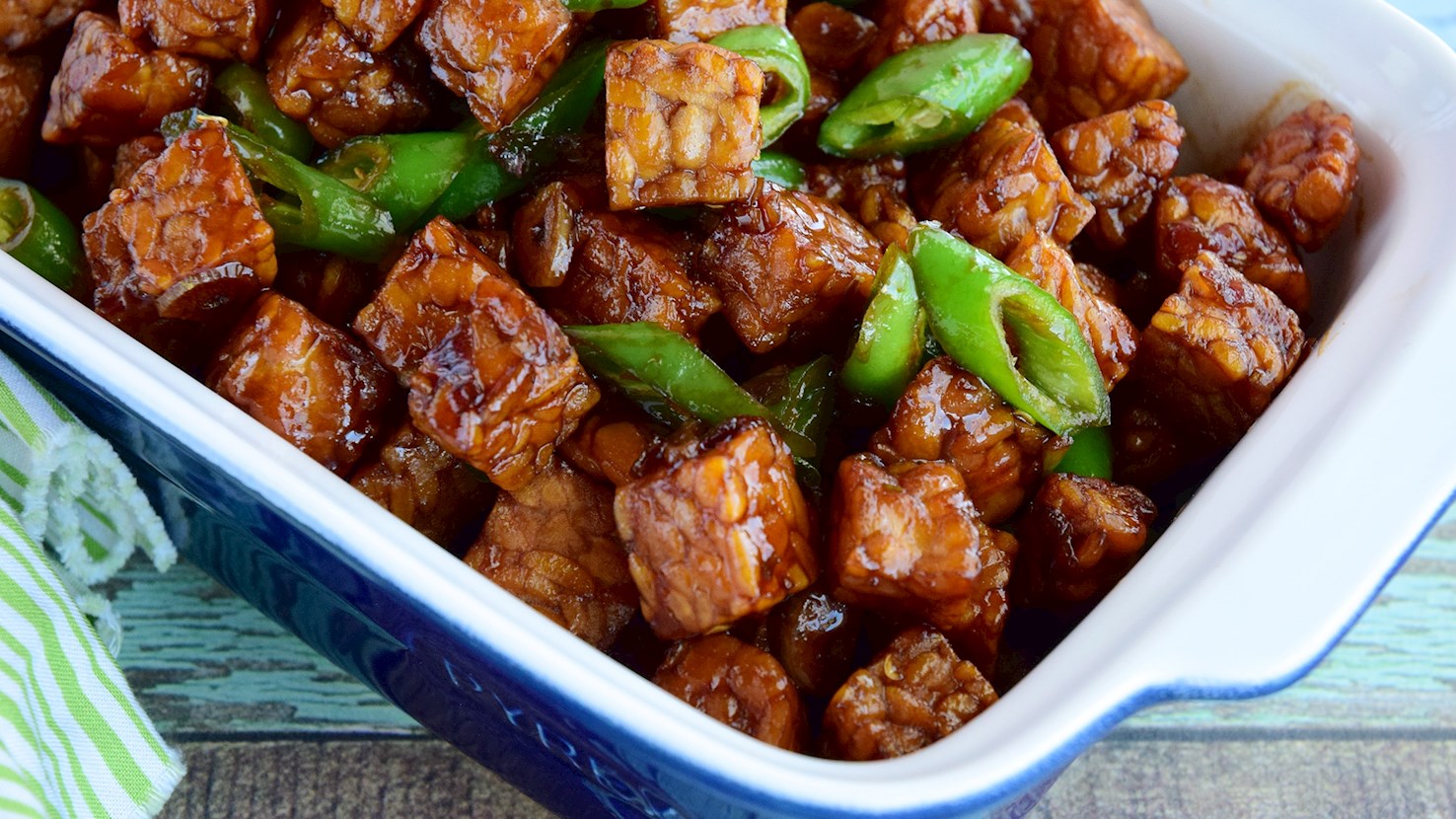
Tempe orek is an Indonesian stir-fry dish made with tempe, a traditional fermented soybean cake that originated in Java. In tempe orek, tempe is typically sliced into small matchsticks or cubes and then fried until golden, giving it a satisfying chew and slightly crispy edges. The fried tempeh is then tossed in a rich caramelized sauce made from a combination of kecap manis (Indonesian sweet soy sauce), garlic, shallots, and chilies, sometimes enhanced with bay leaves, galangal, or a touch of tamarind for added complexity. The result is a glossy, aromatic dish that balances sweetness, saltiness, and mild heat—flavors that are quintessential to Javanese cooking. Tempe orek is commonly served as a side dish alongside steamed rice, vegetables, and other main courses, often as part of a larger nasi rames or nasi campur spread. In some homes, it is made dry and stir-fried until the sauce clings tightly to the tempe, making it suitable for travel or packed lunches; in others, it’s prepared with a bit more sauce, ideal for soaking into warm rice.
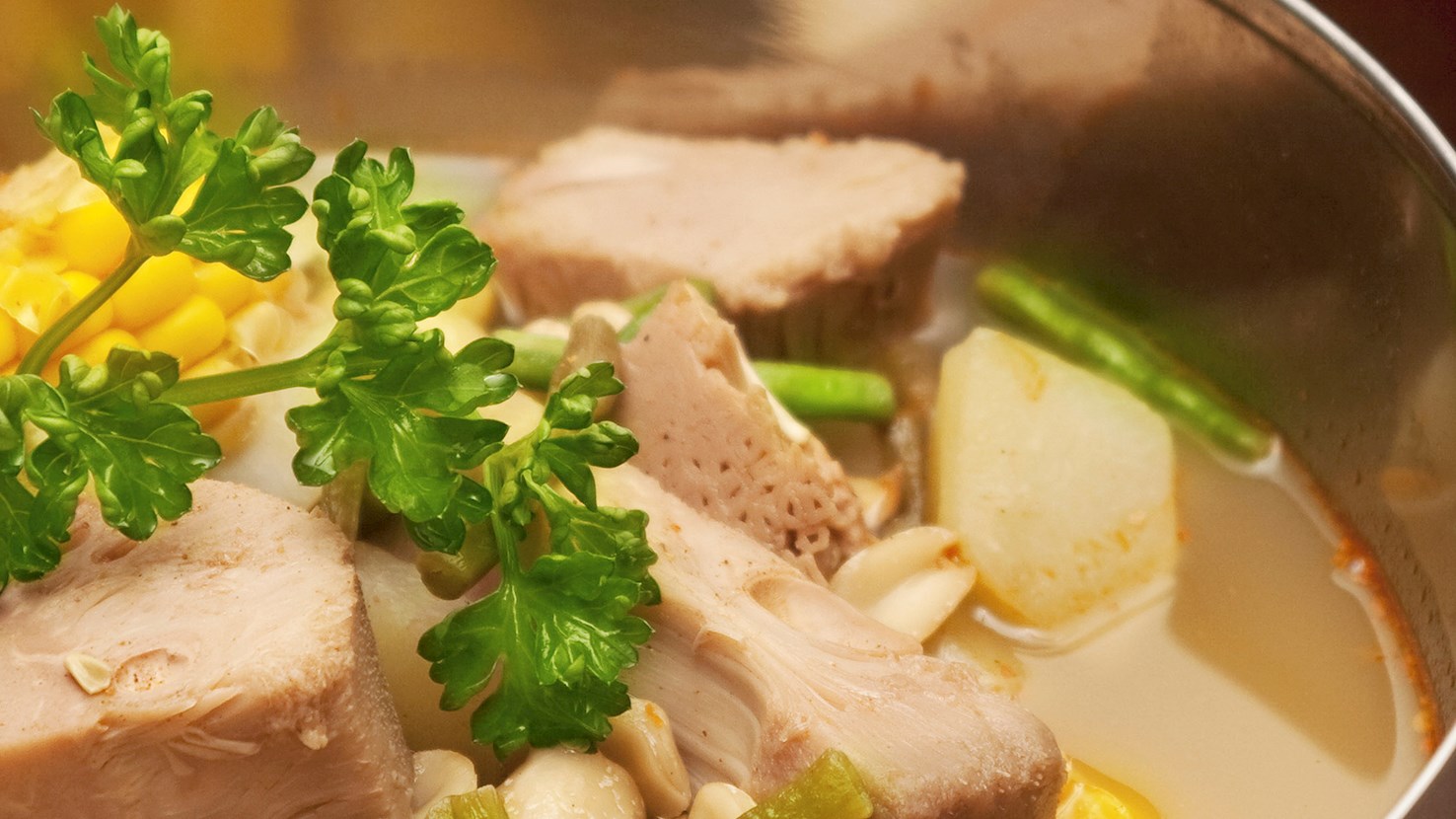
Sayur asem is a sweet and sour vegetable soup. Often referred to as tamarind soup, it is one of the favorite vegetable dishes in Indonesia. The entire dish is based on tamarind, an unusual plant commonly grown in Southeast Asia, which gives the dish a distinctive sour taste. Other traditional Indonesian ingredients in sayur asem include jackfruit, melinjo, long beans, bilimbi, pumpkin, corn, and chayote. Sayur asem originated among the Sundanese people residing in West Java. However, their original recipe for this traditional soup has been adapted across Indonesia. Employing the available ingredients, numerous different varieties of sayur asem have been created. Usually, these newly formed varieties were named after a region of their origin. This soup is extremely versatile and can be served as an appetizer, first course, or a side dish with the main meal. Most commonly it is served alongside rice, fried chicken, tempeh, tofu, and fried or salted fish. It is traditionally prepared during summer, when it is typically served warm.
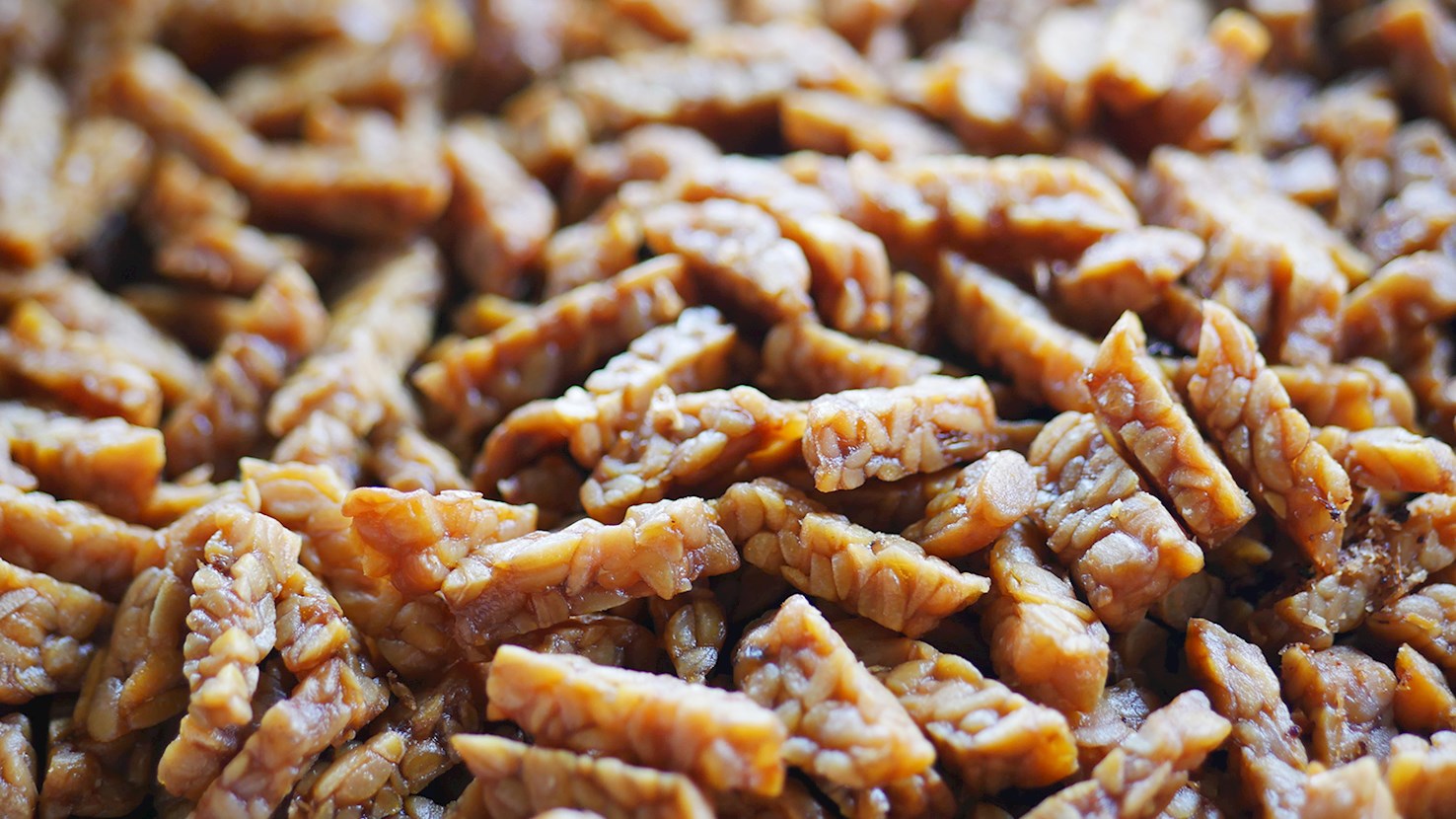
Tempe kering is a dry, crisp tempeh dish that comes from Java, where tempeh has long been a staple protein source in daily cooking. This preparation involves slicing tempeh into thin matchsticks or small cubes, then deep-frying the pieces until they become golden brown and crunchy. After frying, the tempeh is coated in a caramelized glaze made from palm sugar, tamarind juice, garlic, galangal, and bird’s eye chilies, which creates a balanced sweet, salty, and mildly spicy flavor profile. Sometimes peanuts are added to the mixture, providing additional texture and richness. Tempe kering is often prepared in households as a side dish to accompany steamed rice, vegetable dishes, or other proteins. It is also commonly packed into lunch boxes or sold in markets as a snack that can be stored for several days without refrigeration. The preparation requires careful attention to ensure the tempeh remains crisp after it is mixed with the syrup, which is cooked just long enough to coat each piece without making it soggy. Some variations use soy sauce or aromatic makrut lime leaves to add depth, while others substitute granulated sugar for palm sugar, depending on preference and availability. Its popularity is partly due to its versatility, as it can be eaten as a main protein source, a topping for rice, or a savory snack on its own. Tempe kering is also widely prepared during festive occasions and gatherings, when larger batches are made in advance to serve many people.
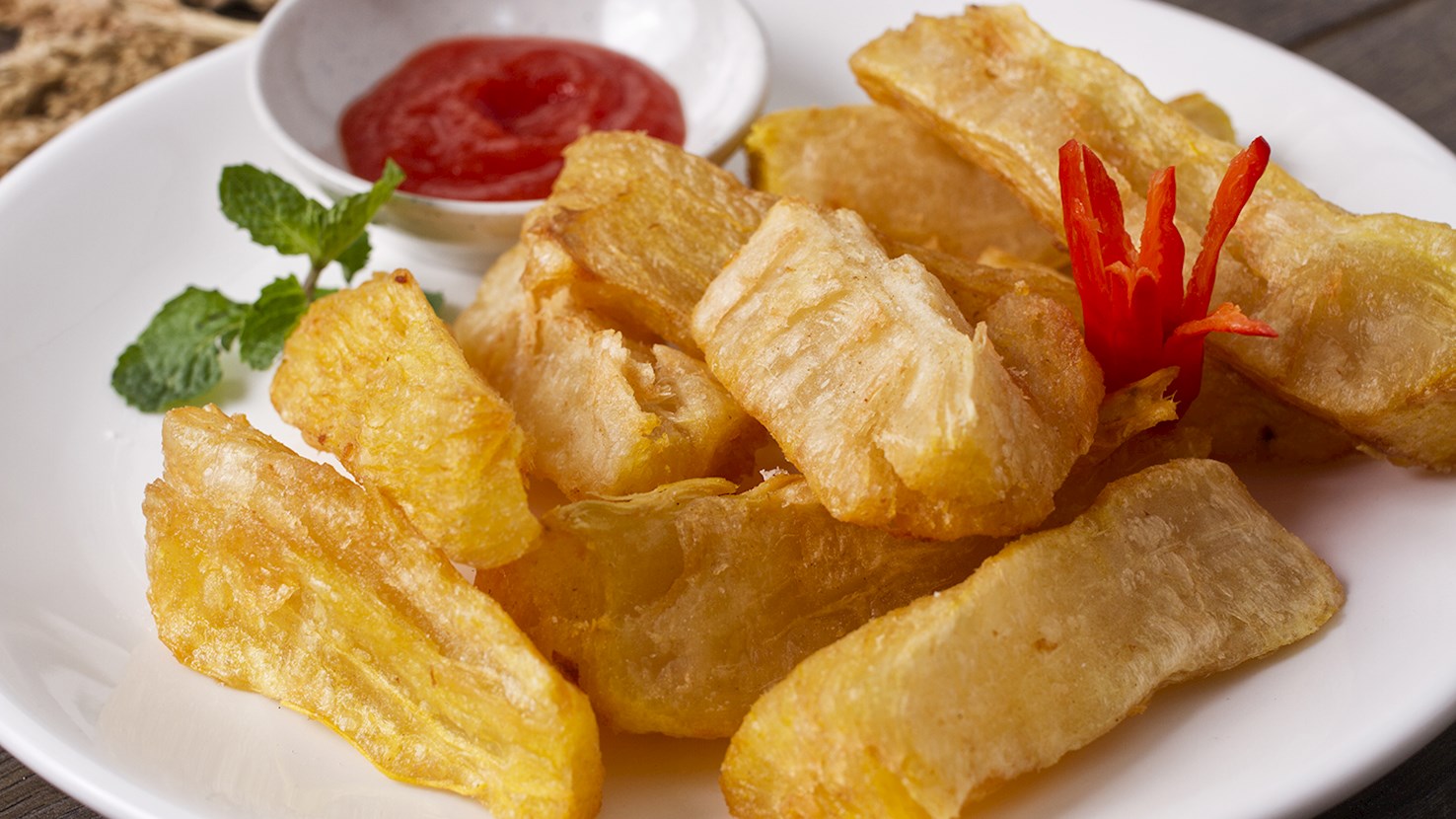
Singkong goreng is a traditional Indonesian snack made from deep-fried cassava, known for its crispy exterior and soft, fluffy interior. It originates from across the Indonesian archipelago, where cassava has long been a staple ingredient, particularly in rural and agricultural communities. The name translates simply to “fried cassava,” and the dish is commonly enjoyed as a street snack, breakfast side, or accompaniment to coffee or tea. Though simple in preparation, singkong goreng showcases the ingenuity of Indonesian home cooking, transforming a humble root vegetable into something satisfying and texturally delightful. The cassava is first peeled, cut into chunks, and boiled until tender, then deep-fried until golden and crisp. In some regions, it is seasoned with salt and garlic, or soaked in a spiced brine before frying to enhance its flavor. A modern and popular variation includes singkong goreng keju, where the fried cassava is topped with grated cheese and sweetened condensed milk, offering a balance of salty, savory, and sweet that reflects Indonesia’s playful approach to snack food.
Tempe bacem is a sweet and savory Javanese dish made from tempe that is marinated and simmered in a mixture of palm sugar, spices, and coconut water, then usually fried to create a richly flavored, caramelized exterior. Originating from Central Java, especially in areas like Yogyakarta and Surakarta, this dish reflects the region’s characteristic use of sweetness in savory cooking. Tempe, a fermented soybean cake that is a cornerstone of Indonesian cuisine, absorbs the braising liquid deeply during the cooking process, resulting in a dense, tender texture with a slightly crisp edge when pan-fried. The flavor is a balance of sweet, salty, and aromatic, often including ingredients such as garlic, shallots, coriander, bay leaves, galangal, and tamarind to create depth and complexity. Tempe bacem is widely prepared in Javanese households and served as part of daily meals alongside rice, vegetables, and sambal. It is also a common sight in warungs and roadside food stalls, either sold on its own or as a component in mixed rice dishes. The bacem technique, involving slow simmering in coconut water and spices, is used not only for tempe but also for tofu, eggs, and even chicken, showing the method’s versatility and cultural importance in Central Javanese cooking. What sets tempe bacem apart is its bold combination of sweetness and umami, a style that distinguishes it from the more neutral or spicy preparations found in other parts of Indonesia.
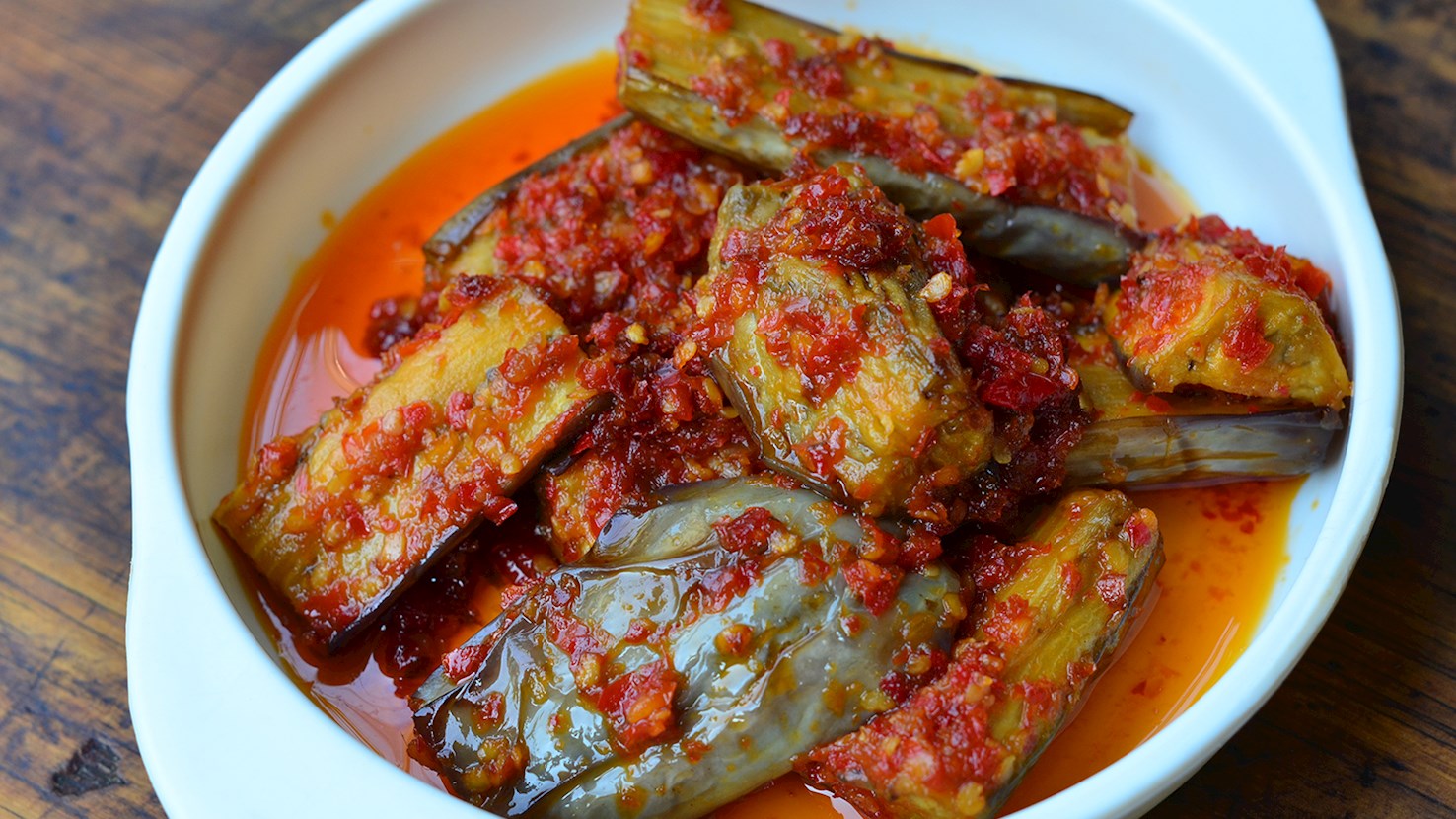
Terong balado is an Indonesian eggplant dish originating from West Sumatra, particularly within the Minangkabau culinary tradition, which is known for its bold use of spices and chili-based preparations. The dish consists of fried eggplant slices coated in a spicy red chili sambal, and it is typically served as a side dish in a larger meal alongside rice and other protein-based components. The term terong means eggplant in Indonesian, while balado refers to a style of cooking involving sautéing ingredients in a red chili paste made from a blend of chilies, shallots, garlic, tomatoes, and sometimes lime juice or kaffir lime leaves. The eggplant used in terong balado is usually of the long, slender Asian variety, though other types may be used depending on availability. It is commonly sliced lengthwise or into rounds, then deep-fried or pan-fried until soft and slightly browned. This process gives the eggplant a tender interior and a surface that can absorb the sambal effectively. The chili paste is made separately by grinding or blending fresh red chilies, shallots, garlic, and tomato into a coarse mixture, which is then sautéed in oil until fragrant and slightly reduced. The fried eggplant is then added to the sambal and gently stirred until coated. Terong balado is widely served in rumah makan Padang (Padang restaurants), where it is one of many dishes offered in the typical spread of Minang cuisine. It stands out for its simplicity, rich color, and assertive flavor profile, combining heat from the chilies, sweetness from the tomato, and a mild smokiness from the fried eggplant. The dish is commonly eaten with steamed rice and may accompany more complex main dishes such as rendang or ayam pop, balancing the richness of those items with its spiciness and soft texture.
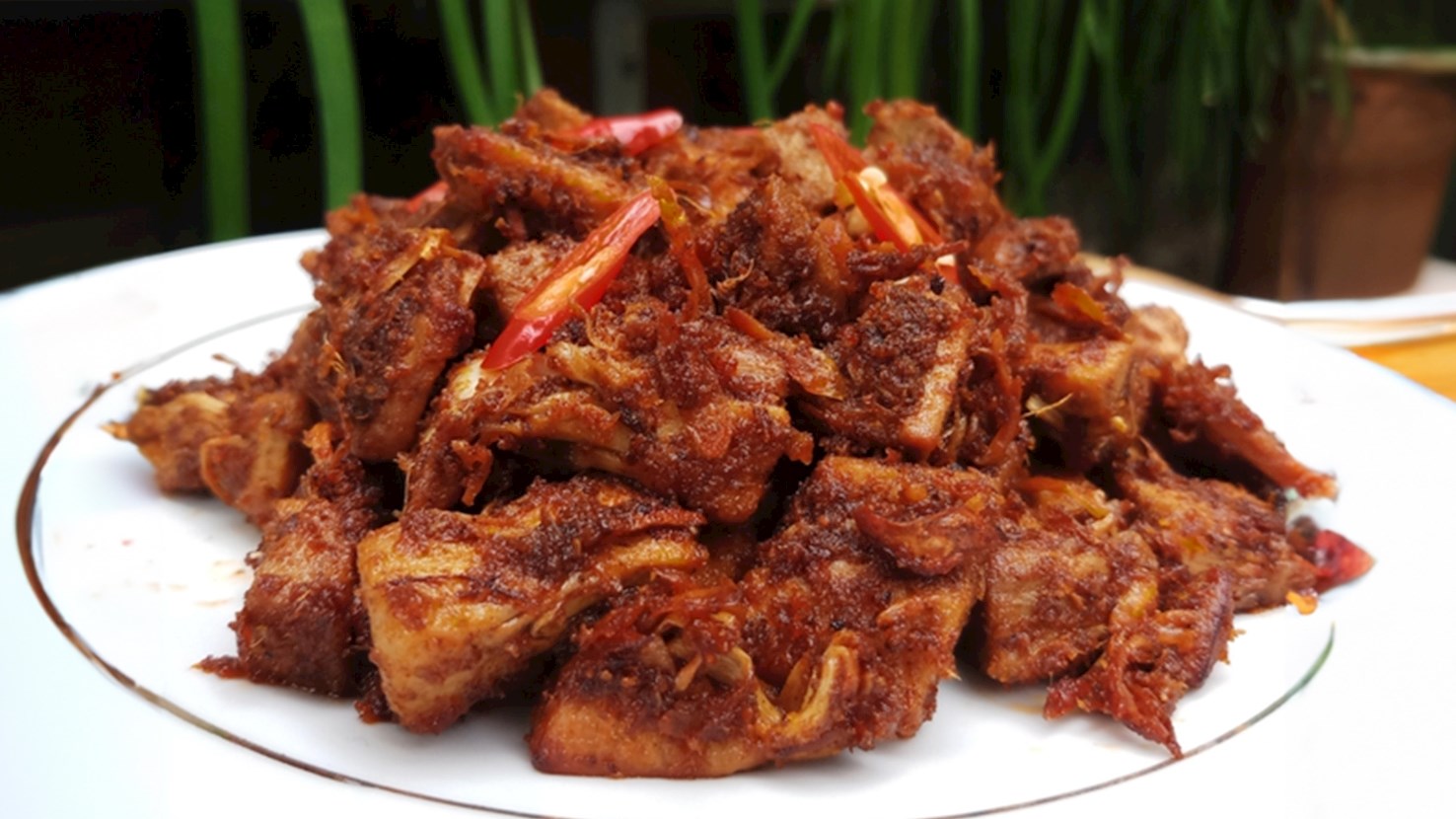
Jackfruit rendang is a vegetarian or vegan version of the classic Indonesian dish known as rendang. Traditional rendang is a rich and tender coconut beef stew that's slow-cooked in coconut milk and a mixture of lemongrass, galangal, garlic, turmeric, ginger, and chilies, among other ingredients. In the jackfruit version, young, unripe jackfruit is used as a substitute for beef. Young jackfruit has a neutral taste and a meaty texture, making it an excellent plant-based alternative for absorbing the complex flavors of the rendang sauce. When cooked, the jackfruit becomes tender and flaky, mimicking the texture of slow-cooked meat. Jackfruit rendang is prepared similarly to the meat version, starting with sautéing a spice paste (rempah) made from grinding together the spices and aromatics. Coconut milk is then added, along with the jackfruit and sometimes kaffir lime leaves and tamarind paste for additional flavor. The mixture is simmered slowly until the jackfruit is tender and has absorbed the flavors of the spices, and the coconut milk has reduced to a thick, rich sauce that clings to the jackfruit pieces. Jackfruit rendang is usually served with rice, much like the original meat-based rendang.
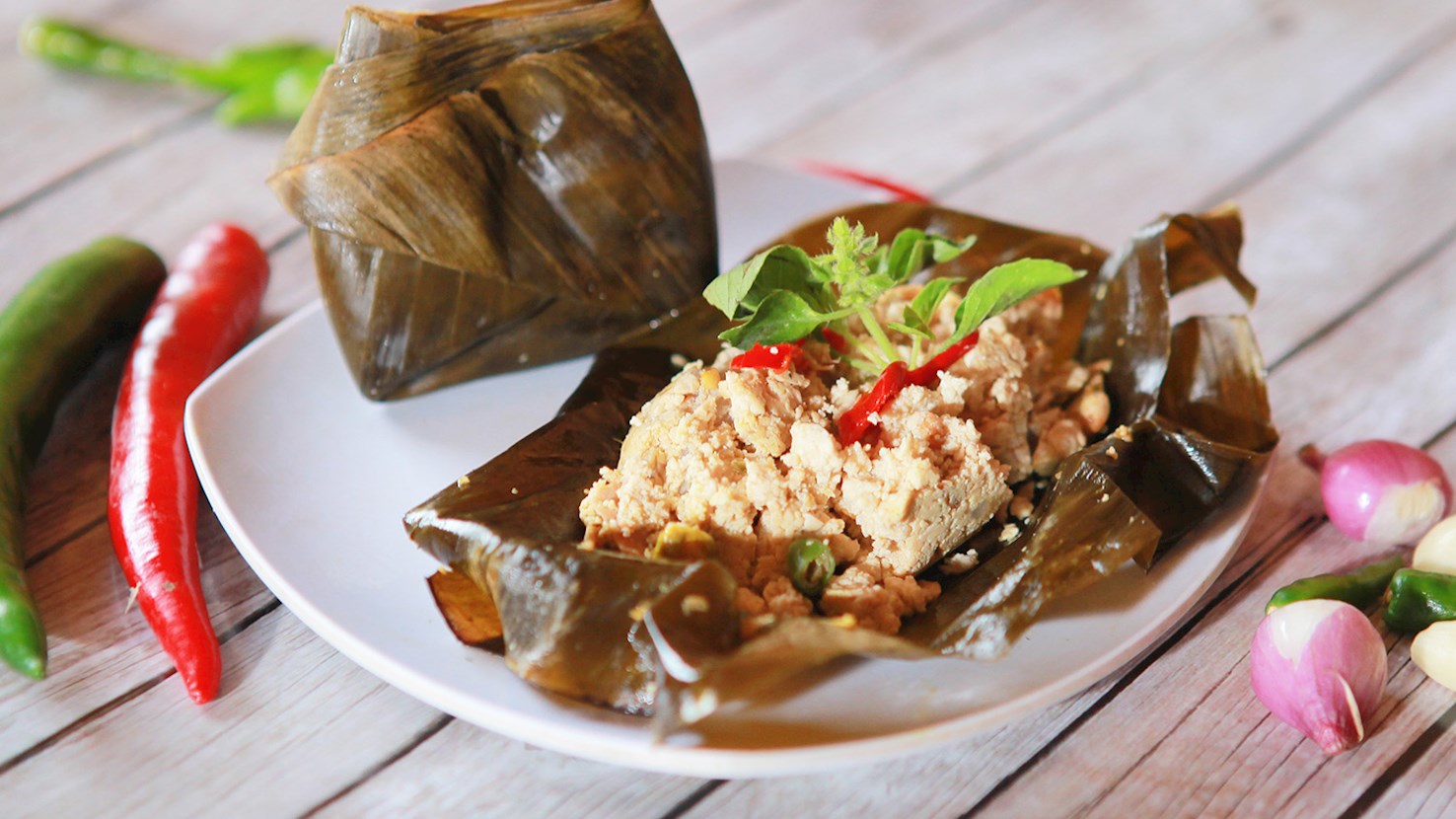
Pepes tahu is an Indonesian steamed tofu dish originating from Java, where the method of cooking in banana leaves, known as pepes, is commonly used for preparing both plant-based and protein-rich foods. In this version, tofu serves as the primary ingredient, mixed with a ground spice paste and sometimes combined with vegetables or aromatic herbs before being wrapped in banana leaves and steamed until firm and fragrant. The use of banana leaves allows the ingredients to cook evenly while absorbing the subtle aroma from the leaf itself, creating a dish that is both practical and flavorful. The preparation of pepes tahu starts with mashing firm tofu until smooth, then blending it with a spice mixture typically made from shallots, garlic, chilies, coriander, candlenuts, and turmeric, with the occasional addition of lemongrass or makrut lime leaves to enhance the aroma. The mixture is seasoned with salt, pepper, and sometimes a small amount of sugar, depending on regional preference. Other optional ingredients include finely sliced chayote, carrots, basil leaves, or chopped mushrooms, which contribute texture and variation. Once the tofu and spices are well-mixed, the seasoned mash is portioned onto softened banana leaves, folded tightly into packets, and secured with toothpicks or small bamboo pins. These packets are then steamed until the contents are cooked through and set, typically for about 20 to 30 minutes. Some variations call for an additional step of grilling the steamed packets briefly to introduce a smoky aroma, though this is optional and often depends on local practice. Pepes tahu is usually served as a side dish with rice and other accompaniments, especially in vegetarian or plant-focused meals. It is appreciated for its soft texture, balanced seasoning, and the clean, slightly earthy fragrance imparted by the banana leaf wrapping. In many parts of Java, it is a common feature in lunchboxes, market stalls, and home meals, valued for its lightness, portability, and ease of preparation.
TasteAtlas food rankings are based on the ratings of the TasteAtlas audience, with a series of mechanisms that recognize real users and that ignore bot,
nationalist or local patriotic ratings, and give additional value to the ratings of users that the system recognizes as knowledgeable.
TasteAtlas Rankings should not be seen as the final global conclusion about food. Their purpose is to promote excellent local foods,
instill pride in traditional dishes, and arouse curiosity about dishes you haven’t tried.



What People Say