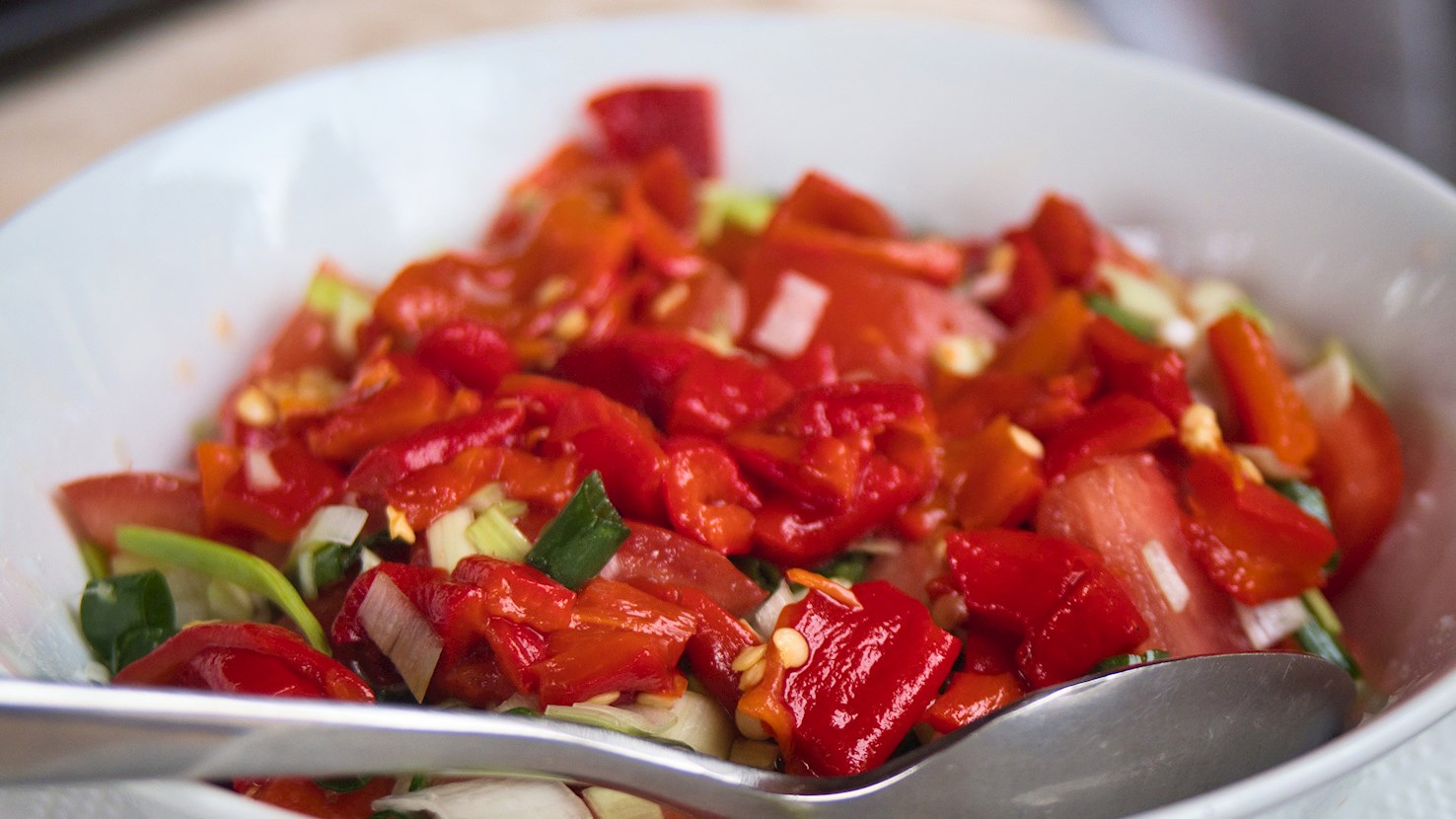
Moravska salata is a Serbian salad originating from Niš and Leskovac. The salad is made with a combination of leeks, tomatoes, roasted peppers, hot peppers, garlic, salt, and oil. The vegetables are chopped, seasoned with salt, and drizzled with oil. The combination is then mixed well and refrigerated before serving. Moravska salata is especially popular during the hot summer months. It can be served as an appetizer, a side dish accompanying grilled meat, and sometimes even as a main dish served with a piece of hard cheese and bread (for dipping) on the side.
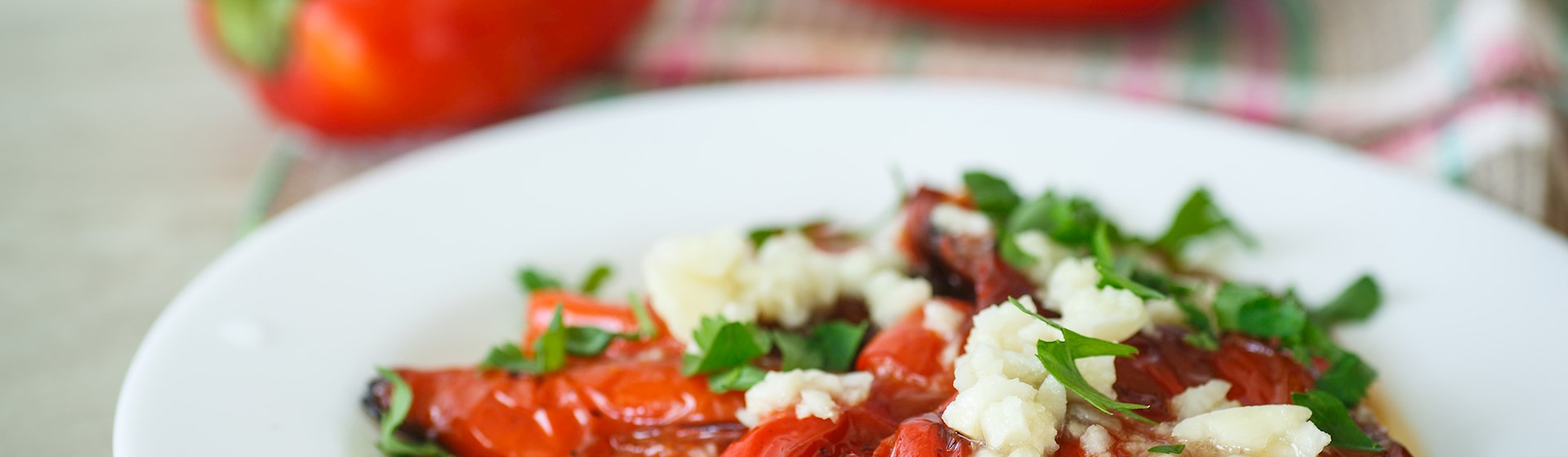
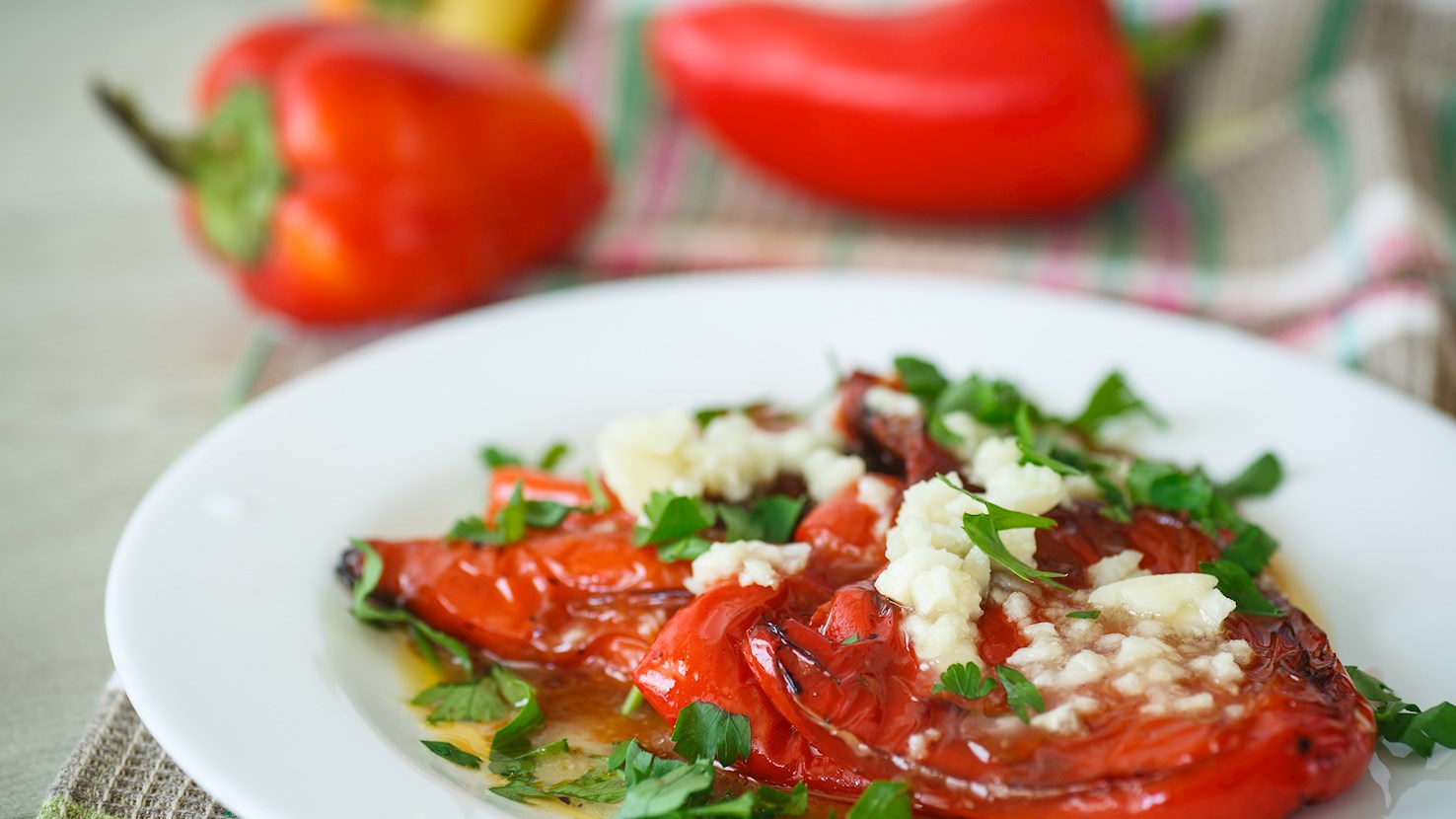
Belolučene paprike is a healthy Serbian salad made with a combination of roasted bell peppers, garlic, vinegar, salt, oil, and parsley. The ingredients are simply mixed together, and the combination is well-chilled before consumption. In summer, the salad is prepared with freshly roasted bell peppers, and in winter, it is usually prepared with preserved and canned bell peppers. Belolučene paprike can sometimes be enriched with roasted aubergines. The salad is served as an appetizer or a side dish. It can also be consumed as a main dish when served with white cheese and a few slices of bread that are typically dipped in the salad juices.
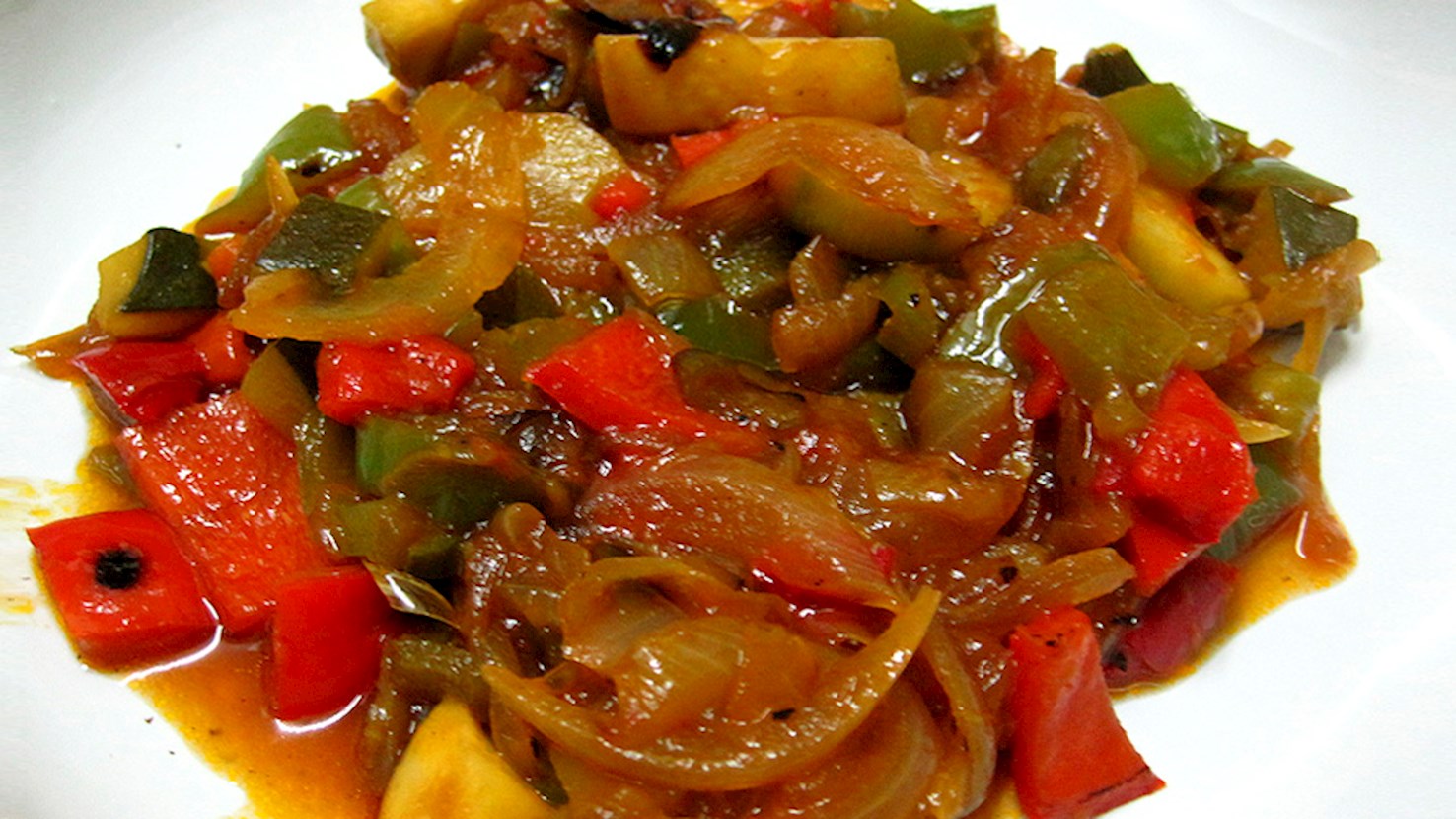
Sataraš is a vegetable stew made with a combination of tomatoes, peppers, onions, garlic, and parsley. The ingredients are first fried, then seasoned with salt and pepper and gently stewed. It is recommended to use a wide pan while preparing the dish so that the liquid evaporates more quickly, while the vegetables retain the desired shape and texture. Sataraš can be eaten hot or cold. It can be served on its own or as an accompaniment to fried meat and fish dishes. In Croatia, when sataraš was served in the past, the head of the family would sometimes ask for a sunny-side-up egg or two to be placed on top of the dish (making the meal non-vegan with his request). The rest of the family could only get scrambled eggs, while the head of the family would sometimes also ask for an omelet with ham and eggs, but that request was usually reserved for festivities and similar events.
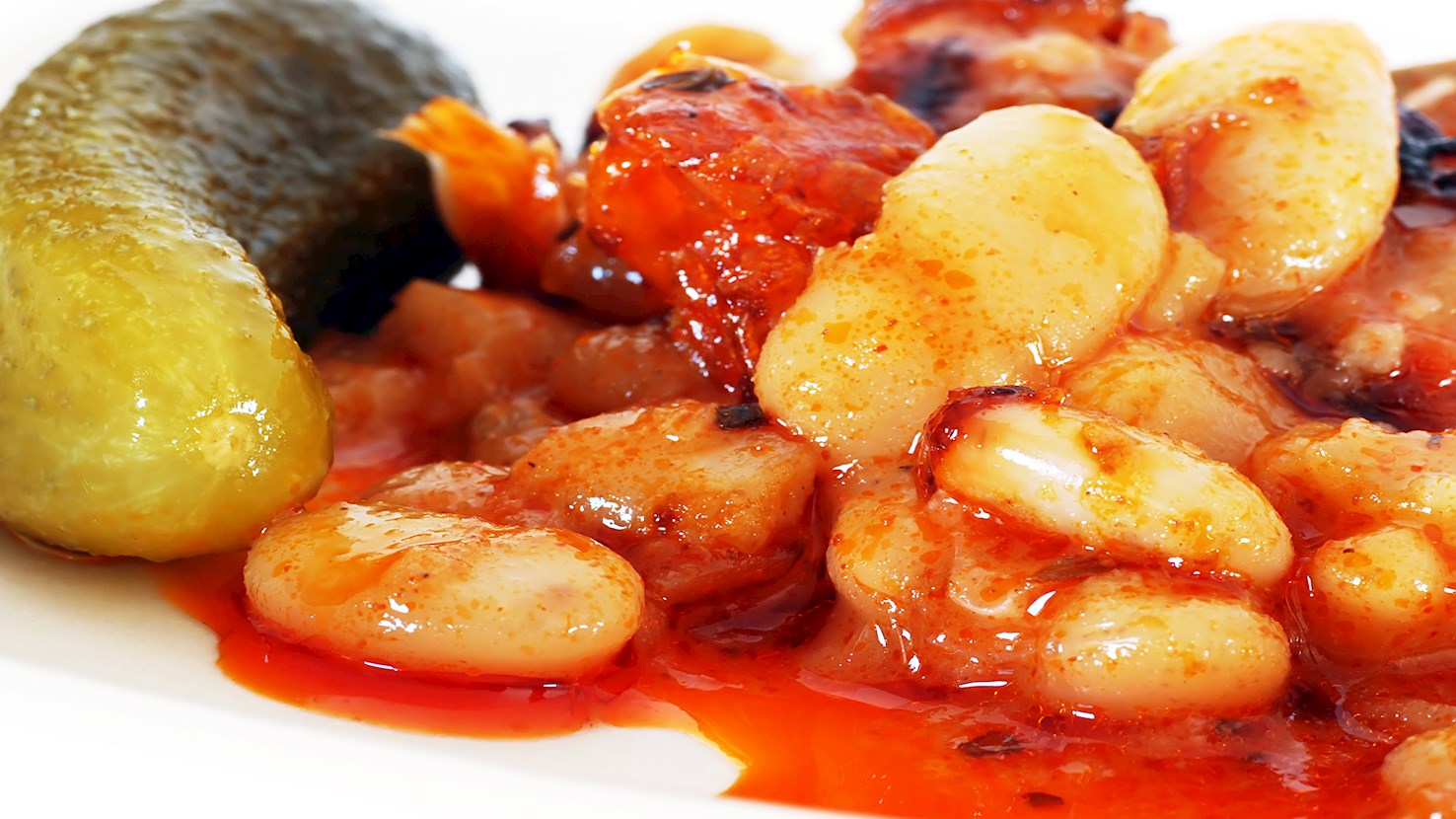
Prebranac is an oven-baked bean casserole made with large white beans, slowly cooked onions, oil, garlic, and sweet ground paprika. The dish belongs to the wider family of Balkan bean dishes known as pasulj, grah, or grav, but unlike soupy versions, prebranac is baked until the beans become creamy and the surface turns slightly dry, dark, and crusted. It is especially associated with Serbia, although related baked bean dishes are also found in neighboring Balkan cuisines. Its role as a filling, inexpensive winter dish is closely tied to rural households, where dried beans, onions, oil, and paprika were practical ingredients that could be stored for long periods and cooked into a substantial meal during cold months. Beans became one of the most important everyday staples across the region because they were cheap, nourishing, and easy to preserve, while paprika and onions gave the dish its characteristic sweetness, color, and depth. Prebranac is also strongly associated with Orthodox Christian fasting periods, when meat and dairy are avoided, and dishes made with legumes, oil, and vegetables serve as the main source of protein and energy. Older bean dishes in the Balkans were often cooked in clay pots or over slow heat, while the baked version developed as a thicker, more concentrated form in which the beans absorb the onion mixture and the cooking liquid evaporates in the oven. A batch usually begins with dried white beans, which are soaked overnight and then boiled until tender yet still intact. While the beans simmer, a large quantity of white onions, often nearly equal in weight to the beans, is sliced and cooked slowly in oil until it collapses into a soft, golden, sweet base. Sweet ground paprika is stirred into the onions together with minced garlic, salt, black pepper, and sometimes bay leaves or hot pepper, turning the mixture deep red and aromatic. The cooked beans are folded with the spiced onions in a wide clay or ceramic baking dish, with enough bean-cooking liquid added to keep the casserole moist without making it soupy. The dish is baked until the liquid reduces, the beans absorb the paprika-scented oil, and the top layer develops a darker, lightly crisp crust. The basic fasting version is completely plant-based, but many households prepare richer variations by tucking smoked sausage, dry bacon, pork ribs, or other smoked pork cuts into the beans before baking, turning the casserole into a more substantial main course. Heat can also be increased by adding crushed red pepper flakes, hot paprika, or a sharper Balkan-style pepper seasoning to the onion base. Prebranac is eaten warm, lukewarm, or at room temperature, which makes it suitable for family meals, feast tables, and make-ahead spreads. It is often served as a hearty side dish with grilled meats, but it can also stand alone with thick slices of crusty white bread used to scoop up the oily, sweet beans. Sharp accompaniments such as pickled cabbage, vinegar-soaked cucumbers, ajvar, or other acidic relishes are commonly served alongside it, cutting through the richness of the caramelized onions, paprika, and oil.
TasteAtlas food rankings are based on the ratings of the TasteAtlas audience, with a series of mechanisms that recognize real users and that ignore bot,
nationalist or local patriotic ratings, and give additional value to the ratings of users that the system recognizes as knowledgeable.
TasteAtlas Rankings should not be seen as the final global conclusion about food. Their purpose is to promote excellent local foods,
instill pride in traditional dishes, and arouse curiosity about dishes you haven’t tried.



What People Say