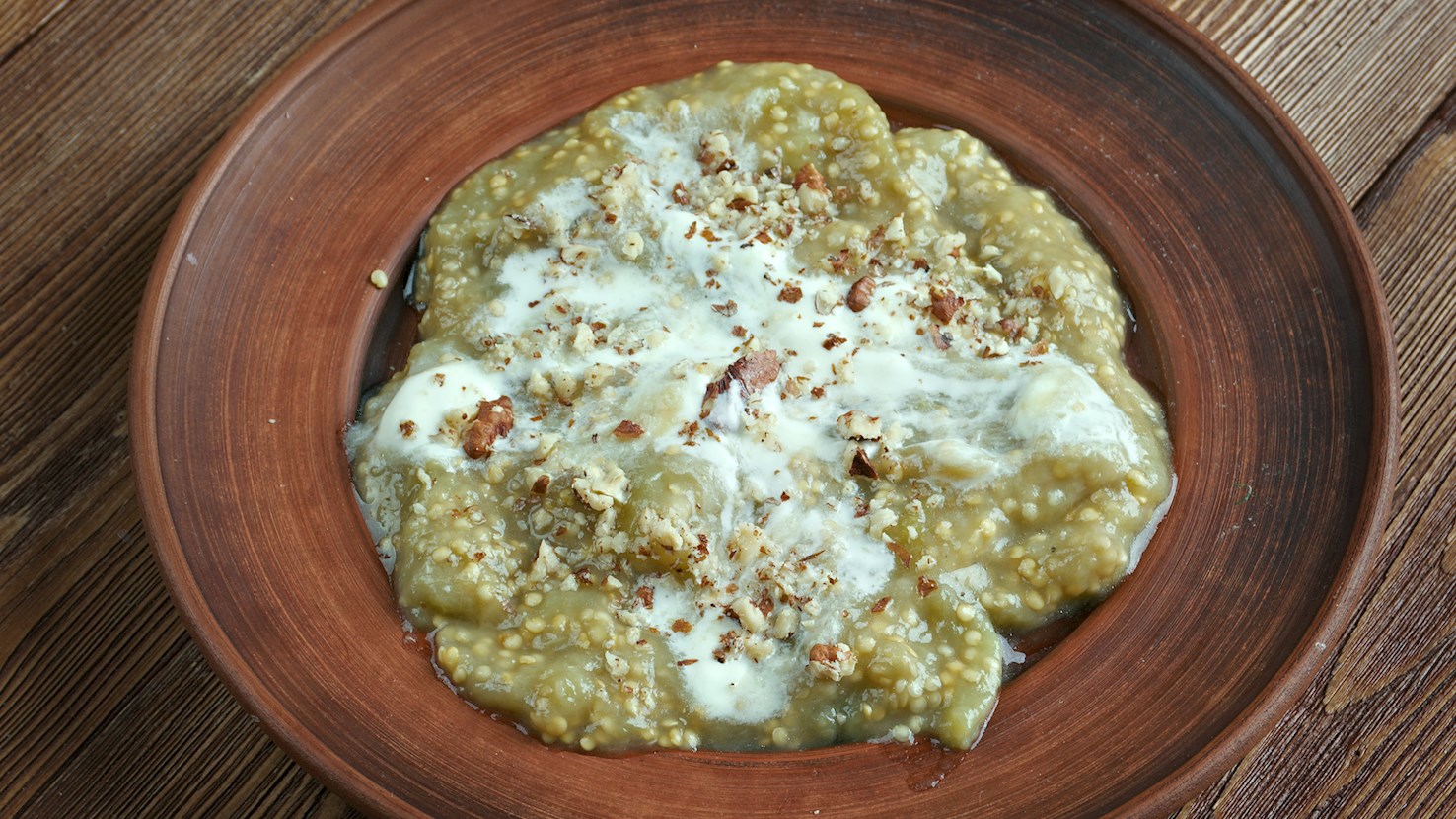
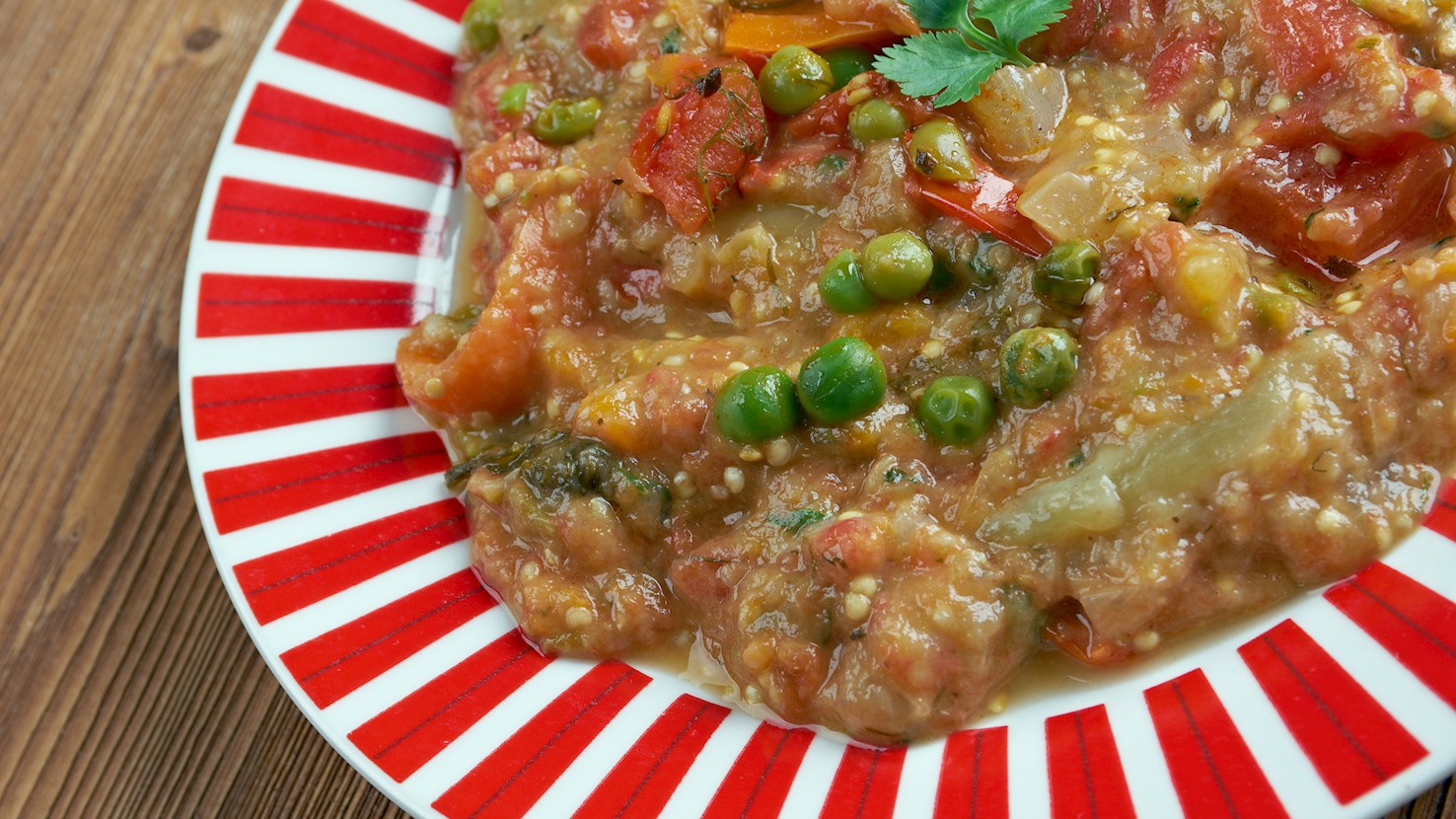
Kashk-e bademjan is an Iranian dish that brings together mashed roasted eggplant with kashk, a fermented dairy product similar to whey, seasoned with fried onions, garlic, and aromatic spices. It originates in central and northern Iran, where eggplant is a staple ingredient and kashk has long been used to enrich stews, dips, and soups. Kashk-e bademjan is commonly prepared as an appetizer or light meal and is typically served warm with flatbread. The history of the dish reflects the evolution of Persian cooking techniques that highlight vegetables and dairy. For centuries, eggplant has been cultivated in Iran and cooked in many forms, from simple grilled slices to elaborate stews. Kashk, produced by fermenting and drying drained yogurt, has been a source of protein and flavor since ancient times. The combination of these ingredients, along with caramelized onions and mint, developed into a recognizable preparation that has been passed down in Iranian households. Preparation begins by roasting or frying eggplants until they are very soft, which gives the dish its characteristic creamy texture. The cooked eggplant is mashed or chopped finely, then gently simmered with sautéed onions, garlic, turmeric, and sometimes ground walnuts for richness. Kashk is stirred in gradually to create a smooth consistency and a tangy depth of flavor. A portion of fried onion and dried mint is reserved for garnish, adding both aroma and visual contrast. Kashk-e bademjan is served in a shallow dish, topped generously with the reserved onions and mint, and often drizzled with additional warm kashk. While some recipes use a food processor for a smoother finish, others retain more texture by mashing the eggplant by hand. In Iran, it is usually accompanied by warm sangak or lavash bread and sometimes served alongside fresh herbs, radishes, and pickled vegetables.
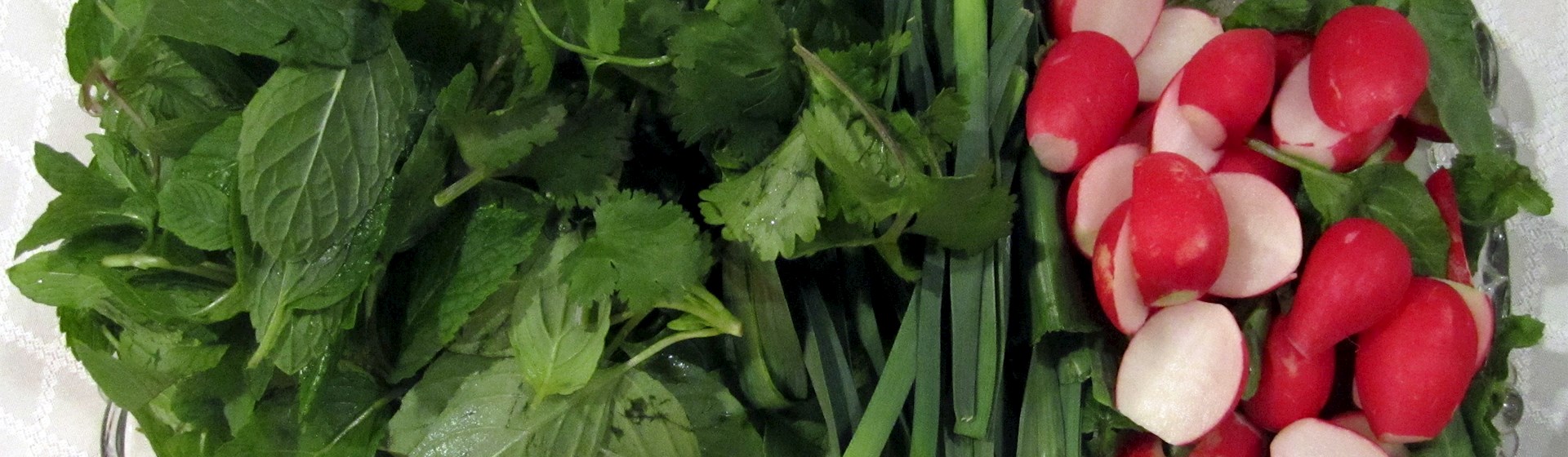
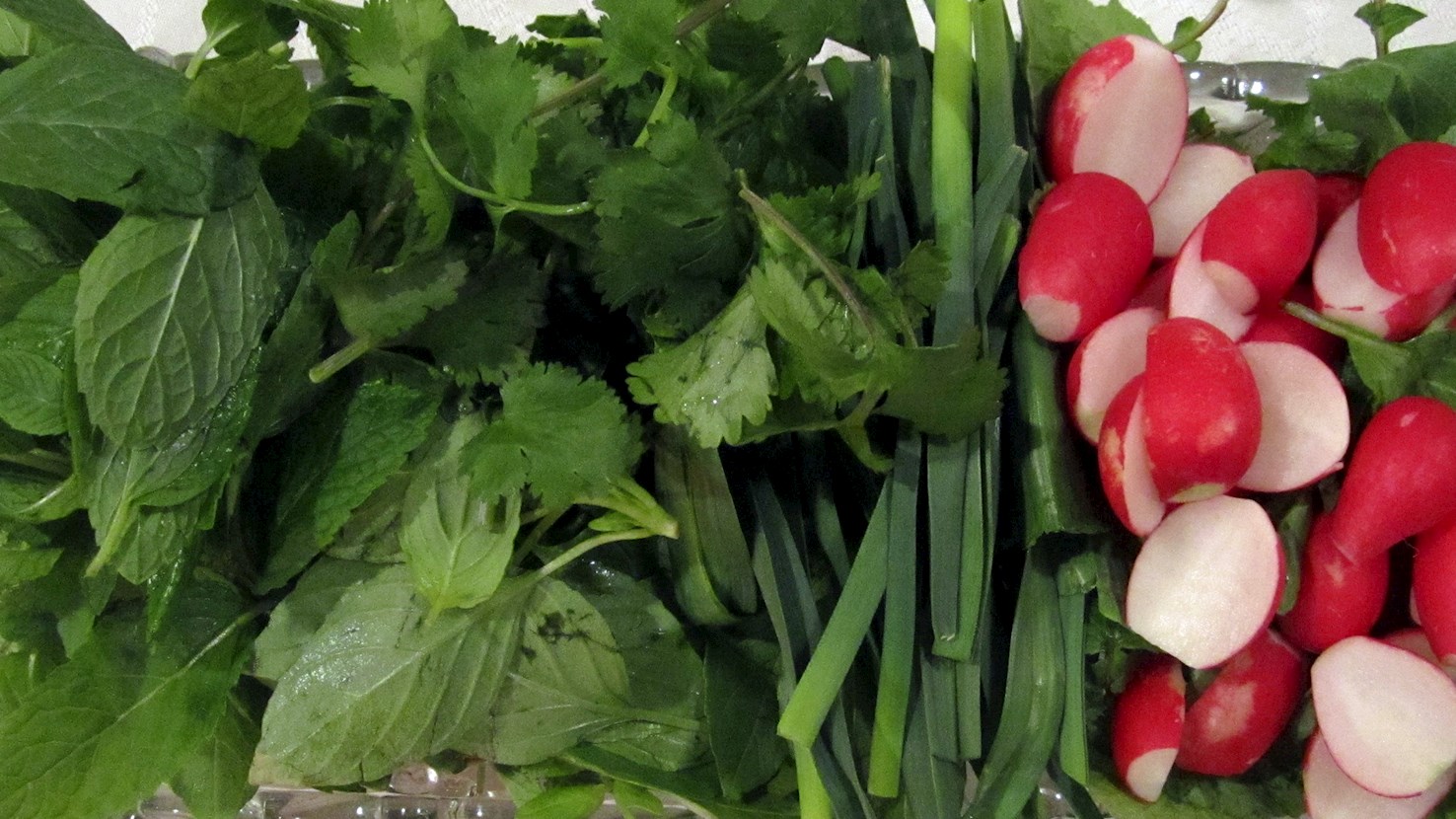
Sabzi khordan is an assortment of fresh herbs and raw vegetables that comes from Iran and plays an essential role in Persian meals. Rather than being a dish with cooking steps, it is a carefully arranged platter of greens that are served as an accompaniment to stews, kebabs, cheese, and bread. The term means “eating herbs,” reflecting the importance of aromatic plants in Iranian cuisine and the way they are integrated into daily dining. The use of fresh herbs as a central part of the meal can be traced back to ancient Persia, where they were valued not only for their flavor but also for their perceived health benefits. Historical texts and poetry often reference gatherings where herbs and bread were shared among family and guests. Over time, sabzi khordan became a standard element of the Iranian table, offered at both casual and formal meals. Its place in Persian hospitality has remained unchanged, reflecting a cultural preference for food that feels abundant and balanced. Preparation requires no cooking but involves careful washing, trimming, and arranging of the herbs and vegetables. A typical platter includes basil, mint, tarragon, cilantro, green onions, and radishes. Other additions can be watercress, savory, dill, or small romaine leaves, depending on the region and season. The herbs are washed in cold water to remove any grit and are often soaked briefly to stay crisp. Once drained, they are arranged in loose bunches or layered on a large dish, sometimes alongside wedges of fresh white cheese like feta, walnuts, and thin sheets of soft flatbread. Sabzi khordan is eaten by taking a handful of herbs and folding them into a piece of bread, creating a fresh bite that complements richer dishes. This combination adds a cool, aromatic contrast to stews such as ghormeh sabzi or kebabs like koobideh. In many homes, the platter is kept on the table throughout the meal so diners can graze on herbs between bites. Besides its role as a side, sabzi khordan represents an appreciation for freshness and simplicity that is central to Iranian food culture. It is served in restaurants, at picnics, and during family gatherings, offered to guests as a gesture of generosity. Whether paired with warm bread and cheese or served with elaborate main courses, sabzi khordan remains a constant feature of Persian dining and a symbol of how raw ingredients can enhance and balance a meal.
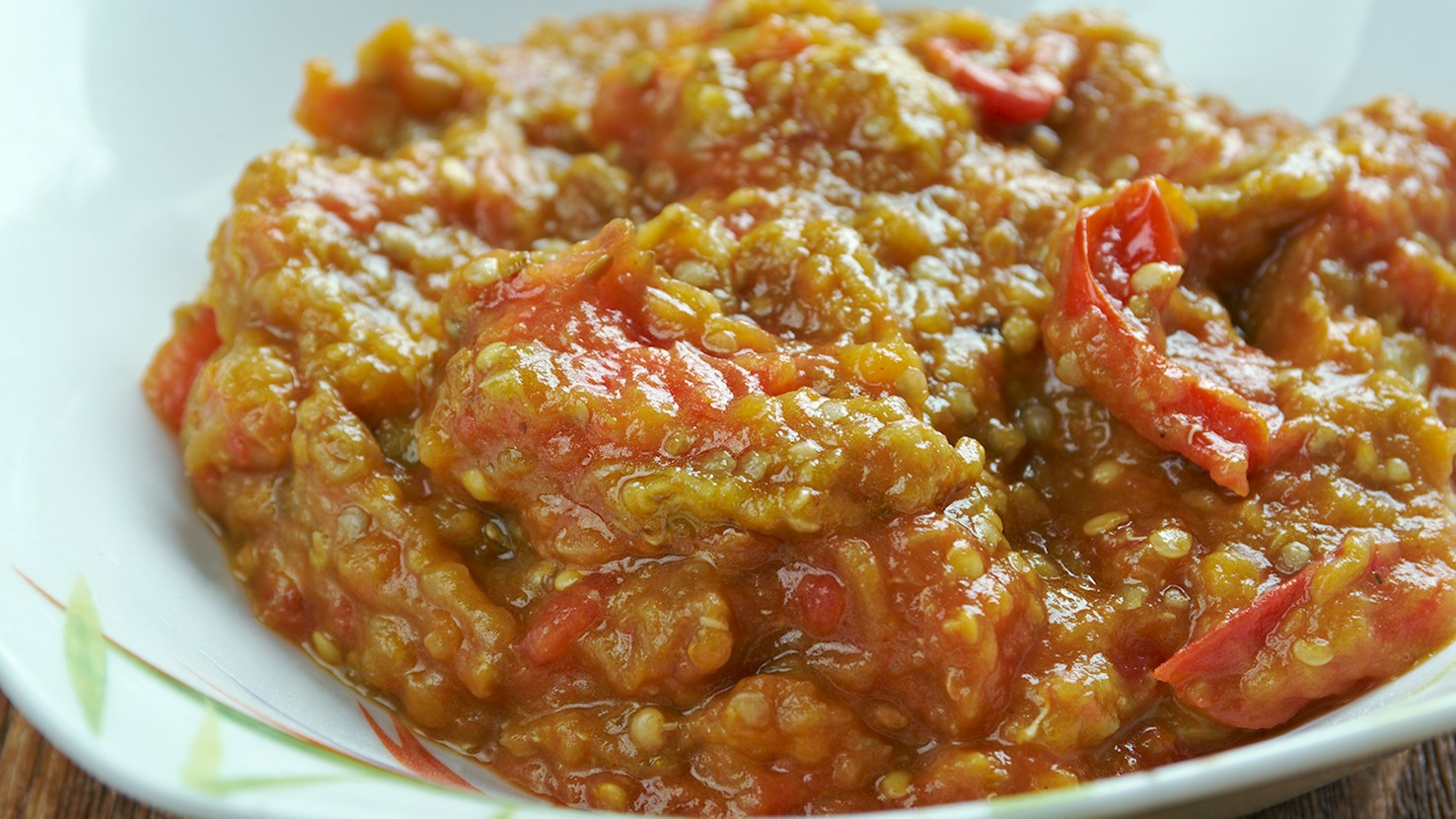
Mirza Ghassemi is a distinctive Iranian dish from Gilan Province on the Caspian Sea coast, known for its combination of smoky grilled eggplants, tomatoes, garlic, and eggs. Its origins are often attributed to Mirza Ali Khan Ghassemi, a 19th-century governor of Rasht, who is said to have introduced the recipe to the local cuisine, though the use of eggplant and garlic in northern Iranian cooking predates his era. Over time, Mirza Ghassemi spread from Gilan to other parts of Iran, becoming a familiar offering in homes and restaurants that serve Gilaki food. To prepare it, large eggplants are first roasted over an open flame or under a broiler until the skins are charred and the flesh softens, imparting the dish’s signature smoky taste. The eggplants are peeled and mashed, then cooked slowly with chopped tomatoes and plenty of finely minced garlic. Once the mixture thickens, eggs are cracked directly into the pan and stirred through until just set, giving the dish a creamy, cohesive texture. The preparation is relatively straightforward, but patience is important to build depth of flavor. Mirza Ghassemi is typically served warm as a main or side dish, often accompanied by flatbread such as lavash or sangak. Some households add turmeric or a pinch of black pepper for extra seasoning, while others prefer it more simply seasoned to highlight the vegetables. A common way of eating it is to tear pieces of bread and scoop up the mixture, sometimes along with pickles or fresh herbs. Though similar eggplant dishes are found across the Middle East, the prominence of garlic and the inclusion of eggs set Mirza Ghassemi apart. Its popularity in Gilan reflects the region’s reliance on fresh produce and smoky, robust flavors that have long shaped the local table. Today, it is frequently offered in Iranian restaurants that highlight northern specialties and is a favorite during casual gatherings and family meals.
Naz khatun is a smoky, intensely tart appetizer composed primarily of fire-roasted eggplants mashed with fresh herbs and sour fruit juices. A thick layer of char must first be achieved by exposing whole eggplants to an open flame, thoroughly burning the outer skin to infuse the soft interior flesh with a heavy, campfire-like aroma. Once the blackened exterior is peeled away, the smoky core is finely chopped or crushed into a coarse paste. Generous amounts of pulverized garlic and finely minced greens—most commonly mint, sweet basil, and parsley—are forcefully stirred into the vegetable base. The defining sharp acidity of this mixture relies entirely on the addition of sour grape juice (verjuice) and dark, thick pomegranate molasses, creating a potent balance of earthy and sour notes. Originating from the damp, fertile provinces bordering the southern coast of the Caspian Sea from the city of Behshahr, this acidic appetizer bears a title that translates directly as "elegant lady," a term historically bestowed upon noblewomen during the Qajar dynasty. While the baseline formula remains strictly vegan, local adaptations frequently alter the texture and aromatic profile. Certain households crush a large handful of toasted walnuts directly into the bowl to thicken the consistency and add a fatty, nutty undertone, whereas others incorporate diced ripe tomatoes or grated onions for extra moisture. The specific herbs also shift depending on geographical availability, occasionally featuring a highly pungent northern green called chochagh, which gets swapped for cilantro or tarragon in areas outside the coastal climate. Because of its sharp, astringent qualities, the finished mash never functions as a standalone meal. It arrives at the dining table either thoroughly chilled or at room temperature, serving as an accompanying side item meant to cut through the heavy fats of roasted meats. Portions are scooped directly onto plates alongside steaming mounds of buttery white rice, paired with thick chunks of lamb kebabs, or simply scooped up directly using torn pieces of warm, unleavened flatbread.
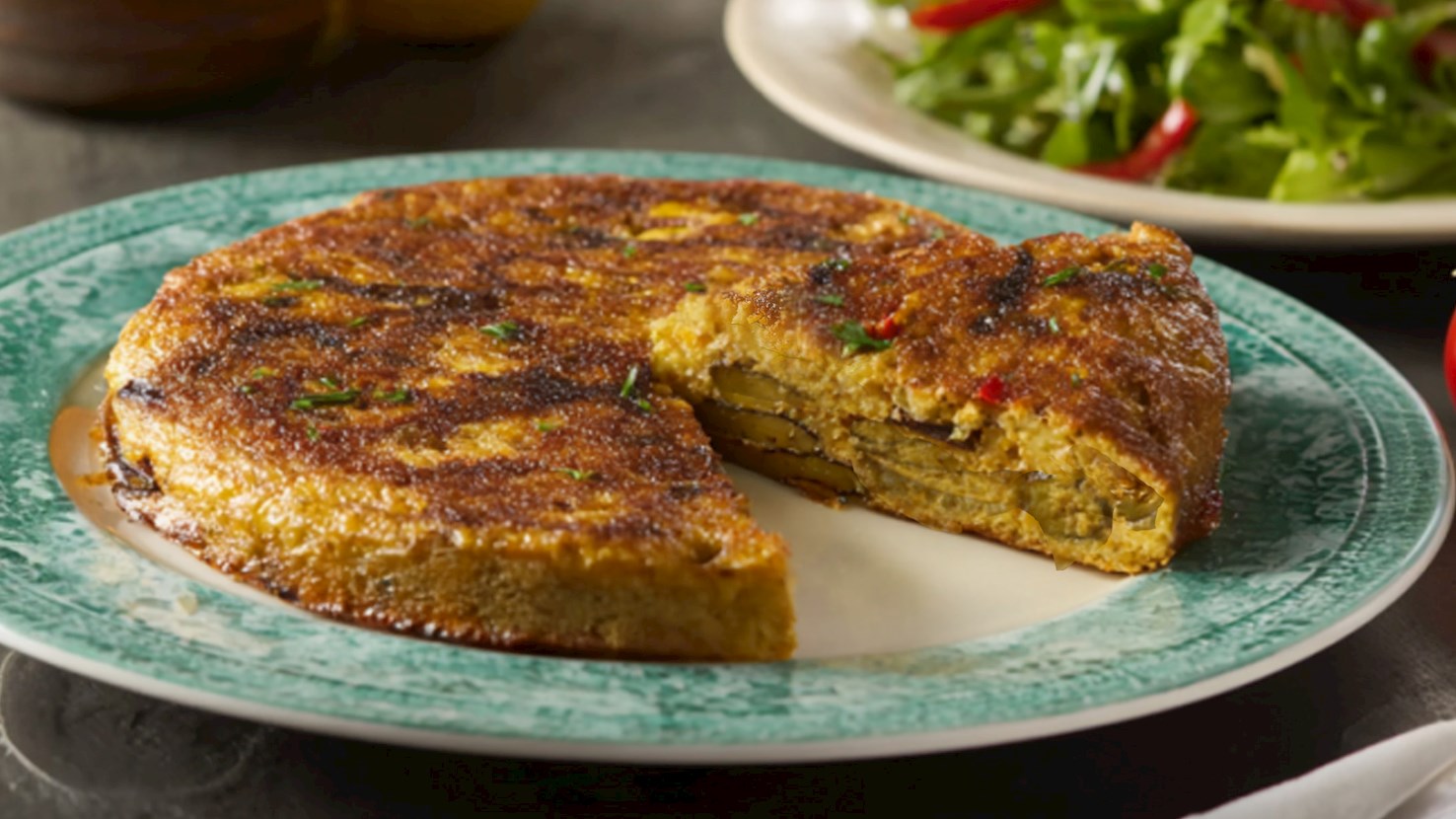
Kuku bademjan is a savory Persian egg-based dish prepared with eggplants, commonly enjoyed across Iran as a main or side course. It belongs to the broader family of kuku recipes, which are similar to frittatas and often combine eggs with vegetables or herbs. The history of kuku as a cooking method dates back centuries, with references in Persian culinary manuscripts to dishes that bind seasonal vegetables with eggs to create a nourishing and economical meal. Over time, variations developed to showcase regional produce, and eggplant became a favored choice because of its soft texture and ability to absorb flavors. As eggplants spread from India and the Middle East to Iran, they gained prominence in many dishes, including stews and kuku preparations. To make kuku bademjan, eggplants are peeled and sliced before being salted and left to rest briefly to reduce bitterness. They are then fried or sautéed in oil until tender and lightly golden. In a bowl, the cooked eggplants are combined with beaten eggs, finely chopped onions, turmeric, salt, black pepper, and sometimes crushed garlic or fresh herbs such as parsley or dill. This mixture is poured into a skillet and cooked over gentle heat until the eggs set and the edges become crisp. In some recipes, the pan is briefly finished in the oven to firm the center without burning the bottom. Kuku bademjan is cut into wedges or squares for serving. It can be served hot, warm, or cold, and is often accompanied by fresh herbs, flatbreads like lavash or sangak, and a side of yogurt or torshi (pickled vegetables). The combination of soft eggplant and fluffy eggs creates a texture that pairs well with rice dishes and salads. Kuku bademjan is commonly eaten at family gatherings, picnics, and as part of shared meals where multiple small dishes are presented together.
Kadoo polo is a Persian rice dish known for its harmonious blend of saffron-infused rice with tender, sautéed pumpkin. This dish combines the subtle sweetness of the pumpkin with aromatic spices and the fluffy texture of basmati rice, resulting in a comforting and balanced meal. The history of kadoo polo is tied to the agricultural cycles of Iran, where pumpkins have been cultivated for centuries and integrated into the local diet alongside grains and spices. Over time, this dish became popular in home kitchens as well as in festive settings, celebrated for its simplicity and the way it highlights natural flavors. Preparation of kadoo polo involves peeling and slicing fresh pumpkin, which is then sautéed gently with onions, turmeric, and sometimes cinnamon or other warming spices. The pumpkin is cooked until tender but not mushy, preserving its shape and sweetness. Meanwhile, basmati rice is parboiled and then steamed with saffron water to develop a fragrant, golden hue. The sautéed pumpkin is either mixed into the rice or layered within it during the final steaming stage, allowing the flavors to meld. Kadoo polo is often served alongside grilled meats, stews, or yogurt-based side dishes, creating a balanced meal. Kadoo polo is enjoyed throughout Iran, especially during autumn when pumpkins are in season. It is a staple in family meals and is also featured during cultural celebrations and gatherings.
TasteAtlas food rankings are based on the ratings of the TasteAtlas audience, with a series of mechanisms that recognize real users and that ignore bot,
nationalist or local patriotic ratings, and give additional value to the ratings of users that the system recognizes as knowledgeable.
For the “Top 6 Iranian Vegetable Dishes” list until July 15, 2026, 301 ratings were recorded, of which 157 were recognized by the system as legitimate.
TasteAtlas Rankings should not be seen as the final global conclusion about food. Their purpose is to promote excellent local foods,
instill pride in traditional dishes, and arouse curiosity about dishes you haven’t tried.