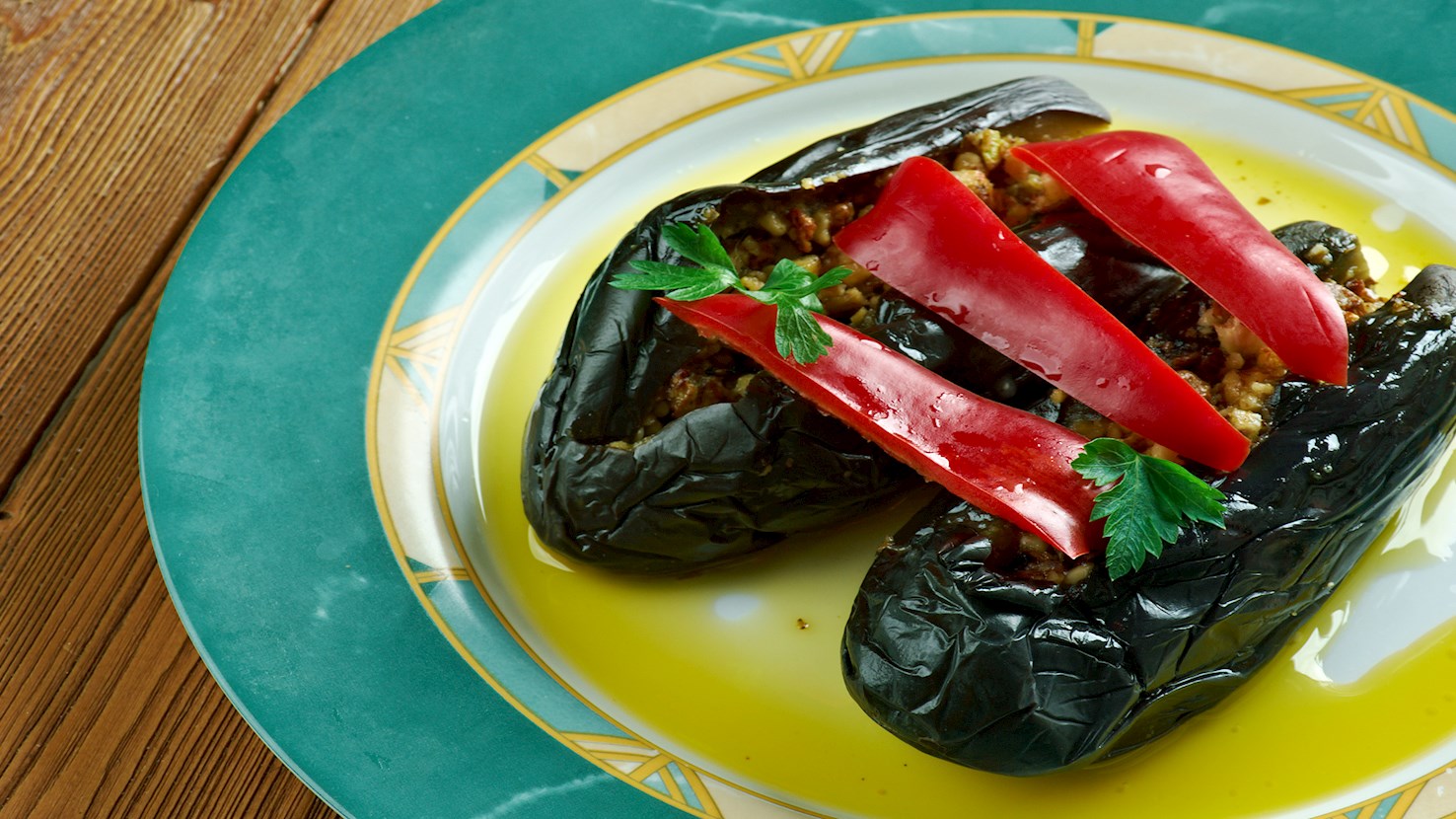
Oil-cured eggplants are a staple throughout Levantine and Middle Eastern cuisine. The dish is traditionally prepared with small-sized baby eggplants that are shortly boiled and stuffed with a flavorful mixture of roasted red peppers, walnuts, garlic, and salt. The eggplants are then cured in olive oil and are traditionally enjoyed for breakfast, usually accompanied by labneh, vegetables, and flatbread, but they also work as a standard meze dish or a snack. Though their origin is vague, preserved eggplants are strongly associated with Syria.
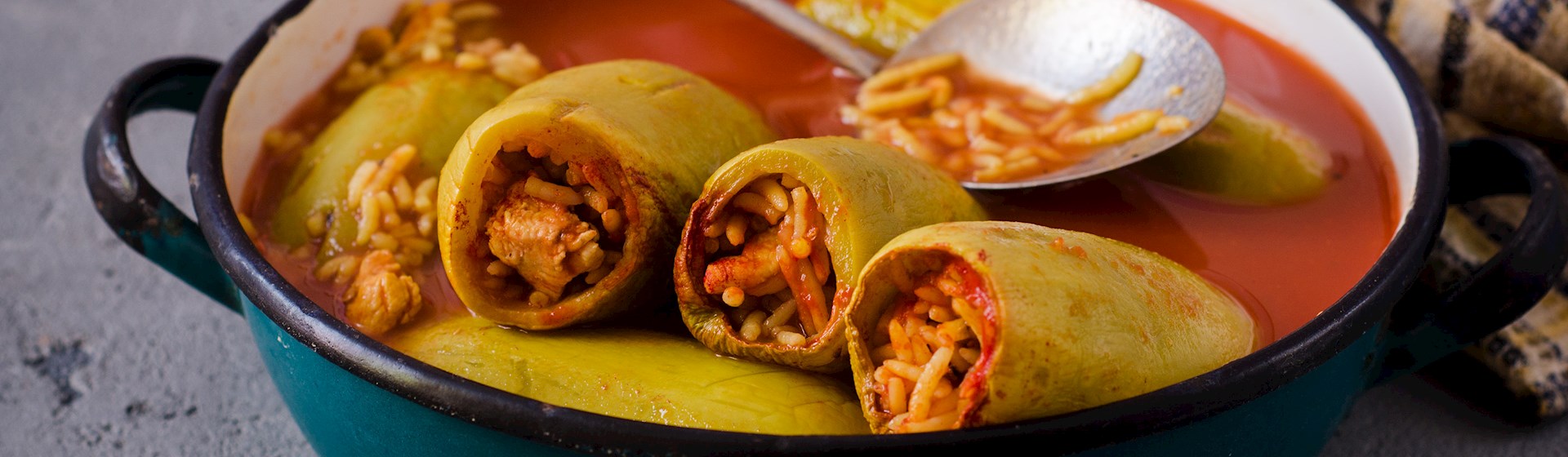
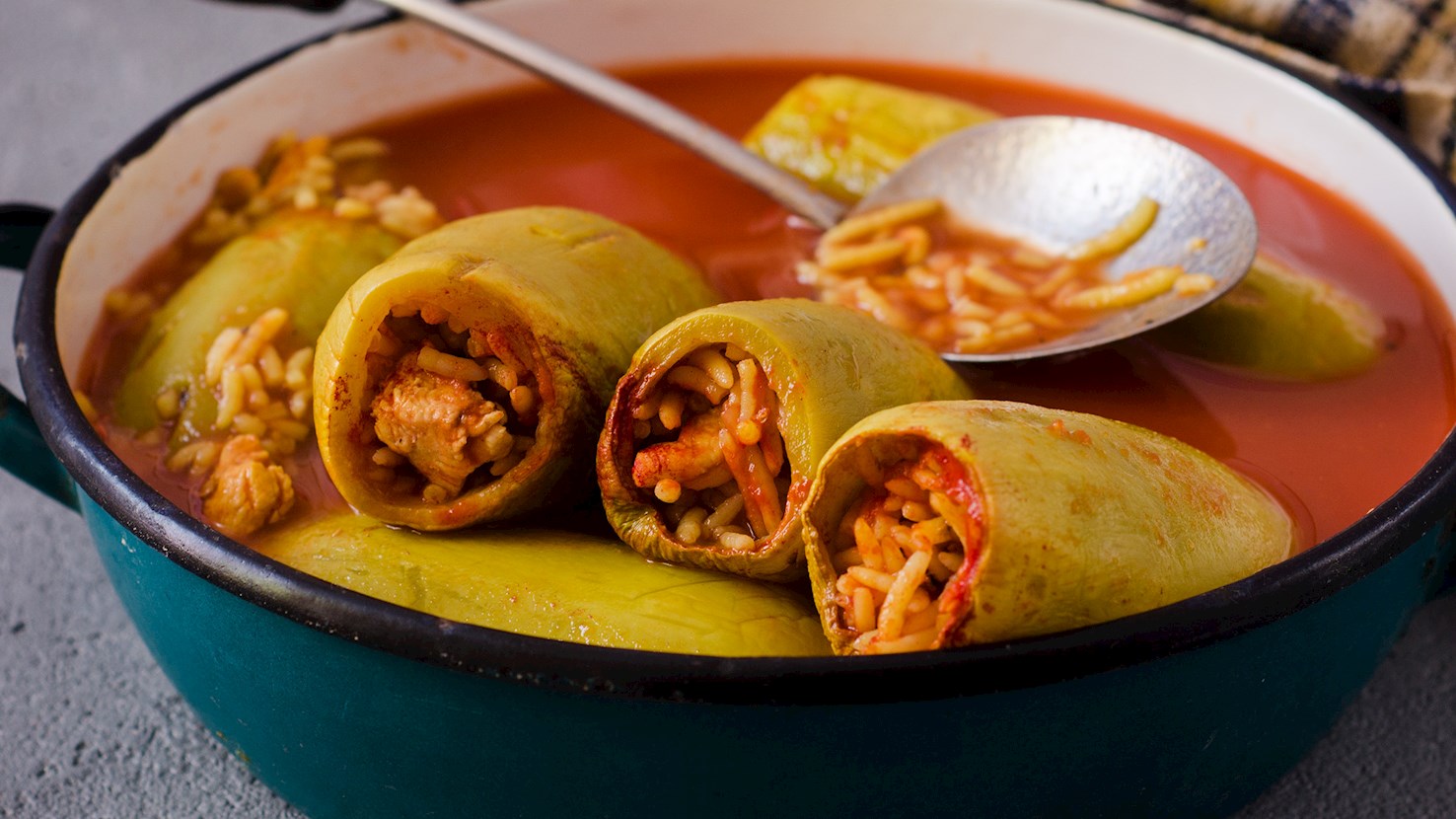
Kousa mahshi is a stuffed zucchini dish prepared and eaten across the Levant, particularly in Lebanon, Syria, Jordan, and Palestine, consisting of pale green zucchini hollowed and filled with a mixture of rice, minced meat, and seasoning, then gently cooked in a light broth or tomato-based liquid. Its development is closely linked to the long cultivation of squash varieties in the eastern Mediterranean and to cooking practices that favored extending limited quantities of meat by combining them with grains and vegetables, with written references to stuffed vegetables appearing in medieval Arabic cookery manuscripts that describe similar methods applied to gourds, eggplants, and vine leaves, indicating an established culinary framework well before modern national cuisines formed. Preparation involves coring small zucchini to create a thin shell, filling them loosely with a mixture of short-grain rice, minced lamb or beef, salt, and mild spices, then arranging them in a pot and simmering them slowly until the rice is fully cooked and the zucchini tender, sometimes finished in a yogurt-based sauce or a lightly acidic tomato broth depending on regional preference. Kousa mahshi is served hot, often with some of its cooking liquid spooned over the top, and presented as a composed dish rather than a side, reflecting its balance of vegetable, grain, and protein in a single form. A defining characteristic of kousa mahshi is the use of hollowed zucchini as both container and component, allowing the filling to absorb moisture and flavor while remaining distinct rather than forming a dense mass. It is eaten mainly at home meals and family gatherings, commonly accompanied by plain yogurt, flatbread, or simple salads, and it pairs naturally with water, unsweetened black tea, or lightly fermented yogurt drinks, fitting into meals where moderate seasoning and careful cooking emphasize texture and balance rather than intensity.
Rummaneyye is a traditional dish made with a combination of lentils, eggplants, olive oil, garlic, flour, pomegranate juice, cumin, and coriander. The lentils, eggplant cubes, salt, pepper, and cumin are cooked until tender. The garlic, coriander, and flour are fried in olive oil, and the two are then combined with the addition of pomegranate juice. The mixture is served in deep plates, then seasoned with olive oil and red chili pepper and garnished with pomegranate grains and chopped parsley. The dish can be served hot or cold, ideally with homemade pita bread on the side.
Khobeizeh is a traditional Middle Eastern dish and a specialty of Palestine. The dish is made with a combination of mallow (malva) leaves, olive oil, garlic, onions, and lemon juice. In order to prepare it, the mallow leaves are rinsed and sautéed in olive oil with onions, garlic, and salt. When served, the dish is drizzled with lemon juice and often garnished with red chili peppers. Khobeizeh is served warm and it's often accompanied by homemade pita bread, green olives, and yogurt on the side.
TasteAtlas food rankings are based on the ratings of the TasteAtlas audience, with a series of mechanisms that recognize real users and that ignore bot,
nationalist or local patriotic ratings, and give additional value to the ratings of users that the system recognizes as knowledgeable.
For the “Top 4 Palestinian Vegetable Dishes” list until July 15, 2026, 1,189 ratings were recorded, of which 54 were recognized by the system as legitimate.
TasteAtlas Rankings should not be seen as the final global conclusion about food. Their purpose is to promote excellent local foods,
instill pride in traditional dishes, and arouse curiosity about dishes you haven’t tried.