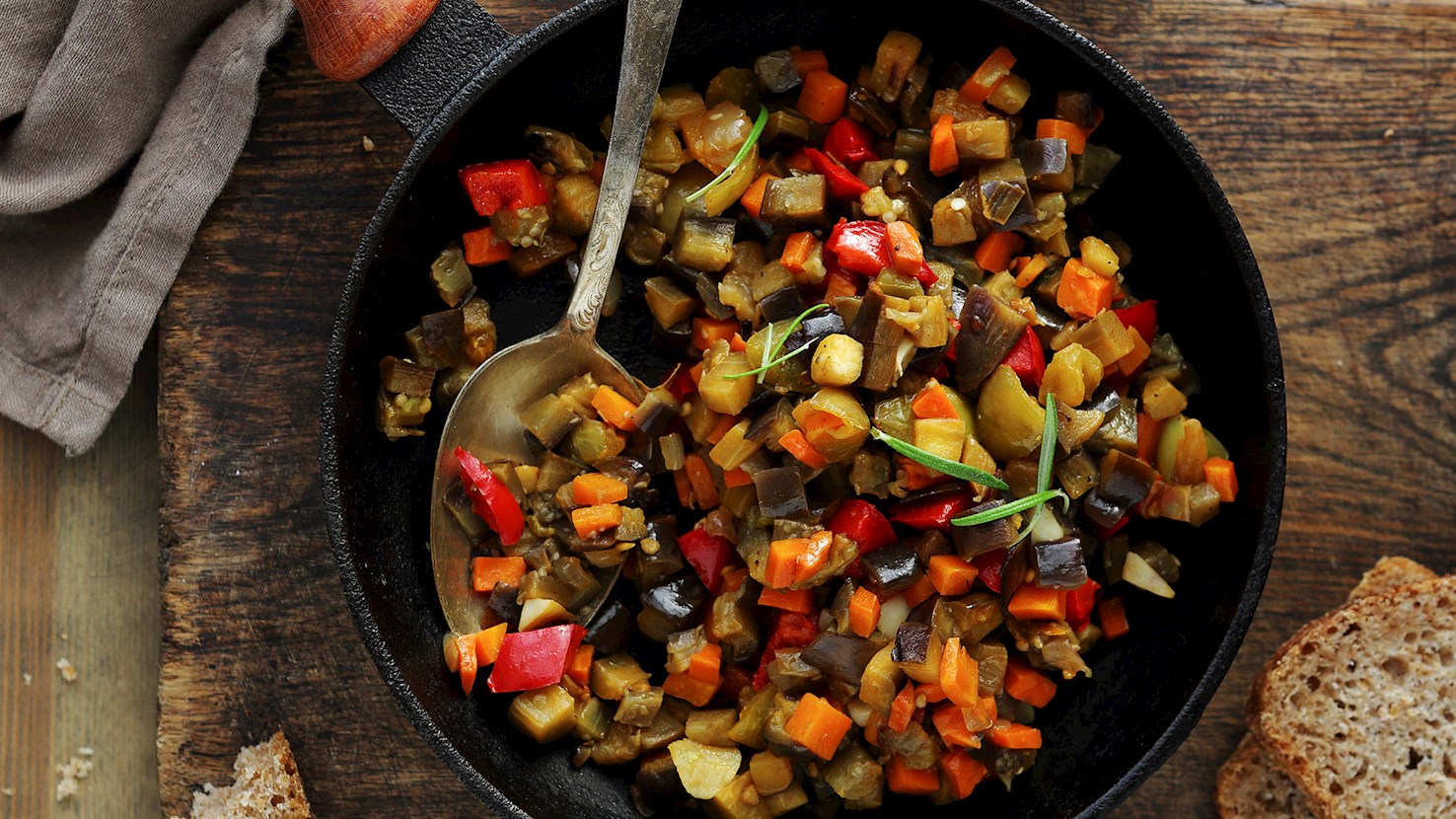
This colorful Provençal vegetable ragout is traditionally made with simple, easily accessible ingredients: courgettes, eggplants, green and red peppers, tomatoes, onions, garlic, and parsley. The name ratatouille stems from the old Occitan word ratatolha, and the French word touiller, both meaning to toss, or to stir up, referring to the cooking process in which the ingredients are first simmered separately—seasoned with salt, pepper, and olive oil—and then tossed together and stirred into a vibrant vegetable medley. Though it wasn't until the 1930s that ratatouille was popularized, by the 1980s, the dish had become the star of any dinner party. Ratatouille can be enjoyed on its own, served either hot or cold, along with toasted garlic bread, or it can be dished out as a side to roasted or grilled meat mains, especially lamb and chicken.
Artichauts à la barigoule is a traditional dish originating from Provence, and it consists of stuffed artichokes. The dish is usually made with a combination of artichokes, lemon juice, olive oil, carrots, celery, shallots, garlic, chicken stock, white wine, bay leaves, salt, and pepper. The stuffing consists of chopped bacon, mushrooms, shallots, breadcrumbs, parsley, tarragon, chives, olive oil, butter, salt, and pepper. The artichokes are cleaned, the choke is removed, and they're placed in cold water with lemon juice. The bacon, shallots, and mushrooms are sautéed in butter and oil, and then mixed with the breadcrumbs, herbs, and seasonings. The mixture is stuffed into the artichokes and a string is tied around the leaves to keep everything in place. They're arranged upright in a wide ovenproof pan with sautéed vegetables, wine, stock, and olive oil. The pan is covered and gently simmered until the artichokes are tender. Before serving, the artichokes are sprinkled with lemon juice and salt and pepper.
Riste d’aubergine is a thick, slow-simmered French vegetable stew that transforms a summer harvest into a dense, jam-like confit. The name itself stems from a regional dialect word meaning "to stew," perfectly capturing the essence of the cooking method rather than a strict set of ingredients. Rural families historically relied on this prolonged simmering technique to preserve massive summer crop yields, creating a remarkably flavorful dish that could sustain a household over several days. Fresh eggplants are first diced or sliced and heavily salted to draw out any lingering bitterness and excess water. Once thoroughly drained, the eggplant gets fried until beautifully soft and golden. In a separate skillet, onions are gently sweated until translucent, then a heap of peeled, seeded, and crushed tomatoes is added to the pan. Combining these two distinct vegetable mixtures in a single pot marks the start of the final, crucial phase. Seasoned simply with salt, black pepper, and perhaps a clove of crushed garlic, the uncovered pot sits over a very low flame for a long time. Reducing the moisture naturally concentrates the inherent sweetness and creates a remarkably silky, cohesive texture that feels completely different from a chunky ratatouille or a watery pasta sauce. Adding sweet bell peppers, a fragrant sprig of thyme, a splash of crisp white wine, or a dollop of concentrated tomato paste easily deepens the flavor profile. Certain households even melt savory anchovies into the base for a punch of umami, while others prefer to bake the entire mixture in a hot oven to achieve a deeply caramelized top crust. Serving this incredibly versatile stew warm makes it a phenomenal main course alongside fluffy rice, pasta, or crusty bread, as well as a wonderful side for grilled meats and fish. Letting the mixture chill in the refrigerator overnight intensifies the savory notes, making it an outstanding cold accompaniment for cured meats and sharp cheeses. A dry Luberon rosé or a light, fruity Ventoux red wine provides a refreshing, acidic counterbalance to the heavy olive oil and sweet vegetables.
Tian provençal is a vegetable gratin from France, made with layered summer produce such as zucchini, tomatoes, and eggplant, baked slowly with olive oil, garlic, and herbs. The name refers both to the dish itself and to the earthenware vessel in which it is cooked, a shallow, round, and unglazed terracotta container used for centuries in rural Provençal kitchens. The word tian originates from the ancient Occitan language, derived from the Latin tegnum, meaning a dish or pan. It has long described the method of slow cooking in an open earthenware vessel placed near the embers of a fire. The tian has roots in the agrarian households of Provence, where families relied on their garden produce and olive oil as essential components of their daily meals. Initially, the name referred only to the cooking pot, but over time it came to denote the layered vegetable preparation that became emblematic of Provençal cuisine. Farmers and villagers assembled the dish with whatever vegetables were in season, particularly those harvested at the height of summer. The method evolved from simple oven-baked casseroles to carefully arranged compositions that emphasized both color and flavor harmony, reflecting the abundance of the Mediterranean landscape. Fresh zucchini, ripe tomatoes, and eggplants are sliced thinly and arranged upright in alternating layers in a shallow dish rubbed with garlic and brushed with olive oil. The base may include finely chopped onions softened in olive oil, sometimes mixed with breadcrumbs to absorb excess moisture. The vegetables are seasoned with salt, pepper, and aromatic herbs such as thyme, rosemary, or basil. Once assembled, the tian is drizzled generously with olive oil and baked slowly until the vegetables soften and their edges caramelize slightly. Slow cooking allows the flavors to mingle while maintaining each vegetable's distinct texture. Various Tian provençal recipes appear throughout southern France. Some versions add potatoes, bell peppers, or goat cheese between the layers, while others incorporate anchovies or olives for a stronger Mediterranean flavor. In some villages, it is baked uncovered to achieve a lightly crisp surface, whereas in others it is covered to achieve a more tender result. The tian is also prepared with other ingredients beyond vegetables—such as fish, lamb, or even fruit for sweet adaptations—but the vegetable form remains the most recognized. Tian provençal is served warm or at room temperature, often as an accompaniment to grilled meats or fish, though it also stands well as a main dish accompanied by fresh bread or a green salad. It pairs naturally with wines from southern France, especially rosés or light reds such as Côtes de Provence or Luberon.
Bohémienne is a rustic French vegetable dish from the Vaucluse region that relies entirely on a precise, equal balance of eggplants and tomatoes. This flavorful specialty gained popularity throughout southern France during the nineteenth century as these two sun-loving crops became agricultural staples in the area. Creating this Mediterranean classic requires slicing or dicing fresh eggplants and combining them in a skillet with the exact same volume of peeled, seeded, and chopped ripe tomatoes. The produce slowly softens and melds together over the heat in a generous pool of olive oil, usually accompanied by crushed garlic and occasionally a finely minced onion. The defining characteristic of this recipe is its deeply savory finish. A hearty spoonful of pungent anchovy paste, known locally as anchoïade, is stirred directly into the soft vegetables right before removing the pan from the stove. This salty addition imparts a rich umami depth that perfectly complements the tomatoes' natural sweetness. Many people choose to slide the oven-safe skillet under a hot broiler at the very end to achieve a beautifully browned, crusted top layer. Adapting the skillet by tossing in sweet bell peppers or summer zucchini adds extra texture, while baking the same mixture in a shallow earthenware vessel creates a presentation similar to a classic Provençal tian. Serving this highly versatile creation offers a variety of delicious options. It functions beautifully as a warm side dish next to roasted meats and fresh fish, or as a chilled, generously spread cold appetizer on toasted bread. A simple green salad tossed with oil and vinegar makes an excellent accompaniment, as well as a cold glass of dry Provençal rosé or a light, low-tannin regional red wine.
TasteAtlas food rankings are based on the ratings of the TasteAtlas audience, with a series of mechanisms that recognize real users and that ignore bot,
nationalist or local patriotic ratings, and give additional value to the ratings of users that the system recognizes as knowledgeable.
For the “Top 5 Provençal Vegetable Dishes” list until July 15, 2026, 484 ratings were recorded, of which 428 were recognized by the system as legitimate.
TasteAtlas Rankings should not be seen as the final global conclusion about food. Their purpose is to promote excellent local foods,
instill pride in traditional dishes, and arouse curiosity about dishes you haven’t tried.