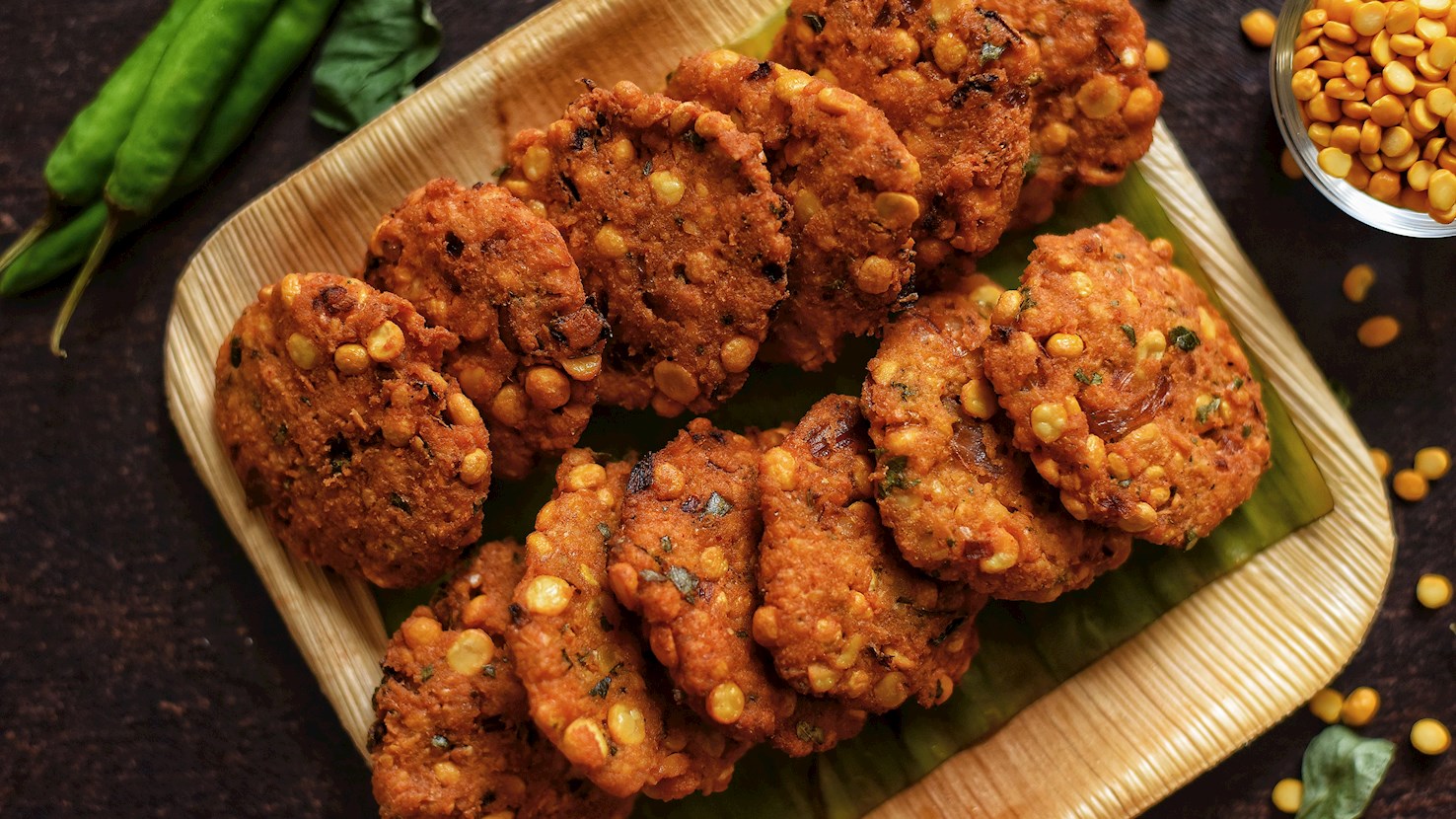
Masala vada or chana dal vada is a traditional fritter originating from Tamil Nadu. Although there are variations, this tea-time snack is usually made with a combination of chana dal, onions, ginger, curry leaves, fennel seeds, dried red hot peppers, vegetable oil, and salt. The chana dal, fennel seeds, and dried hot peppers are soaked in water for two hours, drained, and the mixture is processed into a coarse paste. The paste is mixed with onions, ginger, curry leaves, and some of the reserved chana dal. The mixture is seasoned with salt and formed into round patties. They are deep-fried in hot oil until golden brown, and then served with chutney.
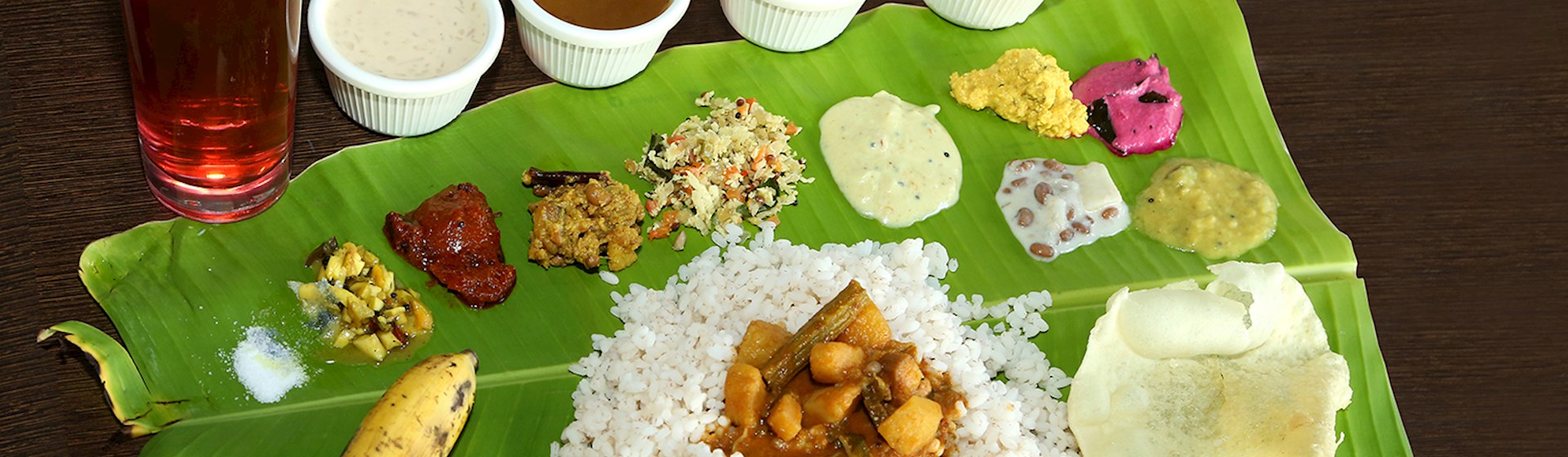
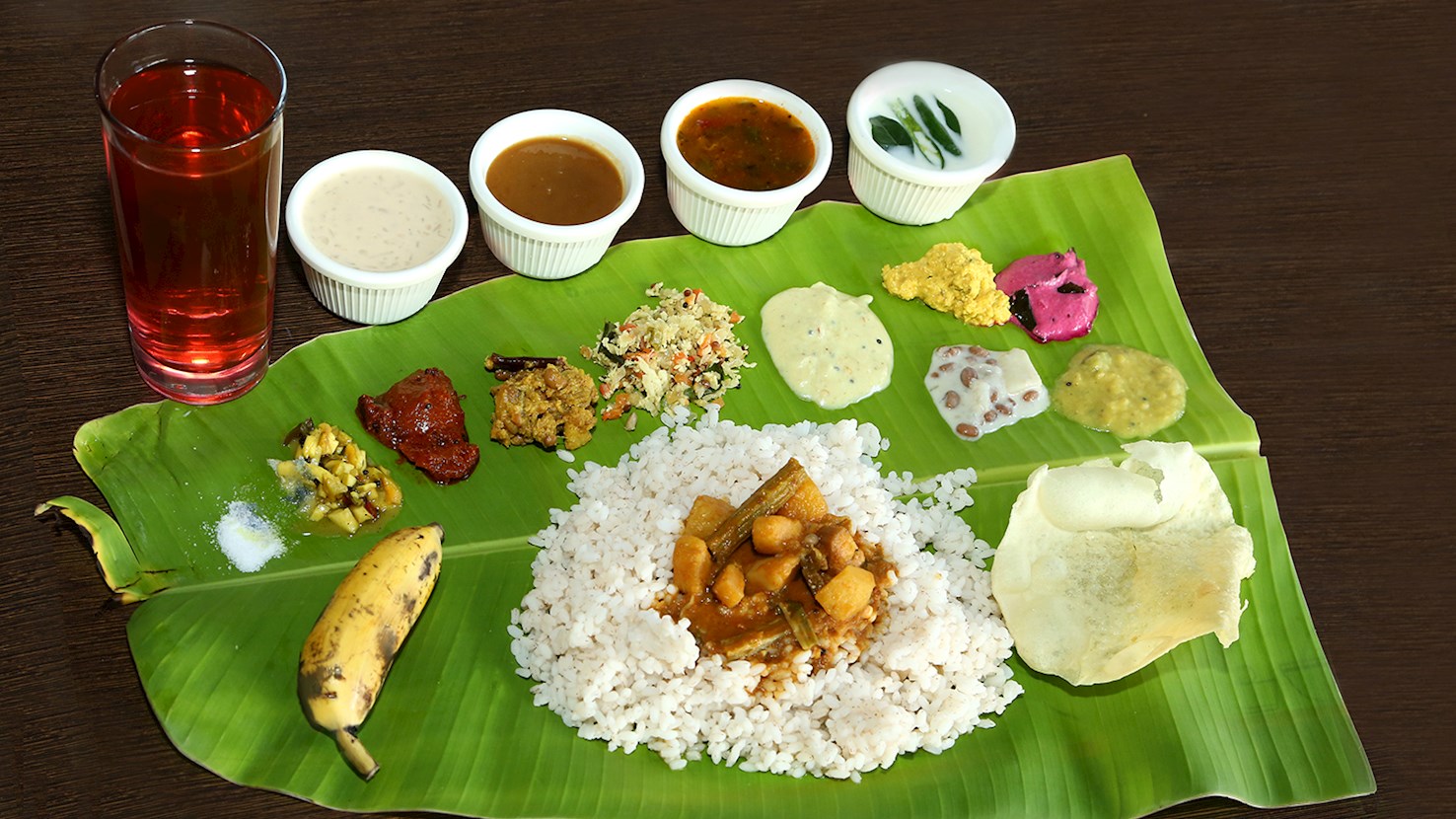
Sadhya is a traditional feast originating from the state of Kerala. All of the small dishes are vegetarian, and one sadhya feast can contain up to 28 dishes at a time, all of them traditionally served on banana leaves and meant to be eaten with hands. This feast is typically served for Onam, the state festival of Kerala. Rice is usually served on the lower side of the leaf as the main dish, and the first dish after the rice is parippu – a curry made from ghee and small gram. It's followed by sambar, a stew of vegetables cooked in gravy of onions, chilis, coriander, lentils, and turmeric. Among a huge variety of dishes, some of them include upperi (banana chips), sharkara varatti (sweet jaggery chunks), naranga curry, elisheri (stewed pumpkin, red beans, and coconut), kaalan (yogurt, coconut, and banana or yam), inji curry, parripu curry, sambhar, pappadam, kichadi, kootu curry, and rasam (tamarind soup), while the last dish is usually payasam, a traditional dessert that's similar to a pudding. This huge feast is usually served for lunch.
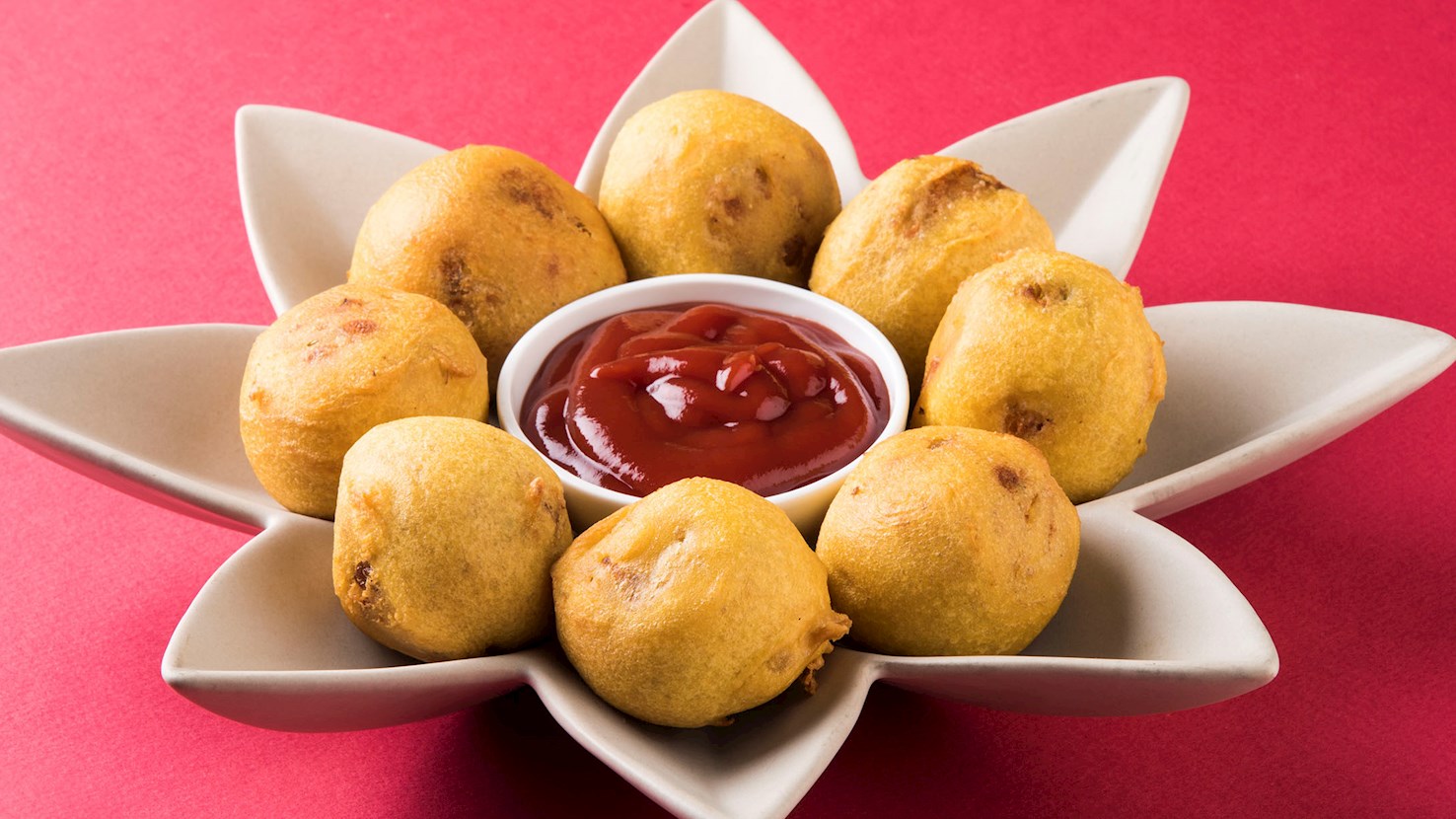
Bonda is a bite-sized fried Indian snack. Often referred to as potato bonda, it is made with a spicy mashed potato filling that is dipped in gram flour batter, then fried until crispy. It is believed that the original bonda, which includes only mashed potatoes, originated in southern India. However, there are numerous varieties and similar snacks found in almost every Indian state. In the north, a similar variety is known under the name batata vada, and it is commonly offered as a street food snack across the region. Furthermore, in Kerala, there are regional variants which replace the potatoes with tapioca, lentils, eggs, sweet potatoes, or even minced meat, and the gram flour coating is often replaced with plain or rice flour. Regardless of the varieties, these delightful snacks are usually served with coconut or coriander chutneys or tomato sauces. They can also be served as tea or coffee snacks during breakfast, and they are a common staple during the traditional Diwali festival. Bonda should always be freshly prepared and served hot or warm.
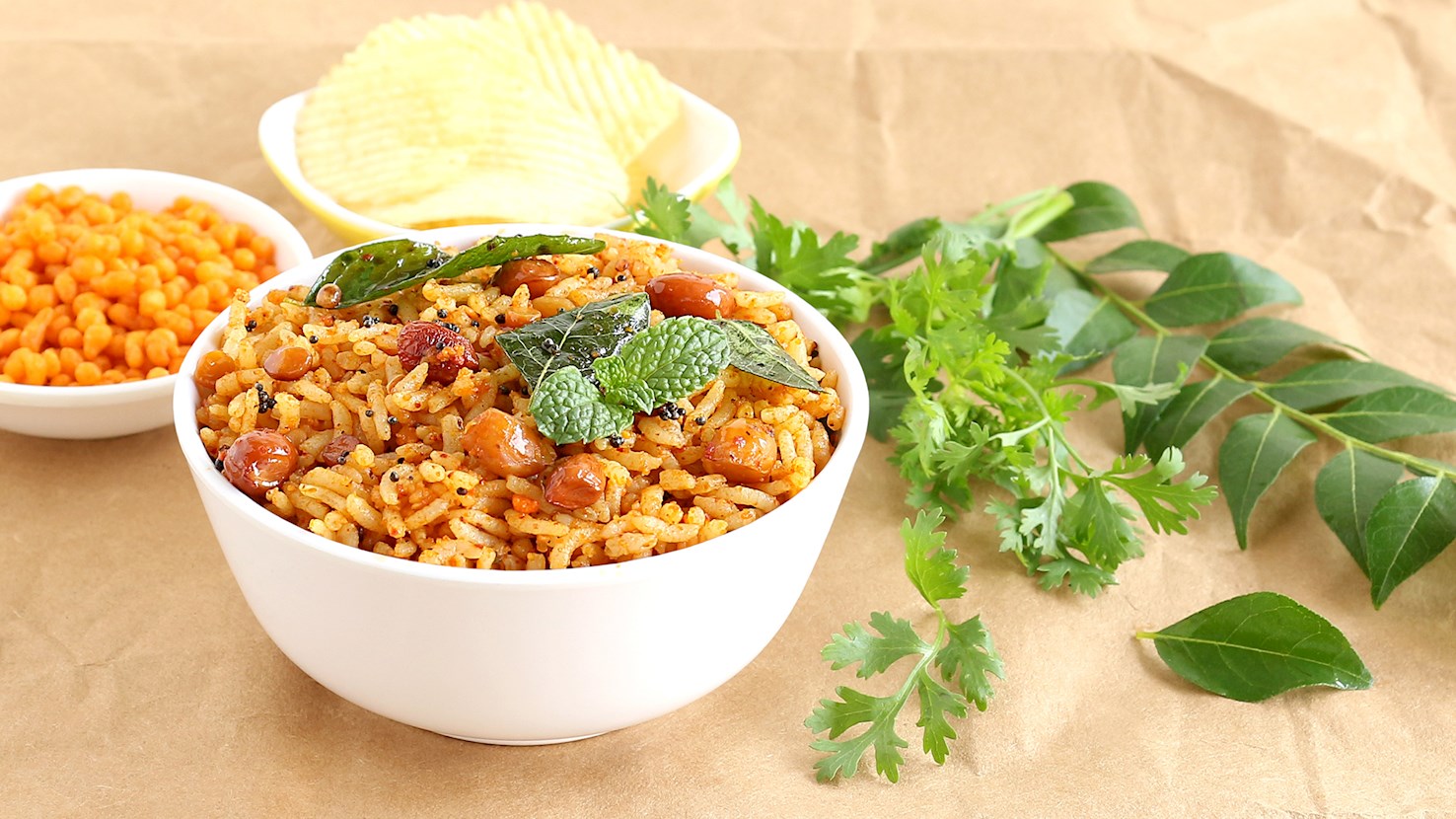
Pulihora is a popular south Indian dish that can easily be found in the states of Andhra Pradesh, Tamil Nadu, and Karnataka. It consists of rice, turmeric, tamarind, curry leaves, coriander, ginger, and green chiles. Additionally, yellow lentils, roasted sesame seed powder, and mustard seeds can be added to enhance the already rich flavors of the dish. It is commonly prepared for festivals, yellow in color due to turmeric - considered sacred and symbolizing festive occasions in the Hindu world. The word puli in its name means sour, reflecting the tangy flavor of the dish. However, spicy and salty flavors that are also present in the dish are well balanced with the sour tamarind. Other states also have their versions of pulihora, so in Tamil Nadu, it is called pulisadham, and in Karnataka, the dish is known as puliyogare. It is traditionally served with sun-dried chiles and yogurt (which is not vegan), making it a complete meal that is said to taste the best after resting for a couple of hours following its preparation.
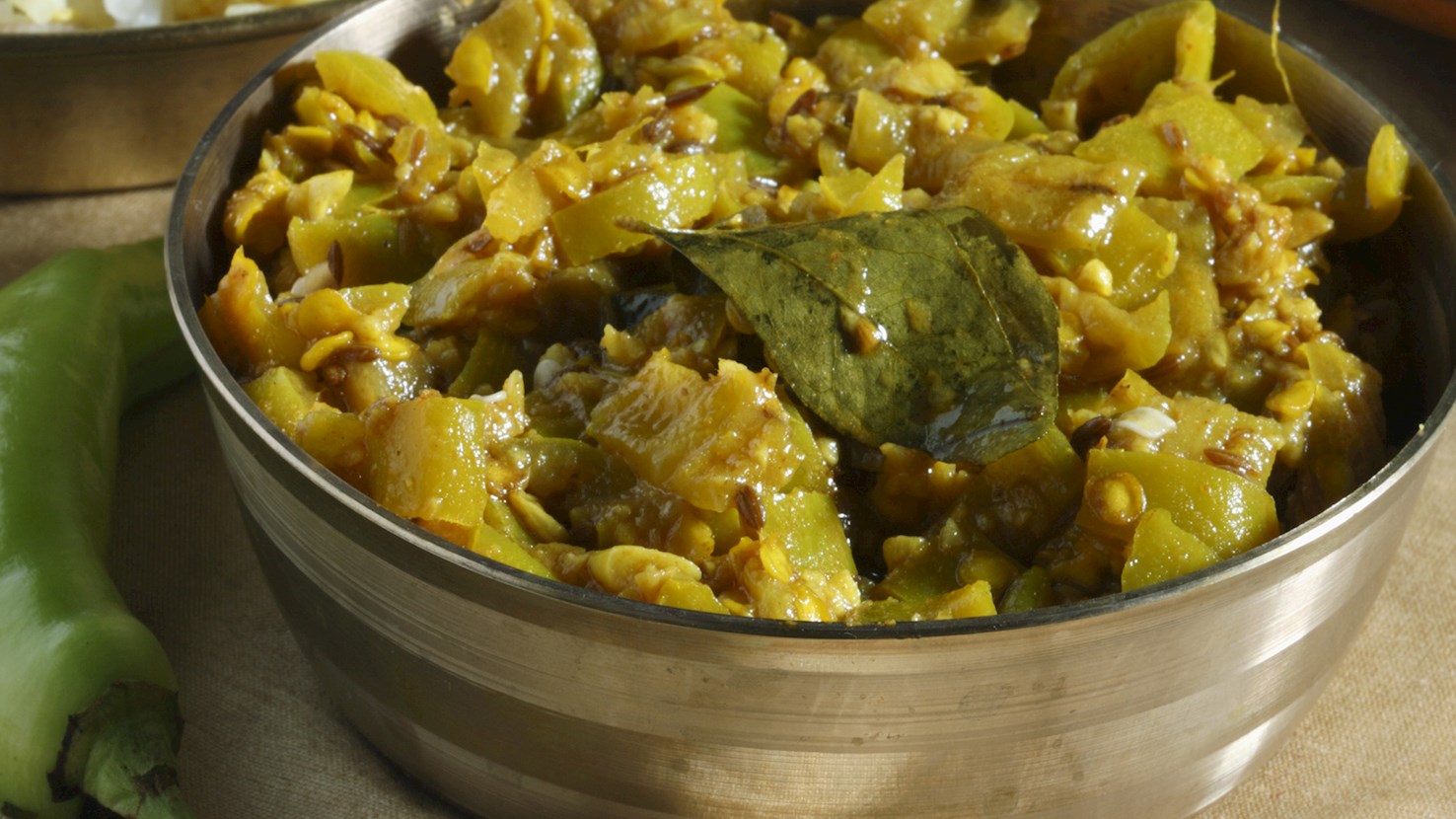
Mirchi ka salan is a variety of curry hailing from Hyderabad. It's made by simmering fried mild green chilis in a piquant mixture of peanuts, coconut, fried onions, sesame seeds, ginger and garlic paste, and a variety of spices. The curry is usually enhanced with a variety of spices and tamarind or lemon juice for an extra kick of tanginess. Typical spices used in the preparation include chili powder, cumin seeds, coriander seeds, mustard seeds, turmeric, curry leaves, fenugreek seeds, and nigella seeds. Mirchi ka salan is typically consumed warm with fresh coriander leaves on top, and it is an excellent accompaniment to Hyderabadi biryani or plain rice, but it can also be paired with naan, roti, or other types of Indian bread on the side.
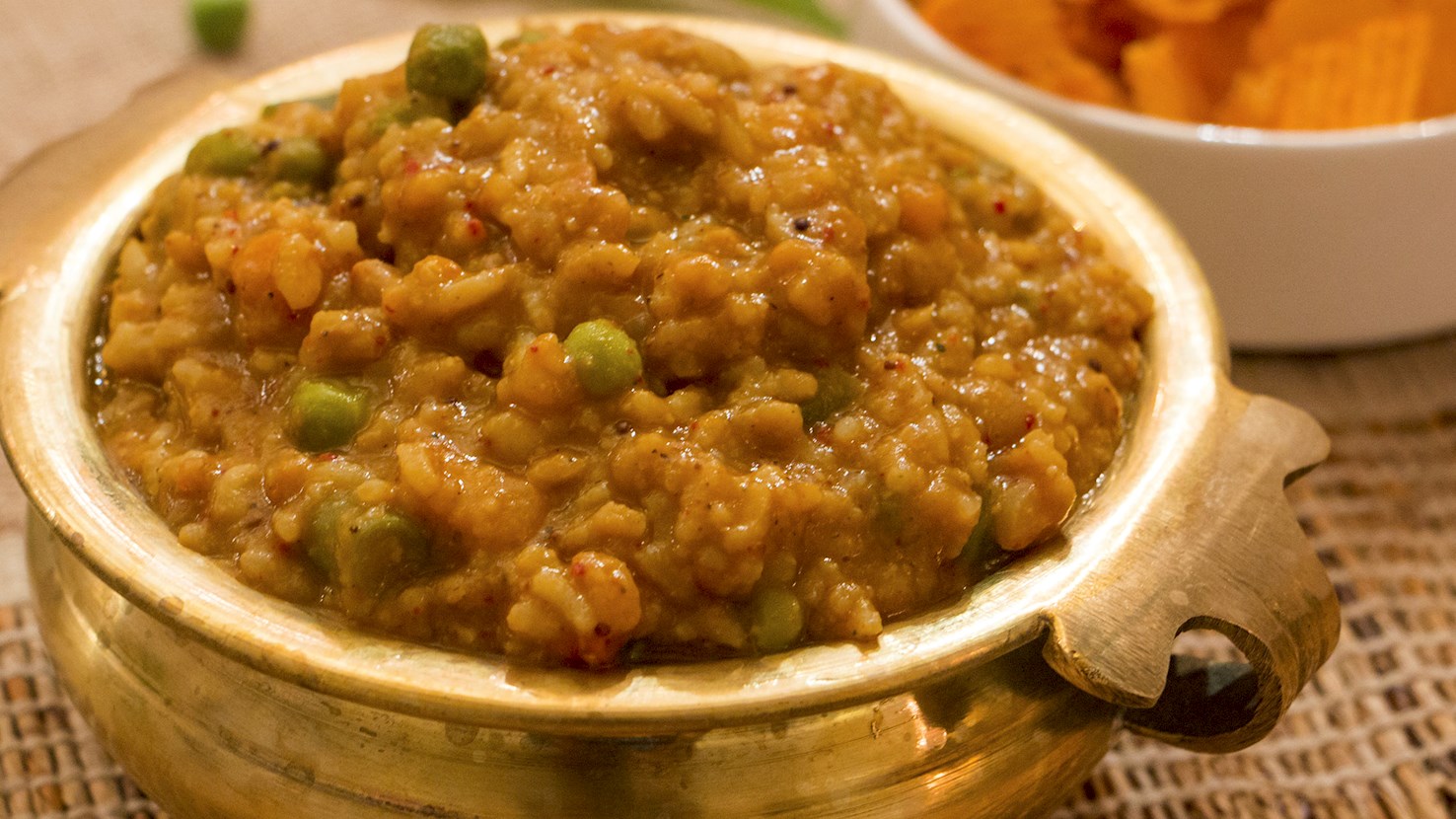
Bisi bele bath, translated to hot lentil rice, is an aromatic and spicy dish originating from the Indian state of Karnataka. Moist rice and lentils are combined with ghee butter, tamarind, curry leaves, nutmeg, and vegetables such as carrots, beans, onions, and green peas. According to K. T. Achaya, a food historian, bisi bele bath is a modern variation of an old dish from the 10th century called kattogara, consisting of rice, ghee, salt, and garlic. However, others disagree and claim that the dish was invented in Mysore Palace, near Bangalore, when it was a typical lunch meal that was additionally flavored with cashews, dried coconut, mustard seeds, and cinnamon. Originally, there were no vegetables in the dish since the royals had access to numerous vegetable-based side dishes. As time went by, bisi bele bath became popular outside of the palace and evolved in a rich farmer's meal that was typically consumed before lunch, after a few hours of hard labor in the fields. Today, the dish is consumed throughout the day, and it is also a popular picnic dish throughout Karnataka.
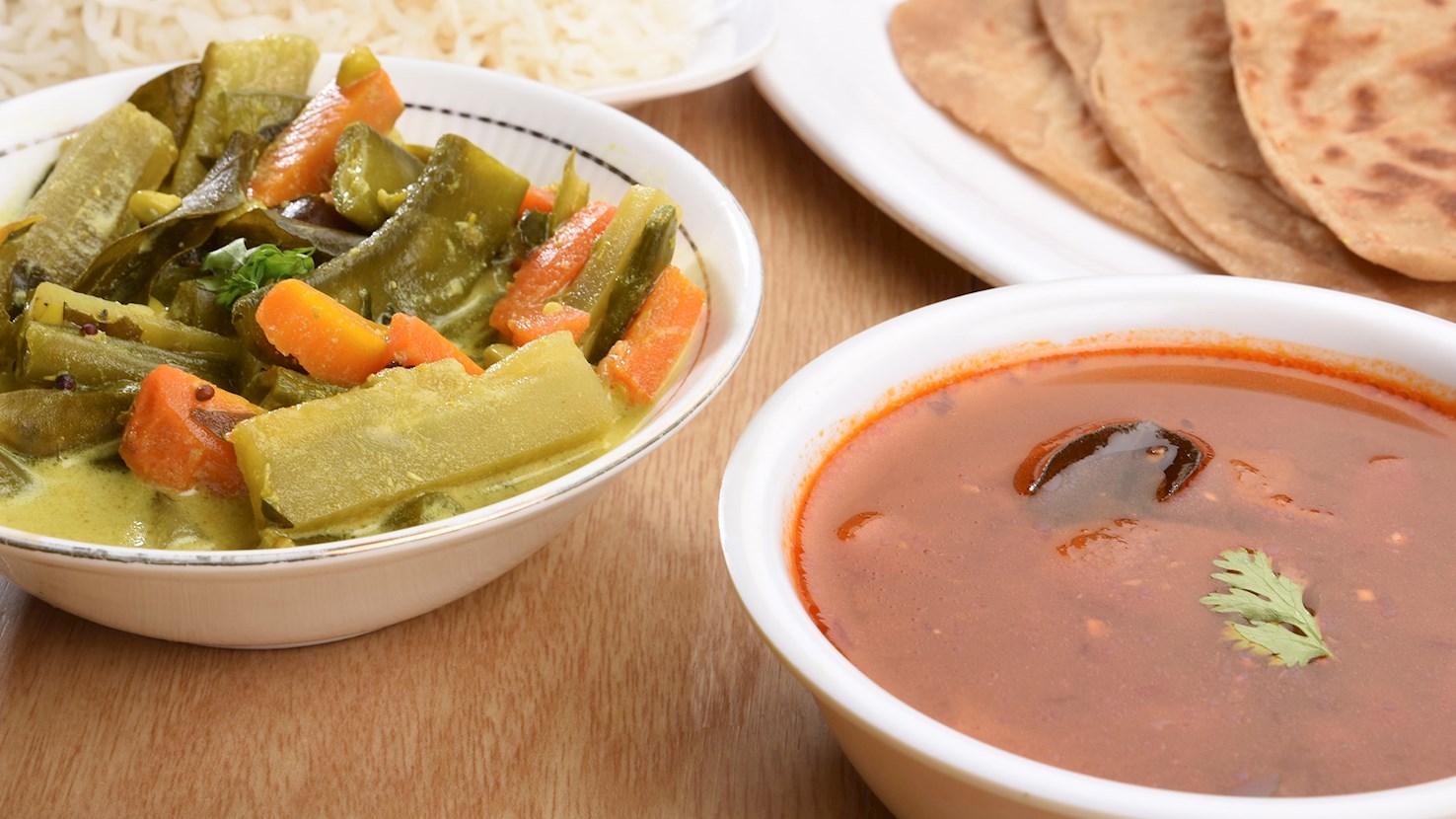
Avial is a vegetable stew from the state of Kerala, where vegetables are simmered in a thick, lightly spiced paste of ground coconut, cumin, and green chilies, then finished with a souring agent such as yogurt and a fragrant drizzle of raw coconut oil. Deeply woven into the cultural and culinary fabric of the Malabar Coast, the dish is an indispensable centerpiece of the Sadya—the grand, multi-course vegetarian banquet served on a fresh plantain leaf during festivals such as Onam and Vishu. According to popular Indian mythology, the invention of avial is attributed to Bhima, one of the Pandava brothers from the ancient epic, the Mahabharata. Legend states that during their period of exile, Bhima assumed the disguise of a cook in the kingdom of Virata and, when faced with an unexpected feast and a shortage of single vegetables, he resourcefully chopped up the available scraps of various root vegetables and gourds, boiling them together with grated coconut to create a dish that unexpectedly delighted the royal court. Another enduring tale attributes its creation to a king of Travancore who, loathing waste, ordered his chefs to combine leftover vegetables from a massive feast into a single, cohesive curry. A proper preparation explicitly avoids watery, soft, or overpowering vegetables like tomatoes, okra, or cabbage, relying instead on hearty, native produce that holds its shape. A typical combination includes elephant foot yam, ash gourd, raw green plantain, drumsticks (moringa pods), snake gourd, carrots, and yard-long beans, all uniformly sliced into thick, two-inch batons. Because these vegetables have vastly different textures, a skilled cook staggers their addition to the cooking pot—beginning with the dense yams and carrots, and ending with the softer gourds—ensuring that every component is perfectly tender but never reduced to mush. Minimal water is used; the vegetables are essentially steam-cooked in their own juices until they are ready to receive the dish's defining flavor profile. Once the vegetables are cooked, a coarsely ground paste of fresh grated coconut, fiery green chilies, and earthy cumin seeds is gently folded into the pot, providing a sweet, aromatic bulk that clings to the batons rather than forming a runny gravy. To balance the sweetness of the coconut and the heat of the chilies, a souring agent is introduced. While lightly whisked, slightly sour yogurt (curd) is the most traditional choice in Kerala, regional variations often utilize raw mango slices or tamarind extract, particularly in Tamil Nadu or the Udupi region, which yields a slightly different color and sharper tang. The cooking process is halted almost immediately after the souring agent is added to prevent it from splitting. The crowning glory of avial, however, is its final tempering—or rather, the lack of a traditional cooked tempering. Instead, a generous handful of bruised, fresh curry leaves is scattered over the hot vegetables, followed by a liberal pour of raw, unheated coconut oil. The pot is immediately covered, allowing the residual heat to trap the volatile essential oils and produce an intoxicating, deeply tropical aroma that permeates the entire dish. Avial is typically served with steamed rice, sambar, pickle, and papadom flatbreads.
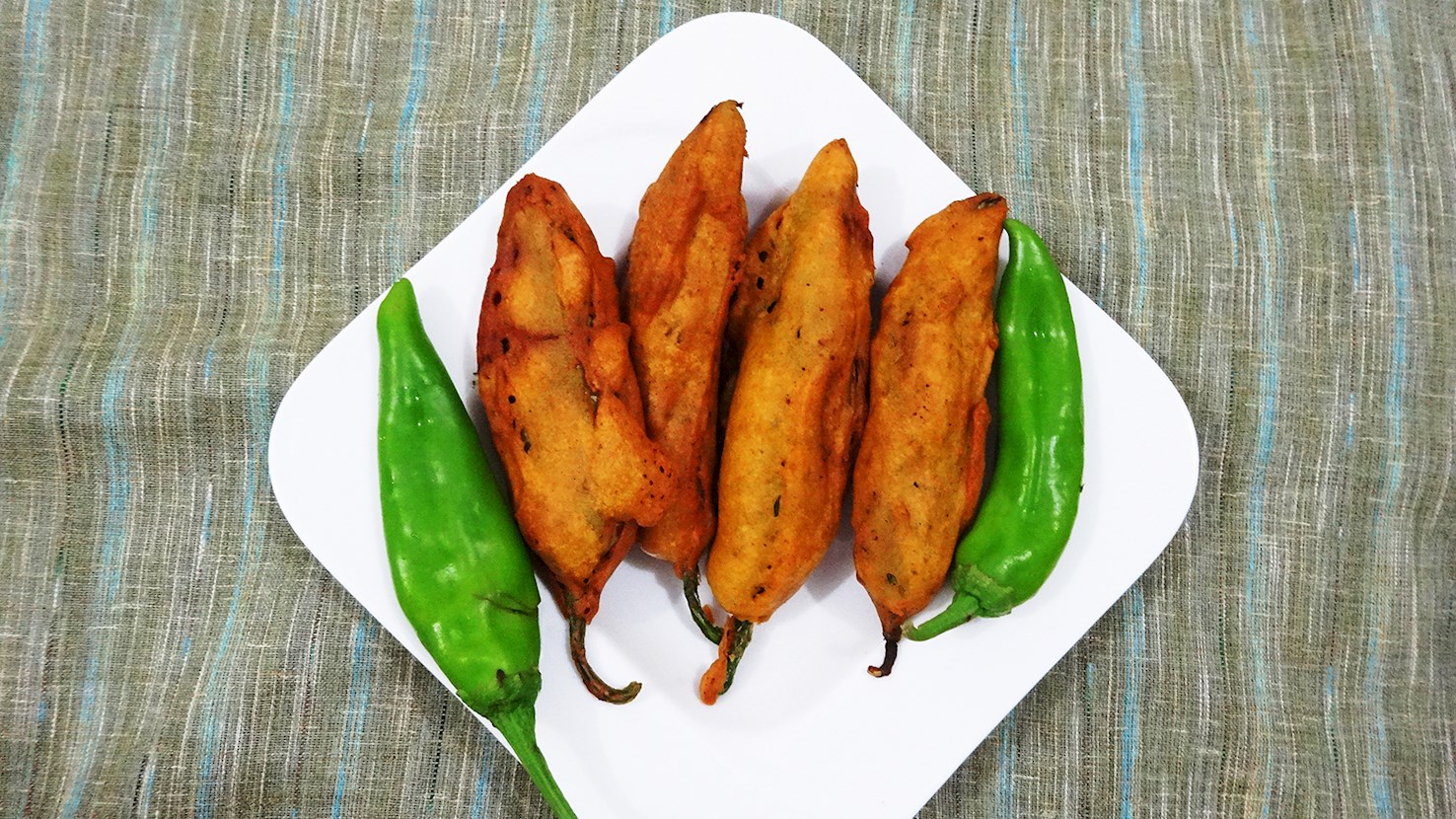
Hari mirch ke pakodey is a traditional dish originating from Andhra Pradesh. This snack is made with a combination of green chili peppers, salt, potatoes, amchur (powdered mango), coriander leaves, cumin powder, and gram flour. The chili peppers are sliced lengthwise, soaked, then stuffed with a combination of of these ingredients. They’re dipped into a smooth batter made from gram flour and water, then fried in oil until lightly browned. This snack is traditionally served piping hot. If desired, mint and tamarind chutney can be used instead of amchur.
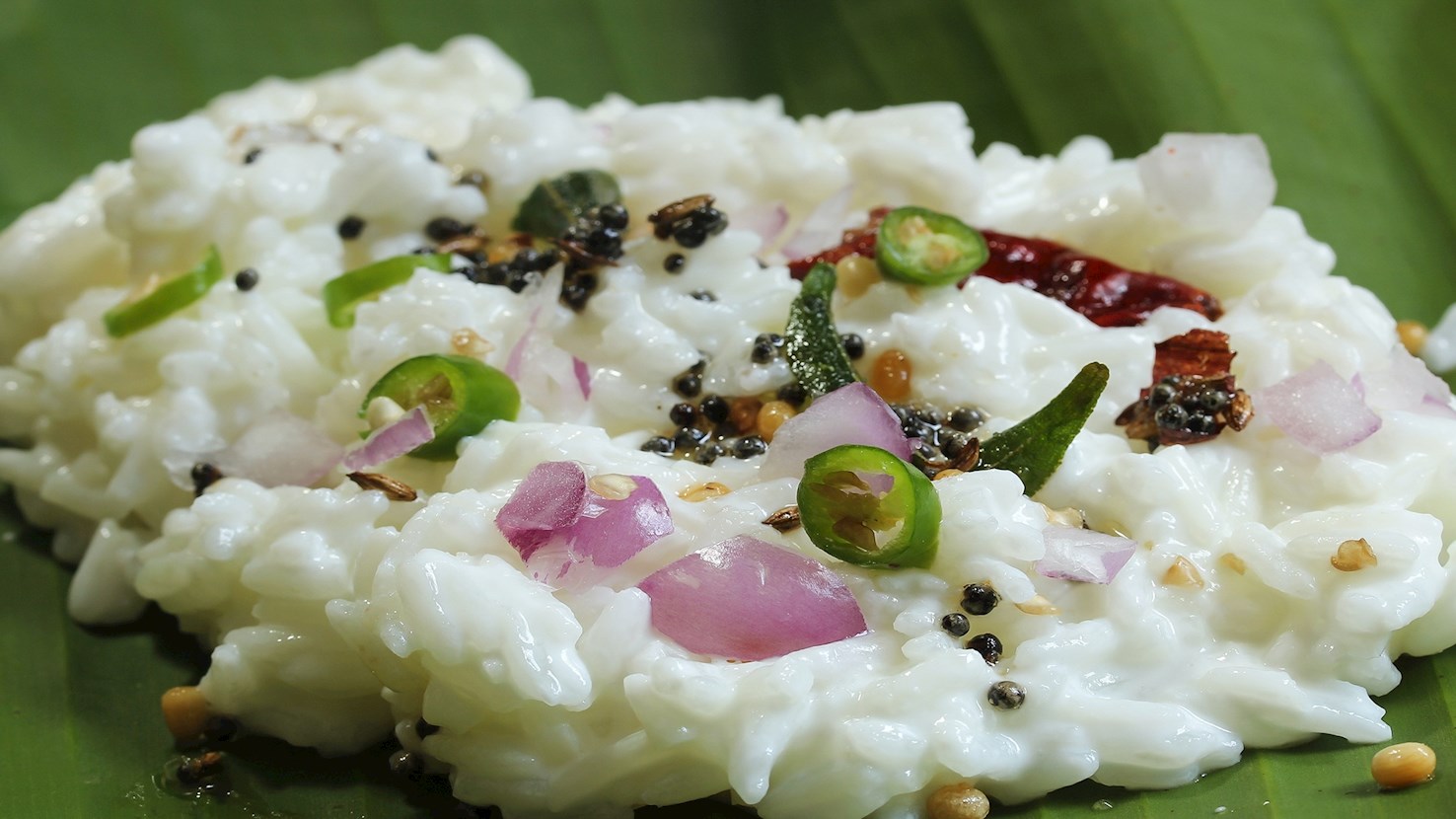
The ultimate Indian comfort food known as curd rice is one of the favorite dishes of many south Indians. It is especially popular in the states of Karnataka, Kerala, Andhra Pradesh, and Tamil Nadu. This vegetarian meal consists of rice and dahi that is flavored with green chile peppers, minced ginger, curry leaves and mustard seeds, but it can also be enriched by adding carrots, calabash, and cucumbers, or even nuts, grapes, and pineapple pieces. In South Indian cuisine, curd rice is commonly served at the end of a meal in order to balance the spicy flavors of other foods and to aid with digestion. It is usually accompanied by roasted carrots and pickled mango or lime.
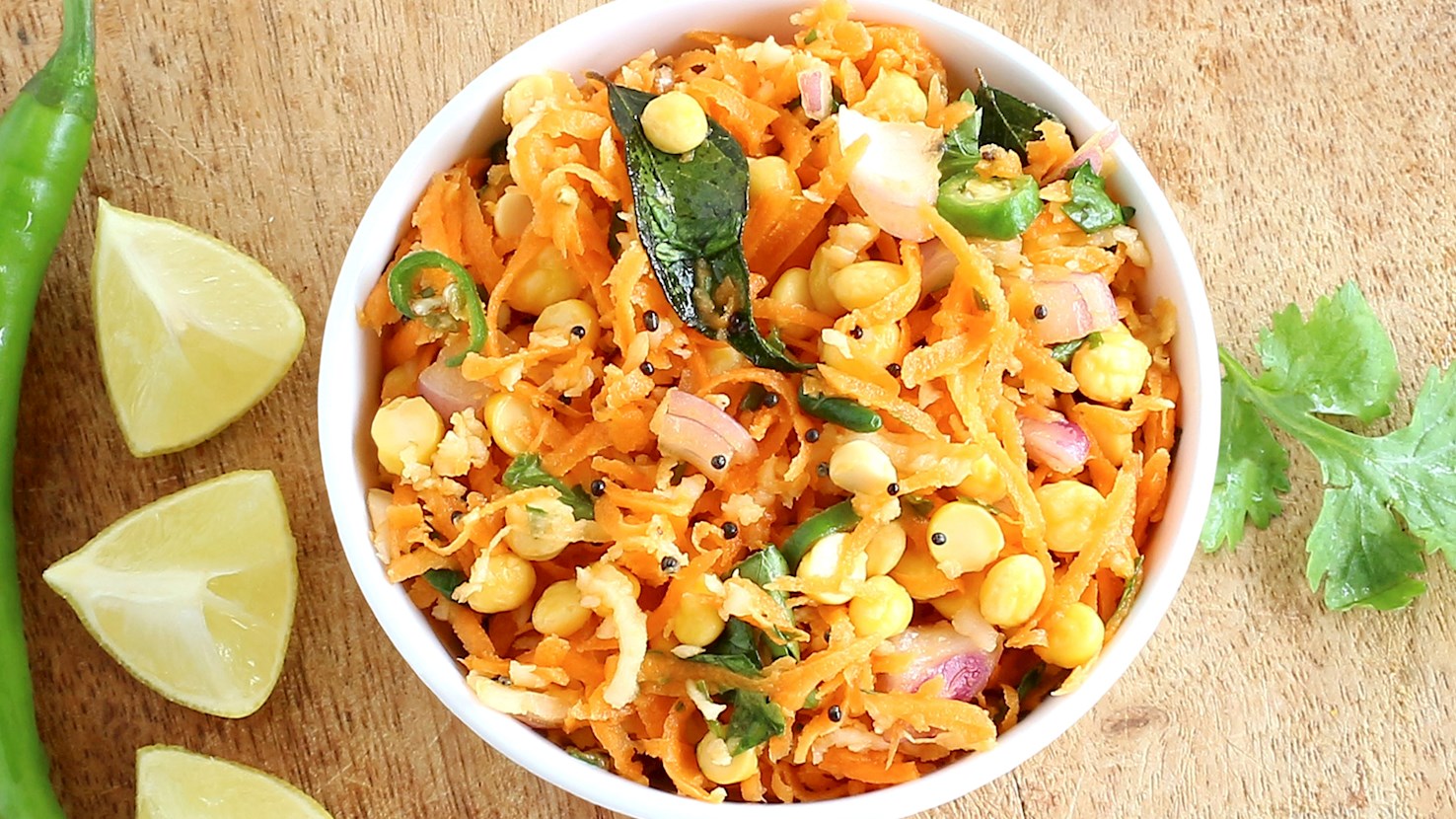
Kosambari is the most popular salad from the Indian state of Karnataka. The salad is made with split legumes such as bengal gram and green gram, and it is additionally seasoned with mustard seeds. The dish is well known for being easy to prepare and for having a high protein count. It is popular as an appetizer at most feasts, celebrations, and festivals, while in most temples it is offered as prasada - a religious offering. Kosambari is often additionally flavored with cucumber slices or rice, and although it is usually served as an appetizer, it is also a healthy main meal or a snack.
TasteAtlas food rankings are based on the ratings of the TasteAtlas audience, with a series of mechanisms that recognize real users and that ignore bot,
nationalist or local patriotic ratings, and give additional value to the ratings of users that the system recognizes as knowledgeable.
TasteAtlas Rankings should not be seen as the final global conclusion about food. Their purpose is to promote excellent local foods,
instill pride in traditional dishes, and arouse curiosity about dishes you haven’t tried.





What People Say