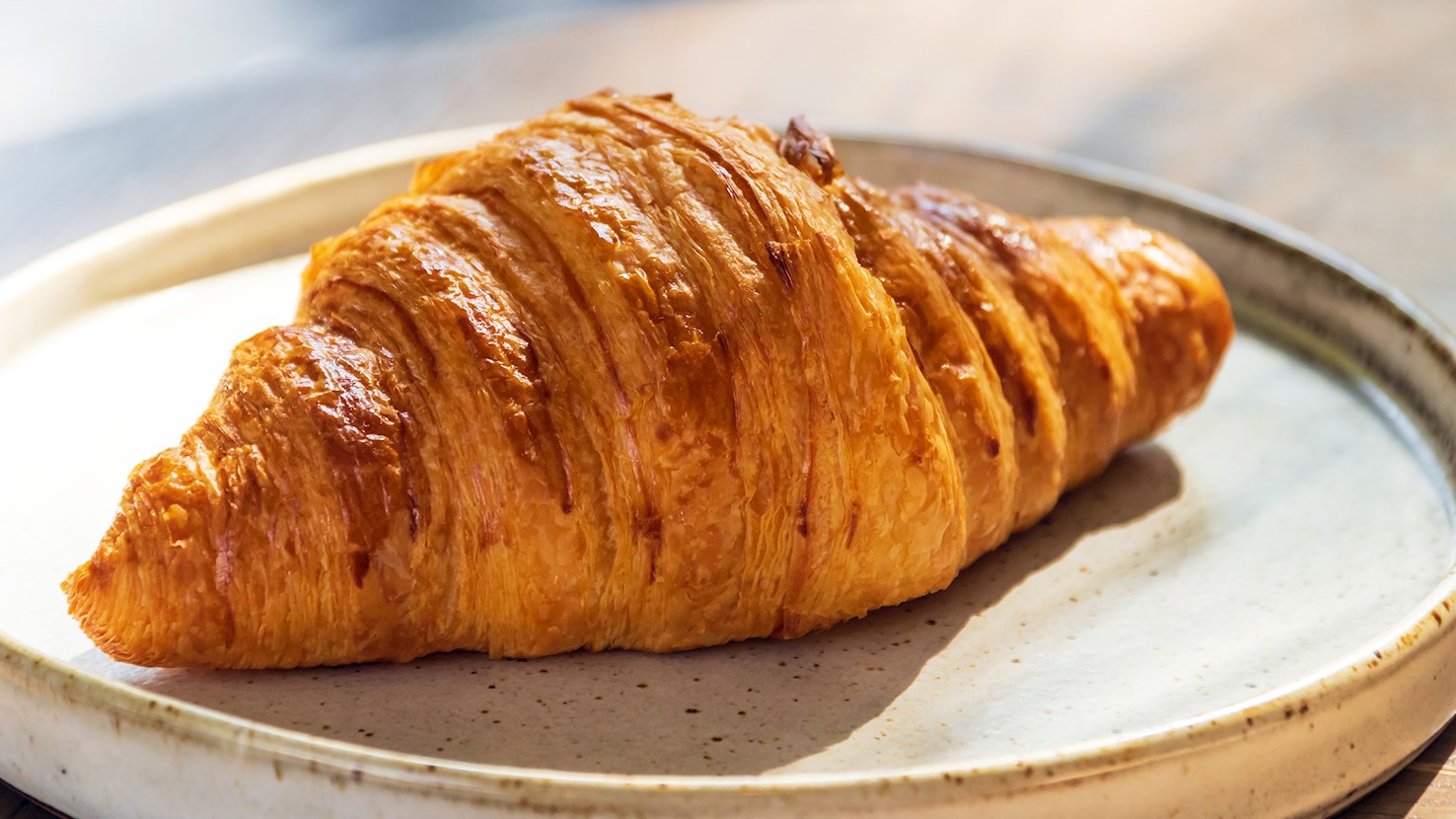
One of the true classics of French cuisine, croissants are not at all easy to make, but the result — if done right — is truly worth the trouble. This crescent-shaped pastry is usually made with puff pastry dough, but alternatively, it can also be made with leavened dough. A classic croissant is on the verge of sweet and savory, and it can either be plain or filled with chocolate, jam, cheese, ham, or raisins, although a filled version could not be considered a true croissant. The process starts with mixing the yeast with some milk and flour and leaving it to rise. Next, the yeast is combined with flour, sugar, salt, and the remaining milk, and kneaded by hand or with a mixer until it becomes homogenous. The dough is then left to rise from 2 up to 48 hours under a plastic foil until it doubles in volume. Then, the dough is kneaded once again, rolled into a rectangle, and processed using a technique called turning. A piece of butter is placed in the middle of the rectangle and covered with the sides of the dough to form an envelope. It is then rolled gently with a rolling pin, so the butter is distributed evenly. The dough is turned by 90 degrees, and the process is repeated once again before leaving the dough to rest for 1 hour. At least two more turns — four overall — should be done afterward, which will laminate the dough to its characteristic layered texture. The dough is then cut into triangles, which are rolled from the base towards the top and formed to resemble a crescent. In the end, croissants are glazed with egg yolk and baked in an oven preheated to 180°C/350°F until they become golden brown. The ideal texture of a croissant is crispy and flaky on the outside, and slightly elastic on the inside, with small air pockets called the alveoli. Croissants are usually served for breakfast, plain, perhaps with some coffee; however, nowadays, croissants will often be served with jam and butter, especially outside of France.
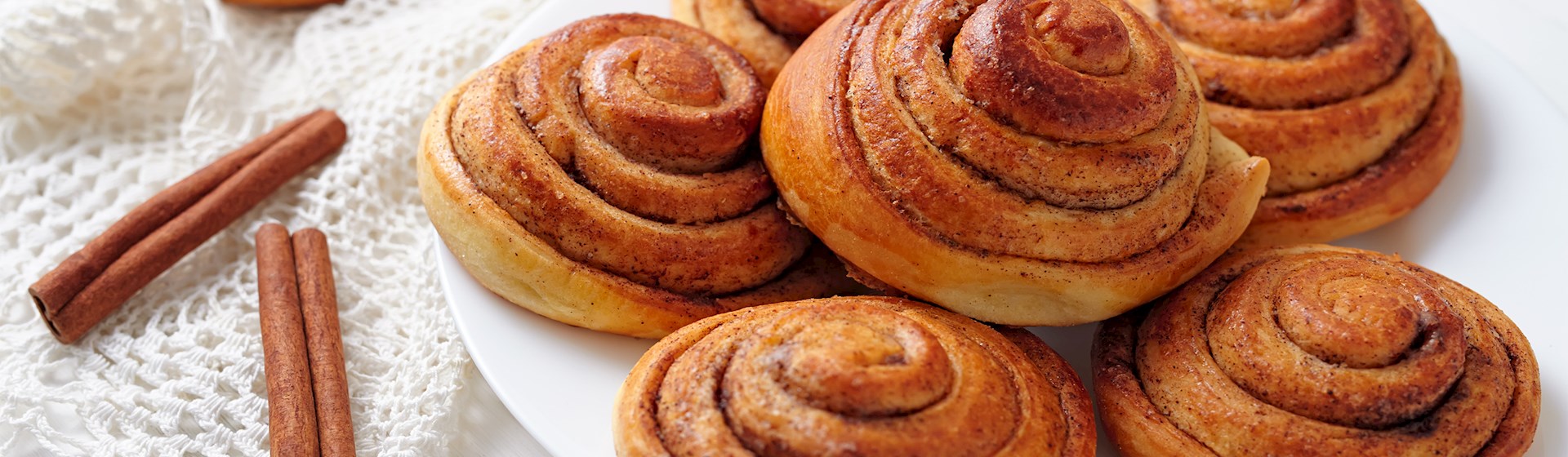
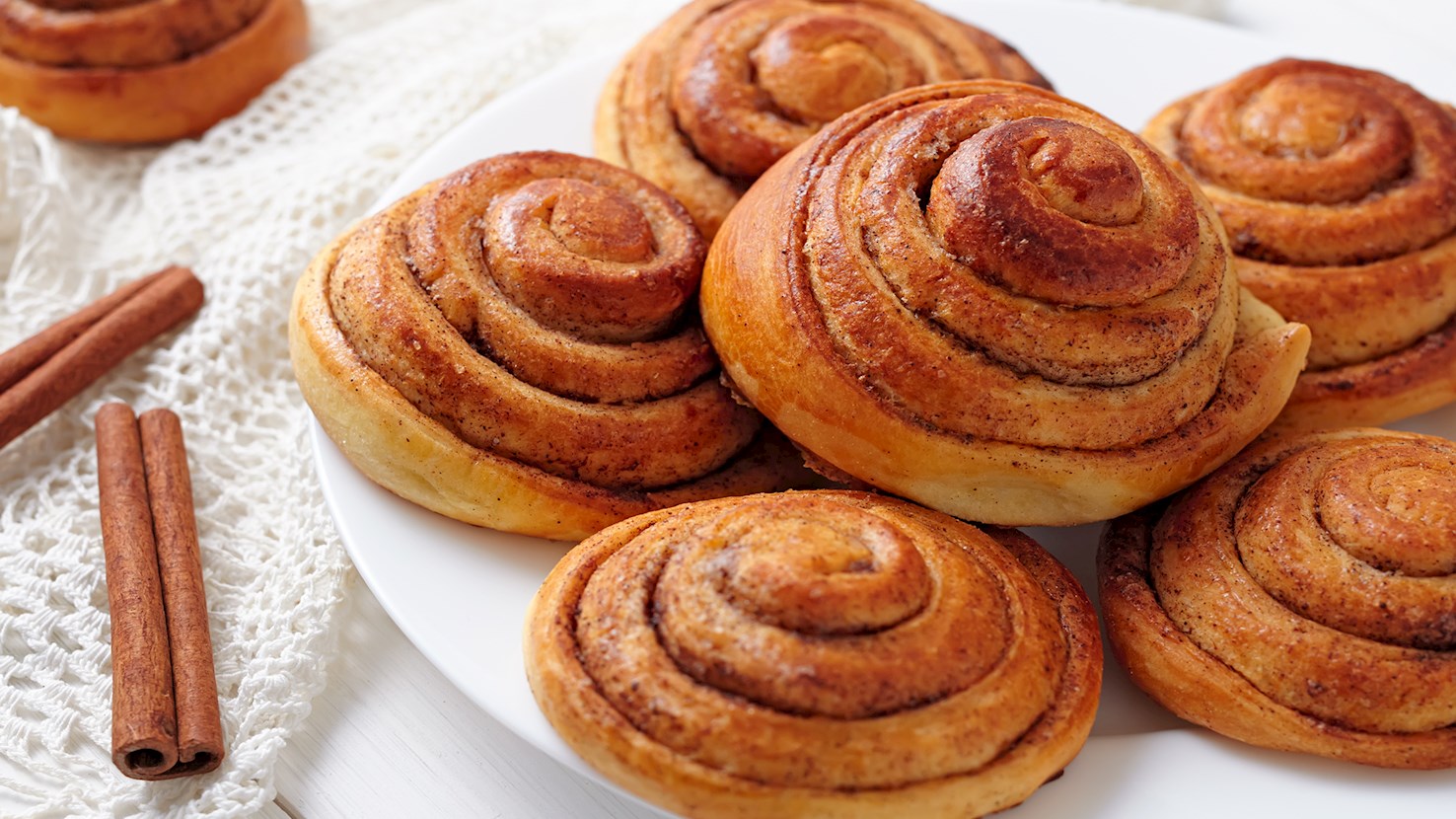
Probably the most famous Swedish food export, kanelbulle or cinnamon rolls, are so revered in their home country they’ve even got their own holiday — each October 4 is celebrated as Kanelbulle Day. They are made with rich, buttery dough that is often flavored with cardamom and filled with butter, sugar, and cinnamon filling. The rolls, or buns as some call them, can be shaped in many ways and are sprinkled before baking with pearl sugar or cardamom sugar. The cinnamon rolls are usually eaten for a coffee break, or fika as Swedes would call it, and typically paired with coffee.
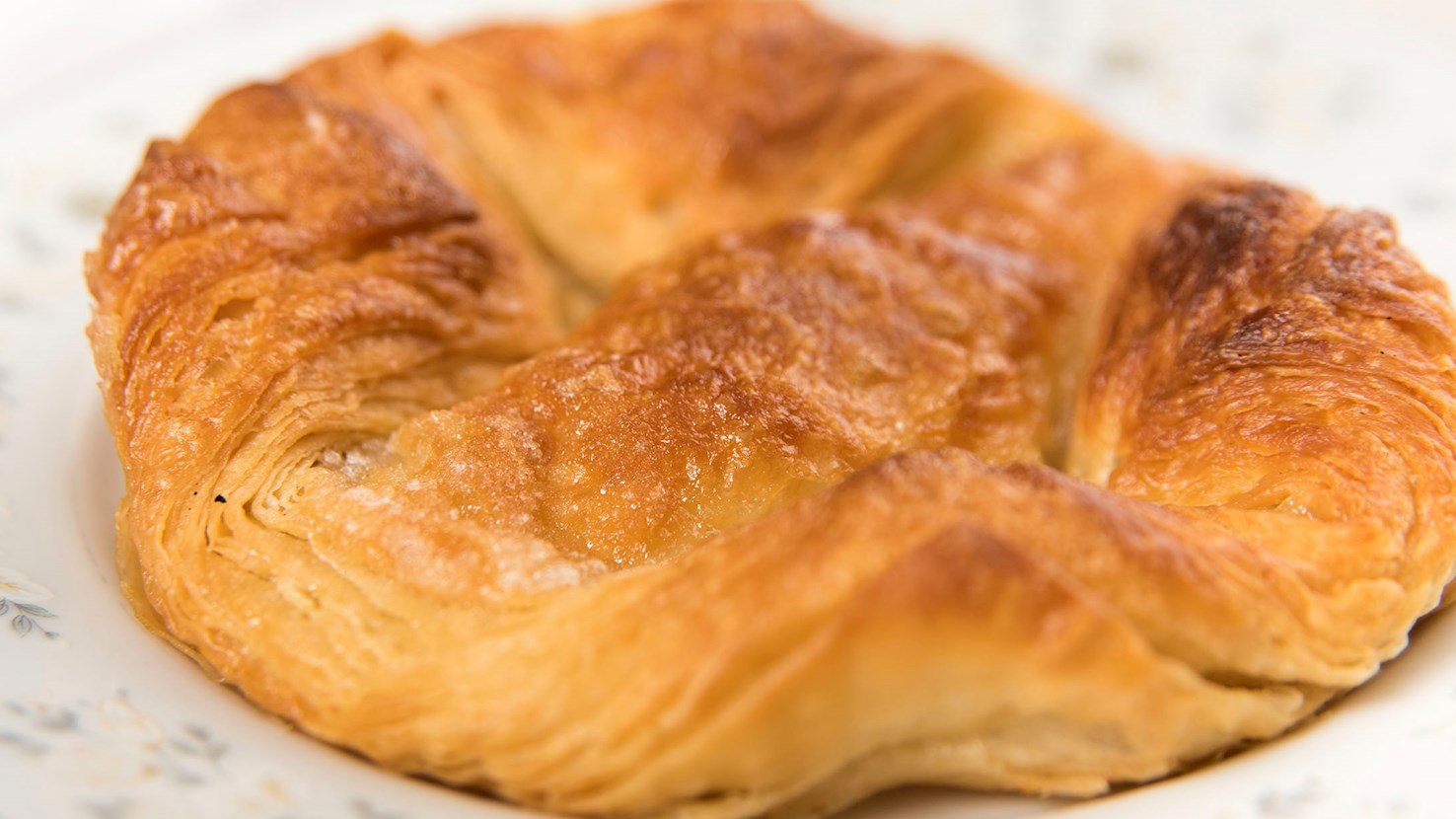
Described as the "fattiest pastry in all of Europe" by the New York Times in 2011, a bready version of canelés, and a caramelized croissant, kouign-amann is a rustic round pastry from Brittany, precisely the town Douarnenez. According to the traditional recipe, it consists of three components in varying amounts: 40% bread dough, 30% butter, and 30% sugar. The bread dough is just flour, yeast, salt, and water, while the butter has to be salted, and generally speaking, all the ingredients must be of top-notch quality. Kouign-amann is prepared by the process of lamination, in which the butter and the sugar are folded into the dough to create super flaky layers. It is traditionally a round pastry, the size of an average American pie, and it’s characterized by a soft center and crunchy outside, full of aromas of browned butter and caramelized sugar. The Véritable kouign-amann de Douarnenez association has gathered a dozen of bakers and pastry makers with the aim of promoting and preserving the kouign-amann.
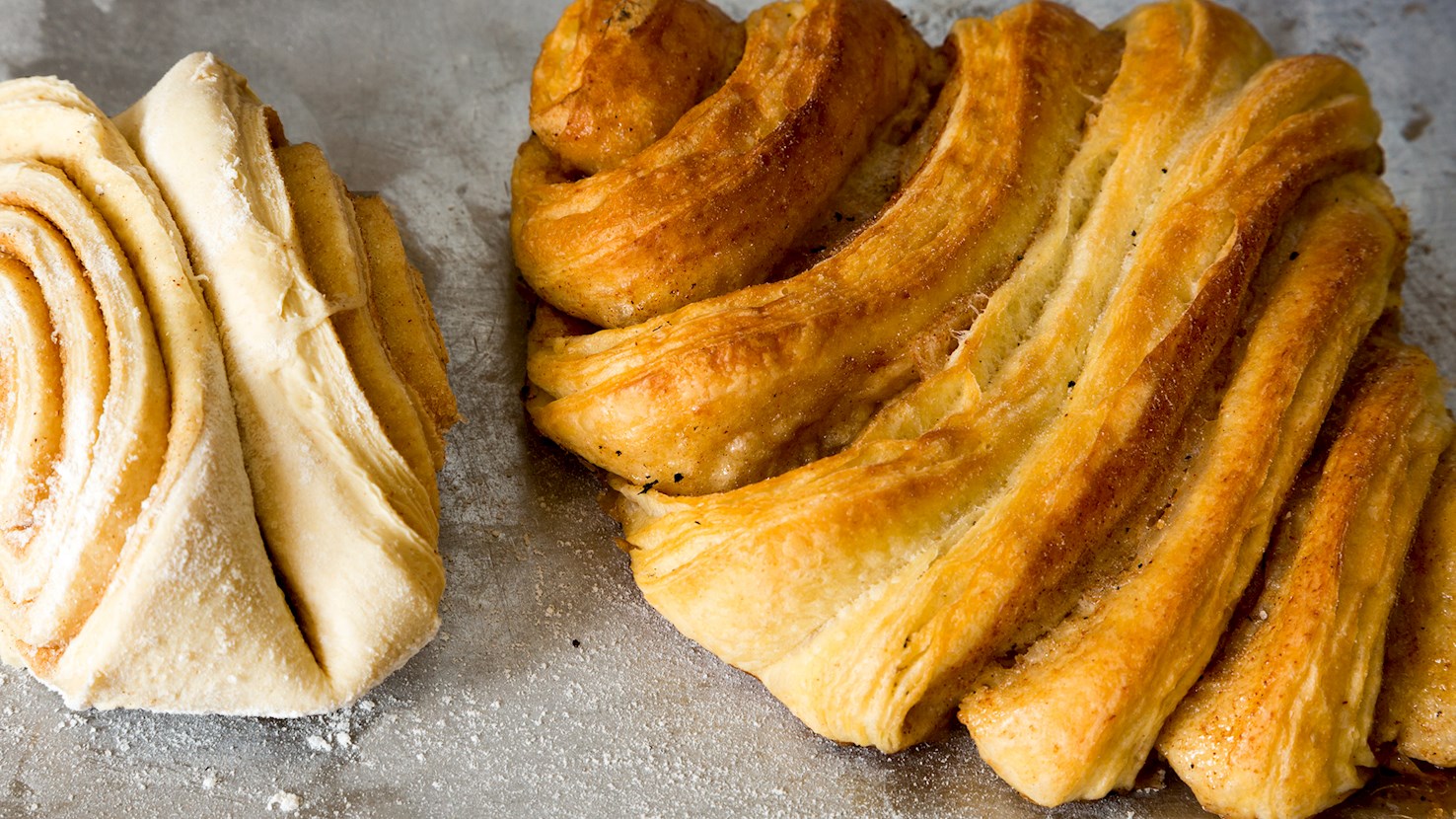
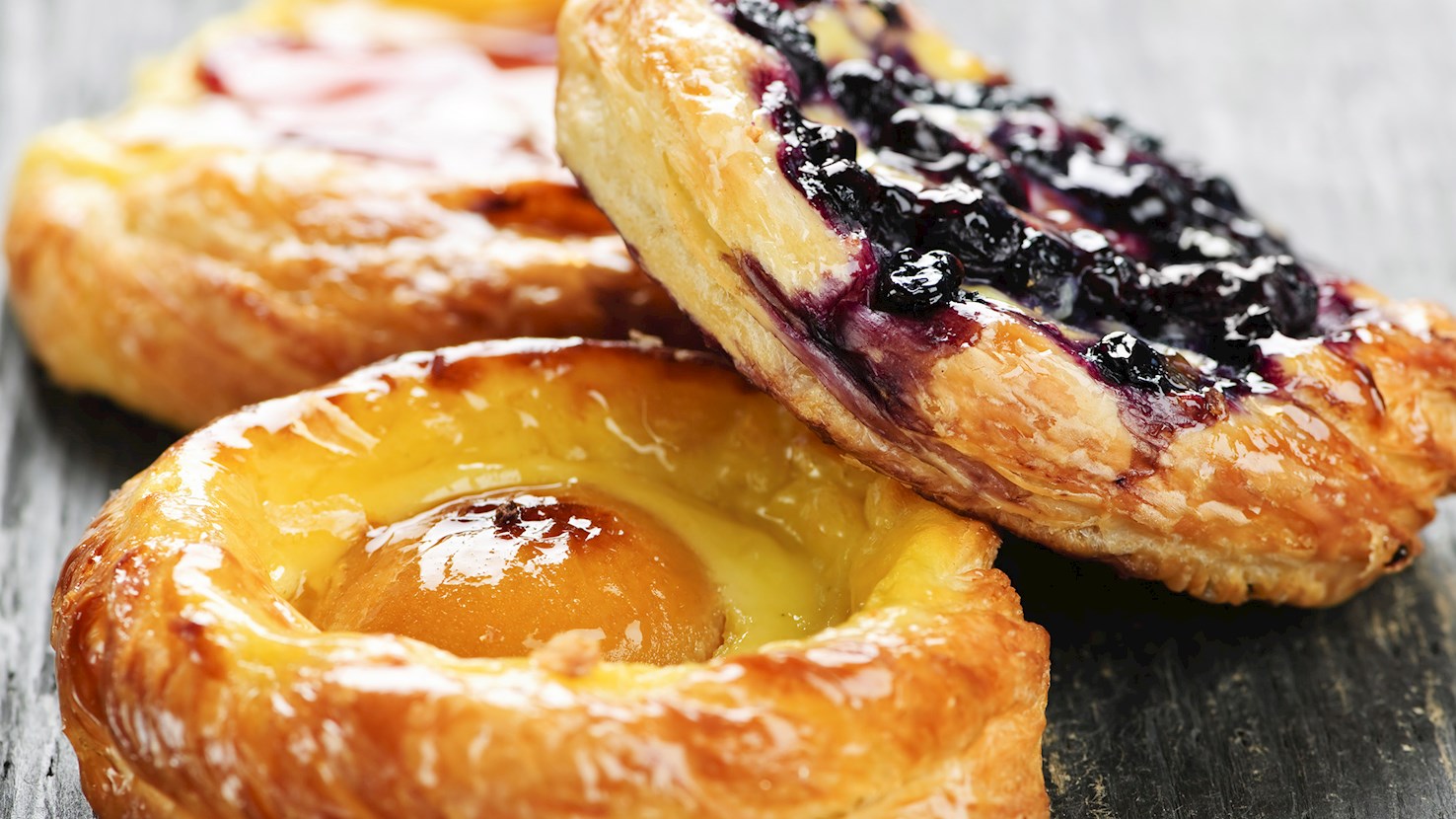
This crispy sweet is made with laminated dough, meaning the yeast-leavened dough is covered with butter and repeatedly folded over itself, which is a process fairly similar to one used to make puff pastry. Depending on the shape and ingredients, there exist various types of Danish pastry, such as frøsnapper, which is pastry twists sprinkled with sesame and poppy seeds, cinnamon rolls kanelsnegle, and poppy seed rolls tebirkes. There is also a chocolate bun chokoladebolle, a chocolate-glazed cinnamon roll direktørsnegl, and many more, as this is just the tip of an iceberg. However, the Danish pastry braid and spandauer, a round pastry filled with custard and jam, are the most popular varieties out of the entire Danish pastry family. All recipes start with making the dough, which is made with flour, butter, eggs, milk, sugar, yeast, and then left to rise up to an hour. It is then rolled out, and slices or shavings of cold butter are arranged on top of it. The dough is then folded over it, so the butter is completely covered. It is then rolled once again and folded in three layers, then refrigerated for 15-30 minutes. This step is repeated two more times, including the refrigeration, which results in a dough with a total of 27 layers, which a mark of true Danish pastry dough. The dough is then smeared with anything from remonce, a mixture of butter, sugar, and nuts or marzipan, to jam, custard, or cinnamon and then molded into the desired shape, either braids, rolls, twists, squares, rounds, to name a few. Before baking, the dough is glazed with an egg wash and can be sprinkled with sesame seeds, poppy seeds, or almond flakes. Once baked, the pastries can be drizzled with icing or chocolate for more texture and flavor.
TasteAtlas food rankings are based on the ratings of the TasteAtlas audience, with a series of mechanisms that recognize real users and that ignore bot,
nationalist or local patriotic ratings, and give additional value to the ratings of users that the system recognizes as knowledgeable.
For the “Top 5 Viennoiserie Recipes” list until October 17, 2026, 5,444 ratings were recorded, of which 4,801 were recognized by the system as legitimate.
TasteAtlas Rankings should not be seen as the final global conclusion about food. Their purpose is to promote excellent local foods,
instill pride in traditional dishes, and arouse curiosity about dishes you haven’t tried.






What People Say