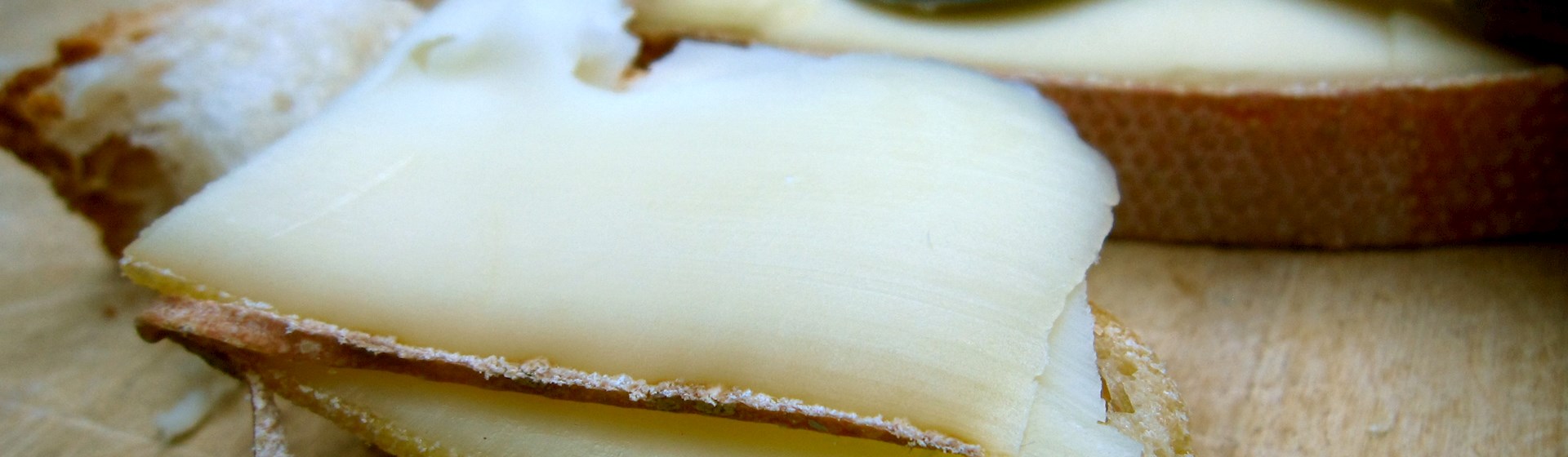
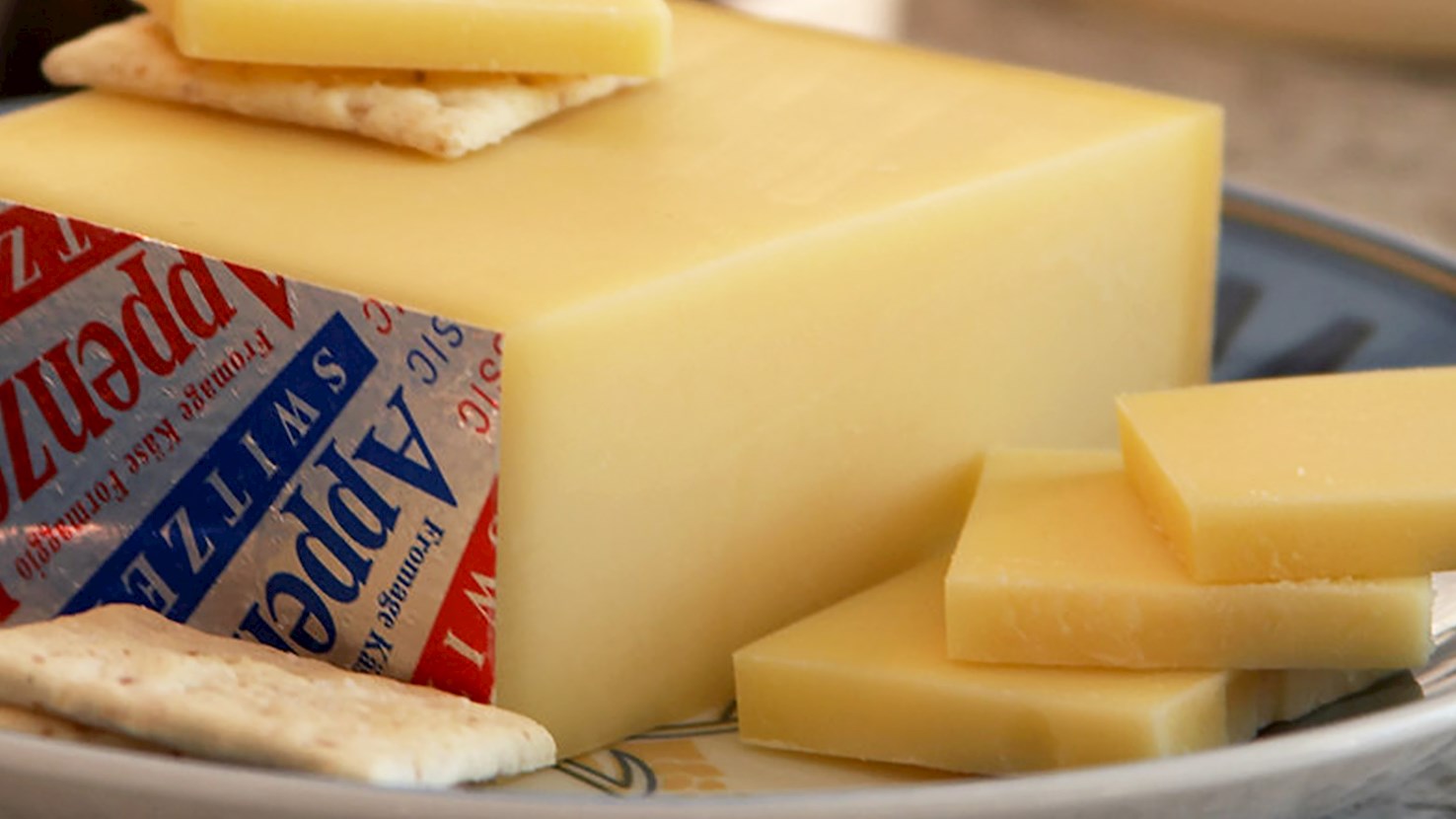
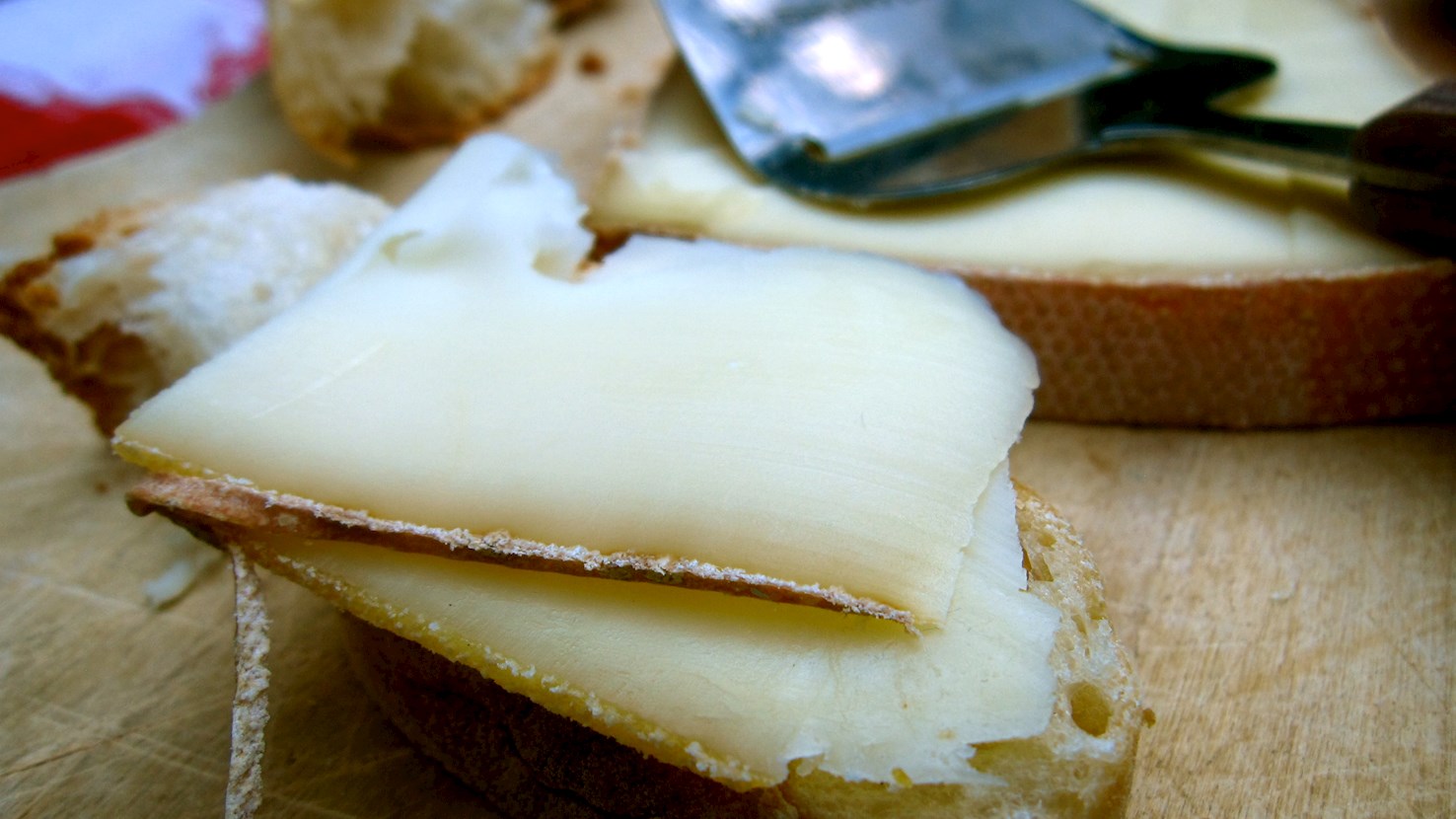
Appenzeller is a Swiss cheese from Appenzell. It's made from raw cow's milk, and while the cheese is maturing, it's regularly washed with a secret herbal brine. After 3 months, it's ready for consumption, and the longer it matures, the spicier it will become. This hard cheese has a firm, open, and smooth texture, while the flavors are tangy, spicy, and fruity. There are three types of Appenzeller: Classic, aged 3 to 4 months, Surchoix, aged 4 to 6 months, and Extra, aged 6 months or longer.
Scharfe Maxx is a Swiss cheese hailing from Thurgau. The cheese is made from raw cow's milk that's been thermized, and it's left to age for 5-6 months. It has a washed rind that hides a semi-soft texture of the cheese. Although it can be mild at first taste, Scharfe Maxx also has a sharp and nutty finish with hints of barnyard. During the production process, cream is added to the cheese, resulting in a silkiness that balances the savory notes of beef broth and sautéed onions. There are also Maxx Extra, aged to 9 months, and Maxx 365, aged up to a year. In spite of its range of complex flavors, Scharfe Maxx is quite versatile, so it can be paired with mustard, rye bread, pickles, potatoes, berry jams, eggs, sandwiches, and asparagus, among others. The name of the cheese means sharp Maxx or spicy Maxx, referring to its sharp finish.
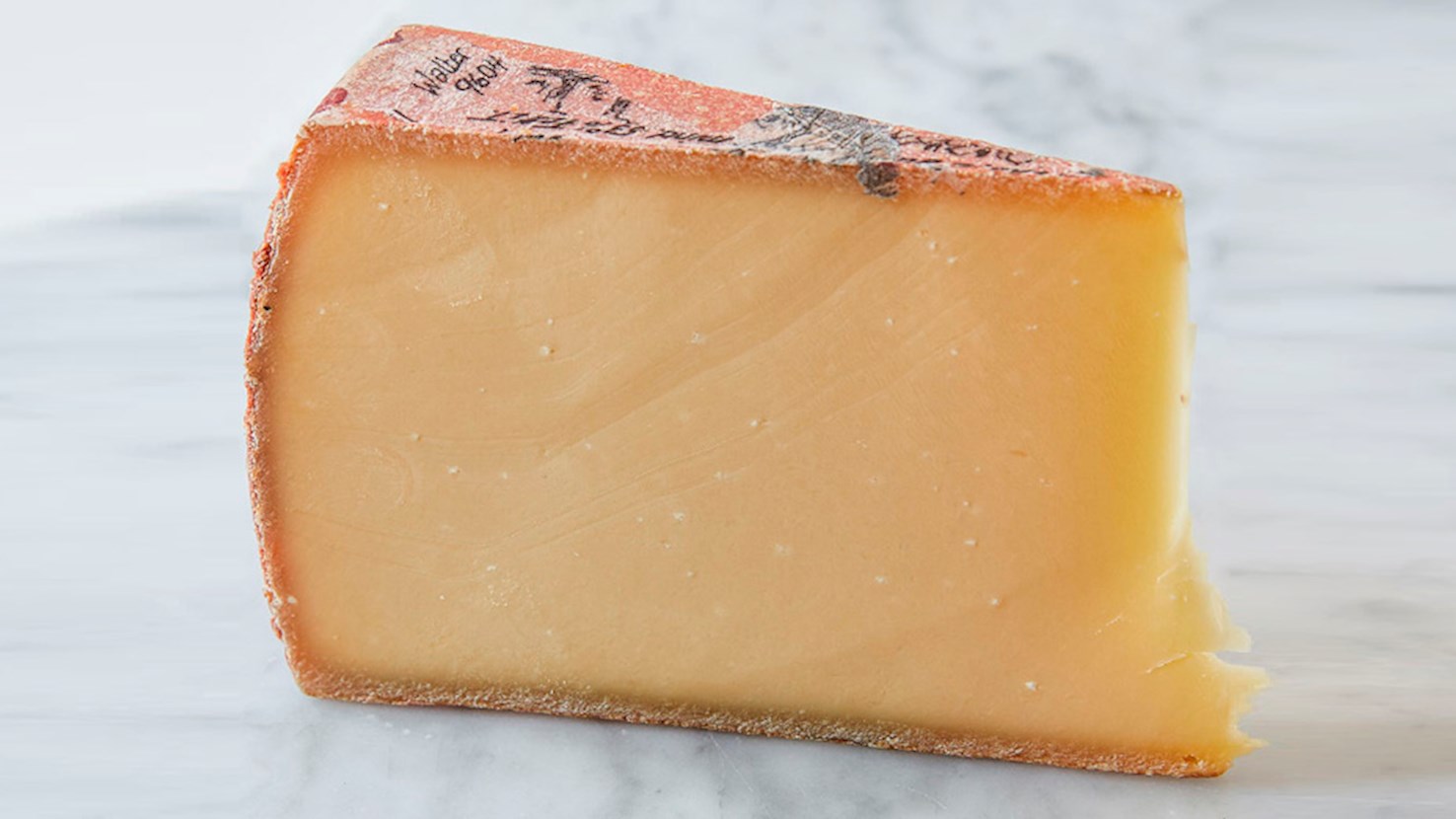
Translating to sitting in the cellar, Challerhocker is a Swiss cheese that's aged for at least 10 months in the region of Saint-Gallen. It was created by Walter Rass, who based the recipe on Appenzeller, but made some changes such as the temperature the curd is cooked at, aging time, and the fat that is left intact, e.g. it's not skimmed off of the milk. The cheese is made from cow's milk, and during the aging period, the rind is regularly washed with brine, which is the reason why it has aromas of roasted peanuts, caramel, and aged meat. Its texture is dense, smooth, and silky, while the flavors are reminiscent of leeks, brown butter, and salted caramel as a finish. Challerhocker doesn't need any overpowering accompaniments, but it's sometimes served on cheese plates with dates, figs, pickles, and caramelized onions. It melts exceptionally well, so feel free to use it in mac & cheese and grilled cheese sandwiches. This cheese is easily recognizable by its label which depicts a slightly creepy boy peeking out behind a brick wall – according to the creator of Challerhocker, it represents a young man who works in the aging room.
Appenzeller rässkäse is a semi-hard cow's milk cheese known for its distinctively strong and tangy flavor. The term "räss" in the local dialect translates to "sharp" or "pungent," aptly describing the cheese's pronounced taste. Historically, Appenzeller rässkäse was produced using semi-skimmed raw cow's milk, a practice that dates back several centuries. During times when it was more profitable to churn cream into butter, the remaining partially skimmed milk was utilized to make this cheese. The cheese is aged for six to eight months, during which it develops its characteristic firm texture and intense flavor. The production process involves regular treatment with a secret herbal brine, known as "kräutersulz," which contributes to its unique taste and aids in the formation of its natural rind. This brine is a blend of over 25 herbs, roots, and spices, and its exact composition is closely guarded. Its robust flavor makes it a favored choice for enhancing traditional Swiss dishes such as fondue and Älplermagronen (Alpine macaroni).
TasteAtlas food rankings are based on the ratings of the TasteAtlas audience, with a series of mechanisms that recognize real users and that ignore bot,
nationalist or local patriotic ratings, and give additional value to the ratings of users that the system recognizes as knowledgeable.
TasteAtlas Rankings should not be seen as the final global conclusion about food. Their purpose is to promote excellent local foods,
instill pride in traditional dishes, and arouse curiosity about dishes you haven’t tried.




What People Say