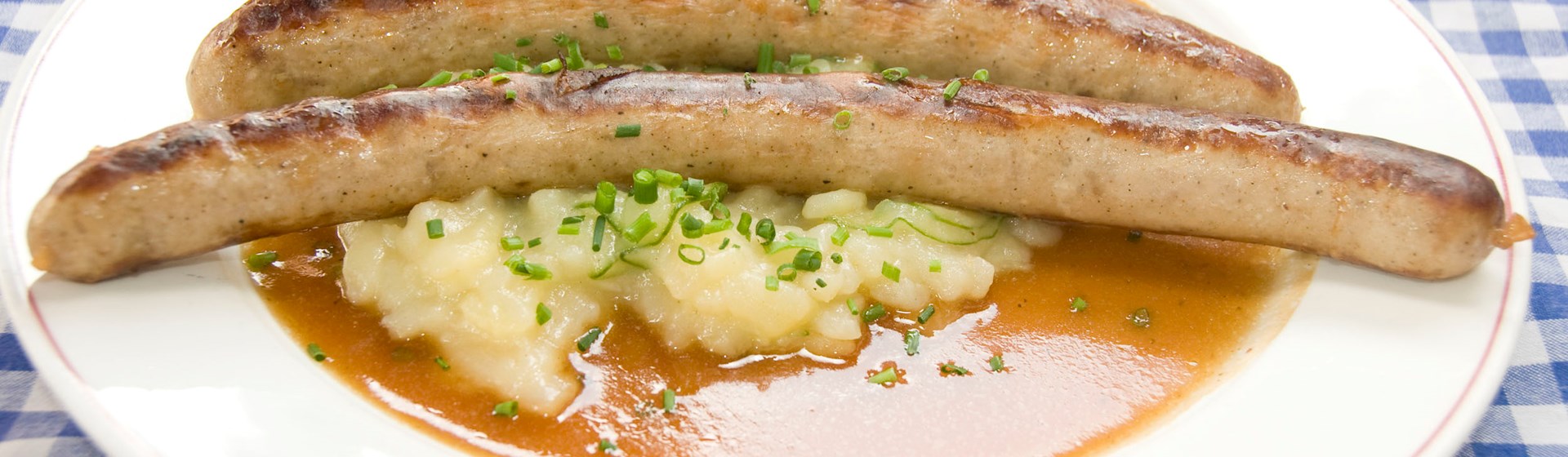
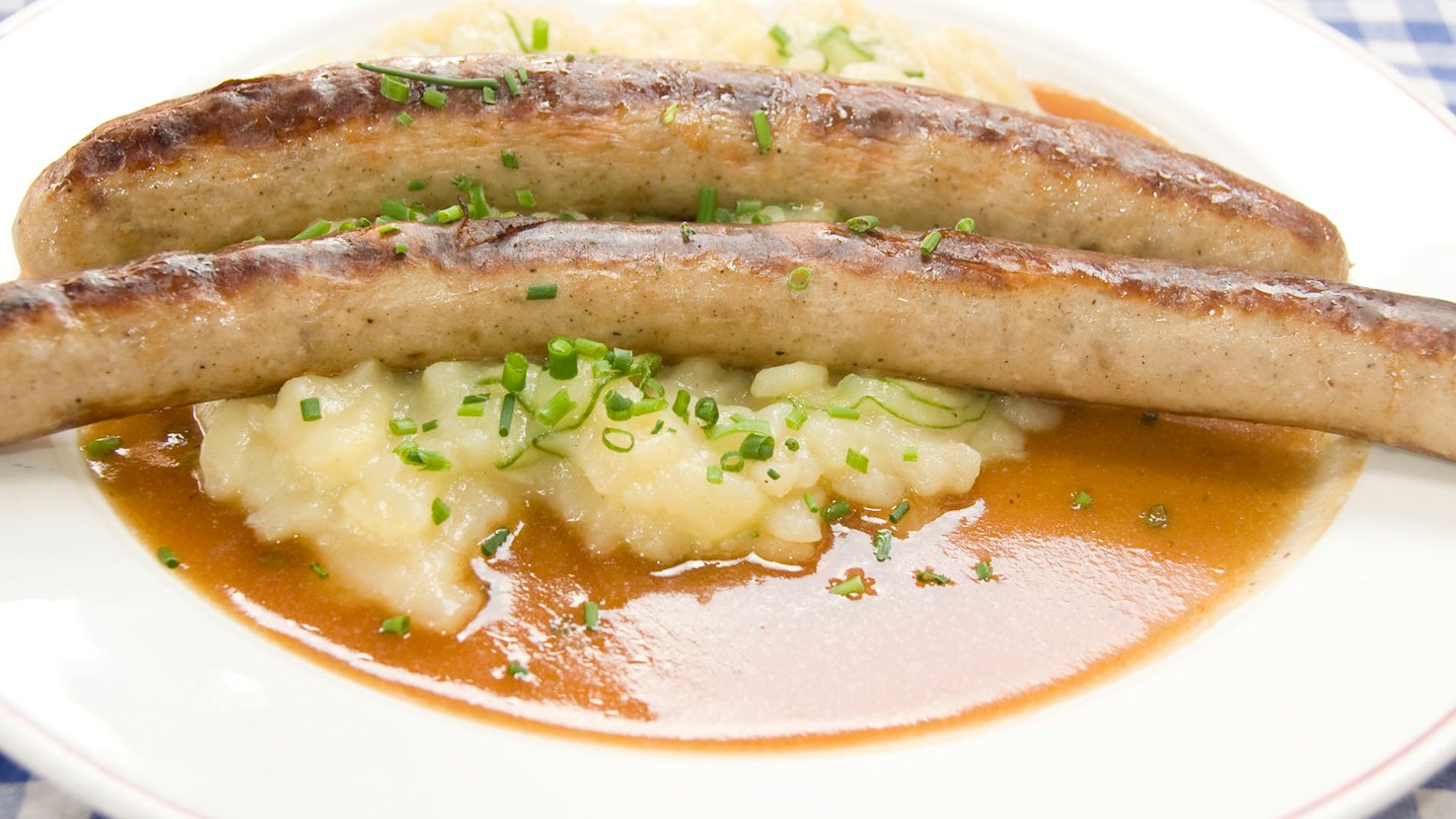
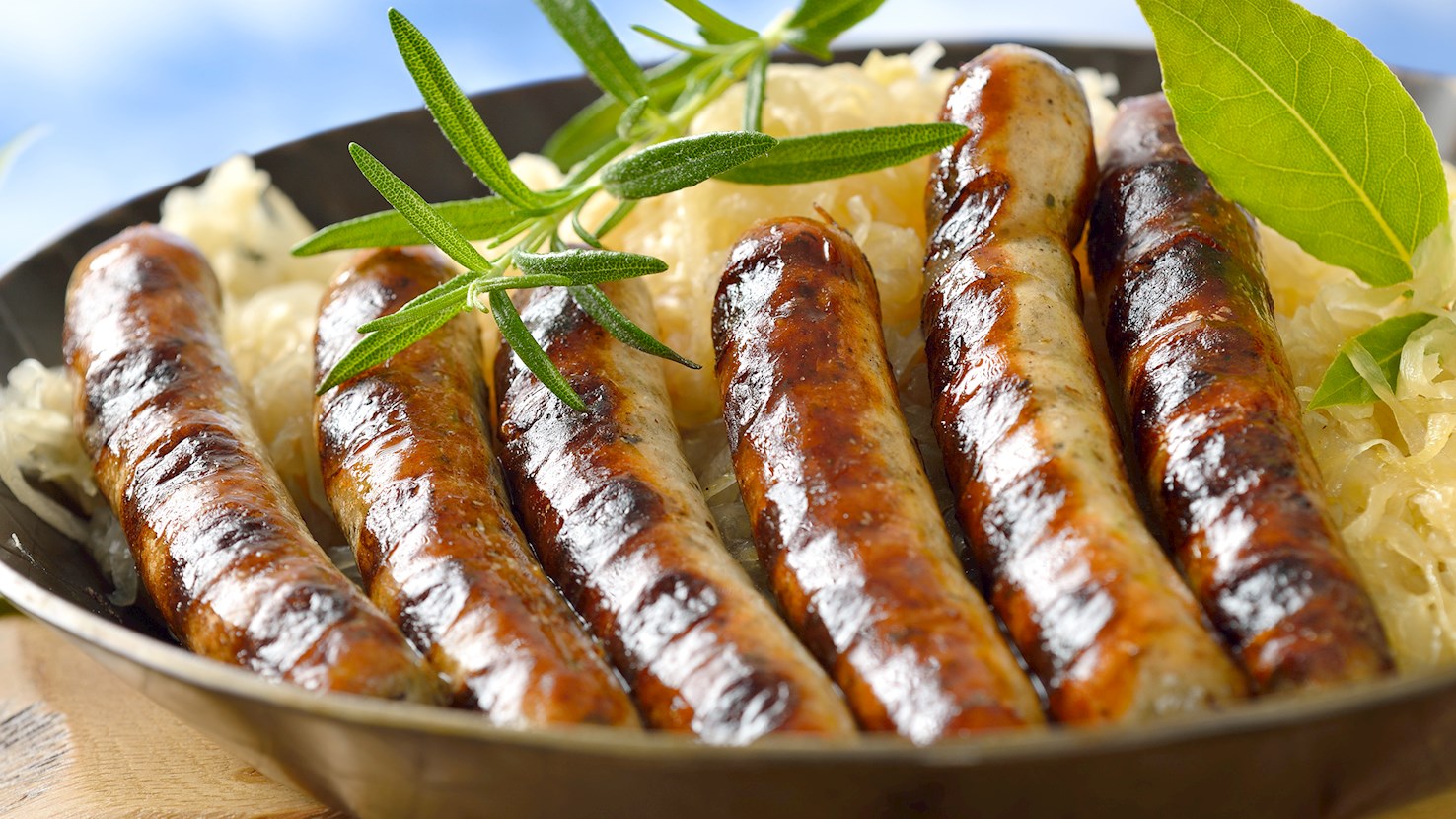
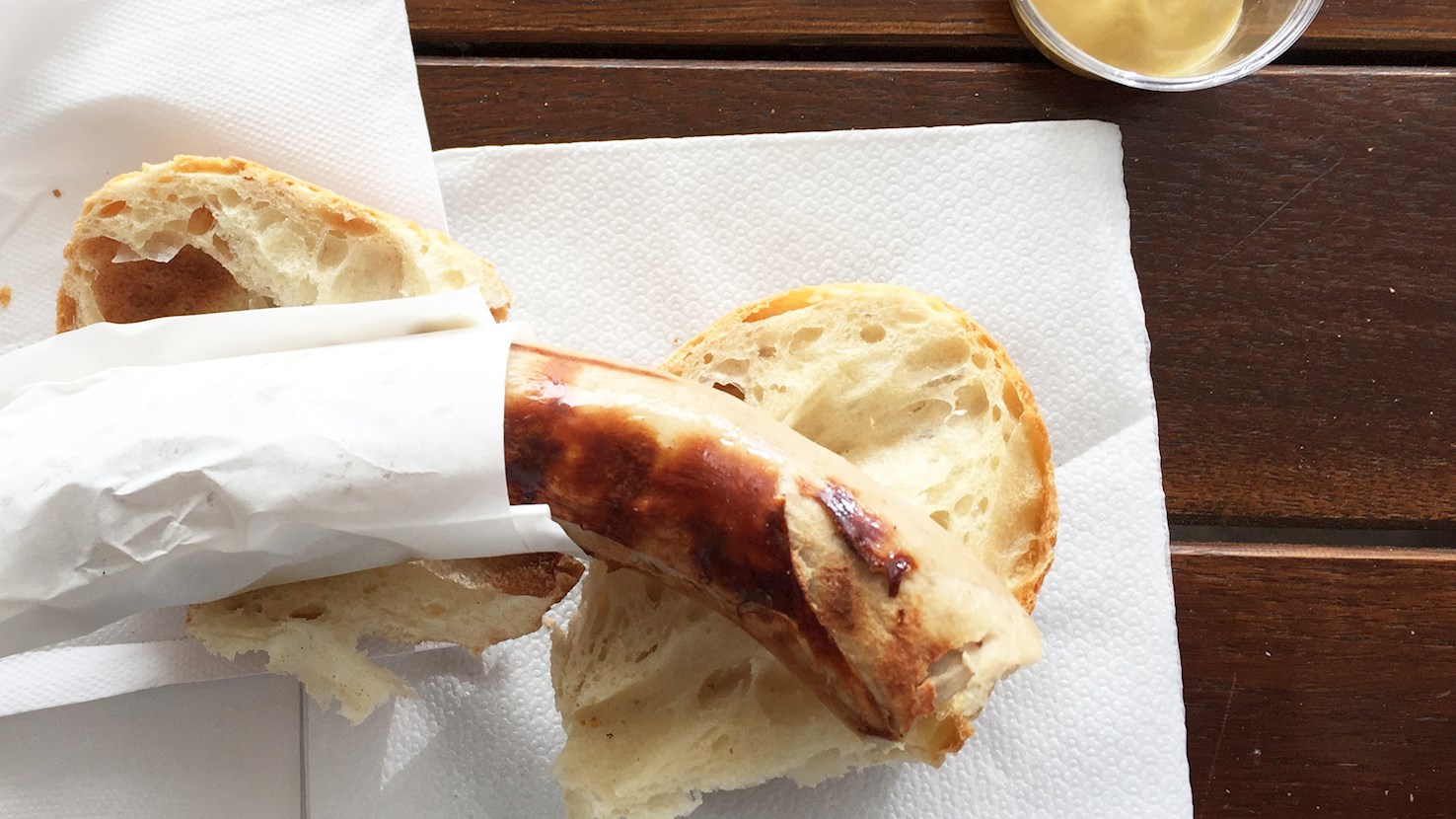
Nürnberger Bratwürste are small, thin sausages originating from the city of Nürnberg in the Franconia region of Bavaria, Germany. They are typically about 7 to 9 centimeters (2.75 to 3.5 inches) long and weigh around 20 to 25 grams each, making them much smaller and thinner compared to other types of German sausages. The sausages are made from finely ground pork, often mixed with a blend of spices that typically includes marjoram, salt, pepper, and sometimes a hint of ginger or nutmeg, with marjoram being a signature ingredient that gives them their distinctive flavor. Nürnberger Bratwürste are usually grilled over a beechwood fire, which imparts a unique, smoky flavor, but they can also be pan-fried or cooked in a skillet. Traditionally, they are served in sets of six, eight, or twelve, often accompanied by sauerkraut or potato salad, or in a bread roll with mustard, known as "Drei im Weckla" (three in a roll). These sausages are a traditional delicacy with a history that dates back centuries, and they are protected under European Union law with a Protected Geographical Indication (PGI), meaning they must be produced within the city of Nuremberg to be labeled as Nürnberger Bratwürste.
Thüringer Rostbratwurst is a product with centuries of tradition. The oldest known recipe, held at the Weimar State Archives, dates back to 1613. Martin Luther and Goethe both appreciated it, and it was often praised in literature. Only finely minced pork (sometimes mixed with beef or veal) is used to make this sausage, and the spice mixtures that are added vary depending on the recipes and regional characteristics. These sausages are easily distinguished from other German sausages by their low fat content and a distinctive combination of spices and seasonings – salt, pepper, caraway, marjoram, and garlic. Due to its unique and delicious flavor, Thüringer Rostbratwurst is still very popular in Germany and beyond, and it can be found at most sausage stands in Thuringia.
What was once an item for survival during the cold winter months and a technique of not wasting meat scraps is nowadays a delicacy consumed throughout Germany and abroad. Bratwurst stems from two words, an Old High German word brat, meaning meat without waste, and wurst, which means sausage. Bratwurst has origins with the Celtics, but the Franconians developed it further. It dates back to the 1300s in a region that would eventually become Eastern Germany. Bratwurst is usually consumed for breakfast, due to the tradition of farmers who would make the sausages in the morning and eat them by noon, as they would otherwise spoil. Technically, a bratwurst must be made from either pork, veal, or beef, but there are more than 40 varieties of the sausage throughout Germany. The oldest recipe for bratwurst was discovered in 2000 by a historian named Heinrich Höllerlhas. The same recipe, for the Thuringian bratwurst (one of the most famous varieties), says that the makers had to use only the purest, unspoiled meat in the production process. Today, bratwursts are commonly served with sauerkraut, potato salad, horseradish, or mustard in Germany, but the sausages are also popular in the United States, especially in Wisconsin, where they are commonly found at summer cookouts and barbecues.
St. Galler bratwurst is a traditional sausage that's eaten throughout the country, but it's especially popular in the city of St. Gallen. The sausage is made with a combination of veal, pork, milk, salt, white pepper, and mace. The combination can be enriched with celery, ginger, cardamom, lemon, onion, and coriander, but it's not mandatory. It is stuffed into pig intenstines, cooked (not smoked), then grilled or pan-fried. These sausages date back to the 15th century, and nowadays there are four distinctive types – the classic version, the one made with more than 50% veal, the OLMA (agricultural trade fair) version, and the largest one, called St. Galler Kinderfest-Bratwurst. Once grilled or fried, the sausage is often accompanied by St. Galler-Bürli, a crusty roll that's baked in pairs, or an onion sauce and rösti in the summertime. Just don't pair it with mustard, as locals insist that their bratwurst is good enough on its own.
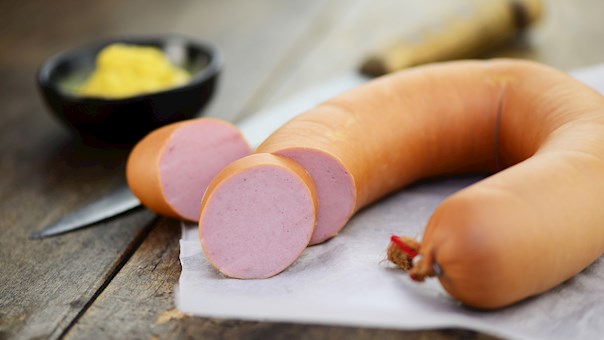
Regensburger wurst is a German sausage originating from Regensburg, where it was invented in the late 19th century. The sausages are made from fine or coarse pork and they're smoked and boiled before being sold or consumed. The pork is usually finely ground without fat, then mixed with spices, salt, and small chunks of pork. Once cooked, they can be served hot or cold, or used in dishes such as salads or sandwiches.
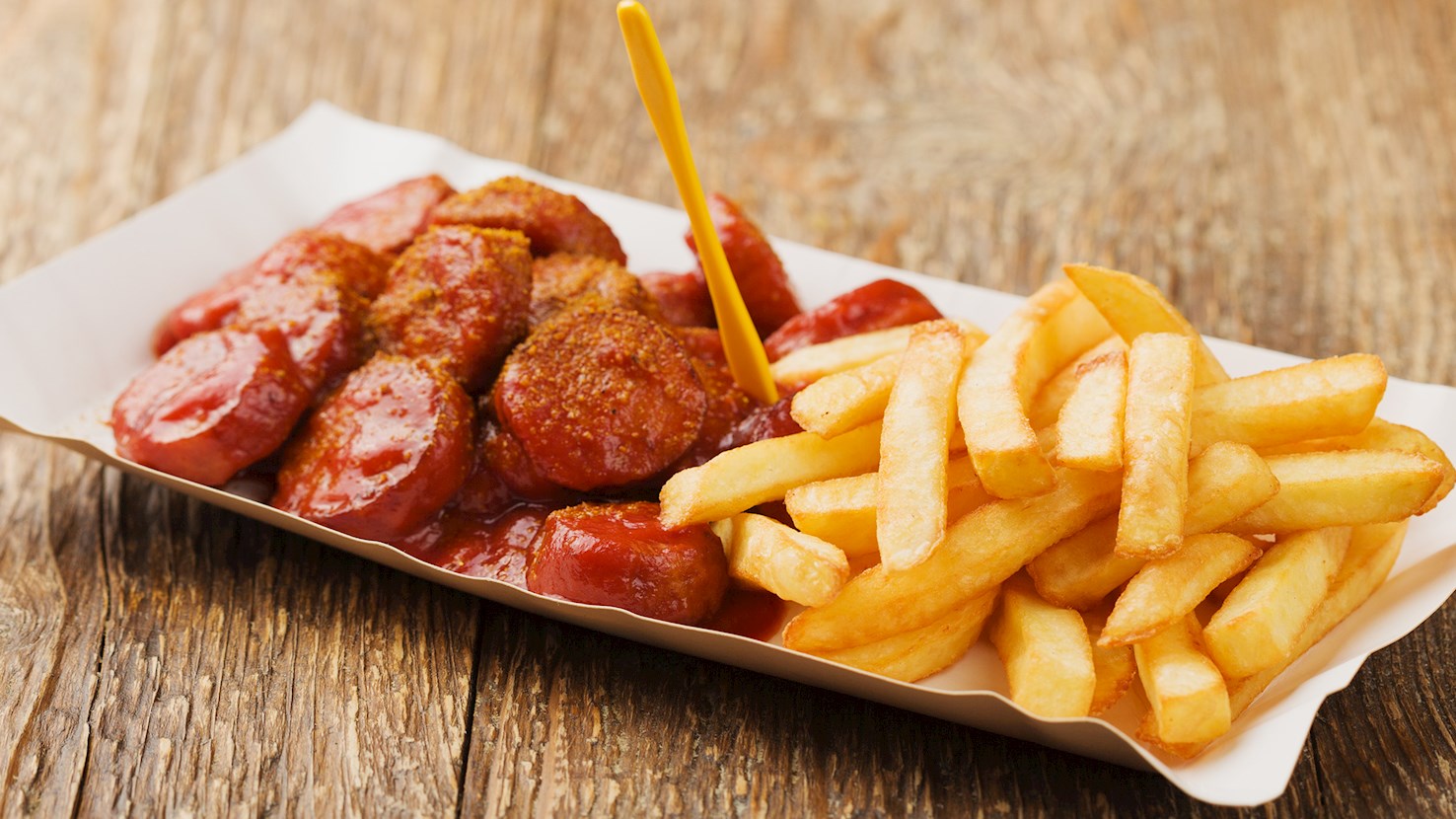
No other dish in Germany is as well known as currywurst, a street snack that has become an indispensable part of Germany’s culinary heritage. The dish is made from two essential parts - boiled and subsequently fried sausage, served whole or sliced, and a smooth and rich curry-spiced tomato sauce. With a portion of french fries or a kaiser roll on the side, the dish is usually lightly dusted with yellow curry powder. A wide range of sausages are used for currywurst, but the famous German bratwurst is the most commonly used variety. The real star of this dish is its gravy-like sauce made with puréed tomatoes and infused with the aromatic curry powder. The popularity of currywurst in Germany has generated numerous legends about its origins. Even though Hamburg is sometimes mentioned as its birthplace, Berlin is the city that is most commonly associated with the invention of this delicious dish. The most famous legend tells the story of Herta Heuwer, a Berlin local who is widely credited as the inventor of the tomato and curry concoction. In 1949, amid the aftermath of World War II, many ingredients were hard to come by and life was tough. However, thanks to Herta’s negotiating skills, she was able to get hold of a hard to come by ingredient – British yellow curry powder. She then mixed it with puréed tomatoes and other spices to create the base sauce, which she served with the sliced sausage. The dish became an instant success. Herta patented her creation and never revealed her original recipe. Later, as currywurst grew in popularity, numerous varieties popped up all over Berlin and the rest of Germany. No two are the same, and every local has their own favorite style and a favorite currywurst place. Germans are so fond of this fast food staple that they have even built a museum in its honor. Located in Berlin, the Currywurst Museum offers a glimpse into the history of the legendary currywurst, as well as a detailed overview of the numerous varieties, cooking styles, and serving options of this famous dish.
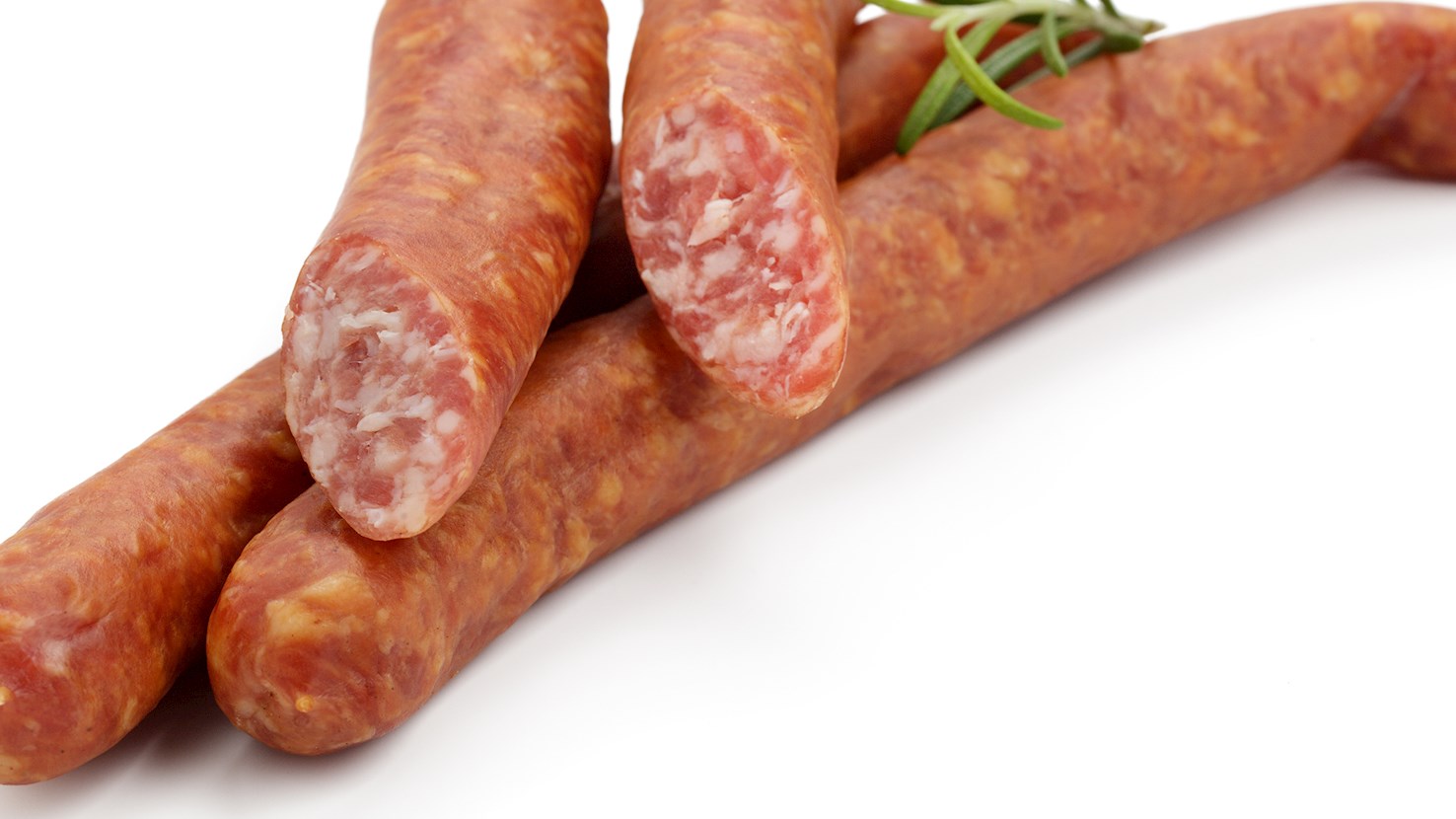
Mettwurst is a long and thin German sausage made with a combination of pork and beef, flavored with anything from garlic, pepper, marjoram, caraway, and mace to alcoholic beverages such as rum and cognac. The sausage is cured and cold smoked or air-dried. Mettwurst can be cooked and served with kale or cabbage, fried, or simply spread on bread and eaten as it is. There are also firmer variations of this sausage, which are often used in a variety of soups and stews.
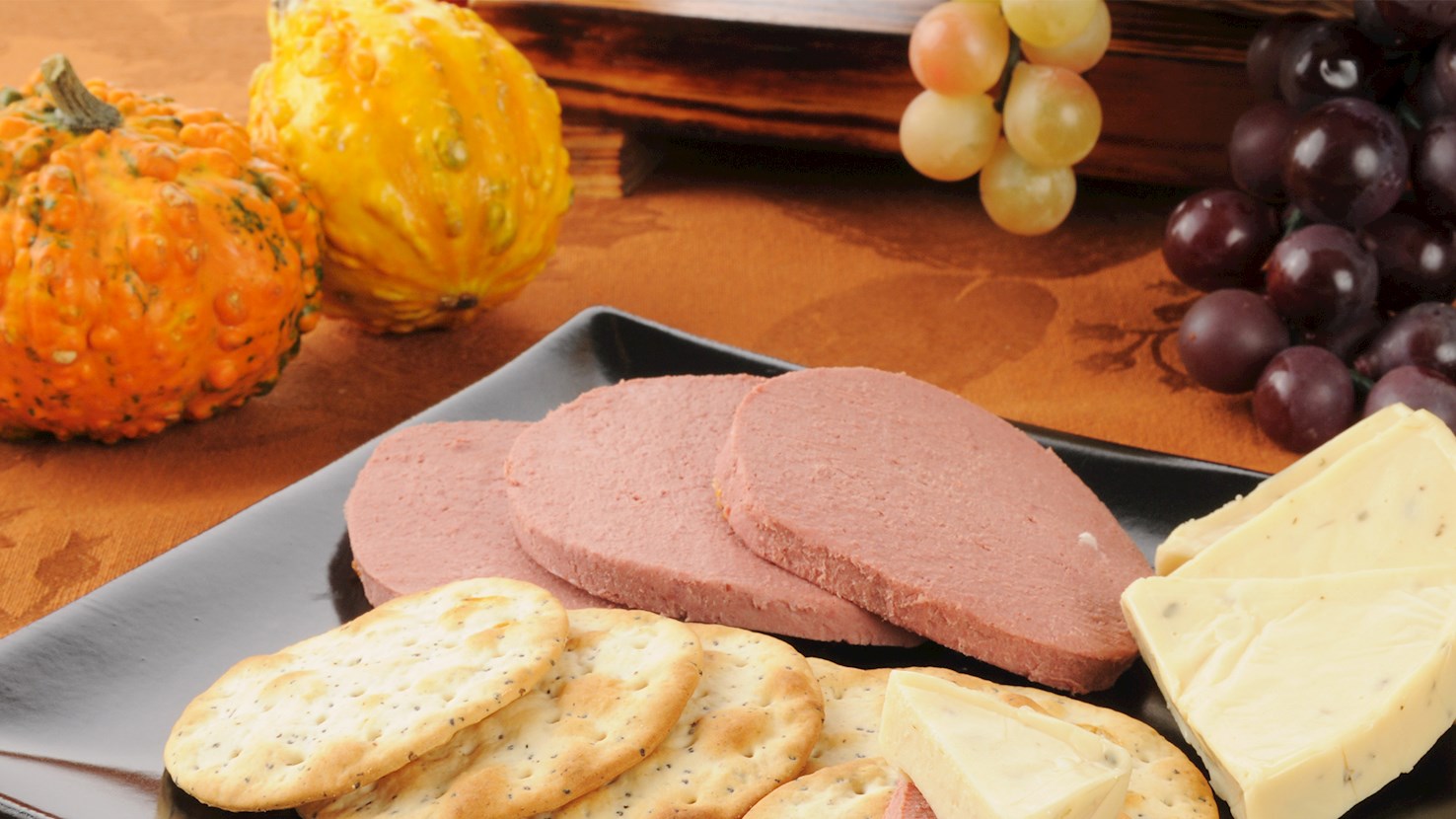
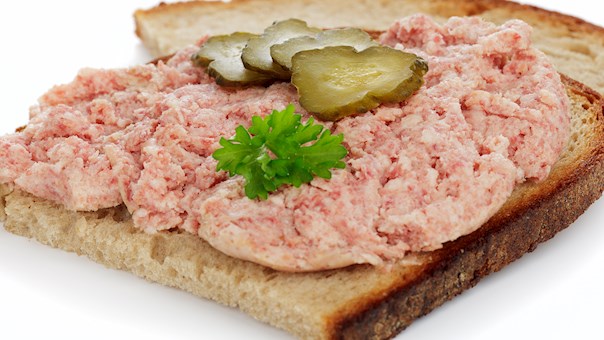
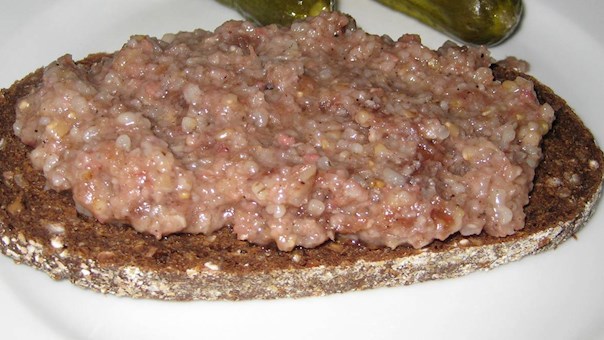
Braunschweiger mettwurst is a smoked, spreadable sausage from Braunschweig, made mainly from pork and pork fat and seasoned with spices, sometimes including garlic. It has a pinkish-red interior, a soft consistency, and a savory flavor in which pork and smoke remain prominent. Coarser versions show small pieces of meat and pale fat, while finer ones spread more evenly across bread. In its home region, this is the sausage commonly meant by “braunschweiger,” although the city’s name also appears on several other sausage types. It is a rohwurst, a sausage made from uncooked meat that is cured and matured, rather than the cooked liver sausage familiar under the same name in the United States. Braunschweig became an important center of commercial sausage production during the nineteenth century. Specialized pork butcheries appeared there in the 1830s, and the city’s meat-processing businesses expanded further in the 1860s and 1870s alongside its growing canning industry. Producers made several kinds of sausage, including mettwurst, schlackwurst, teewurst, and liver sausage, helping establish the city’s name well beyond Lower Saxony. The name therefore describes a recognizable style with variations in texture and seasoning, not a single unchanging formula. Pork supplies the main flavor, while fatty cuts and added speck, meaning pork fat in this context, provide the softness needed for spreading. Belly and other fatty portions may be combined with leaner meat such as shoulder; some formulations also contain beef. The proportion and treatment of the fat matter as much as the grind size. A coarse-looking sausage can still be soft enough to spread because visible meat particles don't necessarily mean the surrounding mixture is firm or dry. Conversely, a finely chopped sausage need not have the creamy texture of a cooked pâté. Braunschweiger is a spreadable raw sausage, and its relatively high fat content and limited drying help maintain that consistency. It is often stuffed into curved casings, although straight sausages and other retail formats also occur. The meat and fat are ground or chopped, mixed with curing salt and seasonings, and filled into casings before the sausage develops its finished color and flavor. A butcher may begin with a coarse grind and then work the mixture further in a bowl cutter, producing a cohesive filling without necessarily eliminating all visible texture. Curing salt contributes to the characteristic reddish color. Some modern formulas include maturation cultures and small amounts of sugar to support controlled development during ripening. The filled sausages are then smoked and dried to the desired consistency. Beechwood is a common smoking wood, adding a wood-smoke aroma that complements the pork. The process is intended to produce a supple sausage for the bread knife, so it does not involve the prolonged drying associated with a hard salami. Individual makers vary the sequence and duration of curing, smoking, and drying, which helps explain differences between products bearing the same name. Garlic is optional, and its presence should not be treated as a requirement for identifying the sausage. Pepper is a familiar seasoning, while nutmeg, paprika, or caraway appear in particular blends. These differences can be noticeable: one version may emphasize smoke and pork, another garlic, and another a warm, slightly aromatic spice mixture. Finer braunschweiger can resemble teewurst in use and appearance, but the names are not simply interchangeable labels for every soft smoked sausage. Both belong to the broader family of spreadable rohwurst, where meat selection, fat content, seasoning, and the degree of chopping vary. Butcher shops and meat producers in Lower Saxony and elsewhere in Germany sell braunschweiger mettwurst, generally as an everyday bread topping. It fits naturally into breakfast, a packed lunch, or abendbrot, the evening meal built around bread, cold meats, cheese, and simple accompaniments. Rye bread or a mixed rye-and-wheat sourdough provides enough substance for the soft sausage, while a crusty roll offers a lighter alternative. A little butter beneath it is optional. Pickled cucumbers, radishes, or thin onion slices add crunch and sharpness, and mustard can be served alongside for those who want a more pungent bite. A dry pilsner suits its smoky, salty flavor, while mineral water keeps the pairing unobtrusive; at breakfast, coffee or tea is entirely at home beside an open-faced slice.
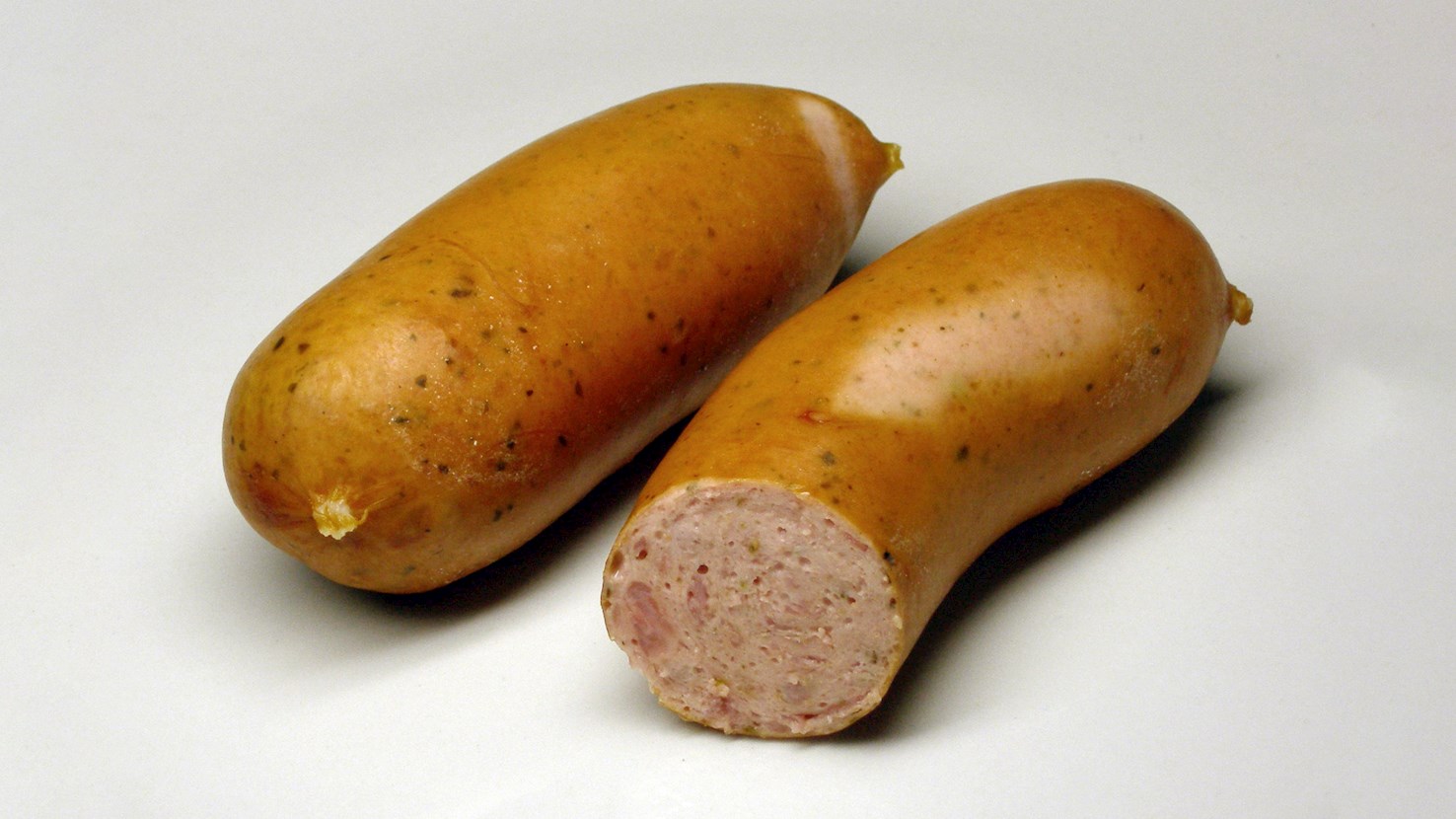
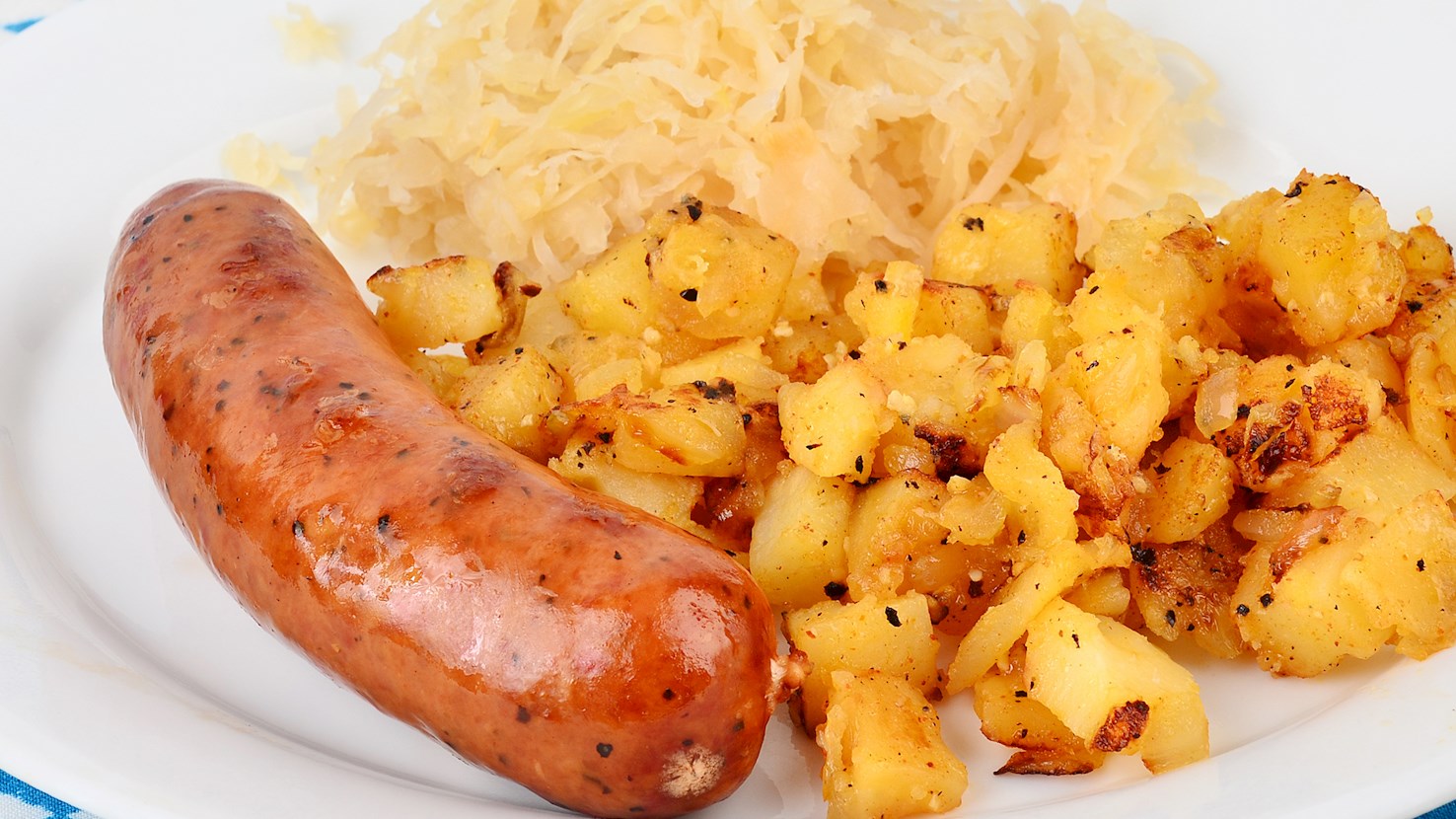
Knackwurst or knockwurst is a preboiled German sausage made from ground pork, beef, or a combination of both. The sausage is heavily seasoned with garlic and has a high fat content. Unlike bratwurst and other similar sausages, knackwurst's casing becomes extra crispy when heated, giving it a different texture and a specific sound when bitten into it. It is recommended to serve the sausage with sauerkraut, potato salad, pickles, mustard, and a glass of cold beer on the side.
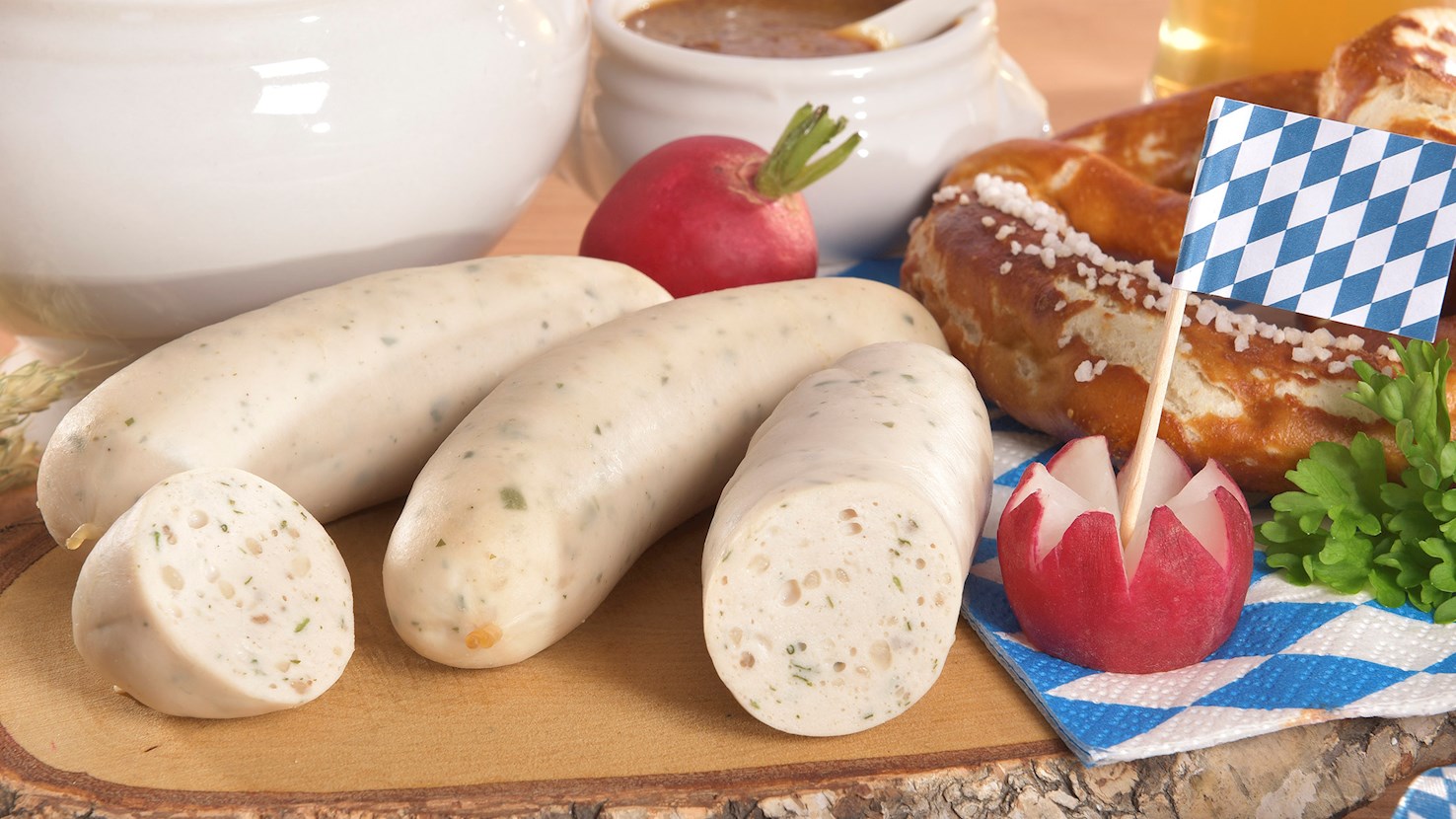
Weisswurst or white sausage is a famous specialty of the city of Munich, invented in 1857 by a butcher named Sepp Moser. He was working in a restaurant next to his butcher's shop and had used the last of thick sausage skins used to make regular sausages. To solve the problem, he opted for thin skins. As he made the sausage, he was worried that it would burst open during the frying process, so he put them in hot water and cooked them for 10 minutes. After serving the cooked sausages to the guests, the new dish was praised, and Weisswurst was born. The sausages consist of a mixture of pork, veal, and pork fat, seasoned with parsley, pepper, lemon, and salt. Today, the sausages are most popular in southern Germany, and they are one of the most consumed items at Oktoberfest. In restaurants, Weisswurst is always served hot, usually accompanied by pretzels and, ideally, Händlmaier's Hausmacher Senf, although it can be served with other Bavarian sweet mustard varieties if the original Händlmeier brand is unavailable. The sausage casing is not intended for consumption, so the sausages are often sliced along their length, and the casing is peeled. Interestingly, it is considered a taboo to eat Weisswurst after noon in Bavaria. This tradition stems from the past when the sausages were made fresh, and were supposed to be consumed as quickly as possible.
TasteAtlas food rankings are based on the ratings of the TasteAtlas audience, with a series of mechanisms that recognize real users and that ignore bot,
nationalist or local patriotic ratings, and give additional value to the ratings of users that the system recognizes as knowledgeable.
For the “37 Wurst Varieties Ranked From the Best To the Worst” list until October 17, 2026, 811,838 ratings were recorded, of which 532,919 were recognized by the system as legitimate.
TasteAtlas Rankings should not be seen as the final global conclusion about food. Their purpose is to promote excellent local foods,
instill pride in traditional dishes, and arouse curiosity about dishes you haven’t tried.






What People Say