



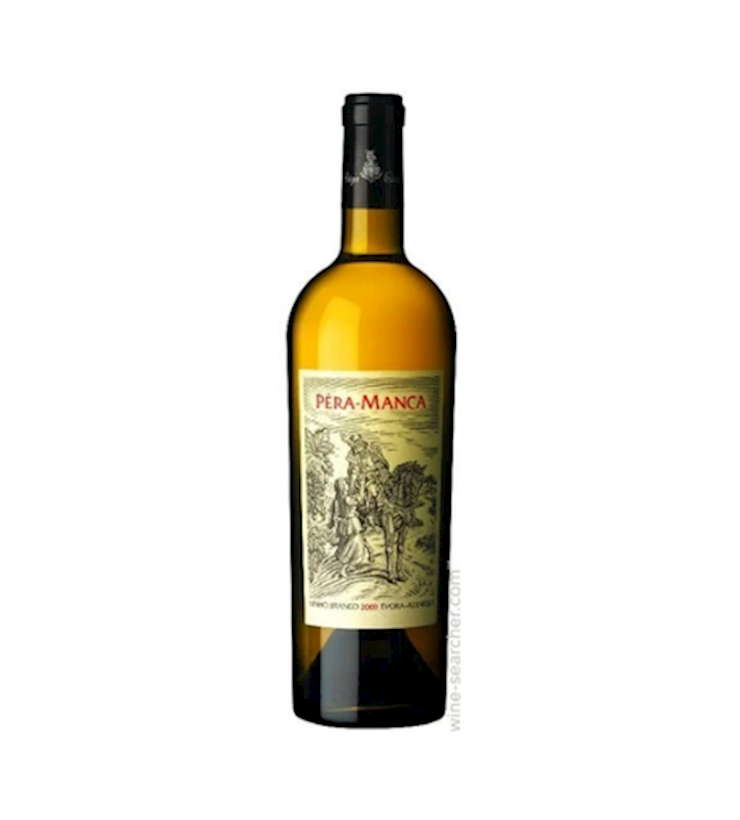
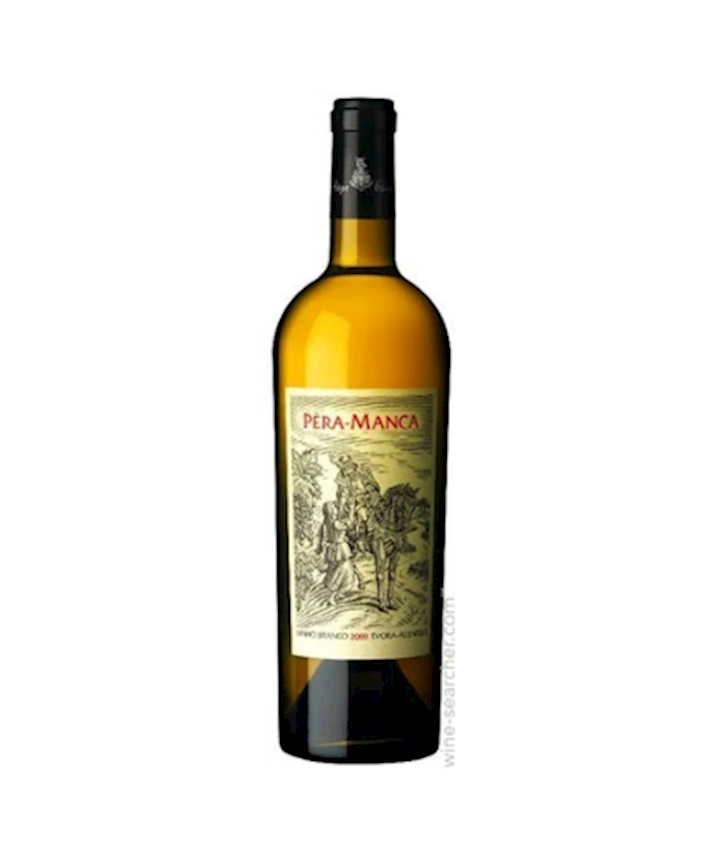




Pêra-Manca Branco is a premium white wine produced by Cartuxa in the Alentejo region of Portugal and represents one of the estate’s most prestigious labels. It is made from the traditional Portuguese grape varieties Arinto and Antão Vaz, sourced from carefully selected vineyards around Évora.
The grapes are harvested at optimal maturity and fermented under controlled conditions, with part of the wine aged in French oak barrels. The wine then matures on its lees for several months, which contributes to greater texture and complexity.
In the glass it shows a bright straw-yellow color and a refined aromatic profile with notes of citrus, peach, and tropical fruit, complemented by subtle hints of toasted oak and spice. On the palate it is structured and elegant, balancing the freshness of Arinto with the body and richness of Antão Vaz.
The finish is long and persistent, supported by balanced acidity and a distinctive mineral character. Thanks to its structure and careful aging, Pêra-Manca Branco also has good potential for bottle aging.
Producer

Cartuxa is a Portuguese wine producer based in the Alentejo region, closely associated with the Fundação Eugénio de Almeida, a foundation that manages the vineyards and winery near the historic city of Évora. The name Cartuxa derives from the nearby Santa Maria Scala Coeli Carthusian monastery, founded in the 16th century, which has long been part of the cultural and historical identity of the area.
Wine production takes place at Adega Cartuxa, located on the Quinta de Valbom estate, where grapes from surrounding vineyards are vinified and aged. The vineyards are planted on typical Alentejo soils and benefit from the region’s warm climate, which is well suited to varieties such as Aragonez, Trincadeira, Alicante Bouschet, Antão Vaz, Roupeiro, and Arinto.
The portfolio includes several wine ranges, notably EA, Cartuxa, Scala Coeli, and Pêra-Manca, the latter widely regarded as one of Portugal’s most prestigious wines. In addition to wine, the estate also produces extra virgin olive oil from its groves.
Revenue generated by these activities supports the cultural, educational, and social initiatives developed by the Fundação Eugénio de Almeida in the Alentejo region.