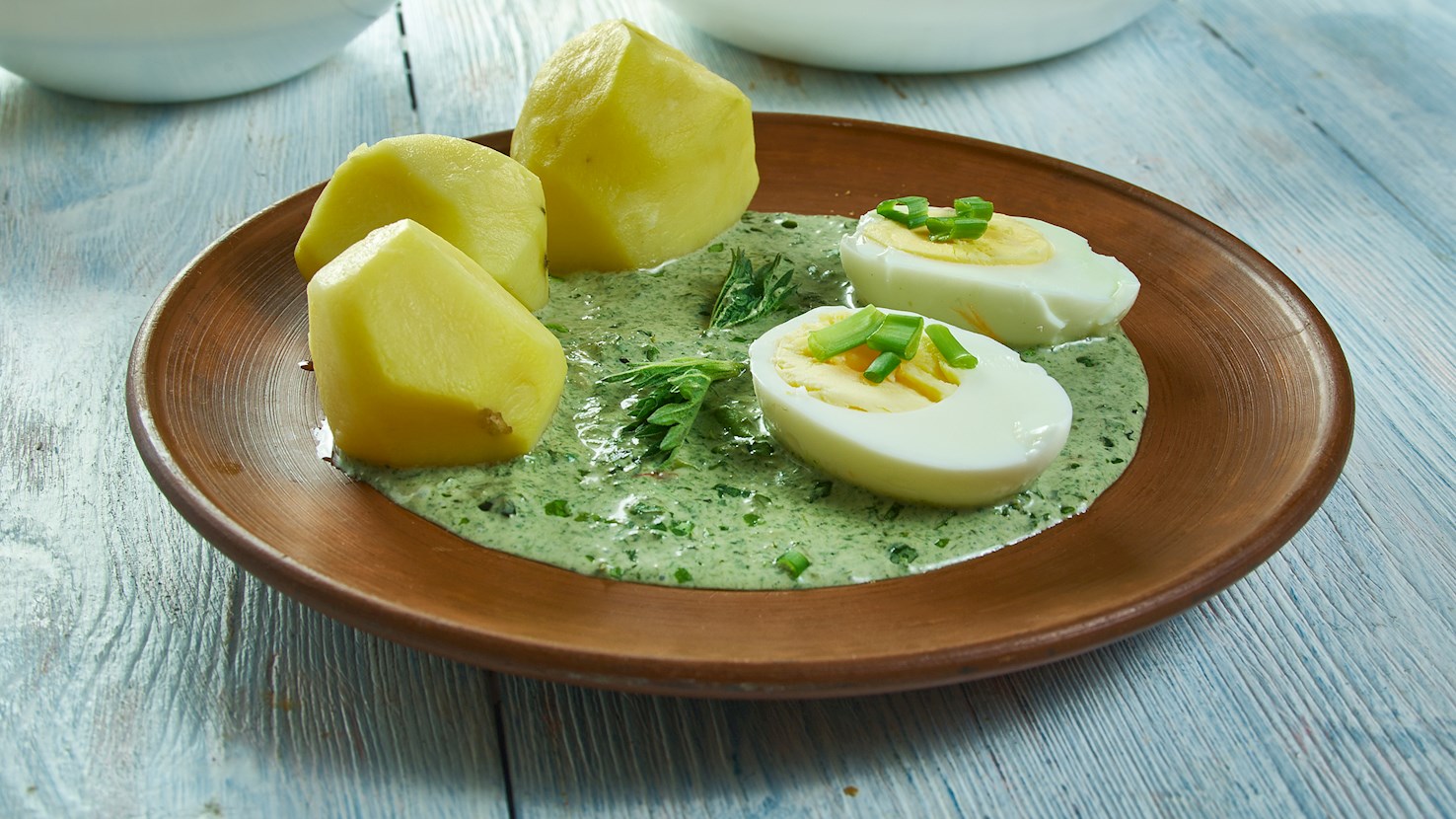
Frankfurter grüne soße mit eiern und kartoffeln is a traditional dish originating from Frankfurt. The dish consists of green sauce, potatoes, and hard-boiled eggs. This famous local sauce is made with a mixture of sour cream, spices, and herbs such as chervil, borage, garden cress, salad burnet, parsley, chives, and sorrel. Once prepared, the sauce is served with chopped hard-boiled eggs and small boiled potatoes. This simple local specialty can be found in most traditional restaurants in the area. There are variations on the dish, so it's sometimes served with roasted potatoes instead of boiled potatoes.
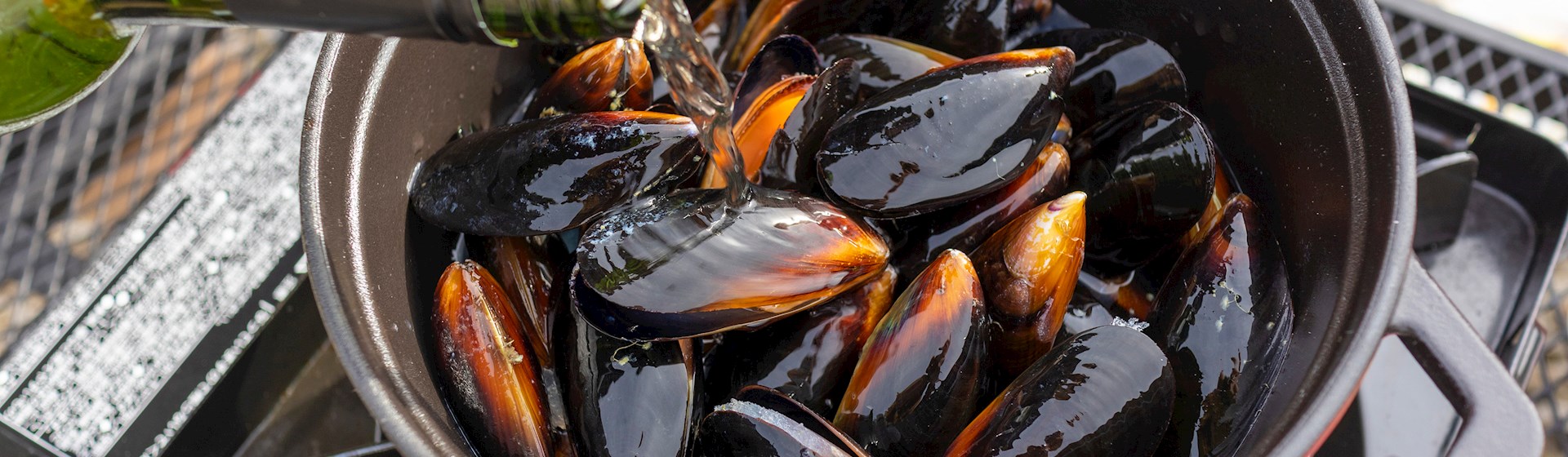
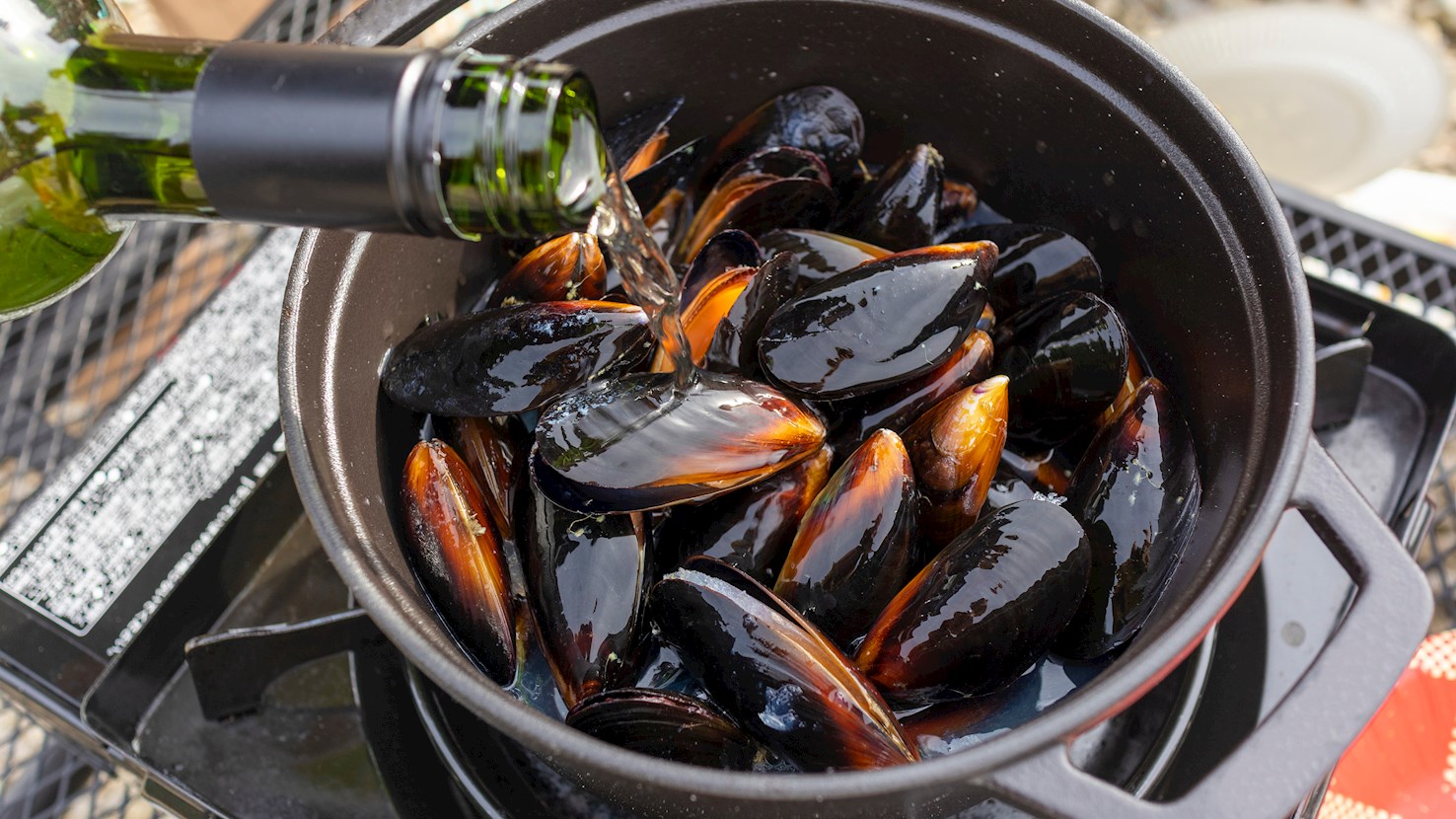
Muscheln rheinische art is a traditional dish originating from the Rhine region. The dish is made with mussels from the North Sea and white wine from the middle and upper Rhine region as key ingredients. The mussels are cooked in vegetable stock and white wine, then served in their shells with a bit of stock. The dish is traditionally accompanied by brown bread and butter on the side. It’s usually served as an appetizer, but it can also be served as the main course. There are a few variations on the dish, so beer is sometimes added to the stock instead of wine.
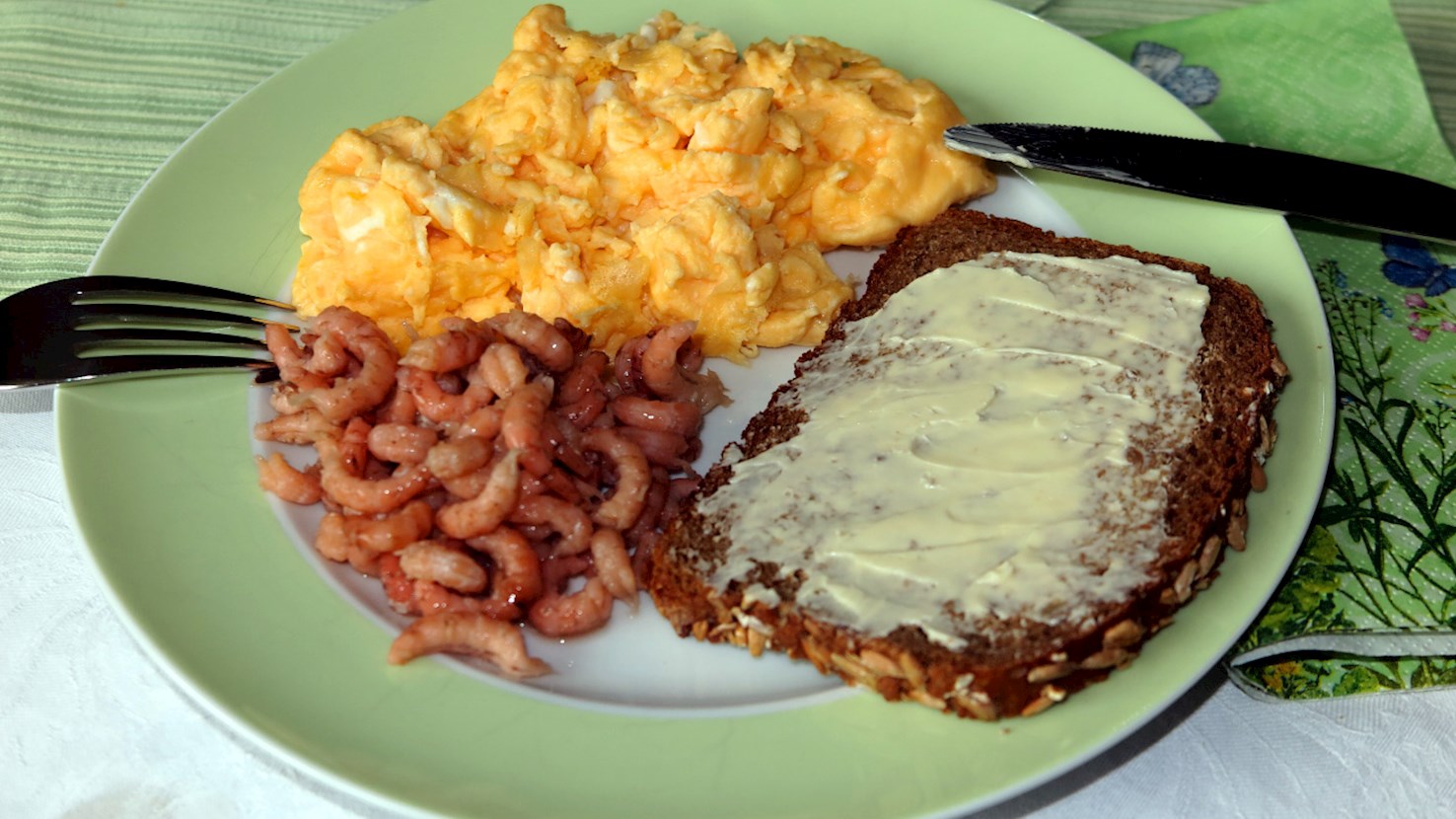
Rührei mit krabben is a traditional egg-based dish originating from Germany. It's usually made with a combination of eggs, shrimp, butter, chives, salt, pepper, and bread. The shrimps are boiled until pink, drained, shelled, and deveined. The eggs are lightly beaten, seasoned with salt and pepper, and cooked in butter over low heat until they are set and no liquid remains. The shrimps are placed on one half of a buttered slice of bread, while the eggs are placed on the other half of the slice. The eggs are garnished with chives, and this appetizer is ready to be enjoyed.
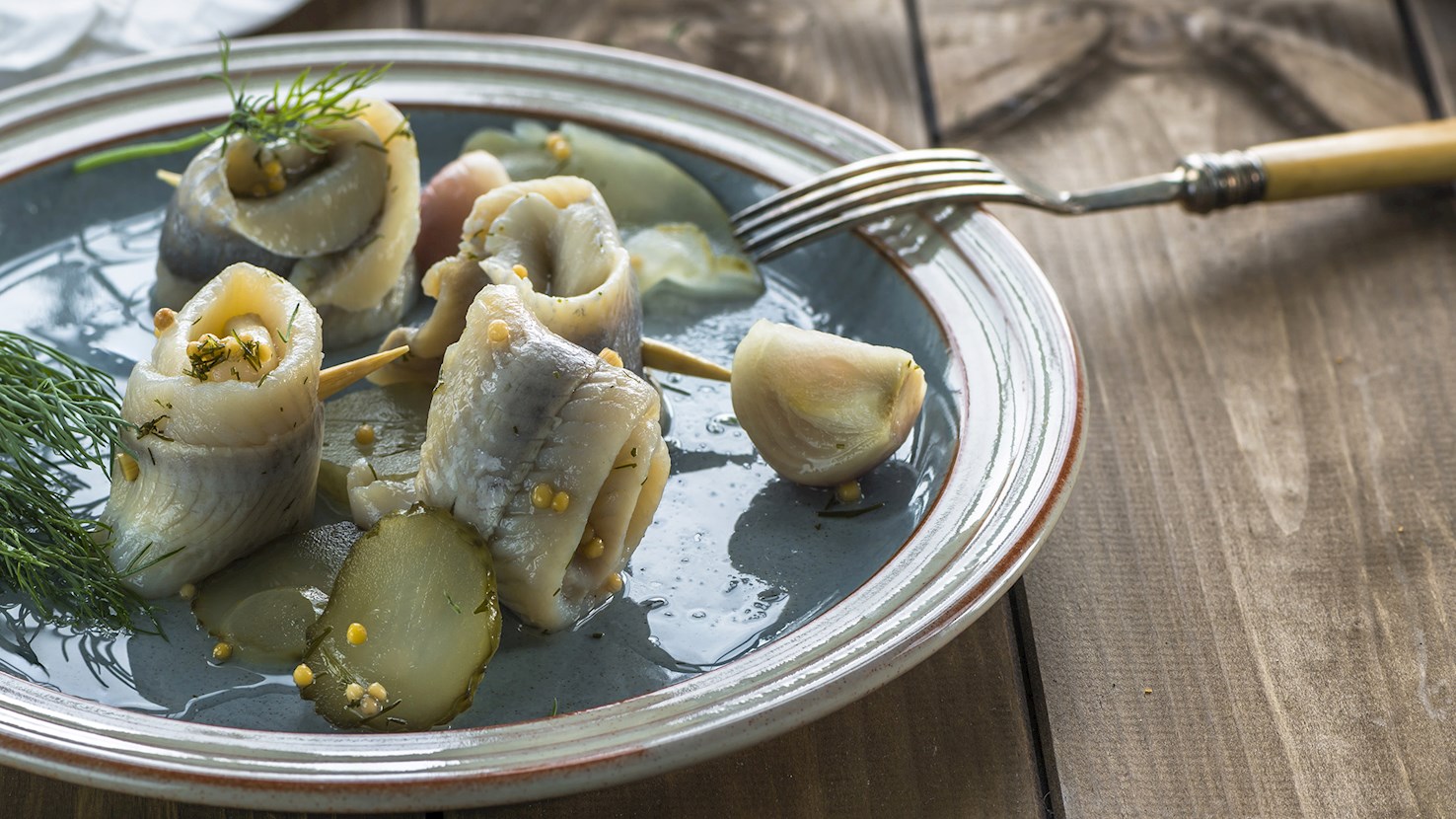
Rollmops is a German dish consisting of pickled herring fillets that are wrapped around ingredients such as gherkins, onion rings, or green olives. The combination is then usually skewered with a cocktail skewer. The dish is traditionally eaten cold, on its own or with bread. It grew in popularity in 19th-century Berlin, and it was a common pub food in the city. Aside from Germany, rollmops are also popular in England and Poland, especially during the Christmas season.
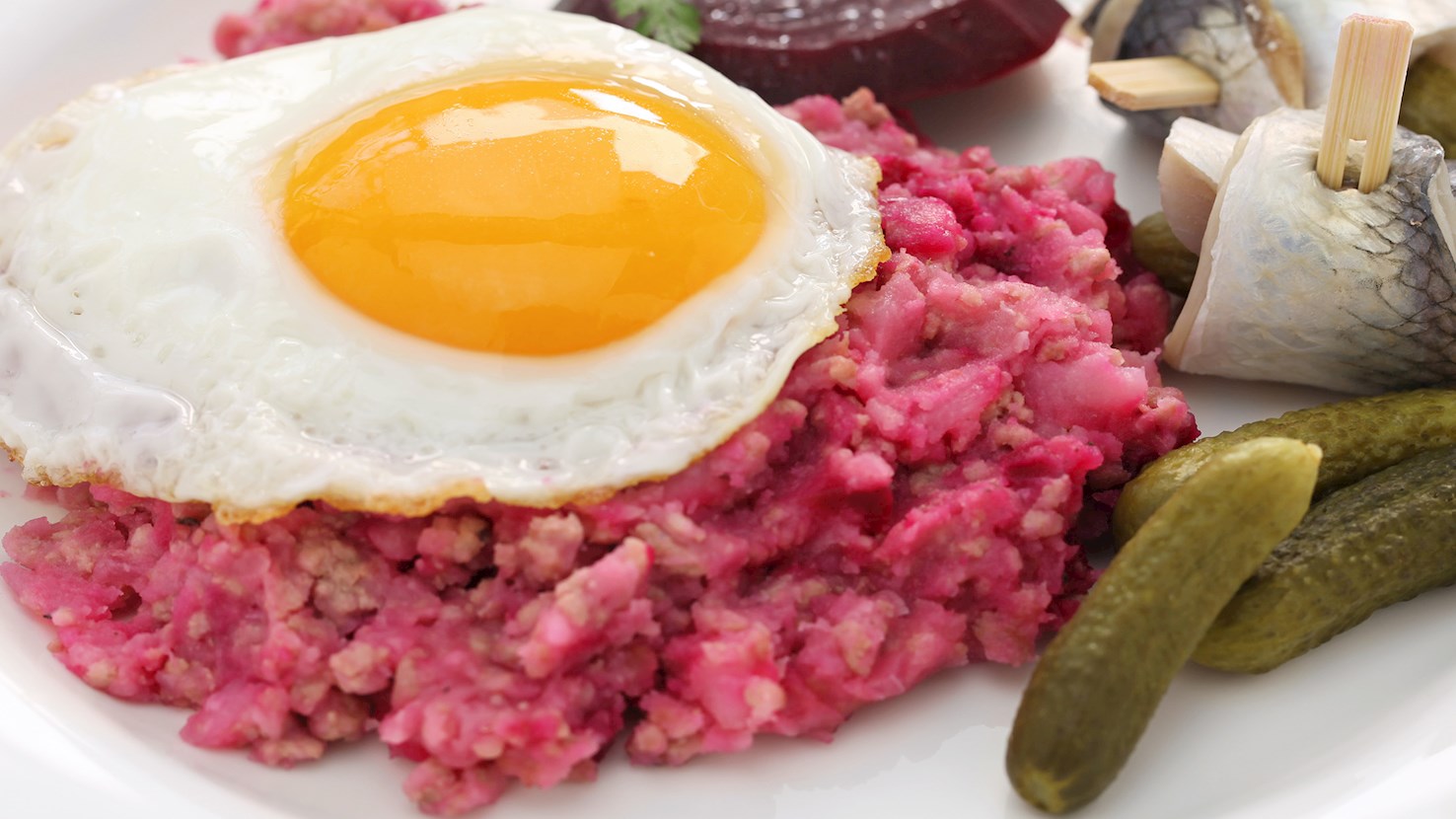
Labskaus is a dish from northern Germany consisting of corned beef, mashed potatoes, and beets, with additional ingredients such as fried eggs, pickles, and rollmops—a pickled, rolled herring. Although its origins are somewhat murky, the dish was most probably invented in the 16th century, when it was typically eaten by poor people, sailors, and seamen, due to the fact that pickled and canned foods were inexpensive and could last during long travels. Although the dish is particularly popular in the cities of Hamburg, Bremen, and Lübeck, variations of labskaus are prepared and consumed throughout northern Europe.
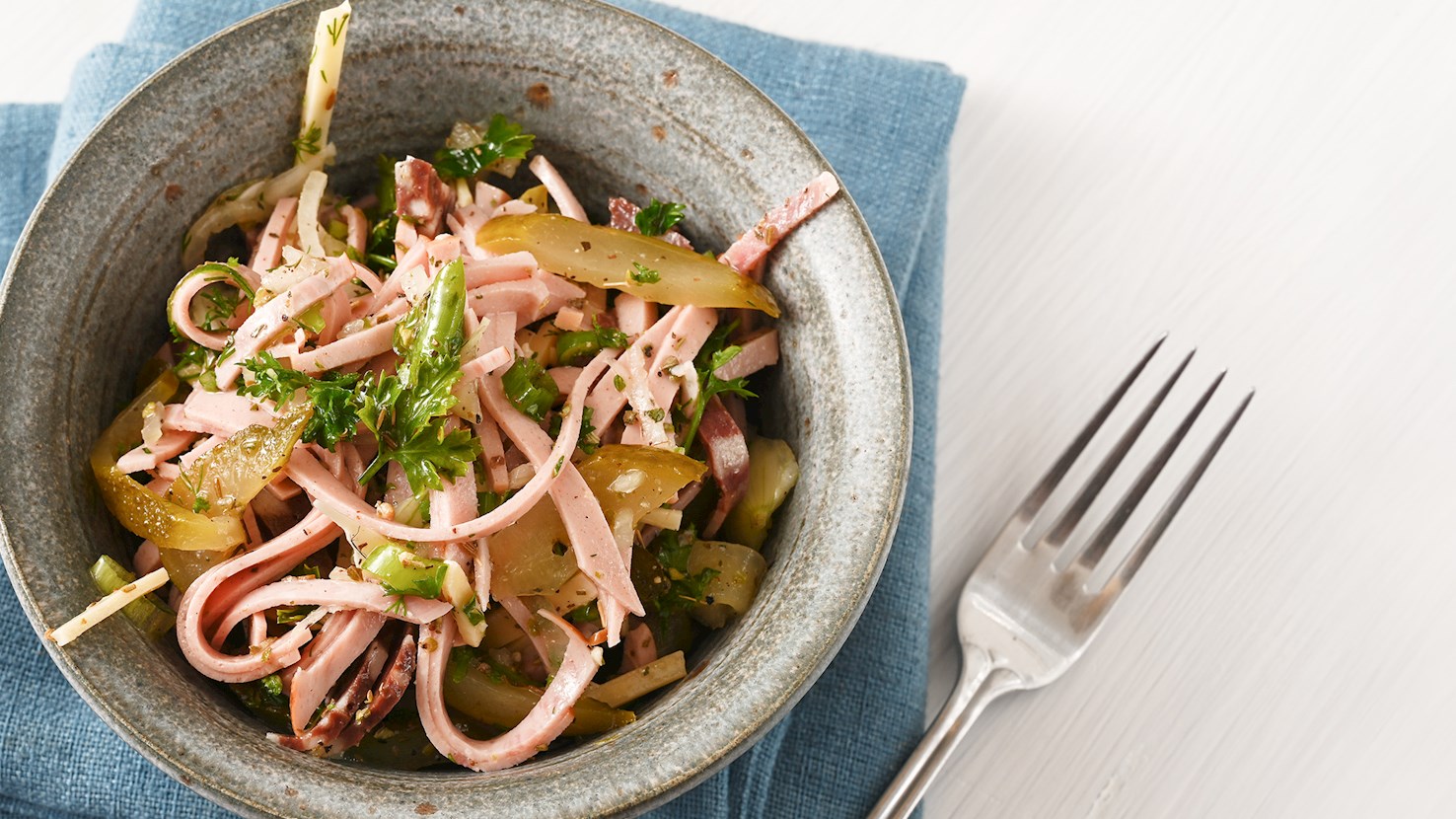
Bayerischer Wurstsalat is a traditional salad originating from Bavaria. It's made with Regensburger knockwurst sausage, diced onions, olive oil, wine vinegar, salt, pepper, and paprika. The wurst is peeled and sliced thinly, then tossed with the onions, olive oil, vinegar, and seasonings. Before serving, it's chilled, then dusted with paprika on top. The salad is sometimes also served as an appetizer, and it's recommended to serve it with beets, pickles, bread rolls, and butter.
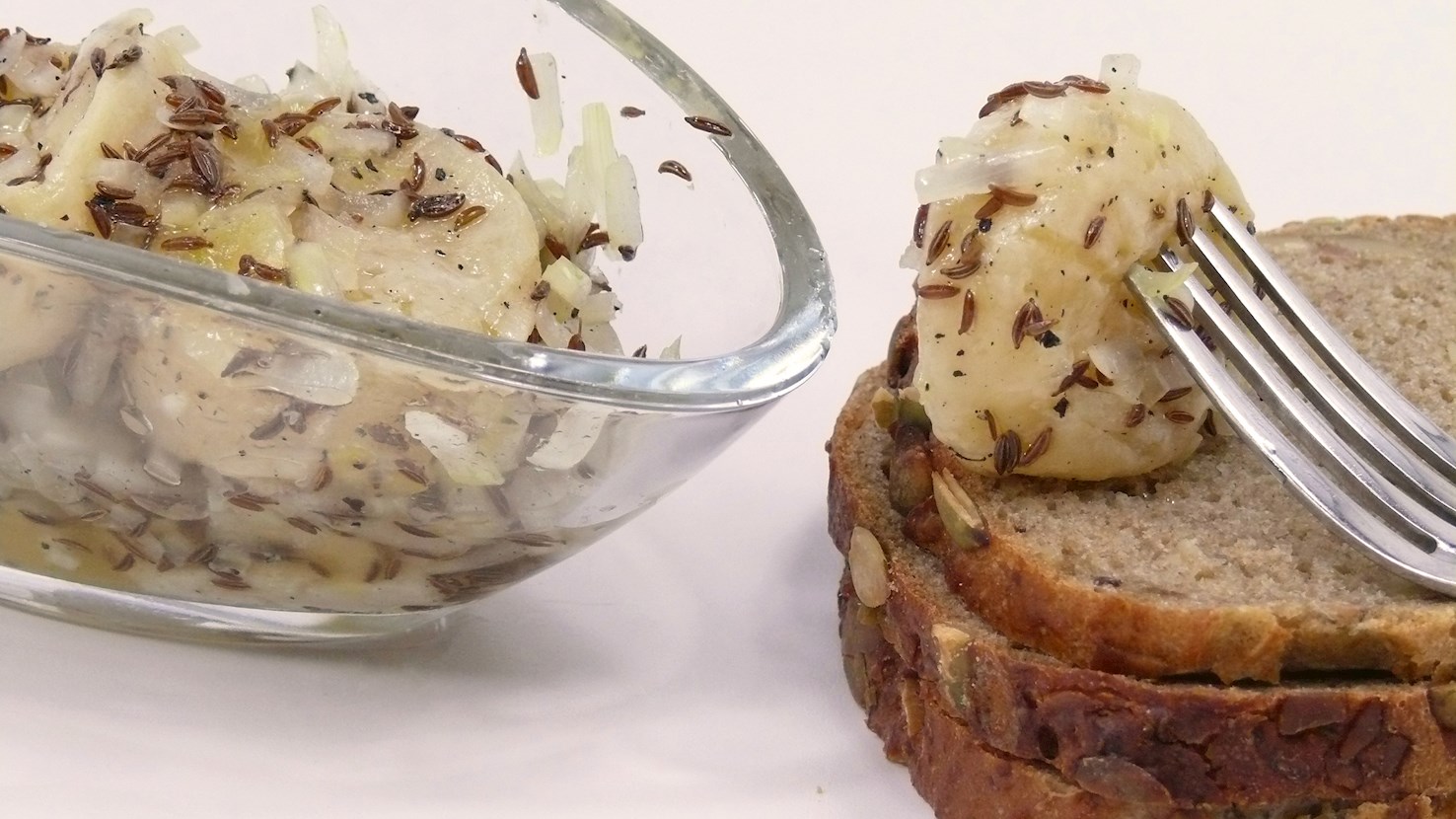
Handkäse mit Musik is a German dish originating from Hesse. It consists of hand-formed handkäse (sour milk cheese) that's topped with raw onion vinaigrette. The onion marinade stands for music (Musik) from the name, which comes in the form of flatulence caused by consuming raw onions. However, the real reason why it has music in its name is because in the past, the onions were served on the side, while vinegar and oil were served in tiny jars that made music while the servers carried them on a plate. The dish is often served only with a knife, and it's typically accompanied by bread, caraway seeds, and apfelwein (apple cider) on the side.
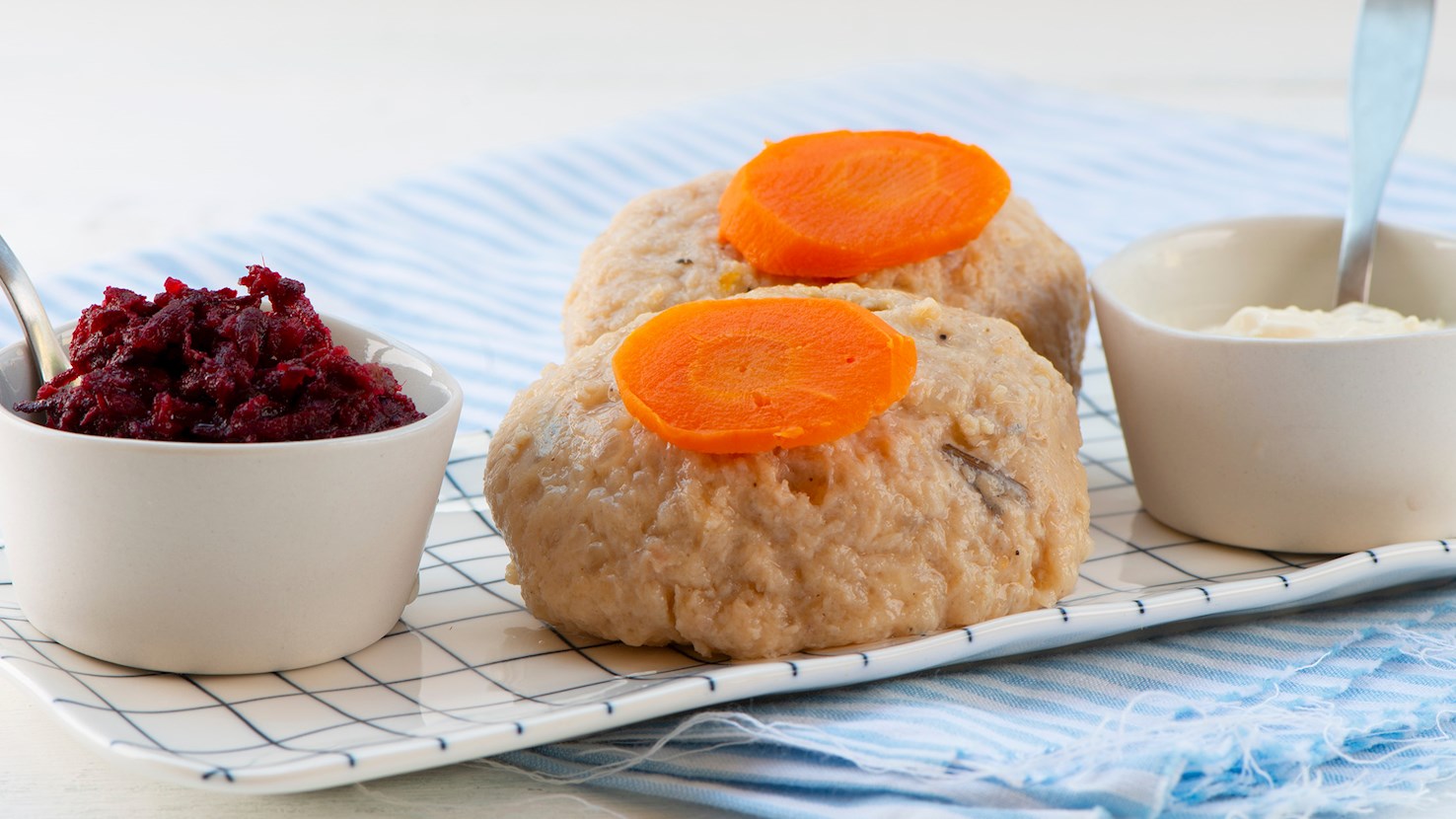
Gefilte fish, or stuffed fish (from gefilte, which means filled or stuffed in Yiddish), is a ubiquitous Jewish appetizer that is based on chopped or ground fish. This dish is typically prepared with ground carp, pike, or whitefish that is combined with a variety of other ingredients before it is shaped into balls or oval patties, which are then usually simmered in fish stock. Typical ingredients that go into gefilte fish include matzo meal, eggs, onions, carrots, leeks, parsley, goose fat or oil, and various seasonings and spices such as salt, pepper, allspice, sugar, cinnamon, or bay leaves. Gefilte fish may be more on the savory side, with a distinctive peppery flavor, as it is usually prepared in countries such as Lithuania and Russia, or sweet, a version that is typical of Polish cuisine. Believed to date back to medieval Germany, this specialty has been attributed to the Ashkenazi Jews, and despite the many different theories regarding its creation, the dish has most likely been invented out of poverty and the need to feed many people with as little expense as possible. Today, gefilte fish balls or patties are available in jarred or frozen versions, though many people prefer the homemade versions over the store-bought ones as these are almost always rather bland-tasting and unappetizing. The dish is usually enjoyed chilled or at room temperature, topped with boiled carrots and onions, and accompanied by a side of chrain (ground horseradish, often mixed with beets). Gefilte fish has been traditionally consumed for Shabbat, although it is also eaten for a number of Jewish holidays such as Passover Seder and Rosh Hashanah, the Jewish New Year.
Frankfurter schneegestöber is a traditional cheese spread originating from Frankfurt. This regional specialty is made with a combination of cream cheese, Camembert, butter, onions, paprika, parsley, and black pepper. The cream cheese, Camembert, and butter are first crushed with a forked and mixed well until all the ingredients blend together. The mixture is enriched with the addition of paprika powder, onions, and black pepper. Once mixed, frankfurter schneegestöber is sprinkled with finely chopped parsley, and it's then served with farmhouse bread as an appetizer. The dish is especially popular in Sachsenhausen's (largest district in Frankfurt, south of the Main river) inns, where it's often paired with Apfelwein.
Pfitzauf is a pastry from Swabia, made from a simple mixture of eggs, milk, flour, and butter. Its shape is due to its strong rise in the oven and to being served straight after baking. When done, pifitzauf is tall and uneven in shape with crisp, browned edges and a soft, airy inside, tasting mild and slightly eggy with a light buttery note, and it has a hollow, tender structure that collapses quickly as it cools. Preparation uses a thin batter made from eggs, milk, flour, and salt, with butter heated in small baking dishes, placed in a very hot oven. Afterward, the batter is poured into the hot butter and baked at high heat, so steam lifts the mixture upward and creates its characteristic height and shape. Common variations include small changes in batter thickness, adding different sweet or savory ingredients, baking the mixture in one large dish or several small molds, and serving it plain or dusted with sugar, while the defining feature of strong oven rise remains the same. The dish is eaten immediately after baking and is served in homes and cafés in Swabia, most often as a light meal or snack, commonly accompanied by applesauce, fruit compote, a simple salad, or coffee.
TasteAtlas food rankings are based on the ratings of the TasteAtlas audience, with a series of mechanisms that recognize real users and that ignore bot,
nationalist or local patriotic ratings, and give additional value to the ratings of users that the system recognizes as knowledgeable.
TasteAtlas Rankings should not be seen as the final global conclusion about food. Their purpose is to promote excellent local foods,
instill pride in traditional dishes, and arouse curiosity about dishes you haven’t tried.






What People Say