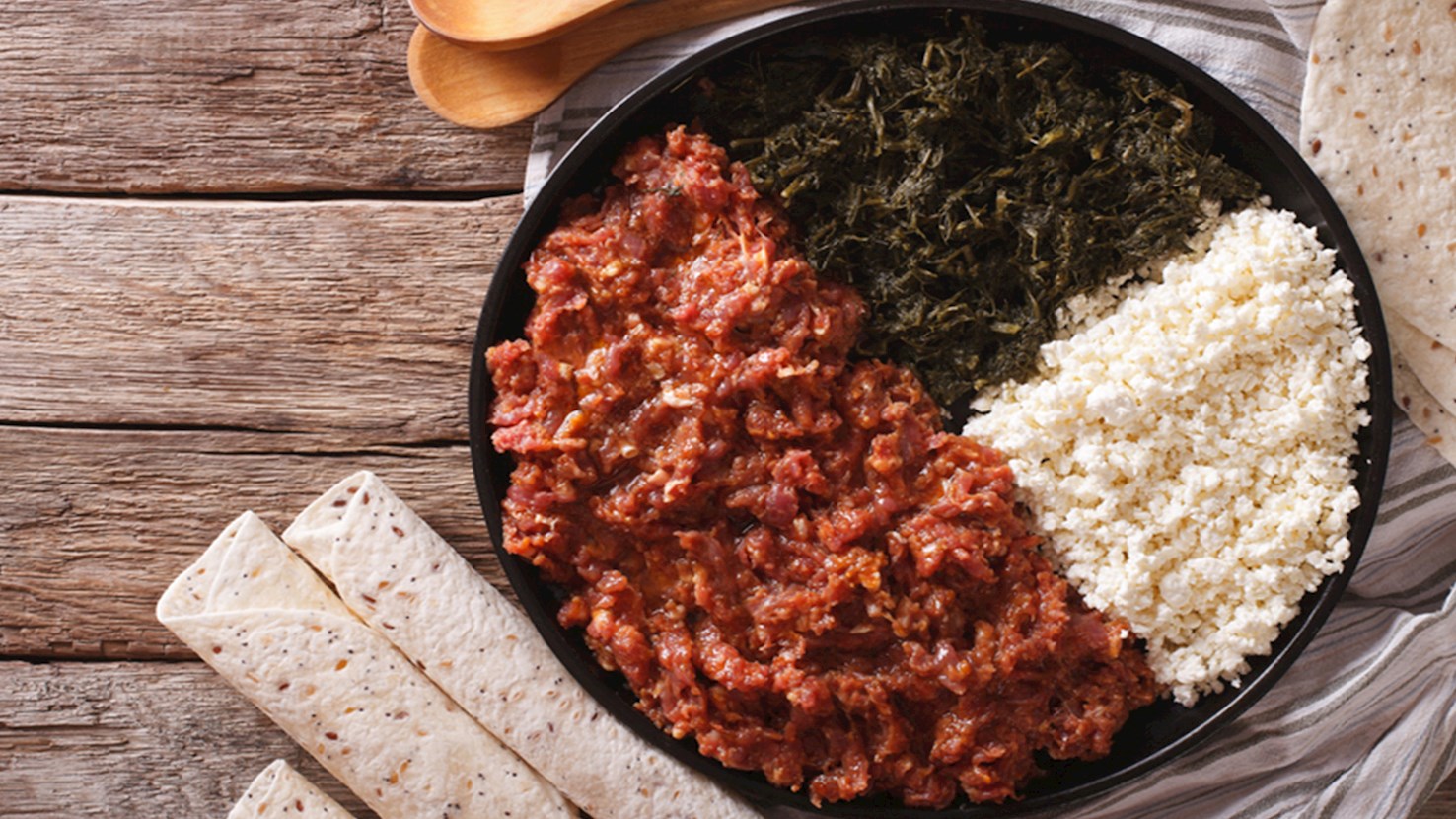
Kitfo is an Ethiopian beef specialty from the Gurage communities of south-central Ethiopia, made from very finely chopped lean beef mixed with warm spiced clarified butter and mitmita, a potent chili-based seasoning. The classic form is served raw, giving it a soft, almost creamy texture once the meat is coated with butter, although lightly warmed and fully cooked versions are also widely available. Kitfo spread well beyond the Gurage highlands and is now eaten throughout Ethiopia, with specialist kitfo restaurants particularly common in Addis Ababa. Its association with the Gurage is well established: accounts of Gurage food culture identify kitfo alongside enset-based foods as an important part of feasts, weddings, hospitality, and other significant gatherings, while Ethiopian restaurant culture helped turn it into a nationally familiar dish. The preparation depends heavily on the quality and texture of the beef. A very lean, tender cut is cleaned of visible fat, membranes, and sinew before being chopped repeatedly until extremely fine; hand-chopping has historically been preferred because it produces a delicate texture without turning the meat into a uniform paste. The meat is then seasoned with mitmita, whose mixture typically includes hot dried chilies, korarima or Ethiopian cardamom, cloves, salt, and other spices depending on the blend. Melted niter kibbeh, clarified butter infused with aromatics and spices, is worked through the beef immediately before serving. The butter provides much of kitfo’s characteristic richness while carrying the heat and fragrance of the spices throughout the meat. The degree of cooking is usually chosen by the person ordering it. Raw kitfo is commonly described as tere, while leb leb is briefly warmed so that the meat begins to cook without becoming firm or dry; a fully cooked version is also available for people who prefer not to eat raw beef. The distinction is important because kitfo is not simply minced beef served at different temperatures: prolonged cooking changes the soft texture that is central to the raw and lightly warmed versions. When eaten raw, it also carries the same food-safety risks as other uncooked beef dishes, so freshness, hygienic handling, and an appropriate cut of meat are particularly important. Kitfo is closely linked with kocho, a dense, slightly sour food made from fermented enset, which is especially characteristic of Gurage cuisine. Enset has long been a major staple among Gurage communities, and its mild fermented flavor provides a useful contrast to the rich meat and chili-spiced butter. Other common accompaniments include ayibe, a mild fresh curd cheese, and cooked leafy greens, often collards known as gomen. The cool, lightly acidic cheese softens the heat of the mitmita, while the greens add a vegetal element to an otherwise rich plate. Injera is also frequently served with kitfo, particularly outside the Gurage region, and pieces of either injera or kocho are used to pick up the meat by hand. Kitfo is usually presented as a substantial main dish rather than a small starter, sometimes on its own and sometimes as part of a larger platter containing cheese, greens, and breads. It remains particularly associated with celebrations and hospitality but is also eaten casually in restaurants throughout Ethiopia and in Ethiopian communities abroad. Its richness works especially well with sour or mildly fermented starches, fresh cheese, and leafy vegetables, while Ethiopian beer can provide a refreshing contrast to the butter and chili. Tej, Ethiopia’s honey wine, can also accompany it, particularly during celebratory meals, while water or lighter drinks allow the heat of the mitmita to remain more prominent.
Gomen be siga is a traditional dish that consists of sautéed collard greens (gomen) and chunks of beef (siga) as the key ingredients, made with addition of fresh ingredients like clarified spiced butter, and lots of onions and garlic for flavor. Like most Ethiopian dishes, gomen be siga is traditionally paired with injera flatbread. For a spicy kick, the dish can be consumed with awaze chili sauce.
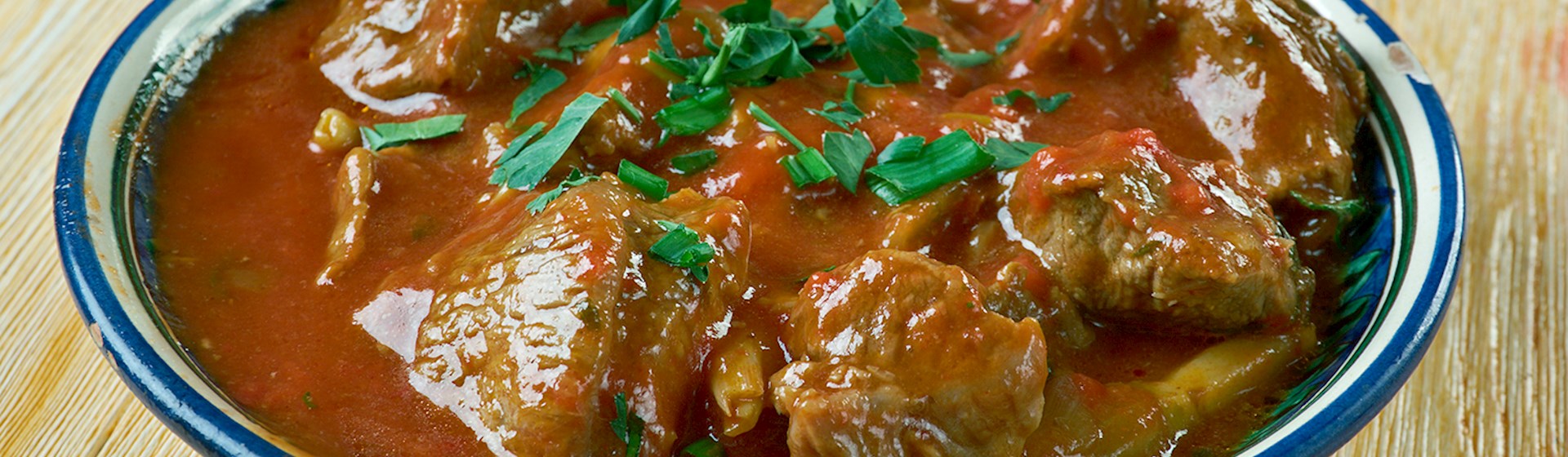
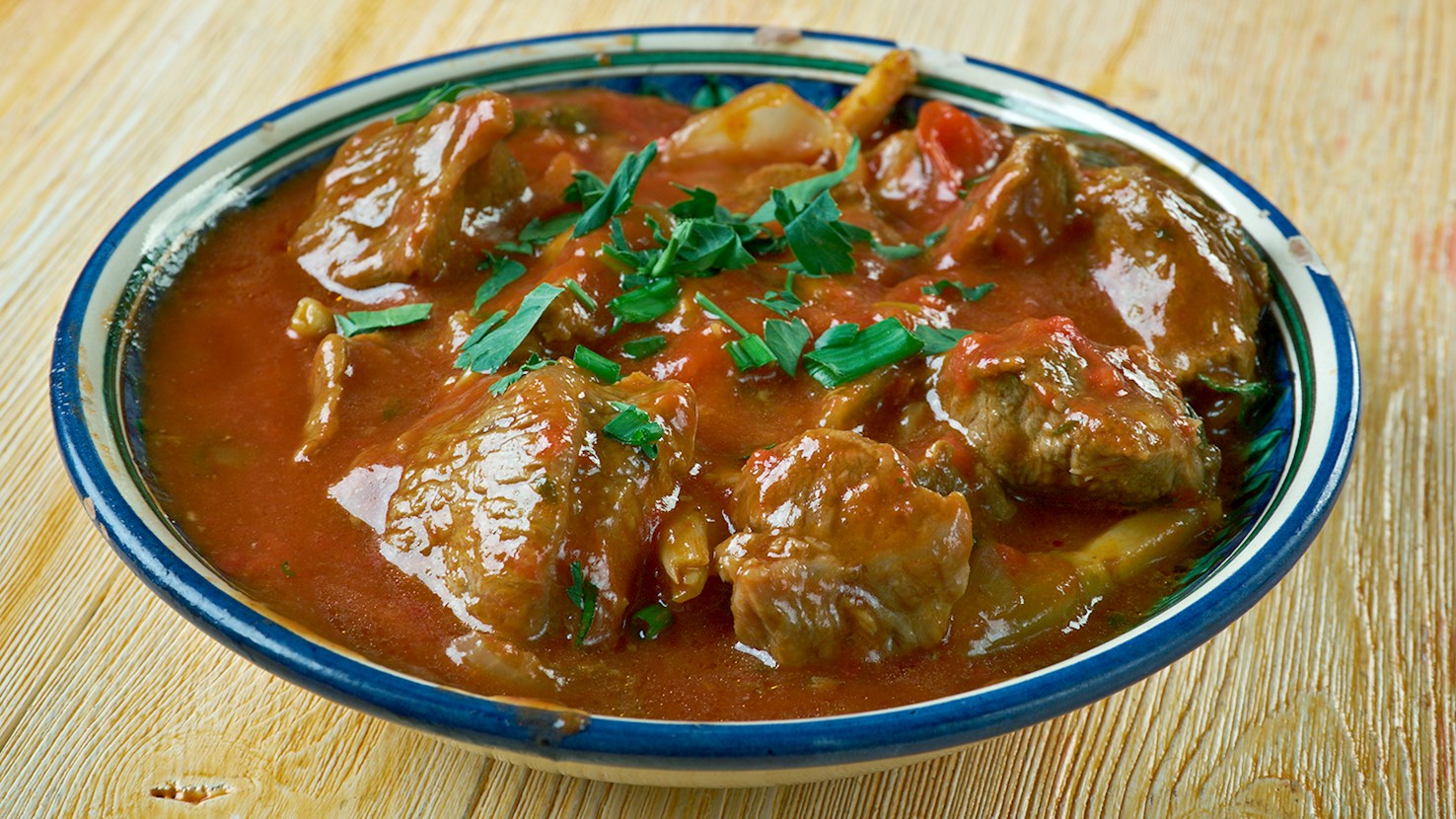
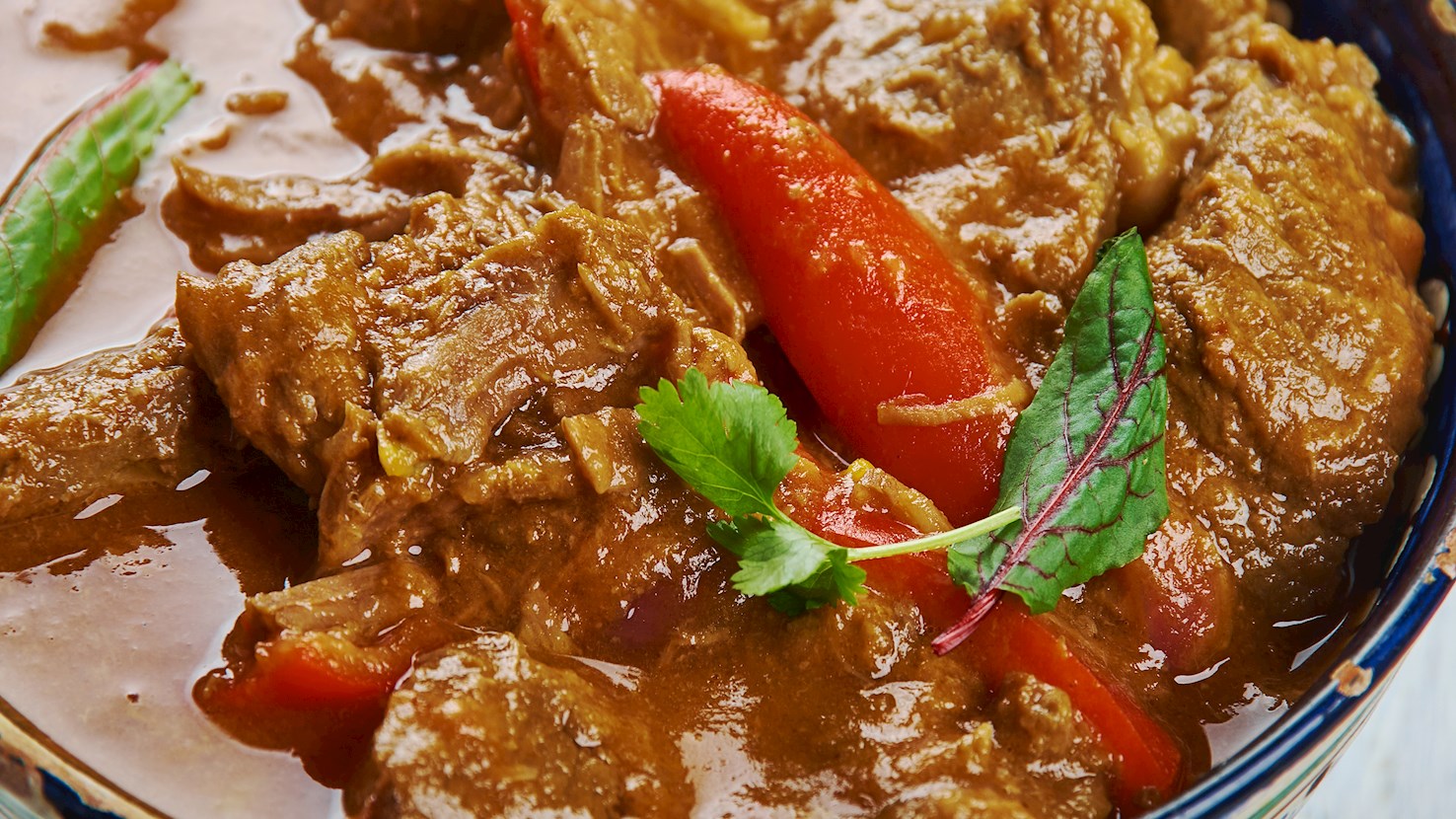
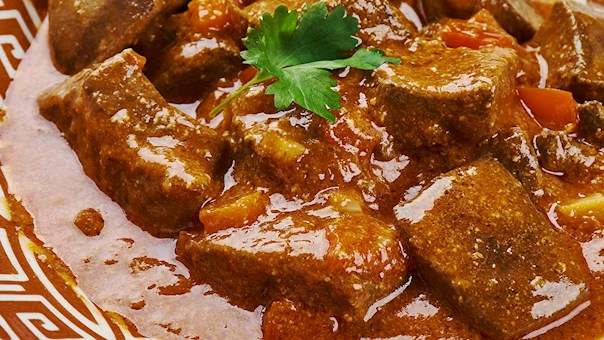
Kamounia is a traditional dish that's a part of Tunisian, Egyptian, and Sudanese cuisine. This hearty stew is usually prepared with beef (sometimes with liver). Variations exist, so lamb is sometimes used instead of the beef, and there are also different spices used depending on the region. Some people like to add parsley, olive oil, and garlic to the stew. Once done, kamounia is often served with rice, either on top of it or on the side.
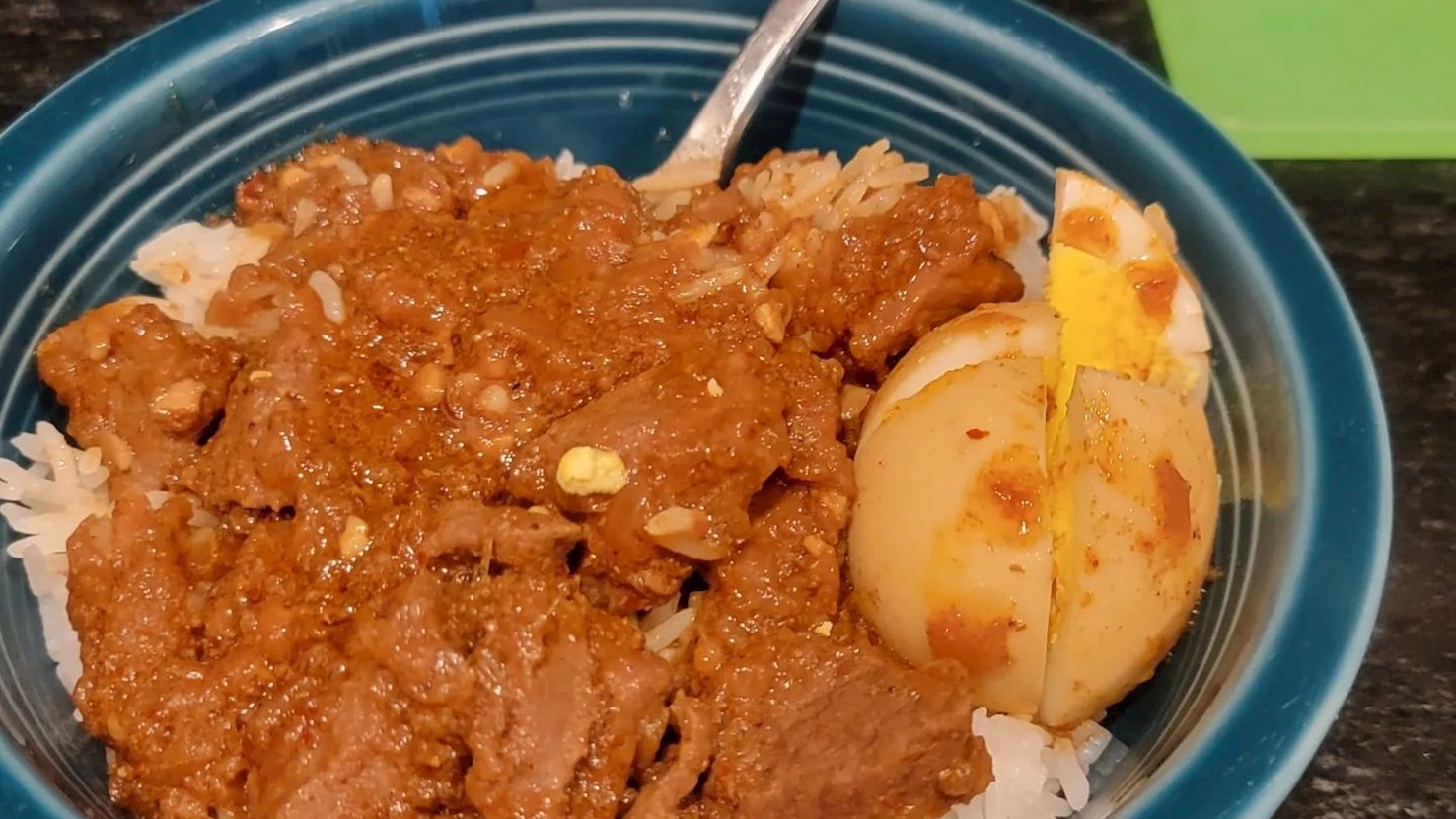
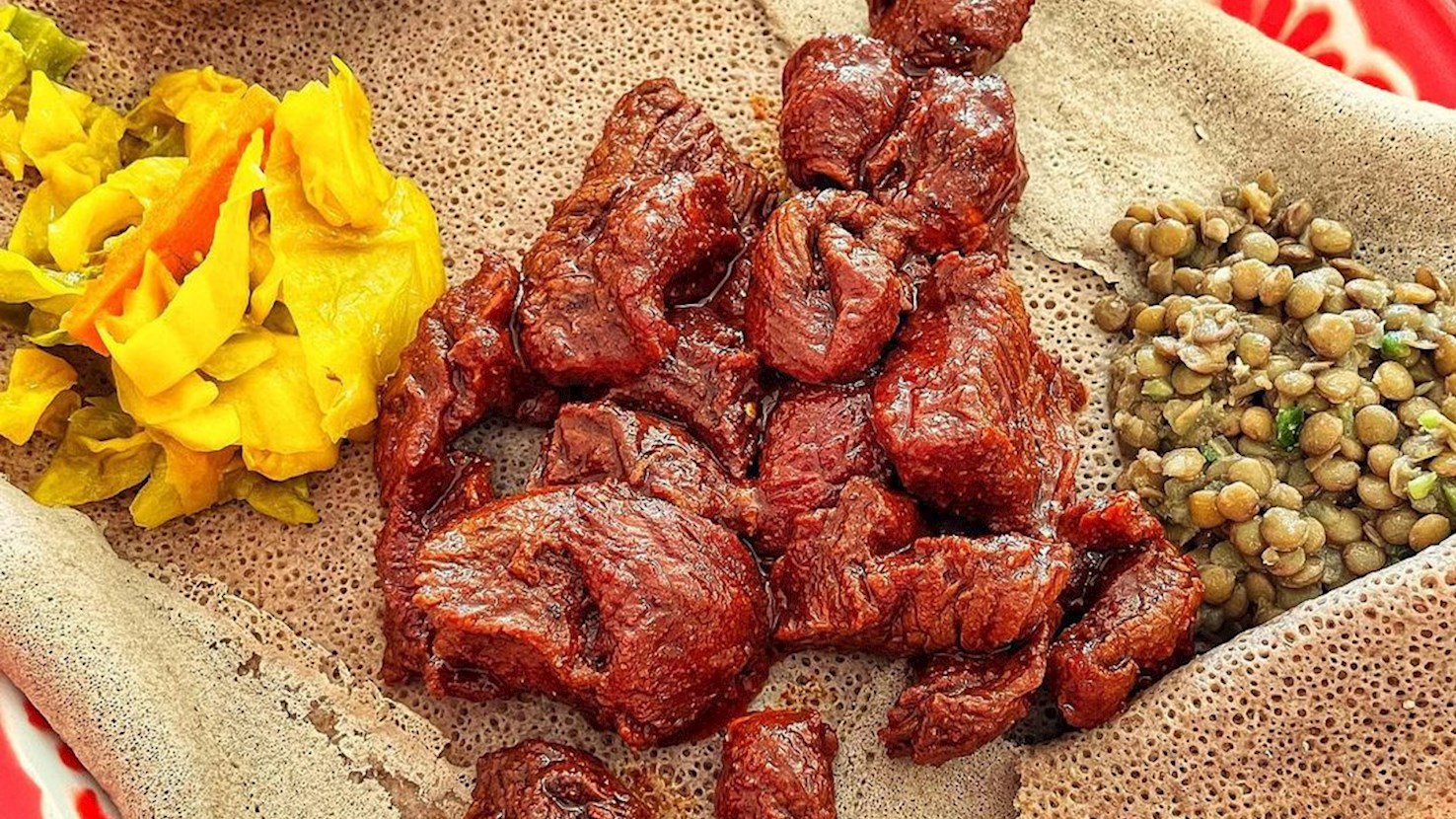
Siga wat or tsebhi sga is a spicy beef stew shared by Ethiopian and Eritrean cuisines, made by slowly cooking pieces of beef in a thick sauce based on onions, seasoned butter, and red chili spices. The two names describe essentially the same preparation: siga or sga means meat, while wat in Amharic and tsebhi in Tigrinya refer to stew. It belongs to the wider family of Ethiopian and Eritrean stews served with injera, in which onions are cooked down extensively until they become the main source of body for the sauce. The dish developed within the closely connected food cultures of the Ethiopian and Eritrean highlands, where beef, clarified butter, fermented flatbread, and strongly seasoned stews have long formed important parts of communal meals. Its modern red form emerged after Capsicum peppers reached the region and became incorporated into local spice mixtures, eventually producing the chili-rich seasoning systems now associated with many red stews. Siga wat begins with a substantial amount of finely chopped onion, which is cooked slowly until soft, reduced, and concentrated. Seasoned clarified butter is then incorporated, followed by garlic, ginger, cardamom or korarima, and a generous amount of berbere or a comparable red chili mixture. Beef is cut into moderately large cubes and added once the sauce has developed enough flavor and thickness, then simmered until tender. Some cooks brown the meat first, while others allow it to cook directly in the sauce; tomato or tomato paste may also be included, but neither is essential to the identity of the dish. Ethiopian and Eritrean recipes both follow this same basic structure, even though spice proportions and individual household methods vary. Relatively little additional liquid is required because siga wat is meant to finish with a dense sauce that coats the beef rather than a thin broth. Extended cooking allows the onions to break down almost completely, while the fat carries the chili and aromatic spices through the meat. Hard-boiled eggs may occasionally be added for a richer version, although they are not required as they are in many preparations of chicken wat. The stew is usually served hot over injera, which absorbs the sauce and provides a sour counterpoint to the rich beef and concentrated seasoning. Mild lentils, split peas, greens, cabbage, fresh salad, or soft cheese can be placed on the same platter, particularly when siga wat forms part of a larger shared meal. It is eaten throughout Ethiopia and Eritrea in homes, restaurants, family meals, and communal gatherings. Beer, tella or suwa, tej or mies, and water can accompany the stew depending on the setting, while coffee commonly follows the meal.
Gored gored is an Ethiopian raw-beef specialty made from substantial cubes of fresh beef rather than finely minced meat, giving it a firm, chewy texture that clearly separates it from kitfo. The defining feature is the cut: tender beef is sliced into bite-sized cubes, often with some fat left attached, and served raw or, in some versions, only very lightly warmed. Gored gored belongs to Ethiopia’s much wider culture of eating fresh raw beef, alongside tere siga or kurt and kitfo. Studies of Ethiopian food habits confirm that raw and lightly cooked beef remain common in many parts of the country and are especially associated with social gatherings, festive occasions, butcher shops, and meals built around freshly slaughtered cattle. A frequently repeated oral explanation claims that Ethiopian soldiers began eating uncooked meat during wartime to avoid lighting fires that might reveal their position, but researchers note that written evidence establishing this story is lacking, so it is better treated as folklore rather than a confirmed account. Preparation is deliberately simple because the quality and texture of the beef are central. Tenderloin, round, or similarly lean and tender cuts are commonly chosen, trimmed and cut with a sharp knife into roughly bite-sized pieces. Some versions are served almost unseasoned, with awaze and mitmita provided separately for dipping, while others lightly coat the cubes with niter kibbeh, berbere, mitmita, or awaze immediately before serving. An Ethiopian Ministry of Labor and Skills training manual, for example, gives a version in which cubed raw beef is mixed with berbere, awaze, mitmita, salt, and melted niter kibbeh, showing that the degree of seasoning is not completely standardized. This flexibility also explains why descriptions sometimes differ: gored gored is not defined by one exact spice formula but by keeping the meat in recognizable cubes rather than mincing it or presenting it as long strips. Kitfo is chopped very finely and mixed thoroughly with seasoned butter and mitmita, while tere siga is generally cut directly from a larger piece of raw beef and eaten with condiments; gored gored occupies a distinct position between the two in terms of cutting and serving. Because it is commonly eaten raw, freshness and hygienic handling are particularly important. Ethiopian food-safety studies have documented significant microbial and zoonotic risks associated with raw-beef consumption, especially where slaughter, storage, or handling conditions are poorly controlled. Gored gored is typically served with injera and strongly flavored condiments rather than elaborate side dishes. Awaze supplies a thick chili-based sauce, mitmita adds concentrated heat, and lemon can provide acidity, while ayib or cooked greens offer a milder contrast on larger platters. It may be ordered as a dish in its own right or appear as part of a larger meat-focused meal, particularly during celebrations and communal gatherings. The dish is especially at home in Ethiopian butcher-restaurants and meat restaurants, where access to freshly cut beef is part of the appeal. Tej or beer can accompany a richer serving, while water works well with heavily seasoned versions, and Ethiopian coffee is commonly taken later in the meal.
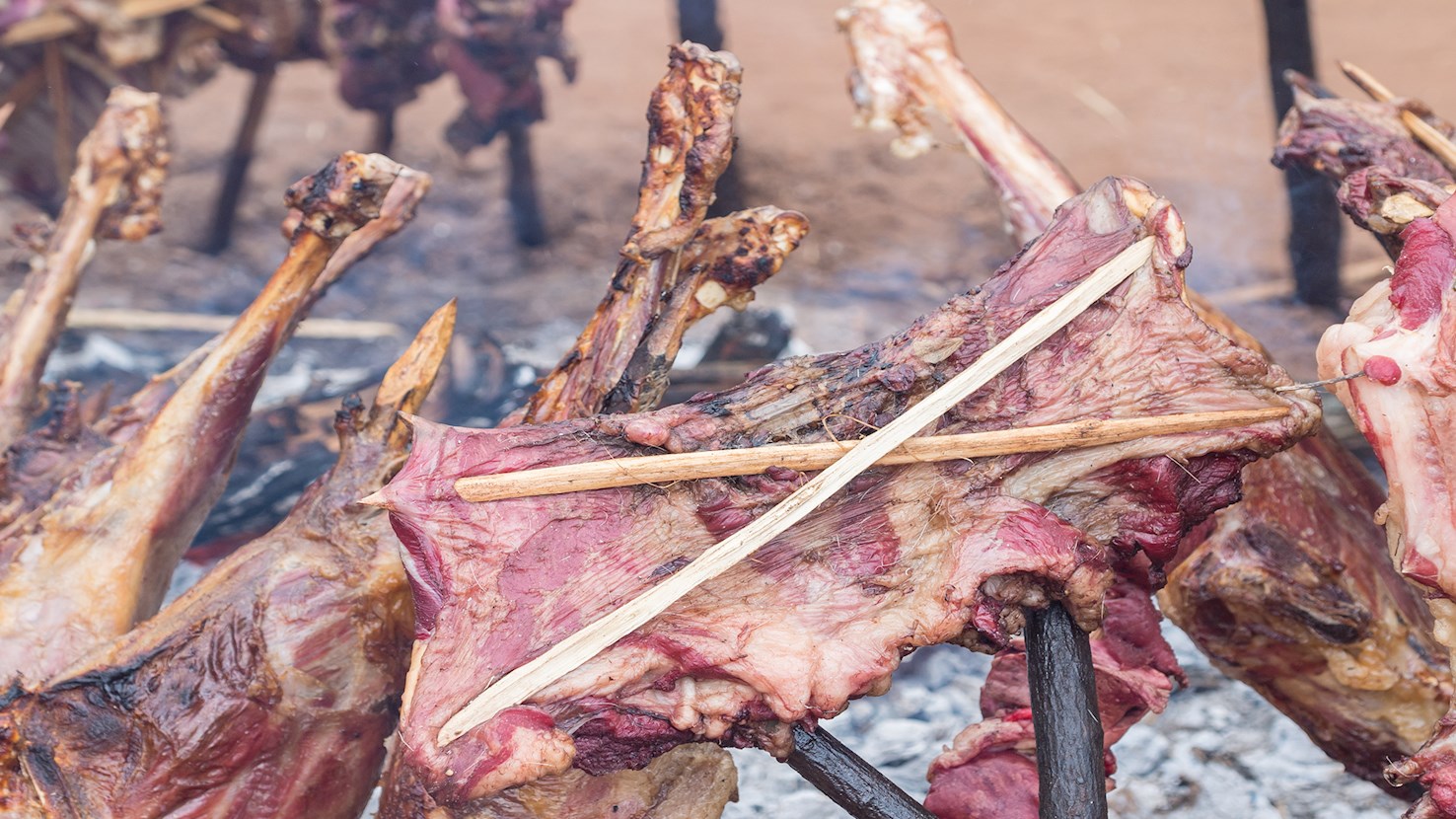
Nyama choma is a grilled meat dish prepared and eaten widely in East Africa, most closely associated with Kenya (unofficial national dish) and Tanzania, where it refers specifically to meat cooked over open heat and served plainly rather than marinated or sauced. Its development follows small-scale livestock-keeping practices in which goats and cattle were slaughtered for communal occasions and cooked simply to highlight freshness, with grilling over wood or charcoal favored for its practicality and for the control it offered without specialized equipment, and the Swahili term itself reflects a direct description of meat and the act of roasting. Preparation centers on cutting goat or beef into large pieces, salting lightly or not at all, and grilling slowly over charcoal or wood embers, turning regularly so the exterior browns while the interior remains moist, with trimming and chopping often done after cooking rather than before to retain juices. Serving is direct and unadorned, with the meat chopped into manageable pieces on a board and placed on a platter, sometimes accompanied by simple sides rather than combined into a composed dish. What distinguishes nyama choma is the minimal intervention between raw meat and fire, as seasonings, marinades, and sauces are deliberately restrained, placing emphasis on cut selection, heat management, and timing rather than on added flavors. It is eaten socially in open-air eateries and homes, often by hand, shared among groups over extended periods, and commonly paired with ugali, kachumbari, or plain bread, while beverages such as local beers, light lagers, or soft drinks are consumed alongside, with water and tea also common depending on context.
Zigni is a spicy red meat stew from Eritrea and Ethiopia, most commonly made with beef slowly cooked in a thick sauce of onions, tomatoes, berbere, garlic, and other aromatics. In Ethiopia, the same dish is generally known as key wat or kai wat, while zigni is especially associated with Eritrean usage; the difference is largely one of naming rather than a fundamentally separate recipe. It belongs to the wider highland cooking culture shared by the two countries, where strongly seasoned stews are served over injera and eaten communally. Its present red form could only have developed after Capsicum peppers reached northeastern Africa and became established in local cooking, eventually forming the basis of berbere, while tomatoes later became a common component in many versions of zigni. The dish is prepared by cooking finely chopped onions slowly until they soften and become concentrated, then adding oil or seasoned butter together with berbere, garlic, and sometimes ginger, coriander, or korarima. Tomatoes or tomato paste are commonly incorporated and allowed to cook down until the sauce becomes dense rather than fresh-tasting. Cubes of beef are then added and simmered gently until tender, with only enough liquid to prevent the mixture from drying out before the meat is fully cooked. Eritrean recipes can also use lamb, and published accounts describe both beef and lamb versions, but beef is the most commonly identified form. Long cooking is important because the onions and tomatoes eventually lose their separate textures and form a smooth, concentrated sauce around the meat. Berbere supplies the characteristic red color and heat, while fenugreek, coriander, cardamom, cloves, ginger, and other spices contained in the blend give the stew a more complex flavor than chili alone. Unlike thinner meat sauces, zigni is reduced until it is substantial enough to sit on injera without flooding the platter. It is most commonly served by spooning it over a large round of injera, which absorbs the sauce and is torn into smaller pieces for picking up the meat by hand. This style of communal serving is well established in Eritrean dining, where meat and vegetable stews are arranged together on injera for several people to share. Zigni can be accompanied by lentils, greens, mild vegetable stews, salad, or other dishes that provide contrast to the heat of the beef sauce. It is eaten in homes and restaurants throughout Eritrea and Ethiopia and appears at everyday meals as well as larger family and social gatherings. Injera is its most important pairing, while suwa or tella, beer, tej or mies, and water all work well with a spicy serving; coffee is commonly taken later.
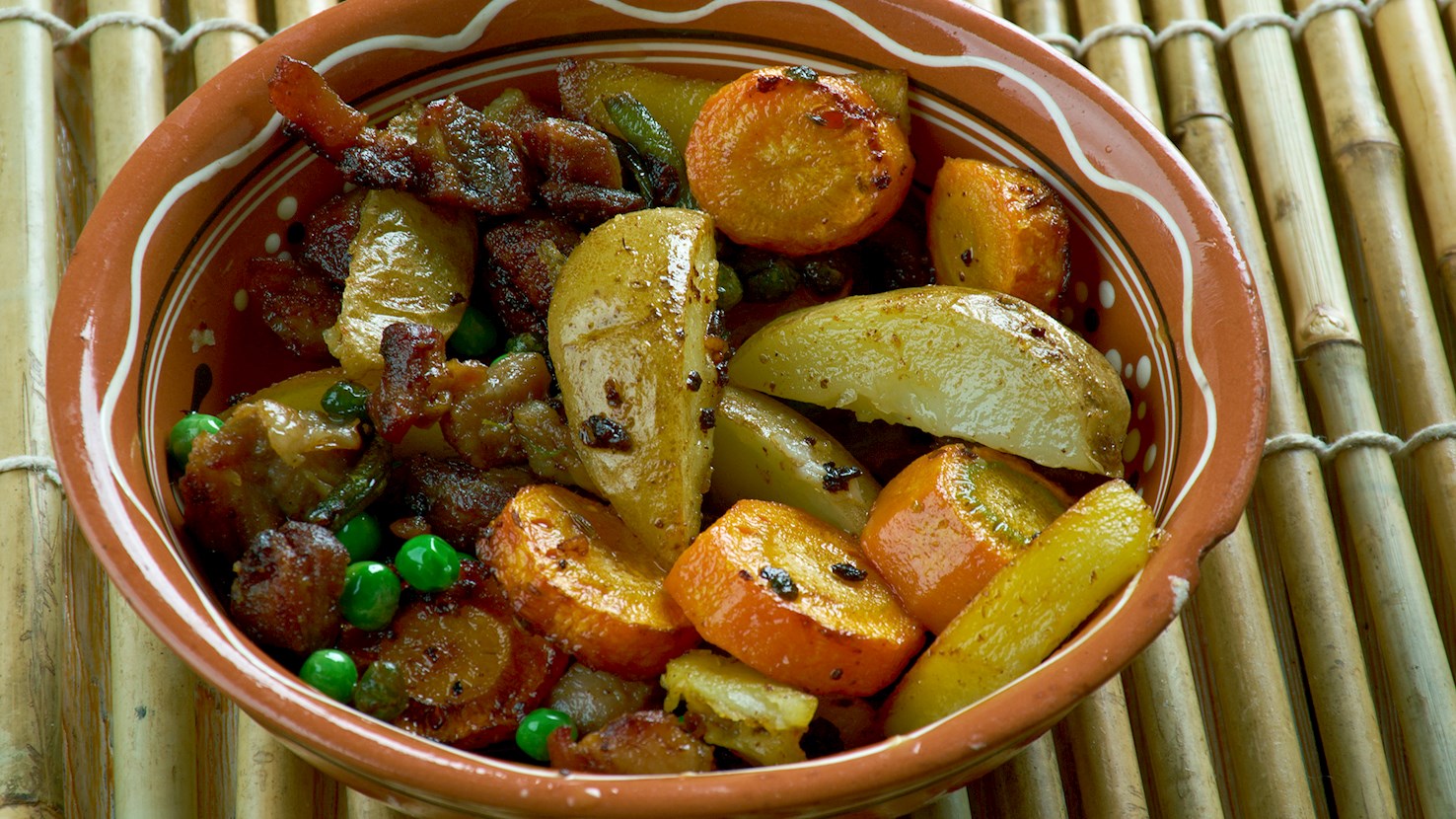
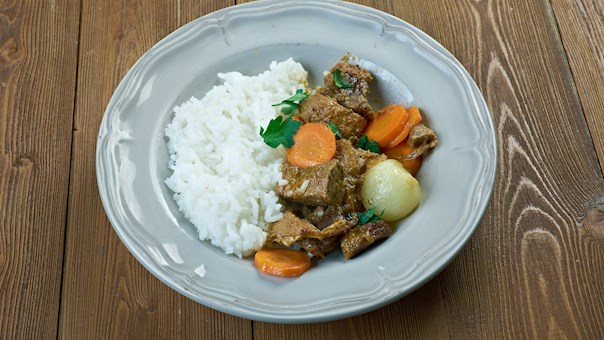
Jarret de boeuf is a traditional stew (also popular in ther formar colony Chad) consisting of beef cooked with vegetables such as carrots, sweet potatoes, leeks, and aubergines. The stew should be cooked for at least two hours until the meat and vegetables become tender. It is recommended to serve the dish in bowls and pair it with fufu or rice.
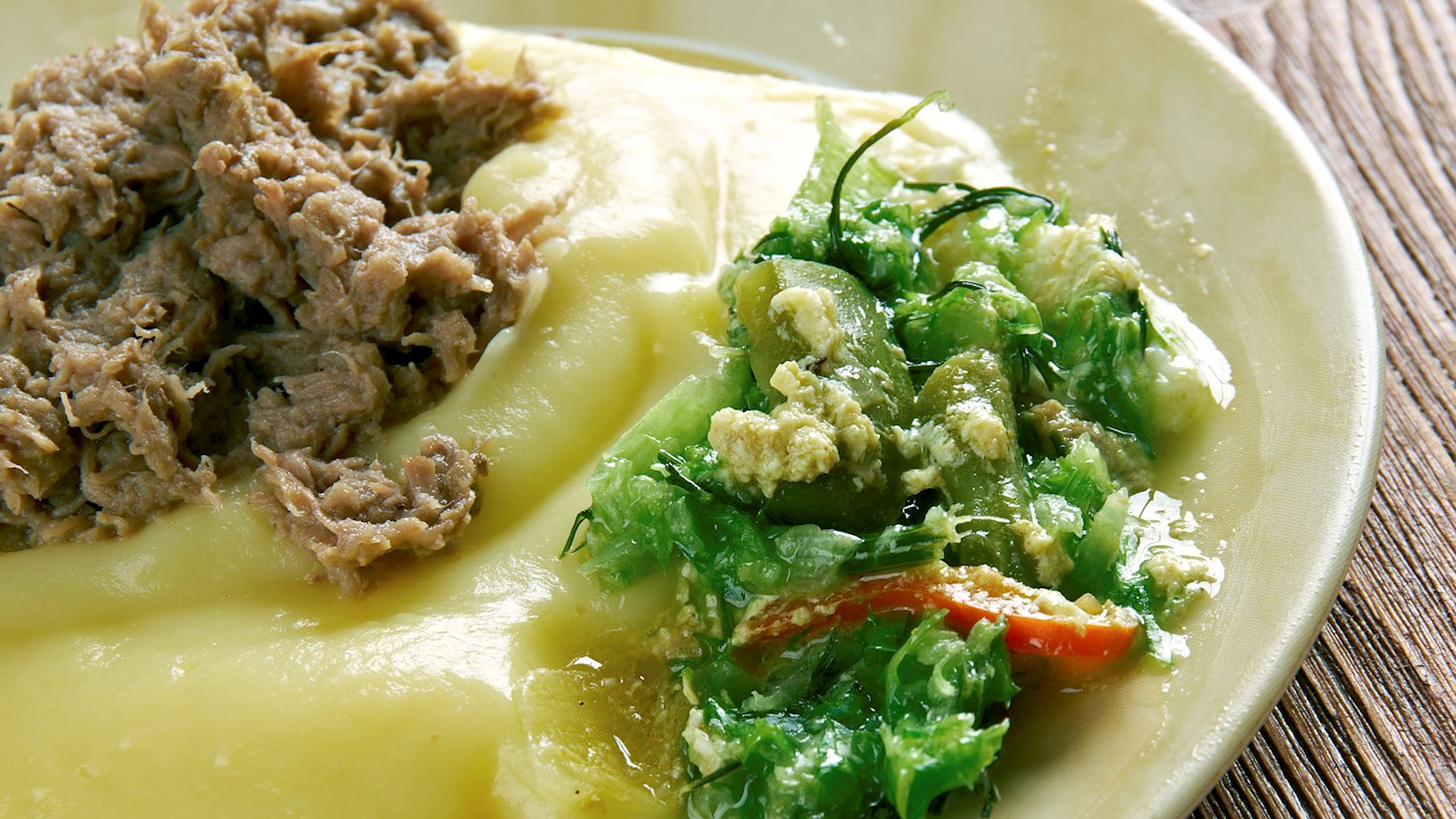
Seswaa, also known as chotlho, is Botswana's national dish consisting of meat on the bone (usually beef) that's slow-cooked in salted water. Once the meat has been cooked, it is pounded with large wooden pestles, then served over pap. Seswaa is usually prepared by men due to the physical extortion during the preparation process, since the meat is cooked in traditional, three-legged pots (called potjie) over an open fire. Lamb or goat meat can be used instead of beef, although beef is the most popular option in Botswana. Seswaa is almost always served on special occasions, weddings, and during the country's celebration of the independence day.
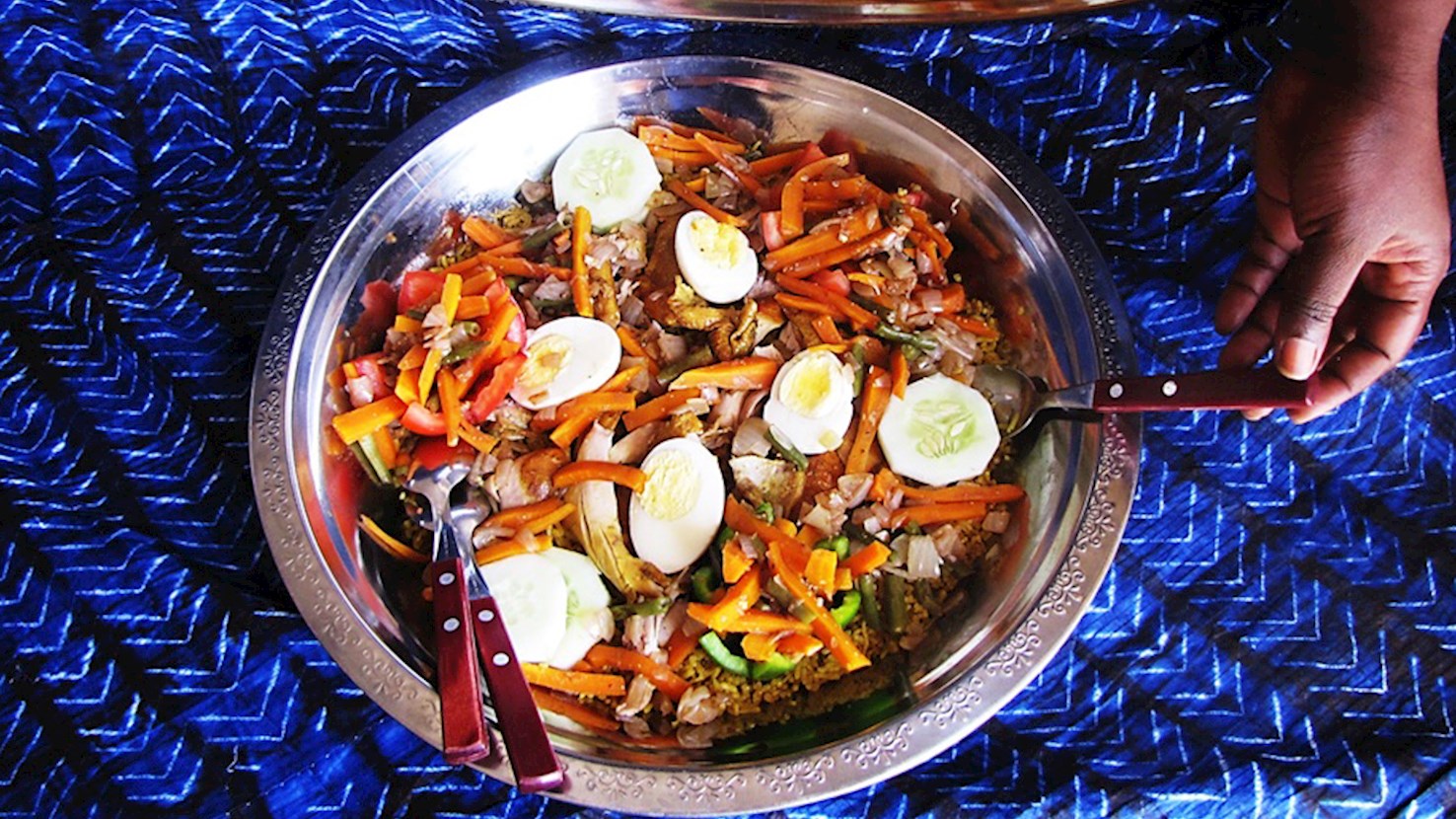
Thiébou yapp is a hearty Senegalese stew made with a combination of rice, meat, and vegetables. It is usually prepared with steamed broken rice, which is added to a meat broth containing browned chunks of beef or lamb, and the concoction is then simmered until fully cooked. Typical ingredients include onions, garlic, bell peppers, cabbage, eggplants, habanero peppers, mustard, carrots, tomatoes, paprika, vinegar, oil, and chopped parsley. This stew is a variation of the Senegalese national specialty thiébou jen, which uses fish instead of meat. Rich and fragrant, the dish is typically served on a plate with the rice on the bottom, topped with meat and vegetable chunks. The dish often features olives and hard-boiled eggs as well.
TasteAtlas food rankings are based on the ratings of the TasteAtlas audience, with a series of mechanisms that recognize real users and that ignore bot,
nationalist or local patriotic ratings, and give additional value to the ratings of users that the system recognizes as knowledgeable.
TasteAtlas Rankings should not be seen as the final global conclusion about food. Their purpose is to promote excellent local foods,
instill pride in traditional dishes, and arouse curiosity about dishes you haven’t tried.





What People Say