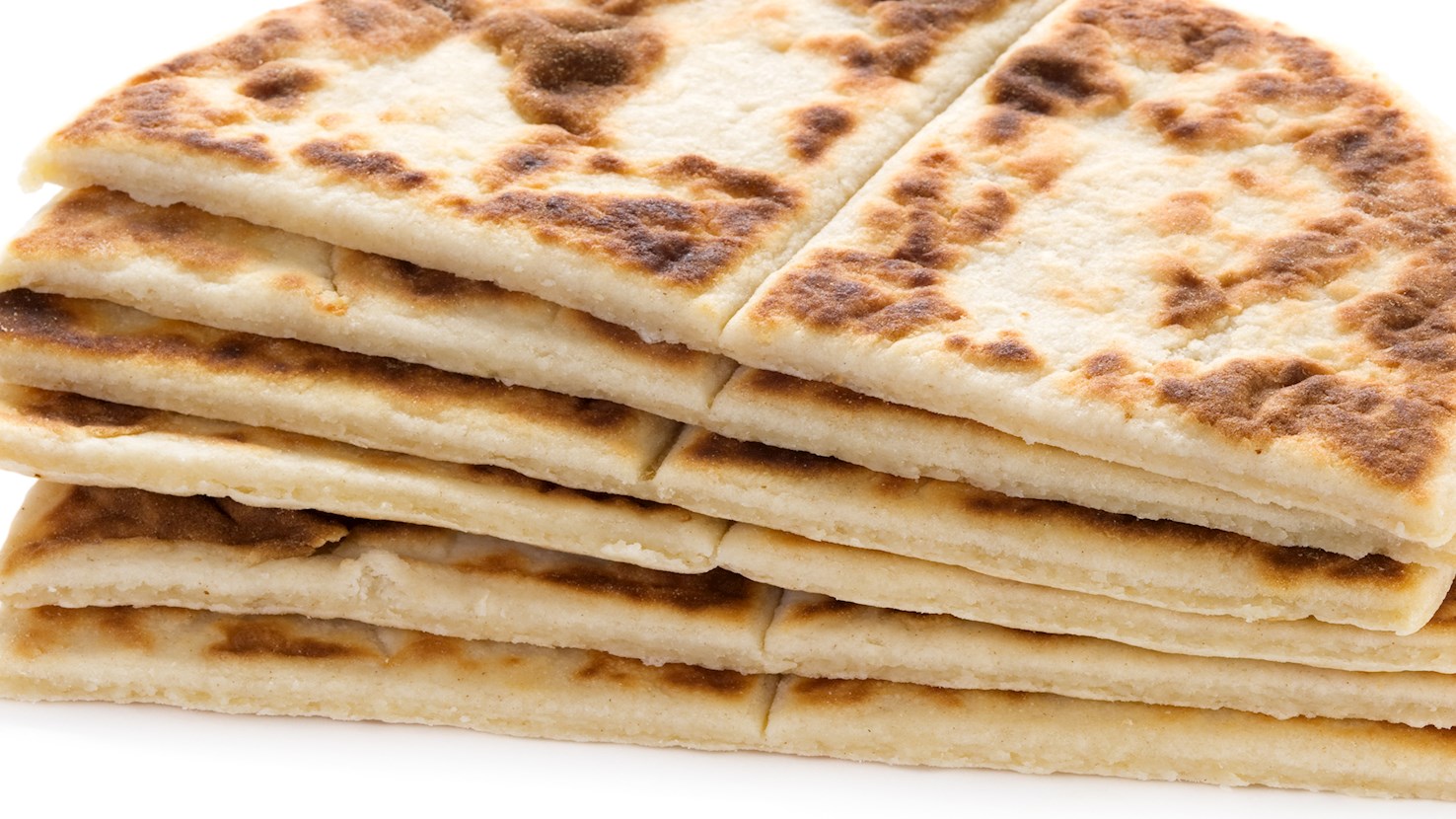
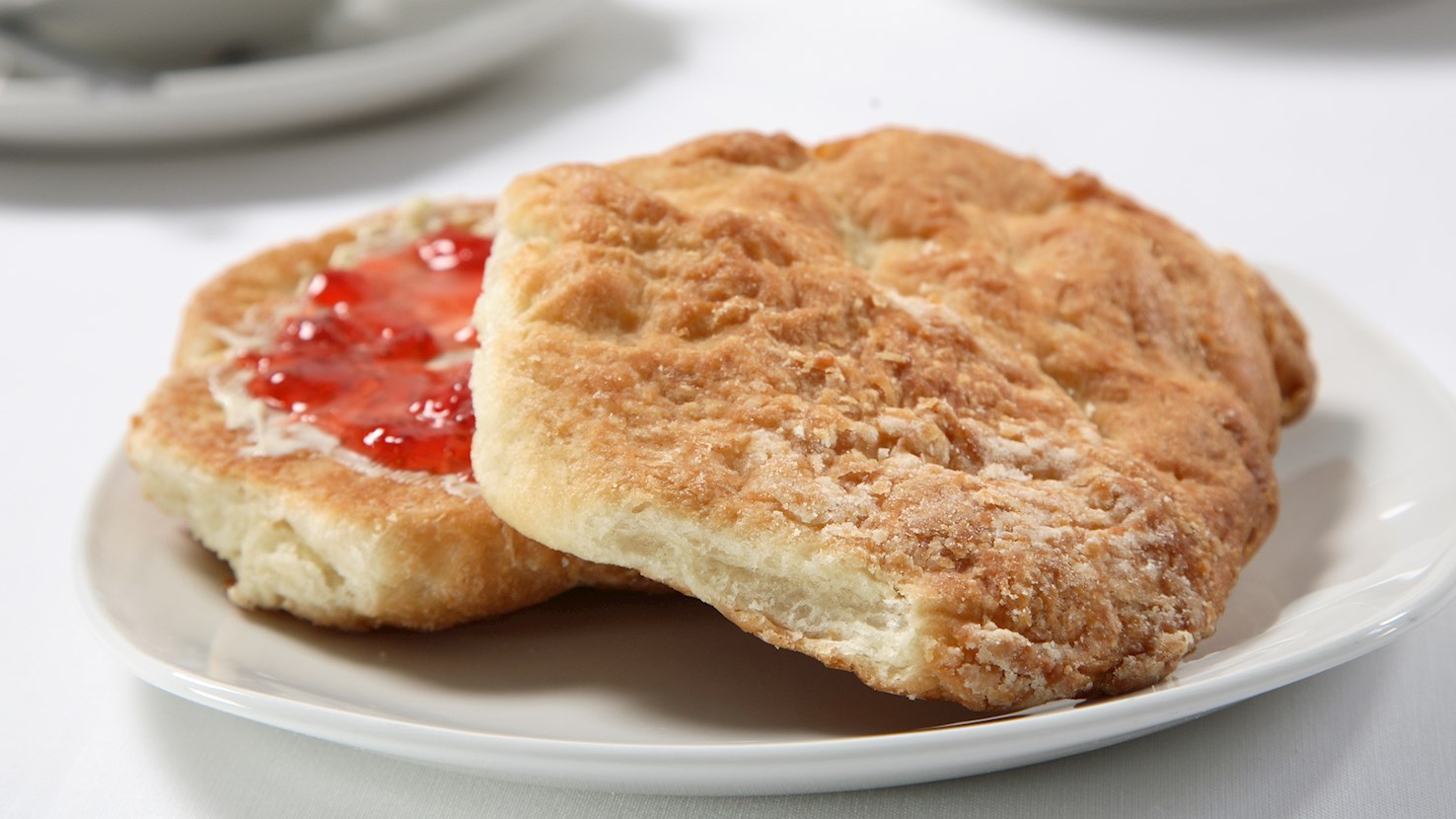
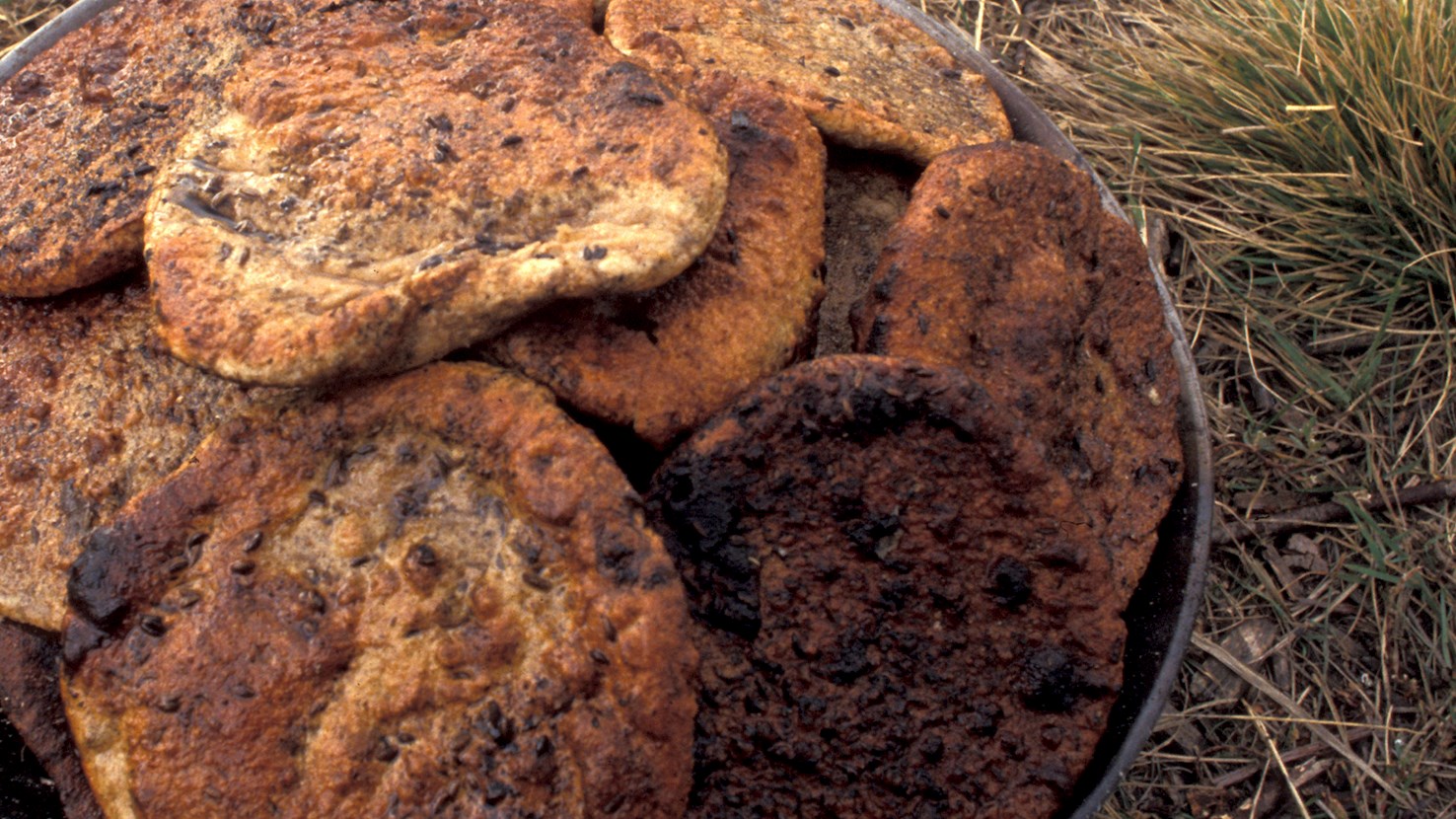
An essential part of every full Scottish breakfast, potato scone - or tattie scone, as they call it in Scotland - is a regional variant of the savory griddle scone made with mashed potatoes, butter, and flour. Even though tattie scones are most often served with fried eggs, porridge, bacon, sliced sausage, or the oat-studded black pudding, they can alternatively be enjoyed with jam and a cup of tea. These breakfast staples are traditionally eaten hot, while the cold ones are usually reheated either by toasting or frying.
Bap is a soft bread roll that’s enjoyed throughout the United Kingdom, but its origins are Scottish. This bread roll is often made with a combination of flour, milk, sugar, salt, yeast, and vegetable oil or butter (or lard). In Scotland, a bap is a favorite morning bread roll. Baps look similar to hamburger buns, and they’re used in a similar manner. The bread roll is ideal for sandwich fillings such as sausages, bacon, or boiled beef. Generally, baps taste the best when buttered or topped with meat. In Scottish pubs, baps are often served with Lincolnshire sausages and caramelized onions. There’s also a popular fish filling – battered and fried mackerel fillets are served in a bap with tartare sauce for a sandwich called mackerel bap, but beware – mackerel is no longer considered sustainable, so decide for yourself if you want to indulge in it or not.
Also known as Aberdeen butteries, butterie rowies, or simply rowies, these small breakfast rolls are a popular choice for starting the day all over Scotland. The rolls feature a decadently high proportion of butter to flour, which makes them particularly flaky and tender. In northeastern Scotland, where these morning rolls enjoy a very special status, it is often said that the honor of a traditional Scottish breakfast goes not to porridge but to "a rou an' a cuppa tea." Butteries are best enjoyed fresh from the bakery, piping hot, and spread with some more butter and marmalade.
This griddle-baked unleavened flatbread hails from the Highlands of Scotland, where it is traditionally made with a single type of grain - whether barley, beremeal, oats, wheat, rye, or even peasemeal - with the addition of water or buttermilk. Bannock made from a mixture of different flours is known as mashlum or meslin bannock. This flatbread was once an essential part of everyday life and various festivities in the Highlands, especially during the celebration of the quarter days, and each variety of bannock was given a different name depending on which of the old Gaelic seasonal festivals it was made for. Prior to the 19th century, bannock bread was baked on a bannock stane - a flat stone placed on embers to be used as a cooking surface. Today, they are mainly made on the griddle, and there are numerous regional variations that diverge from its simple origins: for instance, the Selkirk bannock is more like a lardy, raisin-studded fruitcake, while the Pitcaithly bannock is a rich shortbread with candied fruit peel.
Plain loaf is a traditional bread hailing from Scotland. The bread has a typical dark and hard crust on the top and bottom. On the sides, there is no crust as the bread is baked in batches, and it's later separated, hence the other name for the bread – batch loaf. This type of bread is taller than other traditional bread slices. The crust ends are thicker, and they're called the heels or the ootsiders. In the past, plain loaf was more widely available in stores, but nowadays it has been replaced by the more common pan loaf.
St. Michael’s bannock (or struan Micheil in Scottish Gaelic) is an ancient, profoundly symbolic Scottish flatbread historically baked at the very end of September to celebrate the Feast of St. Michael the Archangel, marking both the conclusion of the harvest season and a crucial moment of spiritual protection before the descent into the harsh Highland winter. It is an incredibly dense, rustic, and complex bake whose every ingredient and preparation step is steeped in centuries of Celtic agrarian folklore and religious ritual. The architecture of the bannock relies on a heavy, unleavened base constructed entirely from the first milled grains of the autumn harvest—typically a rugged blend of bere (an ancient barley), hardy oats, and rough rye flour. Because the feast of Michaelmas (September 29th) was a time of immense celebration and debt settlement, this plain grain base was heavily enriched to reflect the year's agricultural bounty. Historical records from the Hebrides show that the dough was moistened not just with water, but with fresh sheep’s milk, and intensely sweetened with wild honey or molasses. But the true soul of the St. Michael’s bannock lies in the sheer volume of fruit it contains. Before shaping, the dense dough is aggressively packed with wild berries forged from the fading moors—blackberries and wild blueberries—alongside imported dried fruits like raisins and currants, all bound together by a generous splash of warm spices like caraway and cinnamon. The preparation of the St. Michael’s Bannock was traditionally entirely the domain of the eldest daughter of the household. It was baked on a hot griddle stone over a peat fire, and the dough had to be turned exactly on a sheepskin, reflecting the deeply intertwined nature of faith, livestock, and survival in the Scottish Isles. Once baked to a hard, darkened crust with a chewy, fruit-laden interior, the bannock was never simply eaten, but ceremonially broken. The head of the household would cut the massive flatbread into distinct wedges and distribute them to every family member, servant, and even strangers passing by the croft, while chanting a specific blessing to St. Michael, asking for his shield against illness and the winter storms to come.
TasteAtlas food rankings are based on the ratings of the TasteAtlas audience, with a series of mechanisms that recognize real users and that ignore bot,
nationalist or local patriotic ratings, and give additional value to the ratings of users that the system recognizes as knowledgeable.
For the “Top 6 Scottish Breads” list until May 15, 2026, 114 ratings were recorded, of which 93 were recognized by the system as legitimate.
TasteAtlas Rankings should not be seen as the final global conclusion about food. Their purpose is to promote excellent local foods,
instill pride in traditional dishes, and arouse curiosity about dishes you haven’t tried.