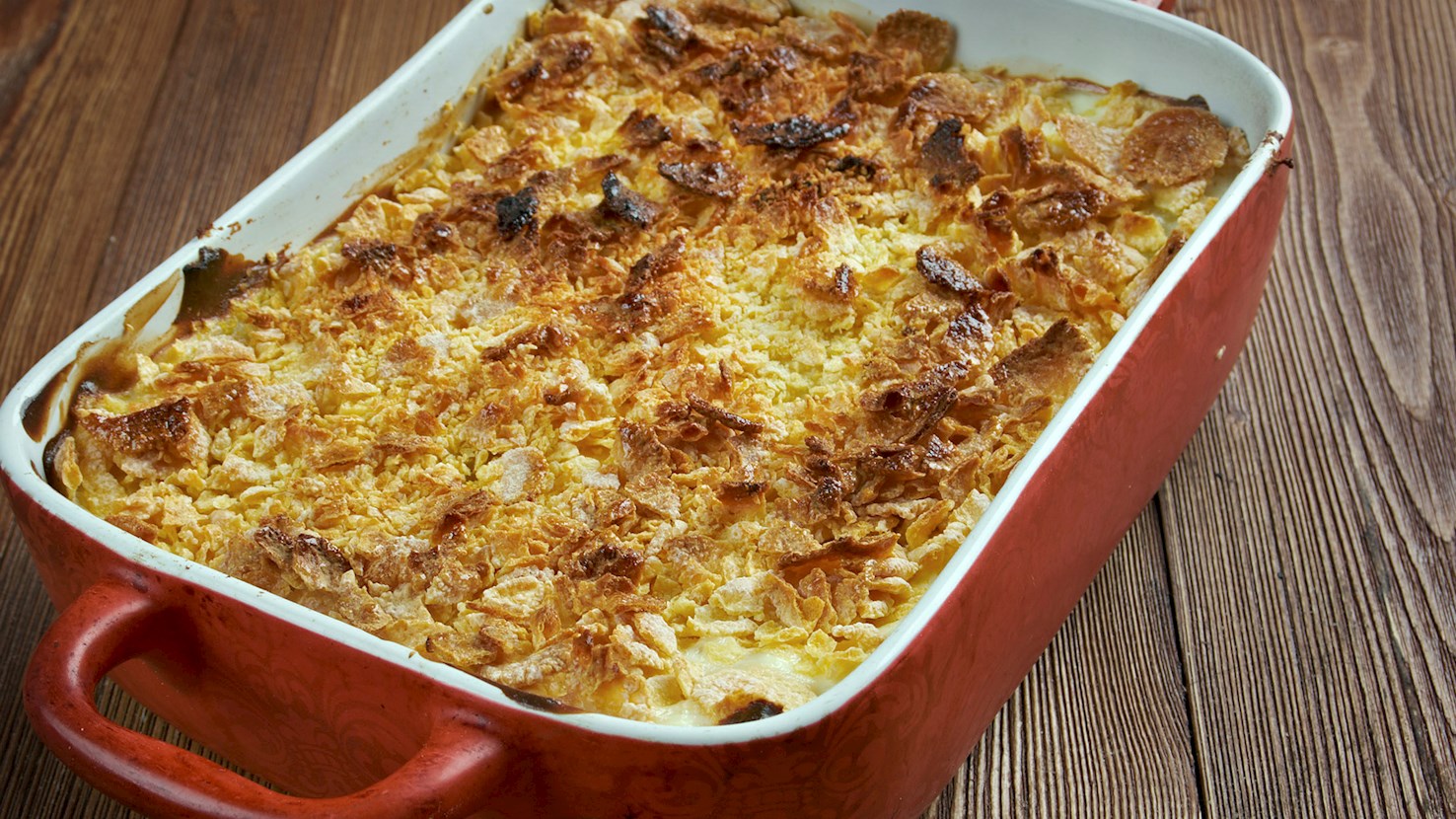
Contrary to its name, funeral potatoes are the ultimate comfort food, a cheesy au gratin potato casserole that is synonymous with the state of Utah and The Church of Jesus Christ of Latter-Day Saints. It consists of cubed potatoes, cheese, onions, cream soup or sauce, sour cream, and a topping of butter and cornflakes or crushed potato chips. The dish is commonly prepared by the members of the Church to comfort grieving relatives after a loved one's funeral, so it is not just an ordinary dish, but also a sign of care, love, and compassion. Although funeral potatoes started as a dish intended for funerals, today it is a common side dish that can be served at any time. It is best accompanied by ham, pastry rolls, and salads with ranch dressing.
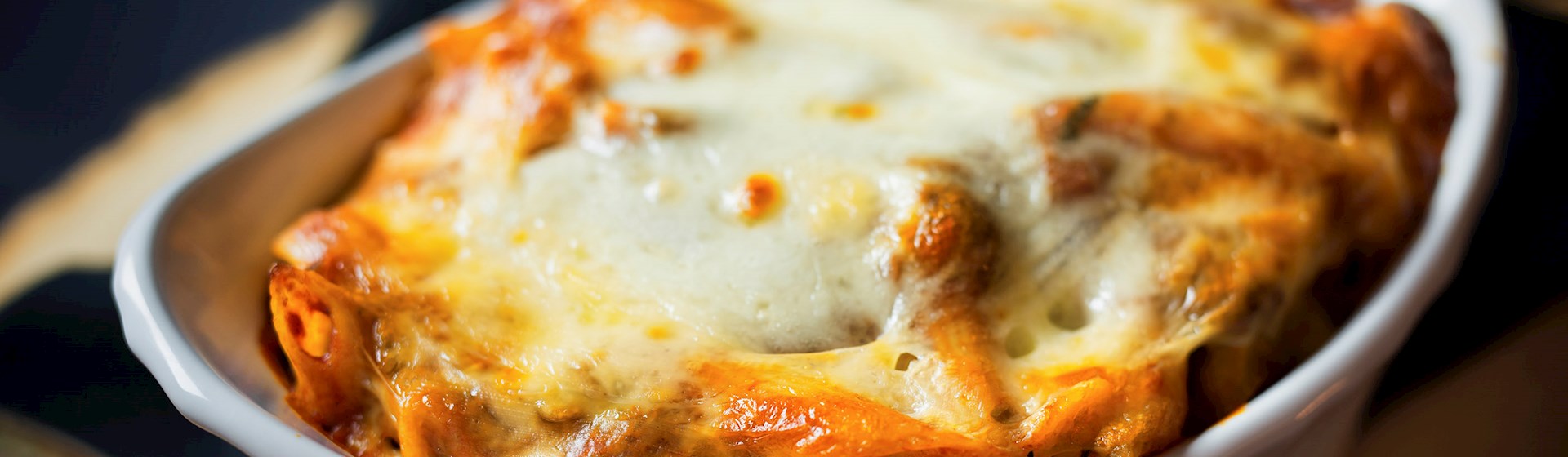
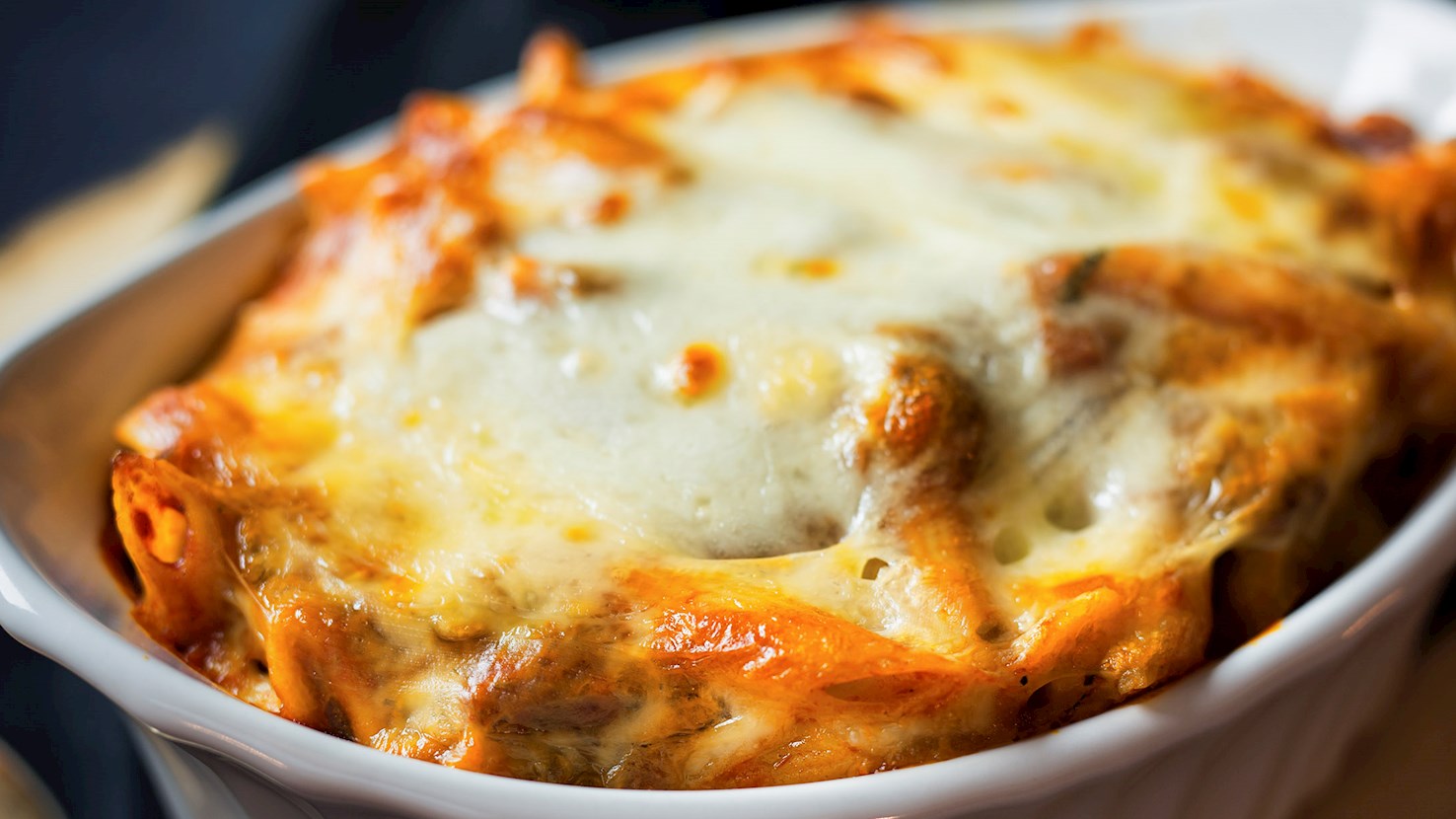
Baked ziti is a casserole-type dish consisting of tubular pasta called ziti that is baked with a variety of other ingredients, mostly chunky sauces, cheese, meat, and vegetables such as mushrooms, peppers, and onions. The dish is considered a hybrid of Italian and American cuisines, basically an Americanized variety of a typical Italian dish, pasta al forno, which is commonly compared to baked ziti. The casserole is often served as a casual appetizer, cut into big slices, and it is best accompanied by a bowl of green salad. However, it can also be served as a meal on its own, making it a great comfort food for a rainy afternoon. Interestingly, the dish was especially popularized when it appeared in an episode of the hit TV show TheSopranos as one of the favorite dishes of Tony Soprano's wife, Carmela.
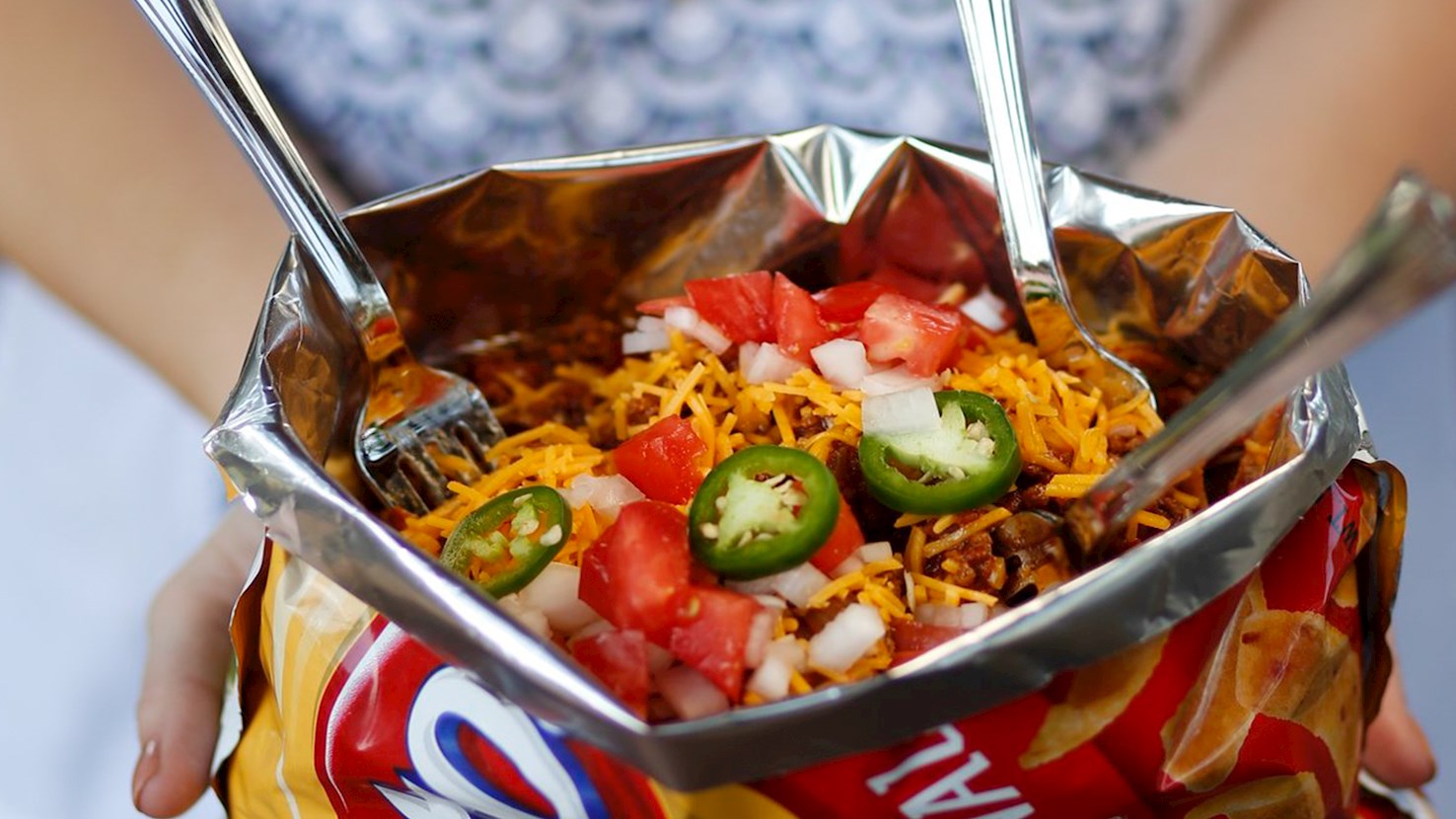
Frito pie is a cheap, hearty, and highly caloric dish consisting of chili, crunchy corn chips (especially the Fritos brand variety), cheese, and onions. It is a popular meal in Southern and Midwestern parts of the United States, and can be found at numerous state fairs and high school football games. Although it can be made in a casserole dish, unusually, it is most often prepared in a Fritos corn chip bag, with a number of toppings. The origins of the dish are yet unclear, but it is believed that it was invented in Mexico as a popular food at fiestas before it spread to the United States. Today, New Mexico and Texas both claim that Frito pie is their invention, always served cold and soggy. In his CNN show Parts Unknown, Anthony Bourdain scathingly described New Mexico's version of Frito pie as "warm crap in a bag" and "colostomy pie", so it is probably best to try the Texas-made version if presented with that kind of gastronomical dilemma.
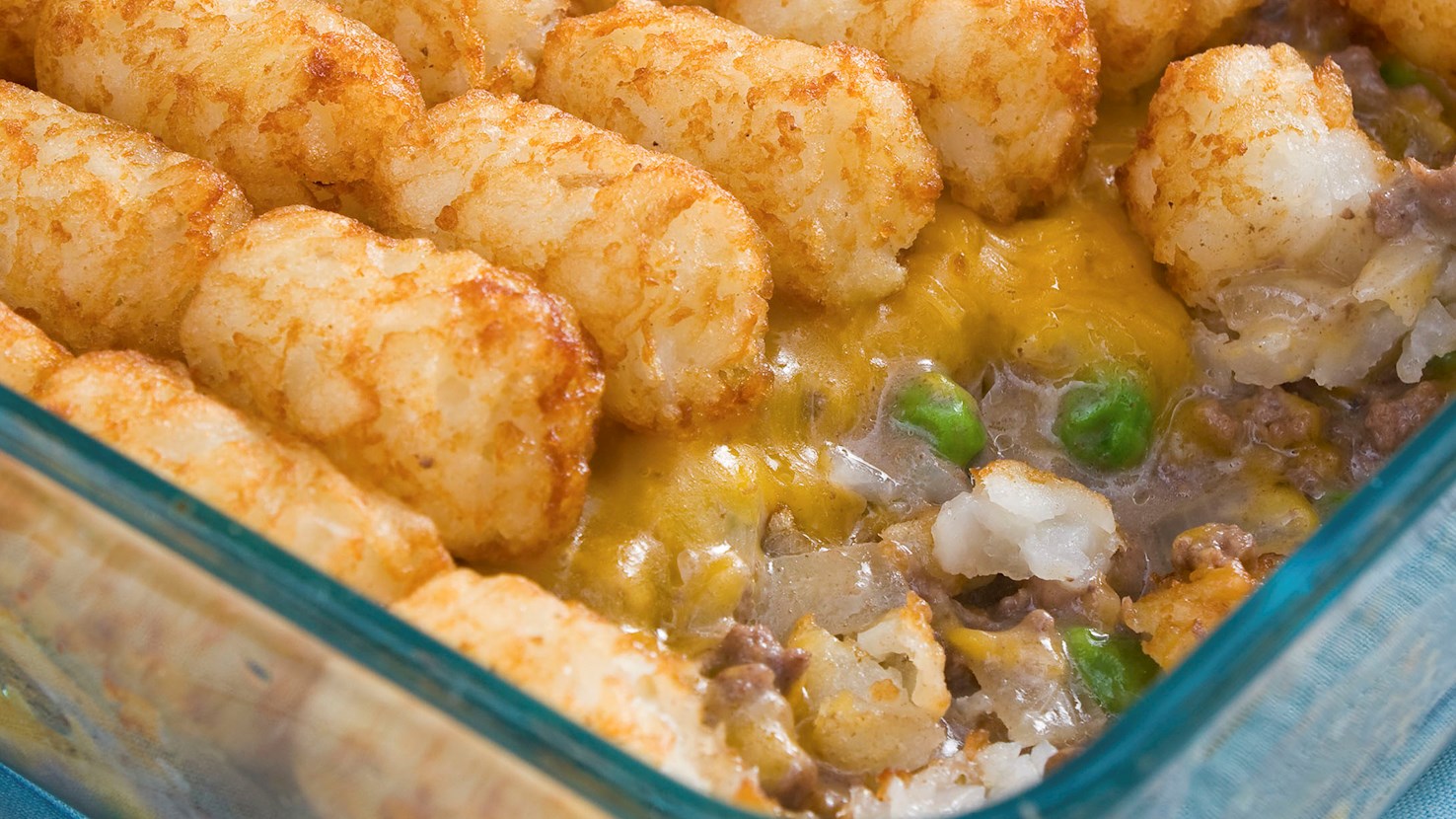
Hotdish is a Midwestern food icon that is especially popular in the states of Minnesota and North Dakota. Any casserole served hot in a single dish can be called hotdish, and it usually consists of starches such as potatoes or pasta, meat (often ground beef), vegetables, and canned soup (typically cream of mushroom soup). The first recipe is found in the 1930s Grace Lutheran Ladies Aid Cookbook, but in 1934, Campbell company mixes things up with their canned soups which became the base for most hotdish varieties. The dish originated from the Midwestern farmers who needed to feed their large families, while another theory suggests that it originates from the Norwegian word varmrett, meaning warm dish, due to the fact that there are many Norwegians living in the region. Since 1956, which marks the invention of commercial tater tots (grated fried potatoes), a large number of Midwestern cooks started to top their hotdishes with crispy fried tater tots, and the dish is then called tater tot casserole or tater tot hotdish. Traditionally, this comfort food dish is served as a main course and it often appears at big family reunions and church suppers.
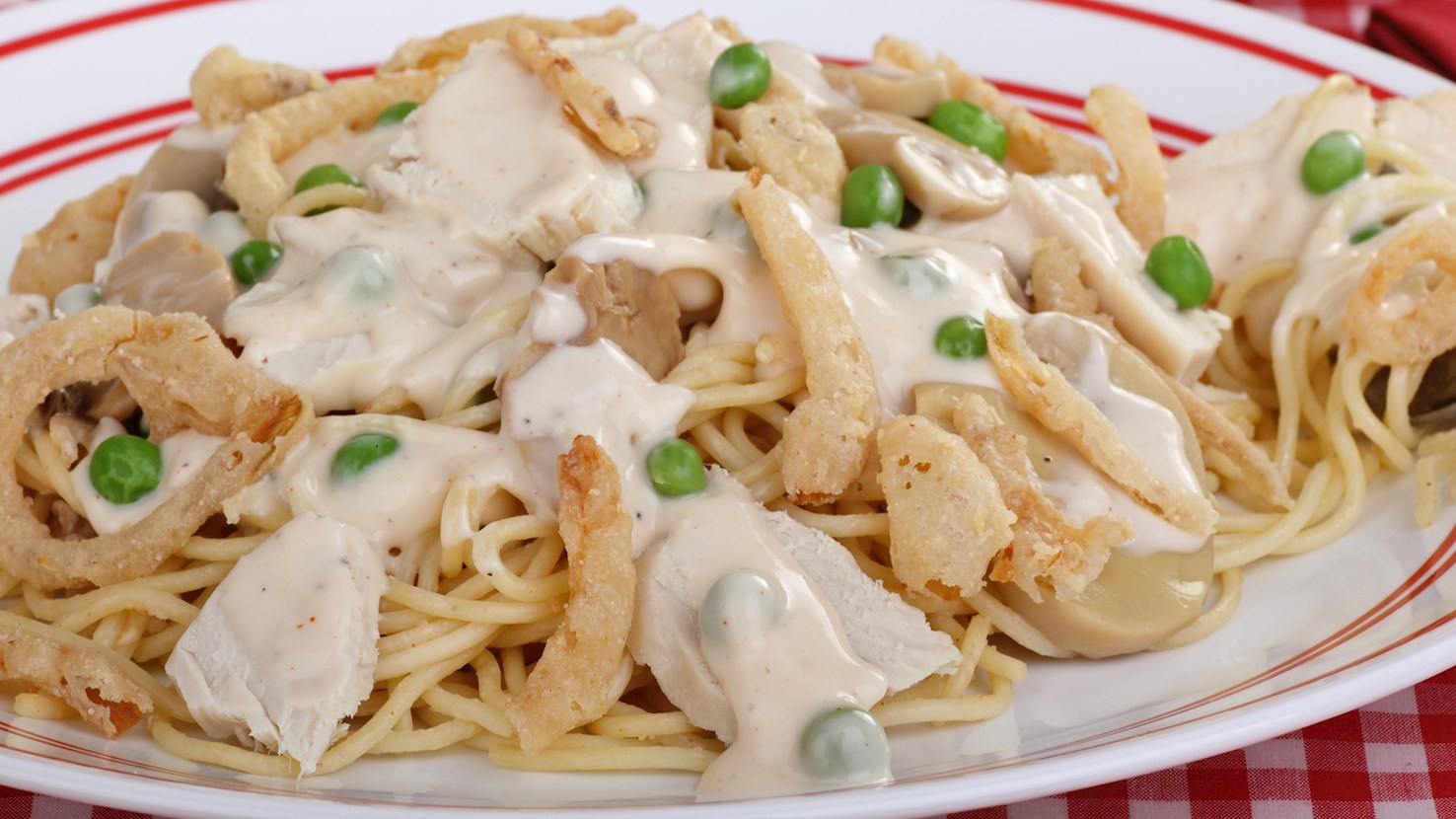
Tetrazzini is a baked pasta casserole that combines diced poultry or seafood with sliced mushrooms in a rich, buttery Parmesan-and-sherry cream sauce. The steaming meal arrives at the table bubbling hot, directly from a large glass or ceramic baking dish. Portions are scooped onto flat plates with a large serving spoon and are universally accompanied by garlic bread to soak up the heavy cream and a highly acidic green salad to cut through the intense dairy fat. The recipe starts by boiling the dried pasta until it is still slightly firm. Concurrently, sliced white button or cremini mushrooms are deeply browned in butter alongside diced white onions and celery. A thick roux is formed by whisking flour into the melted butter, followed by a heavy pour of chicken stock, whole milk, or heavy cream, and a mandatory splash of dry sherry wine to introduce a sharp, nutty undertone. Freshly grated Parmesan cheese melts directly into this simmering liquid. Chopped, pre-cooked meat—most frequently roasted chicken breast—is folded into the creamy sauce along with the drained pasta. This entire mixture fills a greased casserole pan, receives a heavy coating of extra cheese, toasted slivered almonds, or crunchy panko breadcrumbs, and bakes inside a hot oven until the top crust turns a deep golden brown and the edges bubble vigorously. Although chicken tetrazzini is the most famous variety, there are other versions of the dish that use different cheeses, nuts, or other key ingredients. Turkey tetrazzini is an incredibly popular post-holiday meal, using leftover roasted turkey in late November. Tuna and canned salmon frequently replace poultry to create a pescatarian alternative, while high-end restaurant variations incorporate expensive shrimp, scallops, and fresh crab. Short, wide egg noodles or twisted fusilli often replace the long spaghetti strands to hold the thick cream more effectively. Many food historians claim that tetrazzini was invented in San Francisco by Ernest Arbogast, a chef at the Palace Hotel, who created the dish in honor of Luisa Tetrazzini, a popular opera singer in the early 20th century who stayed at the hotel.
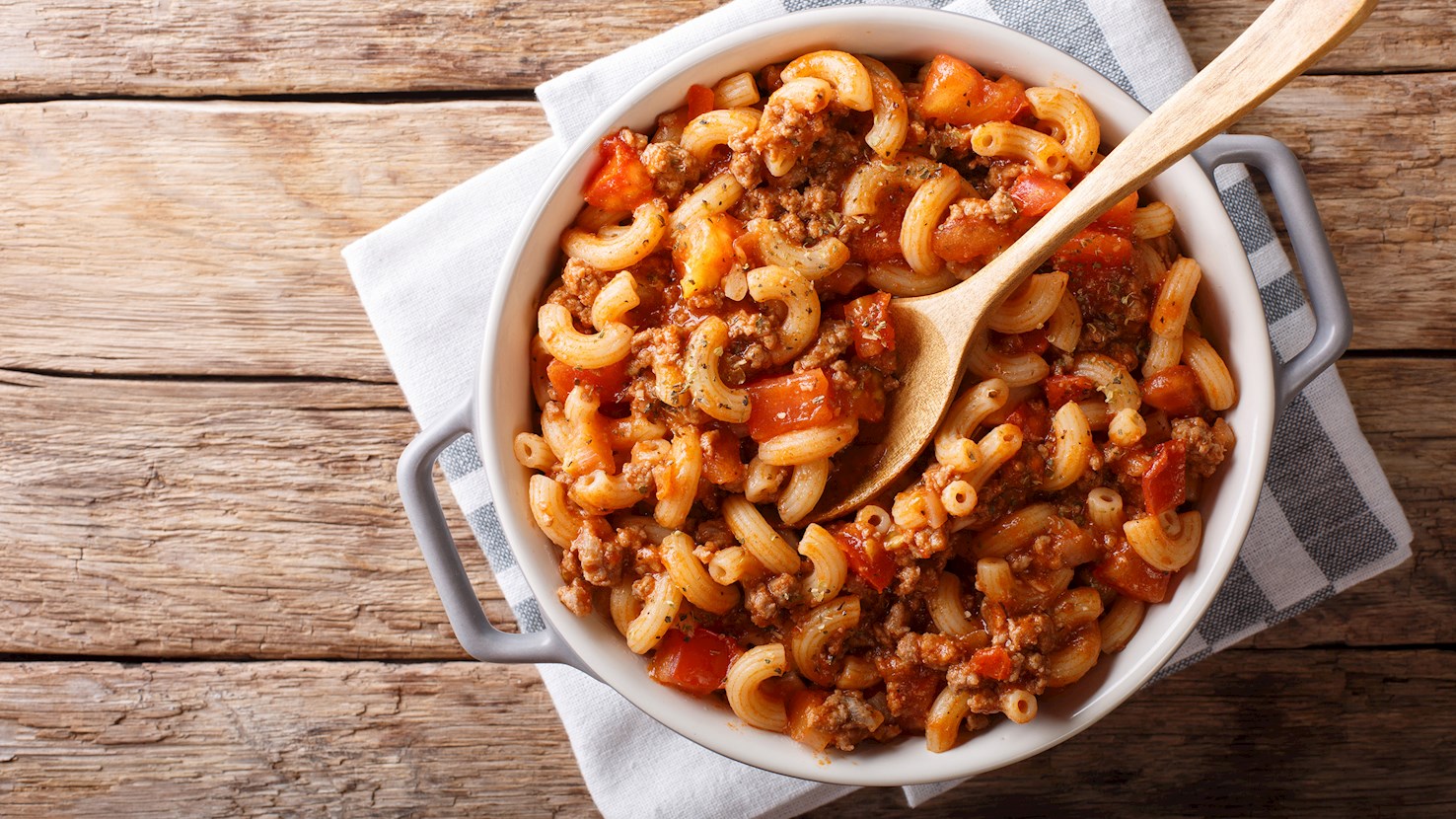
American chop suey is a savory combination of baked pasta, ground beef, and tomato sauce. It's believed that this comfort food dish originates from New England, although many other states had similar recipes before the 1950s. It can be prepared stovetop in a pot or baked as a casserole. Most people like to add grated cheese to the combination, making the dish perfect for cold winter days. Variations abound throughout the country, but elbow macaroni or other tubular pasta shapes are the most common, while ingredients such as Worcestershire sauce, onions, and garlic are included in most recipes. When the cheese melts and the sauce is bubbling, this New Englander comfort food staple is ready to be served.
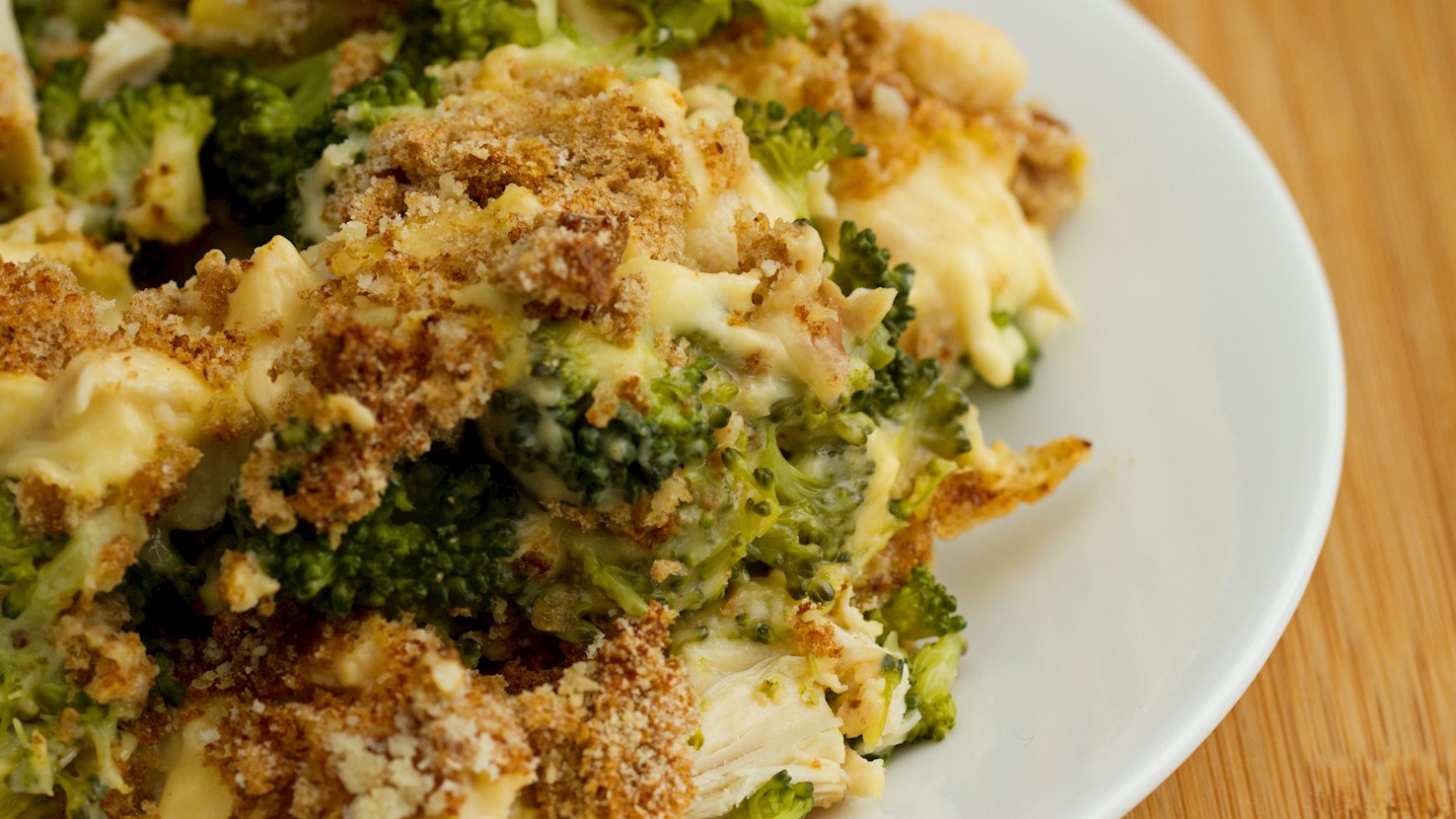
Chicken divan is a rich casserole made with chicken pieces, almonds, broccoli, and Mornay or hollandaise sauce. In the 1950s, it was the signature dish of a New York restaurant called the Divan Parisienne, hence the name. The inventor of the dish is a chef named Anthony Lagasi, who received an award from the New York Chatham Hotel for his creation. The dish might be additionally enriched with ingredients such as cheese, white wine, mushrooms, or water chestnuts, and it is recommended to serve it with bread and salads on the side.
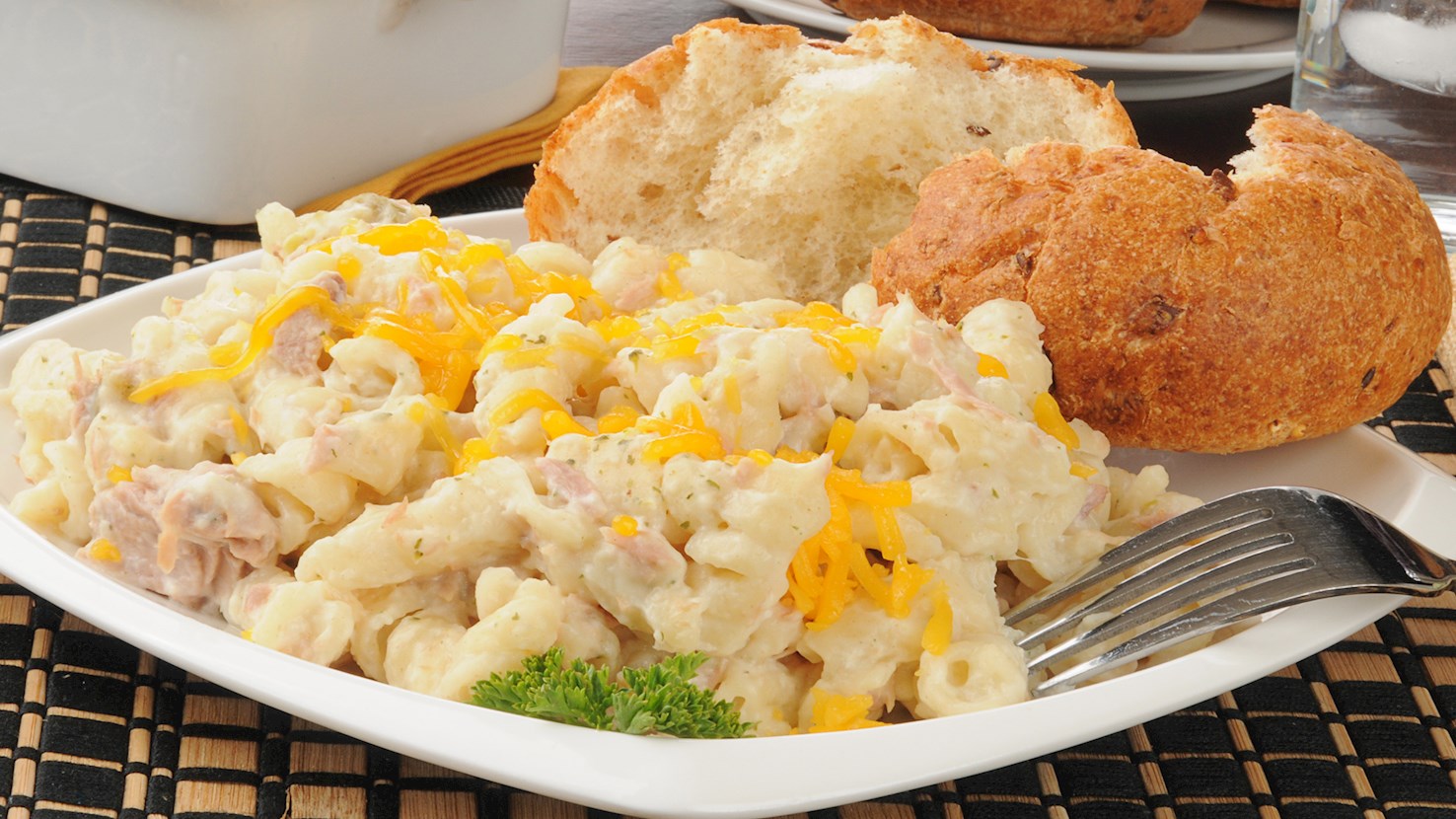
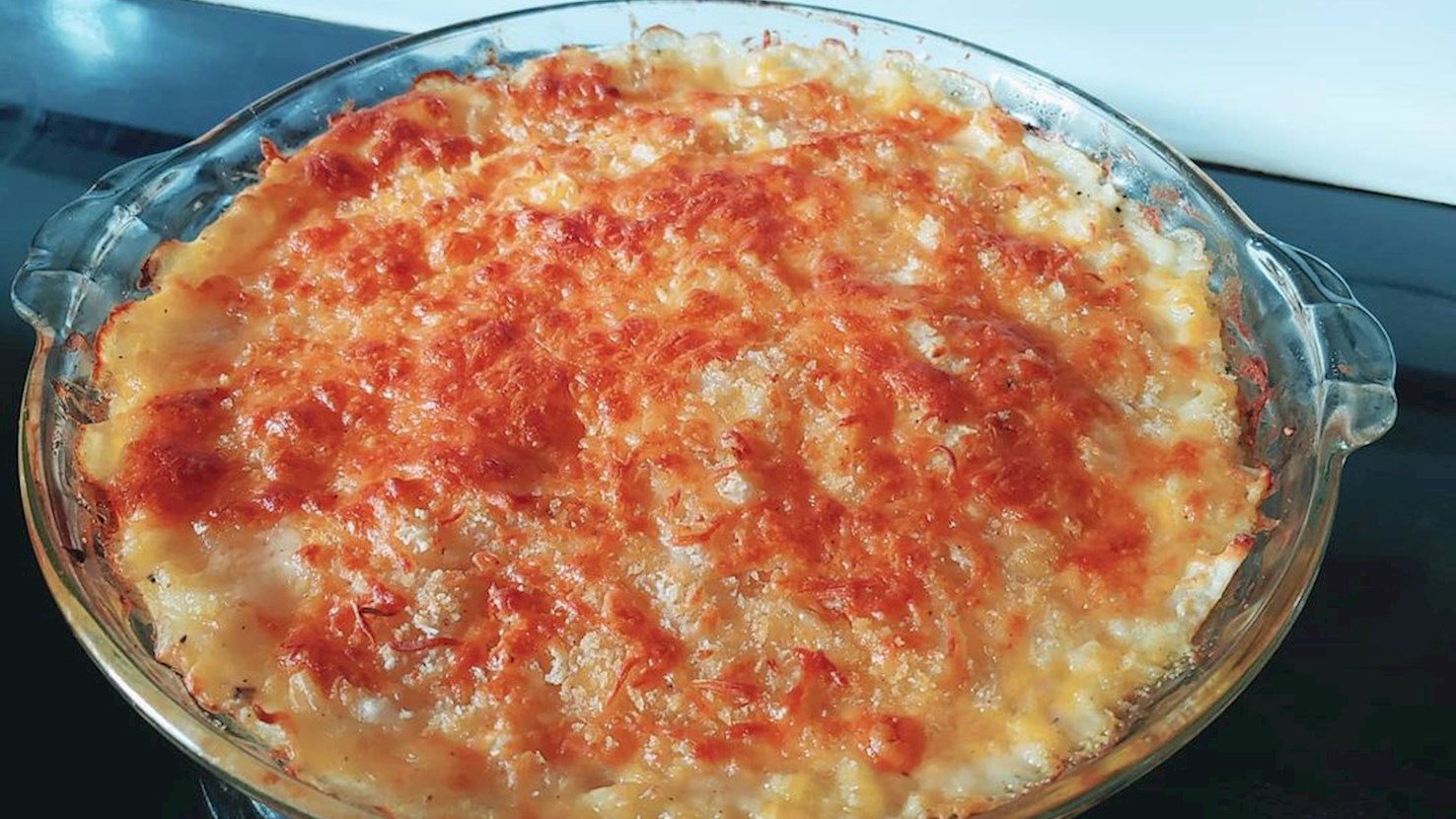
Tuna casserole is a hot baked main course made by combining canned tuna, boiled egg noodles, and green peas with a thick cream-based sauce, then covering everything with a crisp topping. Its specific origins are tied to the Pacific Northwest of the United States, where early printed recipes appeared in regional publications such as Sunset Magazine in 1930. The meal became widely popular in the 1950s because of the commercial food industry and because the ingredients were affordable, and the casserole could easily feed a whole family in about 30 minutes. The Campbell Soup Company heavily promoted recipes using its condensed Cream of Mushroom soup, introduced in 1934, as a quick, inexpensive binder for canned fish. Tuna casserole starts with boiling wide egg noodles until they are just tender, then draining them completely. Canned tuna packed in water or oil is drained and broken into flakes with a fork. The cooked noodles, flaked tuna, and a handful of frozen green peas are placed in a wide glass or ceramic baking dish. Condensed cream of mushroom soup, thinned slightly with whole milk, is folded into the dry ingredients to bind everything together. A thick layer of crushed potato chips is scattered across the entire surface. The casserole is then baked in a hot oven until the liquid inside bubbles vigorously, and the starchy topping turns deep golden brown. Ingredient substitutions often change the texture and flavor of the casserole. In a sharp cheddar cheese version, grated cheese is melted directly into the warm soup before baking. Many kitchens replace the potato chips with crushed butter crackers, toasted breadcrumbs, or canned fried onions for a sturdier crunch, or forgo the noodles in favor of rice. A scratch-made version skips the canned soup entirely and uses a classic butter-and-flour roux, mixed with whole milk and fresh, chopped mushrooms, to create the creamy binder. Other common additions include diced celery or chopped red pimentos, which add a sharper vegetable crunch to the filling. The casserole is served steaming hot in the same baking dish in which it was cooked. A large metal spoon is used to scoop the dense mixture of noodles, sauce, tuna, and topping onto individual plates. Because the dish is rich with cream sauce and starchy pasta, it is often paired with a sharply acidic side, usually a cold iceberg lettuce salad heavily dressed with vinegar, to cut through the heaviness of the fats. Tuna casserole can also be frozen and prepared later, making it a great convenience food and a potluck staple.
Delmonico potatoes is a traditional dish originating from New York City, where it was created around 1830 at Delmonico's Restaurant. The dish is made with a combination of potatoes, heavy cream, whole milk, nutmeg, salt, white pepper, and parmesan cheese. The potatoes are washed, cut into quarters lengthwise, and boiled in water for 10 minutes. They are placed into cold water and left to cool for half an hour before they're grated into long strips. The milk, cream, nutmeg, salt, and white pepper are placed in a pan over medium heat, then mixed with the potatoes and cooked for about 10 minutes. A tablespoon of grated parmesan is added to the mixture, which is placed in a buttered baking dish. The top is sprinkled with the rest of the cheese and the dish is baked until lightly browned.
Potato kugel is a baked casserole originating from the Ashkenazi Jewish communities of Eastern Europe. It consists of finely grated or shredded potatoes mixed with onions, eggs, and a fat source such as oil or rendered poultry fat. The mixture is seasoned with salt and baked until the exterior sets into a browned crust. The interior remains dense, moist, and cohesive, yielding a balance between crisp edges and a soft center with a deeply savory, potato-forward flavor. The dish developed as part of Jewish home cooking, shaped significantly by Sabbath and holiday rhythms. Foods that could be prepared in advance and reheated without a loss of quality were highly favored in this culinary tradition. Furthermore, inexpensive and widely available ingredients like potatoes provided necessary sustenance and structure. The dish became firmly established and standardized in the United States following Jewish immigration, particularly from the late nineteenth century onward. Preparation centers on grating potatoes and onions finely and squeezing out excess liquid. These ingredients are then combined with eggs and fat to bind the mixture. After simple seasoning, the kugel is baked in a well-greased pan at a steady heat. This process allows the starch to set gradually and the surface to brown evenly without drying out the interior. Potato kugel is eaten hot as a side dish. It is most often served with roasted meats, poultry, or stews. It frequently appears at Sabbath meals and festive gatherings, where it is paired with gravies or braised dishes.
TasteAtlas food rankings are based on the ratings of the TasteAtlas audience, with a series of mechanisms that recognize real users and that ignore bot,
nationalist or local patriotic ratings, and give additional value to the ratings of users that the system recognizes as knowledgeable.
TasteAtlas Rankings should not be seen as the final global conclusion about food. Their purpose is to promote excellent local foods,
instill pride in traditional dishes, and arouse curiosity about dishes you haven’t tried.




What People Say