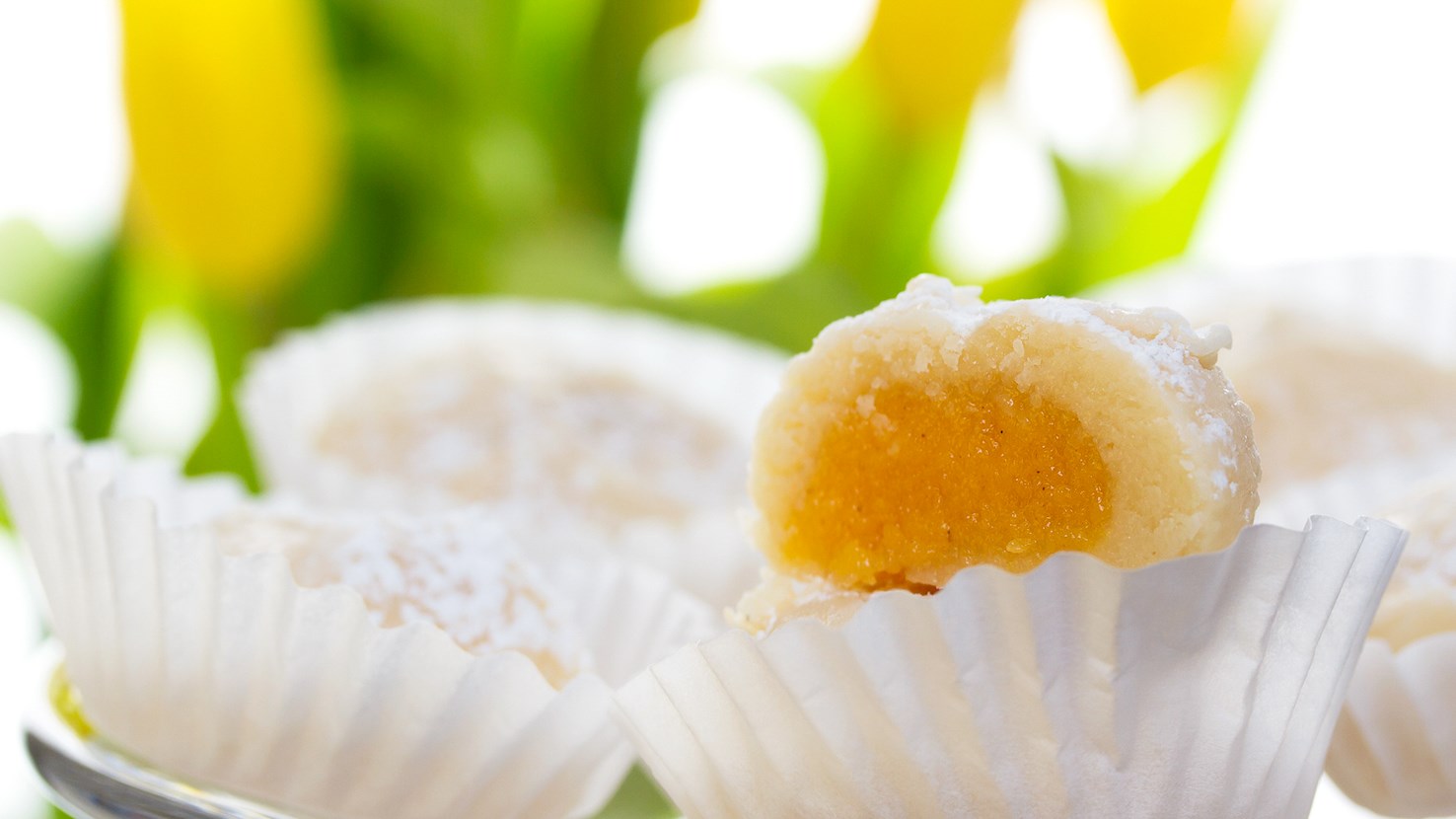
These sugar-coated Portuguese treats consist of an almond shell and a creamy egg-based filling. The shell combines ground almonds and egg whites, while the center is made with traditional Portuguese doce de ovos - a smooth, rich custard consisting of egg yolks and sugar. The name of these delectable desserts roughly translates as small almond cheeses, due to their cylindrical forms and white shells that make them visually similar to cheese wheels. Queijinhos de amêndoa are mainly enjoyed in the region of Algarve.
Dom Rodrigo is a rich almond-and-egg confection from the Algarve, particularly associated with Lagos, made by combining fios de ovos with a soft mixture of ovos moles, ground almonds, sugar syrup, and cinnamon, then lightly toasting the assembled sweet in the same syrup used to cook the egg threads. The finished piece is golden to deep amber, slightly caramelized on the outside, soft and dense within, and usually wrapped in parchment and brightly colored metallic paper, often gathered into a small pyramid or parcel. Eggs appear in two distinct forms: the yolk-based ovos moles create the creamy center, while fios de ovos—very fine strands made by passing beaten yolks into hot sugar syrup—form the delicate outer structure. Almonds give the filling more body and connect Dom Rodrigo closely with the confectionery of the Algarve, where almonds are used extensively in sweets. Portuguese product documentation associates the recipe behind the present form with the Convento de Nossa Senhora do Carmo in Lagos and records that it passed into the hands of a local family during the 19th century. The same documentation links its name with D. Rodrigo de Menezes, governor and captain-general of the Algarve, although the surviving accounts do not provide enough evidence to reconstruct every detail of that connection with certainty. By the 20th century, Dom Rodrigo had become firmly established in Lagos confectionery; commercial production in the city is documented from the 1930s, when specialized regional sweet shops began selling it more widely. Its preparation requires several separate stages. Sugar and water are first cooked into syrup, and part of this is used to make the fios de ovos by dripping egg yolk through a fine funnel or specialized utensil into the hot liquid, where the strands set almost immediately. Ovos moles are prepared separately from egg yolks and sugar syrup, then combined with finely ground or chopped almonds and cinnamon to produce a rich filling. Portions of this mixture are surrounded with fios de ovos and shaped into compact balls or loose nests. The assembled sweets are then returned briefly to a frying pan with syrup and heated until the exterior develops a lightly toasted, caramelized surface. This final browning is an important feature of Dom Rodrigo do Algarve: the sweet is toasted directly in its cooking syrup rather than simply coated with commercial caramel. The process creates several textures in a very small portion—the soft almond-and-yolk center, fine strands of egg on the outside, and slightly firmer caramelized areas produced during the final heating. Cinnamon is used sparingly, providing warmth without becoming the dominant flavor, while the almond balances the intense sweetness of the eggs and syrup. Dom Rodrigo can also be served in small porcelain or glass bowls and eaten with a spoon, but the individually wrapped version has become its most recognizable form. The metallic wrapping is practical as well as decorative, protecting a confection that remains sticky and delicate while giving each portion the appearance of a small parcel. It is eaten throughout the Algarve as a pastry-shop sweet, dessert, or accompaniment to coffee and is especially easy to find in Lagos and other towns with strong regional confectionery traditions. Because Dom Rodrigo is intensely sweet and rich in egg yolk, almond, and syrup, it is usually served in small portions and needs little beside it. Espresso or unsweetened coffee provides one of the simplest pairings, while black tea also works well by providing bitterness without introducing additional sweetness. With wine, a small glass of dry or moderately sweet fortified wine can accompany it, although highly sweet wines can make the combination excessive. Fresh citrus fruit or a simple fruit course can provide a sharper contrast when Dom Rodrigo forms part of a larger dessert table. What sets it apart from many other egg-based Portuguese sweets is the combination of three distinct techniques in a single piece: ovos moles form the center, fios de ovos surround it, and the entire sweet is finished by lightly toasting it in sugar syrup.
Although custard flans are enjoyed throughout Portugal, this orange-flavored version is traditionally associated with Algarve – the southernmost Portuguese region famous for their oranges. This simple dessert consists of a smooth egg-based custard that is enriched with orange juice and orange zest. It is typically baked in round tins, then enjoyed well-chilled. Similar varieties are also popular in Brazil.
Doce fino is a traditional sweet from the Algarve region made with almond paste, sugar, and egg yolks. The sweet is often shaped into a variety of forms, such as fruits, animals, or flowers, and then brightly painted with food coloring to look like the real thing. The artistic presentation of these sweets is a significant part of the tradition, and they're often made to look very realistic and intricate. The flavor of doce fino is sweet and almondy, and the texture is typically soft and slightly chewy. The use of almonds in this and other traditional Algarve sweets is influenced by the region's history, as almond trees are plentiful in the Algarve and were widely used in the local cuisine during the period of Moorish rule. Doce fino is particularly popular during holidays and special occasions, such as weddings and religious festivals. They're often presented as gifts or used as decorative elements on the dessert table.
This light Portuguese sponge cake is prepared with fig-leaf squash, which is locally known as chila or gila. The cake combines already prepared squash jam or raw mashed squash with eggs, cocoa, and ground almonds, and the whole dish can be flavored with cinnamon or orange juice. This moist and flavorful cake is traditionally associated with the region of Algarve and is often decorated with a light dusting of powdered sugar or fios de ovos - traditional confectionary consisting of thin egg threads.
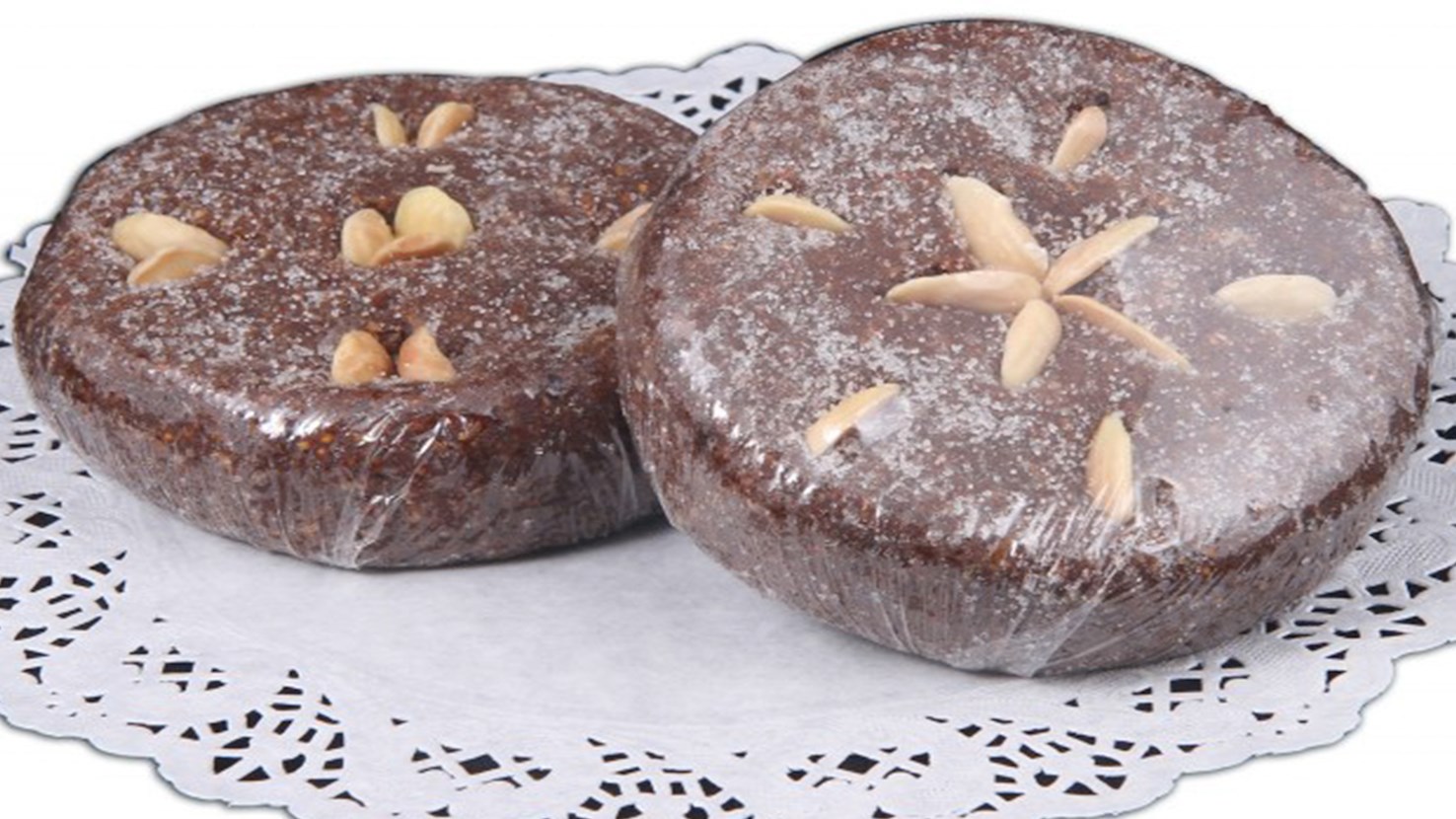
Queijo de figo is a local Algarve specialty that is prepared with dry figs and almonds as the two basic ingredients. Traditionally, sliced figs and almonds were layered into a mold and drizzled with brandy. The combination would then be pressed and stored until the ingredients were combined into a firm cake. Optionally, ground figs and almonds can be mixed with syrup in order to create a compact mixture that is then pressed into a mold. Although these fig cakes are traditionally round, they can be formed into other shapes, but their unusual name, which translates as fig cheese, stems from the classic round form that is reminiscent of a cheese wheel.
Beijinhos de amêndo is a traditional dessert originating from Algarve. These little ''almond kisses'' are made with a simple combination of sugar, almonds, and egg yolks. The sugar is boiled in water, then mixed with the almonds and cooked over low heat. Once warmed, beaten egg yolks are added to the combination. The mixture is stirred constantly until the mass becomes slightly dry. It is rolled into little balls with one's fingers that have been greased with butter. The dessert is then baked until lightly browned, and a piece of almond is stuck on top of each small cake. The beijinhos are then cooled and served in paper molds. If desired, lemon peel can be added for extra flavor.
Hailing from Algarve, this traditional cake combines ground almonds, eggs, butter, and chila jam, which is prepared with fig-leaf squash that is locally known as chila or gila. The cake comes in many varieties which can be spiced with cinnamon or enriched with citrus zest or citrus juice, while the version from Tavira incorporates various candied fruits. Bolo mimosa is usually served well chilled and dusted with sugar, while typical decorations include fios de ovos (egg threads), candied fruit, or almonds.
Morgado de Silves is a traditional cake from Silves in the Faro district in the Algarve region, known for its intricate preparation and rich flavors. It is made with a dough of finely ground almonds, sugar, eggs, and water, filled with layers of gila jam (made from gila pumpkin), egg jam, and egg strands. The cake is shaped like a round, usually 22 cm in diameter and 6 to 7 cm in height. Once baked, it is covered in royal icing, decorated with almond flowers or fruits, and sometimes adorned with silver pearls and tissue paper. It is a symbol of regional craftsmanship and culinary heritage.
Morgado de figo is a traditional dessert from the Algarve region of Portugal, made with a dough of roasted figs, toasted almonds, sugar, and chocolate powder, often flavored with fennel, lemon zest, and cinnamon. It is typically shaped like a small cheese wheel or molded into various forms such as boats, fish, or books. This dark, dense treat has a rich, sweet flavor and is enjoyed as a delicacy throughout the day. Its origins are linked to the abundant fig production in the region.
TasteAtlas food rankings are based on the ratings of the TasteAtlas audience, with a series of mechanisms that recognize real users and that ignore bot,
nationalist or local patriotic ratings, and give additional value to the ratings of users that the system recognizes as knowledgeable.
TasteAtlas Rankings should not be seen as the final global conclusion about food. Their purpose is to promote excellent local foods,
instill pride in traditional dishes, and arouse curiosity about dishes you haven’t tried.








What People Say