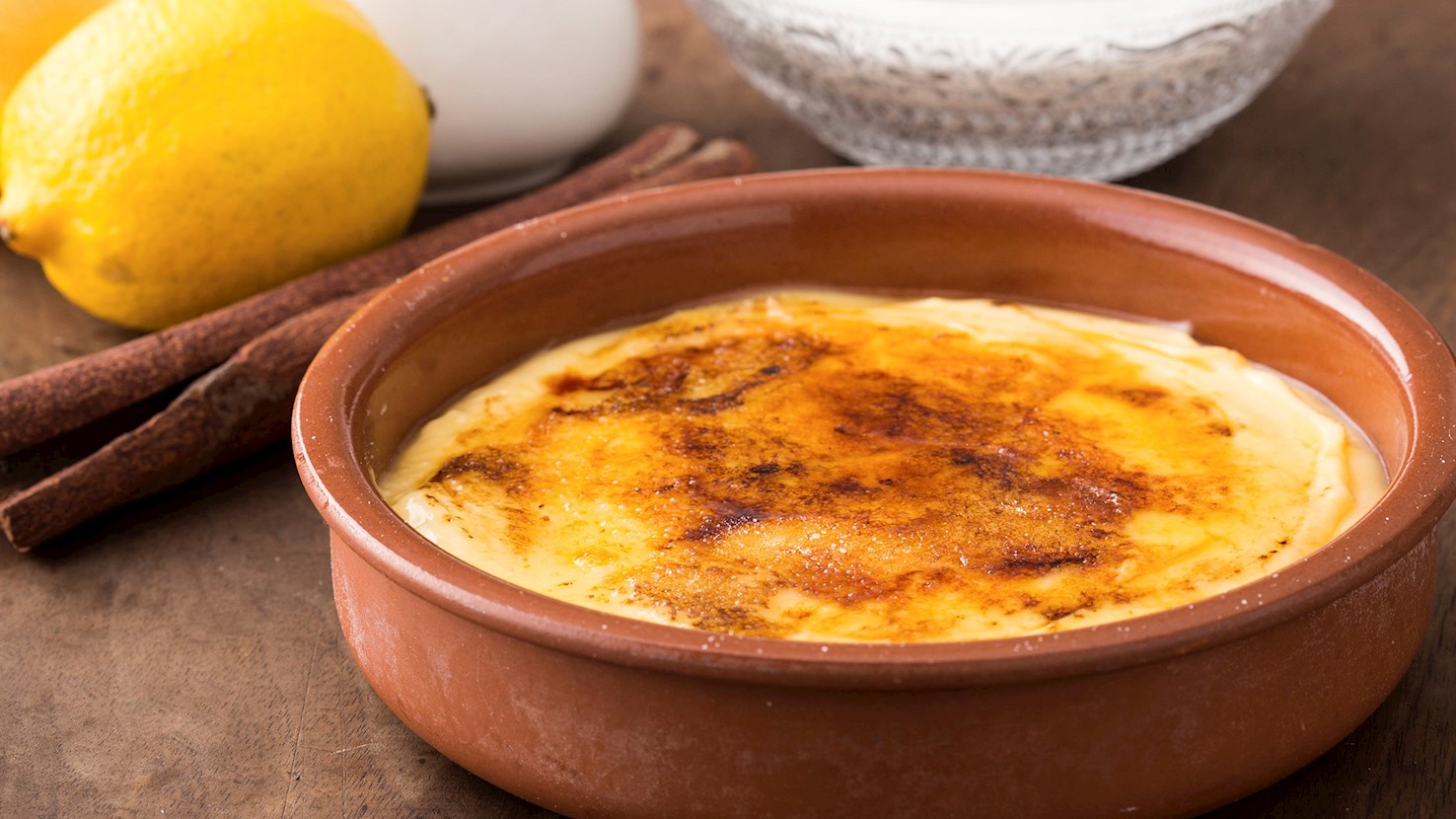
Crema Catalana is a popular Spanish dessert made by baking a custard consisting of milk, cornstarch, and eggs in an oven. After baking and cooling, the dessert is sprinkled with sugar and broiled or burnt with a torch to create a crispy, burnt caramel top layer. Sometimes, crema Catalana may be flavored with cinnamon, lemon, or orange zest. The dessert is also known as Crema de Sant Josep, since it is traditionally prepared on March 19, celebrating the saint. It is also the oldest European custard dessert, dating back to the 14th century. Crema Catalana has such a distinctive flavor that it is often used in the preparation of other desserts such as ice cream and torró, a nougat-like sweet.
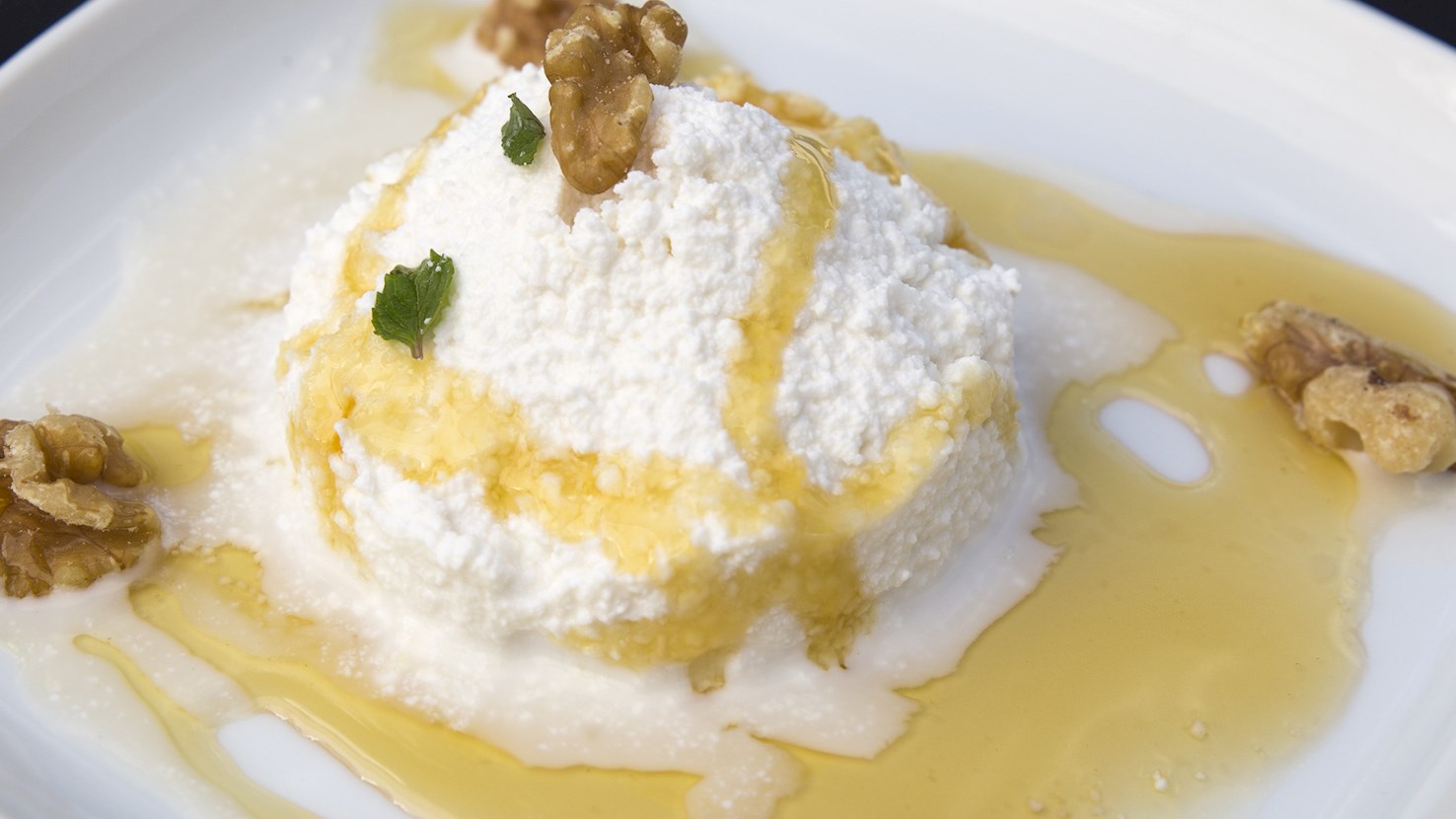
In its basic form, this traditional Catalan dessert is a simple combination of honey and mató (also known as brossat or brull)—a subtly sweet fresh cheese that is made from goat, sheep, or cow milk. The dish is assembled by placing a piece of mató and then generously drizzling it with honey. A common homemade dessert as well as a regular restaurant dish, mel i mató is easily modified with the addition of nuts, jams, and dry or fresh fruit.
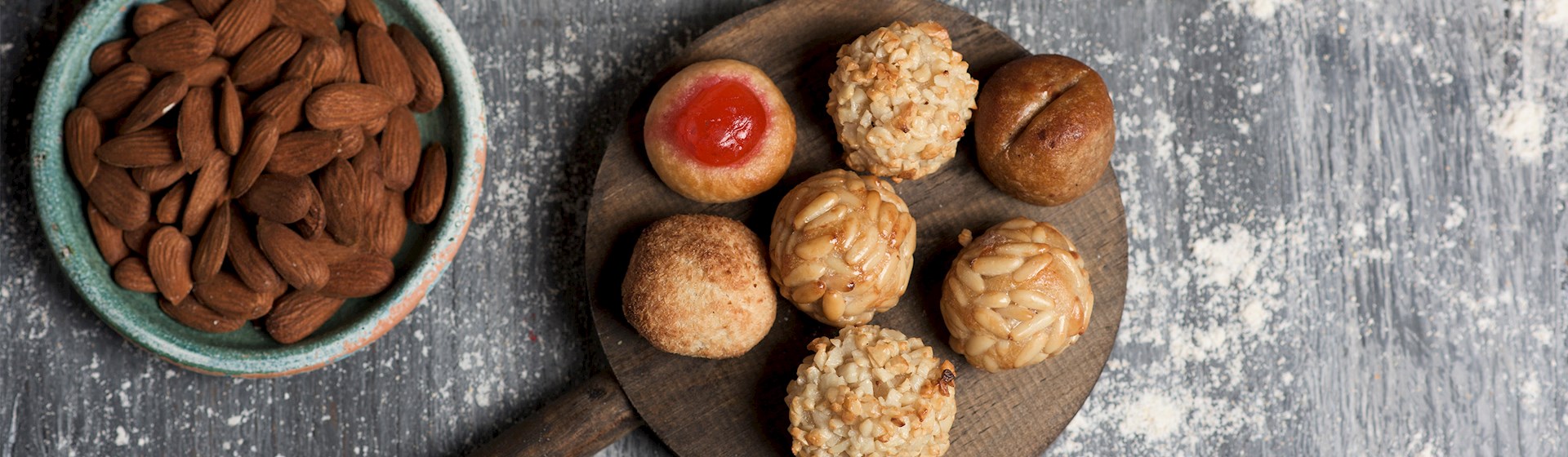
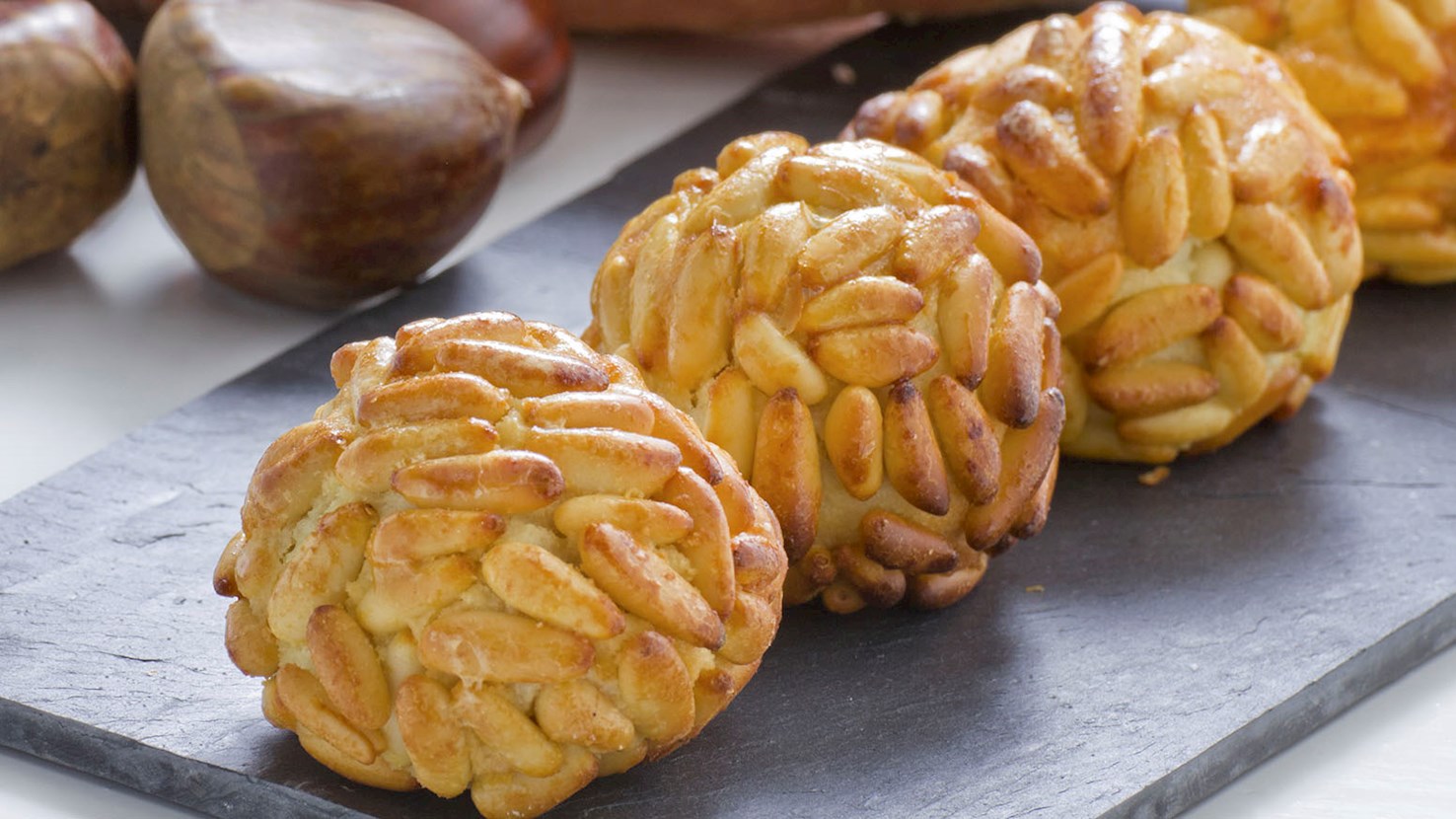
Panellets are small marzipan sweets that that come in different forms and variations. They are made from three types of marzipan; basic, coarse, and fine, and various candied fruits or jams can be added to the marzipan. They are an all-natural product made using as few ingredients as possible, without the addition of any artificial colourings or preservatives. The marzipan is made by combining one kilogram of ground almonds with one kilogram of sugar and adding one whole egg, after which the combination is left to rest for 24 hours. The additional ingredients are then added to the mix, and they can include lemon and orange peel, hazelnuts, pine nuts, chestnuts, coffee, etc. Panellets are then shaped and baked in the oven at approximately 220°C. Traditionally prepared for the feast of All Saints, these sweets are typically enjoyed with a glass of dessert wine on the side.
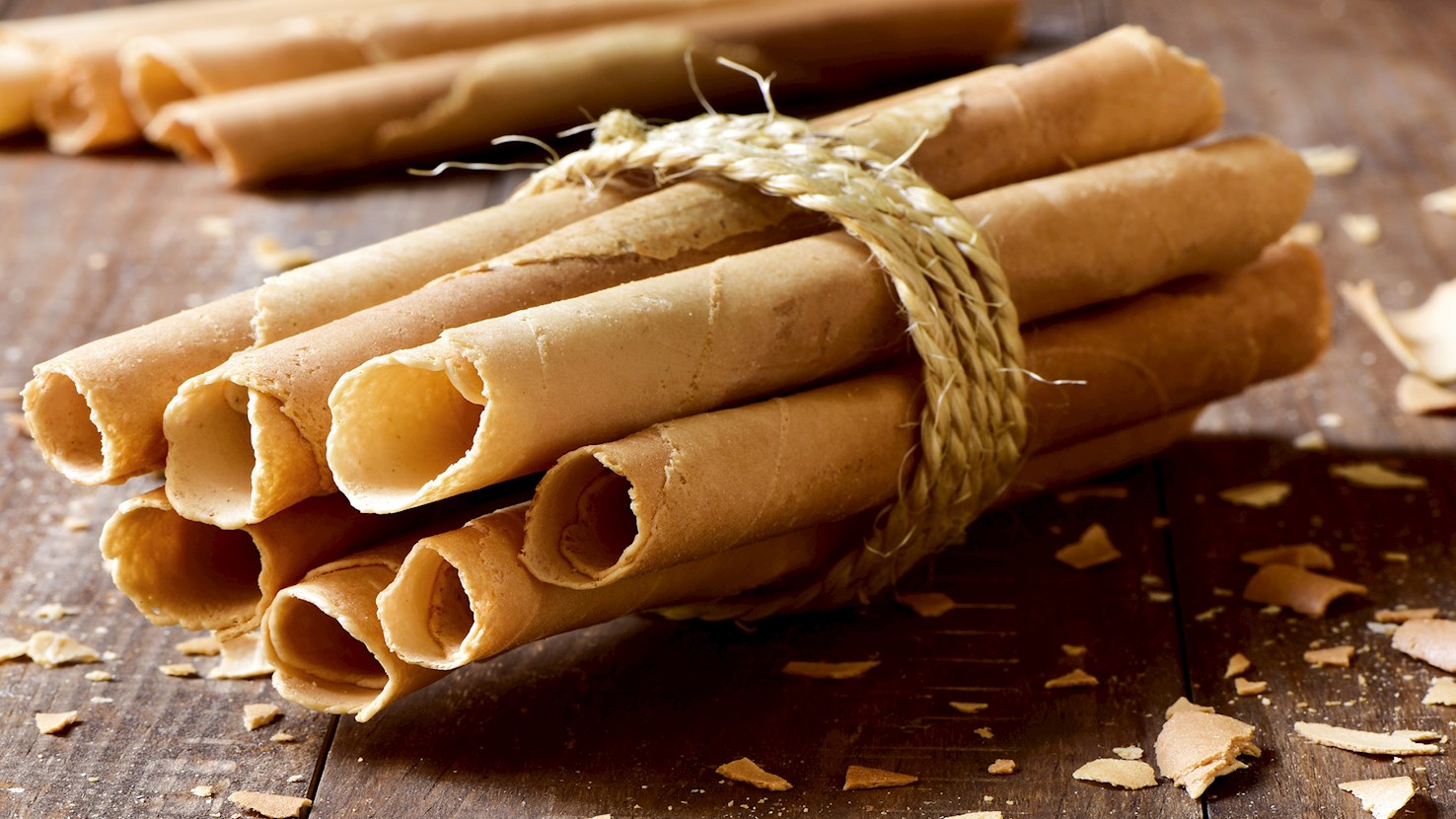
Neula is a thin, brittle wafer whose modern form is a narrow, hollow cylinder. It is made by spreading a fluid wheat batter into an almost translucent sheet, baking it very quickly, and rolling it around a slender rod while it is still hot and flexible. Within seconds, the sugar and fat cool, the remaining moisture escapes, and the tube hardens into a crisp shell that breaks with a clean snap. The earliest securely documented reference dates to the Christmas banquet held by King James I of Aragon in 1267. More than one hundred guests were served neules with pine nuts and almonds at the end of the meal. These medieval neules were not the long rolled tubes now associated with Christmas. They were round, flat wafers, sometimes closer in thickness and structure to a thin waffle. Written references continued through the later Middle Ages: Ramon Llull mentioned them in the thirteenth century, while Francesc Eiximenis referred to thicker neules and the custom of dipping them into wine in the fourteenth century. The familiar cylindrical form appears to have developed much later and is generally associated with the late nineteenth century. Monastic communities played an important role in preserving and refining the wafer-making method. Medieval convent and monastery records show that neules were eaten during religious feast days throughout the year, rather than only at Christmas. Friars, altar servers, and cloistered nuns were all connected with their production, although the surviving evidence does not identify one order or community as the sole inventor. The wafers were made with heavy hinged irons known as neulers. These resembled long tongs fitted with two round metal plates. Batter was placed between the plates, and the closed iron was held over an open wood fire. Many surviving neulers are engraved on the inside with inscriptions, monograms, geometric ornament, or Christian scenes such as the Annunciation, the Crucifixion, the Lamb of God, and Christ in Majesty. The design was pressed directly into the wafer as it baked. One preserved iron even bears an inscription promising God’s blessing to whoever eats the wafer made in it. The name comes from the Latin noun nebula, meaning mist, fog, or a fine translucent substance. The word refers to the wafer’s extreme thinness, pale appearance, and fragile structure. In medieval usage, neula could describe a thin sheet of unleavened flour paste, and the term is recorded with this meaning from at least the eleventh century. A common modern batter combines egg whites, white cane sugar, wheat flour, and melted butter. The egg whites supply water and protein, the flour forms the main framework, the sugar gives sweetness and brittleness, and the butter adds flavor while limiting toughness. Finely grated lemon peel and a small amount of vanilla extract may be added for a sharper citrus aroma and a rounder sweet note. Recipes vary, and some versions use water, oil, whole eggs, or different flavorings, but the mixture must remain fluid enough to spread into an extremely thin layer. A small ladleful of batter is placed on a heated flat iron or cast-iron griddle. A second plate closes over it and presses it into a broad, even circle. The layer is so thin that intense heat sets it in less than a minute. Once the iron opens, the wafer must be lifted immediately. At this point, it is scorching hot but still soft enough to bend. The wafer is wrapped tightly around a slim wooden or metal dowel before the surface cools. Timing is critical. Roll it too slowly, and it cracks before forming a tube; remove it too early, and it remains pale, soft, and prone to collapse. Each wafer must therefore be shaped within seconds of leaving the hot iron. Cooling changes the texture almost at once. Water vapor continues to escape from the thin shell, melted sugar becomes rigid, and the proteins and starches lock into place. The result is a light cylinder with a dry, porous wall and a glass-like fracture. A well-made neula should feel almost weightless, remain crisp in dry air, and shatter into delicate flakes rather than bend. Humidity quickly softens it, which is why the finished tubes are commonly stored in tightly sealed tins, boxes, or tall glass containers. A plain tube has the lowest weight and the airiest bite. Covering the cooled wafer with dark or milk chocolate creates neules de xocolata. The coating increases the weight, reinforces the fragile shell, and adds a thicker, slower-melting layer around the crisp center. Some are only partly dipped, while others are completely covered. Another version is filled with soft almond nougat, especially a paste based on torró de Xixona. The dense almond mixture is piped into the hollow center after the wafer has cooled. This removes much of the space and turns a light biscuit into a richer, heavier confection with a much higher proportion of fat. Instead of shattering into dry fragments, it breaks with a firmer snap and then gives way to the oily, compact filling. Other modern fillings include marzipan, praline, chocolate cream, hazelnut, pistachio, or flavored ganache. Leaving the wafer unrolled produces a flat, brittle disc. Far from being merely an unfinished tube, this form is closer to the medieval original. Early flat neules could be plain or carry the engraved image from the iron. Flat neules also acquired a decorative and ceremonial role in churches. Edible wafers were once perforated and suspended in long garlands. At the end of the Christmas season, the strings could be cut so that the wafers fell and were collected. Mallorca later preserved the custom through finely cut paper neules hung in churches and homes during the Christmas season. During performances of the Song of the Sibyl, suspended neules could represent the stars falling from the sky during the final cataclysm described in the chant. Neules are now most closely associated with Christmas and New Year meals. The tubes may be stacked upright in tall glass cylinders, packed into narrow boxes, or laid flat on wide silver or ceramic trays beside nougat and other sweets. Their height and fragility make upright storage practical, while a sealed container protects them from moisture. They are often eaten plain, broken into shorter sections, or dipped briefly into a drink. Today, cava is a familiar partner, but older records point to sweet and spiced wines. Medieval neules were dipped into piment, a wine flavored with ingredients such as cinnamon, pepper, cloves, nutmeg, or herbs. Later pairings included rancid wine, mistela, malvasia, and sweet muscatel. The hollow tube draws liquid through its porous walls, so even a brief dip changes it from crisp and dry to soft and wine-soaked at the edge. The wafer should be eaten immediately before it loses its structure completely. Snapping the tube in half exposes two open ends, making it easier for the biscuit to absorb sparkling wine or muscatel without soaking the entire length. Another serving method is to place a dry neula beside crema catalana, the thick custard capped with a brittle layer of burnt sugar. The tube may be snapped in half and used to scoop the custard, functioning as an edible spoon. Its crisp wall contrasts with the cold, dense cream, while the caramelized surface adds another brittle layer. Once the wafer touches the custard, however, it absorbs moisture rapidly and softens, so it works best in small bites rather than being left in the bowl.
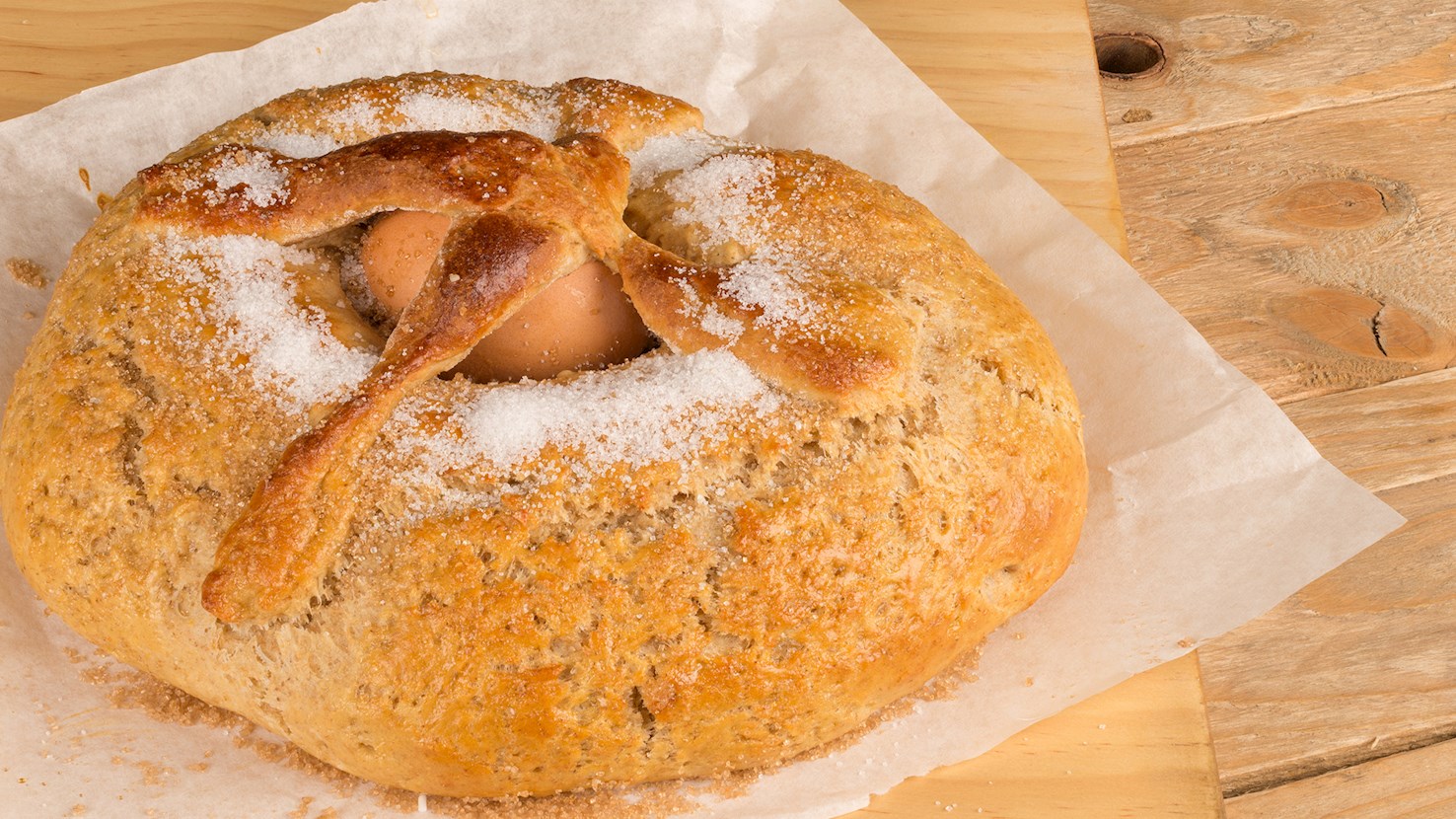
The colorful mona de Pasqua is a traditional Catalan Easter cake symbolizing spring and the end of Lent. Although there are numerous versions of the cake, it most usually consists of a sweet brioche dough that is stuffed with candied fruit and topped with hard-boiled eggs. Many versions of the cake are filled with cream, chocolate, or fruit jam, and covered with almonds or crème brûlée. The cakes are typically decorated with inedible baby chicks, chocolate eggs, or figurines of popular cartoon characters. The word mona in its name is derived from the Arabic munna, meaning gift or offering, because godparents traditionally give the cake to their godchildren on Easter.
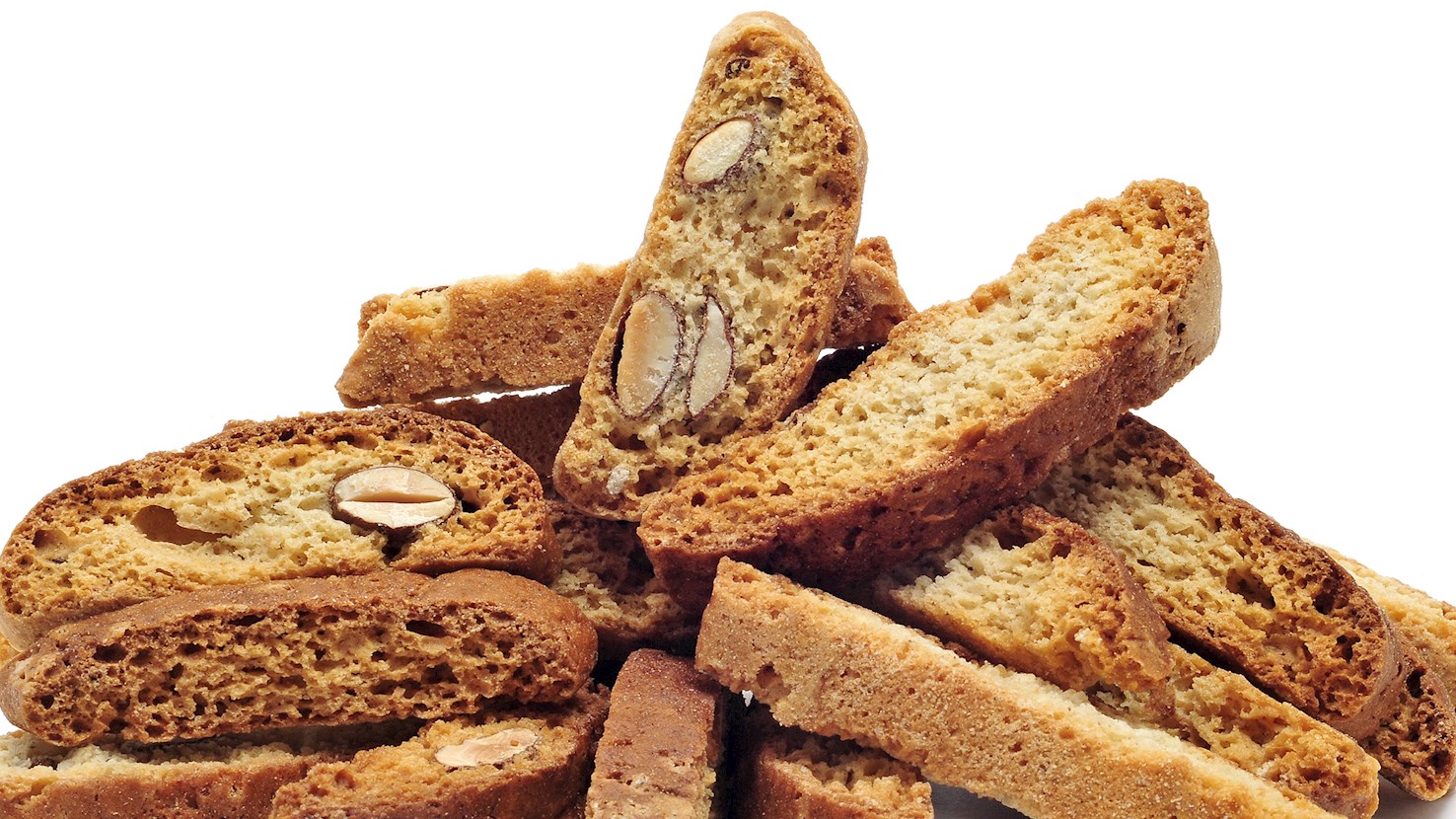
Carquinyolis are traditional Catalan versions of biscotti, similar to the Tuscan cantuccini. They are made with a mixture of flour, eggs, sugar, and toasted almonds, and sometimes anise and lemon. The almonds used should be left unpeeled and soaked in water before being added to the mix. The resulting biscuits, about 1 cm thick, are typically baked twice. Carquinyolis are served as a dessert, typically accompanied by a glass of sweet wine on the side. Variations on these biscuits, apart from the original cantuccini, also exist in Aragon, the Balearic Islands, Occitania, and Sicily.
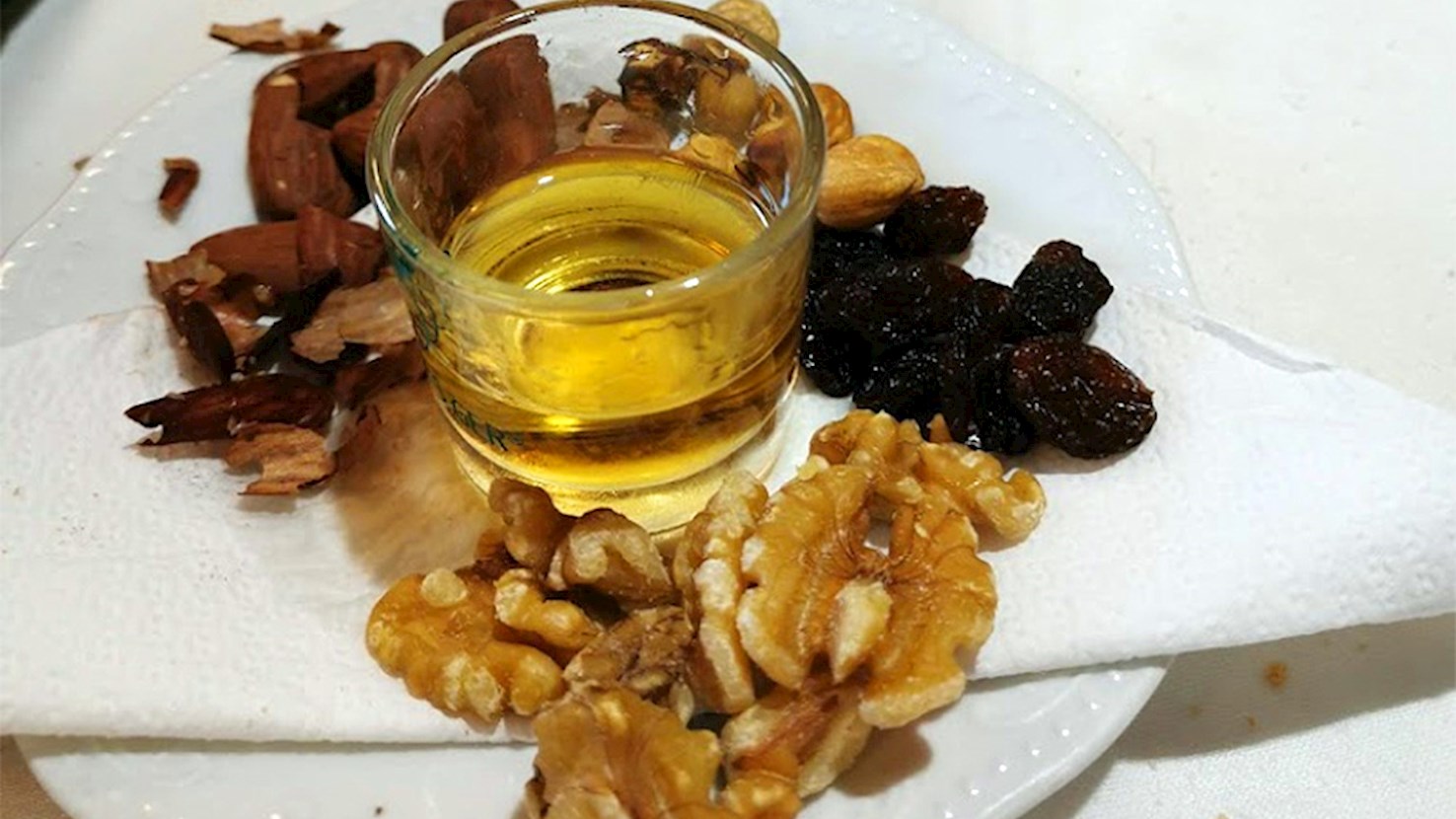
Postre de músico is a simple Spanish dessert consisting of various nuts. Typically, almonds, hazelnuts, walnuts, and pine nuts are used, while many also include dry fruit, such as raisins, figs, and dry apricots. All the elements are served on a platter, and they are usually not mixed. This plate is typically served as a dessert, commonly with a digestif or dessert wine. The drink can be served separately, but small shot glasses can also be placed on the plate. The name of this traditional dessert translates as musicians' dessert. The story is that an assortment of nuts was typically given to street musicians or that it was a typical snack enjoyed by musicians and other performers as they did not have time to enjoy a whole meal.
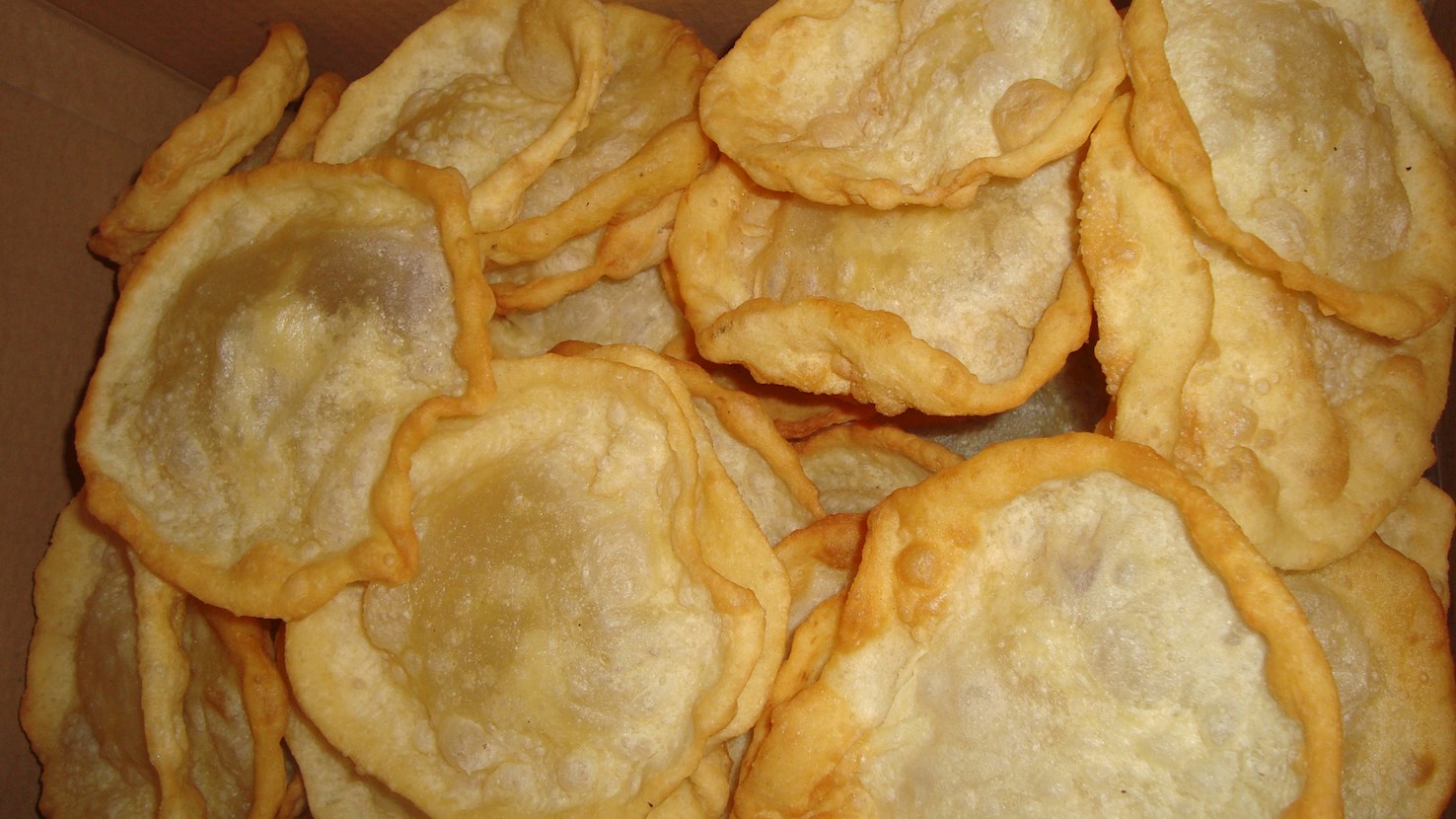
Orelletes are Spanish and Andorran pastries that are especially popular in Catalonia and Valencia. The dough is made with flour, sugar, eggs, anisette, and olive oil, but it might also include orange and lemon juice or zest. The dough is traditionally fried by women, and in the past, the pastries had often been consumed after mass, when they were accompanied by a glass of sweet local wine. The name orelletes means ears, referring to the ear-like shape of these festive pastries that are present at most weddings, birthdays, and similar celebrations. For the best experience, orelletes should be dusted with powdered sugar.
Mató de Pedralbes or mató de monja is a traditional Catalan dessert originating from Barcelona, where it’s made with flavored sweetened milk. It is believed that the dessert was invented in the 19th century by nuns of the convent located in the neighborhood of Pedralbes. They wanted to create a richer version of the famous crema catalana. The custard typically consists of milk, sugar, maize flour, egg yolks, and the combination is flavored with cinnamon sticks.
TasteAtlas food rankings are based on the ratings of the TasteAtlas audience, with a series of mechanisms that recognize real users and that ignore bot,
nationalist or local patriotic ratings, and give additional value to the ratings of users that the system recognizes as knowledgeable.
For the “Top 9 Catalan Desserts” list until August 15, 2026, 680 ratings were recorded, of which 555 were recognized by the system as legitimate.
TasteAtlas Rankings should not be seen as the final global conclusion about food. Their purpose is to promote excellent local foods,
instill pride in traditional dishes, and arouse curiosity about dishes you haven’t tried.




What People Say