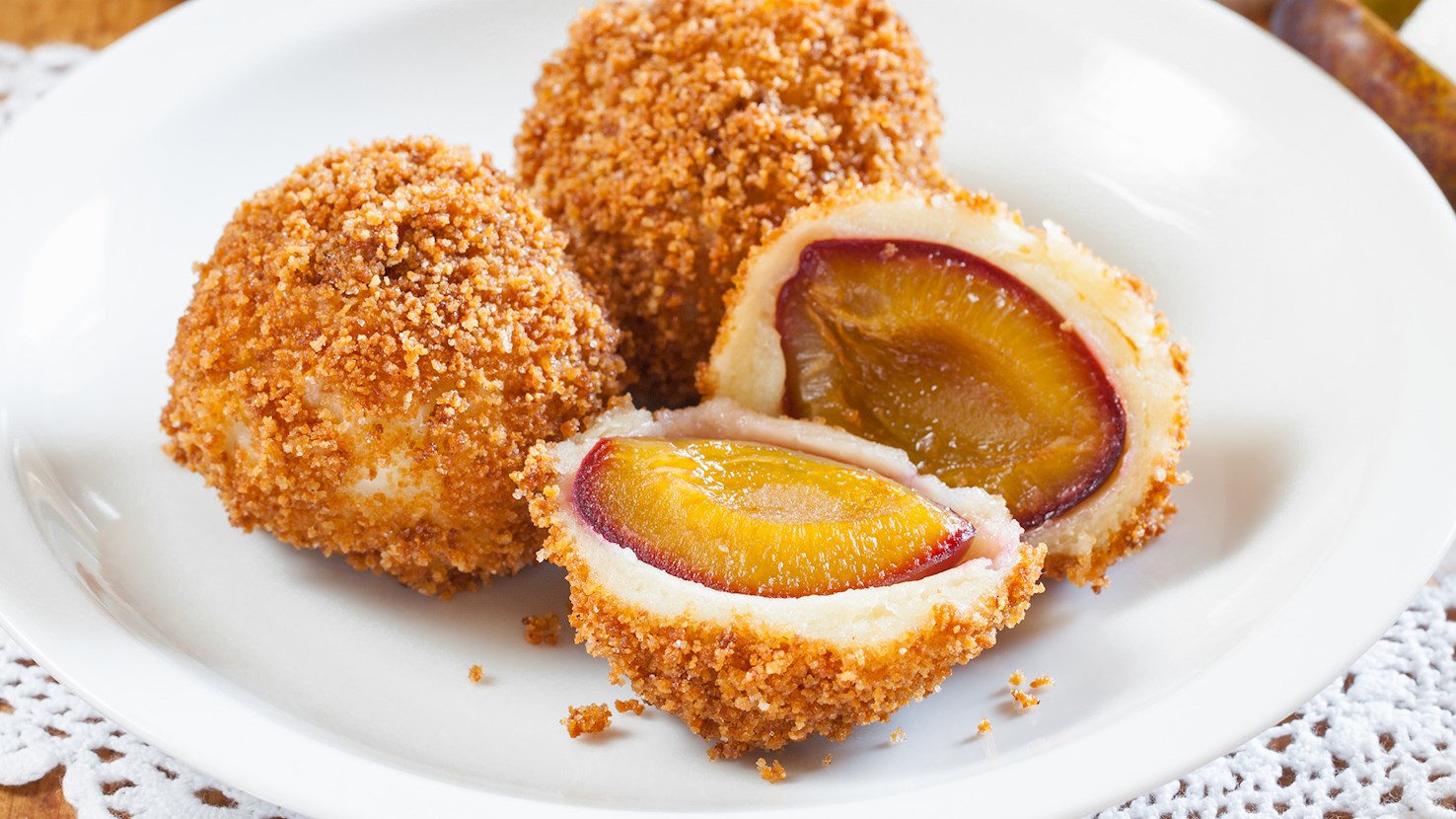
Gomboce or knedle sa šljivama are plum-filled dumplings consumed throughout the Balkans, especially in Serbia and Croatia. The dough is made with potatoes, eggs, and flour. The potatoes should be cooked in their own skin, peeled, then mashed before they are combined with other ingredients. Once prepared, the dough is rolled and plums are placed in the middle of each square, which is then assembled into a dumpling. These dumplings are boiled, then rolled in a combination of breadcrumbs, sugar, and (optionally) butter for the best experience.
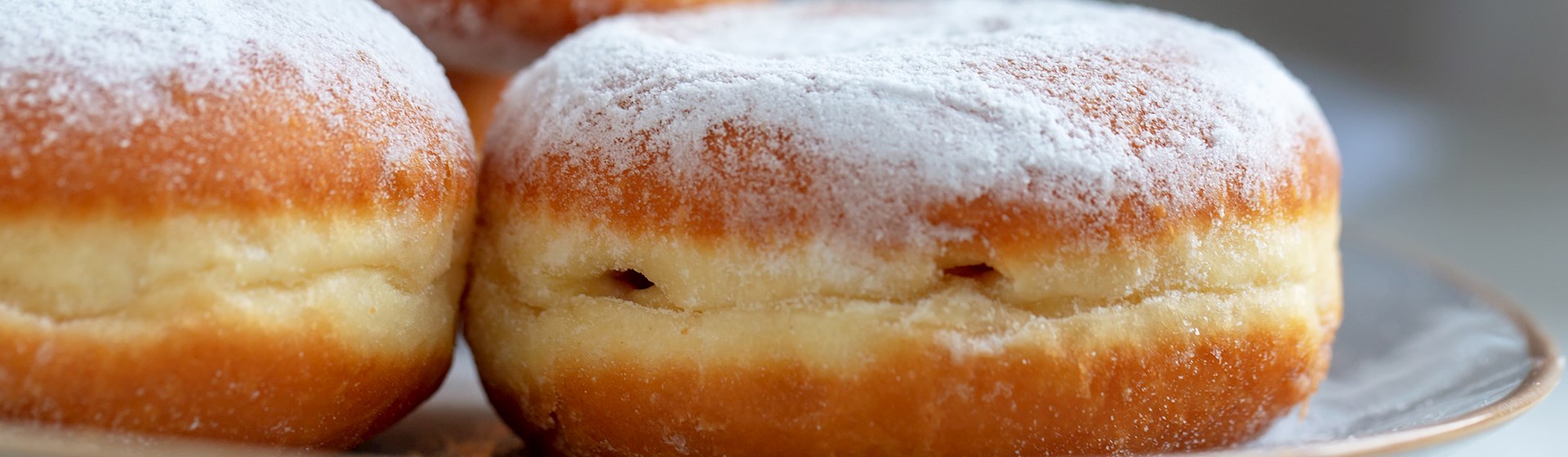
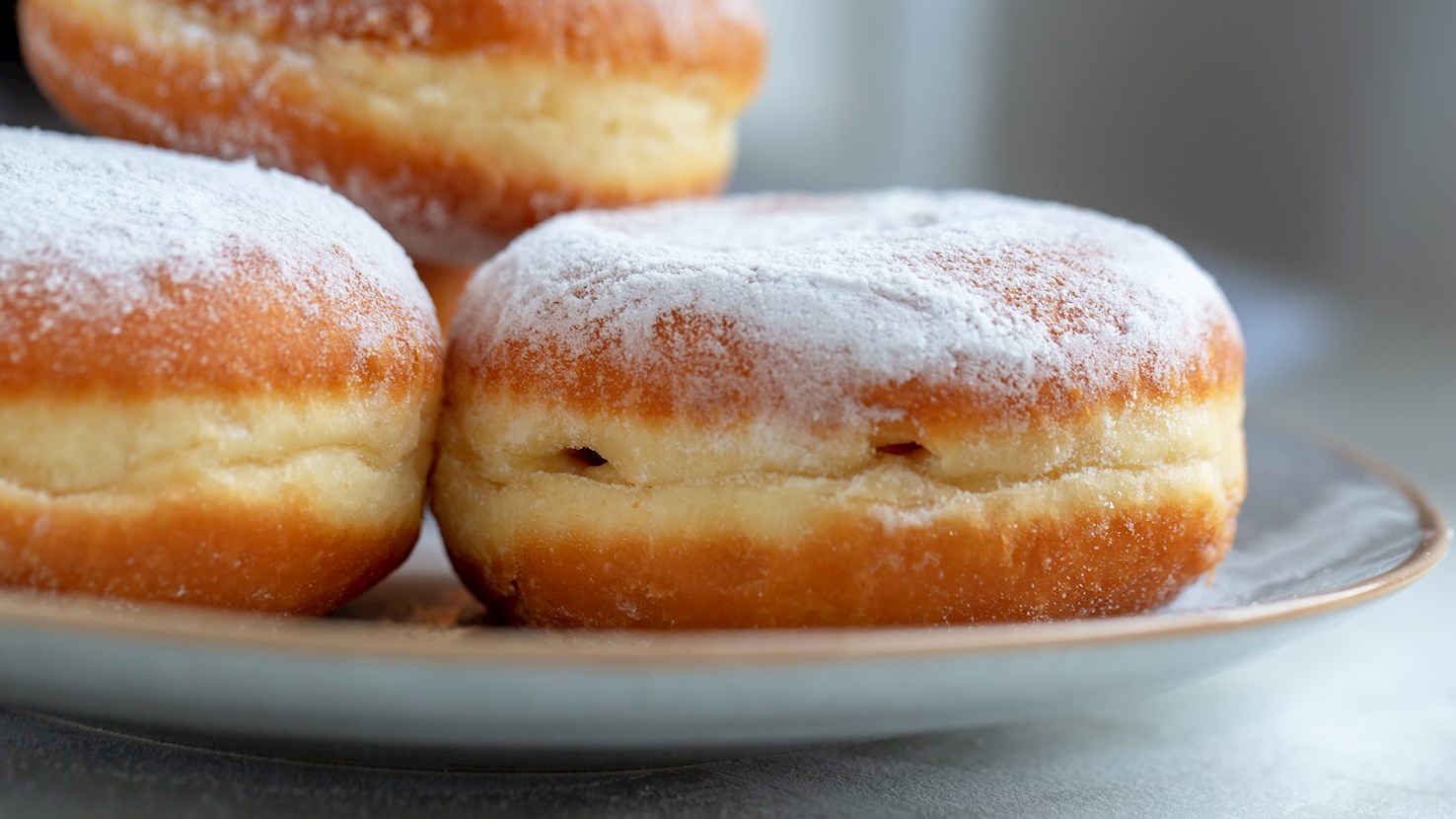
Krapfen was probably the first European-style doughnut to appear, followed by similar varieties in other countries. These pastries are traditionally prepared with leavened dough that is deep-fried until golden and crispy on the outside, while they remain soft, light, and airy on the inside. Though krapfen can be prepared plain, they are most often filled or topped with jams, and vanilla or chocolate custards, while the top is usually dusted with powdered sugar or drizzled with chocolate. The origin of the word krapfen dates back to 9th century, and the recipes in German can be found as early as the 14th century. The sweet versions of the pastry became predominant, and have remained closely associated with the Carnival, a festive period which precedes Christian Lent. Interestingly, during the Carnival, one krapfen in a batch filled with jam and fruit preserves might contain a filling of mustard as a prank. It is believed that doughnuts spread throughout many central European countries, which adopted the technique but used different regional names. Consequently, krapfen in Germany goes under Berliner, pfannkuchen, faschingskrapfen, krebbel, or kreppel. In Poland, they are known as pączki or krepel, Hungarians refer to them as fánk, Slovak as šišky, while the Czechs use the term koblihy. In Slovenia, they are better known as krofi, while the standard name throughout Croatia, Bosnia, and Serbia is krofne or krafne. In St. Petersburg, Russia, the doughnuts are known as pyshki (either ring-shaped or without a hole), and there is a local café that has been serving pyshki prepared from the original recipe since the 1960s.
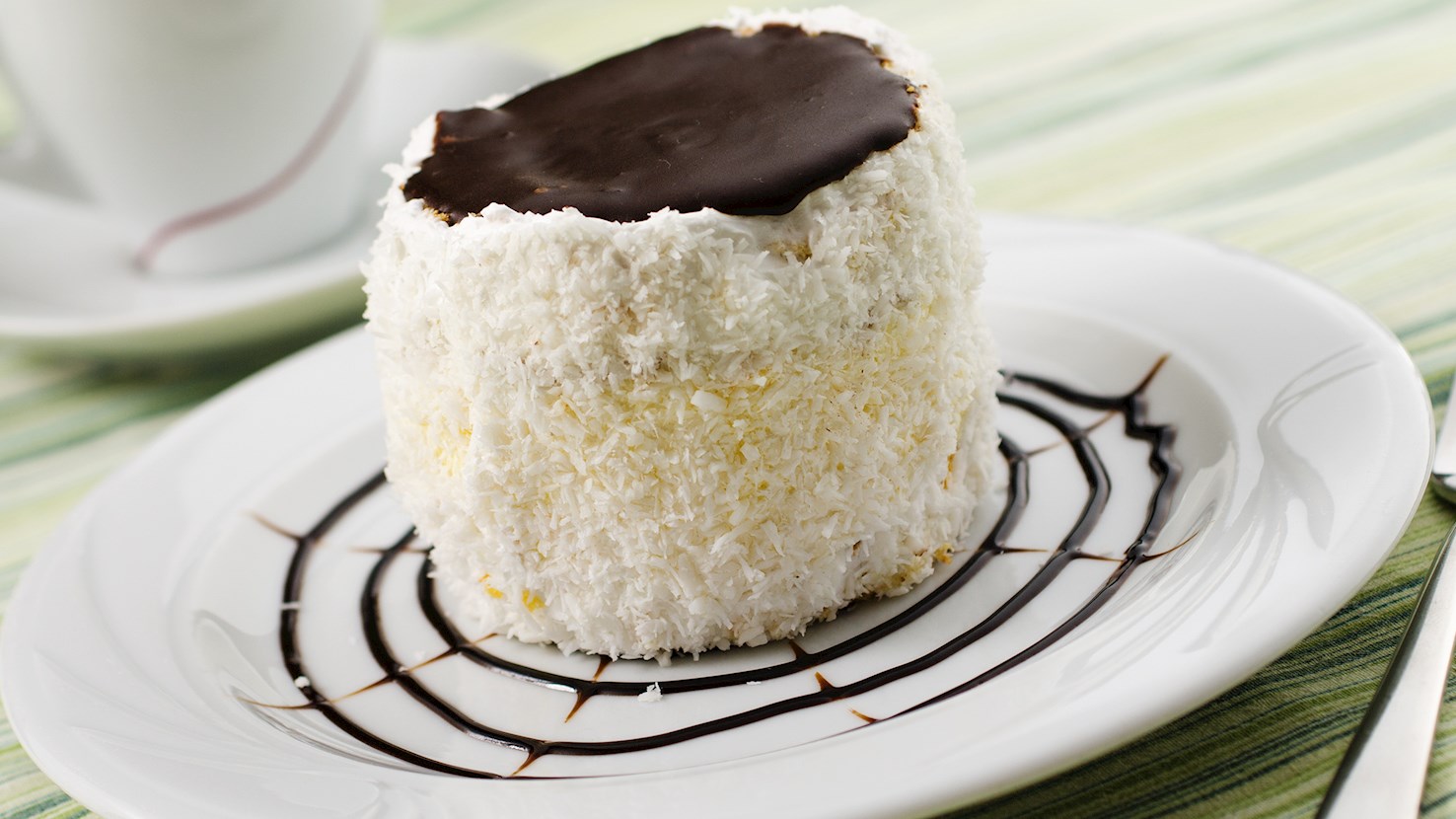
Ruske kape or šubarice is a dessert that is especially popular in Balkan countries such as Bosnia, Serbia, and Croatia. The base is made with eggs, sugar, flour, and baking powder. It is traditionally filled with vanilla custard, chocolate, or both. The outer edges are then covered with chocolate, and the whole concoction is rolled in desiccated coconut on the sides. It is recommended to serve ruske kape well-chilled.
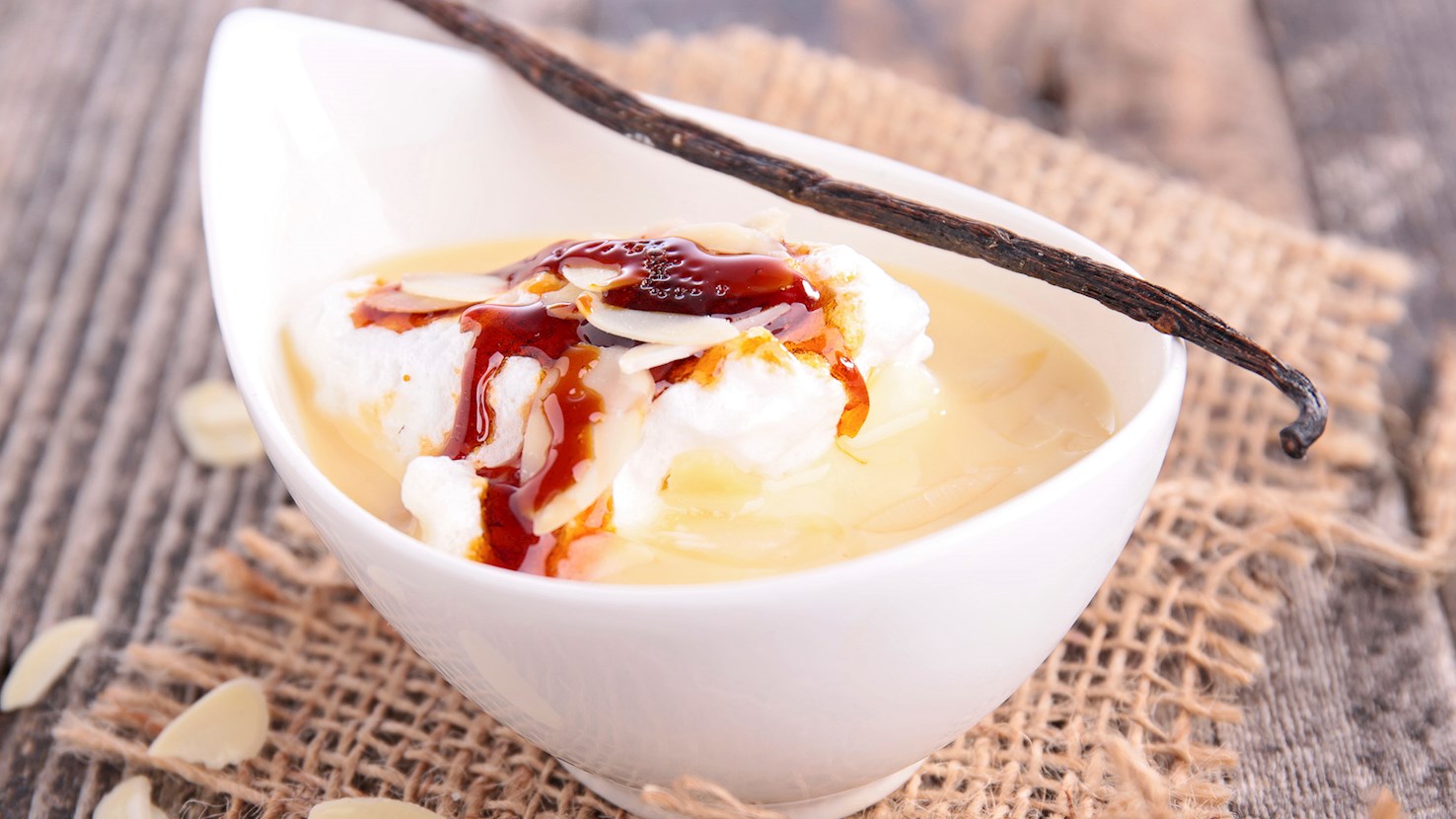
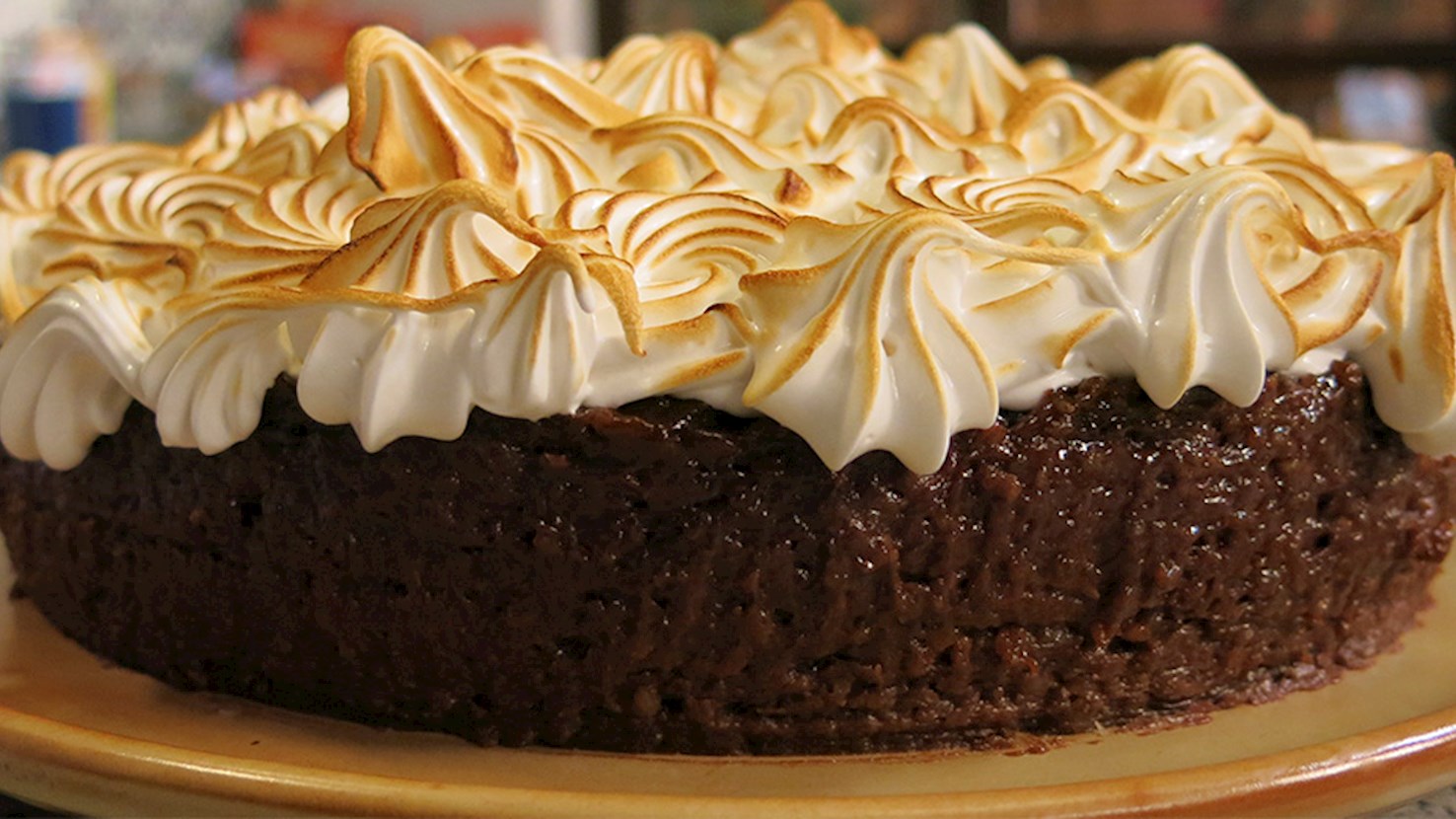
Île flottante or floating island is a popular dessert originating from France, consisting of meringues that are poached in vanilla custard and often topped with caramel sauce and toasted almonds. The meringues are usually made from whipped egg whites, sugar, and vanilla extract. This classic dessert is one of the staples of French comfort food, although it is popular internationally, sometimes with small tweaks and variations, in countries such as Austria (Schneenockerln), Hungary (Madártej), Croatia and Serbia (šnenokle), and Italy (uova di neve). In France, it is usually served in bistros, canteens, and hip restaurants. Although it is an extremely popular dessert, its inventor still remains unknown. Light, fluffy, and low in fat, floating island is believed to taste the best when served cold (or in some cases, at room temperature) after a big meal, although it can be consumed on its own, as a tasty mid-day treat.
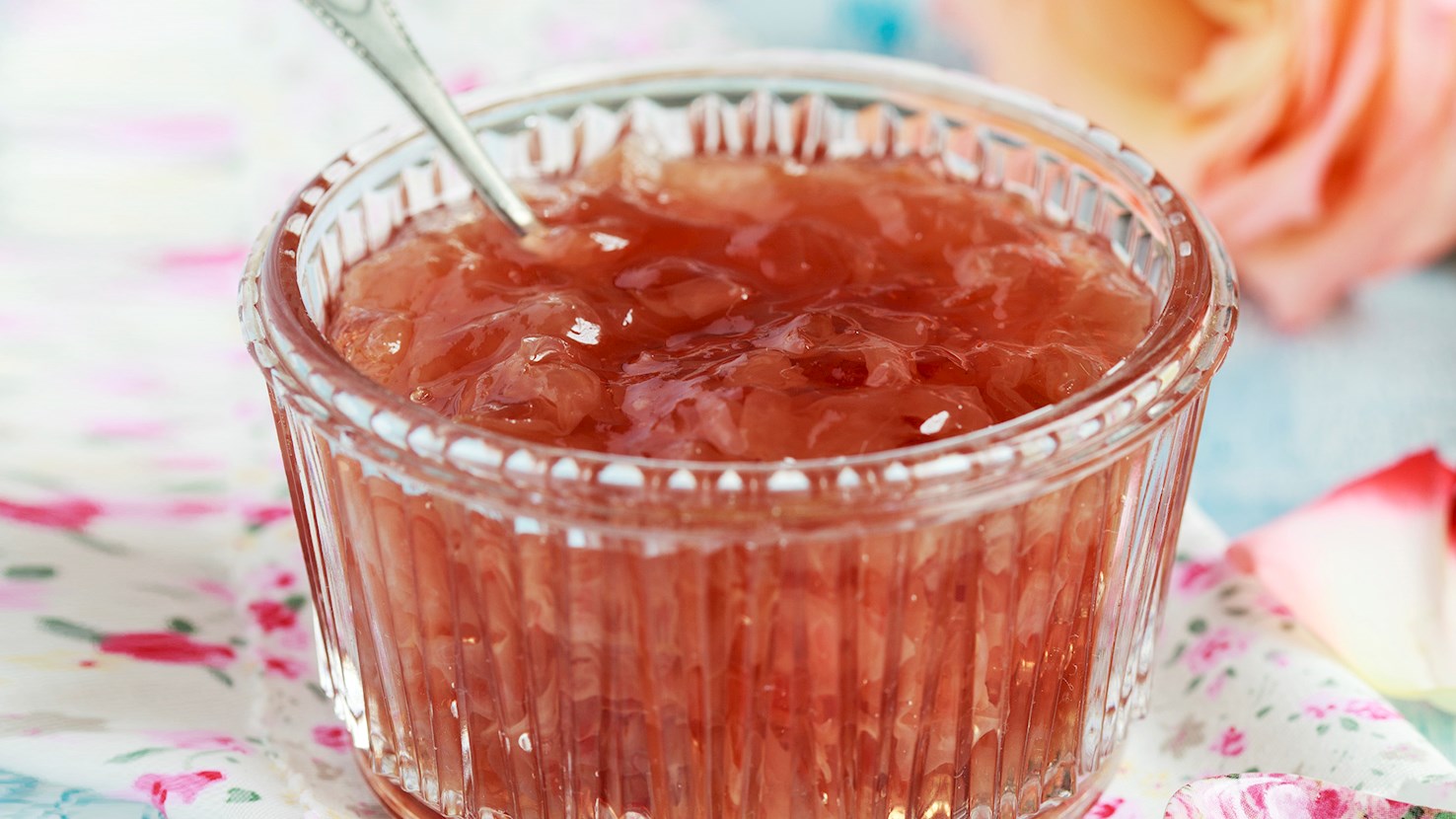
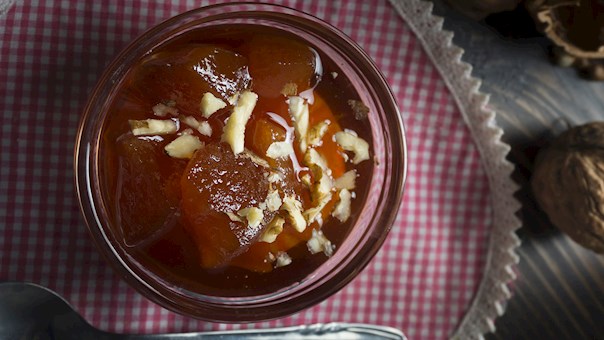
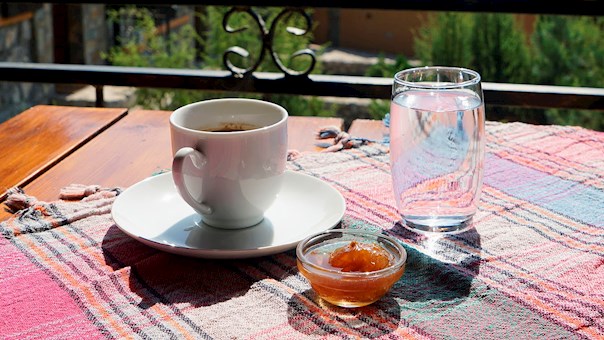
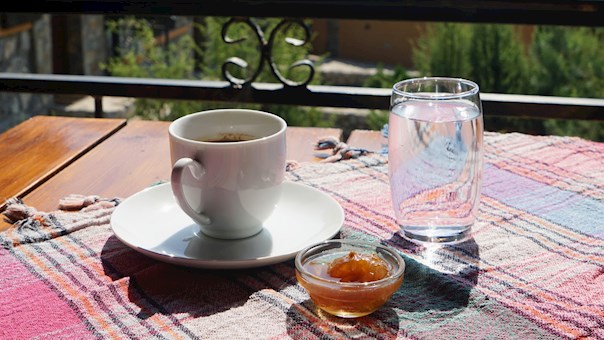
This unique variety of Serbian slatko—a fruit preserve—is made with rose petals. It typically uses the petals of roses that have a pleasant odor, most commonly those of May roses which are characterized by a distinctively sweet rose fragrance. The cleaned and washed petals are simmered in sugar syrup with lemon juice or citric acid until they become translucent and the syrup thickens. Although the tradition of making rose petal preserves in Serbian households is very old, this slatko variety is rarely prepared nowadays. Slatko od ruže is traditionally enjoyed in small portions, and it is usually accompanied by a glass of water, coffee, and local plum brandy. In Serbia, slatko preserves are typically offered to guests to show a warm welcome.
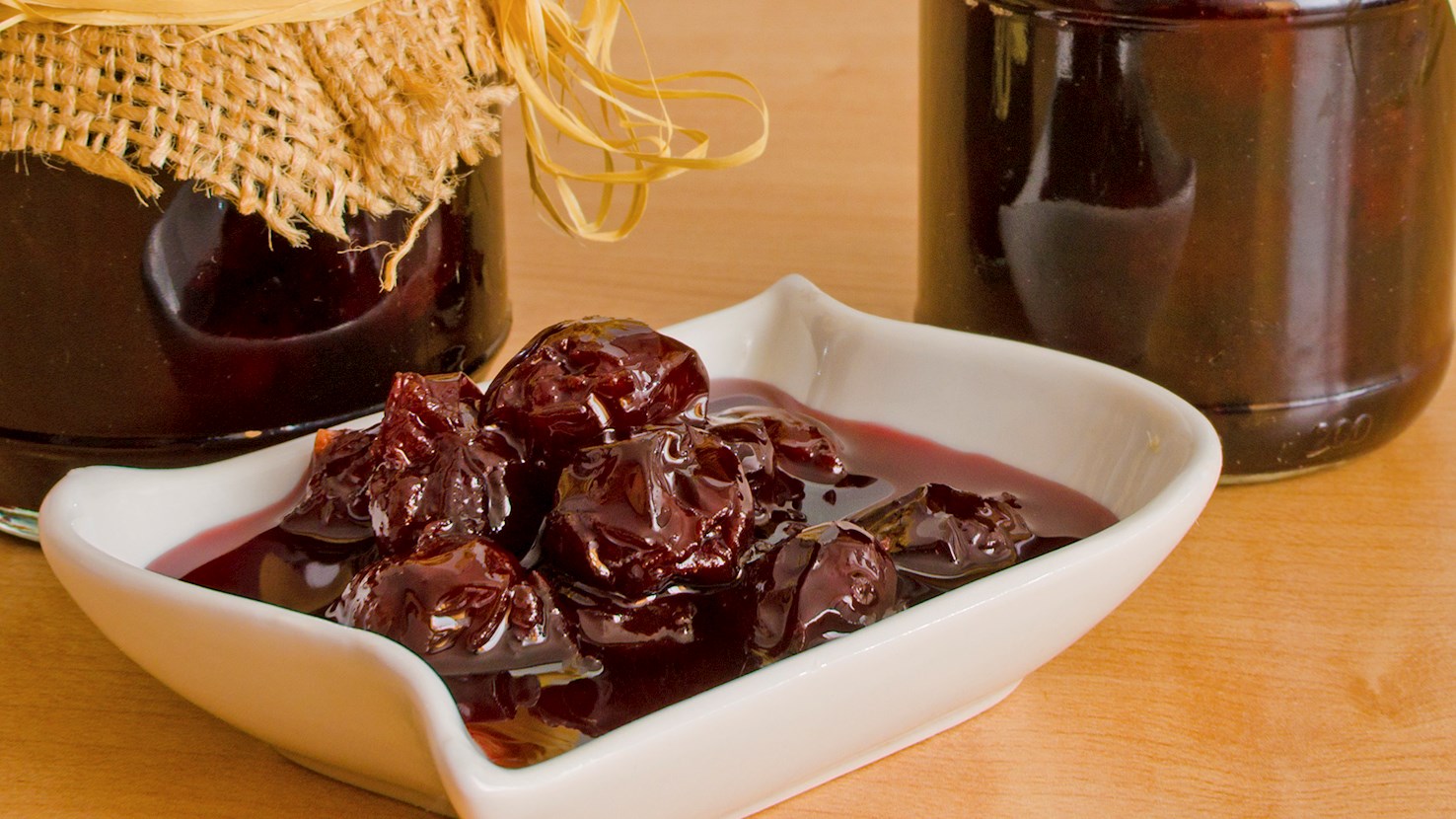
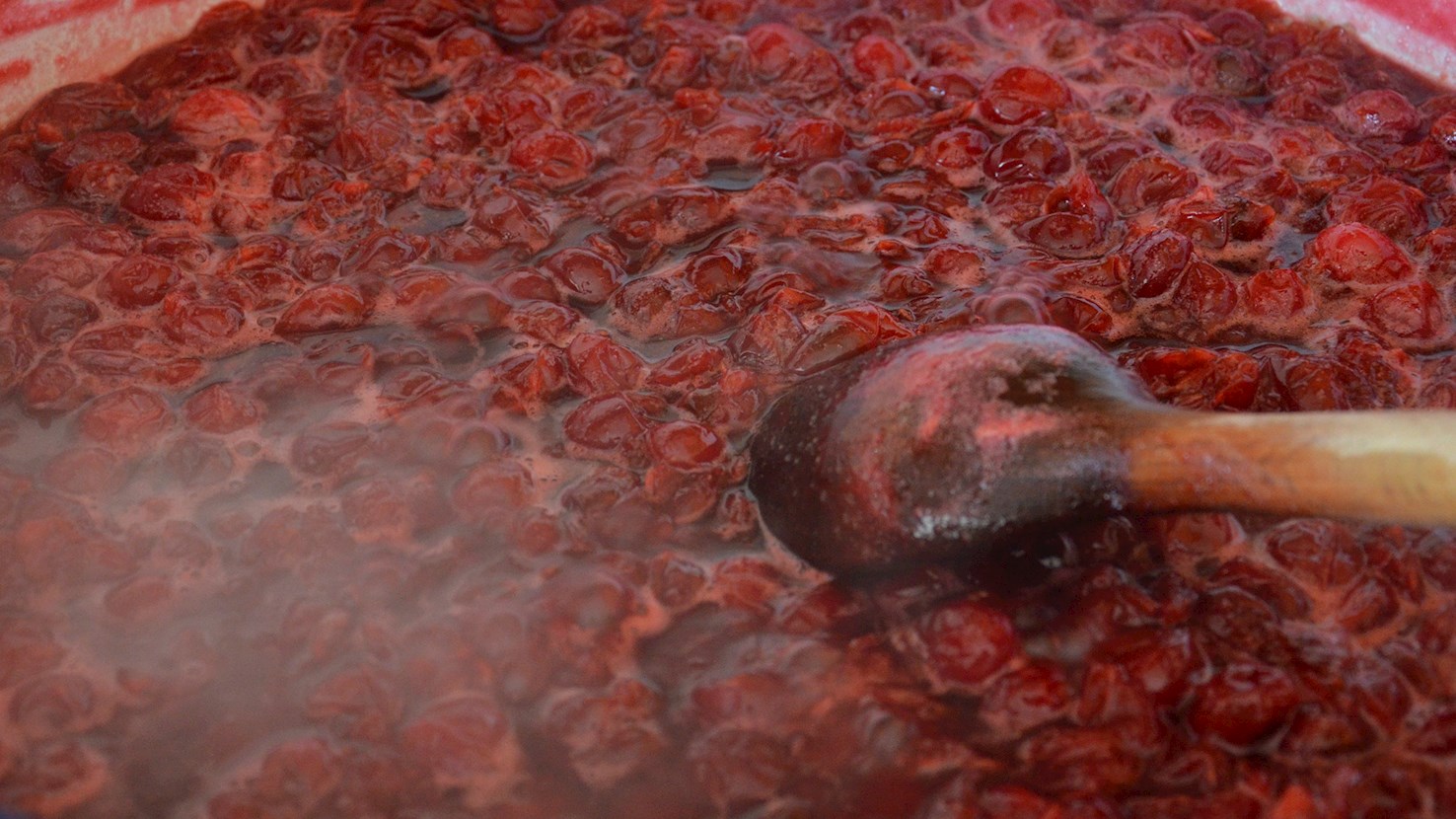
A variety of Serbian slatko, slatko od višanja is a fruit preserve that is based on sour cherries. According to the traditional method of preparation, the sour cherries are cleaned, washed, and pitted, then covered with sugar and left overnight to release their juices. The following day, the mixture is boiled without stirring until it thickens to a syrupy consistency. Another way to make this sour cherry preserve is to cook whole washed and pitted sour cherries in sugar syrup. Unlike other slatko varieties, this one doesn’t require the use of lemons or lemon juice since the cherries are sour themselves. If the fruit is more on the sour side, the amount of sugar should be increased. Traditionally, Serbian slatko, which translates as sweet, is offered to show a warm welcome to guests, and it is typically served in small plates or bowls. Since slatko preserves are quite sweet, they’re usually accompanied by a glass of water. Other typical accompaniments to slatko include coffee and traditional plum brandy known as šljivovica. Apart from being enjoyed as a sweet snack, slatko od višanja is also often incorporated into a variety of desserts.
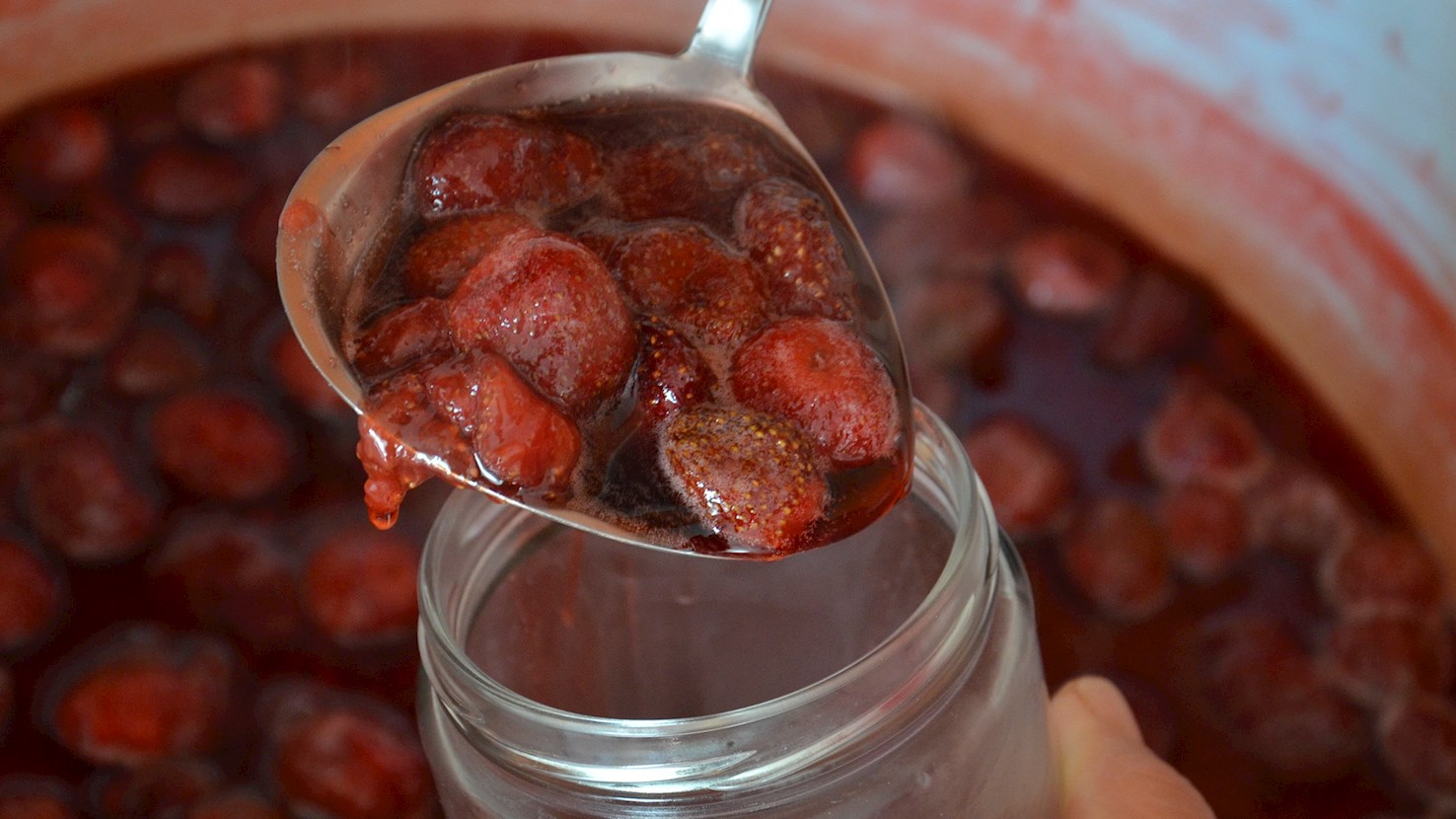
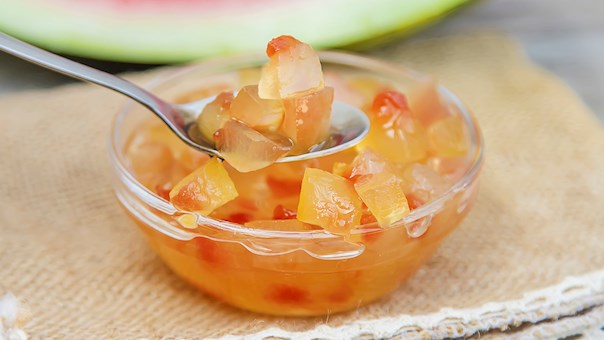
Slatko od jagoda is a type of Serbian preserve made with strawberries. This dish belongs to a group of slatko preserves that are traditionally made from various seasonal fruit such as quinces, apricots, cherries, or watermelons. The strawberries are washed and cleaned before they are cooked in sugar syrup. During cooking, it is recommended not to stir the fruit so it would stay whole and not turn into mush. Lemon is usually added in order to help preserve the fruit and add extra flavor. Like other types of slatko, the strawberry version is also an essential part of Serbian hospitality. According to the age-old custom, slatko is usually served to guests as a sign of greeting. It's traditionally served with a glass of water, while typical accompaniments include Serbian plum brandy (šljivovica) and coffee. Because of its sweetness—the name slatko also translates as sweet—only of a spoonful of the preserve should be enough for consumption.
Slatko od trešanja is a traditional fruit preserve made with cherries. Any type of cherries - red or white, wild or cultivated - may be used as long as they’re firm and not overripe. The cherries are typically cleaned, washed, and pitted before they are cooked in sugar syrup. The syrup is usually flavored with vanilla and lemon juice or slices of lemon. While they’re being cooked, the cherries should not be stirred but only lightly shaken so that they retain their shape and remain firm. This sweet delicacy is usually stored in clean glass jars and it keeps for a whole year. Slatko od trešanja is typically made during the summer period when cherries are in season, and it is only one of a wide variety of slatko preserves that have long been prepared in Serbian households. In Serbia, these preserves are traditionally offered to guests as a sign of hospitality and they’re typically accompanied by a glass of water and a cup of coffee or Serbian plum brandy (šljivovica) on the side. Like other types of slatko, slatko od trešanja can also be used to enrich a variety of desserts.
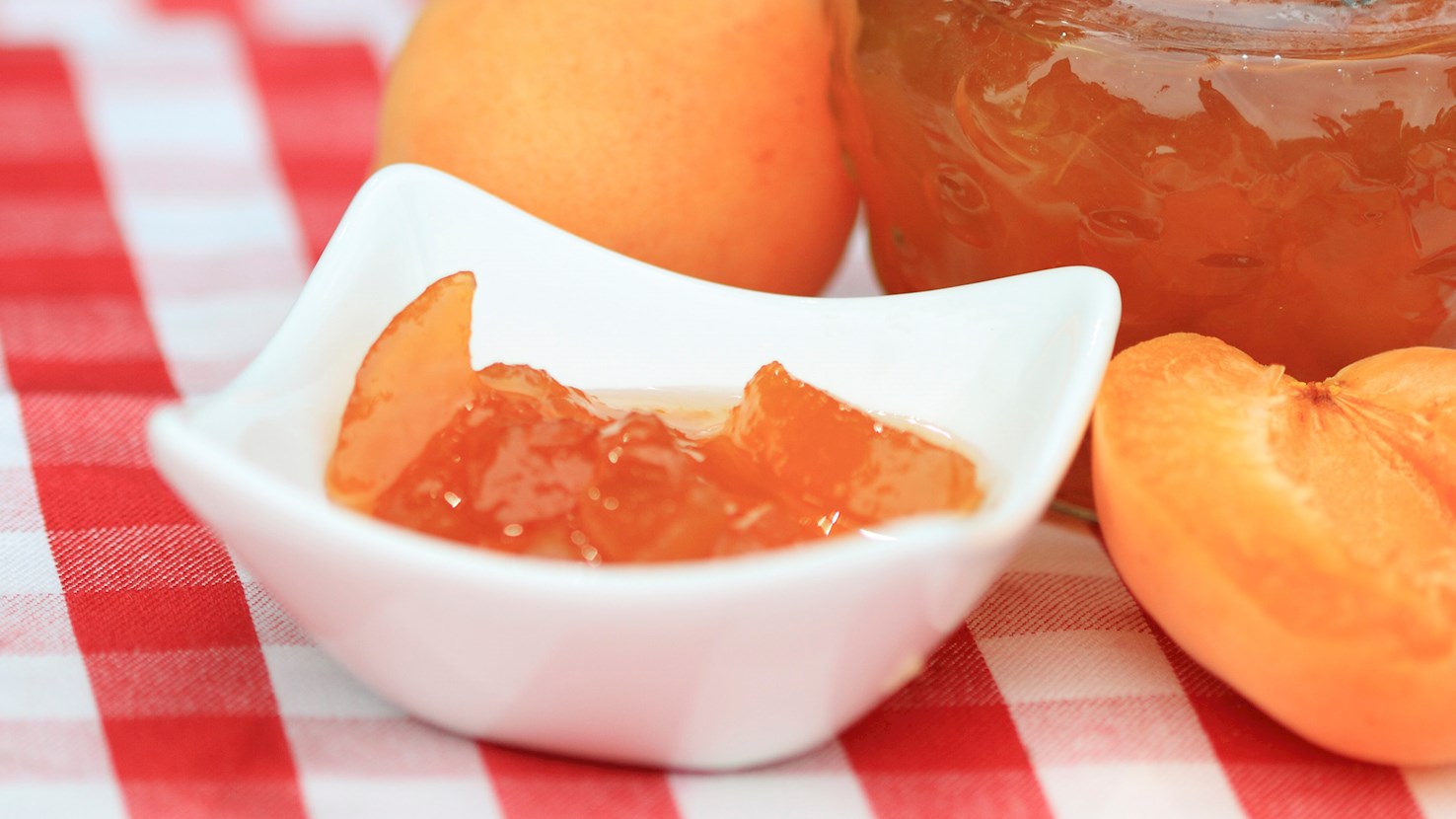
Slatko od kajsija is a variety of Serbian slatko—a fruit preserve—that is made with apricots in this case. The apricots are pitted and usually peeled and then slowly simmered in sugar syrup. Optionally, to preserve the fruit, the apricots can be shortly soaked in a mixture of Calcium hydroxide (slaked lime) and water. Whether halved or used whole, the flesh of the apricot needs to stay intact, and unlike jams, it should never turn into mush. Slatko od kajsija is a part of Serbian tradition, usually served to welcome a guest. The preserve will typically come first, accompanied by a glass of water, plum brandy (šljivovica), and coffee.
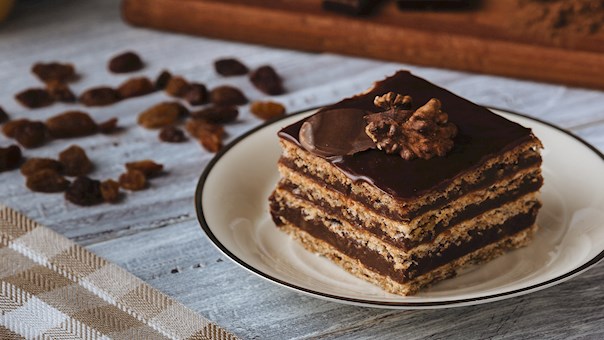
Vasina torta or Vasa's cake is an absolute classic of Serbian cuisine consisting of a walnut sponge base, a creamy filling made with walnuts, chocolate, and oranges, and two additional toppings – šaum (a mixture of egg whites, sugar, and a bit of water) and chocolate. The cake dates back to 1908, when it was prepared as a gift from a mother-in-law to her son-in-law, Vasa Čokrljan from Paraćin, who took his wife to Vienna so she could give birth in better conditions than in Serbia. It should be noted that oranges were a real treasure in Serbia in 1908, which is one of the main reasons why this cake was so precious and valuable. Since then, the cake became a staple in every Serbian home, and it is regularly prepared for festive events such as birthdays and weddings.
TasteAtlas food rankings are based on the ratings of the TasteAtlas audience, with a series of mechanisms that recognize real users and that ignore bot,
nationalist or local patriotic ratings, and give additional value to the ratings of users that the system recognizes as knowledgeable.
For the “Top 22 Serbian Desserts” list until October 15, 2026, 2,487 ratings were recorded, of which 1,751 were recognized by the system as legitimate.
TasteAtlas Rankings should not be seen as the final global conclusion about food. Their purpose is to promote excellent local foods,
instill pride in traditional dishes, and arouse curiosity about dishes you haven’t tried.



What People Say