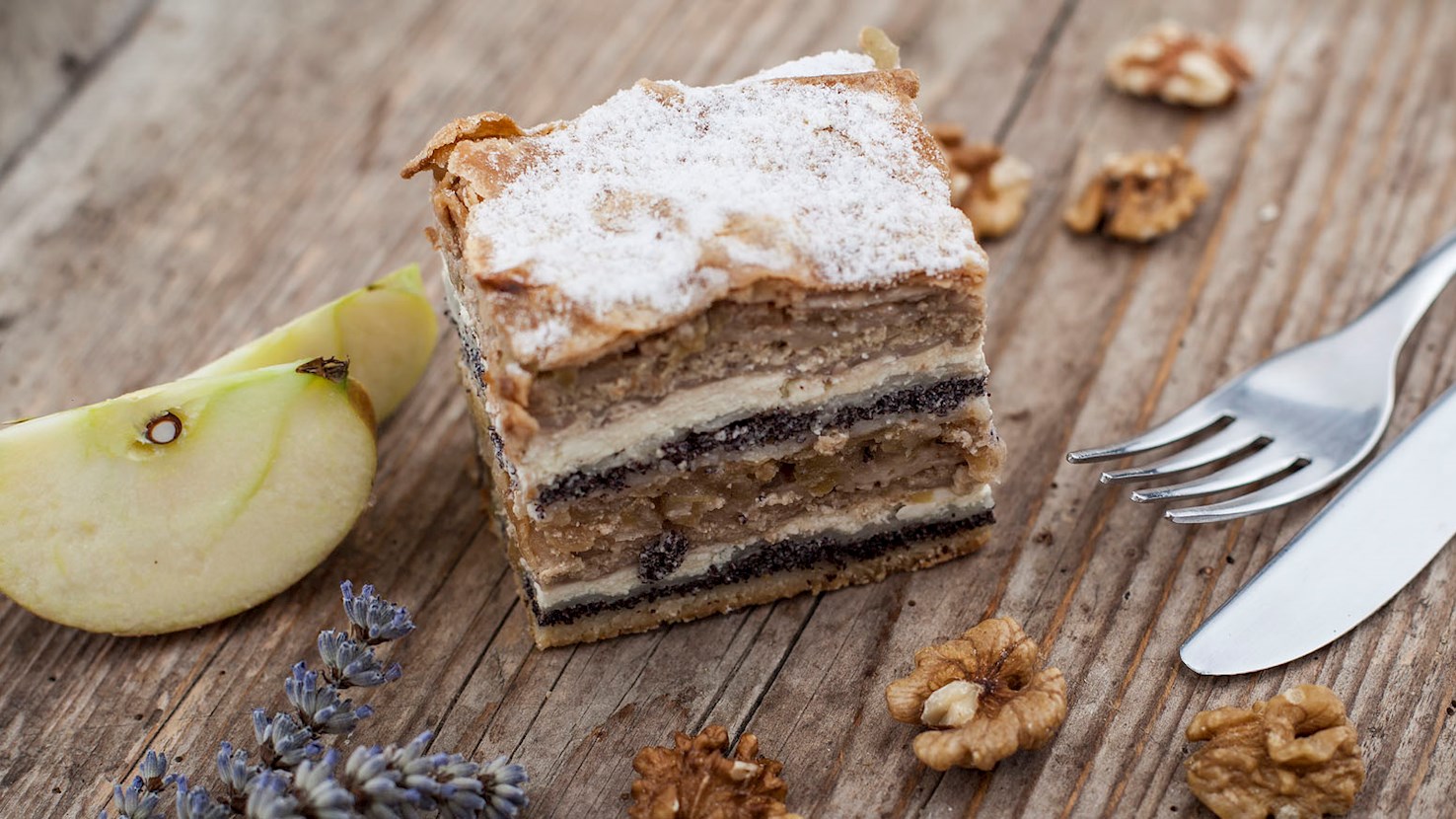
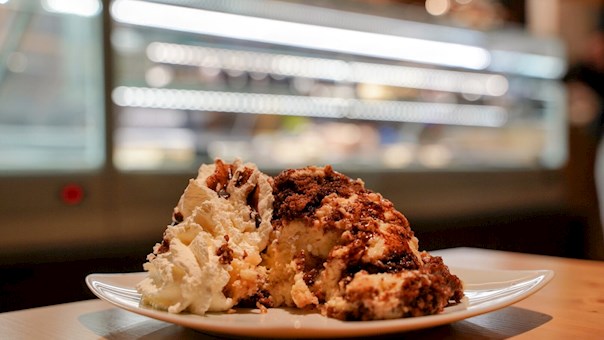
This well-known dessert is a traditional dish of Prekmurje, Slovenia’s northeastern region whose recipes have often been inspired by Hungarian and Austrian traditions. According to the Etymological Dictionary of the Slovenian Language, Prekmurska gibanica is a variety of potica, a layered strudel pie characteristic for the eastern part of the country. The name comes from gibâničnik, a type of pastry basket, or gibâničar, an old Slovenian word for a baker. The oldest written records of Prekmurska gibanica date back to the 1700s when it was first mentioned as gebanza, while another written source from 1828 described it as a dessert that is typically served at weddings. This interesting combination of different fillings and paper-thin phyllo strudel pastry is actually very common in Central European cuisine, but what makes Slovenian gibanica different from the others is the bottom layer, often made with shortcrust pastry. The fillings used to make Prekmurska gibanica are divided by butter-brushed pastry sheets and layered in this exact order: poppy seeds, cottage cheese, ground walnuts, and grated apples. Also, the original gibanica has eight layers of filling, which means that the layering is done twice, finished with another sheet of pastry, and brushed with egg wash before baking. Traditionally prepared during festive seasons, Prekmurska gibanica has a rich flavor, an intense aroma, and must retain its succulent sweetness without being too greasy.
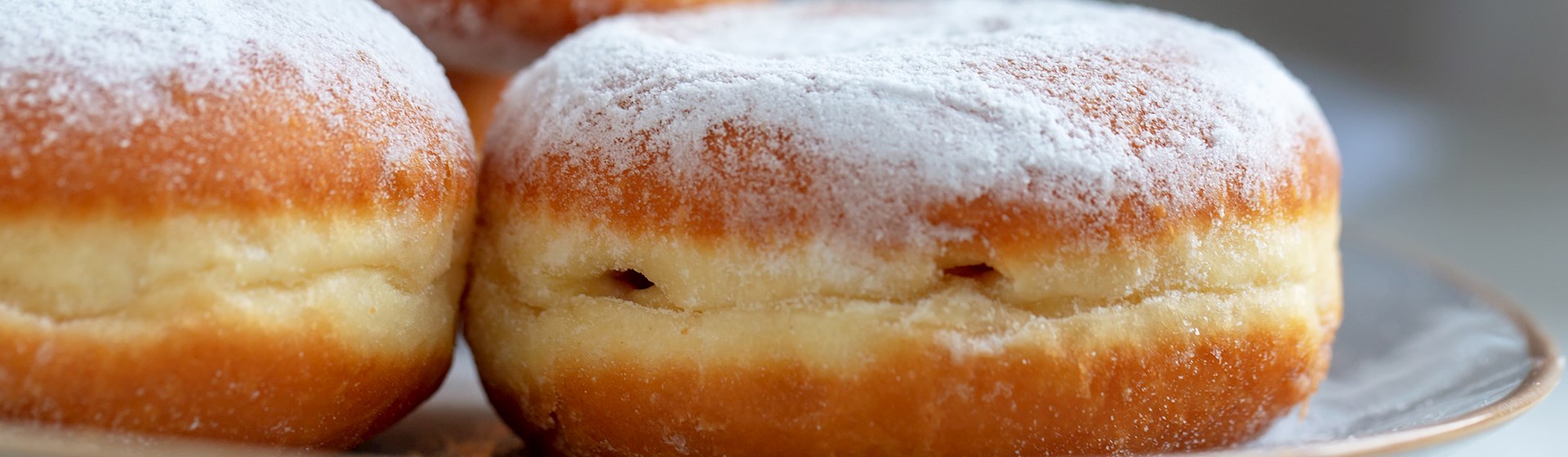
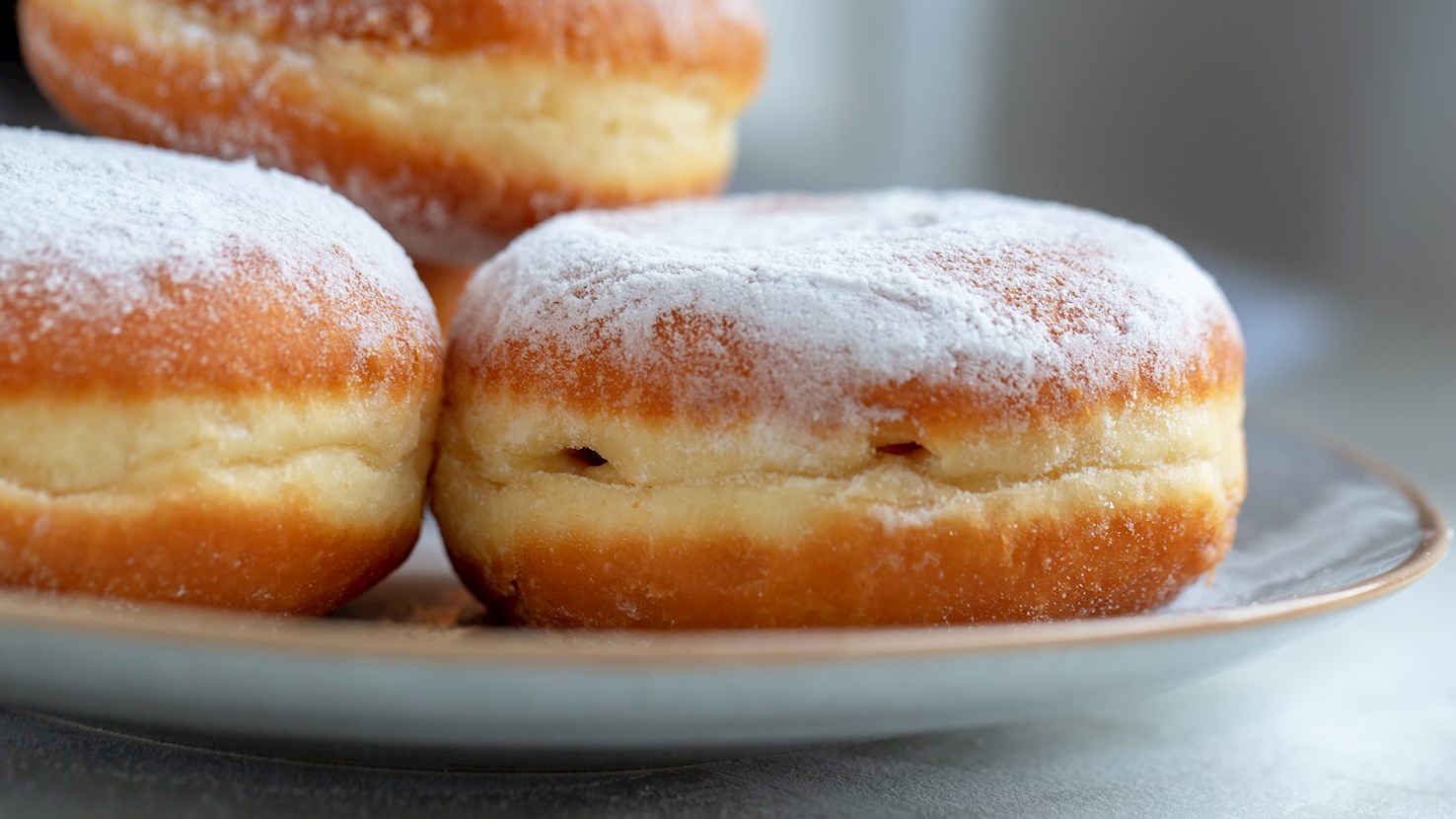
Krapfen was probably the first European-style doughnut to appear, followed by similar varieties in other countries. These pastries are traditionally prepared with leavened dough that is deep-fried until golden and crispy on the outside, while they remain soft, light, and airy on the inside. Though krapfen can be prepared plain, they are most often filled or topped with jams, and vanilla or chocolate custards, while the top is usually dusted with powdered sugar or drizzled with chocolate. The origin of the word krapfen dates back to 9th century, and the recipes in German can be found as early as the 14th century. The sweet versions of the pastry became predominant, and have remained closely associated with the Carnival, a festive period which precedes Christian Lent. Interestingly, during the Carnival, one krapfen in a batch filled with jam and fruit preserves might contain a filling of mustard as a prank. It is believed that doughnuts spread throughout many central European countries, which adopted the technique but used different regional names. Consequently, krapfen in Germany goes under Berliner, pfannkuchen, faschingskrapfen, krebbel, or kreppel. In Poland, they are known as pączki or krepel, Hungarians refer to them as fánk, Slovak as šišky, while the Czechs use the term koblihy. In Slovenia, they are better known as krofi, while the standard name throughout Croatia, Bosnia, and Serbia is krofne or krafne. In St. Petersburg, Russia, the doughnuts are known as pyshki (either ring-shaped or without a hole), and there is a local café that has been serving pyshki prepared from the original recipe since the 1960s.
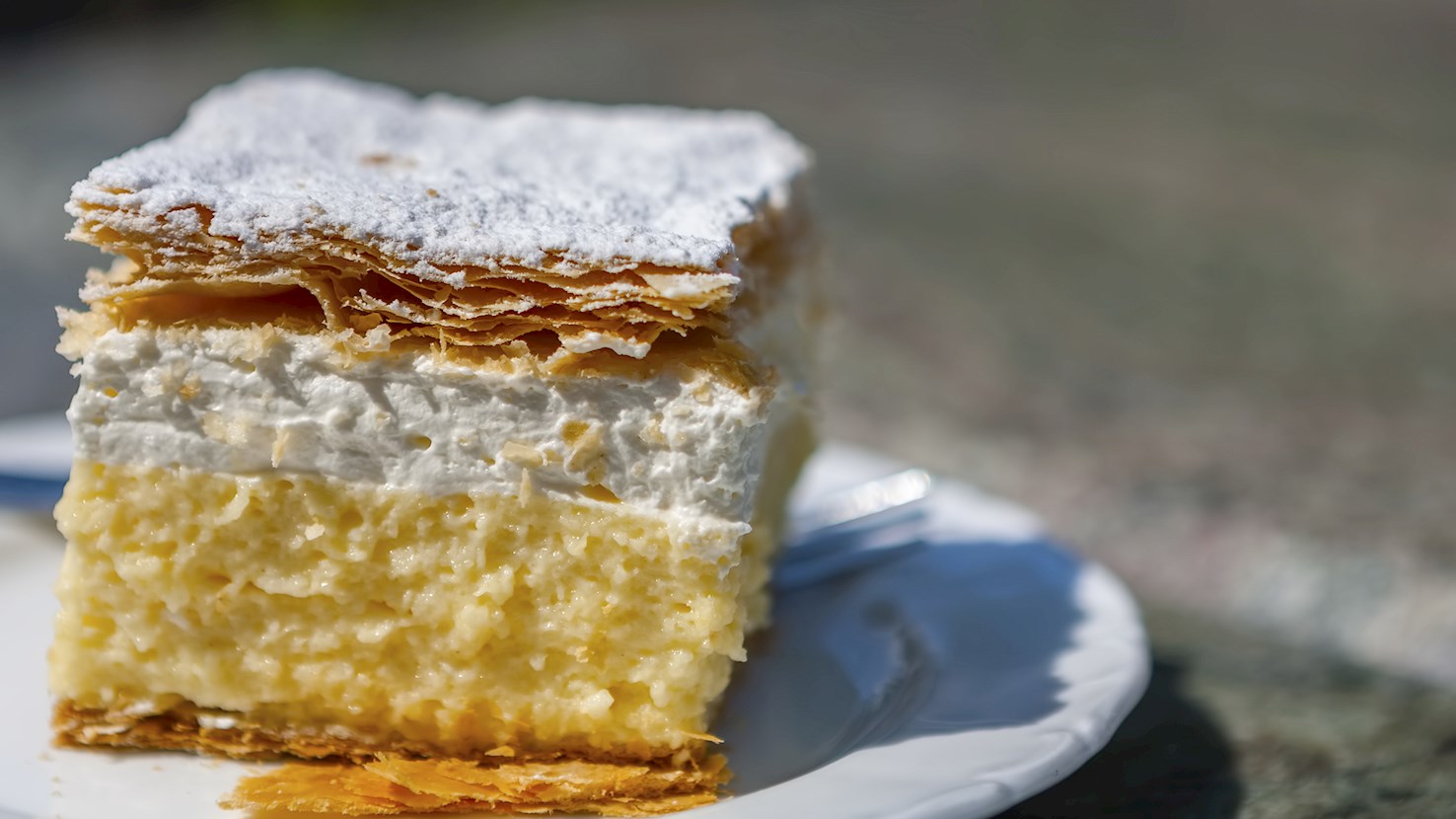
Kremna rezina is a specialty of the Slovenian Lake Bled area. It is a luscious cream cake with a golden, crispy, buttery pastry acting as its base. The base is topped with flavorful vanilla custard, whipped cream, and a layer of thin, buttery dough. The whole cake is traditionally dusted with icing sugar and served sliced in cubes. The story of kremna rezina (or Bled cream cake) began with the arrival of chef Ištvan Lukačević to Bled's Park Hotel, where he modified the Hungarian cream cake by adding the right proportions of whipped cream into it, and in 1953, the hotel presented Lukačević's invention to the public. The new dessert was a huge success and became a popular tourist treat, with up to 3,500 slices sold per day. The authentic kremna rezina is not just a cake, but a piece of art – it is said that the pastry is folded seven times before it's left to rest, the custard is cooked for exactly seven minutes, and each cake is cut into a seven-by-seven centimeter square.
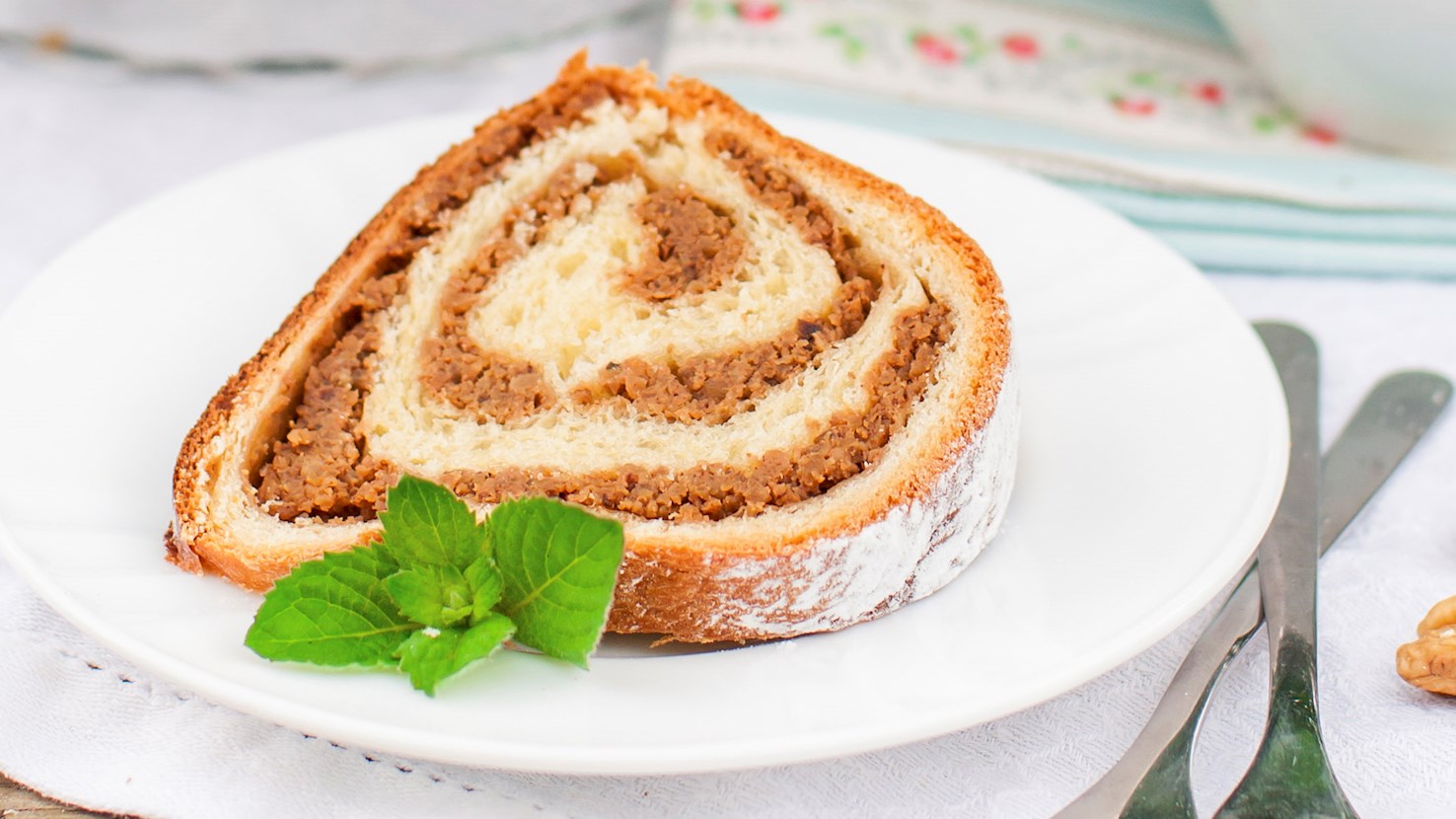
Commonly known as every Slovenian housewife's source of pride, potica is a traditional cake that is usually prepared for festivities and celebrations such as Christmas and Easter. The cake was derived from the older rolled dough cakes, and it was first mentioned in 1575. Originally, it was a cake reserved for the upper class, but over the years, it gained popularity with the peasants. There are around 60 types of potica, with various traditional fillings such as walnuts, hazelnuts, tarragon, honey, poppy seeds, and cottage cheese. Modern versions of potica even include chocolate as a filling. This dessert is a very important part of Slovenian cuisine, so much so that it was featured twice on Slovenian postage stamps. Today, the cake can be bought in supermarkets or consumed in numerous Slovenian restaurants, but it is said that homemade potica is still the best.
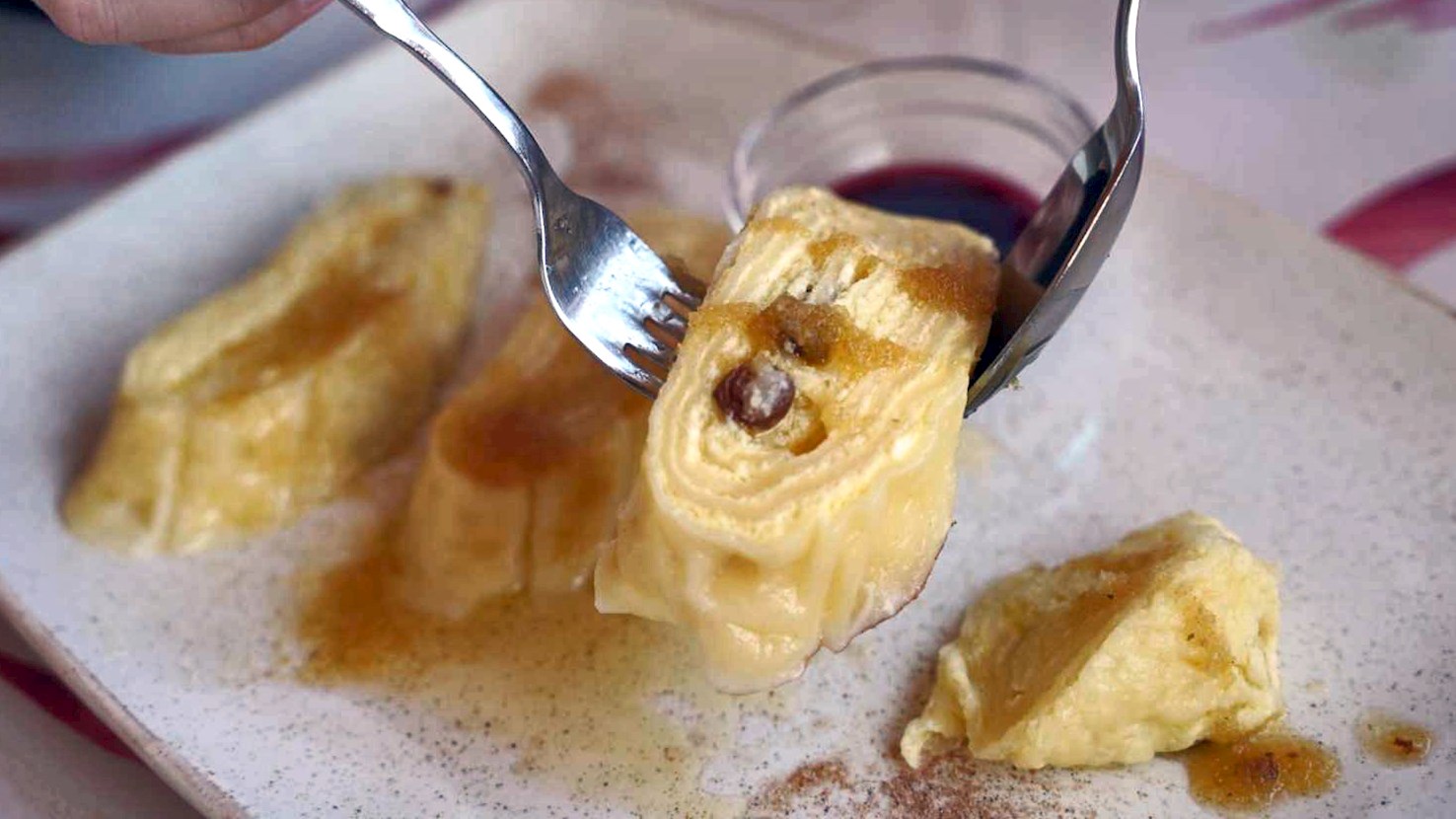
Sirovi or skutni (skutini) štruklji is a traditional variety of štruklji originating from Slovenia. The dough is made with a mixture of flour, water, eggs, oil, and salt. Once rested, it's rolled out into thin sheets that are topped with a mixture of sour cream and skuta (curd cottage cheese). Sugar and raisins are sometimes added to the mixture, but they're not mandatory. The dough is rolled up into a log, and the štruklji are wrapped in a kitchen cloth and then boiled in salted water until fully cooked. Once they've been taken out of the pot, the štruklji are cut into smaller pieces, and the dish is then enjoyed as it is or topped with breadcrumbs fried in butter.
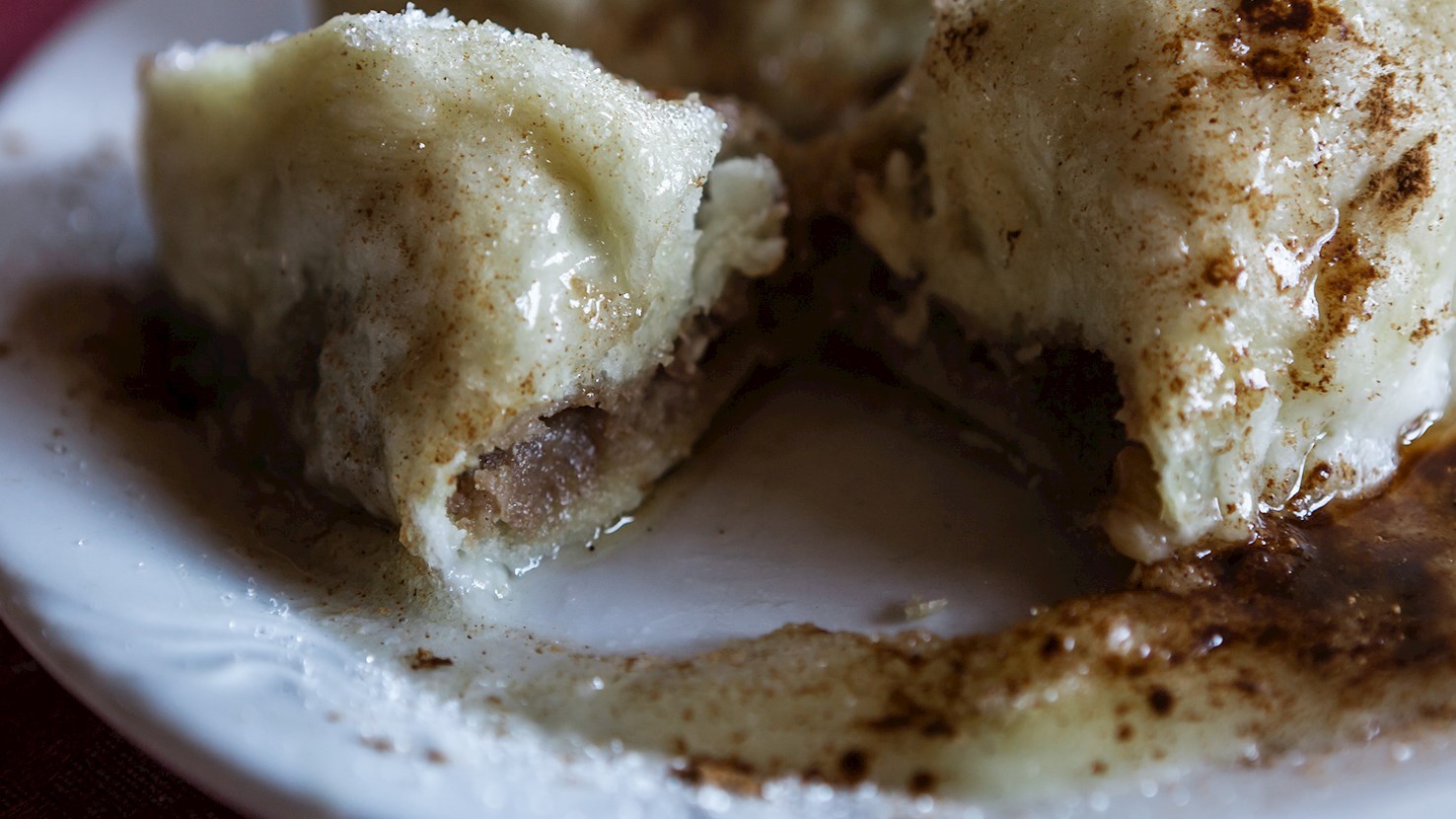
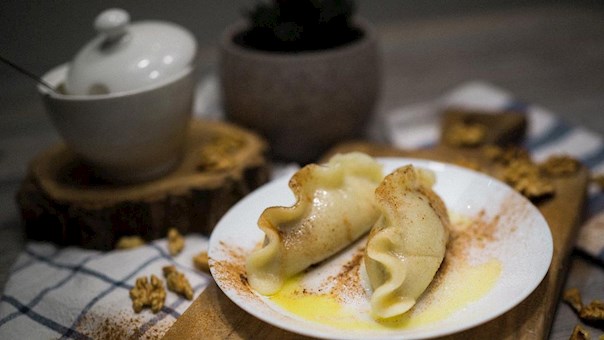
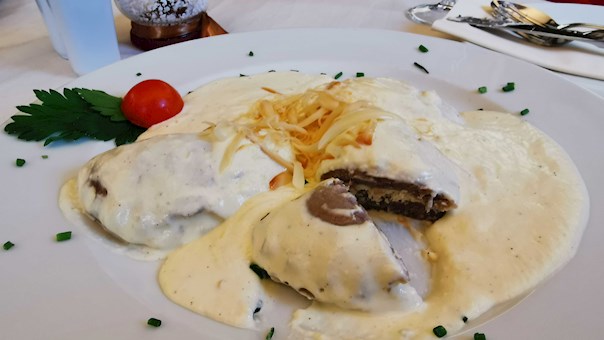
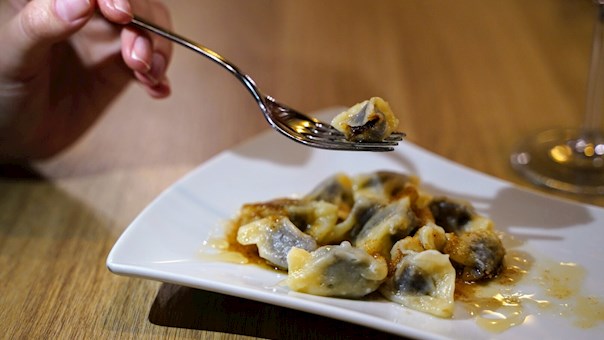
Although they originated as a festive dish that was only served on special occasions, štruklji from Kobarid have become a favorite local dessert that is enjoyed throughout the region. They are prepared with a thin layer of dough and a sweet walnut filling that is enriched with raisins, lemon zest, vanilla, and rum. When the filling is neatly wrapped, each štrukelj is gently pressed in the middle to achieve its typical shape. It is said that this tradition allows chefs to leave their signature on each handmade štrukelj. These sweet dumplings are best served warm, preferably doused in syrup and dusted with cinnamon, sugar, and ground walnuts, or sprinkled with buttered breadcrumbs.
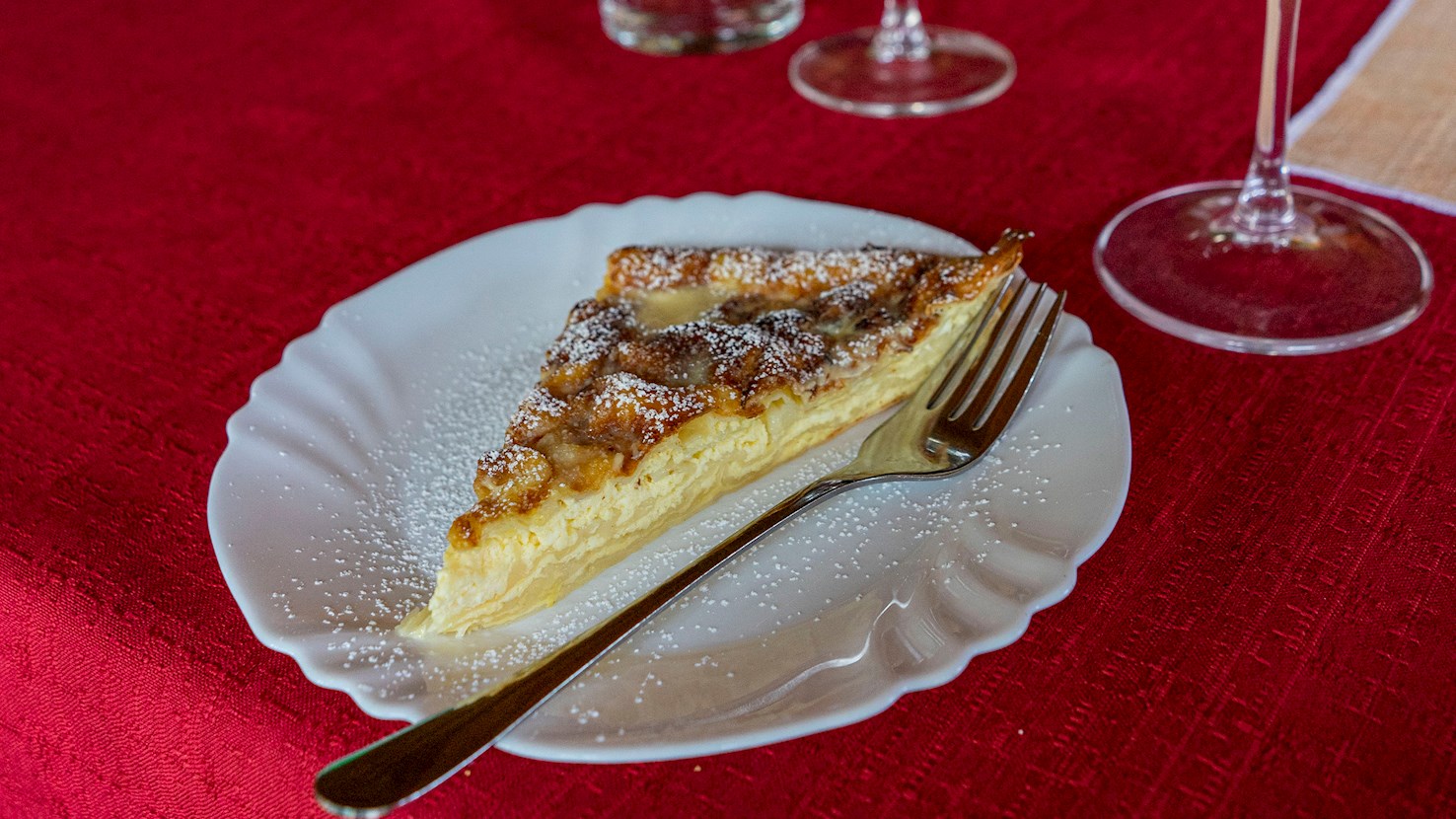
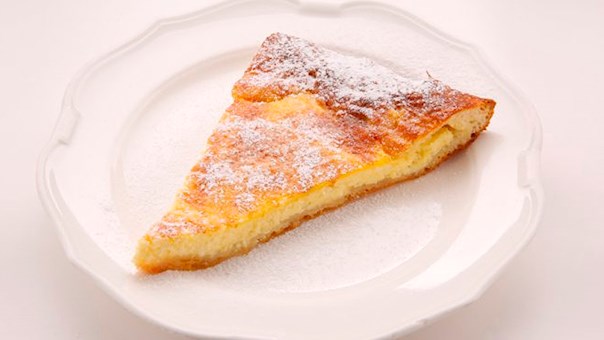
Prleška gibanica is a traditional cake originating from Prlekija. This version of gibanica is prepared with curd cheese and sour cream. Other ingredients include eggs, flour, sugar, oil, butter, vinegar, salt, and warm water. The dough is rolled into thin sheets, then topped with a combination of curd, eggs, and sour cream in alternating layers. The last layer of dough is topped with sour cream and a bit of sunflower oil, and the cake is then baked until it's ready to be served. If desired, prleška gibanica can be (once again) topped with sour cream and sprinkled with sugar before serving.
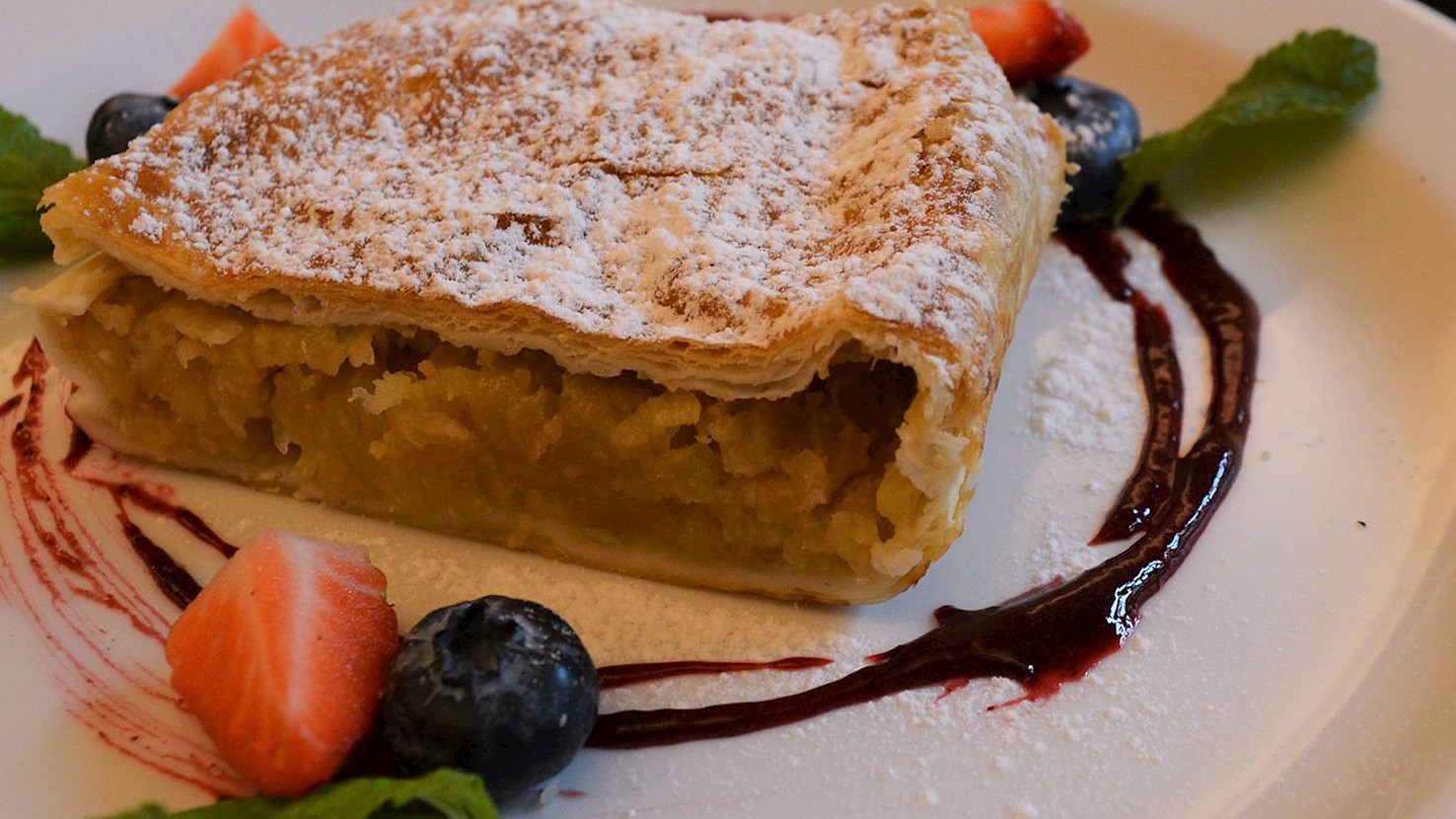
As the name suggests, strudelj is the Slovenian version of strudel, which is especially popular in the Vipava area. Since fruit is always at hand in the valley, sweet strudelj is one of the favorite desserts of the locals. Cherry strudelj is the most popular variety, but there are also other varieties prepared with apricots, peaches, pears, plums, and apples. In late autumn, dainty eaters will surely be delighted by the exceptional persimmon strudelj.
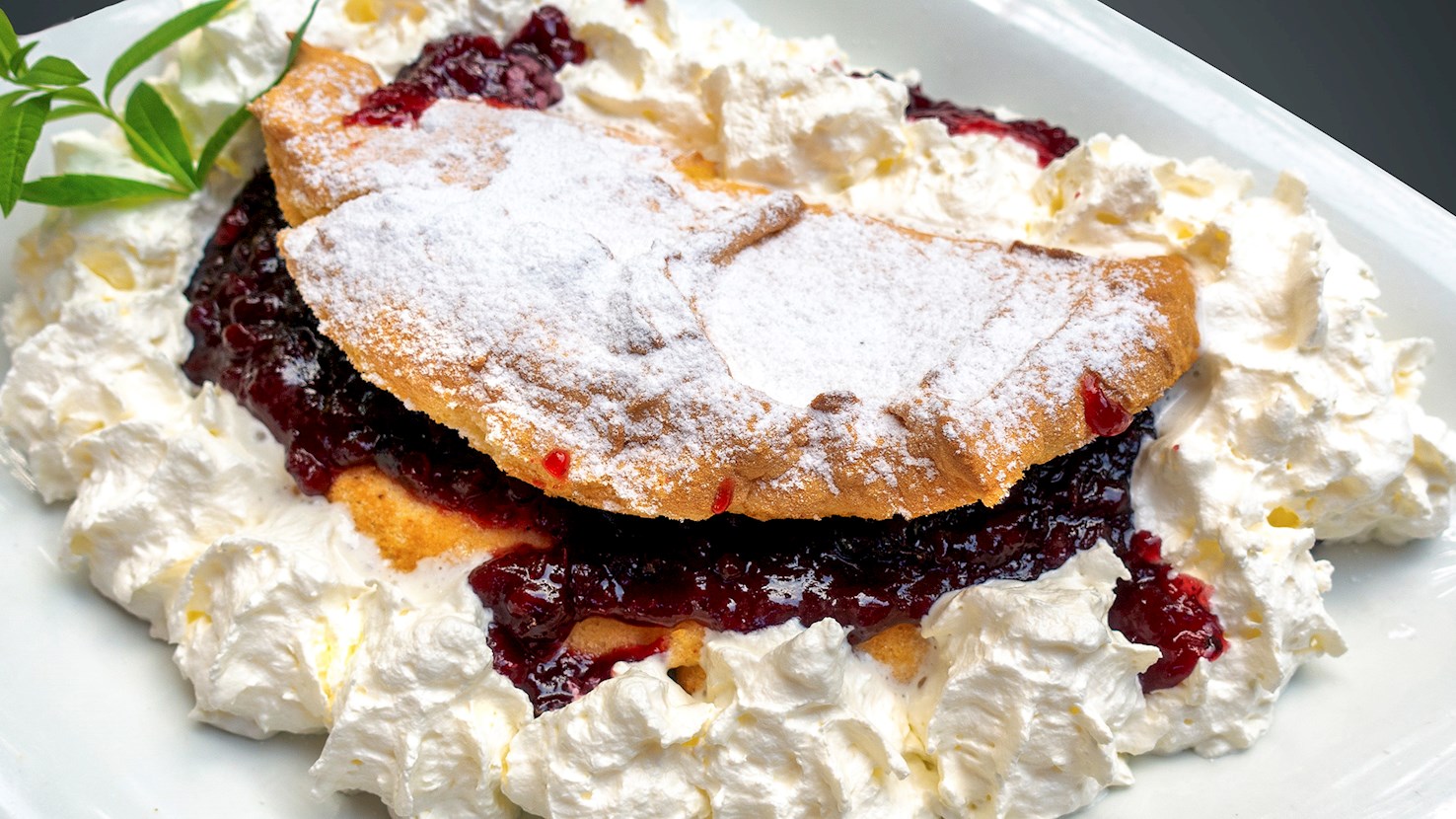
Pohorska omleta or Pohorje omelet is the most famous dessert of the Slovenian region called Pohorje. It was invented in the Poštarski Dom mountain hut in the middle of the 20th century. The dessert is made with eggs, sugar, vanilla sugar, salt, flour, rum, cranberry jam, whipped cream, and mint liqueur. In order to prepare it, egg whites, egg yolks, salt, sugar, rum, and flour are made into an omelet which is then baked in the oven. After it has been baked, the omelet is spread with cranberry jam, decorated with whipped cream, and sprinkled with mint liqueur. This is a dessert the guests need to wait for, because it is always served warm and freshly prepared.
Dražgoški kruhek is a type of gingerbread that is prepared with honey-flavored dough, and it is usually enriched with various spices such as cloves or cinnamon. The gingerbread comes in different shape and sizes, but each is skillfully imprinted or embellished and then glazed with honey. Its origins go back to the 18th century, and its production is typically associated with Dražgoše and Škofja Loka, as well as the entire Gorenjska region. Kruhek is nowadays usually sold as a souvenir.
TasteAtlas food rankings are based on the ratings of the TasteAtlas audience, with a series of mechanisms that recognize real users and that ignore bot,
nationalist or local patriotic ratings, and give additional value to the ratings of users that the system recognizes as knowledgeable.
For the “Top 19 Slovenian Desserts” list until August 15, 2026, 1,229 ratings were recorded, of which 915 were recognized by the system as legitimate.
TasteAtlas Rankings should not be seen as the final global conclusion about food. Their purpose is to promote excellent local foods,
instill pride in traditional dishes, and arouse curiosity about dishes you haven’t tried.







What People Say