


shutterstock

Top 10 French Duck Dishes

Last updated on June 15, 2026
01

Magret de canard

4.3 ·

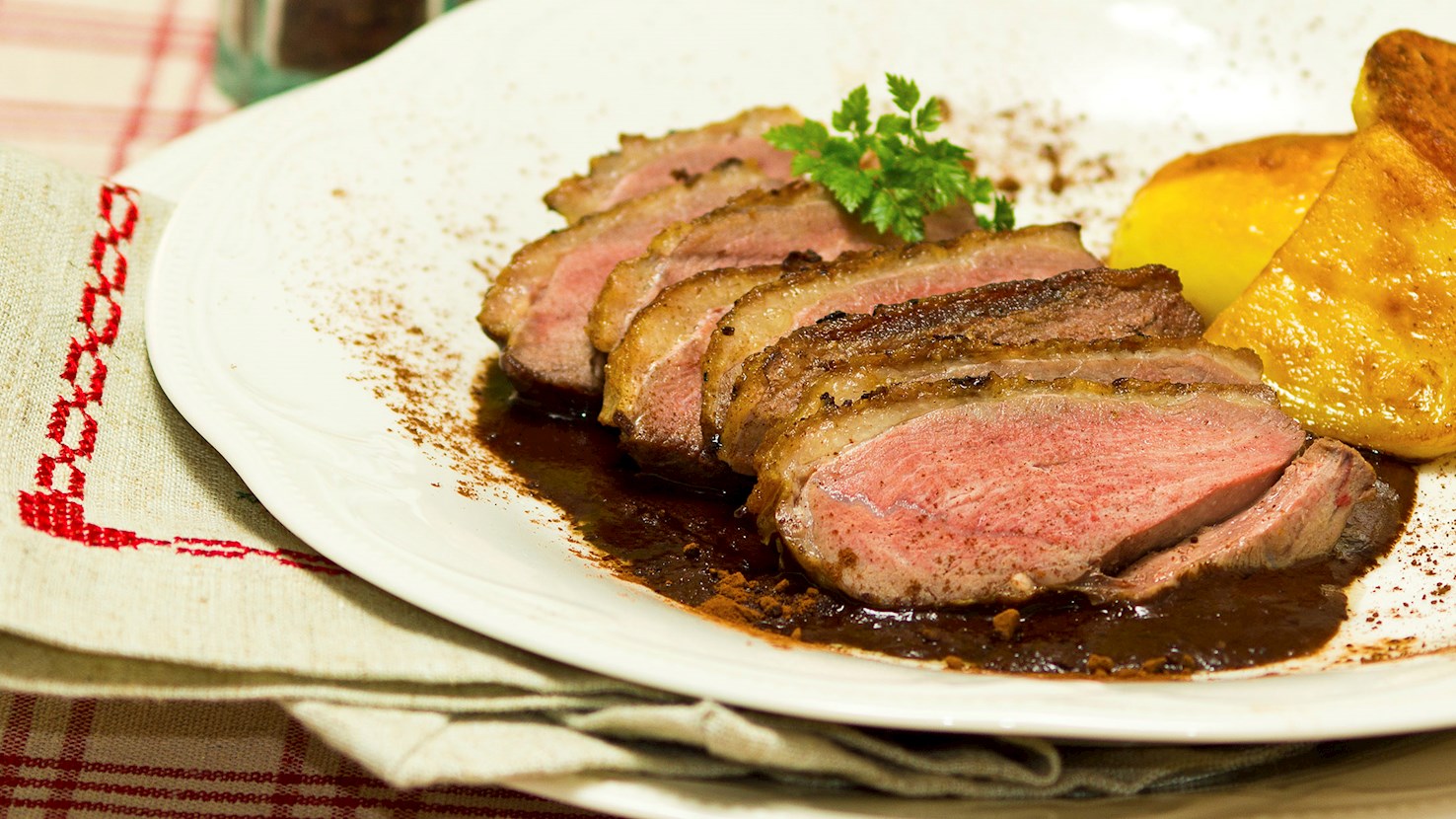
This dish of flash-seared duck breast dates back to the late 1950s, when French chef André Daguin first prepared a magret like a steak and served it medium-rare. The meat is usually served thinly sliced and still slightly pink on the inside. The cut of the breast usually comes from the mulard duck, a cross between the Pekin and the Muscovy duck. This breed is raised for foie gras, so its breast meat is thicker and more flavorful than that of other duck breeds. In the mid-1960s, rare duck breast became extremely popular in the United States thanks to Robert Daley, an American journalist who praised Daguin’s specialty in The New York Times. Today, magret de canard can be found on tables throughout France, both in restaurants and private homes.

02

Confit de canard (Duck confit)

4.2 ·

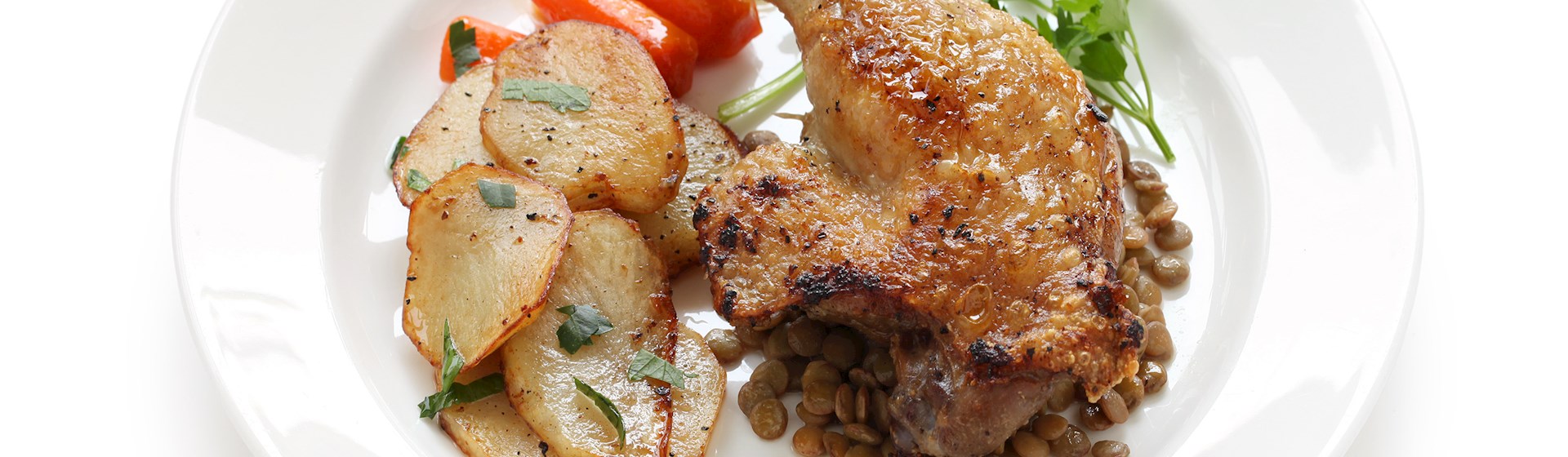
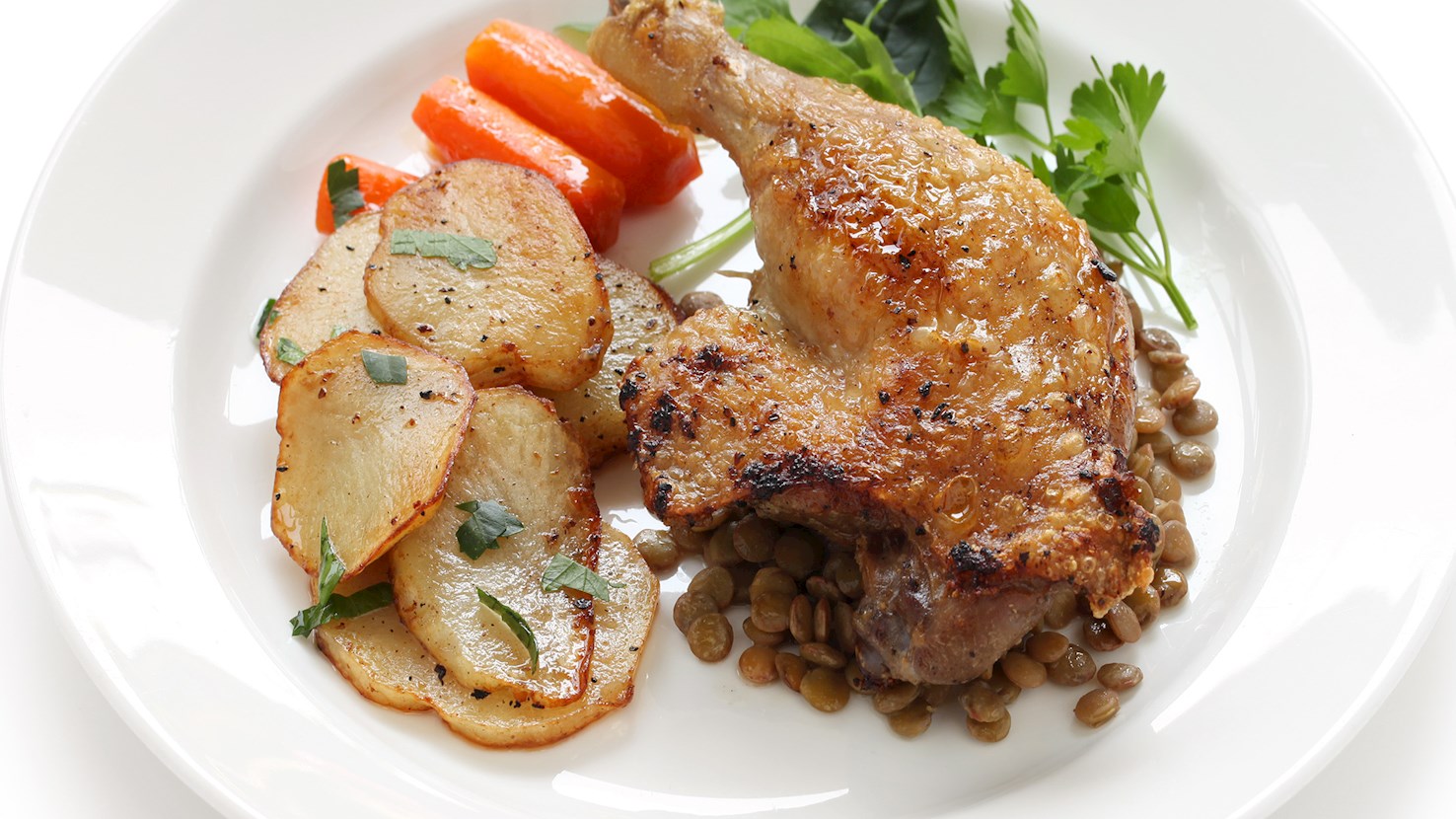
This French classic is made by slow-roasting duck meat in its own fat. What was once used as a method of preserving meat in times before refrigeration is nowadays enjoyed as a rich and flavorful dish of its own. The meat is typically seasoned with salt, pepper, and fresh herbs and spices such as thyme and bay leaves. Traditionally, duck confit is cooked in a copper pot over a fire for up to 24 hours, in order for the fat to render and cover the meat. After cooking, while still hot, the meat and the fat are poured into jars and sealed tightly so that the dish can be stored for later use. The name confit stems from the past participle of the French verb confire, meaning to preserve. Duck confit is so rich and savory that it is usually served on its own, without sauce. However, a side of puy lentils makes an excellent accompaniment to this dish.

03

Canard aux cerises

3.8 ·

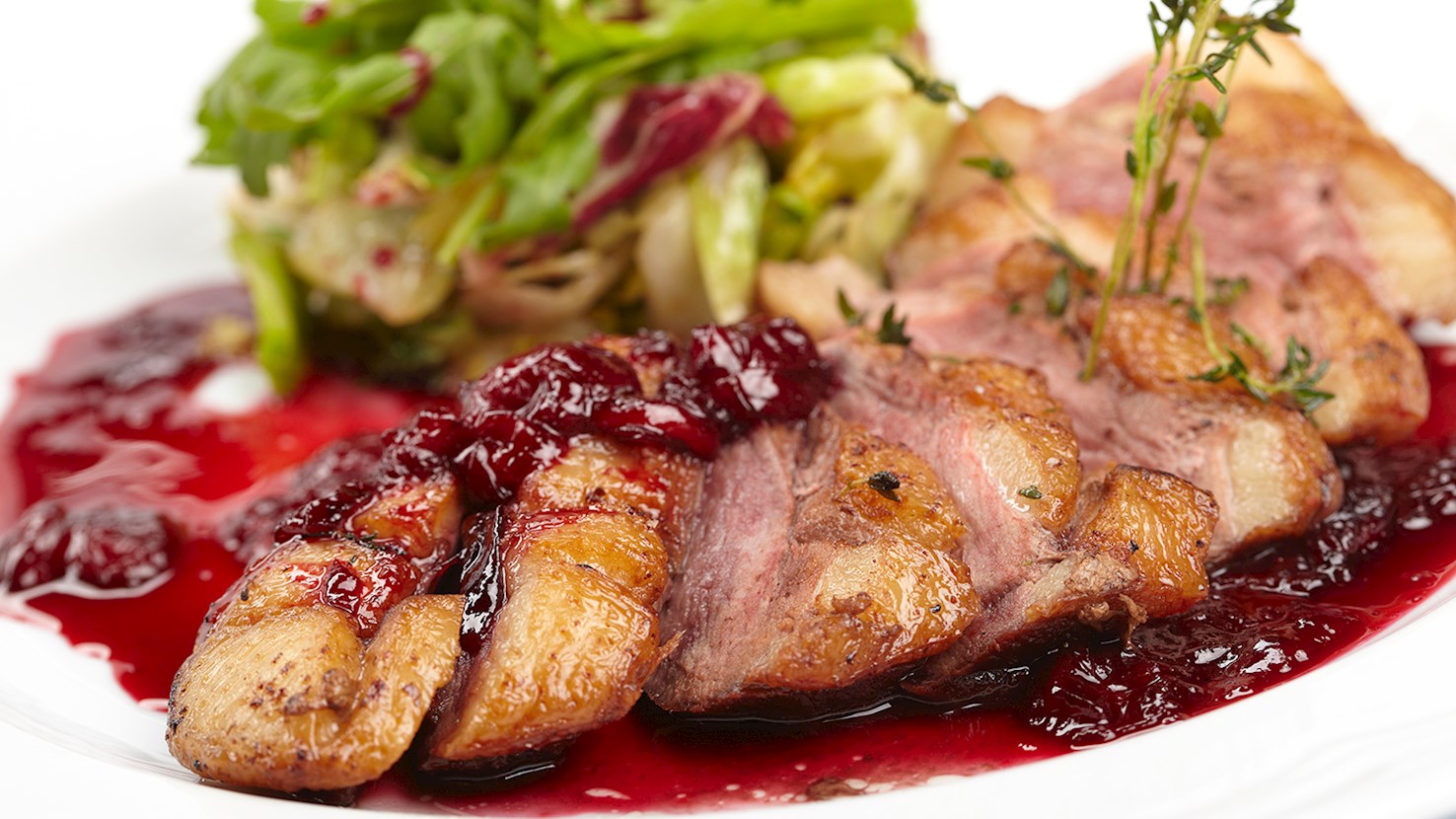
Canard aux cerises is a traditional dish made with duck and sour cherries as the main ingredients. Other ingredients include carrots, onions, duck fat (or lard), white wine, seasonings, and aromatic herbs such as bay leaves, parsley, celery, and thyme. The duck is browned in fat with the carrots and onions over very low heat. The wine, herbs, and seasonings are added to the pot, followed by water, until the duck is fully immersed. The dish is simmered until the meat becomes tender, and the duck is then removed, the fat and the juices are skimmed and strained, then returned to the pot with sour cherries. Before serving, the duck is carved, while the sauce and the cherries are ladled over the meat.

04

Canard à l'orange

3.8 ·

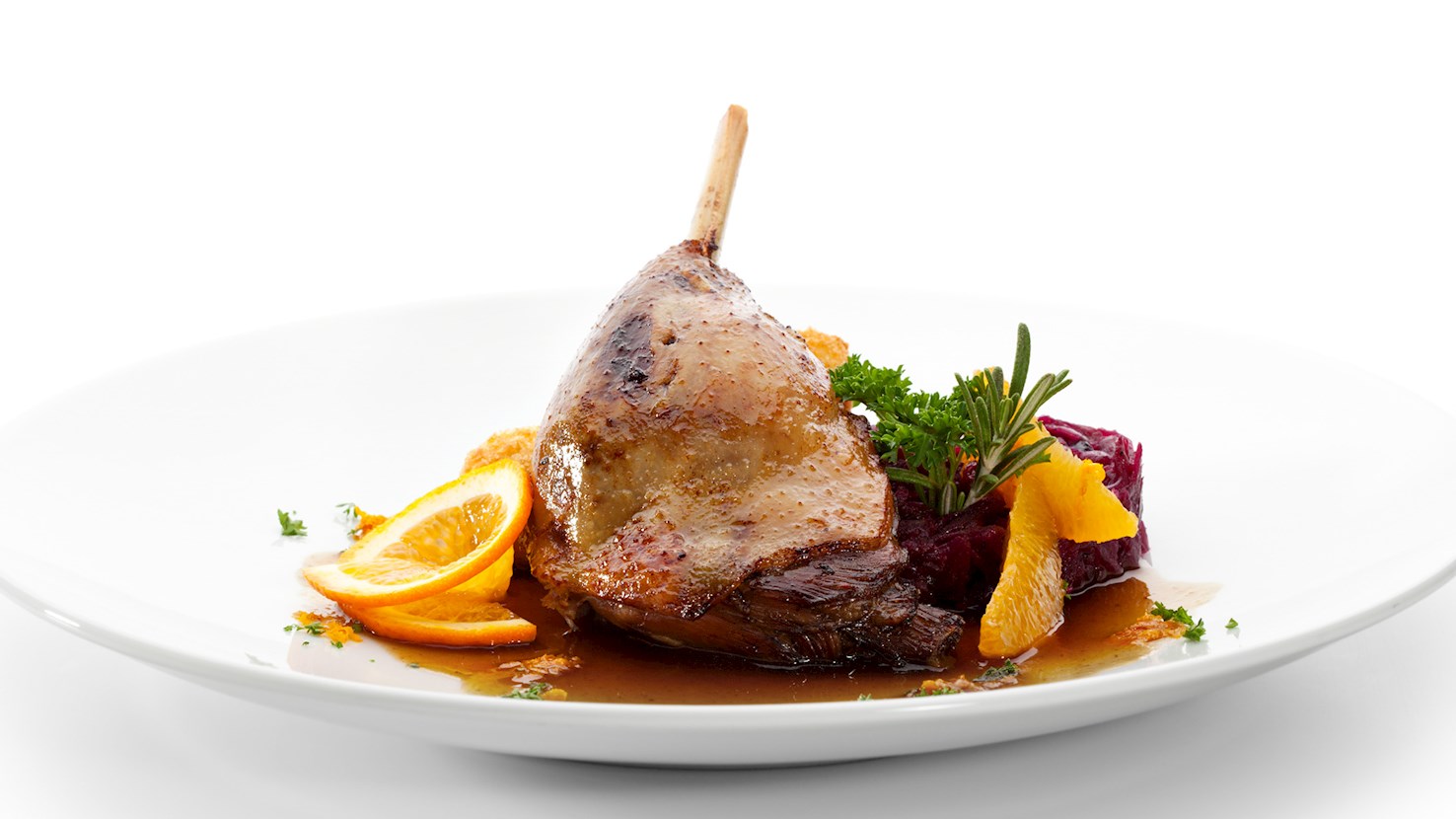
Canard à l'orange is a traditional dish in which a duck is roasted, then served with a rich brown sauce that's flavored with sugar and orange juice. The dish is typically made with a duck breast known as Magret – which comes from a force-fed duck that was raised for the production of foie gras. This type of duck breast is a bit bigger, about twice the size of a normal duck breast. The duck should be cooked so that it still remains pink on the inside, and the accompanying sauce consists of red wine vinegar, orange juice, sugar, chicken stock, and sugar. The dish is usually garnished with orange pieces on the side. It is believed that canard à l'orange was exported to France by Catherine de Medici. However, some believe that the dish goes back to ancient Middle East, as typical meals from that area often pair meat with fruit.

05

Salade Landaise

3.3 ·

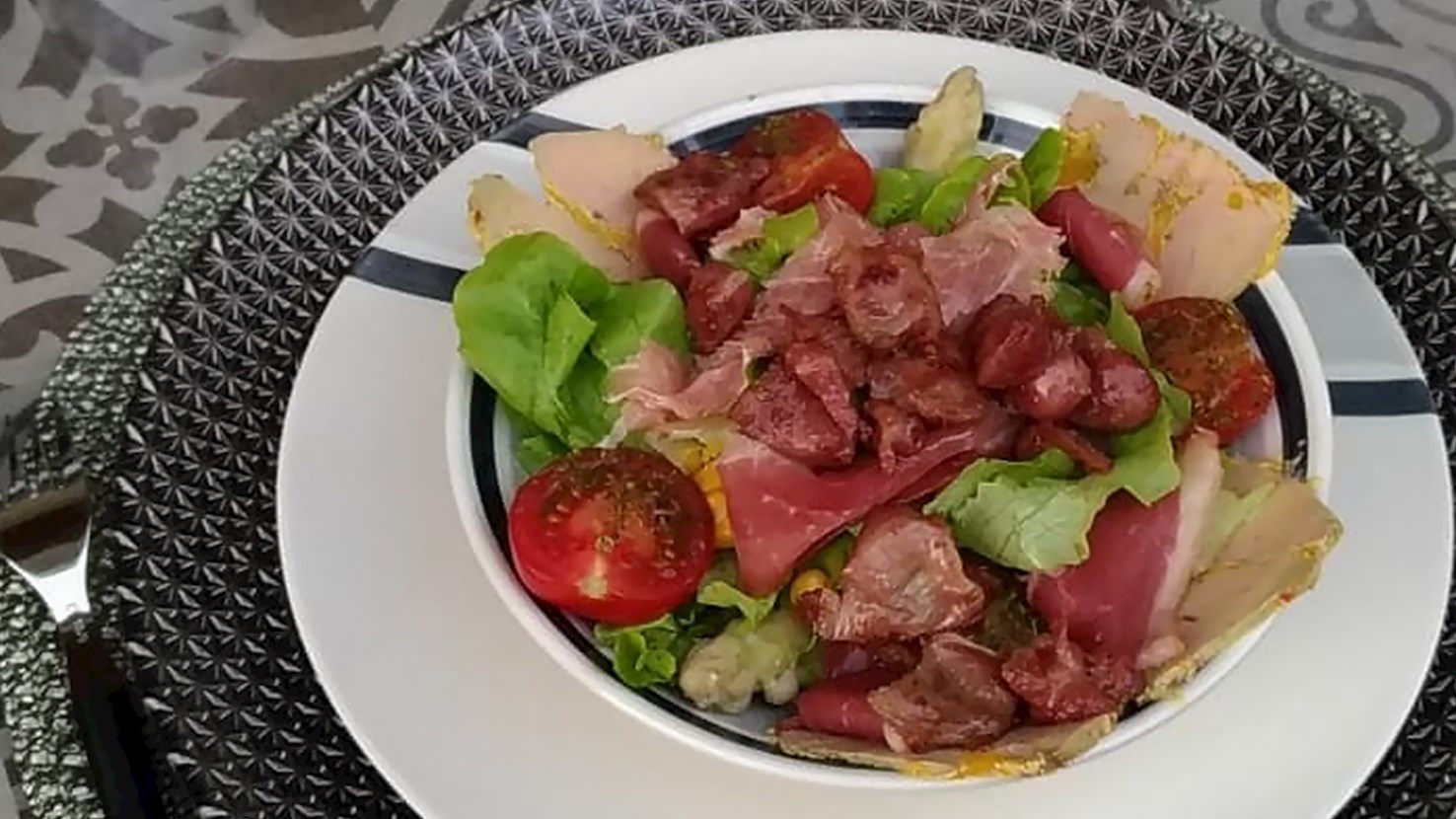
Salade Landaise is a traditional salad originating from the Landes area, famous for its duck and walnuts. The salad is beloved for its contrast of temperatures of the ingredients. It's made with duck breast, gizzards or confit, lettuce leaves, bacon, cherry tomatoes, walnuts, and croutons. The meat is roasted and cut or shredded, then combined with the other ingredients and dressed with a combination of mustard, vinegar, honey, onions, olive oil, and chives. The duck pieces are traditionally arranged on top of the salad, which should be served immediately while the meat is still warm.

06

Canard à la presse (Pressed duck)

n/a ·

Canard à la presse, also known as pressed duck, is a traditional dish that is known for its unique and elaborate preparation. It's a specialty of French cuisine, particularly associated with the Parisian restaurant La Tour d'Argent. The dish usually uses a specific type of duck, often from a particular breed known for its rich flavor. The duck is partially roasted. The most distinctive feature of this dish is the use of a special press. After the duck is partially roasted, certain parts (like the breast and legs) are set aside. The remaining carcass, containing the liver and other internal parts, is placed in a specially designed silver press. This press is used to squeeze out the blood and other juices from the carcass. The extracted juice is then cooked with ingredients like duck stock, wine, and seasonings to create a rich, flavorful sauce. This sauce is typically thickened and enriched with butter. The reserved parts of the duck (breast and legs) are then sliced and served with the sauce.

Best restaurants
07

Civet de canard

n/a ·

Civet de canard is a traditional duck stew. It's made with a combination of duck legs and breasts, bacon, flour, shallots, garlic, red wine, balsamic vinegar, stock, carrots, bay leaves, and thyme. The duck meat is coated in flour and browned, then combined with other ingredients, often in a casserole dish. Once the sauce has formed, carrots are added to the dish and the combination is cooked for a few hours until the meat becomes tender. It's recommended to serve civet de canard with broad beans, mashed potatoes, or roasted parsnips on the side.

08

Canard braisé aux Montmorency (Braised duck with cherries)

n/a ·

Canard braisé aux Montmorency is a traditional dish originating from Val-d'Oise, just north of Paris. The dish is made with a combination of duck, leeks, carrots, onions, turnips, celery, cloves, juniper berries, cinnamon, red wine, chicken stock, butter, sour cherries, sugar, salt, pepper, and bouquet garni. The duck, vegetables, spices, bouquet garni, wine, stock, and seasonings are placed in a casserole, brought to a boil, and simmered for half an hour. The duck is removed, carved, and dotted with butter in an ovenproof dish before it's roasted for an hour while being basted with the pan juices every now and then. The sugar and cherries are sautéed in butter and poured over the duck pieces before serving.

09

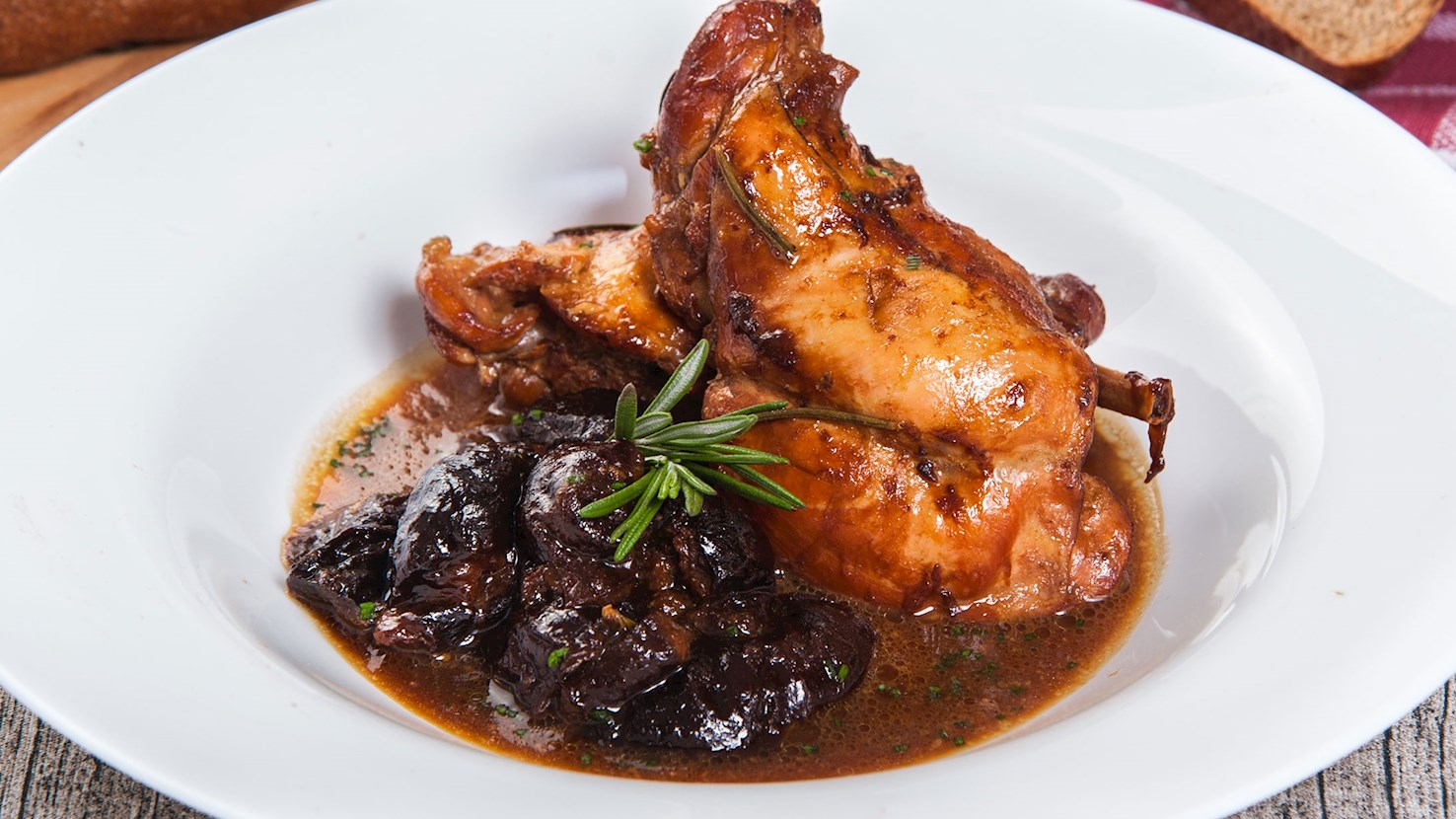
Canard aux pruneaux

n/a ·

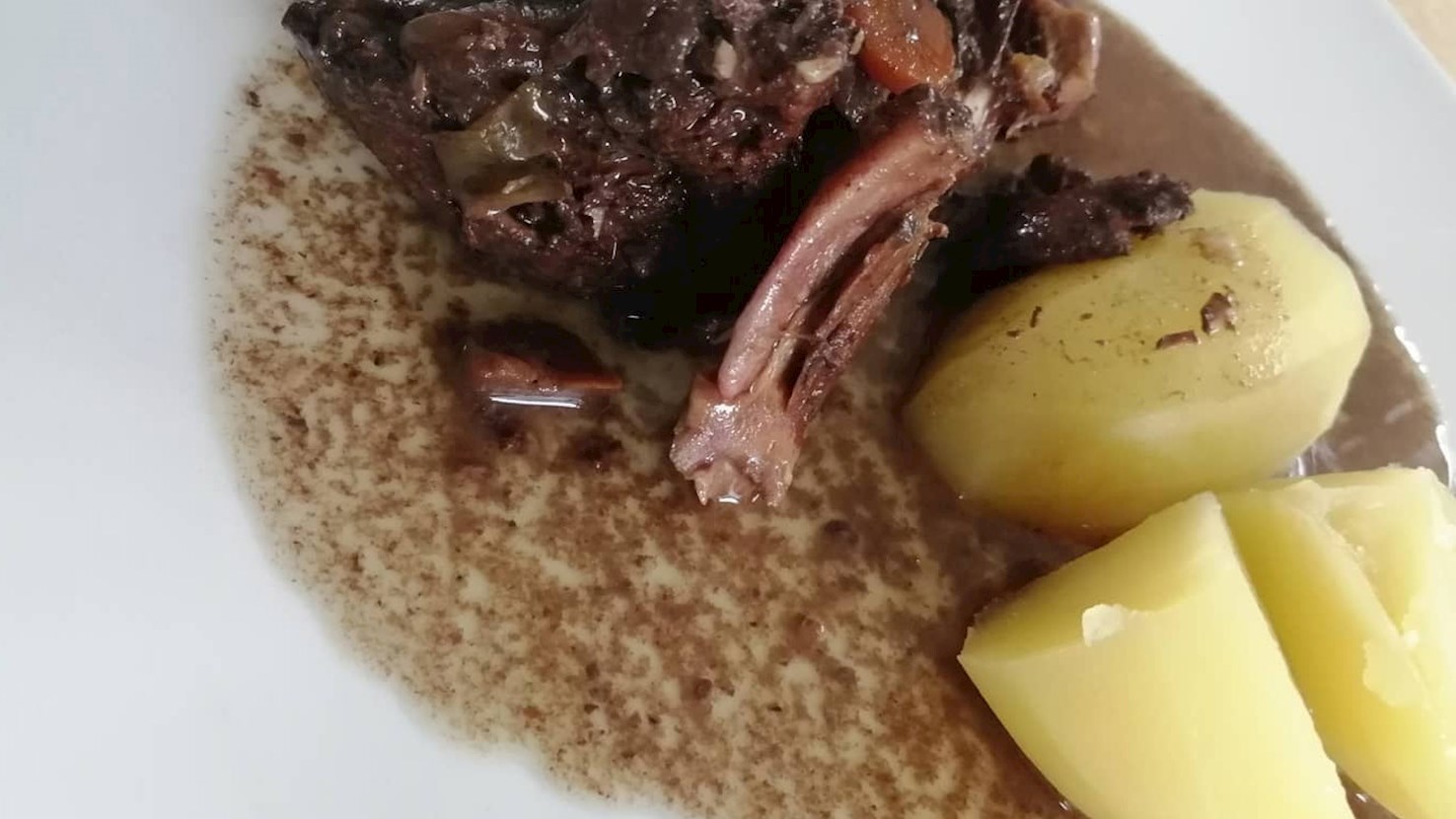
Canard aux pruneaux is a slow-braised duck—typically the legs or thighs—cooked in a rich wine reduction and heavily studded with plump, sweet dried plums. Hailing from southwestern France, particularly the Lot-et-Garonne and Gers departments, the dish is a masterclass in the French sucré-salé (sweet-and-savory) tradition, designed to balance the heavy, gamey fat of the poultry with the dark, caramelized sugars of the fruit. The absolute cornerstone of the recipe is the sourcing of the ingredients: authentic preparations demand pruneaux d'Agen, geographically protected, exceptionally soft, and sticky prunes renowned as the global gold standard, which are traditionally macerated in Armagnac brandy or Floc de Gascogne before cooking. The duck pieces are seared in a heavy cast-iron cocotte, rendering out the thick layer of skin fat until a deep, golden-brown crust forms. The excess fat is then used to caramelize a base of finely chopped shallots, onions, and carrots, forming an aromatic foundation that is quickly deglazed with a local red wine, such as a Côtes de Gascogne or Béarn. The duck is returned to the pot alongside a classic bouquet garni, submerged in the liquid, and left to slowly simmer until the meat threatens to fall off the bone. In the final stages of cooking, the alcohol-soaked prunes are folded into the dark, velvety braising liquid, where they swell with the savory duck juices and naturally thicken the sauce, an effect sometimes aided by melting in a discrete square of bittersweet chocolate to deepen the color and complexity. This intensely comforting, rustic preparation is typically served scorching hot during the colder winter months, ladled over wide ribbons of fresh egg pasta, buttered rice, or simple steamed potatoes, which soak up the highly concentrated syrup.

10

Parmentier de canard

n/a ·

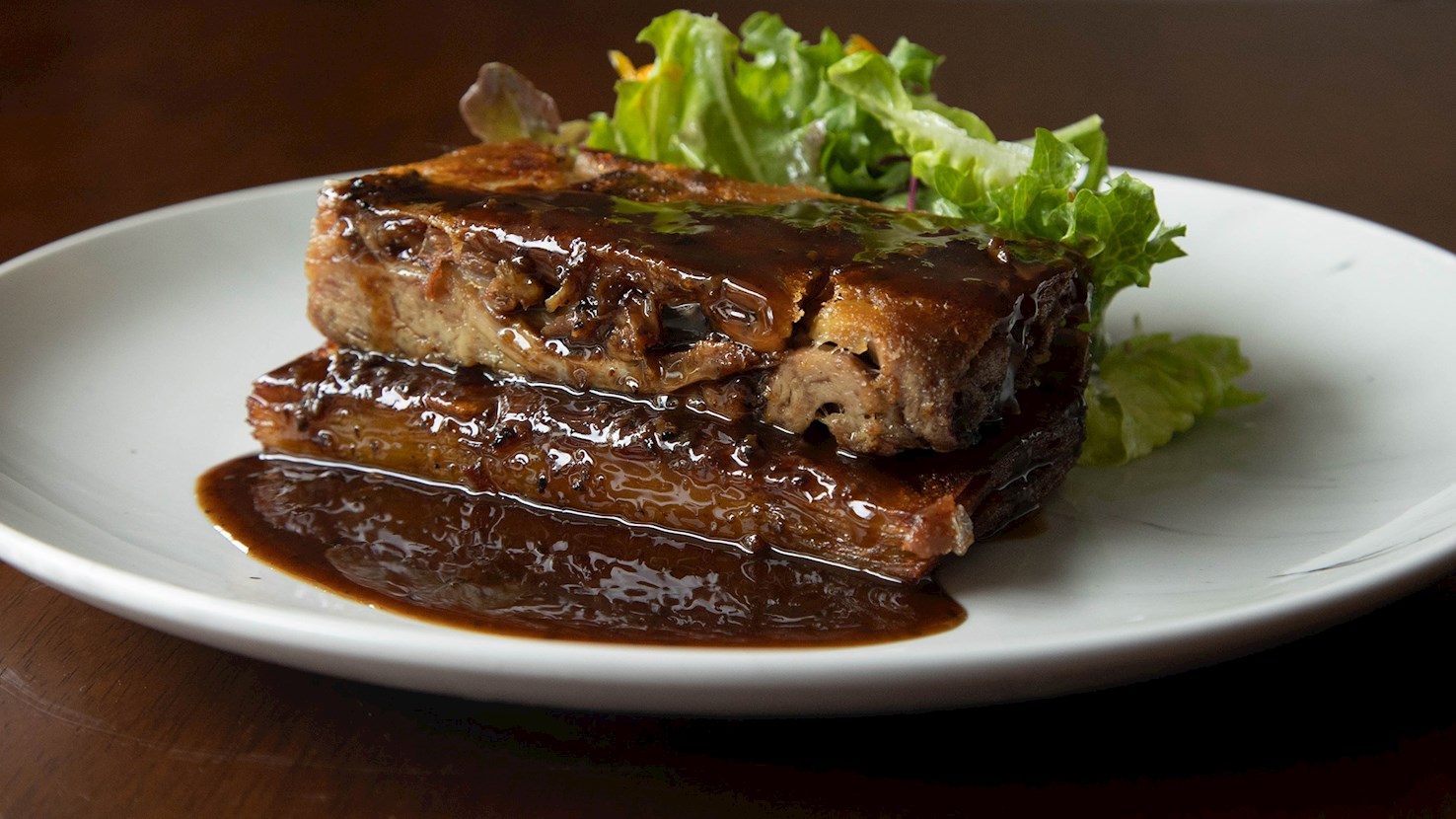
Parmentier de canard is a casserole dish that combines duck, typically duck confit, and mashed potatoes in a layered gratin. For preparation, the most basic method begins with duck legs confit or braised until tender, the meat then removed from the bones and shredded; onions and shallots are sautéed in duck fat, the shredded duck is added and allowed to cook until lightly browned, then wine or a reduction may be added and the mixture seasoned. Meanwhile potatoes are peeled and boiled until soft, then mashed with butter and cream (and sometimes a little milk) along with salt, pepper and nutmeg; in a gratin dish the duck mixture is spread out, topped with the mashed potato and sometimes sprinkled with breadcrumbs or grated cheese, then placed under a hot oven or a grill for a few minutes until the top is lightly golden. Common variations replace the confit with braised duck, include mushrooms or a layer of sautéed vegetables beneath the duck, or enrich the purée with celery‐rave or sweet potato; some versions swap breadcrumbs for a Parmesan crust or add chopped hazelnuts for texture. It is served across France in bistros and homes as a main course, often accompanied by a green salad dressed simply to cut through the richness, and pairs well with a full-bodied red wine from the southwest of France, or a robust white wine if preferred, and a crisp seasonal vegetable on the side helps to complete the plate.

Read more
View all
View map
About this ranking

TasteAtlas food rankings are based on the ratings of the TasteAtlas audience, with a series of mechanisms that recognize real users and that ignore bot, nationalist or local patriotic ratings, and give additional value to the ratings of users that the system recognizes as knowledgeable. For the “Top 10 French Duck Dishes” list until June 15, 2026, 513 ratings were recorded, of which 450 were recognized by the system as legitimate. TasteAtlas Rankings should not be seen as the final global conclusion about food. Their purpose is to promote excellent local foods, instill pride in traditional dishes, and arouse curiosity about dishes you haven’t tried.

Similar lists