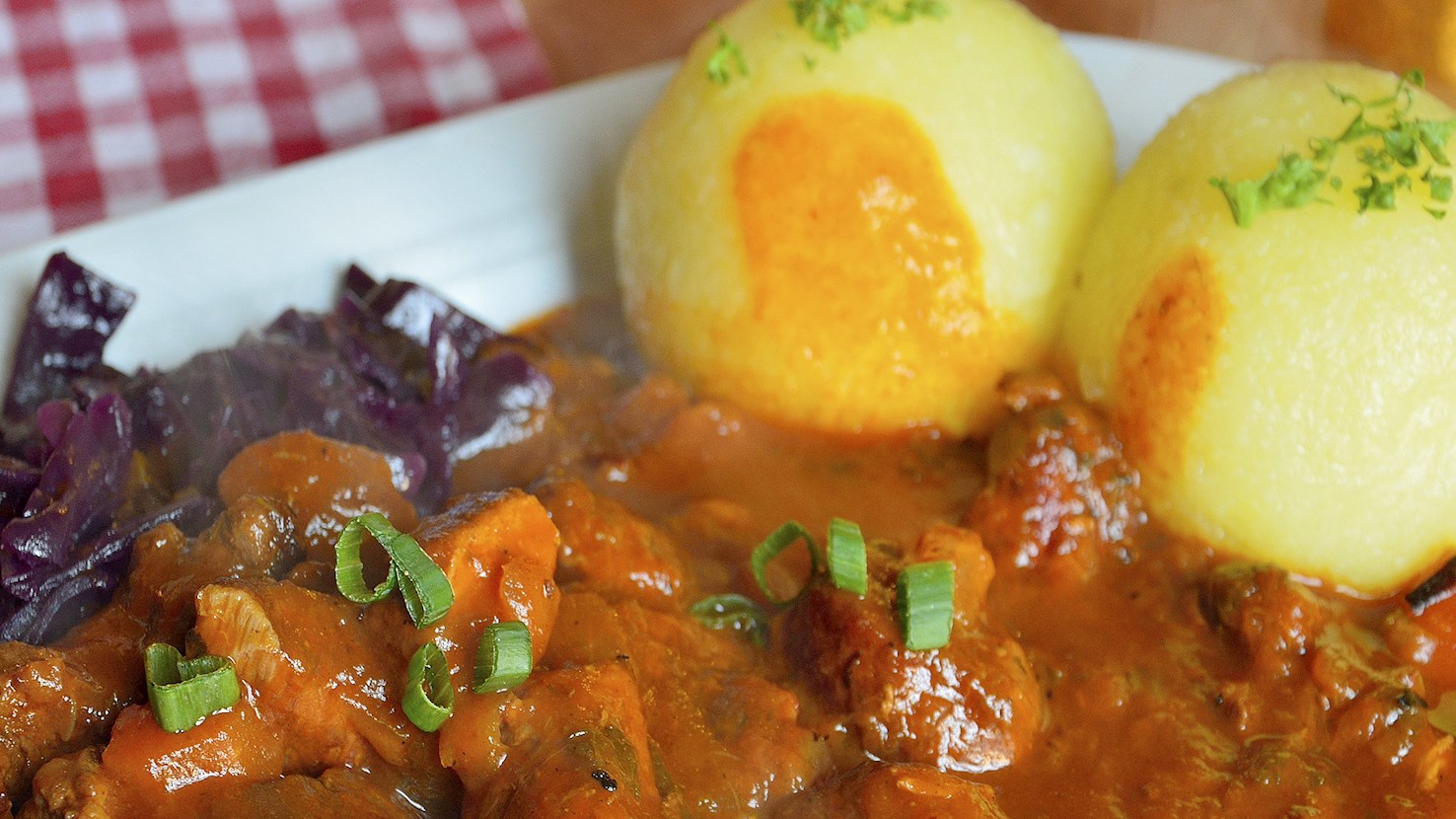
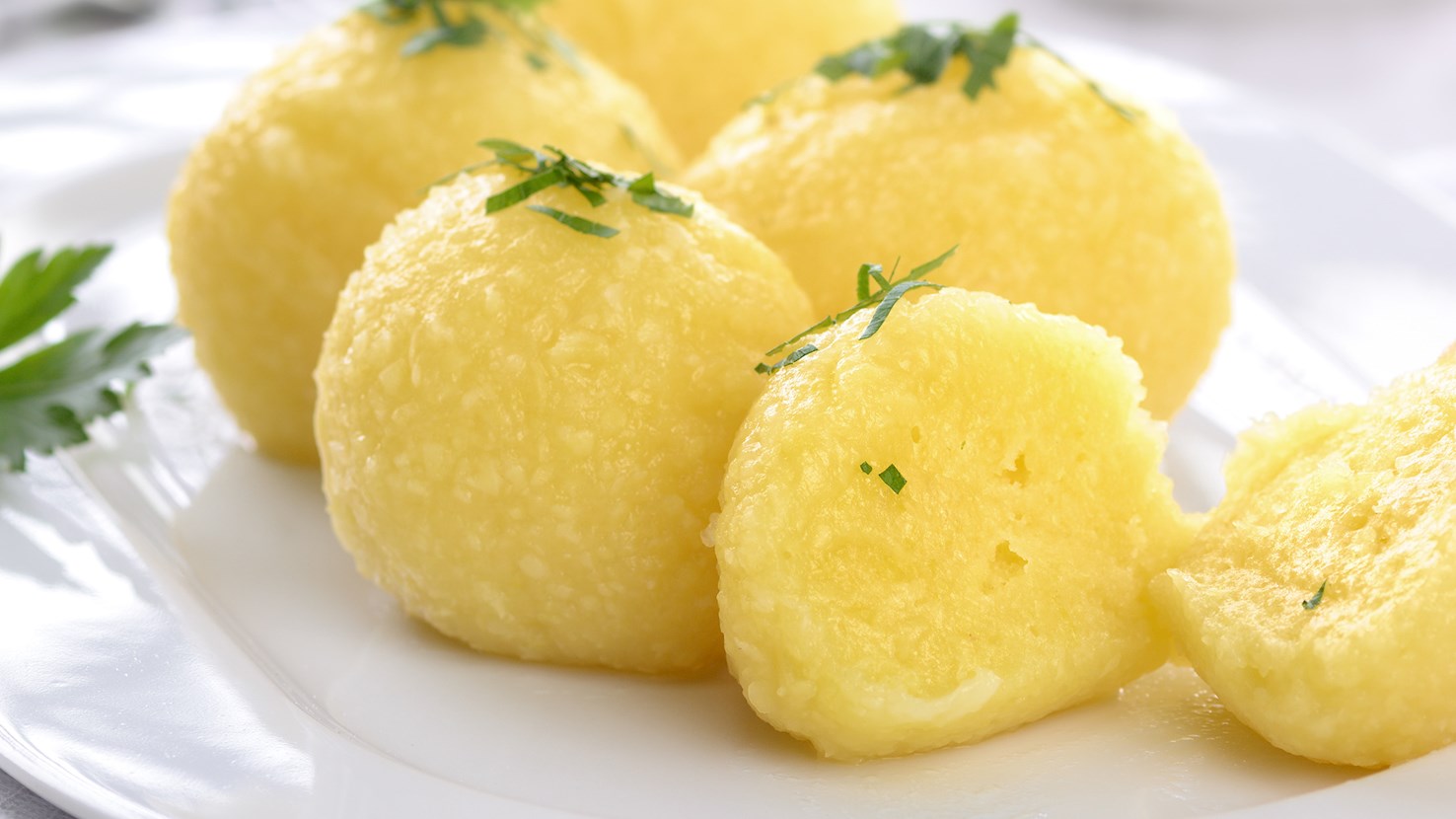
A quintessential specialty hailing from Thuringia, Thüringer klöße is a simple potato dumpling that consists of a mixture of grated raw potatoes and mashed cooked potatoes filled with crunchy cubes of bread. The dumplings are typically cooked in simmering water, but they can also be lightly browned in butter for extra flavor. These traditional Thuringian potato dumplings are a great accompaniment to a variety of German meat delicacies, and they are often served with dishes such as meat roulades, roasted meat, stuffed cabbage rolls, red cabbage, or sauerkraut. Large and perfectly rounded, these German potato dumplings used to be prepared on Sundays and were once considered to be food for the poor. In Heichelheim, there is a Thuringian Dumpling Museum (Thüringer Kloßmuseum) that honors these dumplings. Nowadays, Thüringer klöße are a staple of numerous traditional restaurants in the region.
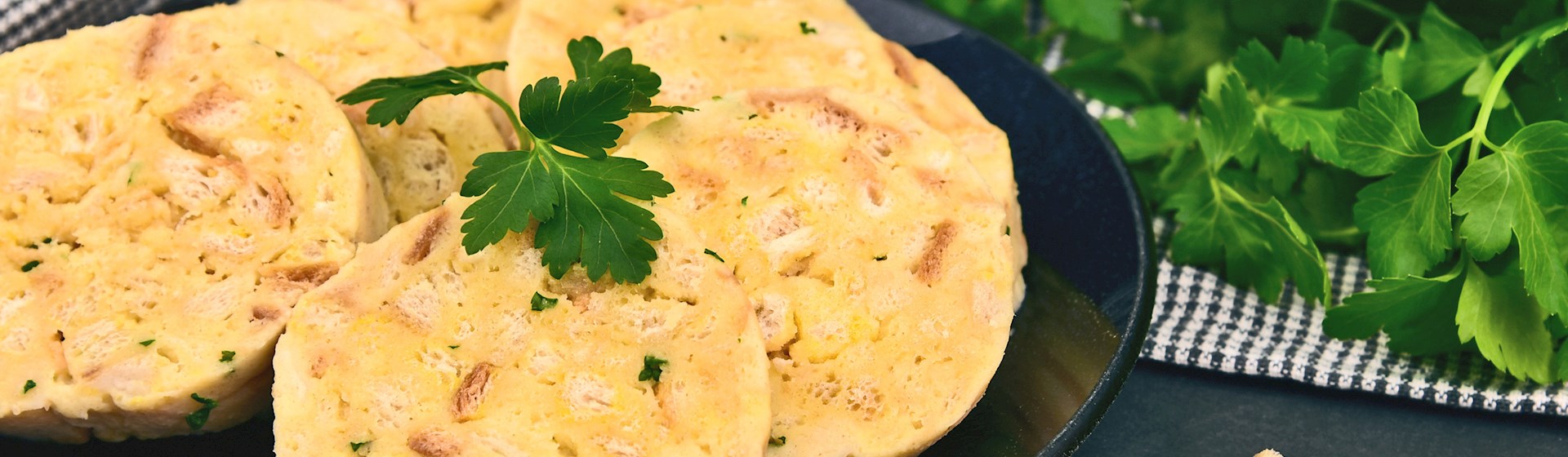
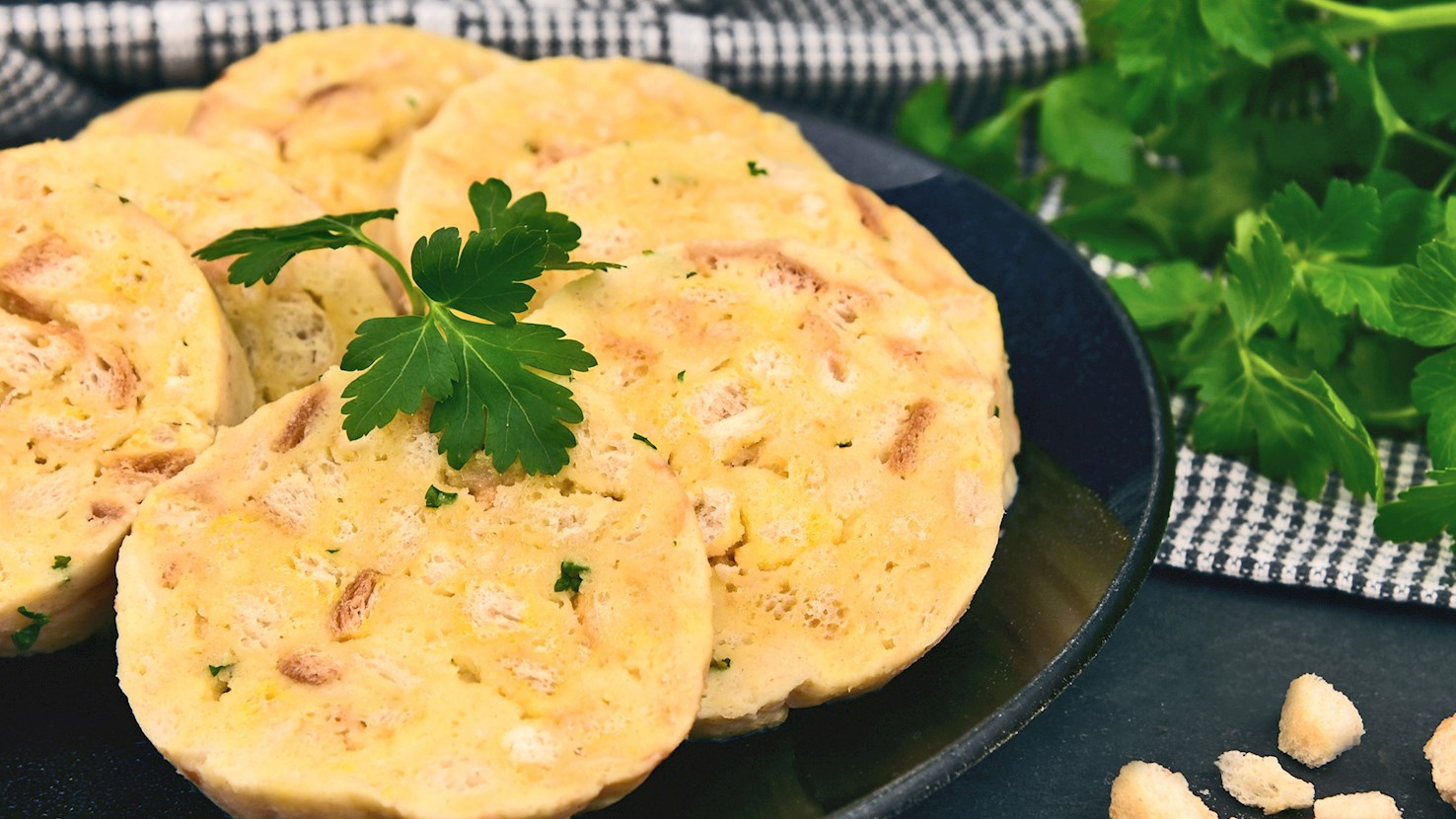
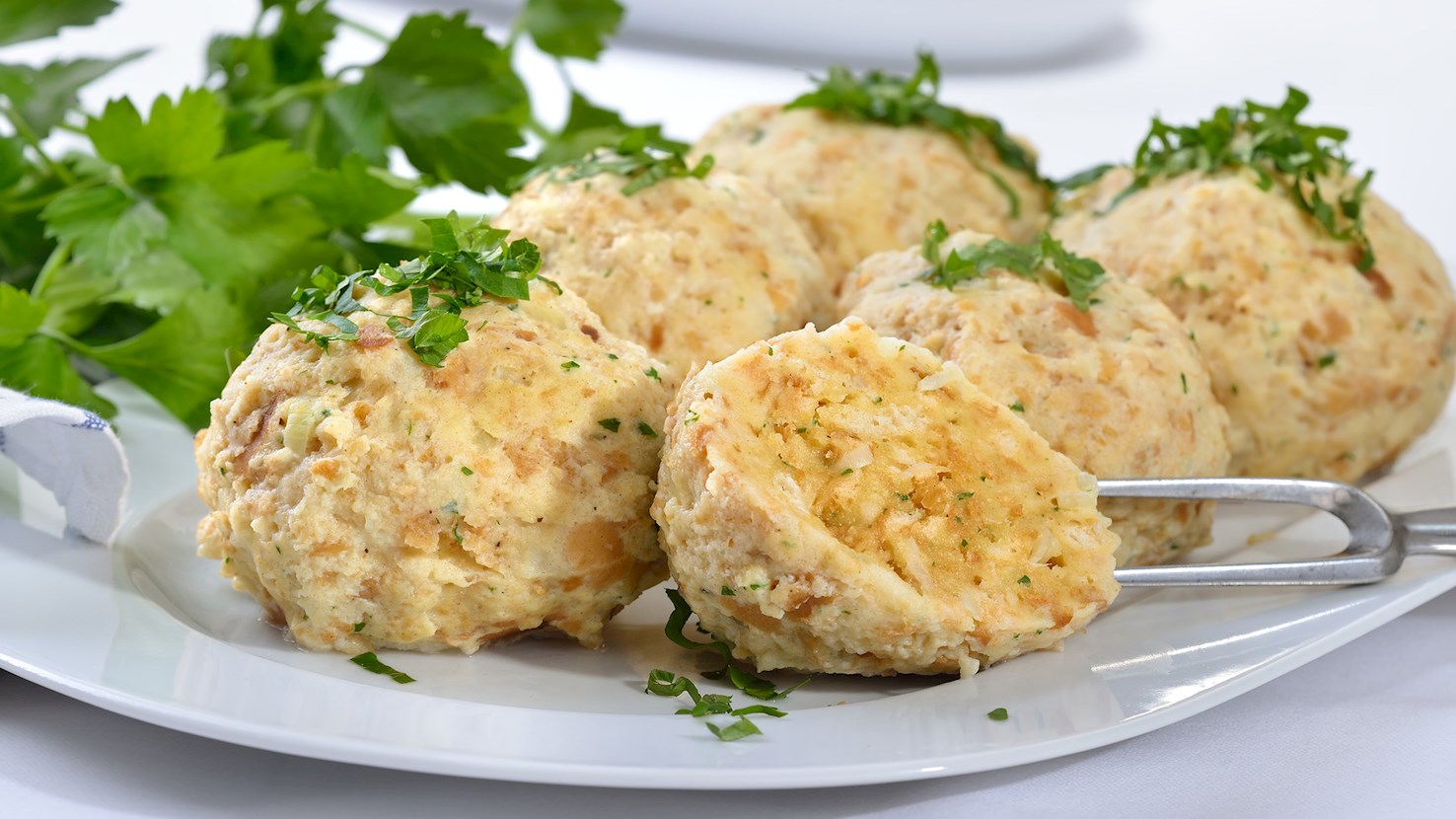
Serviettenknödel are German bread dumplings, or Semmelknödel that derive their name - napkin dumplings - from the way they are traditionally cooked: wrapped tightly and steamed inside a cloth napkin called serviette in German. They are typically made with pieces of stale bread rolls, baguettes, or pretzels, milk, eggs, lard, and softened onions. The bread mixture is usually seasoned with salt and pepper, and it is often enhanced with freshly chopped parsley and nutmeg for extra flavor. Once done, the log-shaped dumplings are generally cut into thick slices which can either be eaten as they are or pan-fried until nicely browned. These savory bread dumplings are a typical accompaniment to various roast meat delicacies, rouladen, gravy, mushroom sauces, and lentils, and they’ve been traditionally prepared for special occasions such as Christmas dinners and weddings. The dumplings are nowadays more commonly cooked in plastic wrap and aluminum foil instead of kitchen towels or napkins. Serviettenknödel have also been a part of other European cuisines, including Austrian and Czech cuisines.
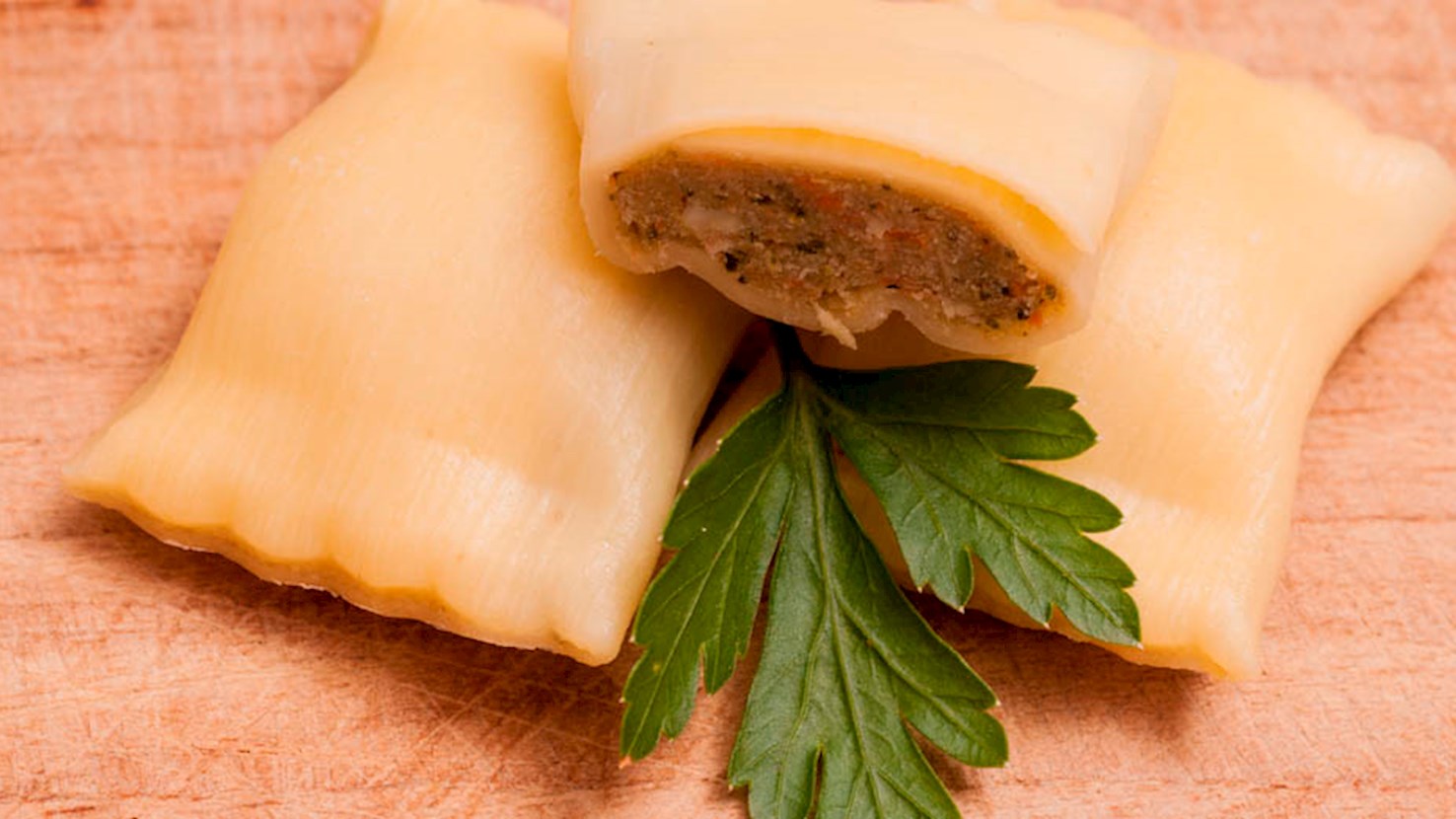
Originating from Swabia in eastern Baden-Württemberg, Schwäbische Maultaschen are traditional, savory dumplings filled with ground meat, onions, spinach, and bread. This hearty dish is ideal for cold winter months and can be prepared in three ways: sliced and fried with eggs, simmered in broth, or topped with onions and butter. Originally, the dish was invented by Cistercian monks from the Maulbronn Monastery in the 1600s. Since meat was forbidden during Lent, the monks chopped the meat and combined it with spinach and herbs to hide it, while the dough was used as another layer of disguise for the meat. Today, the dish is so popular that there is an annual Maultaschen Festival held every autumn in Freiberg am Neckar.
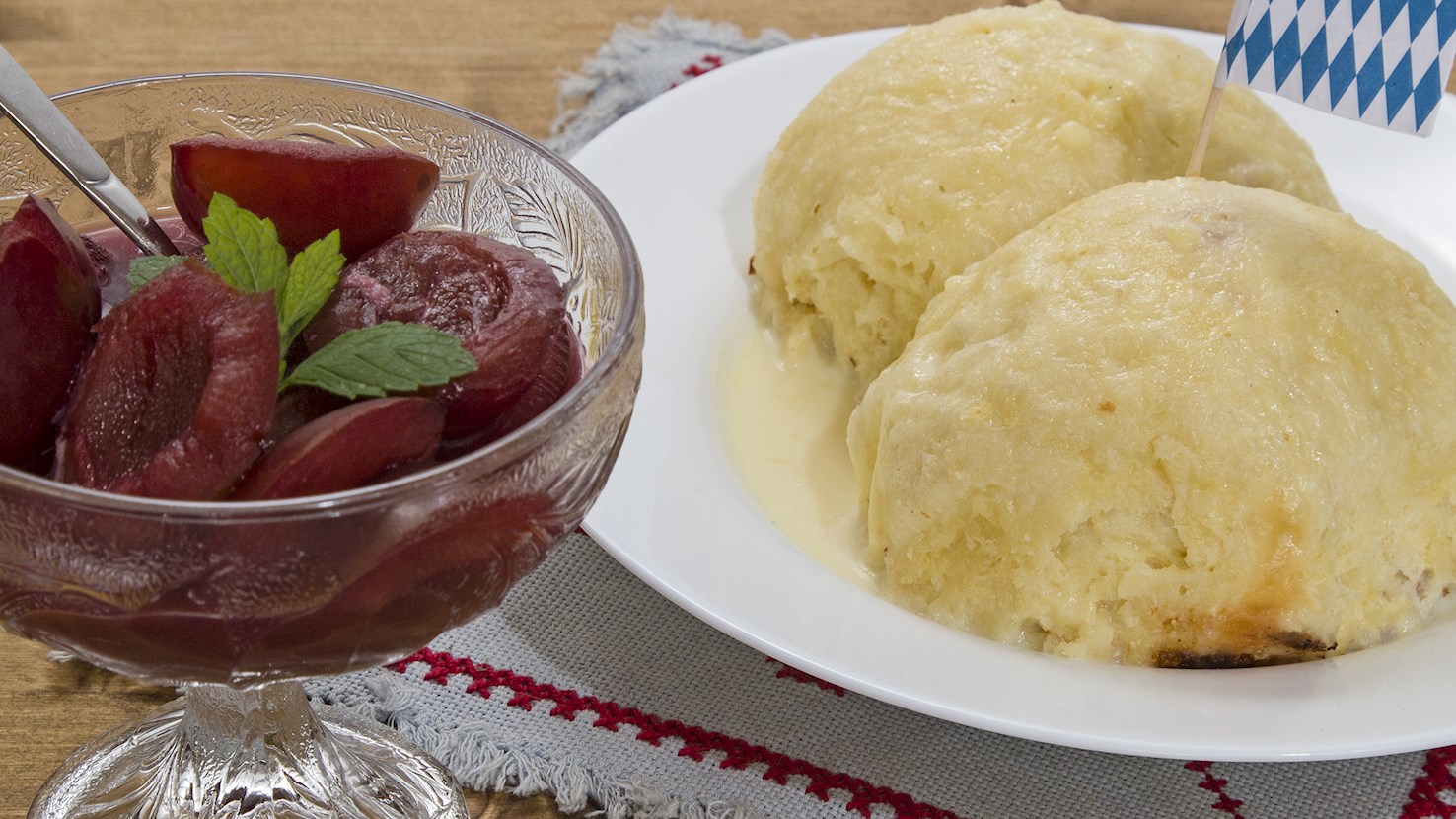
Dampfnudeln is a traditional dish made by steaming yeast dough dumplings in water, milk, and butter. After the liquids have evaporated, the dumplings are fried in butter until they develop a crispy crust on the bottom, while the top remains soft from the steaming process. Dampfnudeln can be prepared in a savory or sweet versions. The savory version is a Palatinate specialty, steamed in salt water, typically without a filling, and it is usually accompanied by a thick potato soup. The sweet versions are usually filled with fruit jams and accompanied by vanilla custard or fruit compotes. Although it is not known whether the first dampfnudel was made in Palatinate or Bavaria, the earliest written reference to the dumplings was found in an 1811 cookbook called The Bavarian Dampfnudeln.
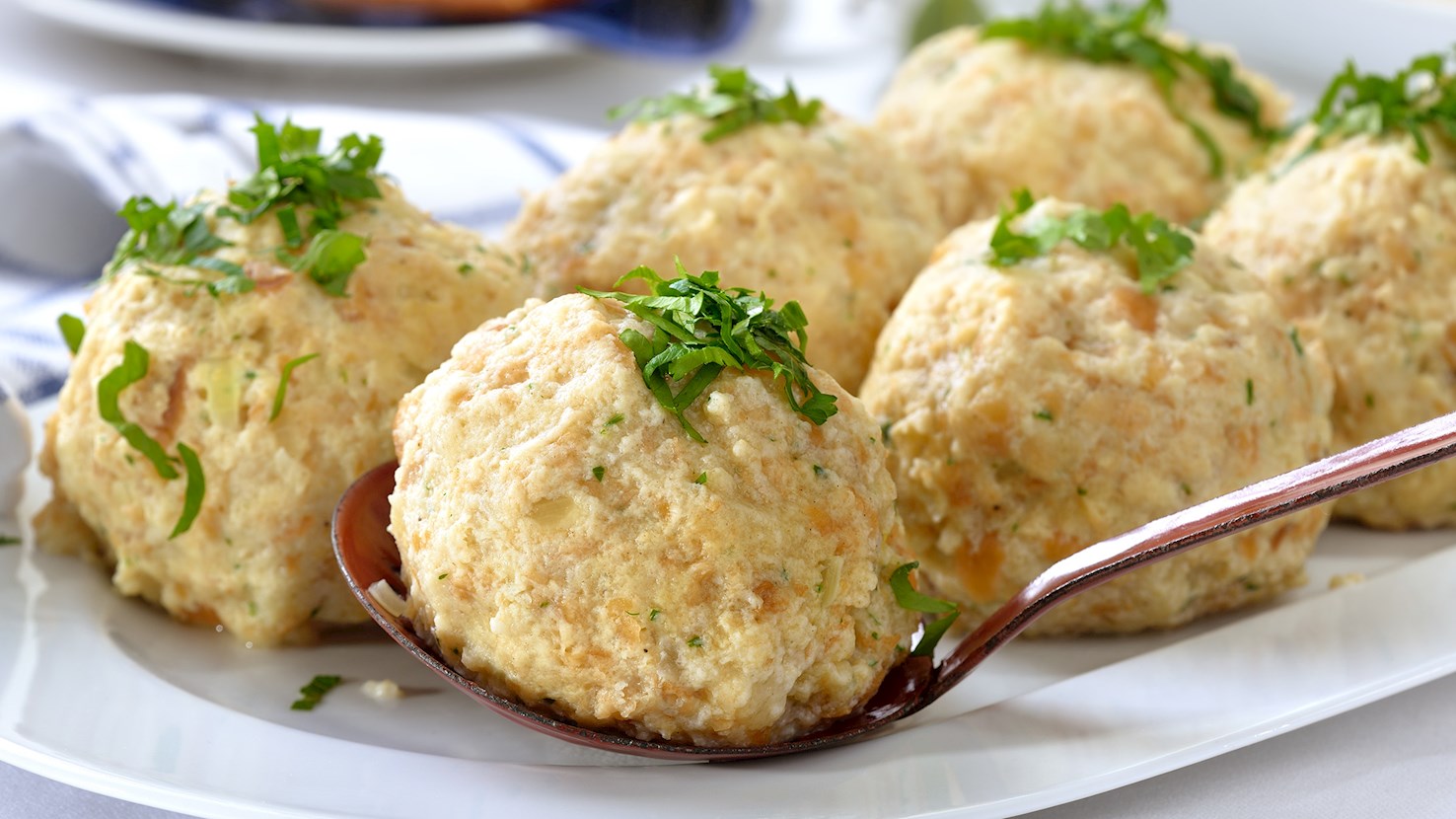
Semmelknödel are popular German bread dumplings–nutritious and convenient, they are one of the most versatile side dishes in traditional German cuisine. Even though there are numerous semmelknödel varieties, which come in various sizes, they all have a recognizable round form and employ bread as the base ingredient. Sliced or diced bread pieces, which can be fried in oil, are usually soaked in plain milk to soften, then mixed with eggs to form a pliable, soft base. Since they are incredibly neutral on their own, bread dumplings are usually mixed with different spices and additional ingredients to form a myriad of flavorful varieties. They commonly include onions and fresh herbs such as parsley or marjoram, but can even withstand strong flavors coming from nutmeg or fresh lemon zest. Even though semmelknödel are mostly served as a complement to various roast meat dishes and stews, they can be enjoyed as a nourishing dish on their own, usually served alongside vegetables and lentils, or doused in creamy mushroom sauces. Various dumplings are omnipresent in many European cuisines, but the invention of semmelknödel has usually been associated with the German region of Bavaria, from where it spread to other parts of Germany and countries such as Austria, Hungary, and the Czech Republic.
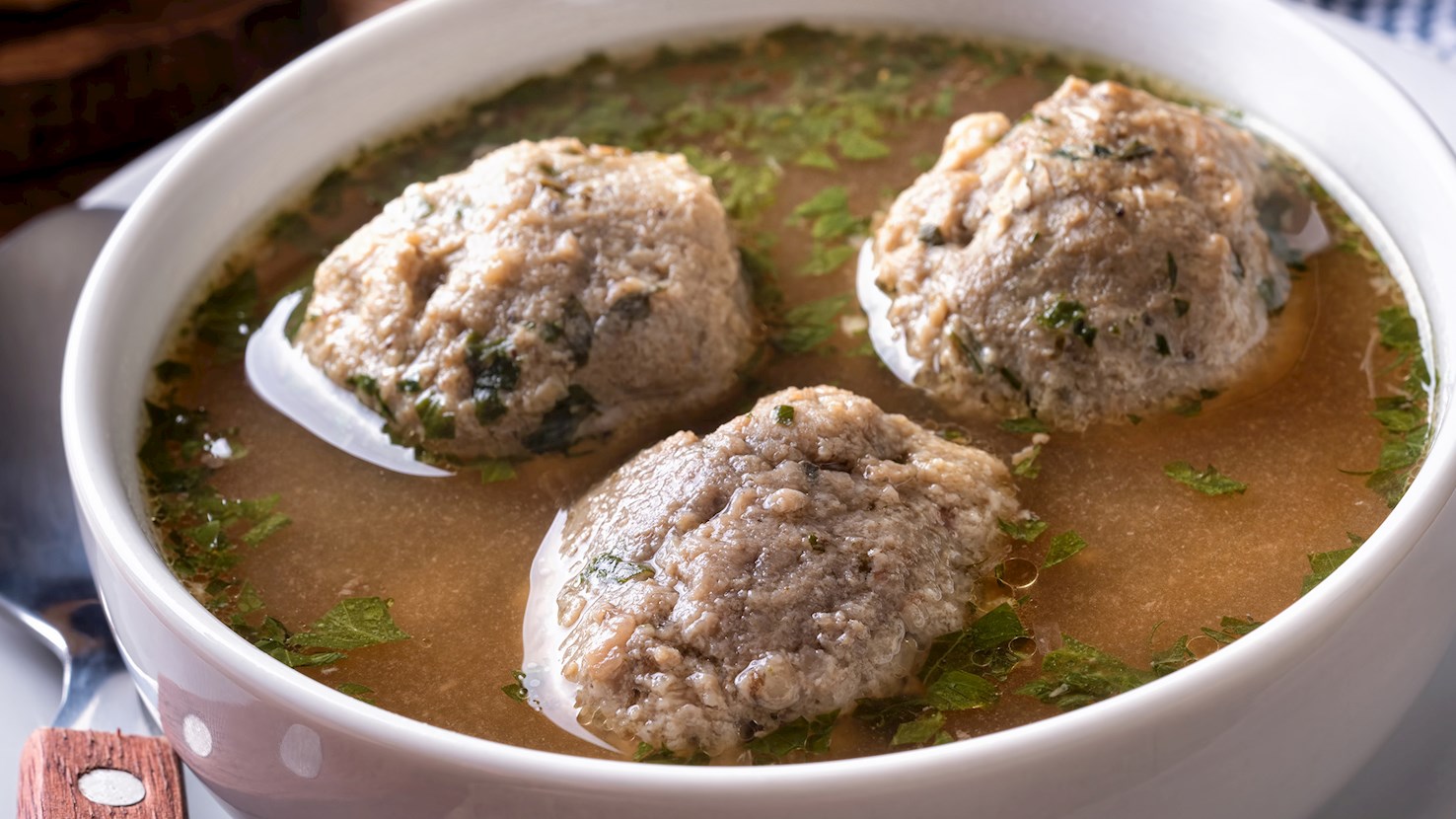
Leberknödel is a type of liver dumpling originating from southern Germany and Austria, especially associated with the regions of Bavaria, Swabia, and parts of Austria such as Salzburg and Upper Austria. The dish consists of finely ground liver, commonly from beef or pork (sometimes even veal), combined with stale bread rolls soaked in milk, eggs, onions, fresh herbs, and spices to create a dense, flavorful mixture that can be shaped into large, round dumplings. The liver is typically minced or passed through a grinder until smooth, then carefully mixed with the other ingredients to form a cohesive mass. Once shaped, Leberknödel are gently simmered in salted water or clear broth until firm and cooked through. These dumplings are commonly served in two main ways. They can be presented in a clear beef broth as a soup, known as Leberknödelsuppe, where the dumpling absorbs some of the broth’s flavor while adding richness to the liquid. Alternatively, they are served as a more substantial main dish accompanied by sauerkraut and boiled or mashed potatoes. The flavor is distinctly savory and robust, reflecting the use of liver and the aromatic additions of marjoram, parsley, and occasionally nutmeg or pepper. Preparation requires attention to achieve the correct texture, which should be tender but not falling apart when cooked. Leberknödel has a long history as a practical and nourishing food in rural and urban settings, where no part of the animal was wasted and organ meats were valued for their nutritional content. Today, it appears in both everyday cooking and regional restaurant menus, especially in southern Germany and Austria, where it remains an example of regional comfort food made with simple, accessible ingredients. The dumplings are typically prepared fresh, although they can also be made in advance and reheated in broth.
Kartoffelklöße or kartoffelknödel are traditional German potato dumplings that are consumed all over the country but are especially popular in Bavaria, Thuringia, and the Rhineland area. Depending on the variation, the dumplings may consist of cooked potatoes, raw potatoes, or a combination of both. The potato mixture can further be enhanced with the addition of other ingredients such as beaten eggs, potato starch, cornstarch, or flour, and herbs such as chives or parsley, while some versions also call for filling the dumplings with croutons, sauerkraut, or ham. Potato dumplings typically come in the shape of balls, and they are usually simmered in salted water, although they can optionally be pan-seared in butter for added flavor and texture. A common variation of potato dumplings is the one from Thuringia called Thüringer klöße, a type of dumplings made with raw and cooked potatoes containing a filling of toasted bread cubes. In Germany, potato dumplings are a staple accompaniment to dishes such as roasted and braised meat specialties with sauces, sauerbraten, sauerkraut, braised red cabbage, goulash, and rouladen.
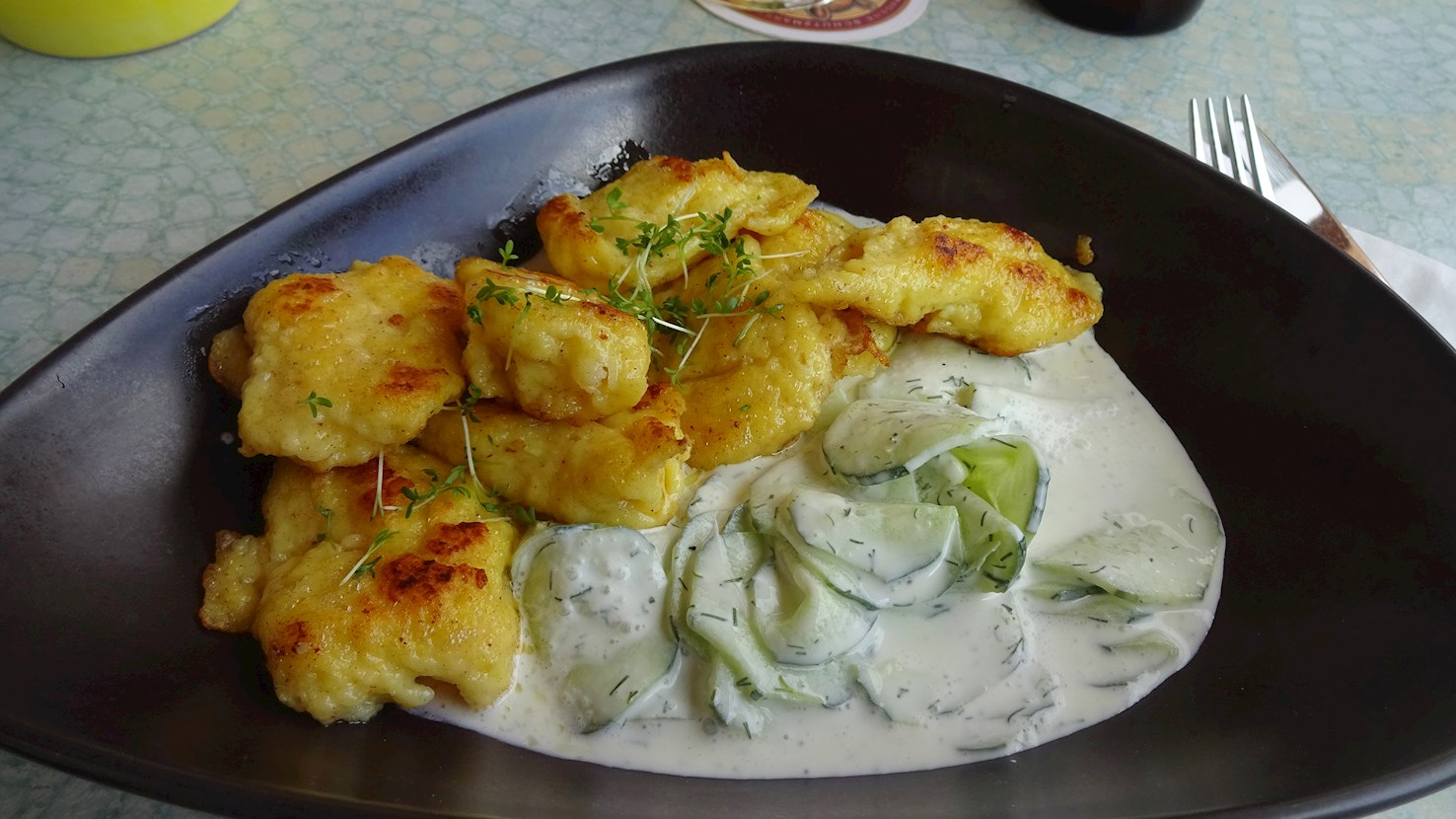
Kluten is a German dumpling that is made with flour, milk, eggs, and butter. The batter is dropped into boiling water or soup using a spoon, and it is then cooked until done, yielding small and soft dumplings. These dumplings have a very mild flavor, so they pair well with both sweet and savory specialties. Kluten are often featured in dishes such as sweet buttermilk vanilla pudding (buttermilksuppe) and sour cherry soup (kirschsuppe).
Brezenknödel is a type of bread dumpling made from soft pretzels, originating from the southern regions of Germany, particularly Bavaria. It is a variation of the more widespread Semmelknödel, which are dumplings made from day-old bread rolls. In the case of Brezenknödel, stale or leftover pretzels serve as the base ingredient, giving the dish a slightly saltier flavor and denser texture due to the unique characteristics of pretzel dough. The name combines Brezen, the Bavarian word for pretzel, and Knödel, which means dumpling in German. The preparation of Brezenknödel begins by slicing or cubing stale soft pretzels and soaking them in warm milk until softened. The mixture is then combined with sautéed onions, fresh parsley, eggs, and a pinch of nutmeg or black pepper for seasoning. The dough is gently mixed to avoid becoming too compact, then shaped by hand into balls. These dumplings are simmered in hot water until firm and cooked through, typically for 15 to 20 minutes. The pretzel base gives them a darker color and richer flavor compared to dumplings made from plain white bread. Brezenknödel is commonly served as a side dish with hearty Bavarian meals, especially those featuring meat and rich gravies such as Schweinebraten (roast pork), wild game, or mushroom sauces. It is also occasionally served with vegetarian dishes, particularly those involving creamy or wine-based sauces. The pretzel dumplings absorb sauce well, making them ideal for savory pairings. In many Bavarian households and restaurants, Brezenknödel is a way to repurpose leftover pretzels, reflecting a practical and resource-conscious approach to cooking. In recent years, Brezenknödel has gained modest popularity outside Bavaria, particularly in southern Austria and parts of Germany where Alpine culinary influence is strong. It is also occasionally featured in modern German restaurants that specialize in regional cuisine, offering diners a chance to experience a dish that connects the simple pretzel with the broader category of central European dumplings.
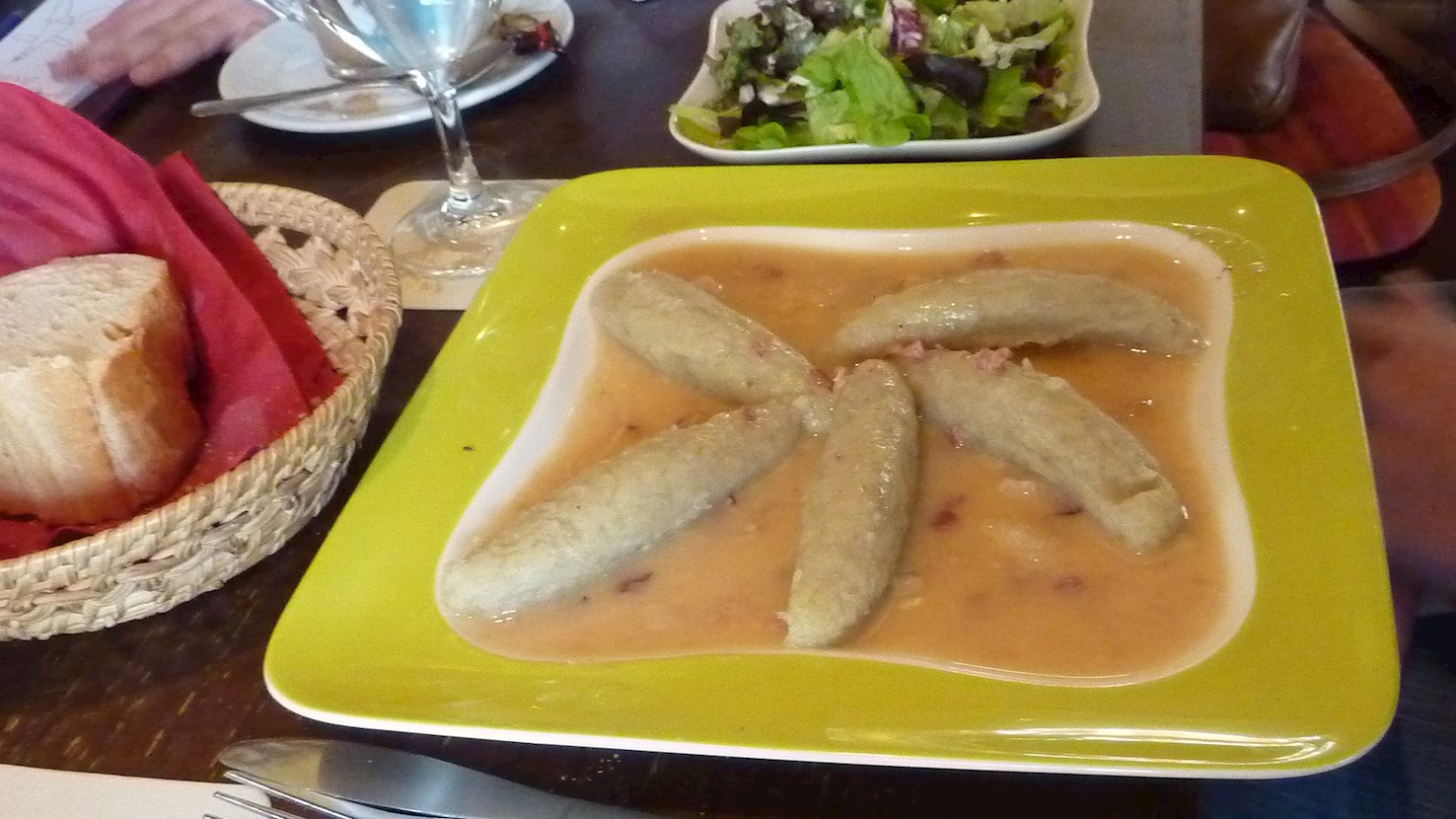
Hoorische is a type of potato dumpling hailing from the German region of Saarland. The dumplings are typically made with a combination of both grated raw potatoes and boiled potatoes, along with ingredients such as eggs, flour, nutmeg, salt, and pepper. They usually take an elongated, either oblong or egg-shaped form and are simmered in boiling salted water. The name of these dumplings means hairy, referring to their rough, hairy-like outer surface due to coarsely grated potatoes. A creamy bacon gravy and a side of sauerkraut or apple sauce usually accompanies the dumplings. Just like other German potato dumplings, these also make for an excellent accompaniment to various meat specialties.
TasteAtlas food rankings are based on the ratings of the TasteAtlas audience, with a series of mechanisms that recognize real users and that ignore bot,
nationalist or local patriotic ratings, and give additional value to the ratings of users that the system recognizes as knowledgeable.
For the “Top 12 German Dumplings” list until September 15, 2026, 781 ratings were recorded, of which 695 were recognized by the system as legitimate.
TasteAtlas Rankings should not be seen as the final global conclusion about food. Their purpose is to promote excellent local foods,
instill pride in traditional dishes, and arouse curiosity about dishes you haven’t tried.




What People Say