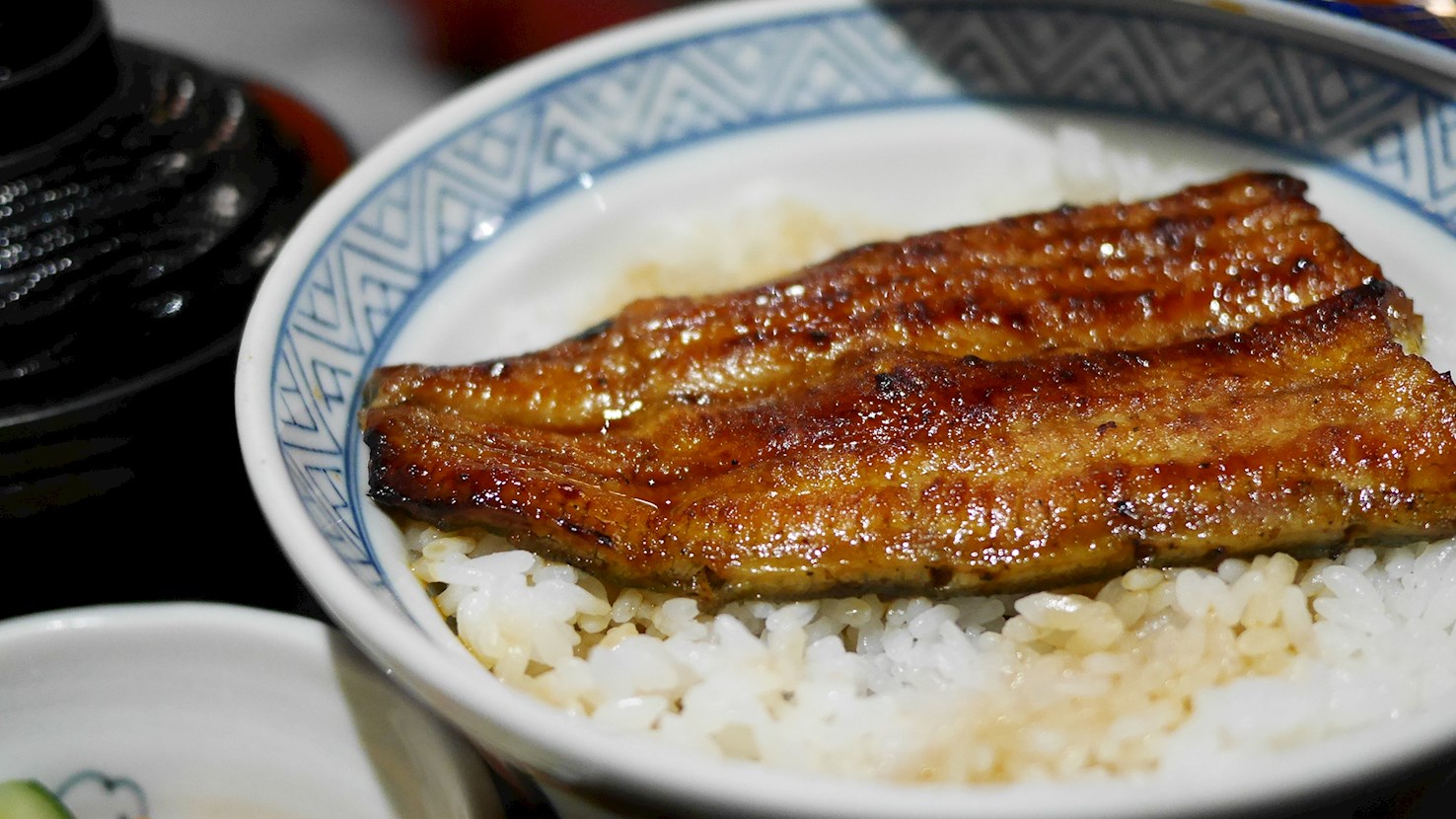
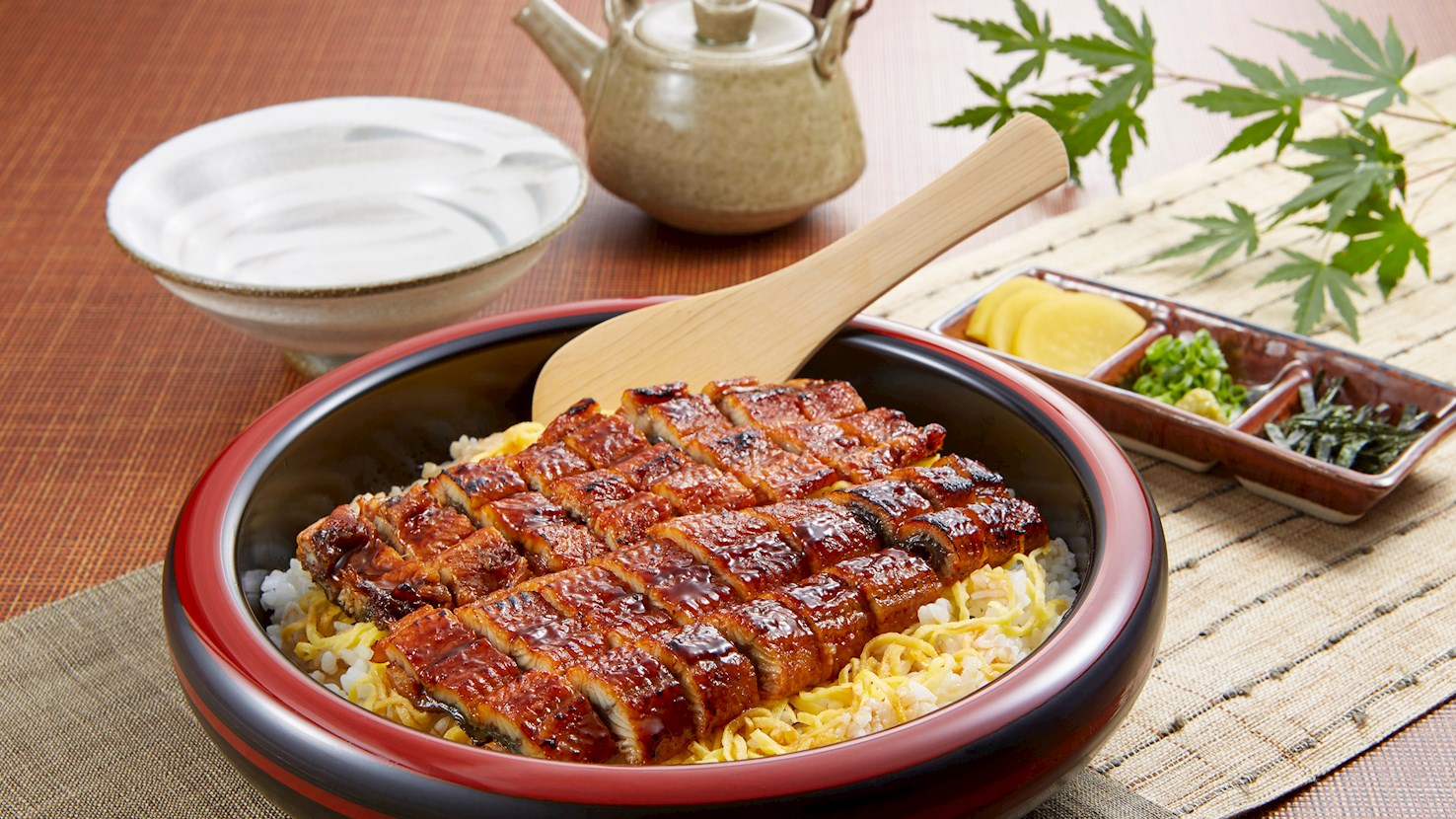
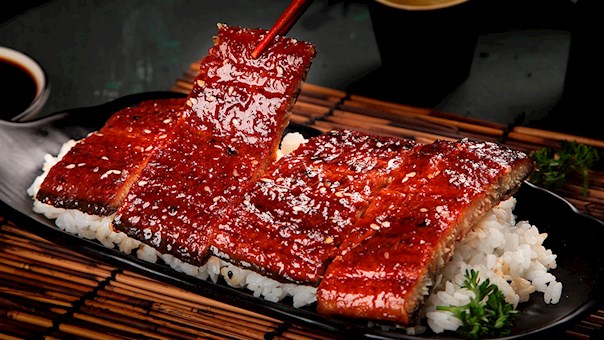
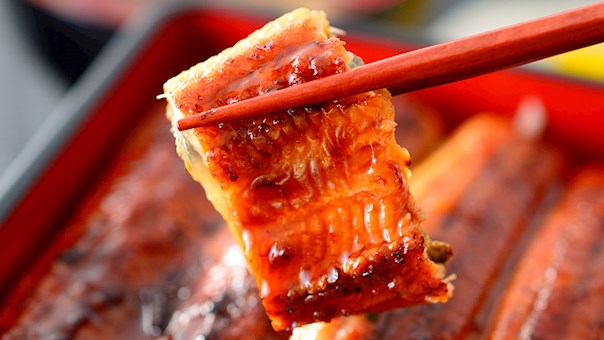
Unadon is a bowl of hot rice topped with freshwater eel grilled in a sweet, savory glaze, its browned surface lying over grains lightly stained by the sauce. The name shortens unagi donburi: unagi means freshwater eel, while donburi refers to a bowl, and by extension, a rice dish with a topping. The eel is prepared as kabayaki: split open, boned, flattened, skewered, and grilled with a soy-based sauce. Its flesh is rich and tender, and the skin can be soft or lightly crisp, depending on the cooking method. The rice is plain cooked rice, without the vinegar seasoning used for sushi, and absorbs both the glaze and some of the eel’s rendered fat. A bowl can look spare, with little more than eel, rice, and a dusting of seasoning, because much of the work takes place before assembly. Preparing the fish requires careful cutting and skewering to keep the flattened fillets intact through repeated handling over heat. In the Kantō method, chefs open the eel along the back, grill it without sauce, then steam it before a final grilling with the glaze. Steaming softens the flesh and skin and lets some fat drain away, creating a particularly delicate texture. The Kansai method generally opens the eel along the belly and omits steaming, relying on grilling to cook the flesh and render its fat. This gives a firmer bite and a more distinctly browned exterior. These are broad differences in technique, and individual restaurants adjust the sequence, heat, and cooking time to the fish they use. The glaze, called tare, usually combines soy sauce and mirin, with many formulas including sugar and sake. It adds salt, sweetness, and a glossy brown coating rather than a thick sauce. During the final grilling, the cook applies it in stages, allowing each coating to heat and reduce against the fish. Careful turning and control of the distance from the heat keep the sugary glaze from scorching before the eel is ready. Many specialists use charcoal, though kabayaki can also be cooked over other heat sources. The finished pieces are placed over freshly cooked rice, with enough sauce to season the upper grains without leaving the bowl soupy. Unadon became established in the late Edo period, when grilled eel was already sold by specialist shops. A frequently repeated account credits Ōkubo Imasuke, a theater financier in Edo’s Sakai-chō, with packing hot rice with his eel so it would stay warm during delivery to the theater. The account appears in an 1865 work and links the arrangement to the subsequent sale of eel and rice together as unagimeshi. It is best understood as an early explanation of the serving format rather than proof of a single moment of invention. The practical relationship between the two ingredients is clear: hot rice holds warmth beneath the fillet, and the juices and sauce season the rice as the meal is eaten. The container distinguishes unadon from unajū. Unadon comes in a round bowl; unajū serves essentially the same combination in a rectangular, often lacquered box. A restaurant may offer a larger portion of eel or a more elaborate presentation with unajū. Still, the vessel alone does not establish a different recipe or a superior grade of fish. Hitsumabushi changes the eating method more substantially: the grilled eel is cut into smaller pieces over rice, and portions are eaten plain, with condiments, or with broth, or tea poured over them. An ordinary bowl of unadon does not require that sequence. Ground sanshō is a customary table seasoning that adds a citrus-like fragrance and a tingling sensation to the fatty eel and sweet glaze. It is sprinkled sparingly so that the fish remains recognizable beneath it. A set meal may include pickles and kimosui, a clear soup containing eel liver, which introduces a lighter, savory accompaniment without adding another rich sauce. Unadon is available year-round, with particular attention given to eel during the summer observance of Doyō no Ushi no Hi, the Day of the Ox in the midsummer doyō period. Eating eel then is associated with staying strong in the heat. Specialist eel restaurants serve freshly prepared bowls, while cooked kabayaki also allows the meal to be assembled at home. The eel is warmed, laid over hot rice, and eaten promptly while the flesh is supple and the rice beneath it is still steaming.
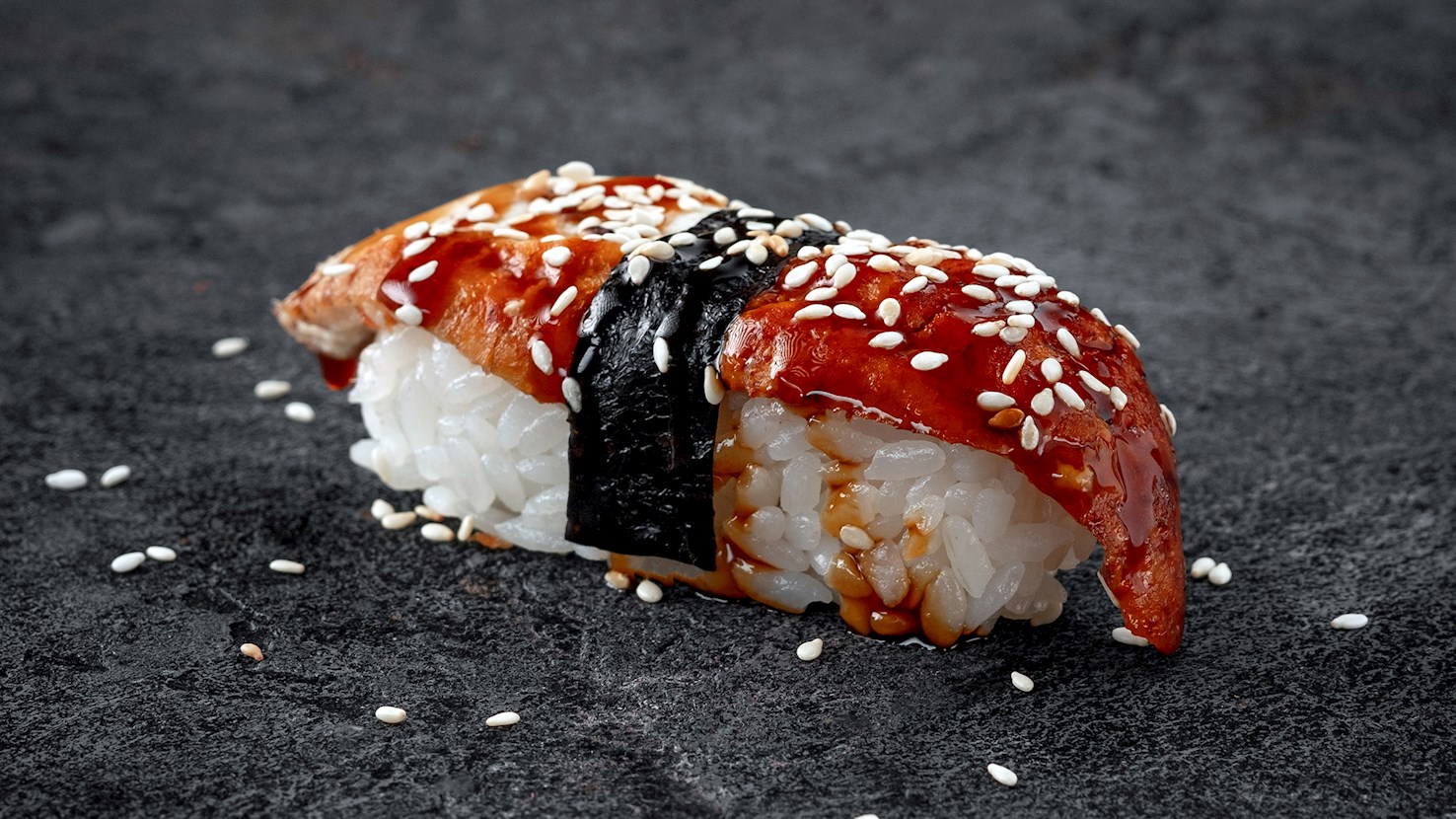
Unagi nigiri sushi is a traditional type of nigiri sushi. It consists of hand-pressed sushi rice that's topped with slices of freshwater eel that's usually cooked. The dish has a soft texture and a mild flavor. If desired, the eel can be lightly seared with a blowtorch. It's a nice option for people who don't prefer raw food but want to enjoy sushi. Traditionally, this type of sushi is eaten by hand in a single bite. It's usually accompanied by soy sauce, wasabi, or pickled ginger (gari) on the side.
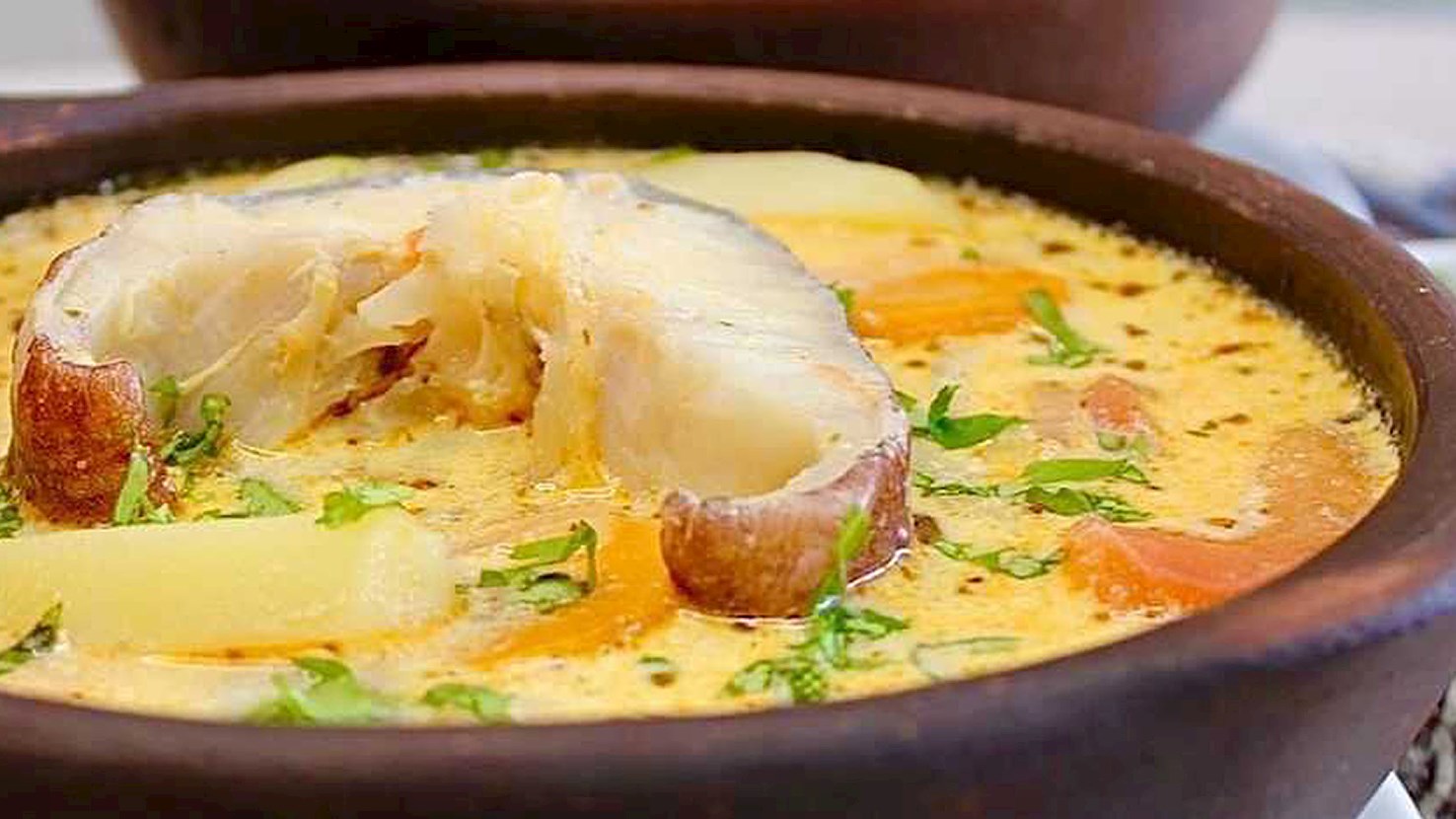
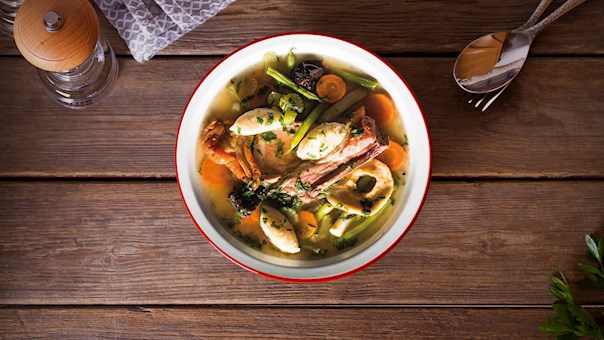
Caldillo de congrio is a hearty Chilean fish soup made with conger eel as its key ingredient. Chopped and cooked conger eel is usually boiled in water, creating a flavorful broth in the process. The broth and the eels are then combined with sautéed onions, garlic, tomatoes, carrots, and bell peppers. Optionally, heavy cream can also be stirred into the soup. Caldillo de congrio is typically seasoned with salt and black pepper, and it is garnished with coriander, parsley, or scallions. This nourishing soup is traditionally paired with crusty bread and a glass of wine on the side. Interestingly, the soup is so popular and rooted in Chilean culture that the famous poet and Nobel Prize winner Pablo Neruda wrote a poem called Ode to the Caldillo de Congrio.
Anago nigiri is a traditional type of nigiri sushi. It consists of hand-pressed sushi rice that's topped with slices of saltwater eel (anago). Anago is always cooked and the fat breaks down during the process. As a result, the meat develops a very soft consistency and becomes fluffier than unagi (freshwater eel nigiri), which is more chewy and has a dense texture. When served, anago nigiri sushi is typically brushed with tsume, the reduced broth from cooking anago, which has a sweet, barbecue-like flavor, so it's used as a replacement for soy sauce. Accompaniments to this nigiri sushi include wasabi and pickled ginger (gari) on the side.
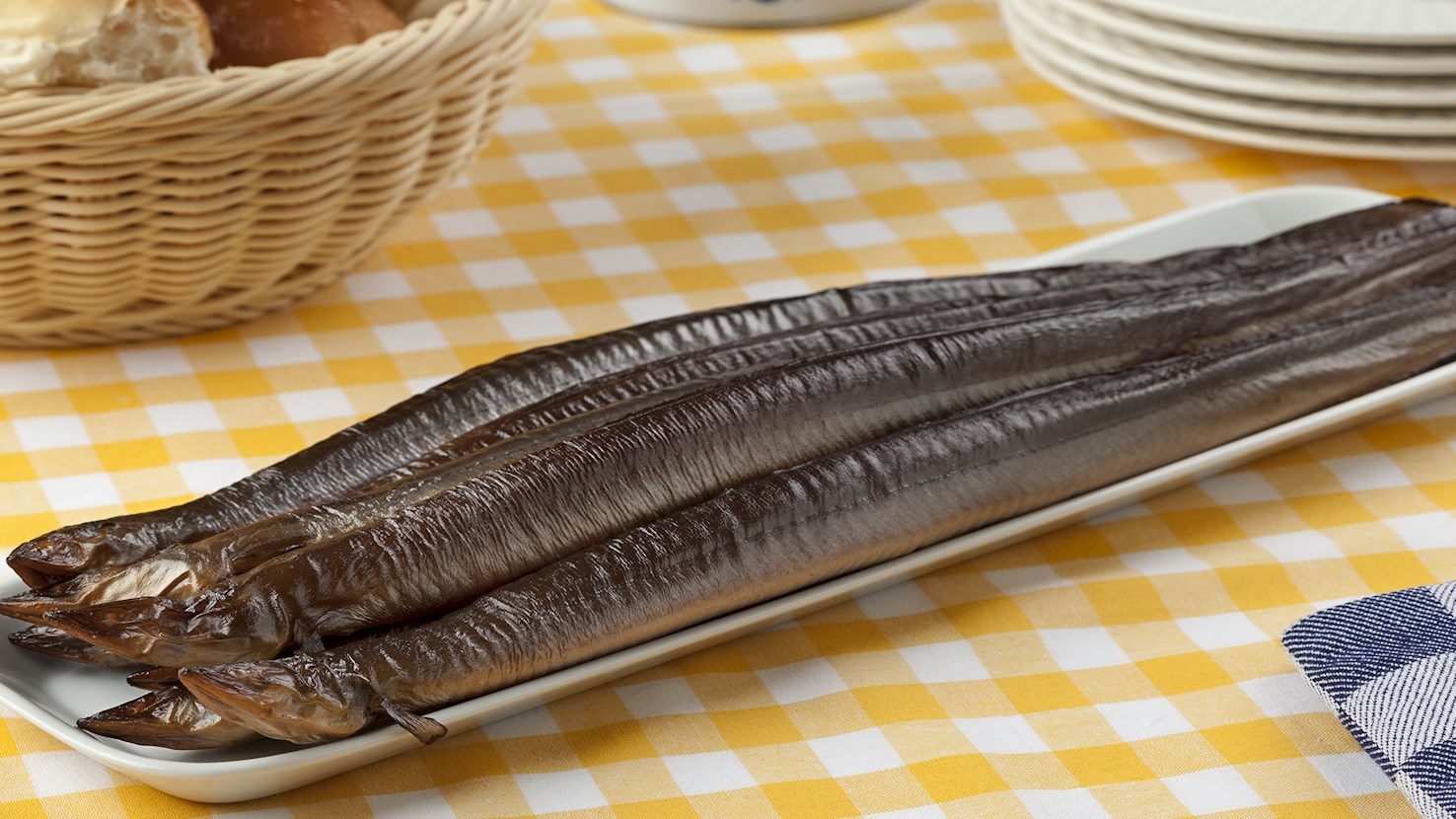
At just about every haringhuis (herring stand) or vishandel (fish shop) in Amsterdam, one can buy the Dutch delicacy of smoked eel, known as gerookte paling. In the past, smoked eel was a staple in the country, but today it is a true delicacy due to the scarcity of eels and its high price. The dish is both healthy and flavorful, filled with omega-3 fatty acids, vitamins, and protein. It is usually served on a bun or a cracker and consumed as a snack.
Hitsumabushi is a traditional dish originating from Nagoya. Although it's similar to unadon regarding most of the ingredients, histumabushi consists of sliced grilled eel that's served on top of steamed rice, but it's accompanied by assorted condiments and garnishes. The dish is also served in a very specific way – everything is divided into four portions. The first portion is eaten as it is, the second is accompanied by condiments such as nori seaweed, chopped green onions, and wasabi. The third portion is the same as the second, with the addition of dashi broth or green tea (eaten like a soup), and the last portion is eaten however you like. It is believed that histumabushi dates back to the end of Meiji Era, when waitresses served chopped grilled eel on rice into individual bowls.
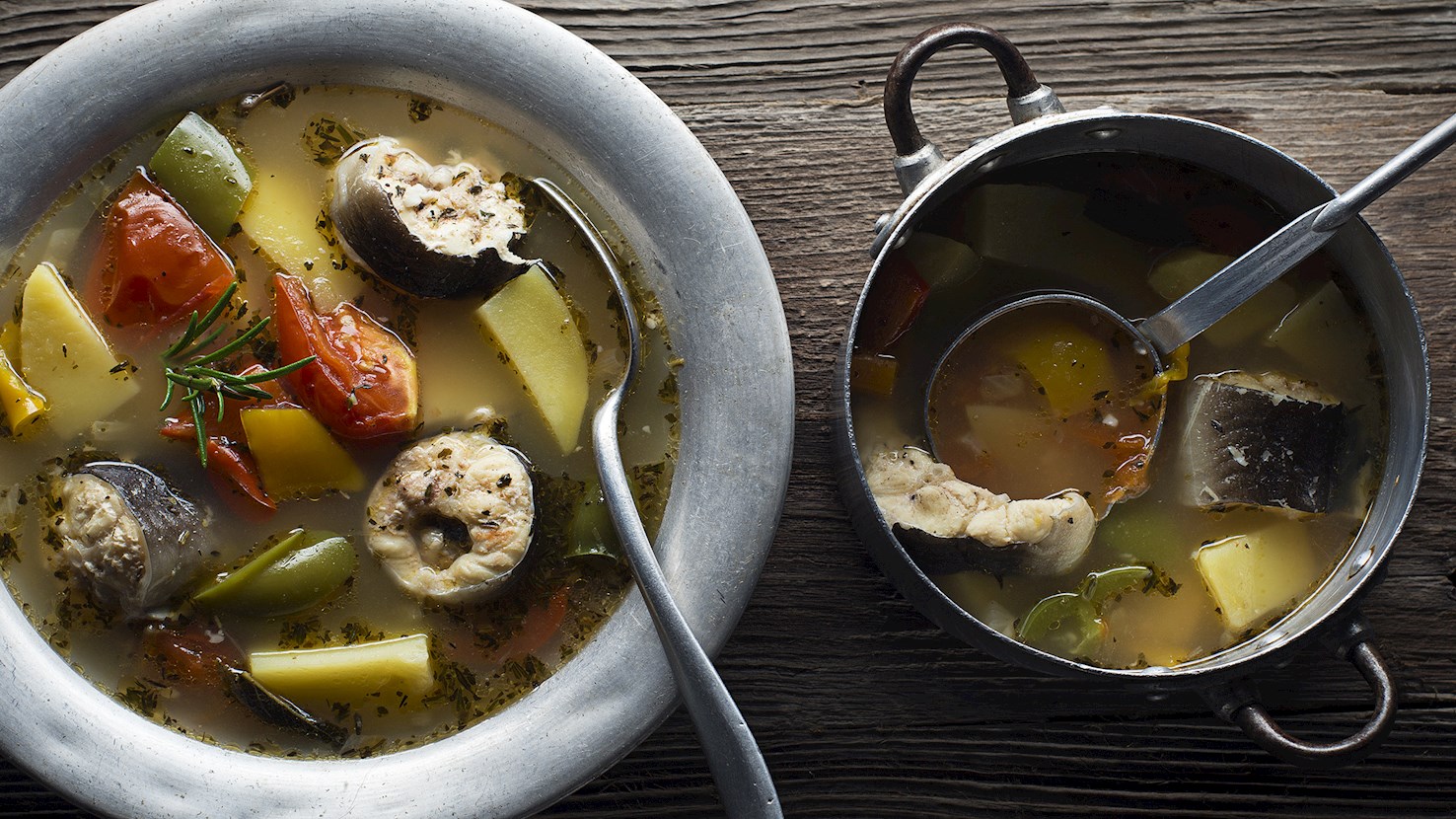
Originating from Aveiro, famous for its eels, caldeirada de enguias is a flavorful Portuguese eel stew that is typically seasoned with saffron and accompanied by onions, potatoes, and bell peppers. The stew should be cooked on medium heat without any stirring until the potatoes are fully cooked. It is recommended to pair caldeirada de enguias with crisp white wines from the Bairrada region.
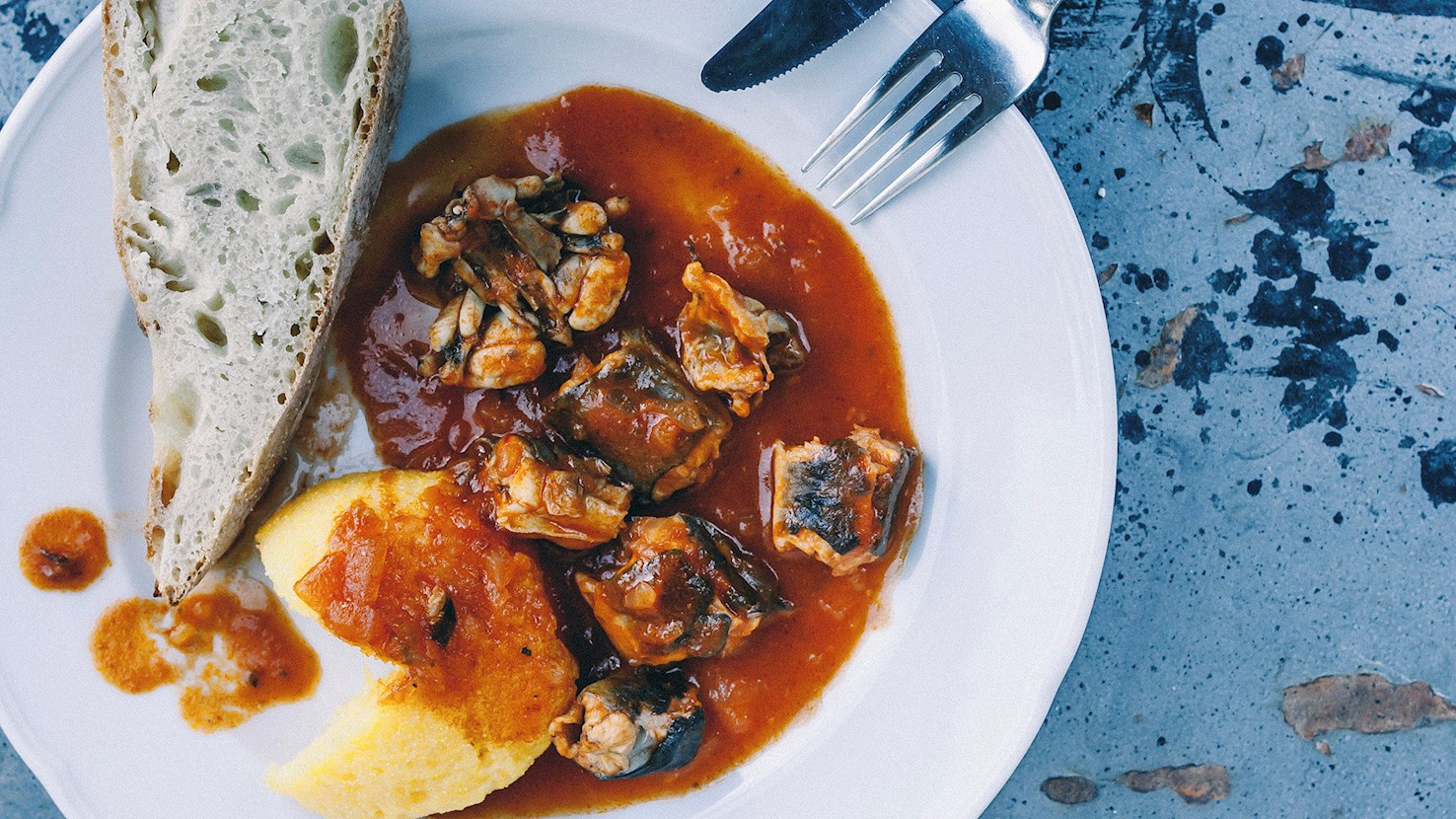
Out of the numerous varieties of Croatian brudet, the one that hails from the Neretva region is considered unique since it usually employs eels and frogs, two traditional ingredients used in the area. It is said that every village in the region has a different recipe, but the basic version employs thoroughly cleaned pieces of eels and frogs that are sautéed alongside olive oil, onions, and garlic. They are later braised in a combination of seafood stock, fresh tomatoes, chili peppers, and a touch of vinegar. Though tradition suggests the use of eels and frogs, the dish is commonly enriched with other fish varieties. Regardless of the differences, every version of brudet is always prepared in a traditional, heavy-bottomed pan and should never be stirred. This flavorful fish stew is traditionally accompanied by polenta or rustic, country-style bread.
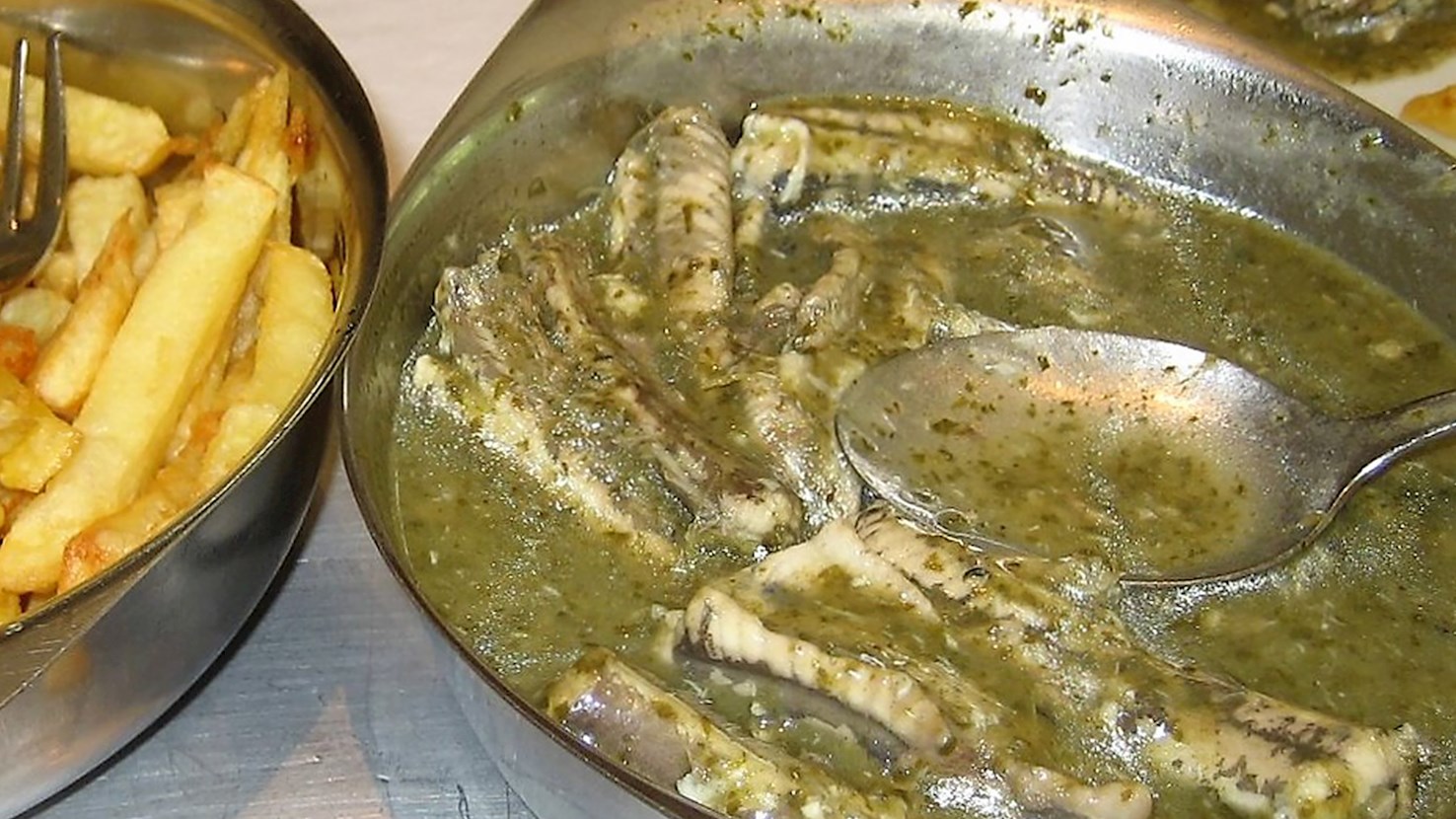
Paling in 't groen is a Flemish specialty dish consisting of chopped eel in a unique green sauce made from white wine, parsley, spinach, mint, tarragon, sage, dill, and lemon juice. It is believed that the dish originated on the banks of the river Scheldt, when local fishermen started to catch large quantities of eel and combined them with whatever fresh herbs they found near the river. The dish should be served hot, preferably with some fresh bread or fries on the side.
Jellied eels is a traditional Cockney street food item, dating back to the 18th century. Originally, it was a cheap and easy way to make a good dish, with plenty of native eels readily available in the Thames River. The eels would get chopped, boiled for approximately half an hour in herbs, then cooled - that is when the fish would produce their own gelatin, and a soft, transparent jelly would form on the cut pieces. The texture of jellied eels is delicate and soft, and while some may say it's unpleasant, their flavor is unique - mild, slightly salty, like pickled herring, but without the unusual "fishy" scent. They are commonly accompanied by white pepper and vinegar in order to further accentuate the flavors. The dish can be served either hot or cold, and according to jellied eels experts, it tastes perfect when paired with chili vinegar.
TasteAtlas food rankings are based on the ratings of the TasteAtlas audience, with a series of mechanisms that recognize real users and that ignore bot,
nationalist or local patriotic ratings, and give additional value to the ratings of users that the system recognizes as knowledgeable.
For the “Top 22 Eel Dishes in the World” list until November 15, 2026, 736 ratings were recorded, of which 578 were recognized by the system as legitimate.
TasteAtlas Rankings should not be seen as the final global conclusion about food. Their purpose is to promote excellent local foods,
instill pride in traditional dishes, and arouse curiosity about dishes you haven’t tried.
















What People Say