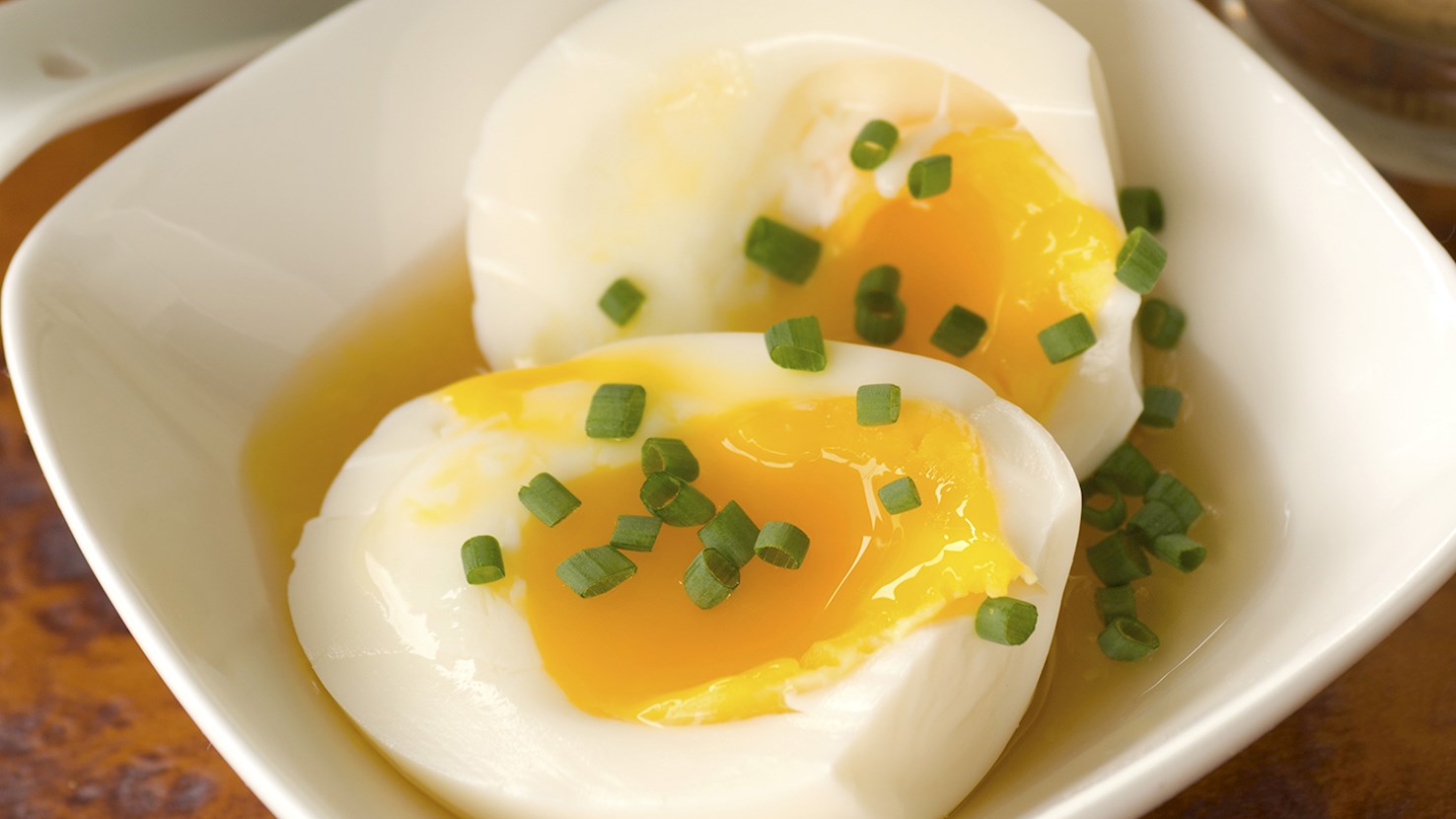
Ajitsuke tamago is a traditional dish consisting of soft-boiled eggs that have been soaked in mirin and soy sauce. The egg yolks should be custardy if properly prepared, and the eggs are eaten as a snack, a part of bento, or more commonly, enjoyed as a ramen topping. The eggs are boiled for a few minutes so that the yolk remains runny, and they are then chilled and soaked (overnight or for a few days) in a combination of water, mirin, and soy sauce. This is the basic preparation, and some cooks might add their own secret ingredients to the marinade to make the eggs more flavorful.
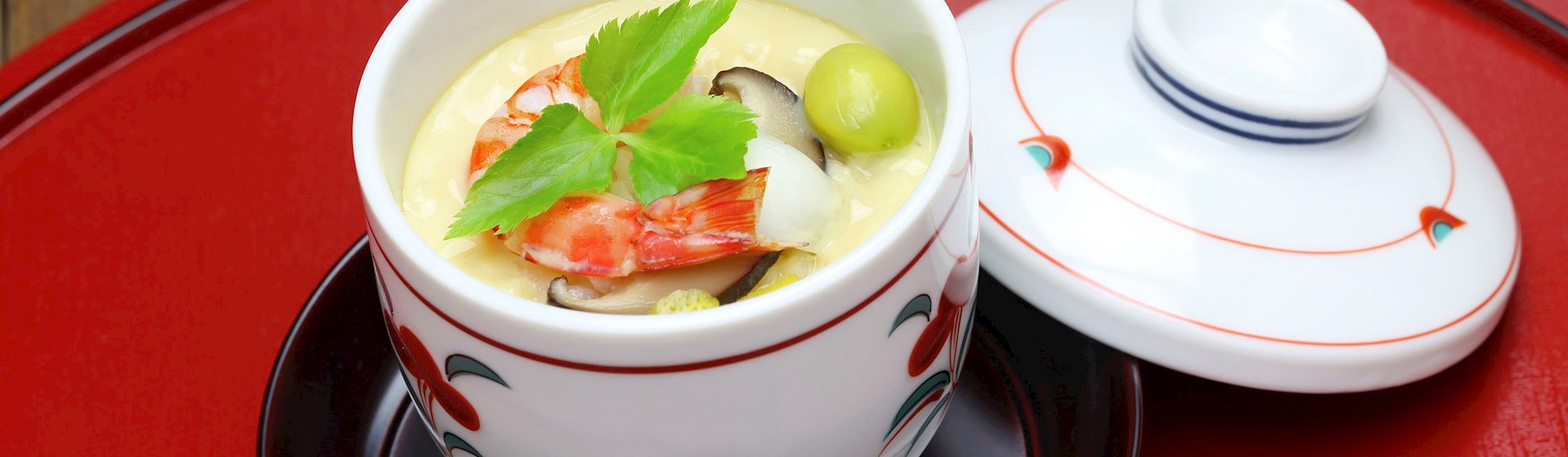
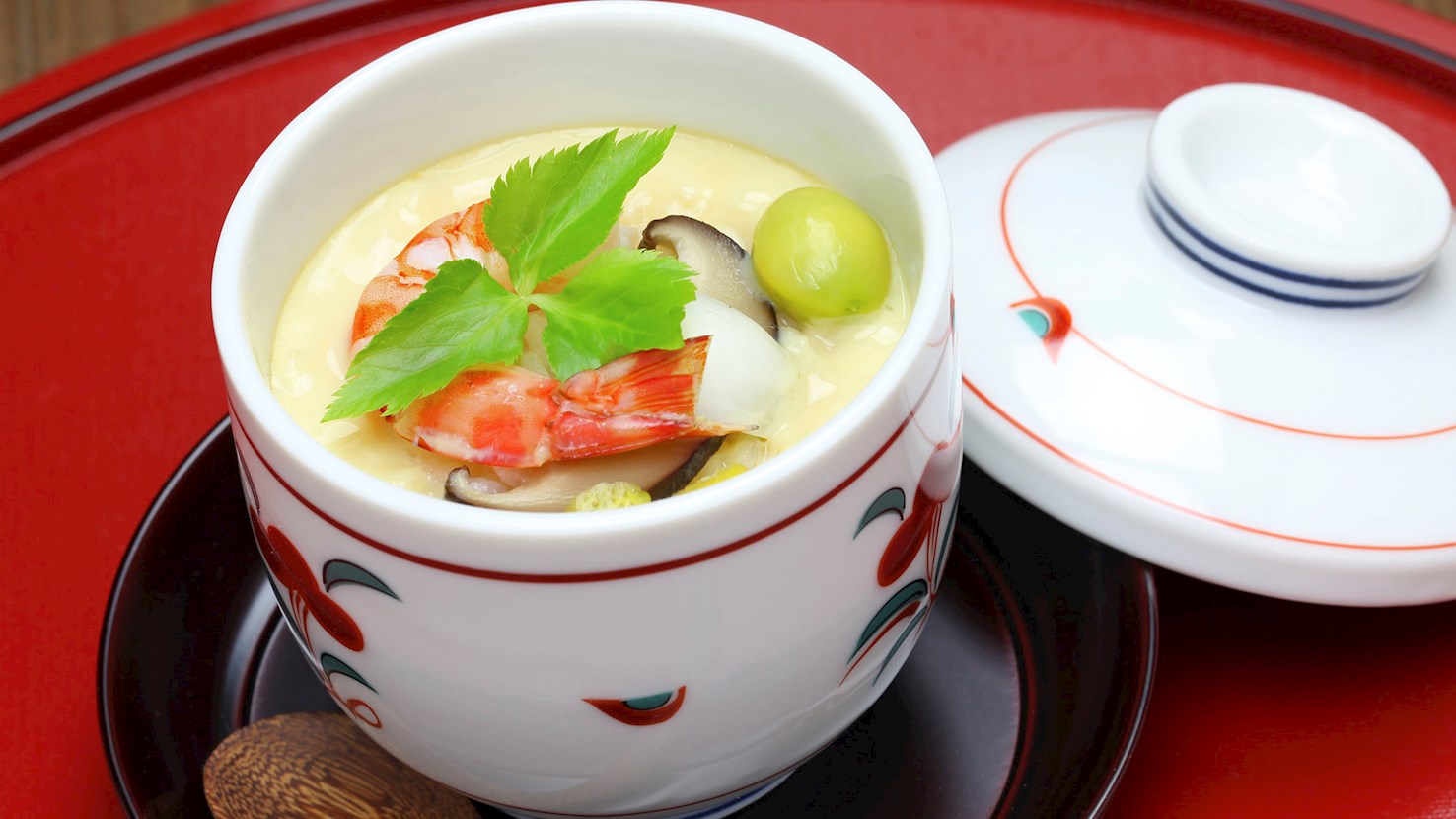
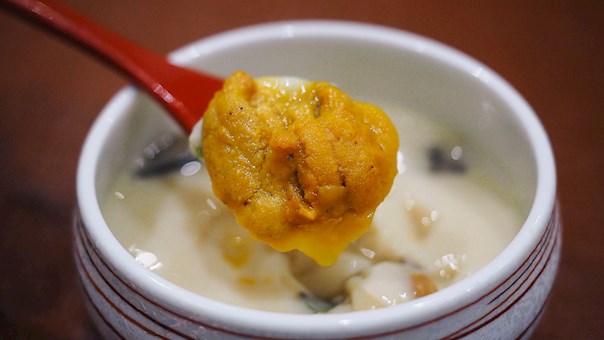
Chawanmushi is a delicate custard-soup, its name meaning steamed in a tea cup. Each portion of the dish is ideally served in a small, lidded cup, either as an appetizer or as a part of a bigger meal. The custard usually consists of an egg mixture that can be flavored with numerous ingredients such as dashi (Japanese stock), soy sauce, mushrooms, tofu, ginko nut, or steamed shrimp. It is believed that the dish originated in Kyoto and Osaka during the Kansei period, later spreading to Edo and Nagasaki. Chawanmushi can be served hot, warm, or cold, and can be garnished with carrot shavings, Japanese parsley, or even more seafood. Since it cannot be eaten with chopsticks, it is one of the few Japanese dishes that are traditionally consumed with a spoon.
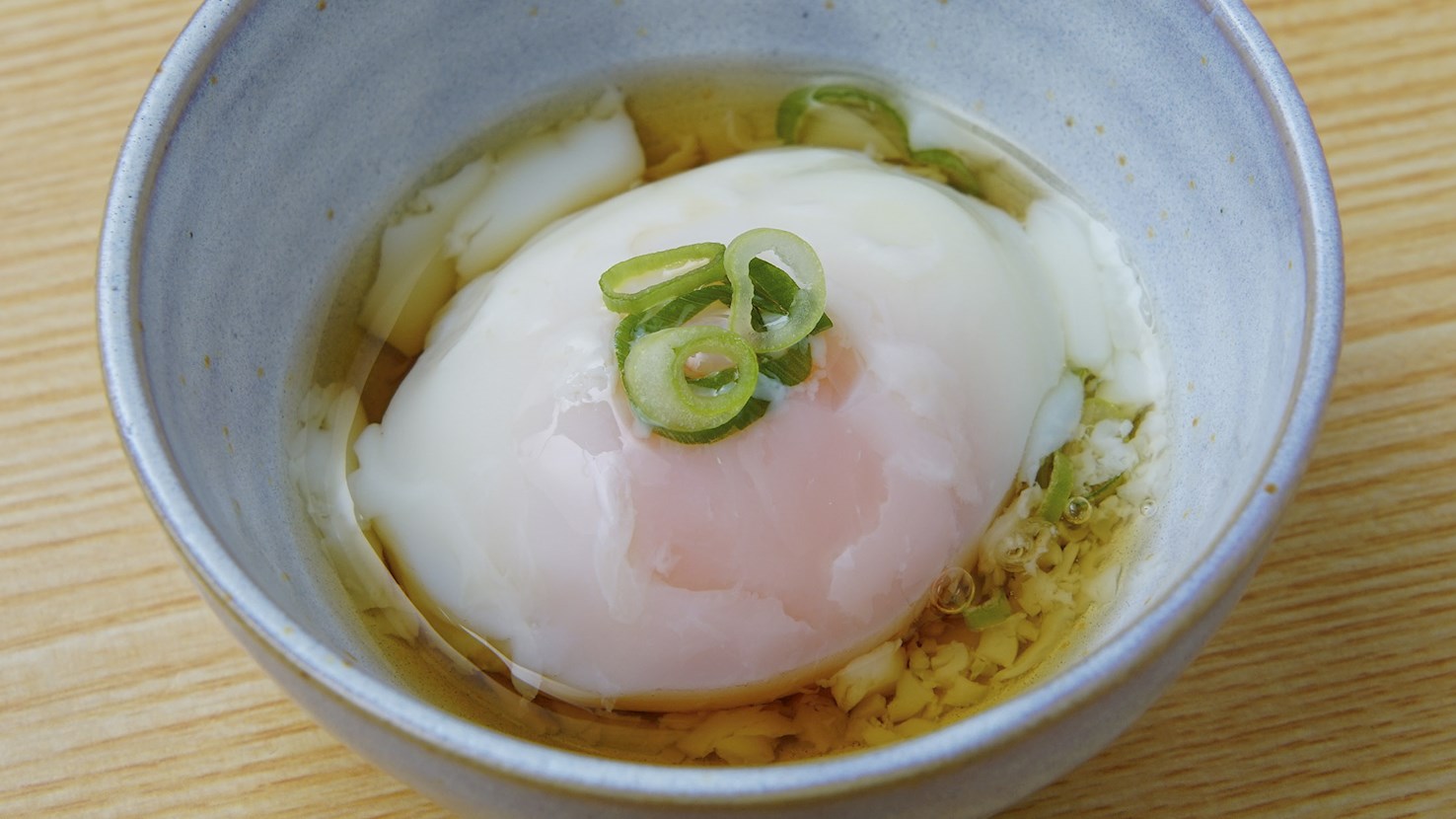
Onsen tamago is a traditional delicacy made by slow-cooking eggs in baskets that are submerged in onsen hot springs. The eggs are cooked in their shells so that the yolk becomes soft-set and the egg white develops a loose consistency. It is believed that the secret is in the hot springs' temperature, which causes the egg to be creamy and flavorful on the interior. Traditionally, onsen tamago is consumed by placing the egg in an indentation in steamed rice and drizzling some soy sauce or broth around it, preferably with some grated daikon on the side. It is recommended to garnish the dish with finely chopped spring onions on top.
Omurice is a short form of omelet and rice, the two essential ingredients of this Japanese fusion dish. The rice is usually pan-fried together with chicken and ketchup, then wrapped in a thin omelet sheet. Finally, the dish is generously covered with ketchup. Occasionally, scrambled eggs can be put on top of the rice, and ketchup can be substituted with demi-glace sauce. Omurice is one of many Japanese dishes influenced by Western cooking techniques and ingredients. Although it has become a traditional Japanese dish, it is usually prepared at home or served in non-traditional Japanese restaurants. There are two stories about the true origin and creation of this unusual fusion dish. One claims that it was created in Tokyo as a quickly-prepared dish to feed the restaurant staff. However, the other story tells that it was in fact invented in Osaka as a specially-designed meal for a particular customer who could only eat light food. Whichever theory is true; it is certain that the dish has been present in Japanese cuisine since the beginning of the 20th century. Nowadays, it is also commonly found in South Korea and Taiwan.
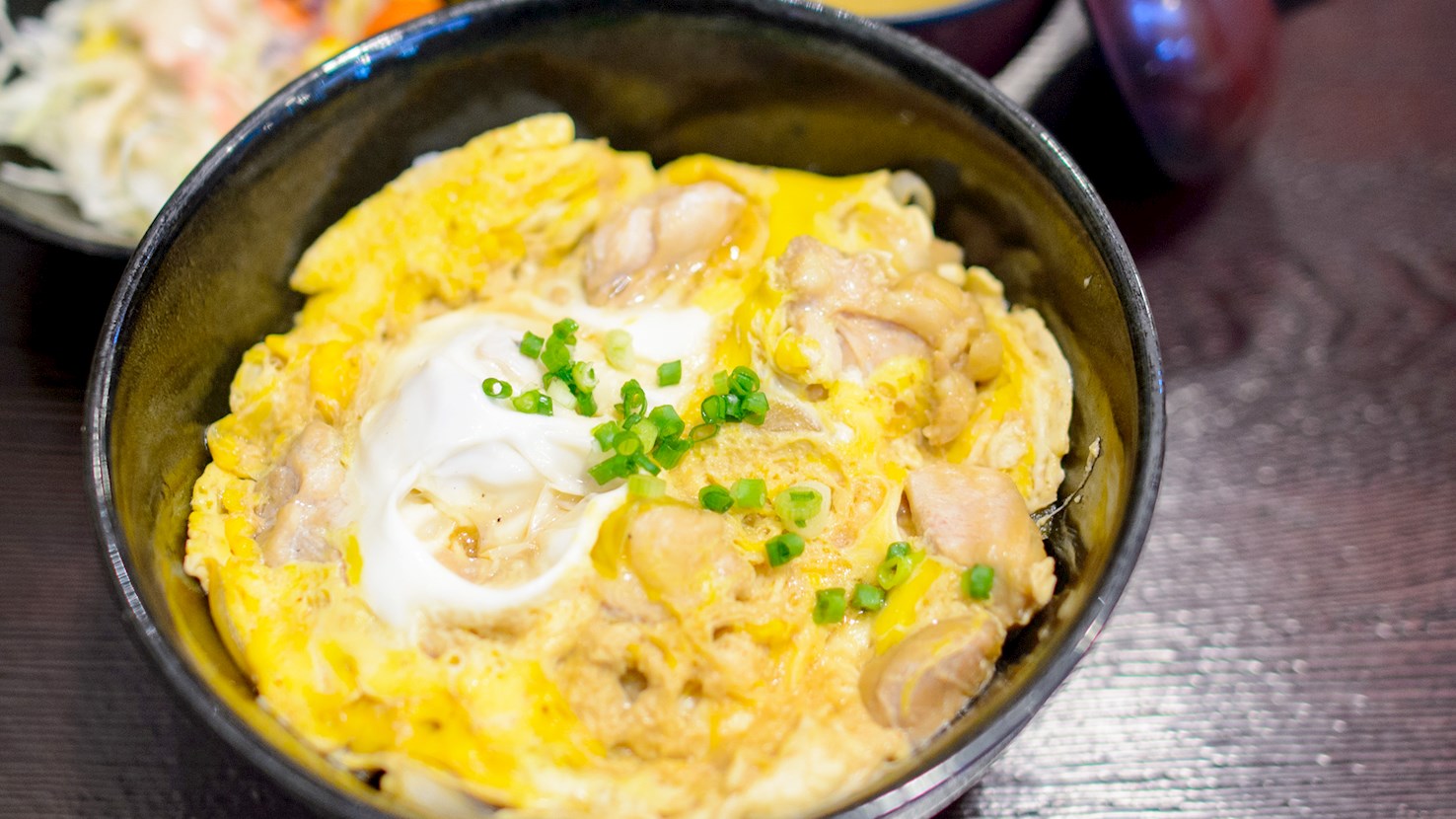
Oyakodon is a poetically named dish meaning father and child, referring to the fact that both the chicken and the egg are used in the dish. It consists of a bowl of white rice that is topped with chicken, eggs, and chopped scallions. The eggs are poured over the rice before they have completely cooked, and the cooked rice finishes the job and helps the eggs to solidify. This simple dish is served in numerous Japanese eateries, such as soba restaurants. Oyakodon is especially popular at lunchtime, since it is easy and quick to prepare, which is a crucial fact for many Japanese businessmen. In addition to Japanese fast-food restaurants, oyakodon can also be bought from numerous street vendors. It is recommended to eat it as the Japanese do, from the bottom up, so that there is always some of the topping covering the white rice.
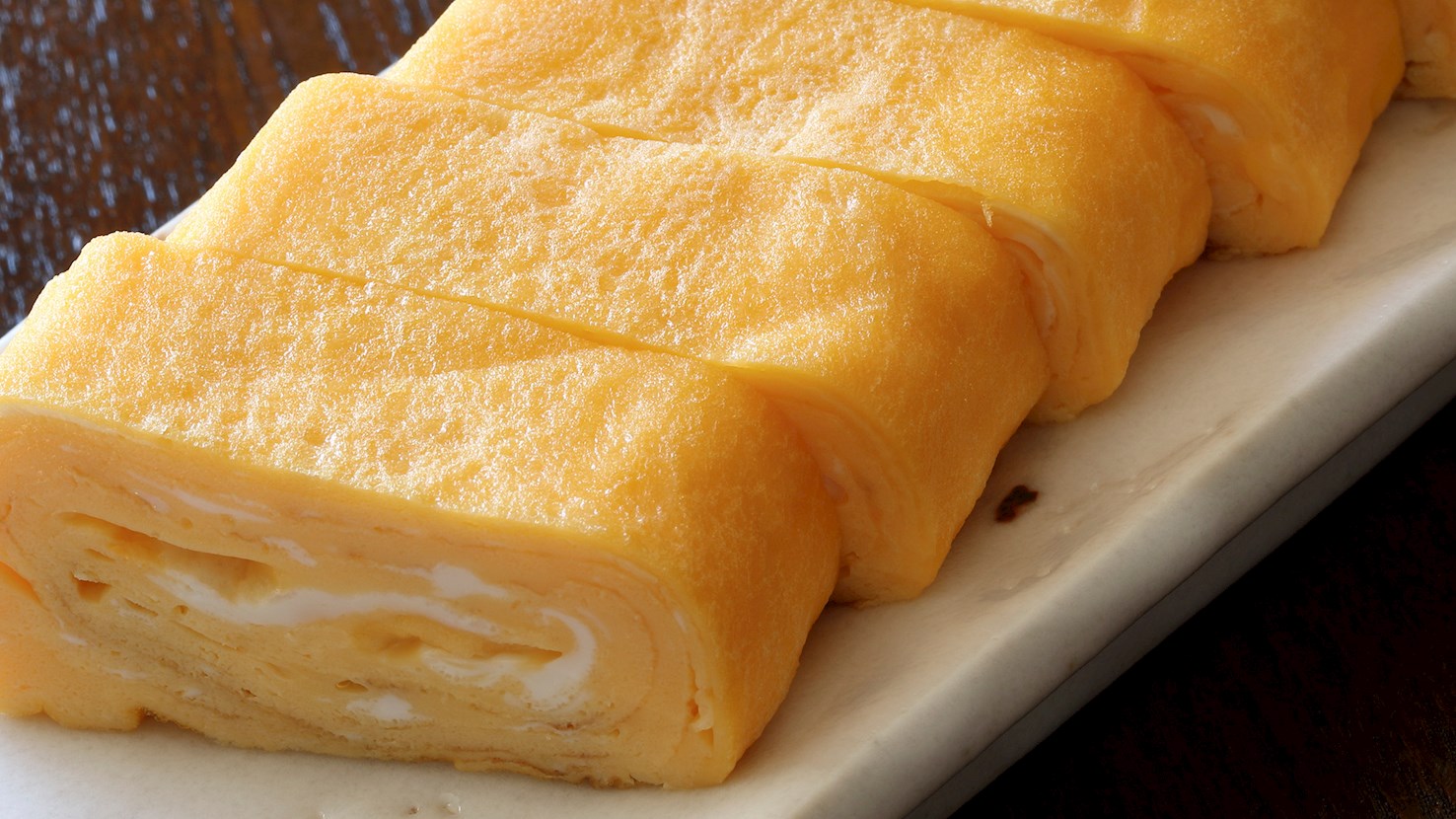
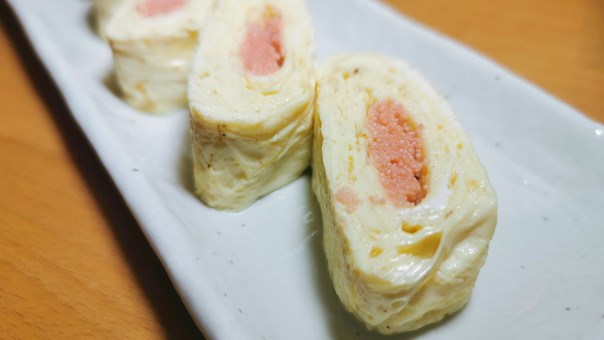
Tamagoyaki is a sweet and savory rolled omelet made by folding over successive thin layers of beaten egg in a rectangular pan. The omelet is made of eggs, whisked vigorously with dashi broth, soy sauce, mirin, and sugar, creating a distinct balance of umami and sweetness. Crafting the rolled shape requires a specific rectangular copper or non-stick pan called a makiyakinabe. A thin layer of the liquid is poured into the hot, oiled metal, allowed to set briefly, and then rolled tightly from one end to the other. The resulting roll is pushed to the back of the pan, more oil is applied, and another thin layer of egg is poured in, ensuring the liquid flows beneath the first roll. As this new layer solidifies, the existing roll is rolled back over it, wrapping the new layer around the outside. This cycle repeats until the mixture is completely spent, resulting in a dense, rectangular block with a visible spiral cross-section. The flavor changes based on regional preferences. The Kantō version heavily features sugar and soy sauce for a darker, sweeter finish, while the Kansai iteration relies primarily on extra dashi broth for a lighter, softer, and more savory result known as dashimaki tamago. Other variations introduce fillings such as spicy cod roe, chopped scallions, roasted eel, or seaweed, incorporated directly into the liquid before it hits the heat. The name of the dish can be literally translated as "eggs cooked over dry heat." The widespread consumption of this item dates back to the late 19th century, gaining massive popularity in the 1950s when the government actively encouraged chicken farming and eggs became affordable for everyday households. Served cold or warm, it appears frequently in lunch boxes due to its sturdy texture, acts as a standard topping fastened with a strip of nori over vinegared rice at sushi restaurants, or arrives simply sliced on a small plate alongside grated daikon radish and a splash of soy sauce for a light breakfast.
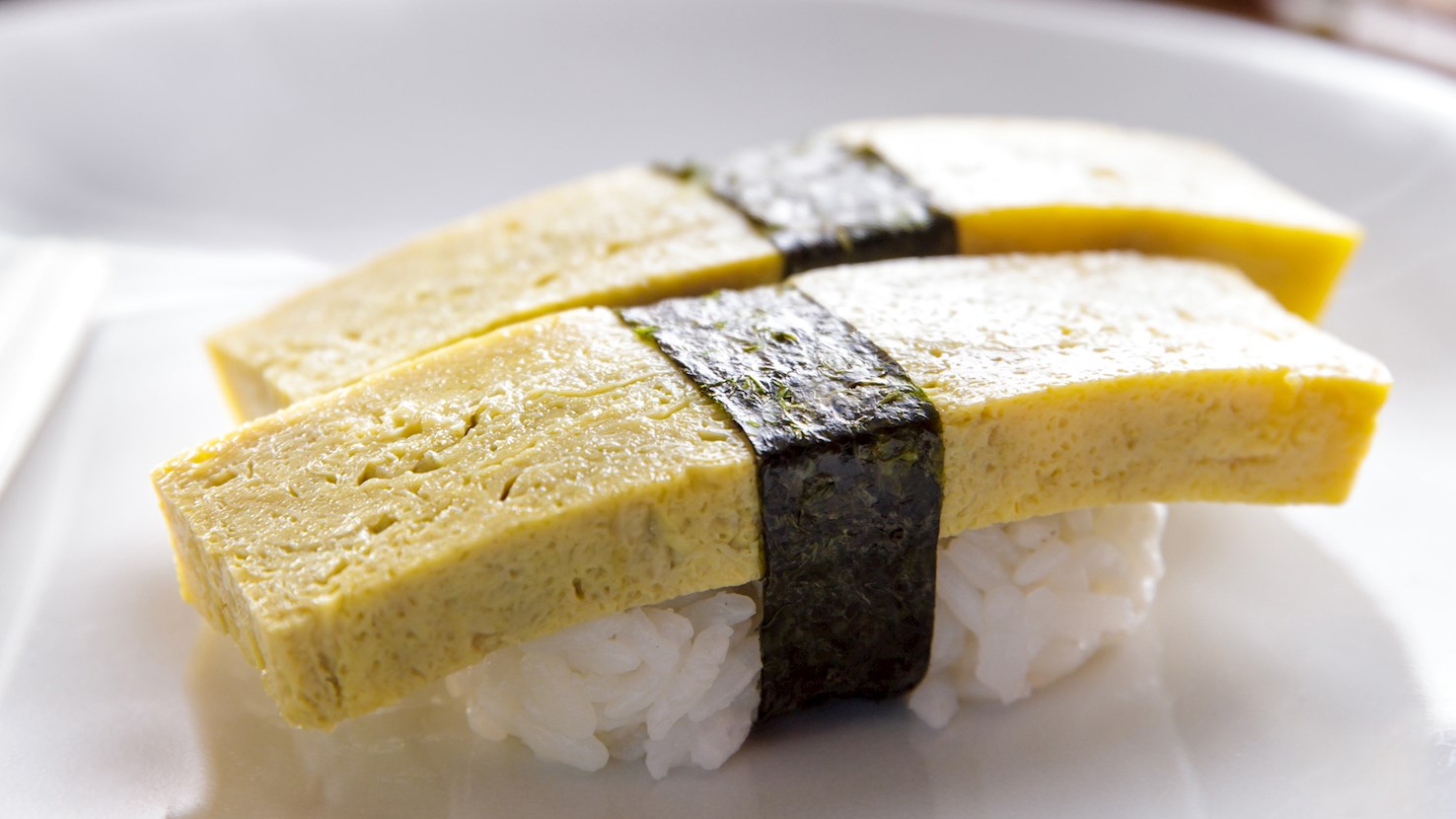
Tamago nigiri sushi is a traditional type of nigiri sushi. It consists of hand-pressed sushi rice that's topped with a slice of egg omelet. The dish has a sweet flavor with a clean finish because the eggs are cooked with dashi and sugar. The texture is light and fluffy. Traditionally, this type of sushi is eaten by hand in a single bite, and it's said that no two sushi restaurants have the same recipe. This type of nigiri should be eaten last because it's a great palate cleanser.
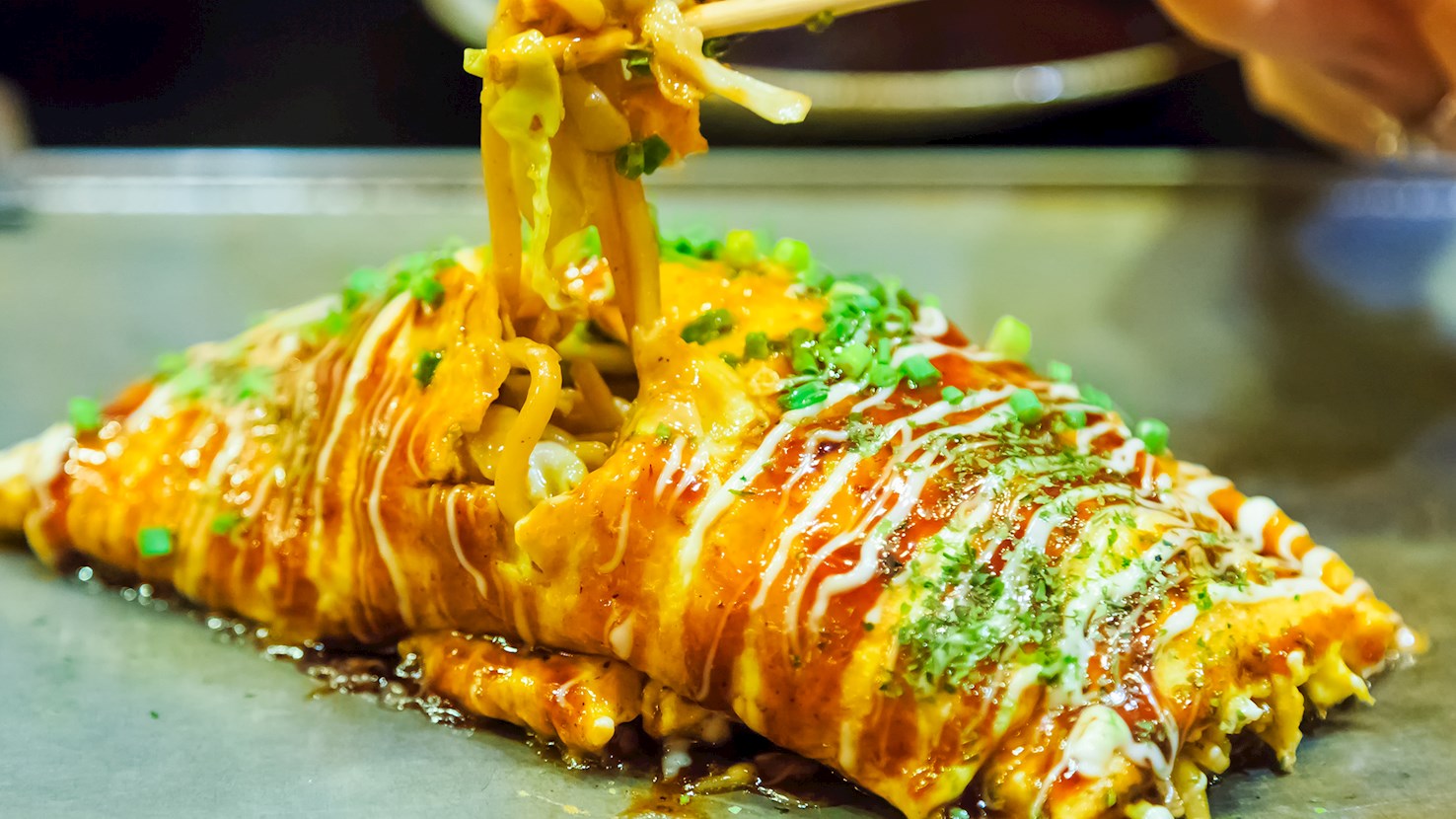
Omusoba is a dish consisting of sauce-seasoned yakisoba wrapped in a thin omelet. It is particularly associated with Osaka and the wider Kansai region, where yakisoba, okonomiyaki, and other foods cooked on a teppan griddle are central to everyday casual dining. The name combines omu, from omelet, with soba, referring here to yakisoba noodles. In appearance and construction, it resembles omurice: instead of seasoned rice, a thin layer of egg encloses a portion of fried noodles. Omusoba developed within Osaka's popular griddle-food culture during the 20th century. Its exact inventor and date of creation remain unclear. A closely related Osaka preparation known as soba roll, in which fried noodles are enclosed in egg, is regarded as an early form of the dish. It eventually became widely known as omusoba. The filling is essentially classic sauce yakisoba. Steamed Chinese-style wheat noodles are stir-fried on a hot griddle or in a frying pan with thinly sliced pork, usually pork belly, and vegetables such as cabbage. The noodles are seasoned with yakisoba sauce, a thick, sweet, and savory Japanese brown sauce related to Worcestershire sauce. The noodles are cooked over fairly high heat so they develop some browning while remaining chewy. The sauce is added toward the end and tossed through the noodles, pork, and cabbage until everything is evenly coated and slightly caramelized. Separately, beaten eggs are spread into a thin layer on the griddle. While the egg is still soft, the cooked yakisoba is placed in the center, and the egg is folded around it. The finished omusoba is transferred to a plate with the seam underneath, forming an elongated omelet with the noodles enclosed inside. Yakisoba or okonomiyaki sauce is usually spread over the top. Mayonnaise is also common, followed by a light sprinkling of aonori, the finely ground green seaweed used on many Kansai griddle dishes. Beni shoga, thin strips of bright red pickled ginger, is commonly served alongside and provides a sharp, refreshing contrast to the rich noodles and egg. Bonito flakes may also be added, but the essential dish is much simpler: sauce-seasoned yakisoba, pork and cabbage wrapped in egg and finished with sauce. Cheese, seafood, and other fillings are later or optional variations rather than part of the basic preparation. Omusoba is typically served hot as a complete casual meal at okonomiyaki restaurants, teppanyaki shops, food stalls, and at home.
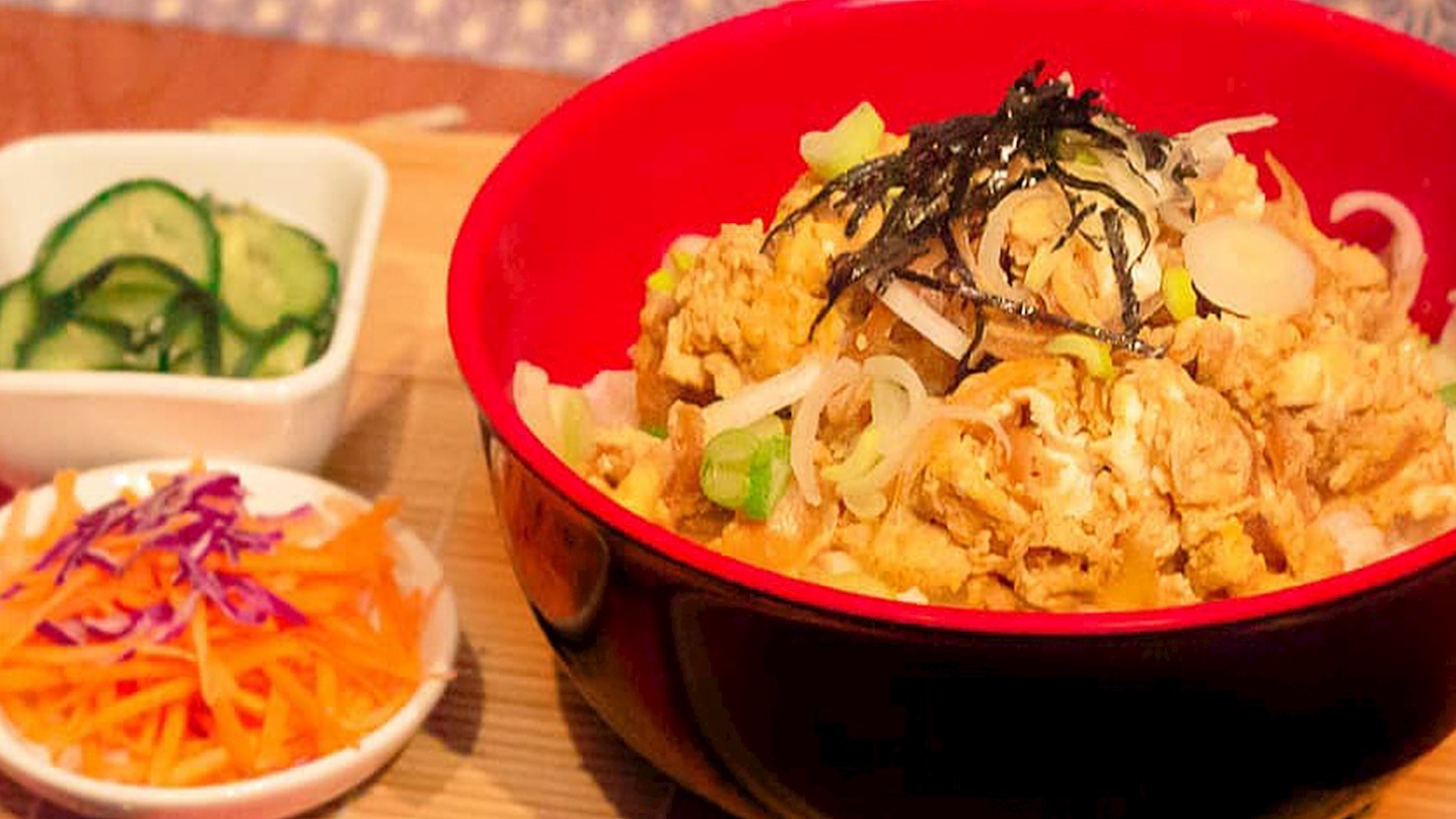
Tamagodon is a Japanese donburi dish that is simple and quick to prepare. It consists of fluffy eggs that are placed on top of steamed rice. The omelet is often enriched with onions and a savory sauce made with mirin, dashi, and soy sauce. Before serving, this Japanese comfort food staple can be garnished with nori seaweed and chopped spring onions.
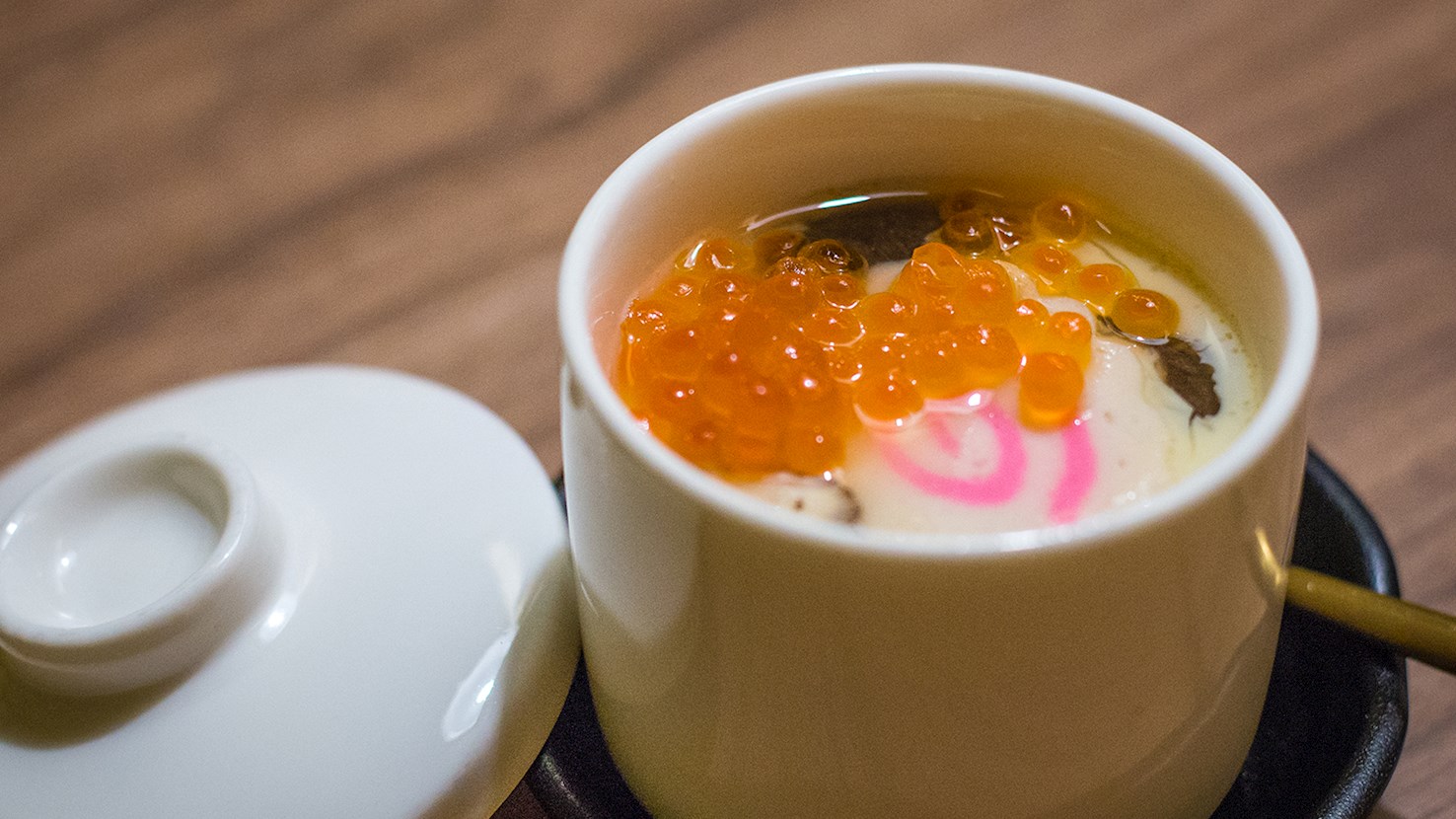
Ikura chawanmushi is a traditional egg-based dish. Chawanmushi is a soft egg custard that's steamed until the texture becomes silky smooth. The eggs are often flavored with dashi, soy sauce, or seafood stock. In this version, chawanmushi is topped with ikura (salmon roe) before serving, providing a salty pop and a nice textural contrast. This delicate dish can be served hot, warm, or cold in a small lidded cup, and since it can't be eaten with chopsticks, it's one of few Japanese dishes that are traditionally consumed with a spoon. Ikura chawanmushi is traditionally served as an appetizer.
TasteAtlas food rankings are based on the ratings of the TasteAtlas audience, with a series of mechanisms that recognize real users and that ignore bot,
nationalist or local patriotic ratings, and give additional value to the ratings of users that the system recognizes as knowledgeable.
For the “Top 15 Japanese Egg Dishes” list until October 15, 2026, 989 ratings were recorded, of which 886 were recognized by the system as legitimate.
TasteAtlas Rankings should not be seen as the final global conclusion about food. Their purpose is to promote excellent local foods,
instill pride in traditional dishes, and arouse curiosity about dishes you haven’t tried.





What People Say