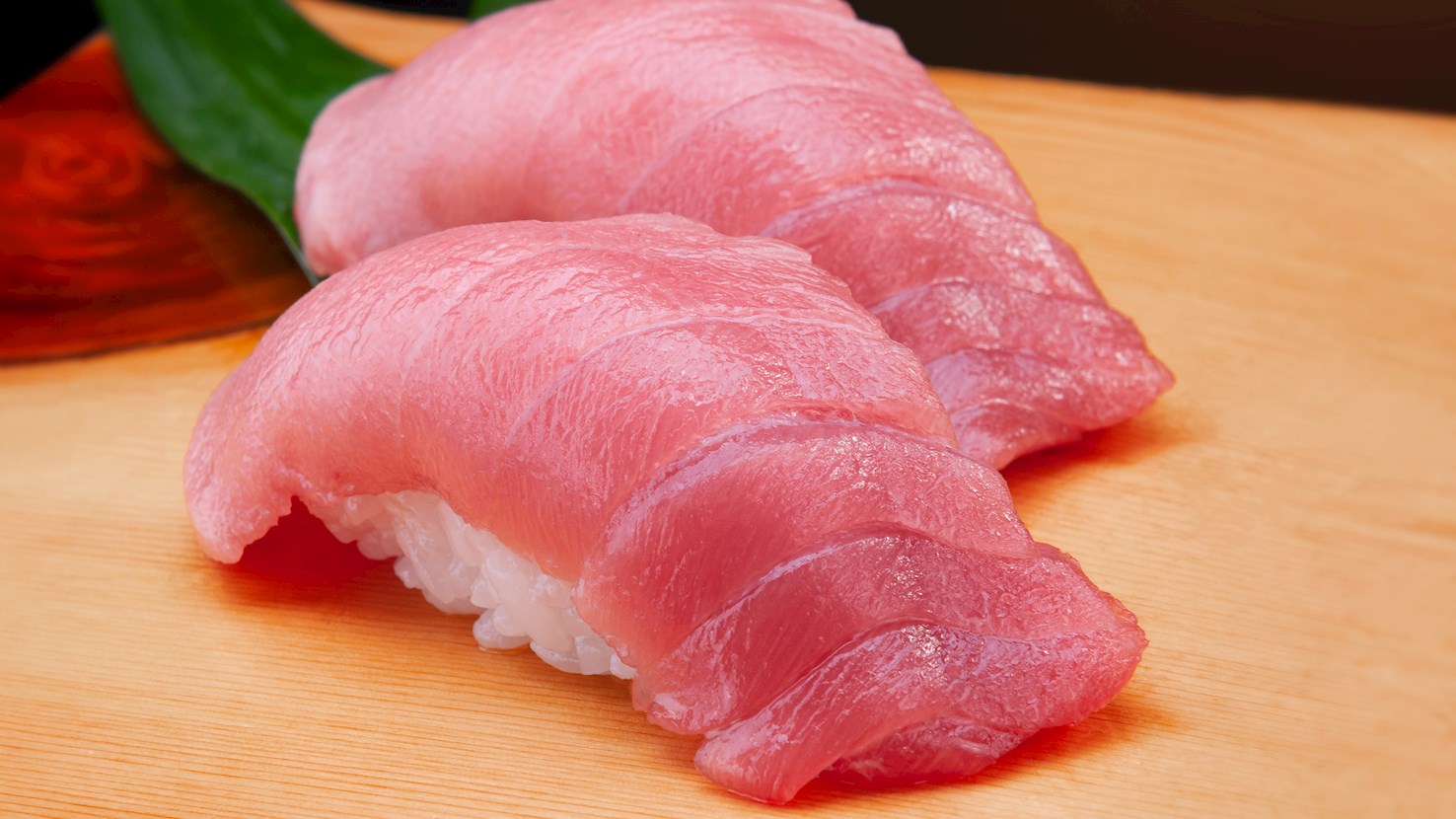
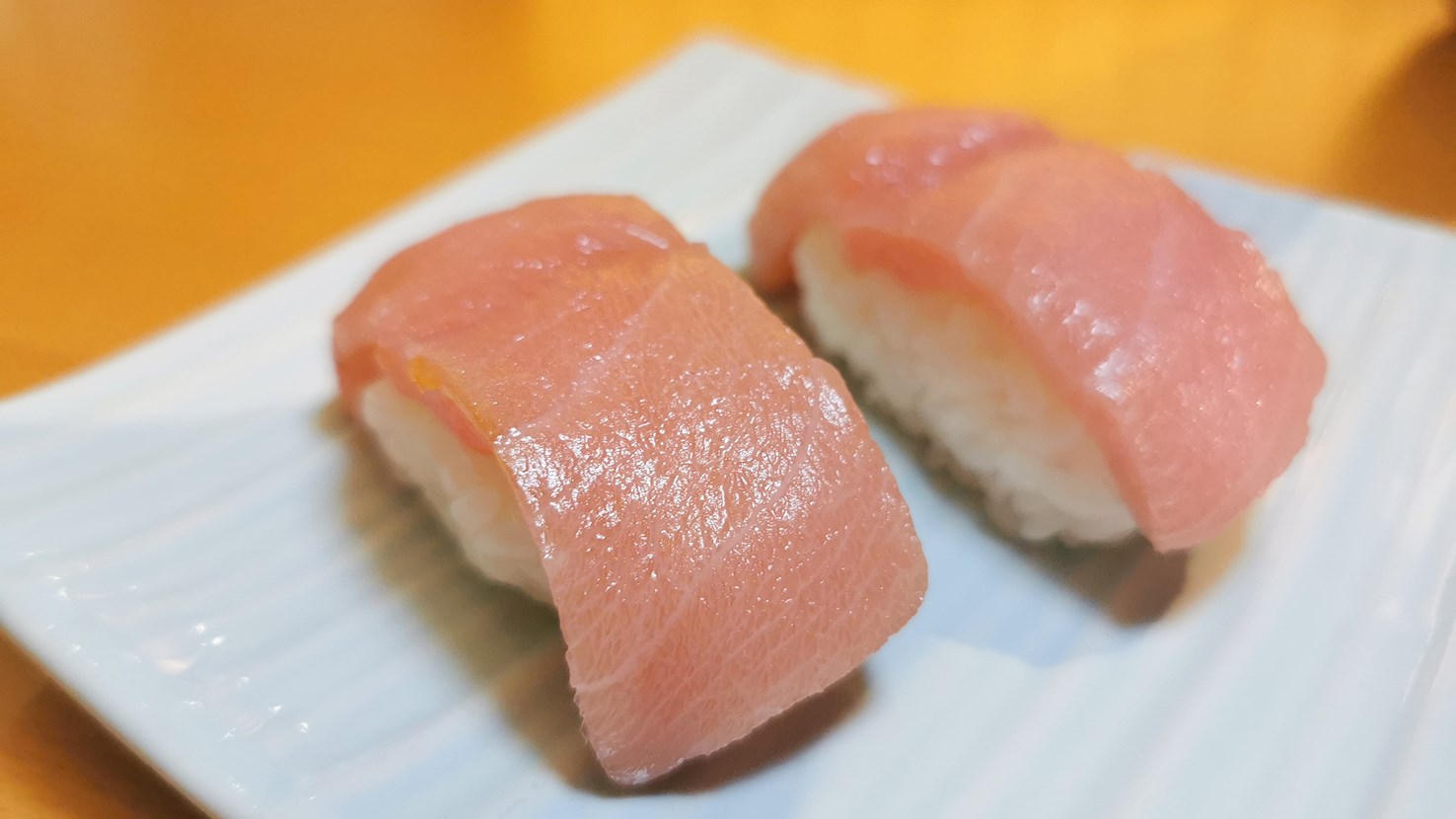
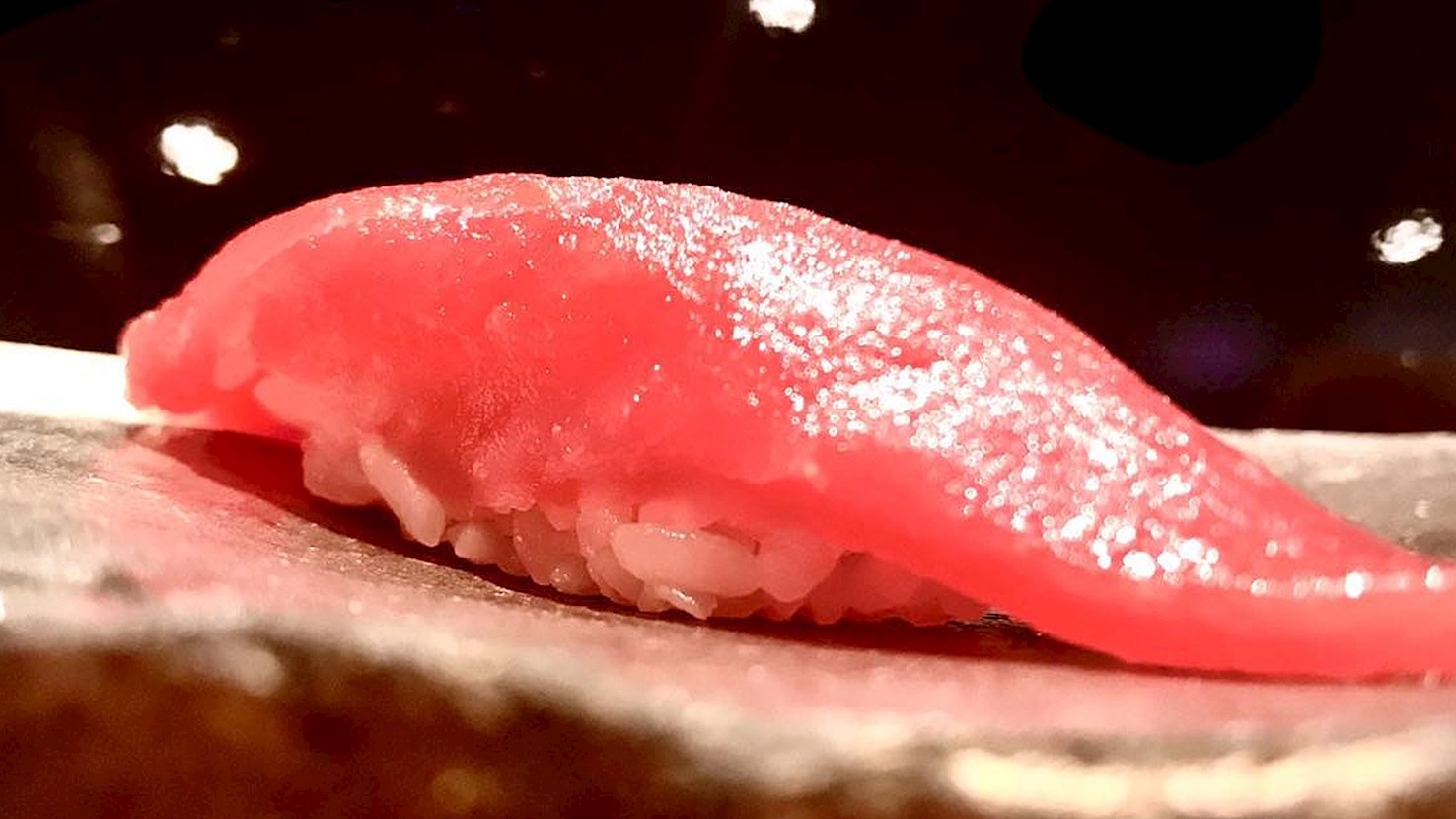
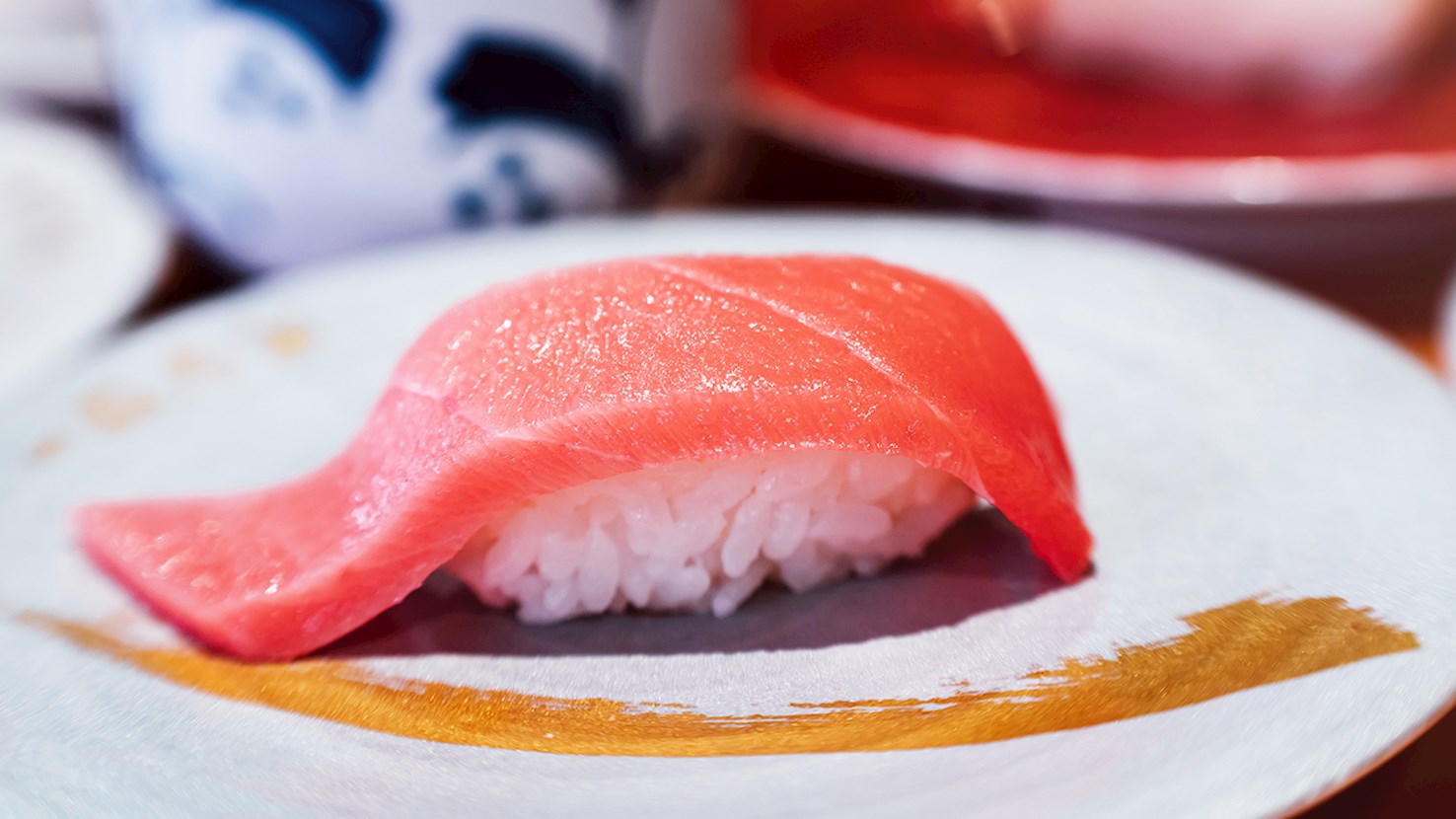
Otoro nigiri sushi is a traditional type of nigiri sushi. It consists of hand-pressed sushi rice that's topped with slices of fatty cuts of tuna. Different cuts of tuna are classified as otoro (fatty), chutoro (medium-fatty), and akami (red meat). The dish has a rich flavor and a melt-in-the-mouth texture that makes it quite expensive. Traditionally, this type of sushi is eaten by hand in a single bite. It's usually accompanied by soy sauce, wasabi, or pickled ginger (gari) on the side.
Chutoro nigiri sushi is a traditional type of nigiri sushi. It consists of hand-pressed sushi rice that's topped with slices of medium-fatty cuts of tuna. Different cuts of tuna are classified as otoro (fatty), chutoro (medium-fatty), and akami (red meat). The dish has a rich and deep flavor and a soft texture. Traditionally, this type of sushi is eaten by hand in a single bite. It's usually accompanied by soy sauce, wasabi, or pickled ginger (gari) on the side.
Maguro nigiri sushi is a traditional type of nigiri sushi. It consists of hand-pressed sushi rice that's topped with slices of tuna. Different cuts of tuna are classified as otoro (fatty), chutoro (medium-fatty), and akami (red meat). The dish has a mild flavor and a rich texture that makes it great for sushi newcomers. Traditionally, this type of sushi is eaten by hand in a single bite. It's usually accompanied by soy sauce, wasabi, or pickled ginger (gari) on the side.
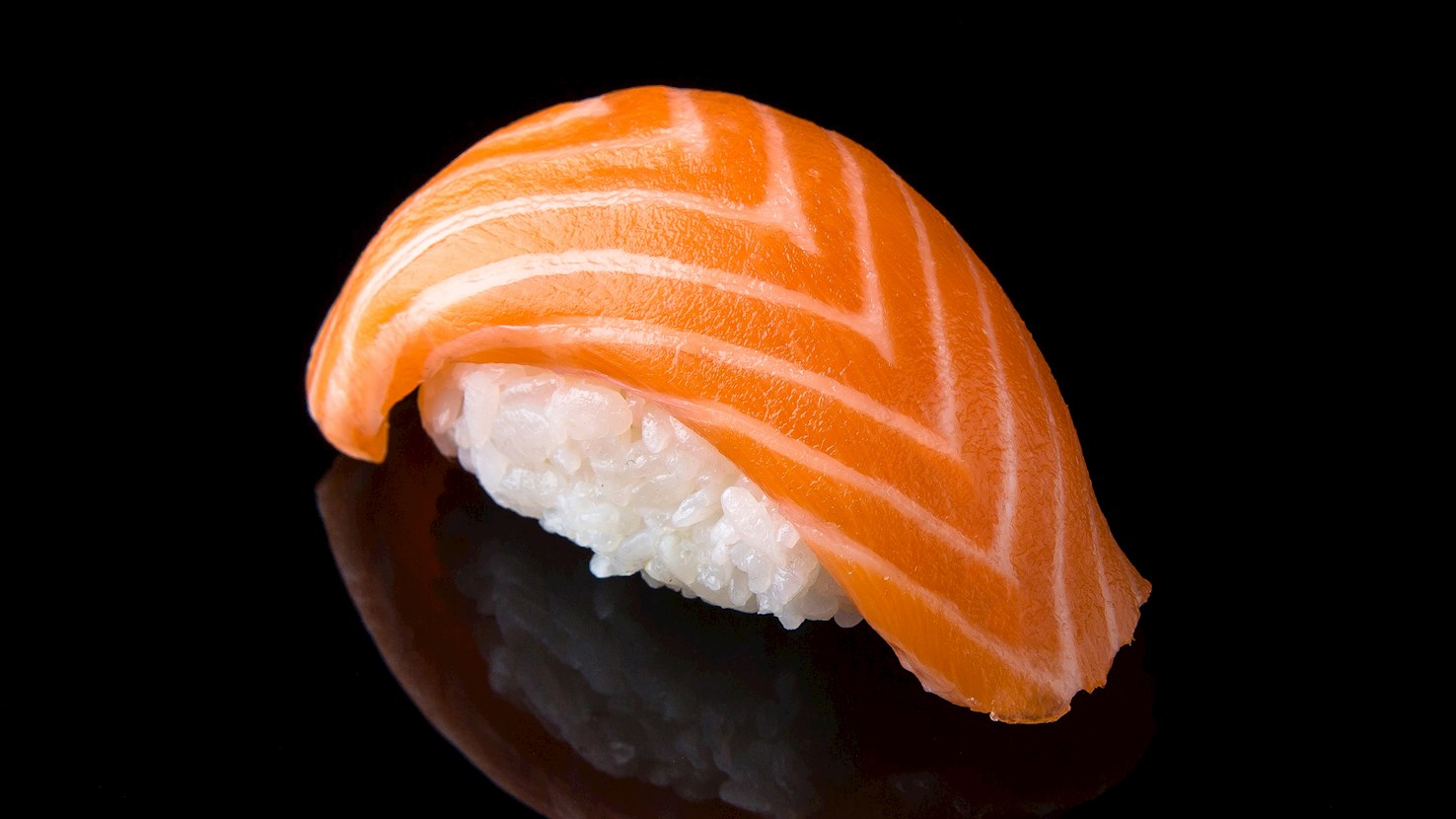
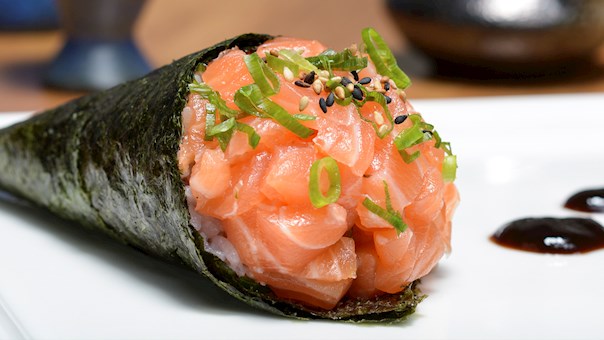
Sake nigiri sushi is a Japanese type of nigiri sushi, with origins in Norway. It consists of hand-pressed sushi rice that's topped with slices of salmon. The dish has a soft texture and a clean finish that makes it good for sushi newcomers, although the flavor can be a bit fishier than maguro (tuna) nigiri sushi. Traditionally, this type of sushi is eaten by hand in a single bite. It's usually accompanied by soy sauce, wasabi, or pickled ginger (gari) on the side.
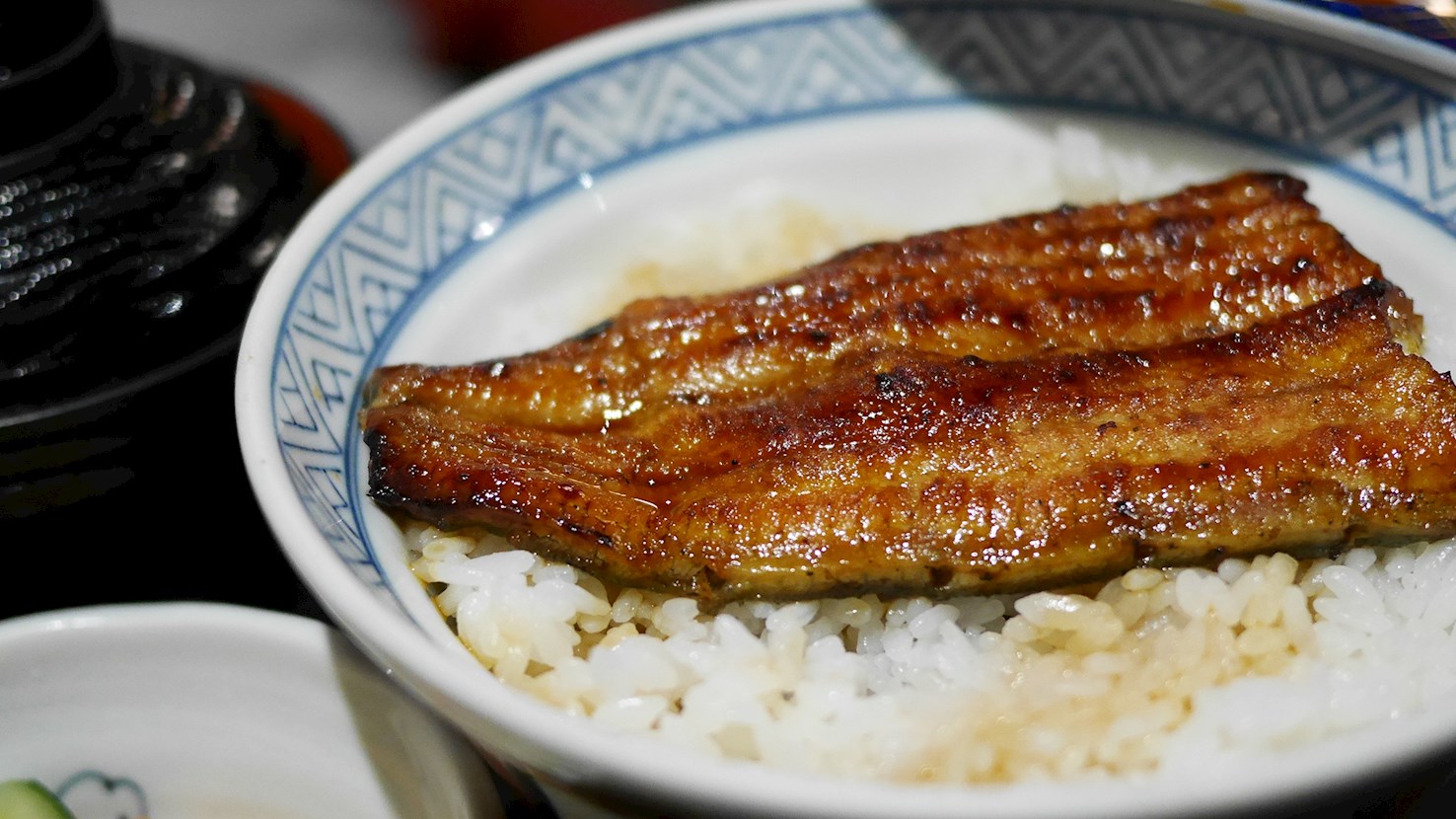
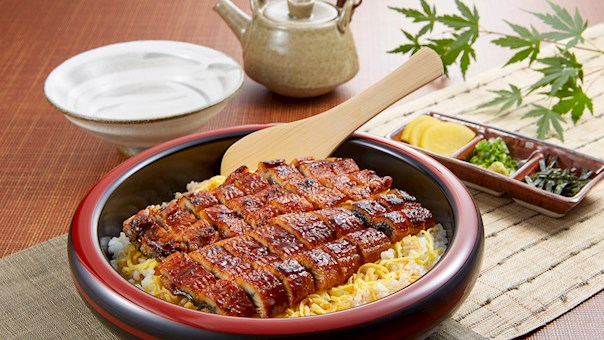
Unadon is a Japanese dish consisting of grilled unagi (eel) fillets placed on top of steamed rice. The eel is grilled kabayaki-style, where the fish is split, gutted, butterflied, cut into squares, skewered, then diped in tare sauce before being grilled. The tare sauce consists of soy sauce, mirin, sugar, and sake. It provides the necessary caramelization to the fish during the grilling process. Before serving, unadon is typically garnished with sanshō berries on top. In Kantō, the eel is traditionally steamed before grilling, resulting in a more tender texture of the fish, while in Kansai, the eel is simply grilled without prior steaming. This way of enjoying eel over rice was invented in the Edo era, and nowadays it is a classic dish in Japanese cuisine.
Akami nigiri is a traditional type of nigiri sushi. It consists of hand-pressed sushi rice that's topped with slices of akami (red meat) tuna. There are also otoro (fatty tuna) nigiri sushi and chutoro (medium-fatty tuna) nigiri sushi varieties, and all of them are classified under maguro (tuna) nigiri sushi. Akami includes tuna and bonito, and the meat gets its red color from the high content of myoglobin and hemoglobin, which is typical for migratory fish. The slices are on the thicker side and the focus is on tuna's sticky and firm texture. Akami nigiri sushi is usually served with pickled ginger (gari), soy sauce, and wasabi on the side.
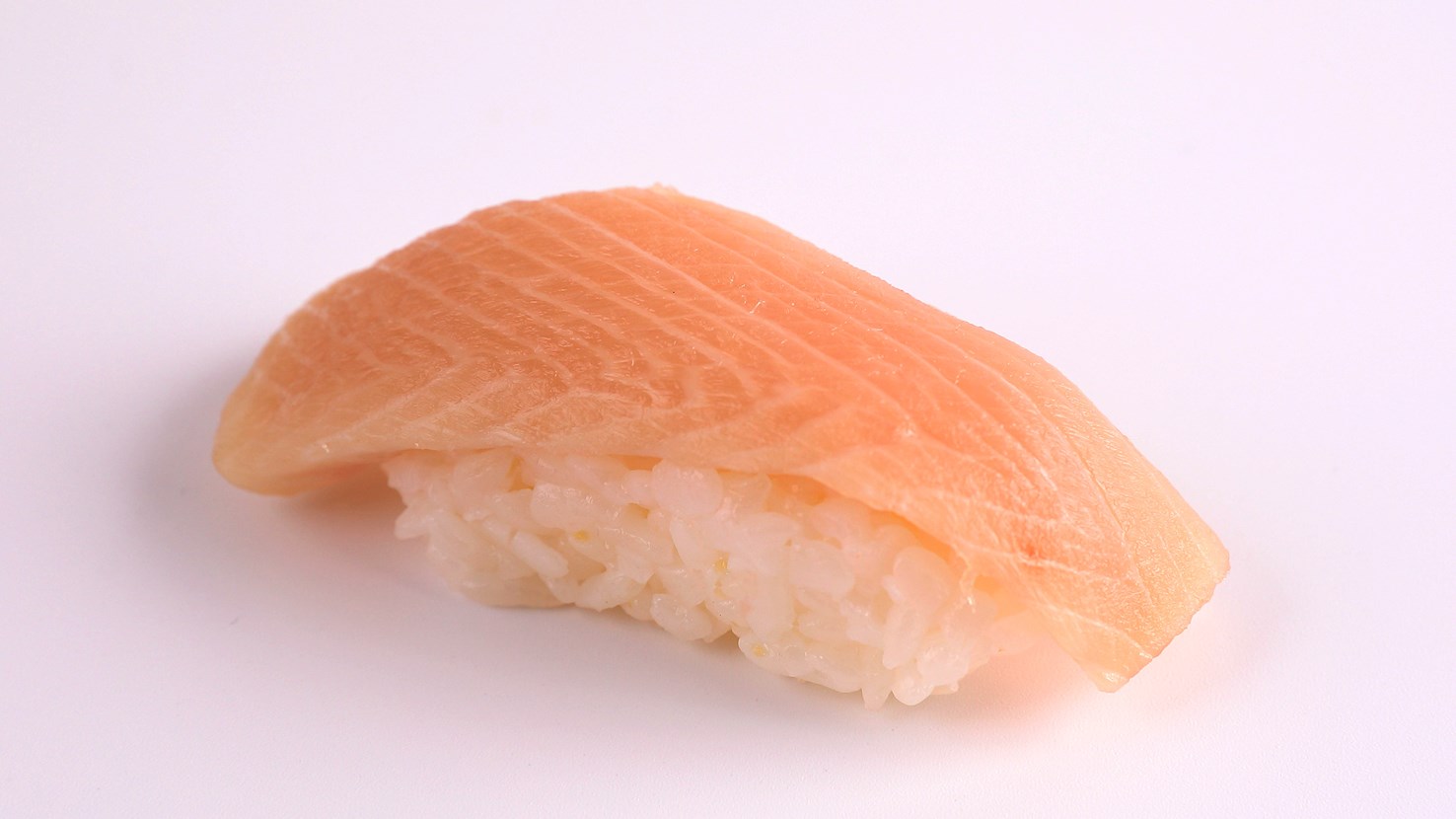
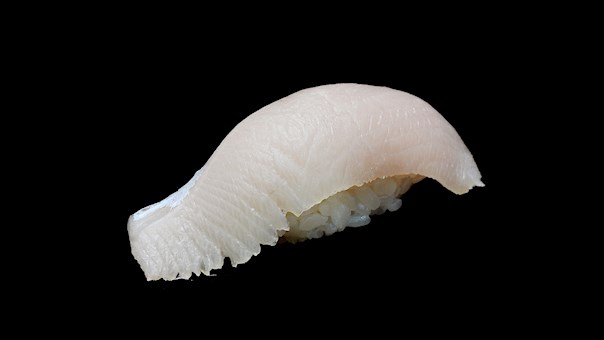
Hamachi nigiri sushi is a traditional type of nigiri sushi. It consists of hand-pressed sushi rice that's topped with slices of young Japanese amberjack, also known as yellowtail tuna. The dish has a soft texture and flavors that are not as deep as salmon nigiri sushi or tuna nigiri sushi. The fish is sometimes seared with a blowtorch until lightly charred. Traditionally, this type of sushi is eaten by hand in a single bite. It's usually accompanied by soy sauce, wasabi, or pickled ginger (gari) on the side. The lower quality version of this dish is known as buri nigiri sushi, prepared with older and bigger yellowtail tuna.
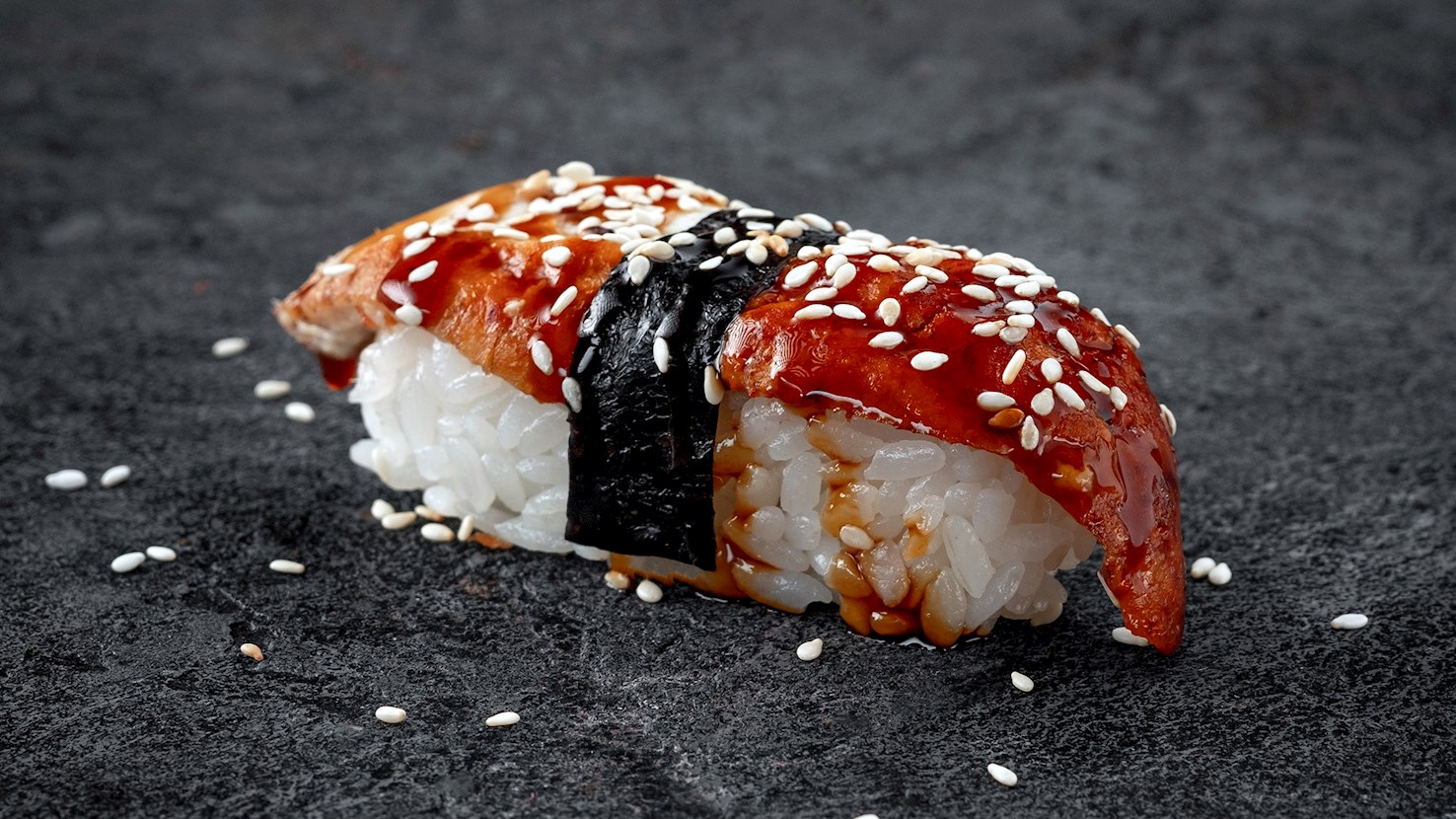
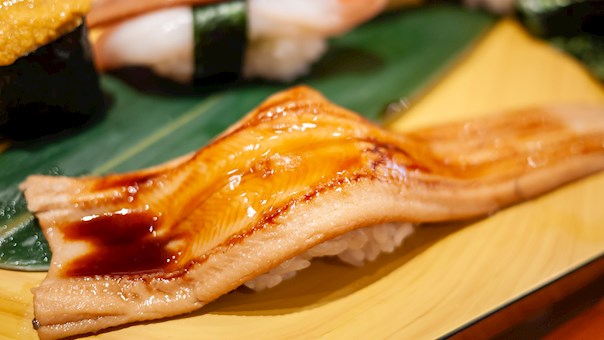
Unagi nigiri sushi is a traditional type of nigiri sushi. It consists of hand-pressed sushi rice that's topped with slices of freshwater eel that's usually cooked. The dish has a soft texture and a mild flavor. If desired, the eel can be lightly seared with a blowtorch. It's a nice option for people who don't prefer raw food but want to enjoy sushi. Traditionally, this type of sushi is eaten by hand in a single bite. It's usually accompanied by soy sauce, wasabi, or pickled ginger (gari) on the side.
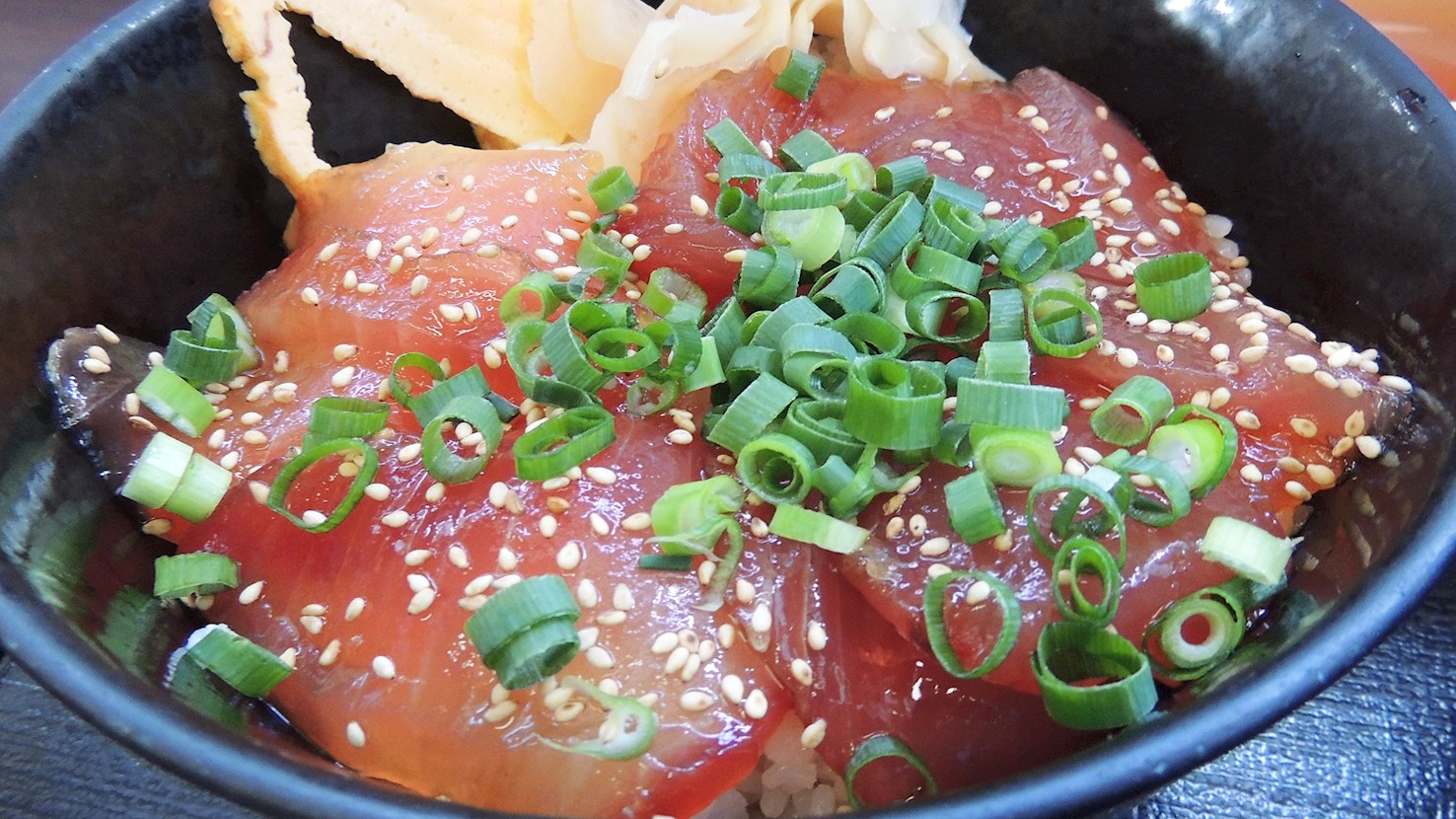
Tekkadon is a simple Japanese dish that consists of steamed, vinegar-flavored rice that is topped with pieces of sashimi-style, raw tuna. The dish is often garnished with strips of nori seaweed and sliced scallions and is usually served with a soy sauce on the side. The term is sometimes used interchangeably with maguro zuke don—a similar dish that incorporates marinated pieces of tuna and which is usually served without a dipping sauce on the side. Tekkadon belongs to the group of donburi dishes, and it can be enjoyed as a light main course.
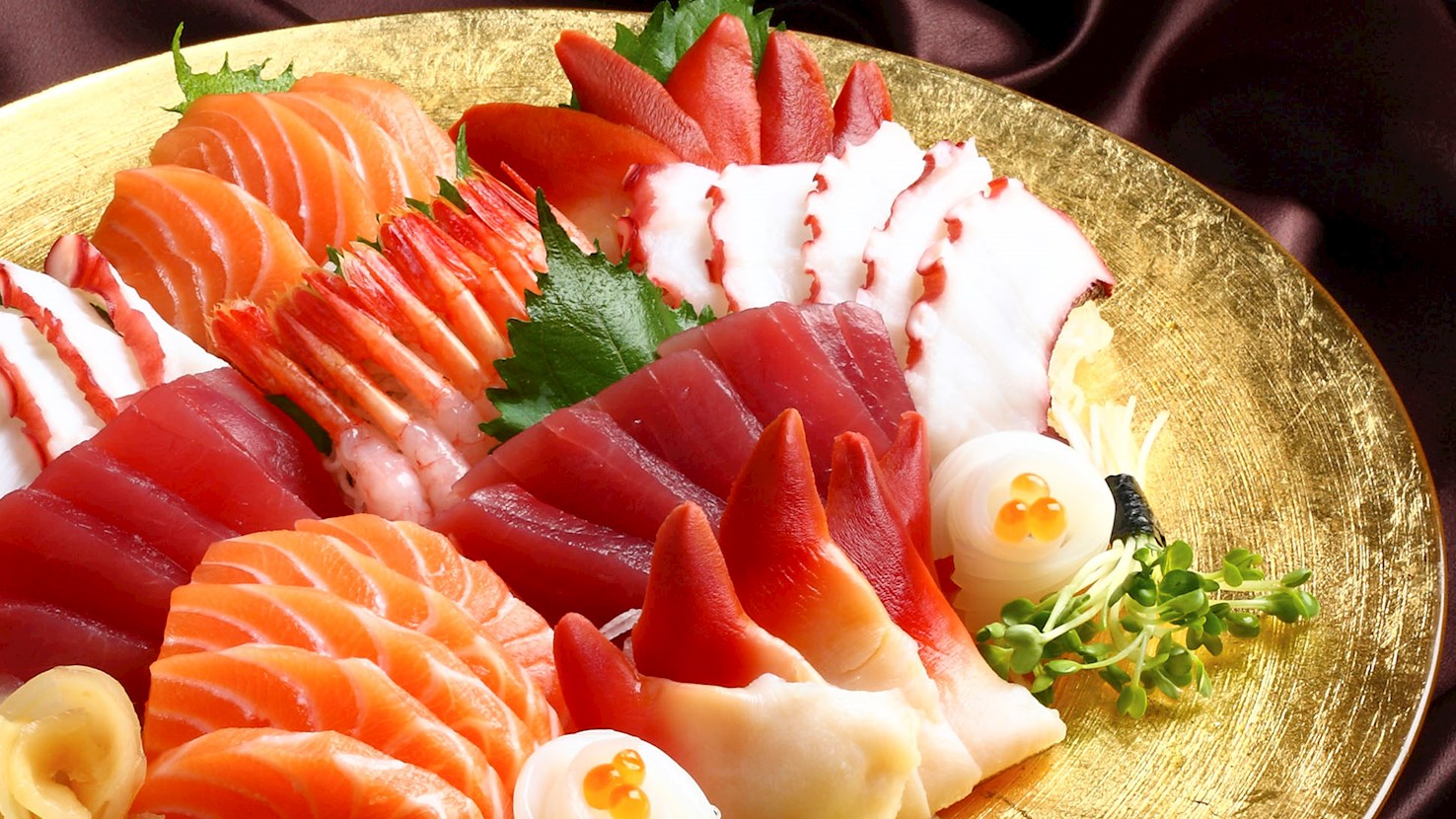
Sashimi is a culinary preparation consisting of fresh, raw seafood or meat sliced into precise, bite-sized pieces and served without heat. Historical records trace the origins of eating raw sliced fish to the Muromachi period, between 1336 and 1573, when people began consuming it with a mixture of vinegar and salt. The term itself translates to "pierced body" and originates from the words "sashi," meaning "pierced,," and "mi," meaning "body." Historians attribute this specific terminology to two distinct practices of the era. Fishmongers often pierced the severed head and tail of the fish, then attached them to the fillets to help buyers identify the species. Additionally, the samurai class dominated the social hierarchy at the time, and the word "kiru," meaning to cut, carried strict associations with swords and combat. People adopted the word "sashi" to politely avoid referencing violence at the dining table. A chef slicing the seafood uses a long, single-edged knife called a yanagiba to execute continuous, fluid strokes. Pulling the blade through the flesh in one motion cleanly severs the muscle fibers. A clean cut prevents the cellular structure from being crushed, which helps maintain a firm texture and traps natural moisture inside the meat. Different fish species require different geometric cuts. Hira-zukuri is a thick, rectangular cut used for firm fish such as bluefin tuna or salmon. Usu-zukuri is a paper-thin, diagonal slice used for white fish like flounder, making the flesh translucent enough to see the plate beneath. Ito-zukuri turns softer ingredients like squid into fine, thread-like strips. Bluefin tuna, known as maguro, offers a deep ruby color and a graduated fat content depending on the cut. Yellowtail, or hamachi, provides a buttery, rich bite, while sea bream offers a leaner, snappier texture. A serving arrives with a shallow dish of soy sauce for dipping. A small portion of grated green wasabi root frequently accompanies the slices, adding a sharp, volatile heat that clears the palate. Grated ginger typically replaces wasabi when serving oily, strong-tasting fish like mackerel or sardines. Shredded white daikon radish and serrated green shiso leaves rest beneath the slices, providing an herbaceous contrast and an edible palate cleanser between different types of seafood. The entire process relies entirely on the pristine quality of the raw catch and the absolute precision of the knife work.
TasteAtlas food rankings are based on the ratings of the TasteAtlas audience, with a series of mechanisms that recognize real users and that ignore bot,
nationalist or local patriotic ratings, and give additional value to the ratings of users that the system recognizes as knowledgeable.
For the “Top 33 Japanese Fish Dishes” list until September 15, 2026, 3,098 ratings were recorded, of which 2,683 were recognized by the system as legitimate.
TasteAtlas Rankings should not be seen as the final global conclusion about food. Their purpose is to promote excellent local foods,
instill pride in traditional dishes, and arouse curiosity about dishes you haven’t tried.



What People Say