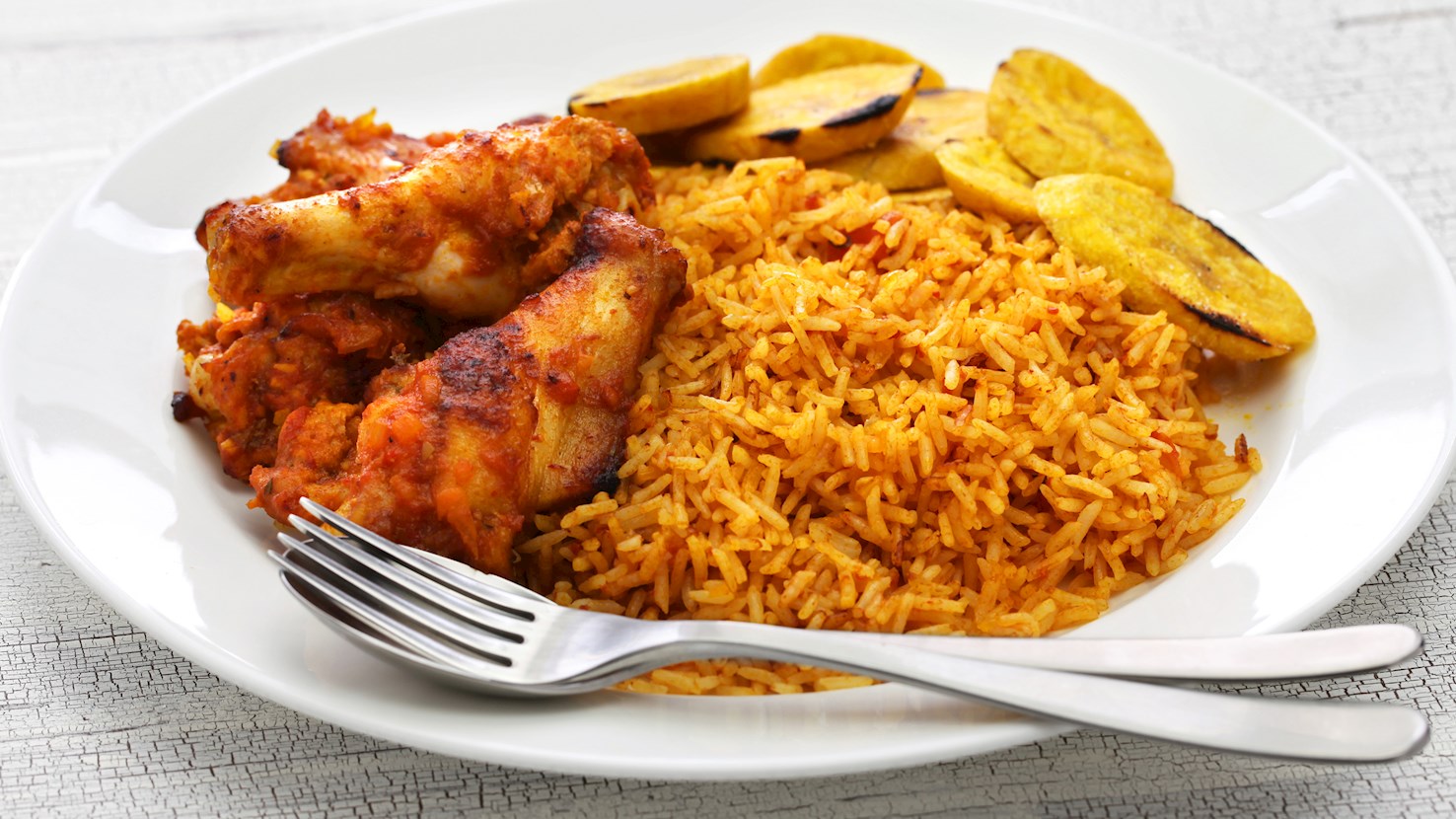
Jollof rice is a West African rice dish made with a base of tomatoes, onions, and peppers, cooked together with seasonings until the rice absorbs the sauce and takes on a deep red or orange color. It is prepared in many countries across the region, including Nigeria, Ghana, Senegal, Sierra Leone, Liberia, The Gambia, and Cameroon, each with distinct methods and flavor profiles. The dish has its roots in the Wolof-speaking areas of present-day Senegal and The Gambia, where one-pot rice dishes developed within the Wolof kingdom and later spread along trade and migration routes. Early forms of rice cooked in tomato-based sauces, including benachin, served as a foundation for what became known more broadly as jollof rice as the dish moved eastward and adapted to regional tastes. Preparation begins with creating a stew base by cooking tomatoes, tomato paste, onions, and chili peppers until thick and concentrated. This mixture forms the core of the dish’s flavor. Spices commonly include thyme, curry powder, ginger, garlic, and bay leaves, although blends differ by region. Broth is often added to the stew before the rice goes in, and long-grain varieties are favored for their ability to stay separate while absorbing the sauce. The rice is cooked on low heat until it absorbs the liquid fully, often forming a crust at the bottom of the pot, which some cooks consider an essential element. Vegetables such as carrots or peas may be added, and the dish can be prepared with chicken, beef, fish, or served as a vegetarian version. The defining feature is the balance between the acidity of tomatoes, the heat of peppers, and the aromatics in the spice blend, which creates a layered and concentrated flavor. A notable characteristic of jollof rice is the regional variation that shapes its identity. Senegalese versions often reflect the one-pot method of benachin and feature larger pieces of vegetables and fish. Nigerian versions are known for their smoky aroma due to cooking techniques that allow the stew and rice to caramelize slightly. Ghanaian versions may emphasize Scotch bonnet peppers and a softer consistency. Although each country asserts its own preferred style, all share the core elements of rice cooked directly in a seasoned tomato-pepper mixture. Jollof rice is eaten across West Africa in homes, restaurants, street-food settings, and festive gatherings. It appears at celebrations, everyday family meals, and communal events, often accompanied by fried plantains, grilled chicken, stews, or salads. Beverages that pair well with it include hibiscus drinks such as bissap or zobo, ginger drinks, palm wine, beer, or citrus-based soft drinks, which complement the spice and richness of the dish.
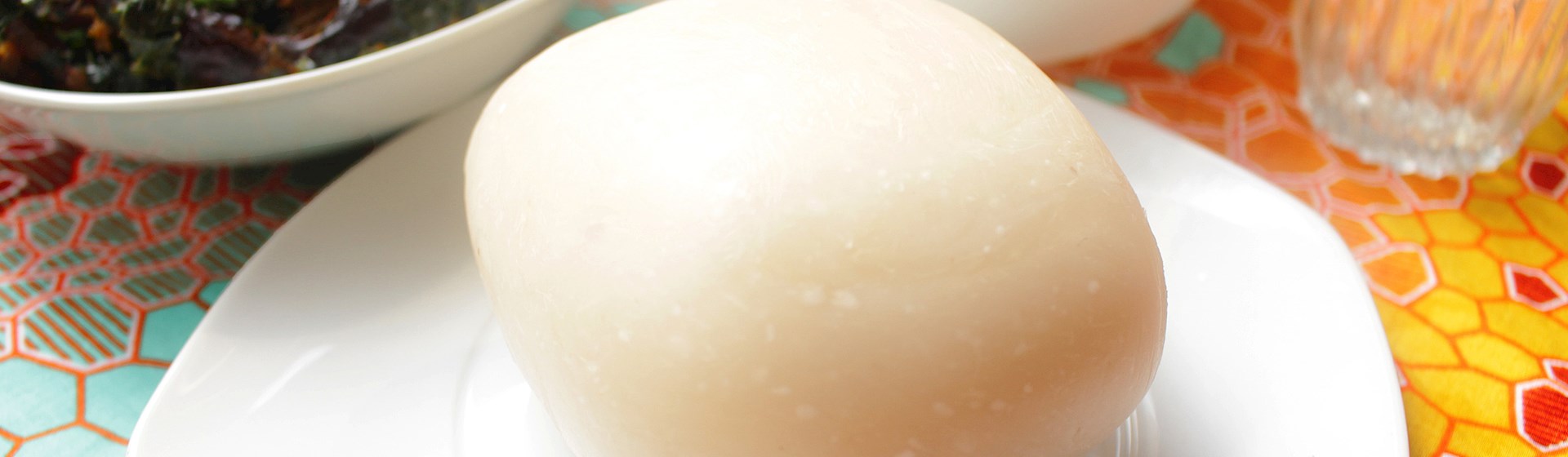
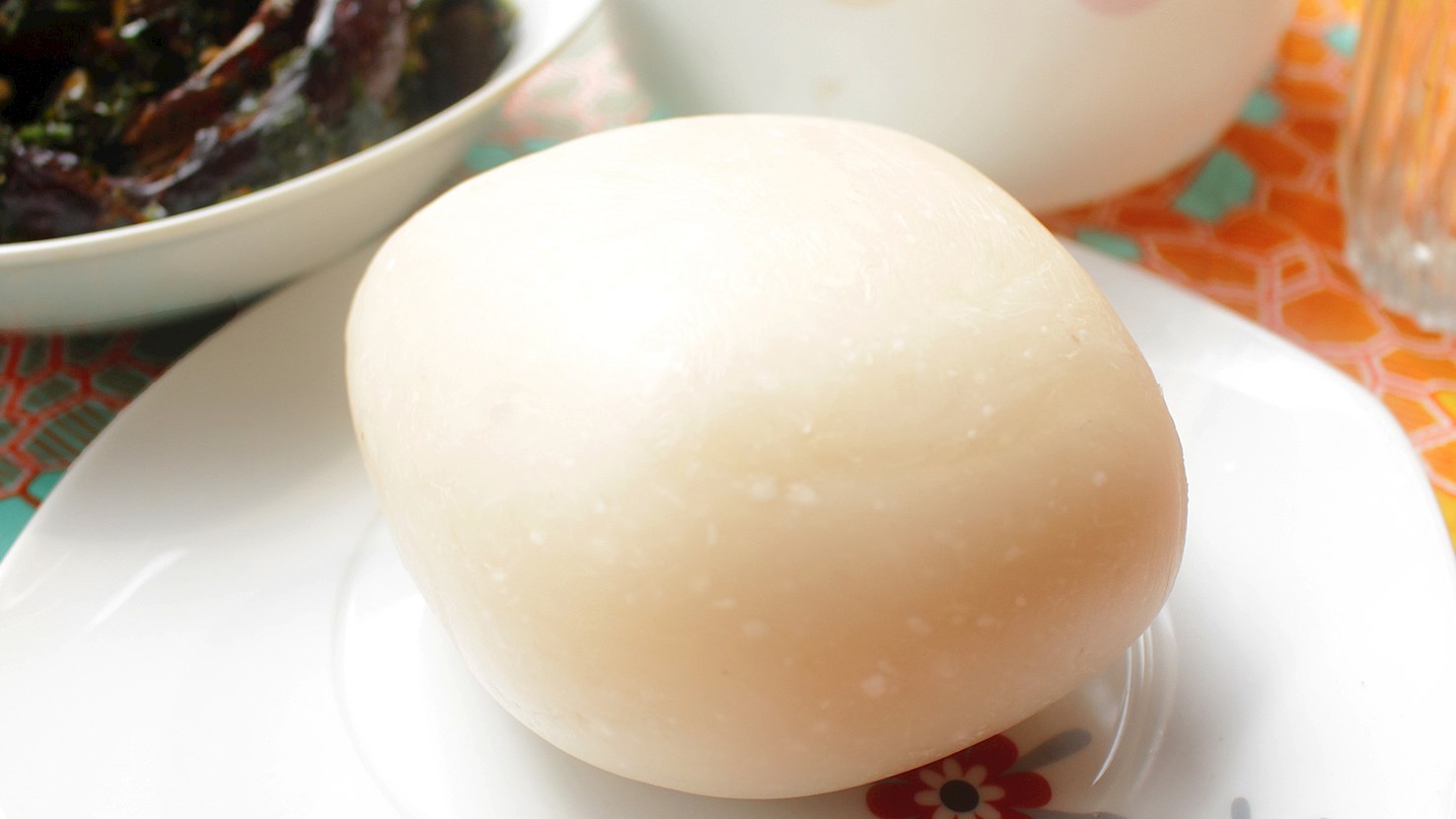
Fufu is a staple side dish made by pounding cassava and unripe plantains together with a big wooden pole and mashing them while adding water. As it needs to be vigorously stirred, it usually takes two people to make it - one pounding it, and the other moving it around between the pounding. Once the mixture is smooth, it gets shaped into small balls that are then placed in a stew or soup with meat. Similar to the Tanzanian ugali, an indentation is made in the ball, used for scooping up the sauce, with fufu acting as a spoon. The texture is quite gummy and stretchy, while the flavor is bland, but dipping it into a stew gives fufu a spicy flavor that is slightly reminiscent of peanuts. Just make sure not to eat with your left hand, as this is considered extremely disrespectful in many parts of Africa, because the left hand is used for toilet-related actions. This starchy side dish is an important accompaniment to various stews and sauce-based dishes, and it's regularly eaten throughout West and Central Africa.
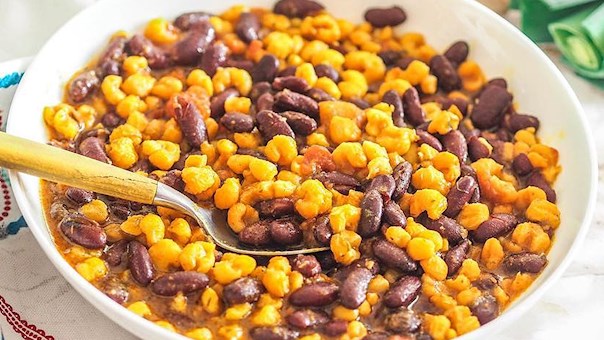
Sangah, also spelled sanga, is a dish made from fresh maize, leafy greens, and palm-nut juice. It has a soft, porridge-like consistency and a mild combination of sweet corn, earthy greens, and the rich flavor of palm fruit. The dish is particularly associated with the Fang-Beti cultural area of central, southern and eastern Cameroon, including Beti and Bulu communities. The Bassa and other groups also prepare it, and recipes vary considerably from one region and household to another. One of the most characteristic versions uses zom, an edible nightshade leaf, rather than cassava leaves. Other leafy vegetables, including cassava leaves, garden-egg leaves and similar local greens, can also be used. Preparation usually begins by removing the leafy greens from their stems, washing them thoroughly and slicing or pounding them depending on the type of leaf being used. The greens are cooked until they soften and release some of their moisture. Fresh maize is cut from the cob and added to the pot. Sanga is particularly associated with the fresh-maize season, and fresh kernels are preferred because they provide both texture and a natural sweetness. The corn is cooked with the greens until tender. The other defining ingredient is palm-nut juice, sometimes called palm-nut cream or palm-fruit pulp. Traditionally, fresh oil-palm fruits are boiled until soft and then pounded. Warm water is worked through the crushed fruit and the fibrous pulp is strained away, leaving a thick, orange-colored extract. This differs from simply pouring red palm oil into the dish: palm-nut juice contains the pulp and flavor of the fruit, as well as its natural fat. The palm-nut extract is added once the corn and greens have begun to soften. Everything is then cooked together, usually with frequent stirring, until the liquid reduces and the mixture thickens and becomes creamy. The final consistency falls somewhere between a vegetable stew and a maize porridge, with whole corn kernels remaining visible throughout. Seasoning is generally restrained. Hot pepper can be added, and some Fang-Beti versions include olom, an aromatic local seasoning sometimes described as garlic-like. Salt isn't essential in every version. Sugar is a typical accompaniment to sanga. Some people eat it without sugar, while others stir a small amount into the finished dish. The sweetness works naturally with fresh corn and the rich palm fruit, so sweeter versions can have a noticeable sweet-savory character without becoming a dessert. Cassava-leaf sanga is another common version. The leaves are finely chopped or pounded and must be cooked thoroughly before eating. Cassava leaves naturally contain cyanogenic compounds, which proper processing and prolonged cooking reduce. The leaves give the finished dish a deeper green color and a stronger, more earthy flavor than versions made with softer leafy vegetables. Sanga is traditionally a largely plant-based dish. Smoked fish, dried fish, or crayfish can be added in individual or modern versions, but they are not necessary to its identity and should not be treated as standard ingredients. The basic combination of vegetables, maize and palm fruit is substantial enough to form a meal on its own. It is often eaten by itself, especially because the fresh corn already provides plenty of starch. Depending on the household and region, it can also be served with boiled plantain, cassava, rice, or another staple.
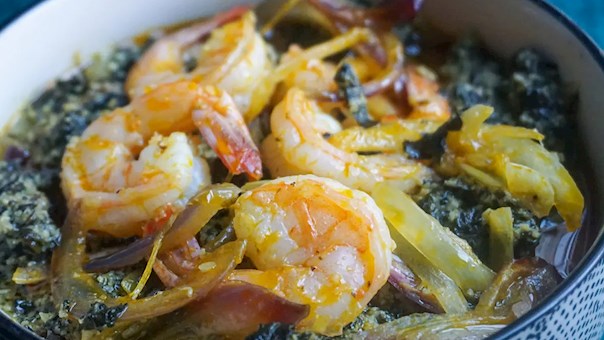
Pèpè soup is a traditional soup with intense aromas, made with njansa nut as the main ingredient. It is also popular in Nigeria and throughout West Africa. A spicy nut known as njansa is the key ingredient in pèpè soup, acting as a thickener and giving the soup its signature flavors. Other ingredients include meat or fish, garlic, ginger, hot peppers, onions, and water. The soup can be served on its own or it can be paired with yams, rice, and plantains when served as a main dish.
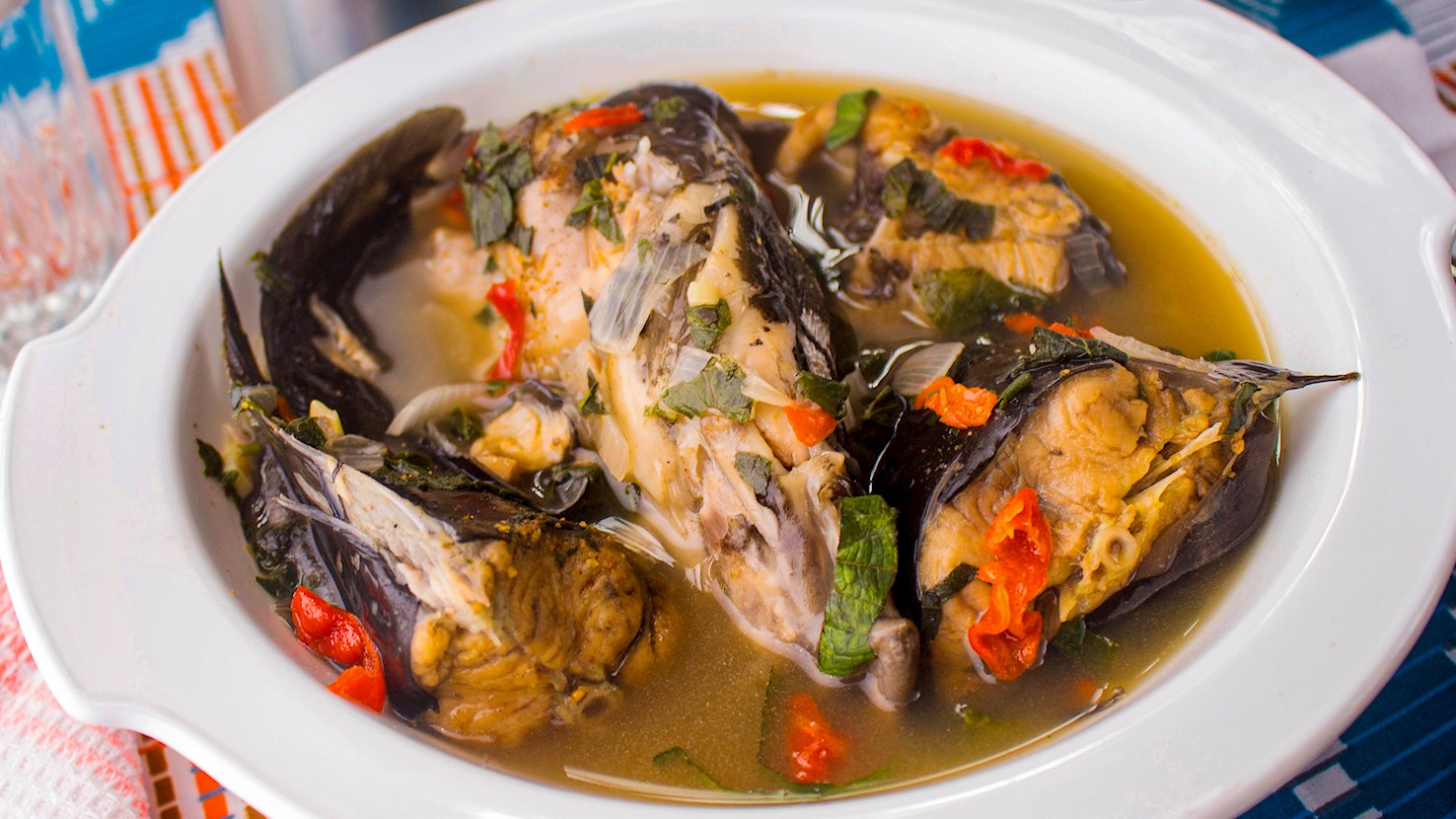
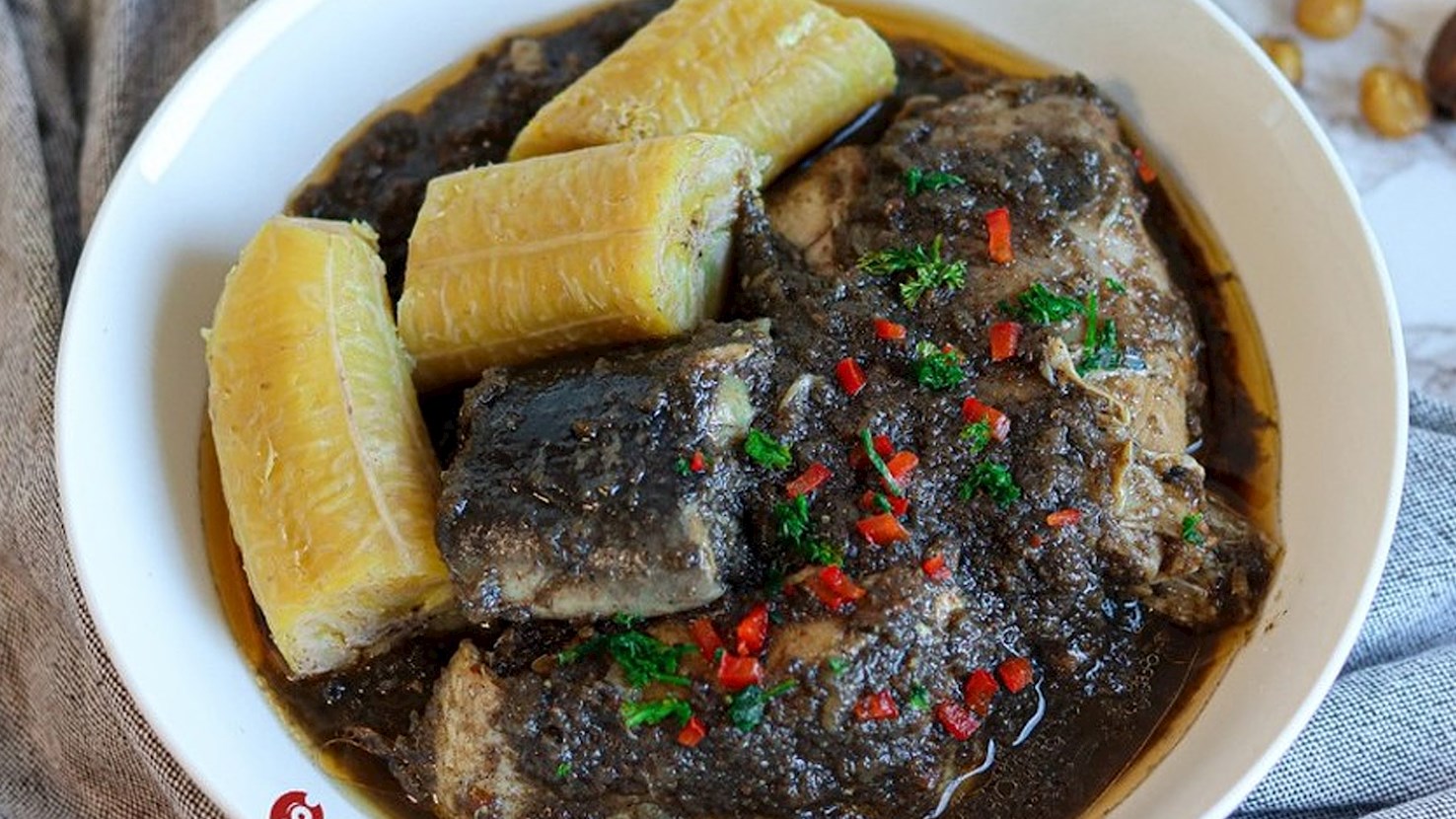
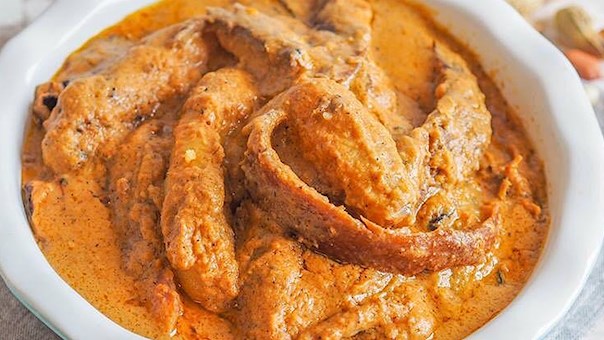
Although some people may be taken aback by the unappealing grayish-black color of mbongo tchobi, also known as black stew, it is actually a flavorful meal that is typically made with onions, tomatoes, fish, and meat such as lamb, beef, or goat, along with hiomi powder, alligator pepper, and a nutty spice known as njansa. Mbongo refers both to the name of the dish and the spice used in its preparation. After the stew has simmered for the required amount of time, it is traditionally served warm with boiled plantains on the side.
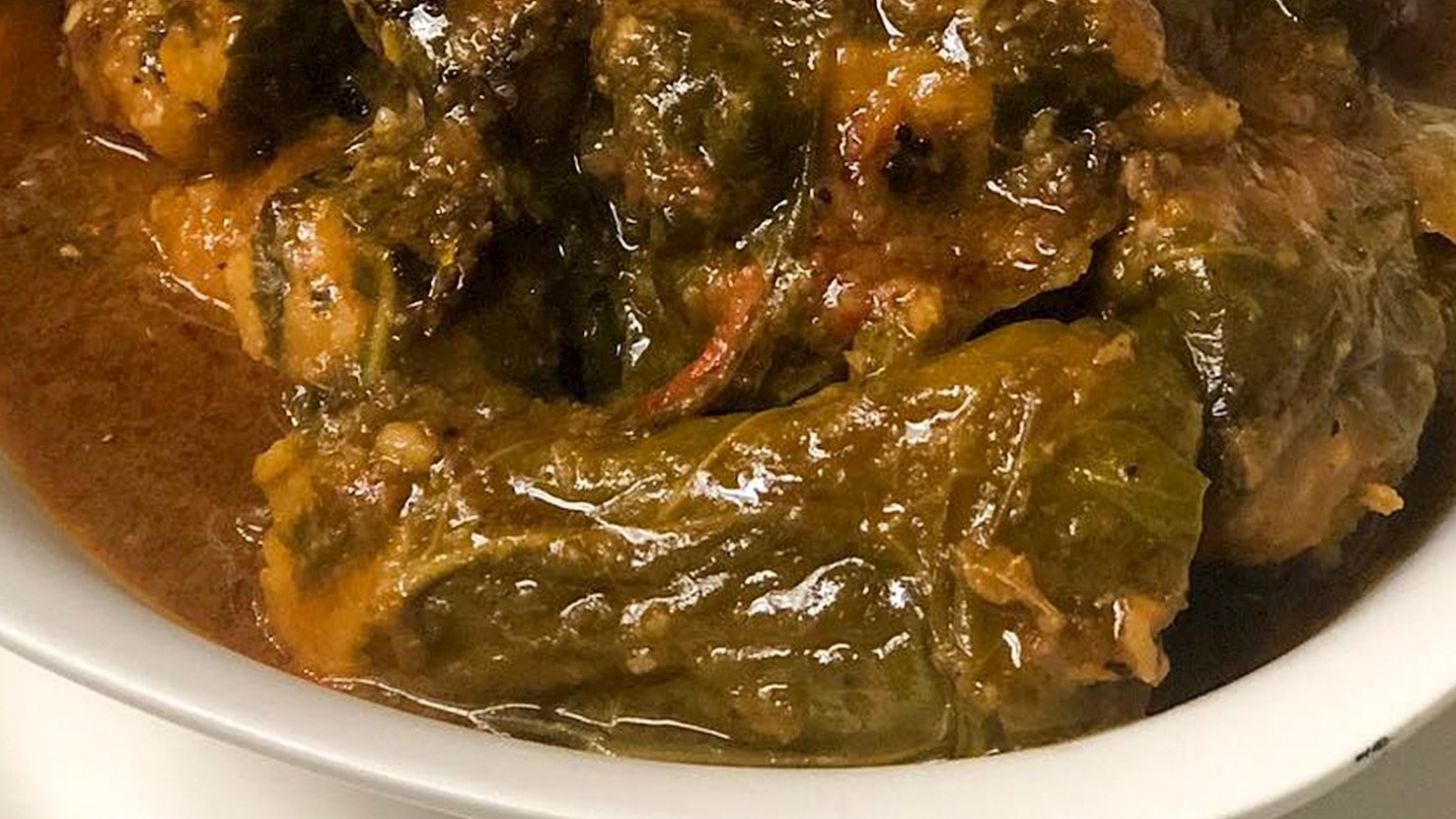
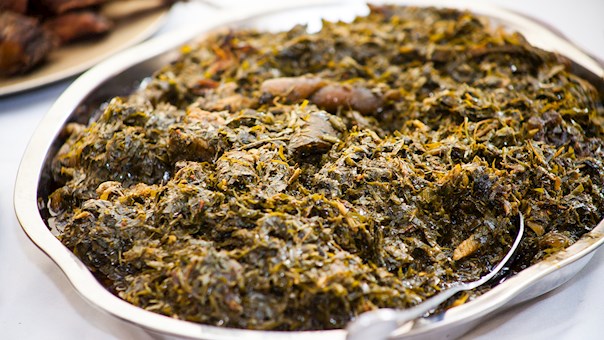
In Cameroonian cuisine, njamma jamma refers to both the plant (internationally known as garden huckleberry) and the eponymous dish made from its leaves. The dish consists of garlic, onions, hot peppers, water, oil, and greens such as njamma jamma and collards, swiss chard, or kale. The combination is then cooked over low heat until the greens develop a tender texture. Njamma jamma is served hot, preferably with ugali on the side.
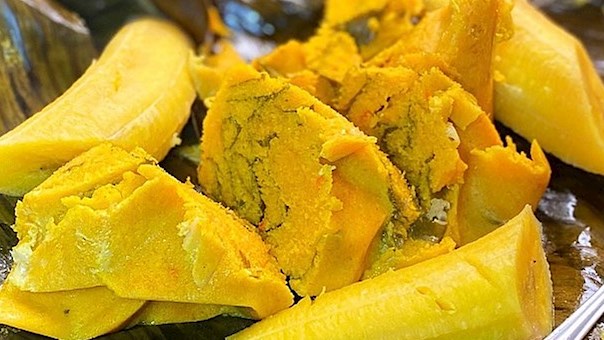
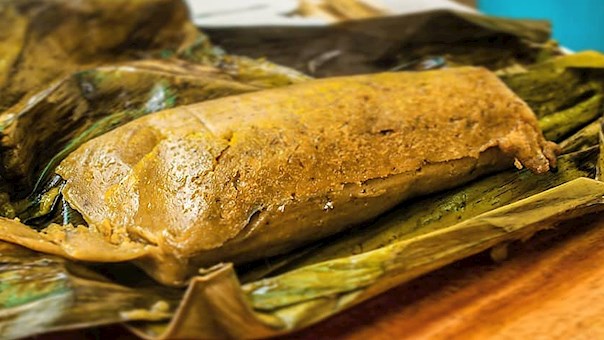
Ekwang is a popular Cameroonian and Nigerian dish consisting of grated cocoyams that are tied in cocoyam leaves, then slowly simmered with crayfish, palm oil, and various spices. This delicacy is traditionally prepared by the Bafaw people from the Southwest region of Cameroon and several ethnic groups in the Nigerian state of Cross River. Although making ekwang is a laborious, time-consuming process due to all the grating and wrapping, most cooks claim that it disappears from the plates quite fast after it has been served.
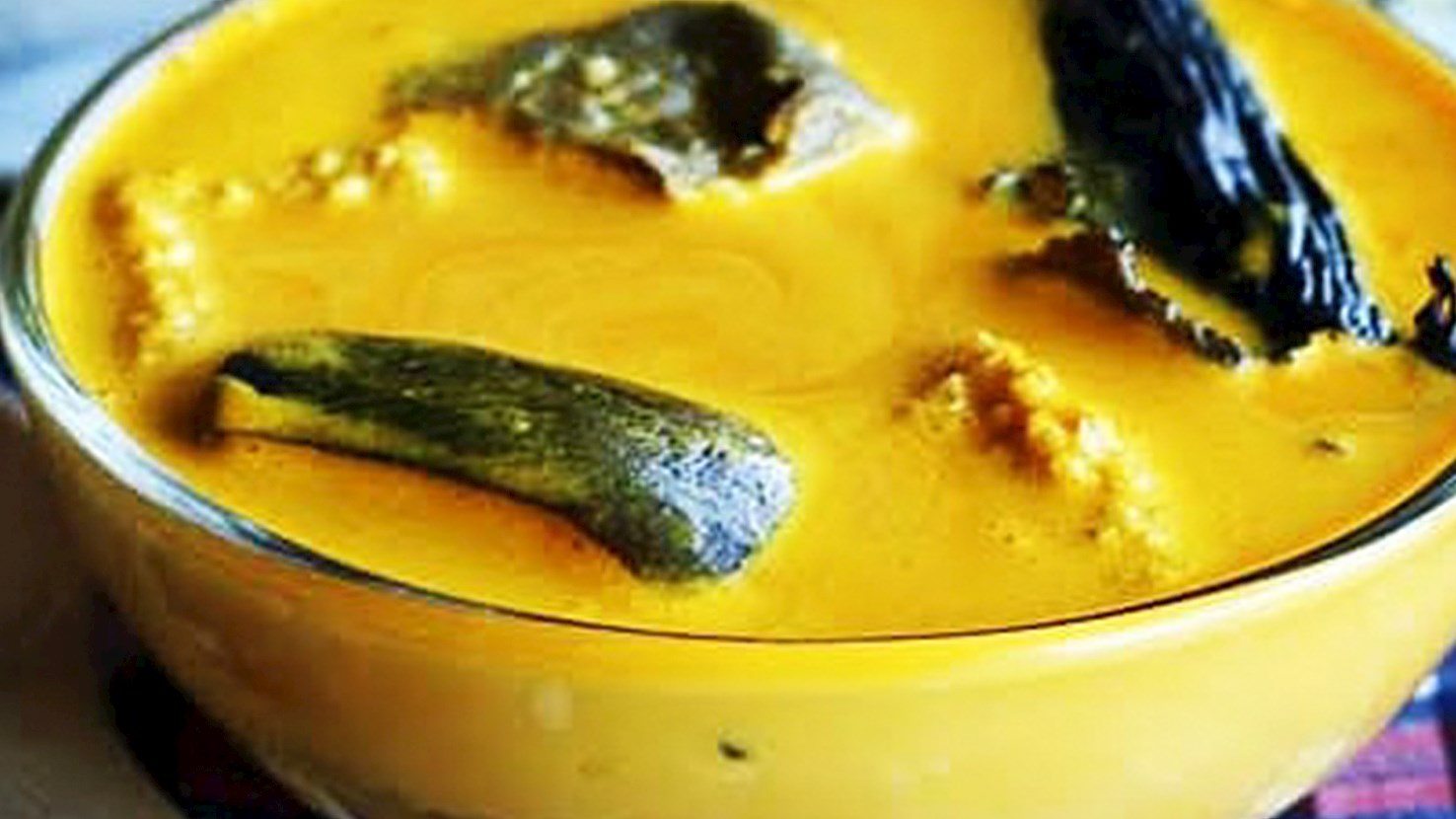
Kondre is one of the two national dishes of Cameroon, consisting of platains, tomatoes, onions, spices, and meat such as beef, goat, chicken, or pork. Originally from Bafang, kondre used to be a ceremonial dish that was reserved for special occasions such as weddings, baby welcomings, and funerals. Visually, it is a thick, hearty stew that looks similar to a butternut squash soup. With its unique flavor and appearance, kondre is guaranteed to remain a staple of Cameroonian cuisine.
Traditionally prepared and consumed by the Ngemba people from the Northwest Region of Cameroon, achu soup consists of boiled and pounded cocoyams, canwa (lime stone), water, spices, and palm oil. The palm oil changes the color of the soup to yellow, which is the reason why achu soup is also known as yellow soup. When served, it is typically paired with beef or fish, which can be boiled, fried, or smoked.
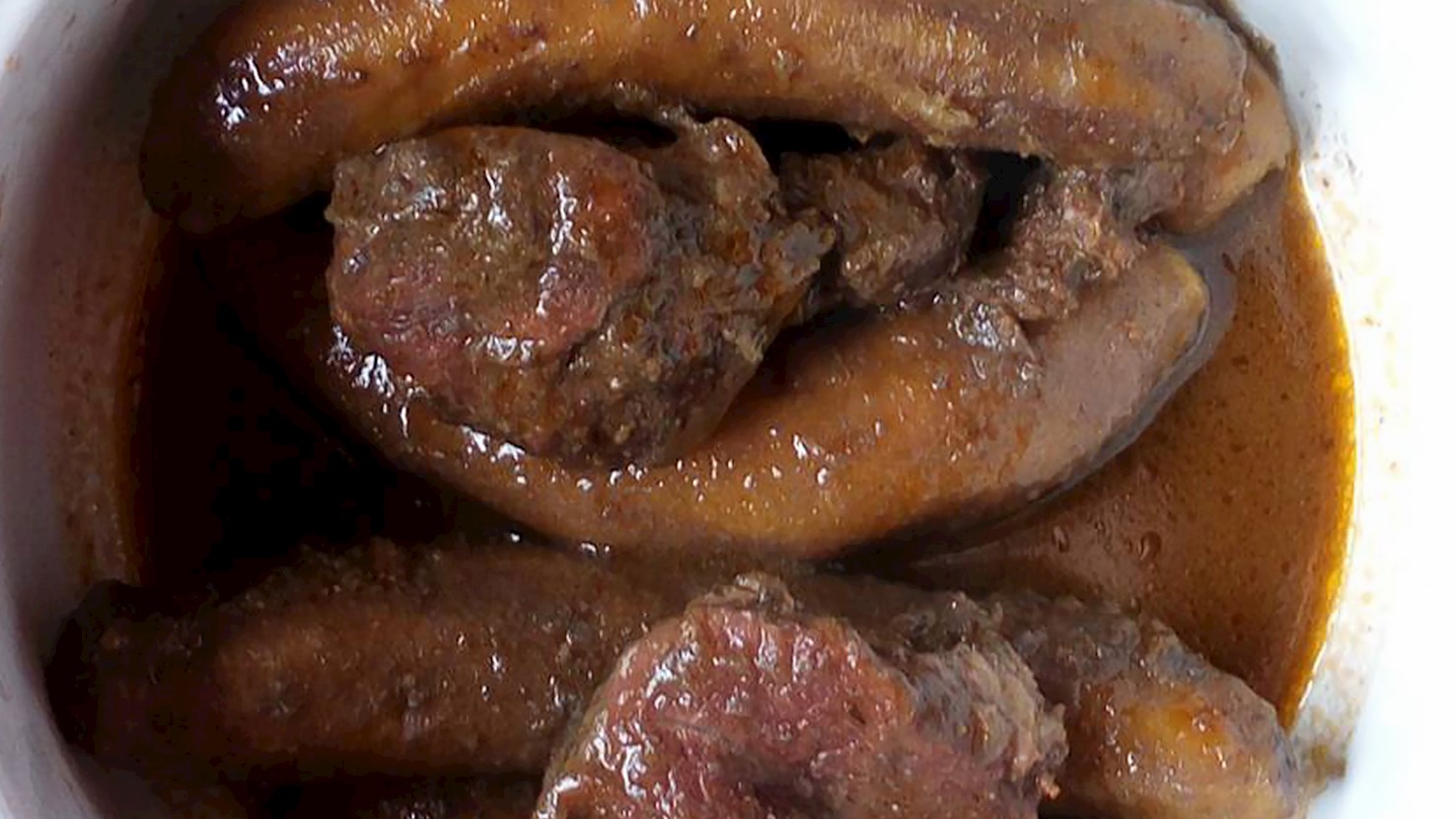
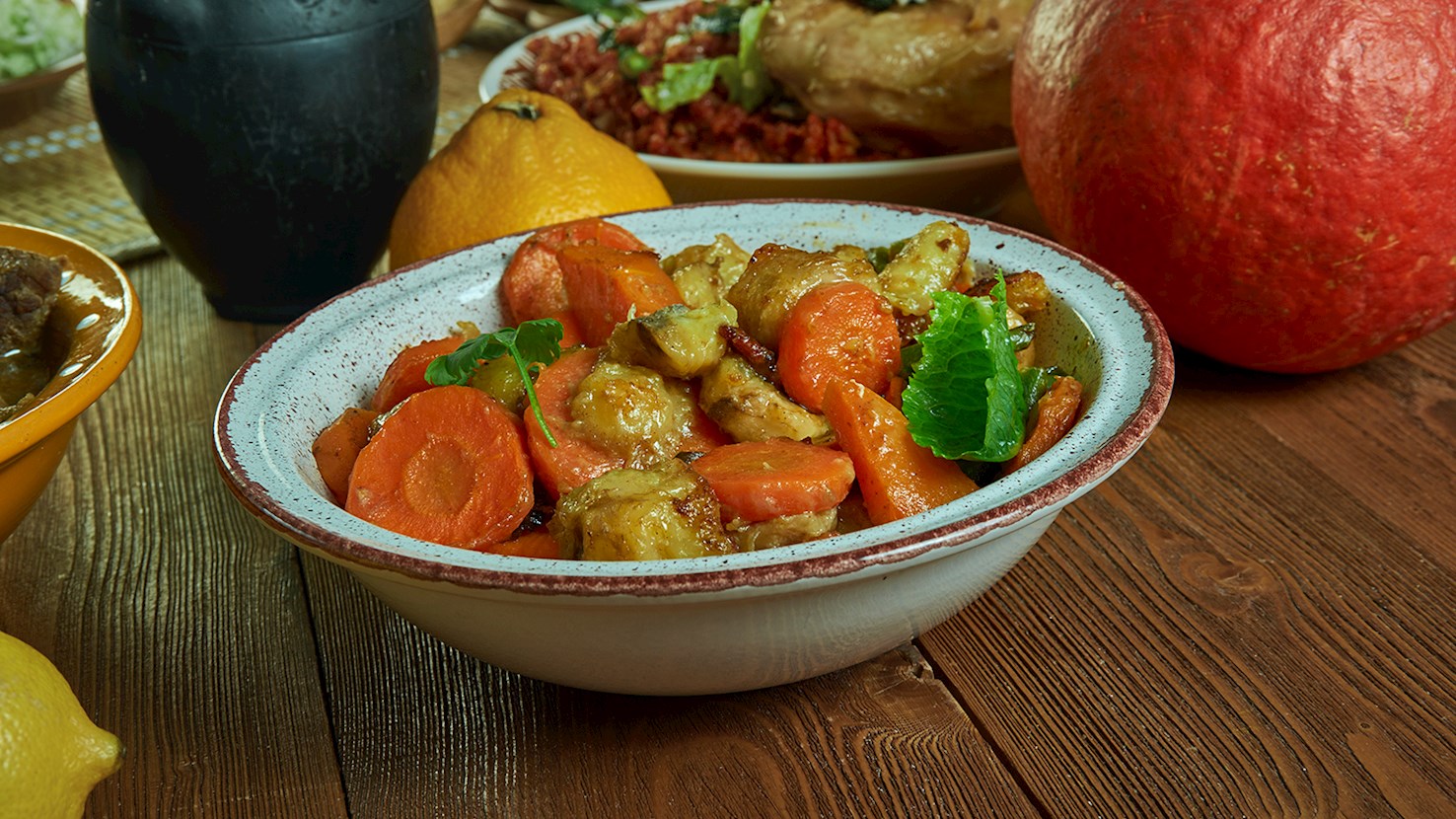
Poulet DG is a tasty Cameroonian poultry dish made with a combination of chicken and ripe plantains in a hearty tomato sauce. The dish is typically garnished with a variety of vegetables such as green beans, bell peppers, and carrots, making it visually appealing and enhancing the flavors even further. Regarding the name of the dish, poulet refers to chicken, while DG means Directeur Général in French or CEO in English, referring to the fact that poulet DG was most commonly served to people from the upper classes in the past. It is recommended to serve the dish warm and pair it with a glass of juice on the side.
TasteAtlas food rankings are based on the ratings of the TasteAtlas audience, with a series of mechanisms that recognize real users and that ignore bot,
nationalist or local patriotic ratings, and give additional value to the ratings of users that the system recognizes as knowledgeable.
TasteAtlas Rankings should not be seen as the final global conclusion about food. Their purpose is to promote excellent local foods,
instill pride in traditional dishes, and arouse curiosity about dishes you haven’t tried.






What People Say